
Where Is the Chicken Thighs: Best Cuts, Cooking, and Recipes
You’ll find the chicken thigh on the upper part of the leg, between the hip joint and the knee. This dark, flavorful meat cooks more forgivingly than the breast.
Keep that in mind next time you’re at the counter or the market.
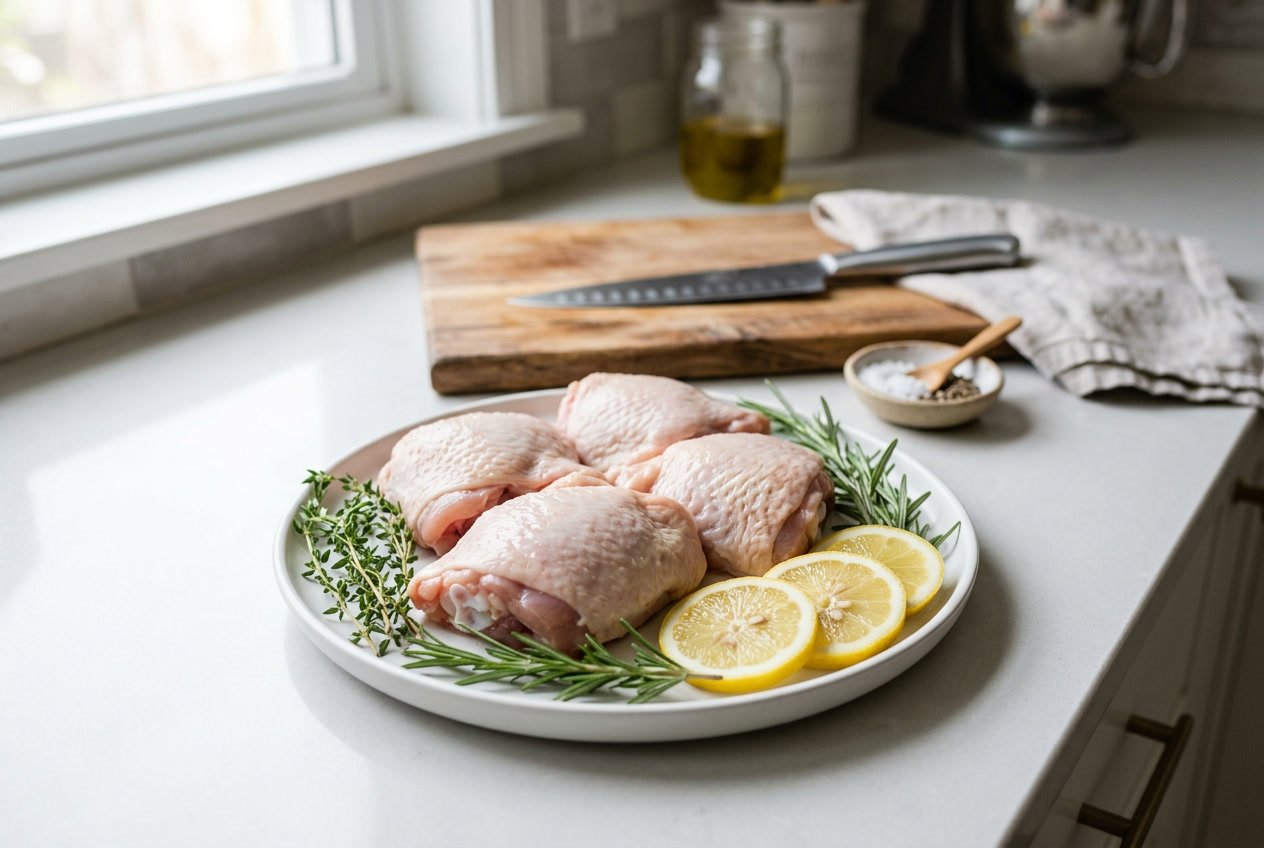
Knowing where the thigh sits helps with buying, prepping, and choosing cooking methods that make the most of its higher fat and richer flavor.
This guide explains what thighs are, where to buy them, simple prep steps, popular cooking techniques, recipe ideas, and ways to use leftovers.
Understanding Chicken Thighs
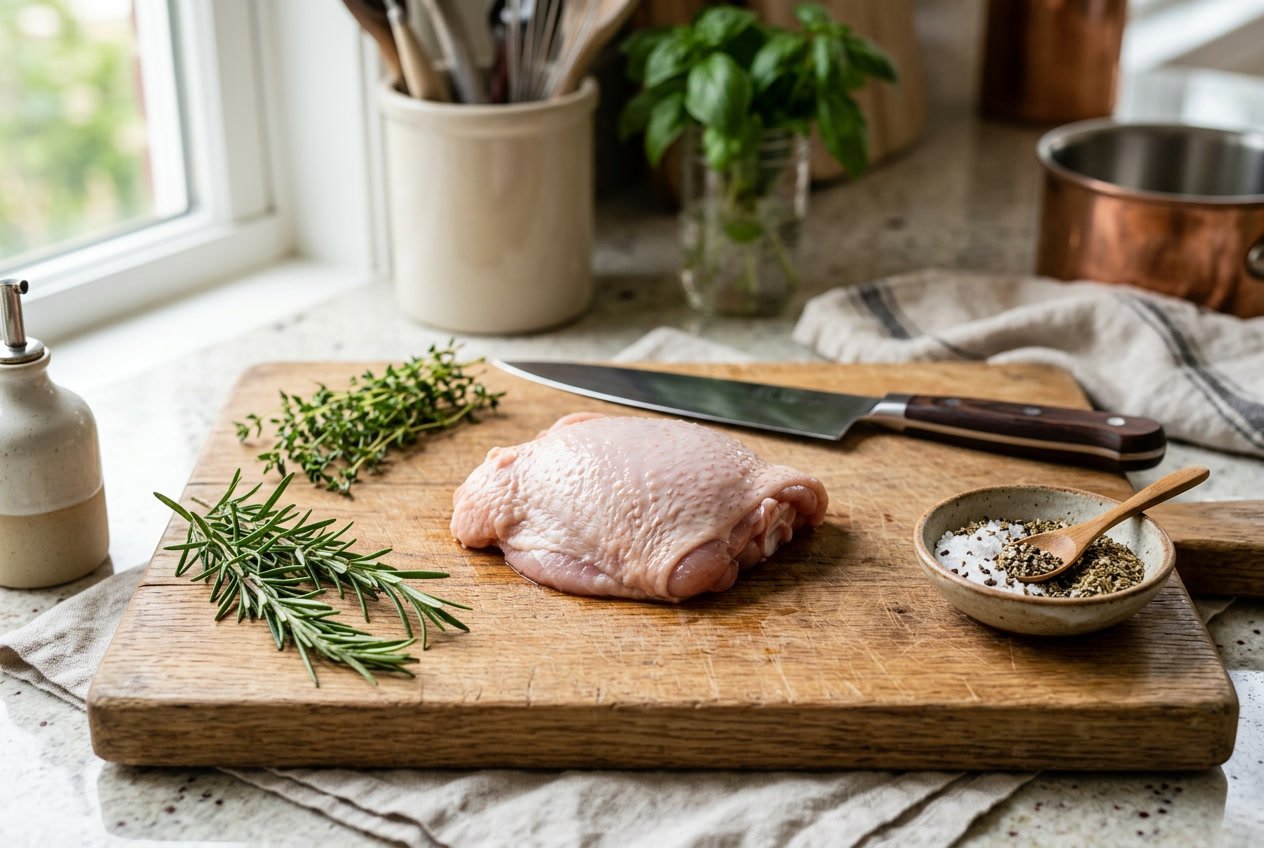
Thighs are the dark, flavorful portion of the chicken leg with more fat and connective tissue than the breast.
You’ll notice differences in cooking time, moisture, and flavor depending on bone and skin presence.
What Part of the Chicken Are Thighs
Chicken thighs sit on the upper leg between the hip joint and the knee joint.
They attach to the body at the hip and connect below to the drumstick.
When you buy a whole leg quarter, both pieces remain together.
Thigh meat is dark meat because it contains more myoglobin and fat than breast meat.
That extra fat and connective tissue keeps thighs juicier during long cooking and makes them forgiving to high-heat methods and slow braises.
When deboned, a thigh becomes smaller and more compact than a breast, with a slightly irregular rectangular shape.
You’ll see thighs sold bone-in or boneless, and either skin-on or skinless.
Each form changes how you should season and cook them.
Bone-In vs. Boneless Chicken Thighs
Bone-in chicken thighs keep the femur and surrounding joint intact.
The bone conducts heat differently, so bone-in thighs often take a few minutes longer to reach safe internal temperature but produce more intense flavor during roasting and braising.
Boneless chicken thighs have the bone removed, which shortens cook time and makes them easier to cut for kebabs, stir-fries, or quick pan-searing.
They absorb marinades faster and cook more evenly on a flat surface, but they can dry out if overcooked.
Choose bone-in for slow-roasted or braised dishes where you want more depth and a bit more forgiving texture.
Choose boneless when you need speed, uniform slices, or easier portioning for sandwiches and tacos.
Skin-On vs. Skinless Chicken Thighs
Skin-on chicken thighs include the outer layer of fat and skin that crisps during high-heat cooking.
That skin renders fat and bastes the meat, improving flavor and mouthfeel.
Skinless chicken thighs remove that protective layer, lowering surface fat and total calories.
They work well in saucy recipes, stews, or recipes where you want the seasoning to directly contact the meat.
If you want crispy texture and richer taste, pick skin-on thighs and plan for higher-heat finishing.
If you prioritize leaner meat or quicker absorption of sauces and marinades, pick skinless and monitor time closely to keep them moist.
Where to Buy Chicken Thighs
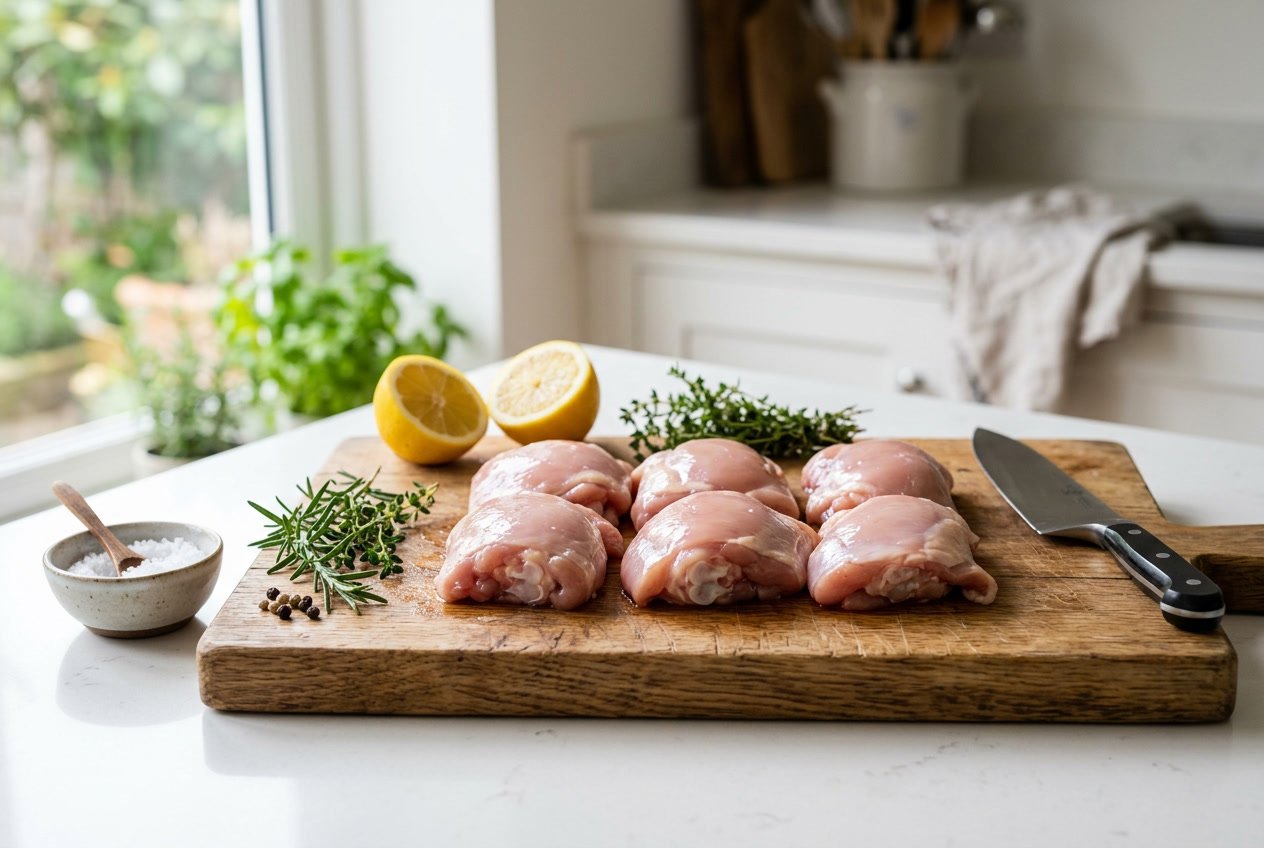
You can find chicken thighs at supermarkets, specialty butchers, and online retailers.
Look for the specific cut, packaging, and labeling that match your cooking plan and budget before you buy.
Finding Chicken Thighs in Grocery Stores
Most chain supermarkets stock bone-in and boneless thighs in the meat case and prepackaged refrigerated trays.
Check the butcher counter for single cuts and larger bulk packs.
Inspect the package date, sell-by label, and the color.
A fresh thigh is pink with minimal discoloration and no slime.
If you want skin-on pieces for roasting or grilling, choose trays labeled “skin-on.”
For quicker cooking, pick boneless skinless packs.
Look for labels like “antibiotic-free,” “organic,” or “pasture-raised” if those production methods matter to you.
Choosing Quality Chicken Thighs
Prioritize firmness, consistent color, and intact packaging when comparing options.
Avoid packages with excess liquid pooling; that indicates older product or thawed-and-refrozen meat.
Ask staff when the case was replenished and whether the thighs came from a local supplier if traceability matters.
For value buys, compare per-pound prices across brands and check for weekly promotions.
If you plan to freeze, buy within one to two days of the pack date and freeze in airtight wrap or vacuum-seal bags to preserve texture.
Buying Chicken Thighs Online
Use reputable grocery services and read recent buyer reviews focused on refrigeration and delivery reliability.
Search filters let you narrow results by cut, weight range, and certifications like organic or antibiotic-free.
Confirm cold-chain handling.
Items should ship in refrigerated packaging and indicate transit time.
For subscription or bulk orders, verify return policies and whether the seller provides lot numbers or source information.
If you receive thighs that appear off—bad odor, broken seals, or excessive thawing—document the package and request a refund or replacement immediately.
How to Prepare Chicken Thighs
Trim excess fat, remove loose skin, and decide whether to keep bone and skin for flavor or remove them for faster, even cooking.
Use a sharp knife, keep the thigh dry, and season beneath the skin when possible to push flavor into the meat.
Trimming and Cleaning Chicken Thighs
Pat each thigh dry with paper towels to remove surface moisture.
This helps browning and prevents steaming.
Trim away large fat deposits and any ragged skin edges with a small, sharp knife.
If you plan to crisp skin, leave the skin attached and remove only excess fat from the edges.
For boneless, skinless thighs sold with pieces of fat or cartilage, trim those off to avoid chewy bits after cooking.
Rinse only if you will immediately pat dry and cook.
Otherwise, avoid prolonged washing.
Use a clean cutting board and sanitize surfaces and knives after handling raw poultry to prevent cross-contamination.
Deboning Chicken Thighs
Place the thigh skin-side down and locate the bone with your fingers.
It usually runs lengthwise through bone-in thighs.
Use a boning knife to cut along one side of the bone, freeing the meat with small, controlled strokes while keeping the blade close to the bone.
Work slowly to avoid removing too much meat.
You want a clean removal so the thigh lays flat for even cooking.
After removing the bone, check for cartilage or tiny bone fragments and trim them away.
If you want a pocket for stuffing, slide the tip of the knife between muscle layers and gently expand without cutting through the skin.
Marinating and Seasoning Techniques
Salt the thighs at least 30 minutes before cooking or up to overnight in the fridge for deeper seasoning.
Combine kosher salt with black pepper, 1–2 teaspoons paprika, and a pinch each of dried oregano and thyme for a versatile dry rub.
If you prefer a wet marinade, mix olive oil, minced garlic, lemon juice, paprika, oregano, thyme, and black pepper.
Marinate 1–4 hours for best flavor uptake without turning the meat mushy.
For maximum impact, loosen the skin and spread seasoning or marinade directly on the meat under the skin.
Pat the skin dry again before searing or roasting to help it crisp while the interior stays juicy.
Popular Ways to Cook Chicken Thighs
You can use reliable techniques that produce juicy meat and, when desired, crispy skin.
Focus on temperature control, surface dryness, and avoiding overcrowding for best results.
Baked Chicken Thighs
Baking gives you even heat and hands-off cooking for both bone-in and boneless thighs.
Preheat the oven to 400–425°F for roasted, crispy baked chicken thighs.
Place thighs skin-side up on a wire rack set over a rimmed sheet pan so air circulates and fat drips away.
Season simply with salt, pepper, and a touch of oil, or use a marinade and pat the skin dry before roasting.
Bone-in thighs typically take 35–45 minutes; boneless take 20–30 minutes.
Use an instant-read thermometer: pull boneless at 165°F, bone-in at 175°F for tender, gelatin-rich meat.
Grilled Chicken Thighs
Grilling adds smoke and char while protecting the meat from drying thanks to higher fat content.
For bone-in, set up two heat zones.
Sear skin-side down over direct high heat 5–6 minutes, then move to indirect heat and cover for 20–25 minutes until the interior reaches 175°F.
Boneless thighs can cook over medium-high direct heat about 5–7 minutes per side.
Trim large fat pockets and watch for flare-ups from dripping fat.
Finish with a 2–3 minute rest before slicing to let juices redistribute.
Use bold marinades like soy-ginger or chipotle for pronounced grilled flavor.
Air Fryer Chicken Thighs
The air fryer uses high-convection heat for fast, consistently crispy results.
Pat thighs completely dry and season; do not overlap pieces.
Cook skin-side up at 400°F: boneless 16–20 minutes, bone-in 22–28 minutes, flipping once if needed for even browning.
A light spray of oil helps the skin crisp.
A dusting of baking powder in the rub can increase browning.
Work in batches to avoid steaming.
Check the thickest part with a thermometer and let rest 3–5 minutes.
Air fryer thighs are ideal when you want quick, crispy baked-style results without using a full oven.
Sheet-Pan Chicken Thighs
Sheet-pan chicken thighs let you cook a full meal at once with reliable oven roasting.
Arrange skin-side up on a rimmed sheet pan with vegetables spaced at least 1 inch apart.
Use 400–425°F for crispy roasted chicken thighs; vegetables benefit from the same high heat.
A wire rack is optional but helps the skin crisp further.
Toss vegetables in a little oil and seasonings so they brown rather than steam.
Cook times align with baked thighs: boneless 20–30 minutes, bone-in 35–45 minutes.
Finish bone-in thighs at 175°F and let everything rest briefly before serving to lock in juices.
Classic and Creative Chicken Thigh Recipes
These recipes focus on easy weeknight execution, pressure-cooker convenience, and rich, saucy comfort.
Expect specific cooking times, flavor profiles, and pairing suggestions so you can pick the right dish for your week.
Tender Chicken Thighs for Weeknight Dinners
You can get tender, flavorful thighs with a simple roast or sheet-pan method that fits a busy weeknight.
Season bone-in, skin-on thighs with salt, pepper, garlic powder, and smoked paprika.
Roast at 425°F (220°C) for 30–35 minutes until the skin is crisp and the internal temperature reaches 165°F (74°C).
Serve with quick sides: steamed green beans, roasted baby potatoes, or orzo tossed with lemon and parsley.
For a one-pan creamy chicken orzo bake, brown thighs first, then add orzo, chicken stock, a splash of cream, and spinach.
Bake covered 20 minutes.
This gives you juicy meat and a built-in starch without extra pots.
If you prefer boneless thighs, sauté 6–8 minutes per side over medium heat for fast weeknight dinners.
Finish with a pan sauce of white wine, mustard, or lemon for bright flavor.
Instant Pot Chicken Thigh Dishes
The Instant Pot quickly turns chicken thighs tender in under 30 minutes.
For chicken adobo, brown thighs on Sauté, then add soy sauce, vinegar, garlic, bay leaves, and black pepper.
Pressure cook 8–10 minutes with a quick release.
Serve with steamed rice.
For braises like chicken cacciatore, sauté onions and peppers, add tomatoes, olives, herbs, and thighs, then pressure cook 10–12 minutes.
Shred or leave whole and thicken sauce with a cornstarch slurry on Sauté for serving.
For a quick creamy dish, pressure-cook thighs with mushrooms, onion, and stock 10 minutes, then stir in sour cream or crème fraîche off heat.
This creates a fast chicken stroganoff–style meal to spoon over egg noodles or mashed potatoes.
Creamy and Smothered Chicken Thighs
Smothered chicken gives you richly flavored thighs in a velvety sauce that clings to rice or mashed potatoes.
Start by browning thighs. Remove them, then sauté onions, garlic, and mushrooms until soft.
Deglaze the pan with a little wine or stock. Return the thighs and simmer in a mix of stock and heavy cream or sour cream for 20–30 minutes until the sauce reduces and coats the chicken.
For creamy chicken stroganoff, cook mushrooms with Dijon and a touch of Worcestershire, then finish with sour cream and parsley.
Serve over egg noodles or buttered rice.
For a lighter option, make a lemon-herb pan sauce using chicken schmaltz, lemon juice, thyme, and a splash of cream.
Simmer briefly to keep the sauce bright. This method pairs well with roasted vegetables or a simple green salad.
Frequently Used Ingredients and Seasonings
Seasonings for chicken thighs emphasize savory depth and aromatic lift.
Focus on a balance of salt, fat, acid, and a few core spices for consistent, flavorful results.
Building Flavor with Spices and Herbs
Use kosher salt and freshly ground black pepper to season both sides of each thigh.
Add paprika (sweet or smoked) for color and mild sweetness; 1–2 teaspoons per pound works well for roasting or grilling.
Include dried oregano and thyme for herbal complexity.
Sprinkle 1 teaspoon dried oregano plus 1 teaspoon dried thyme per pound, or use fresh herbs—chopped thyme leaves and whole oregano sprigs—when braising.
For a quick pan sear, rub thighs with oil and press in a mix of paprika, oregano, thyme, garlic powder, and black pepper to help the spices adhere and the skin crisp.
Marinades and rubs work best with an acid (lemon juice or vinegar) and oil to carry flavors into the meat.
If you want heat, add cayenne or chili powder sparingly so it doesn’t overpower the herbs.
Pairing Chicken Thighs with Sides and Sauces
Pair richer chicken thighs with bright or acidic sides to cut through fat.
Citrus salads, lemony couscous, or a simple vinegar-based slaw provide contrast and refresh the palate.
For starches, roasted potatoes tossed with oregano and rosemary echo the thyme-and-oregano notes on the chicken.
Rice pilaf with toasted cumin or a gremolata of parsley, lemon zest, and garlic lifts each serving without competing with paprika and black pepper.
Choose sauces that complement your seasoning.
A pan sauce of white wine, chicken stock, and a sprig of thyme reduces quickly and pairs with paprika’s sweetness.
A yogurt-based sauce with lemon and chopped oregano works well for spiced or grilled thighs.
A tomato-based sauce adds acidity for braised preparations.
Leftover Chicken Thighs and Meal Ideas
Leftover chicken thighs keep well when you cool, store, and reheat them properly.
You can turn shredded or chopped thigh meat into quick meals like soups, tacos, stir-fries, and casseroles.
Storing Cooked Chicken Thighs Safely
Cool cooked thighs to room temperature within two hours after cooking.
Place them in shallow airtight containers or resealable bags to speed cooling and prevent bacterial growth.
Label containers with the date.
Store in the refrigerator for up to 3–4 days, or freeze for 2–6 months for best quality.
When freezing, wrap pieces tightly or use vacuum sealing to avoid freezer burn.
Reheat to an internal temperature of 165°F (74°C).
Thaw frozen thighs in the fridge overnight or use the defrost setting on your microwave, then reheat immediately.
Discard any meat that smells off, has a slimy texture, or has been left out over two hours.
Creative Uses for Leftover Thigh Meat
Shred or dice leftover thighs to speed meal prep.
Toss shredded meat into fried rice or grain bowls with soy sauce, sesame oil, and scallions for quick flavor.
Make tacos or quesadillas by heating diced thigh meat with chili powder, cumin, and lime.
Layer with shredded cabbage, cotija or Monterey Jack, and a squeeze of lime.
Use chopped thighs in creamy pasta, pot pie, or casseroles.
For salads, mix shredded thighs with Greek yogurt, celery, and grapes for a quick chicken salad.
Keep small jars of sauces like BBQ, teriyaki, or pesto on hand to instantly change the dish profile.
Chicken and Wild Rice Soup
Sauté onions, carrots, and celery in butter or oil until soft. This step builds the soup’s base.
Add 6–8 cups of low-sodium chicken broth and 1–1½ cups of rinsed wild rice blend. Simmer until the rice is tender, about 40–50 minutes.
Stir in shredded leftover chicken thighs during the last 10 minutes to warm the meat. For creaminess, whisk in 1/2–1 cup of cream or a slurry of milk and flour.
Alternatively, blend plain yogurt with a little warm broth for a lighter finish. Season with thyme, bay leaf, salt, and black pepper.
Add chopped parsley or sliced green onions before serving. The thighs’ dark meat adds depth and keeps the soup moist, while the wild rice provides chew and nutty flavor.


