
Where Is Chicken Thighs: Guide to Cuts, Cooking & Recipes
You can find chicken thighs at most supermarkets, butcher shops, and many local markets. Look for them fresh in the meat case, frozen in the aisle, or pre-marinated in the refrigerated section.
If you want the most flavor and versatility, choose bone-in, skin-on thighs for roasting and grilling. Pick boneless, skinless thighs for quick sautés and weeknight meals.
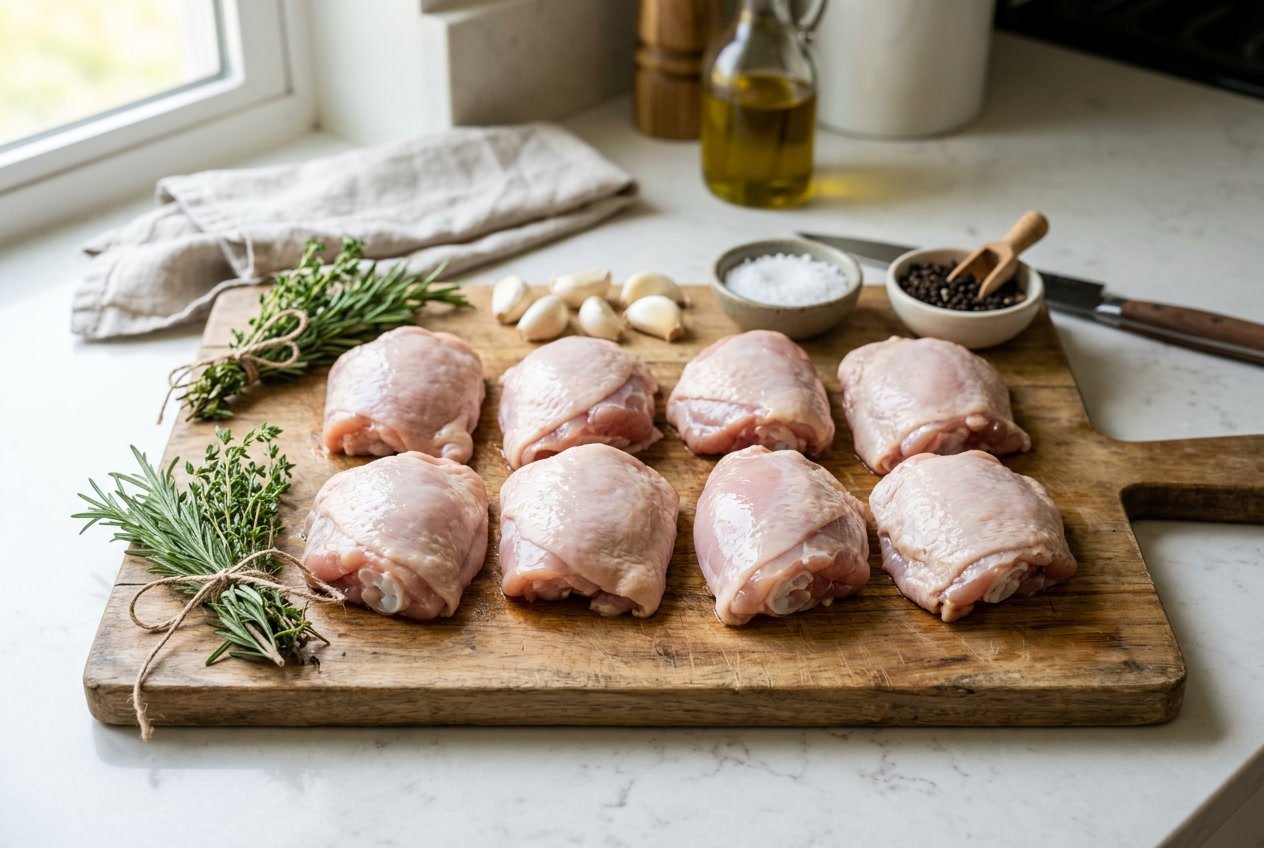
This post will help you find the best sources and understand the main types available. You’ll also get tips on buying, storing, seasoning, and cooking so you can add chicken thighs to your dinner rotation.
Where Chicken Thighs Come From
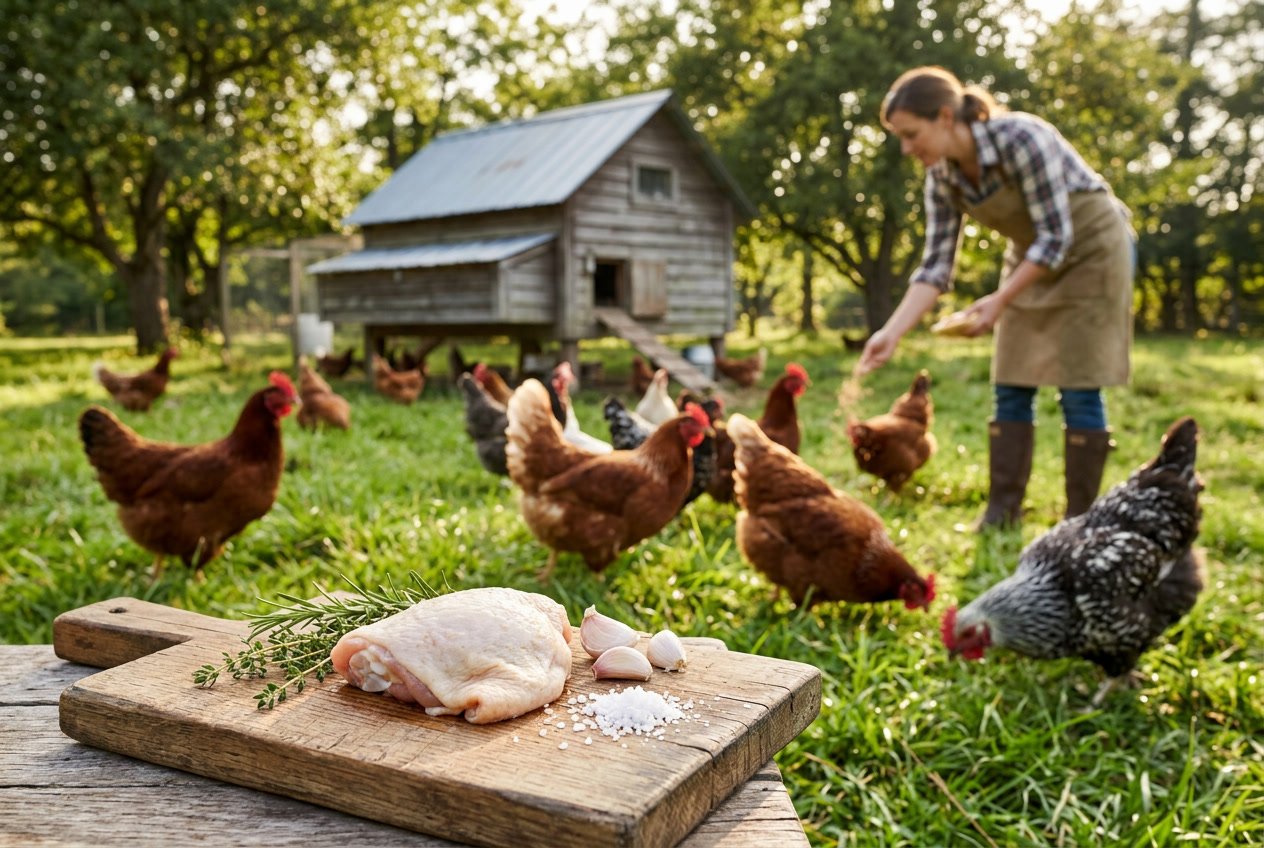
Chicken thighs sit on the bird’s hindquarter and contain dark, flavorful muscle with varying amounts of skin and bone. Markets sell both bone-in and boneless, skin-on and skinless options, each suited to different cooking methods and recipe needs.
Chicken Thigh Location on the Bird
The thigh is the upper part of the chicken’s leg, attached between the body and the drumstick. It connects to the pelvis at the hip joint and to the drumstick at the knee joint.
When butchers break down a chicken, they cut along the natural seam at those joints to yield either bone-in chicken thighs or, after deboning, boneless chicken thighs. Skin-on thighs keep a layer of fat and skin that crisps during roasting or frying, while skinless thighs remove that exterior for leaner cooking.
Comparison to Other Chicken Cuts
Thighs are darker and fattier than breast meat because these leg muscles get more use and contain more myoglobin. Compared with drumsticks, thighs are broader and contain the femur; drumsticks are the lower leg and have a different texture and shape.
Thighs tolerate longer, slower cooking without drying out. Choose bone-in, skin-on chicken thighs for roasting and braising to maximize flavor. Pick boneless, skinless chicken thighs for quick sautés, stir-fries, or recipes that need uniform pieces.
Bone Structure and Meat Characteristics
The main bone in the thigh is the femur, surrounded by dense muscle that yields tender, juicy meat when cooked properly. Bone-in chicken thighs release collagen and marrow during slow cooking, enriching sauces and stews.
Skin-on thighs render fat and produce crisp skin. Skinless thighs have less surface fat and benefit from marinades or pan-searing. Boneless chicken thighs are easier to portion and faster to cook but lose some of the moisture and depth that the bone and skin contribute.
Types of Chicken Thighs Available
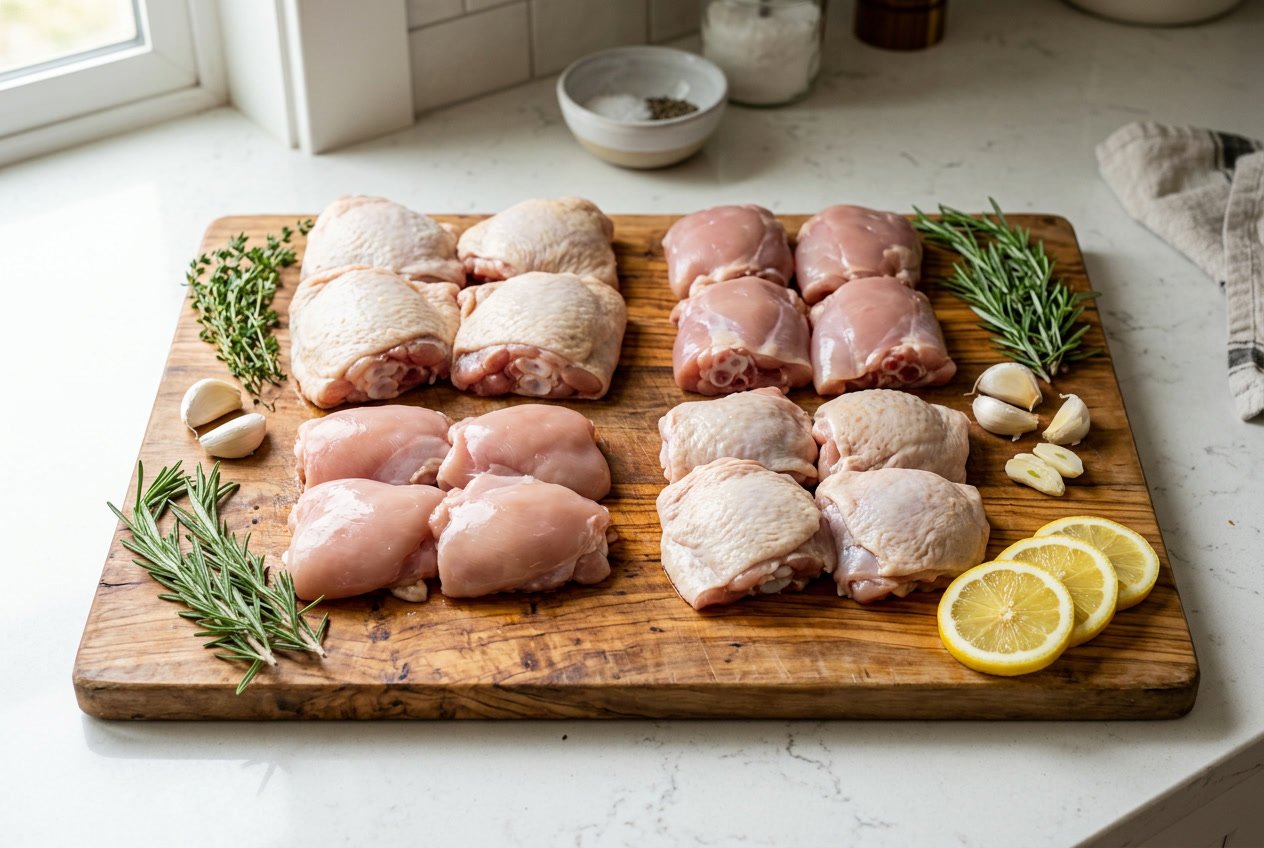
Choose thighs by bone and skin configuration to match cooking time, texture, and flavor needs. Select bone-in or boneless for richness and structure, and skin-on or skinless for moisture and crispness.
Bone-In vs. Boneless Chicken Thighs
Bone-in chicken thighs include the thigh bone and connective tissue, which adds flavor and slows cooking. Use bone-in thighs for braises, oven roasting, or grilling when you want deeper taste and meat that resists drying; expect 10–20 minutes longer cook times than boneless pieces.
Boneless chicken thighs cook faster and more uniformly and are easier to slice. They’re ideal for stir-fries, skewers, and quick pan-sears. Both types are similar nutritionally, but boneless pieces often come trimmed of exterior fat for a leaner profile.
Skin-On vs. Skinless Chicken Thighs
Skin-on chicken thighs deliver extra fat and collagen that render during cooking to keep meat moist and produce crisp skin when roasted or pan-finished. Choose skin-on for high-heat methods like roasting, broiling, or grilling for a golden, textural contrast and richer mouthfeel.
Skinless chicken thighs cook faster and produce less surface fat, which suits braises, stews, or recipes where you want spice rubs to penetrate quickly. Use skinless for lower-fat preparations or when you prefer sauces without rendered skin fat. You can always add a thin oil layer to encourage browning if needed.
Buying and Selecting Chicken Thighs
Look for thighs that are plump, moist (not slimy), and pale pink with minimal discoloration. Check packaging dates and choose uniform sizes to ensure even cooking.
Decide between fresh and frozen based on timing. Fresh yields slightly better texture if used within 1–2 days, while frozen offers convenience and longer storage.
Popular Ways to Cook Chicken Thighs
You can get crispy skin, juicy meat, or fall-apart tenderness depending on method and temperature. Choose bone-in, skin-on for texture and moisture. Use boneless for faster, uniform cooking.
Baking and Roasting Techniques
Baking and roasting suit both bone-in and boneless thighs. Pat skin dry, season well, and roast skin-side up to render fat and keep meat juicy.
For crispy chicken thighs, start at 425°F (220°C) and roast 25–35 minutes for bone-in, skin-on, or 20–25 minutes for boneless. Use an instant-read thermometer and aim for 165–175°F (74–79°C).
You can also sear skin in a hot skillet first to deepen color and crispness, then finish in a 350°F (175°C) oven until done. Rest thighs 5–10 minutes to let juices redistribute.
Use a rimmed sheet or roasting pan to collect rendered fat. Give thighs space on the pan for even browning.
Grilling and Broiling Chicken Thighs
Grilling and broiling create intense heat that crisps skin and adds char flavor. Preheat grill to medium-high; cook skin-side down first to render fat, then flip and finish over indirect heat to reach 165–175°F.
For boneless thighs, 6–8 minutes per side usually works. Bone-in may need longer and indirect finishing.
Under the broiler, place thighs skin-side up on a rack 6–8 inches from the element and watch closely. Use a two-zone grill setup to sear over direct heat, then move to cooler side to avoid flare-ups.
Add marinades and high-sugar glazes near the end to prevent burning. Let grilled or broiled thighs rest briefly before serving.
Air Fryer Chicken Thighs
Air fryers give crispy chicken thighs with less oil. Preheat the basket to 380–400°F (190–205°C). Arrange thighs skin-side up in a single layer and avoid overcrowding.
Cook 18–22 minutes for bone-in or 12–16 minutes for boneless, flipping halfway for even crisping. Pat skin dry and use a light coating of oil or baking powder for extra crispness.
Check internal temperature at the thickest point and aim for 165–175°F. Air frying reduces cooking time and renders fat into the basket, producing a crunchy exterior without stovetop splatter.
Slow Cooker and Braised Chicken Thighs
Slow cooking and braising use low, moist heat for tender results. Brown skin briefly in a pan if you want color and some rendered fat, then transfer to the slow cooker or braising pot with aromatics and liquid.
Cook on low 4–6 hours or high 2–3 hours until meat is tender and easily pulls from the bone. For braising on the stovetop or oven, simmer at low heat, covered, at about 300°F (150°C) until tender—usually 1.5–2.5 hours.
Finish under the broiler or in a hot pan if you want to crisp the skin after braising.
Top Seasonings and Marinades for Chicken Thighs
Use a balance of acid, oil, salt, and aromatics to build flavor and keep thighs juicy. Choose herbs like oregano or thyme for savory notes, paprika and black pepper for warmth, and a simple marinade or rub to lock in moisture.
Classic Herbs and Spices
Start with salt and freshly ground black pepper as a base. Add oregano for a green, slightly bitter lift and thyme for an earthy, minty backbone.
Use 1–2 teaspoons of dried oregano or 1 tablespoon fresh per pound of chicken. For thyme, use 1 teaspoon dried or 1 tablespoon fresh.
Paprika (sweet or smoked) at 1–2 teaspoons adds color and a mild smoky sweetness without heat. Adjust black pepper to taste, about 1/2–1 teaspoon per pound.
Sprinkle these directly before cooking for crisp skin, or combine them with oil and lemon for a short marinade. These seasonings work whether you bake, grill, or pan-sear, and they pair well with garlic and onion powder.
Marinated Chicken Thigh Ideas
Marinades balance acid, oil, salt, and flavorings to tenderize and infuse. For a reliable all-purpose marinade: 3 tbsp soy sauce or 2 tbsp lemon juice, 3 tbsp olive oil, 2 cloves minced garlic, 1 tsp oregano, 1 tsp thyme, 1 tsp paprika, and 1 tsp black pepper.
Marinate boneless or bone-in thighs for at least 30 minutes; 4–12 hours gives better penetration. Acid shortens marinade time, and longer than 12 hours can change texture for smaller pieces.
Try a honey-soy mix for sweet-savory caramelization, or lemon-herb with olive oil and oregano for bright, Mediterranean notes.
Flavorful Rubs for Juicy Chicken
Dry rubs form a crust that seals juices and creates concentrated flavor on the skin. Combine 1 tbsp paprika, 1 tsp black pepper, 1 tsp salt, 1 tsp dried oregano, 1 tsp dried thyme, and 1 tsp brown sugar for balance.
Pat thighs dry before applying the rub. Rub under and over the skin for deeper flavor.
Rest the rubbed thighs in the fridge uncovered for 30 minutes to dry the skin further, or up to a few hours for stronger flavor. Use higher heat (375–425°F) to develop a caramelized crust without overdrying.
Chicken Thigh Recipes Around the World
Chicken thighs give you rich flavor, forgiving texture, and versatile cooking options. You can braise, grill, or roast them to highlight regional spice blends and sauces.
Italian-Style Chicken Thigh Dishes
Chicken thighs appear in rustic Italian dishes that favor long, slow cooking and bold tomato or wine-based sauces. Chicken cacciatore is a prime example: thighs braised with tomatoes, onions, bell peppers, olives, and rosemary until the meat falls from the bone.
Use boneless thighs for quicker sautés or bone-in for deeper flavor in the oven. A creamy chicken stroganoff-like adaptation swaps beef for thighs, combining mushrooms, white wine, and a touch of crème fraîche or sour cream for a silky sauce.
Serve these with polenta, pasta, or crusty bread.
Asian Chicken Thigh Favorites
Asian cuisines use thighs for their ability to carry marinades and high-heat cooking. Tandoori chicken uses yogurt-and-spice marinades and benefits from bone-in thighs that char without drying.
You can replicate tandoori flavors at home on a hot grill or under the broiler. In Chinese-style dishes like bourbon chicken, cooks cut thighs into chunks, sear them, and toss them in a sweet-savory glaze of soy, brown sugar, and ginger.
Japanese and Korean preparations often glaze thighs with miso, gochujang, or teriyaki-style sauces for a caramelized exterior and juicy interior. For quick weeknight meals, slice boneless thighs thin and stir-fry with vegetables and a bright sauce.
Comfort Food Classics Featuring Chicken Thighs
Thighs give comfort recipes reliable tenderness and a richer mouthfeel. When you pan-sear thighs and cover them in savory gravy made from pan drippings, onions, and stock, the meat turns fork-tender as it finishes slowly.
That gravied richness pairs well with mashed potatoes or creamy grits.
Chicken noodle soup gets extra body when you simmer bone-in thighs to build a full-bodied broth. After cooking, shred the meat and add it back into the soup.
Thighs work well in stovetop braises and roasted one-pan dinners because their higher fat content keeps meals succulent even after reheating. For everyday cooking, use a simple chicken thigh recipe that moves from stovetop to oven with minimal effort.
Incorporating Chicken Thighs into Your Dinner Rotation
Chicken thighs give you quick, reliable meals and options that stretch across cuisines. You can cook them fast on a skillet or grill, braise them for shredding, or batch-roast a tray to use all week.
Easy Chicken Thigh Recipes for Busy Weeknights
Choose recipes that minimize hands-on time and gear. Pan-seared skin-on thighs take about 20–30 minutes and give you crispy skin with a simple pan sauce of garlic, lemon, and a splash of stock.
Use boneless thighs for stir-fries or sheet-pan meals for faster cook times and easier slicing. Use a timer and one-pan methods to cut cleanup.
Try a 5-ingredient marinade with soy, garlic, oil, honey, and ginger. Apply it in the morning and grill or pan-cook after work.
For batch-cooking, roast thighs at 400°F on a wire rack so they crisp and stay usable for salads, tacos, and grain bowls through the week.
Healthy Choices with Chicken Thighs
Make thighs fit a health-focused plan by controlling portion sizes and cooking method. Remove excess skin and drain rendered fat, or roast on a rack so fat drips away.
Pair each thigh with 1–1.5 cups of vegetables and a whole grain for balanced plates. Choose marinades and sauces that emphasize acid, herbs, and aromatics instead of heavy creams or sugars.
Examples include lemon-tahini drizzle, yogurt-herb marinade, or a simple olive oil, paprika, and garlic rub. Use baking, grilling, or air-frying to maintain juiciness while limiting added fat.
Tips for Meal Planning with Chicken Thighs
Plan 2–3 meals around a roast batch. Use whole roasted thighs for dinner, shred leftovers for sandwiches, and dice for salads or fried rice.
Roast 6–8 thighs on Sunday to cover several dinners for a family of four. Adjust quantities to fit your household size.
Label and store cooked thighs in airtight containers for up to 4 days. Freeze portions for up to 3 months.
Prep versatile elements such as grain, roasted vegetables, and a simple sauce. This lets you mix and match quickly.
Keep a rotating list of easy chicken recipes like stir-fry, sheet-pan, braise, and grill. This helps keep your dinner rotation varied.


