
Where Is Chicken Leg Piece: Anatomy, Cuts, Cooking & More
You might have wondered where the chicken leg piece comes from when scanning a grocery case or recipe.
The chicken leg piece is the lower half of the bird’s hindquarter and includes two parts: the thigh (upper) and the drumstick (lower).
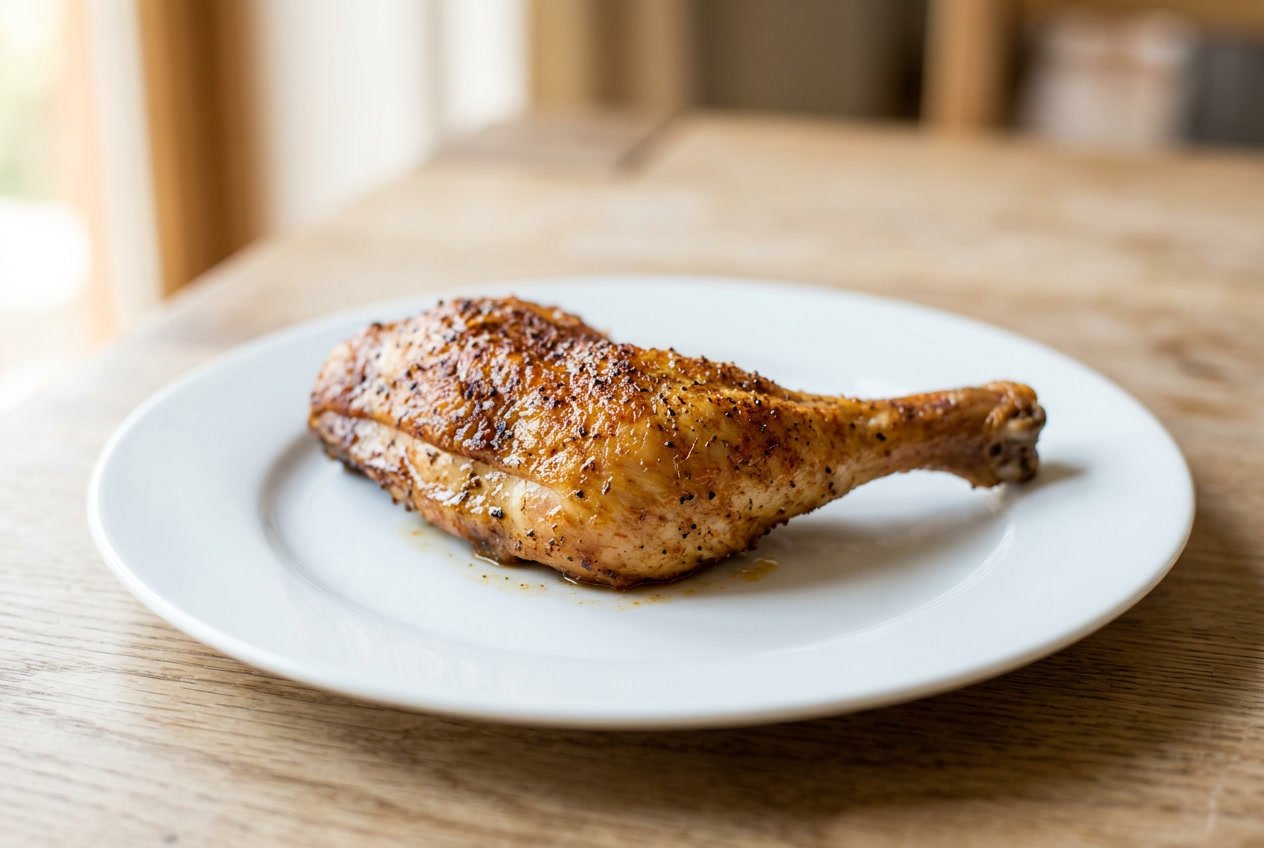
Understanding this helps you pick the right cut for flavor, cooking time, and budget.
Where the Chicken Leg Piece Is Located
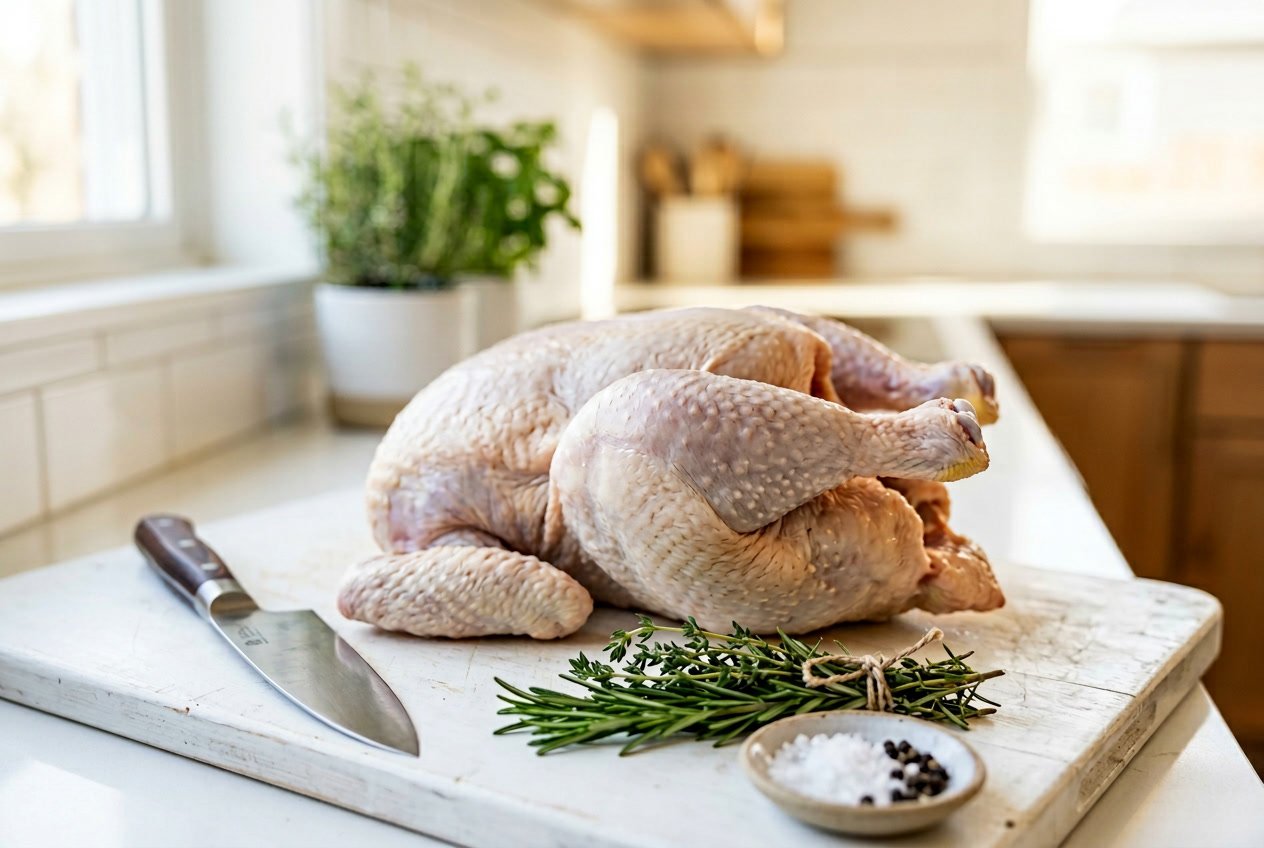
The chicken leg piece comes from the bird’s hind limb. Stores commonly sell it as a whole leg (thigh and drumstick together) or as separated parts.
You’ll find darker, more flavorful meat here, perfect for roasting, grilling, or braising.
Anatomy of Chicken Legs
The chicken leg has two main segments: the thigh (upper leg) and the drumstick (lower leg).
The thigh connects to the bird’s body at the hip joint and contains the femur. The drumstick runs from the knee-like joint down to the hock and contains the tibia.
Muscles in this area, mainly the quadriceps group in the thigh and gastrocnemius in the drumstick, work constantly.
This makes the meat dark and higher in fat than breast meat.
Key bones and joints:
- Hip joint: attaches leg to the carcass.
- Tibiotarsal (knee) joint: divides thigh from drumstick.
- Hock: lower joint near the foot, usually removed in retail cuts.
Stores often label the whole leg as “leg quarter” or “whole leg” when the thigh and drumstick remain joined.
Differences Between Drumstick and Thigh
The drumstick is the lower leg section with one primary long bone (tibia) and denser, connective-tissue-rich muscle.
The thigh sits above it, has a shorter, thicker femur, and a broader muscle mass.
Drumsticks handle high heat and long cooking well because their connective tissue breaks down into gelatin.
Thighs cook faster than whole leg quarters and stay moist even when slightly overcooked.
Nutritional and practical differences:
- Drumstick: slightly higher in iron and zinc, often sold with skin attached.
- Thigh: larger surface area, better for slicing and dishes needing bigger pieces.
When you buy “chicken leg” at the store, ask whether it means the whole leg (thigh and drumstick) or a single segment.
Where the Leg Piece Comes From
Processors separate leg pieces at anatomical joints to preserve meat integrity.
For a whole leg, the cut follows the hip joint to include both thigh and drumstick.
To produce individual drumsticks or thighs, butchers cut through the tibiotarsal joint that connects the two segments.
Automated lines use mechanical separation at these joints after chilling.
At home, you can feel for the joint where motion is greatest and use a sharp knife or kitchen shears to separate without sawing through bone.
Retail labels you’ll encounter:
- Whole leg / leg quarter: includes thigh and drumstick (hindquarter).
- Thigh: upper leg only.
- Drumstick: lower leg only.
Knowing these terms helps you select the exact piece you want for your recipe.
Types of Chicken Leg Pieces and Related Cuts
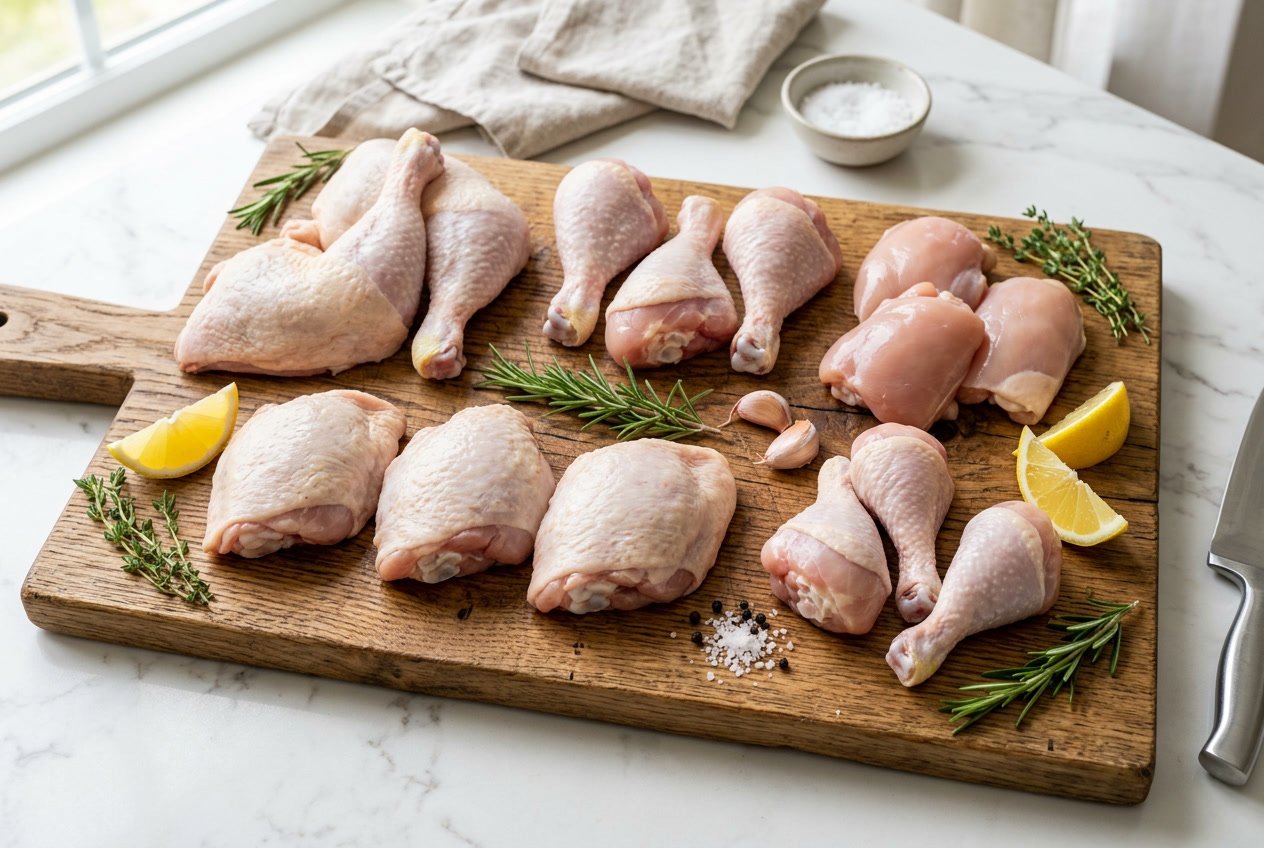
You’ll find the leg sold either as a whole unit or split into thigh and drumstick.
Each form affects cooking time, presentation, and price.
Whole Leg Piece and Leg Quarter
A whole leg piece includes both the thigh and drumstick joined at the knee joint.
When sold as a leg quarter, it typically includes a portion of the back and skin, making the cut larger and better suited for roasting or grilling for longer periods.
Leg quarters give you more fat and connective tissue, which helps with braising and slow roasting.
Expect them to take 40–60 minutes at moderate oven temperatures to reach preferred doneness.
Leg quarters are often cheaper per pound than buying thighs and drumsticks separately.
They present well on a platter and hold marinades, but they can be uneven in thickness.
You may need to adjust cooking or cut them into separate thighs and drumsticks for even doneness.
Separated Drumsticks and Thighs
Drumsticks are the lower leg portion with a single prominent bone.
They’re ideal for finger food, grilling, and quick roasting because their shape cooks relatively evenly.
Thighs are the upper leg portion attached to the body.
They hold more meat and fat, which keeps them moist under higher heat and longer cooks like stews or confit.
You can buy thighs boneless or bone-in and skin-on.
Boneless thighs cook faster and are easier to shred for tacos or casseroles.
If a recipe lists “whole chicken legs,” confirm whether it means leg quarters or separated pieces.
Many recipes assume you’ll separate them if you need uniform pieces for pan frying or skewering.
Splitting a leg quarter at home with a sharp knife or shears is straightforward and saves money compared with purchasing all pieces pre-butchered.
Comparison to Other Chicken Parts
Compared with the breast quarter or split breast, leg pieces are dark meat with higher fat and connective tissue.
This makes them more forgiving to cook beyond 165°F and better suited to slow, moist methods.
Breasts and tenderloins need precise timing to stay tender.
Wings and the chicken back have less meat and more bone, so they serve different purposes.
Wings work well for appetizers and backs are best for stock.
If a recipe calls for chicken pieces that hold up to high heat or prolonged cooking, choose thighs or leg quarters.
If it needs quick, lean cuts for sautéing or quick grilling, pick breasts or tenderloins.
White Meat and Dark Meat: Nutritional Differences
You’ll see measurable differences in calories, fat, and certain micronutrients between leg pieces (thigh and drumstick) and breast meat.
Know which values matter for your goals, such as calorie control or iron intake.
Nutritional Value of Chicken Leg Pieces
Chicken thigh and drumstick are dark meat and contain more myoglobin and intramuscular fat than breast meat.
A typical 4-ounce cooked, skinless chicken thigh provides roughly 180–200 calories, 8–10 g total fat, and about 25–27 g protein.
The drumstick is similar per ounce but varies slightly with bone weight.
Dark meat supplies higher amounts of iron, zinc, niacin, riboflavin, and vitamin B12 than white meat.
Leaving the skin on increases calories and fat; one ounce of skin can add about 90 calories.
Skinless leg pieces still deliver more flavor and remain juicier when cooked.
Comparing Dark Meat and White Meat
White meat (chicken breast) generally contains fewer calories and less fat.
A 4-ounce cooked, skinless breast averages about 140 calories, 3 g fat, and 26 g protein.
Protein content between breast and thigh stays similar, so protein per serving isn’t a major differentiator.
Dark meat wins on micronutrients: iron and zinc values are higher per serving.
Fat composition differs slightly; dark meat has more total fat but only modestly more saturated fat.
That extra fat improves flavor and makes thighs and drumsticks more forgiving in dry-heat cooking.
Health Considerations
Choose leg pieces when you want higher iron and zinc or a moister, more flavorful cut that tolerates longer cooking.
Thighs and drumsticks work well in stews, braises, and grilling where texture matters.
The additional fat can help you absorb fat-soluble nutrients and sustain fullness.
Opt for breast meat if you want to minimize calories and total fat while keeping high protein.
Removing skin from thighs or drumsticks lowers calories significantly while preserving most micronutrients.
Pair either cut with vegetables and whole grains for balanced meals.
How to Buy and Identify Chicken Leg Pieces
You’ll learn how to spot thighs, drumsticks, whole legs, and leg quarters at the store.
Pay attention to cut names, bone-in vs boneless, and visible signs of freshness.
Buying Chicken Leg Pieces in Stores
Look for the specific cut name on the tag: thigh, drumstick, whole leg, or leg quarter.
Thighs are broader and flatter with more fat.
Drumsticks are narrow with a pronounced bone and rounded end.
Whole legs keep thigh and drumstick connected for roasting.
Leg quarters include a portion of the backbone.
Check for uniform color (pale pink to light red), firm flesh, and minimal odor.
Avoid packages with excessive liquid or dark spots.
Choose bone-in pieces for more flavor and slower cooking.
Pick boneless, skinless thighs for quick, even cooking.
For grilling or frying, select pieces with skin intact for better browning.
Use size and weight to plan portions.
A typical drumstick serves one person; thighs are larger and more filling.
When in doubt, ask the butcher to show you leg quarters or split legs so you can compare meat-to-bone ratio before buying.
Recognizing Packaging and Labels
Read the label for terms like fresh, frozen, marinated, skin-on, skinless, bone-in, or boneless.
Fresh, unpackaged trays let you inspect color and liquid.
Vacuum-sealed packages extend shelf life but hide visual cues.
Frozen packages often list whether pieces are grouped (whole leg or leg quarter) or pre-separated into thighs and drumsticks.
Look for weight, sell-by date, and inspection marks.
Labels may state “ready-to-cook” or list added solutions such as salt or broth.
Check the ingredients if you want plain meat.
If a package says “leg quarters,” expect both thigh and drumstick plus some back.
“Whole leg” typically means the same as leg quarter in many stores, so verify the photo or ask staff.
Choose pre-cut thighs or drumsticks for even pan-frying.
Pick leg quarters or whole legs for roasting and braising.
When shopping organic or free-range, confirm the certification logo.
These options can affect price and fat content.
Ways to Cook Chicken Leg Pieces
You’ll find reliable methods to get crispy skin, moist meat, or fall-off-the-bone texture.
Choose a technique based on time, equipment, and the flavor profile you want.
Roasting and Baking
Roast at 400°F (200°C) for 30–40 minutes to get browned, crispy skin and juicy meat when legs reach 165°F (74°C) internally.
Pat legs dry, rub with oil, and season with salt, pepper, garlic powder, and paprika.
For larger batches, arrange on a rimmed sheet with a rack to allow hot air under the skin.
This improves crispiness without flipping.
Try beer can chicken-style roasting for whole leg quarters by placing upright on a small can to infuse steam and flavor.
Roast with root vegetables and reserve pan juices to make quick chicken stock.
Frying and Grilling
For classic fried chicken legs, dredge in seasoned flour or a buttermilk batter and fry at 350–375°F (175–190°C) until golden and 165°F inside.
Frying gives a crunchy crust and dependable texture.
Grill over medium-high heat to sear skin and add smoke.
Cook 10–15 minutes per side depending on size, and watch flare-ups from fat.
Use marinades with lemon pepper, soy, or cajun blends for grilling.
Apply sauce in the last few minutes to avoid burning.
Let pieces rest 5–10 minutes before serving.
Slow Cooking and Braising
Braise in a covered pot with aromatics and 1–2 cups of liquid (broth, wine, or a savory sauce) for tender meat that pulls from the bone.
Brown legs first for color, then simmer on low for 45–90 minutes until fully tender.
Slow cook in a crockpot on low for 4–6 hours to concentrate flavors.
Add vegetables and use the finished liquid to make a simple chicken stock.
These methods suit rich sauces and global recipes such as curry, coq au vin, or tomato-based braises.
They prevent drying and maximize collagen breakdown for silky texture.
Creative Chicken Leg Piece Recipes and Serving Ideas
You’ll find both bold global flavors and simple family-friendly riffs that highlight the dark meat’s richness and forgiving texture. These recipes use braising, roasting, frying, and quick marinades with leg pieces and nearby cuts like tenderloins.
International Dishes Using Leg Pieces
Use leg pieces for dishes that benefit from slow cooking or high-heat crisping. Try Moroccan-style braised legs with preserved lemon, olives, and cumin; cook low and slow so the skin stays intact and the meat pulls from the bone.
For Asian profiles, marinate drumsticks with soy, ginger, mirin, garlic, and scallions. Roast them at high heat to caramelize the glaze.
You can also adapt Indian recipes. Tandoori-spiced thighs respond well to yogurt marinades and a hot grill.
A coconut-based Kerala curry pairs with leg quarters to keep the sauce rich. When using tenderloin, shorten cooking time and watch temperature, since tenderloin cooks faster and needs to be removed earlier to avoid drying out.
Modern Takes and Family Favorites
For weeknight dinners, roast leg pieces on a sheet pan with potatoes and rosemary. The fat from the chicken flavors the vegetables and makes cleanup easy.
Coat drumsticks in panko and parmesan, then spray them with oil before baking for a crispy oven “fried” texture. Serve with a simple slaw and lemon wedges.
When you feed a crowd, prepare a one-pot chicken cacciatore with mushrooms and tomatoes. The legs stay moist and tender during simmering.
For something fast, shred roasted legs for tacos or sandwiches. Mix the meat with salsa verde or BBQ sauce for different flavors.


