
Where Are Chicken Thighs: Types, Cooking, and Recipes
You’ll find chicken thighs on the upper part of the bird’s leg, between the hip and the knee. This is the dark, flavorful meat that stays moist through many cooking methods.
If you want juicy, forgiving poultry that works for roasting, braising, grilling, or quick weeknight meals, choose the thigh.
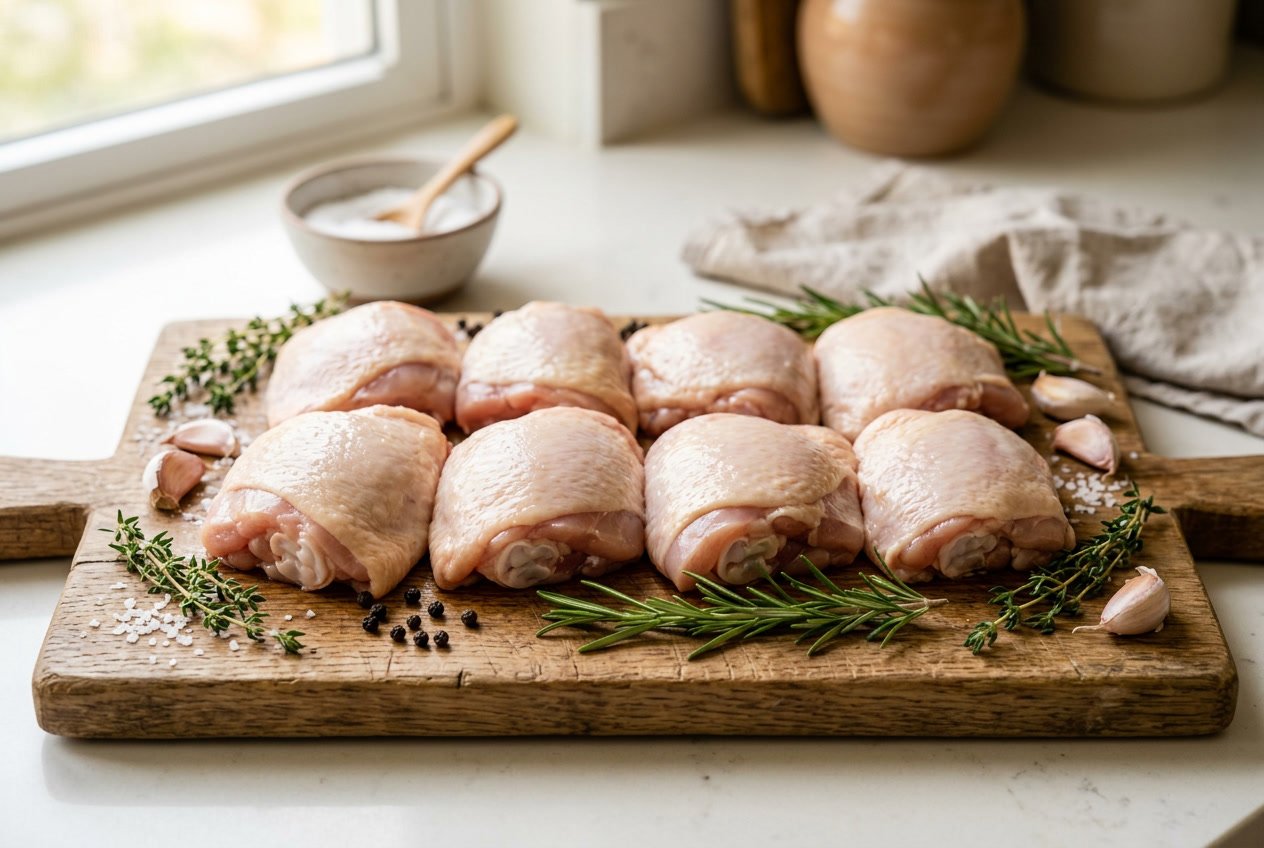
You can identify thighs on a whole chicken by locating the upper leg section. In stores, look for labeled trays or counter service for different cuts.
You’ll find simple seasoning and marinade ideas, basic cooking times, and recipes to put those thighs to work.
What Are Chicken Thighs?
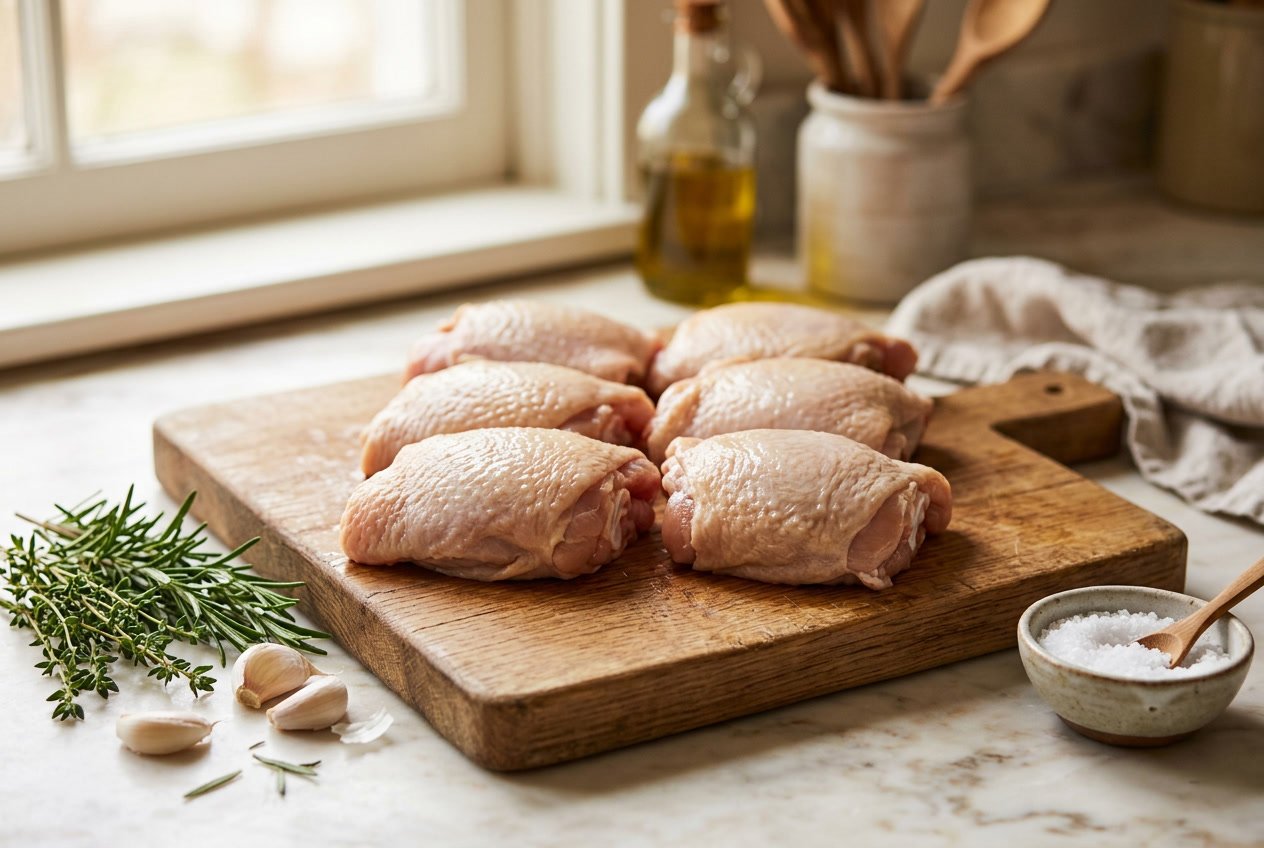
Chicken thighs are the upper portion of the bird’s leg. They have richer flavor and higher fat content than breast meat.
Stores sell them as bone-in or boneless, and skin-on or skinless, each suited to different cooking methods.
Anatomy of a Chicken Thigh
The thigh sits between the hip joint and the knee joint, directly above the drumstick. It contains dark meat with more connective tissue and intramuscular fat than the breast.
This gives thighs greater moisture and flavor when cooked. A typical thigh includes a femur (thigh bone) when sold bone-in, surrounding muscle, connective tissue, and often skin.
Longer cooking breaks down the connective tissue, converting collagen into gelatin. Braised or slow-cooked thighs become particularly tender this way.
When you buy whole legs, the thigh and drumstick may be connected. Most retail packages separate thighs for convenience.
Types of Chicken Thighs: Bone-In vs. Boneless
Bone-in chicken thighs include the femur and deliver more flavor during cooking. The bone conducts heat and helps the meat stay juicy.
If you roast or braise, bone-in thighs are forgiving and resist drying out. Boneless chicken thighs have the bone removed and often cook faster and more evenly on a grill or in a pan.
Boneless thighs make carving and shredding easier for tacos, stews, or pulled chicken dishes. These cuts may cost slightly more per pound, but they save prep time and work well for recipes that require uniform pieces.
Skin-On vs. Skinless Chicken Thighs
Skin-on chicken thighs carry a layer of fat beneath the skin that crisps when roasted or pan-fried. Crisped skin adds texture and savory fat that bastes the meat as it cooks.
Skin-on, bone-in thighs offer the most flavor for roasting and grilling. Skinless chicken thighs remove that protective layer and reduce surface fat, which appeals if you want leaner results or plan to marinate and quickly saute or stew the meat.
Skinless boneless thighs cook fastest and are convenient for kebabs, stir-fries, and recipes where you don’t want to remove bones or crisp skin.
Where to Find Chicken Thighs in Stores
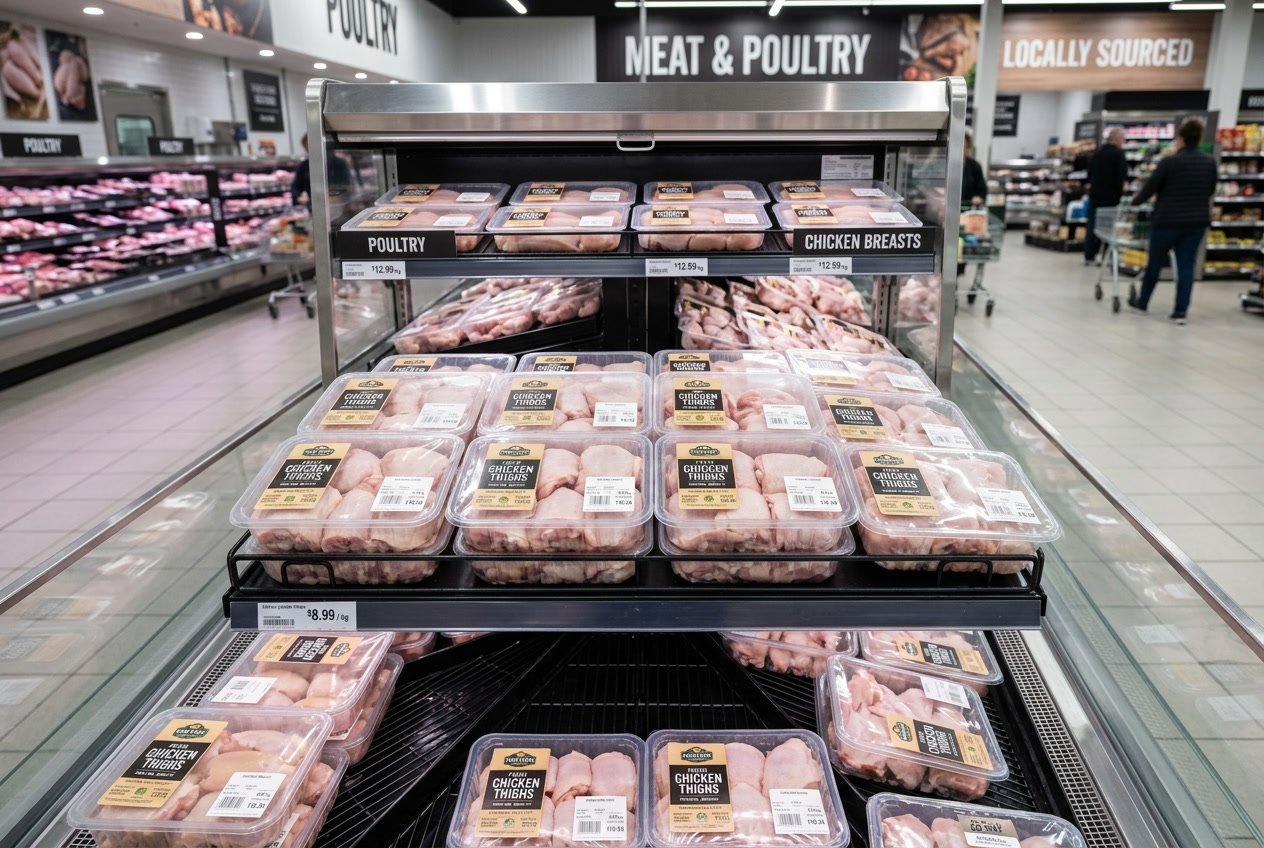
You’ll find chicken thighs in the meat or poultry section. Choices include fresh and frozen, with a range of pack sizes and cuts.
Look for labeled trays or ask at the counter for specific weight, bone-in versus boneless, or skin-on versus skinless options.
Fresh vs. Frozen Chicken Thighs
Fresh chicken thighs usually sit in refrigerated cases near other poultry. You’ll find both bone-in and boneless chicken thighs in pre-packaged trays or behind the meat counter, where staff can cut or portion to order.
Fresh skin-on thighs keep more flavor and brown better. Skinless thighs save prep time and reduce fat.
Frozen chicken thighs appear in chest freezers or aisle freezers, often sold in larger multi-pound bags. Frozen boneless chicken thighs are common for bulk cooking and longer storage.
Check packaging dates and look for vacuum-sealed packs or individually frozen pieces to avoid freezer burn.
Grocery Store Cuts and Packaging
Pre-packaged trays list weight, sell-by date, and whether thighs are bone-in, boneless, skin-on, or skinless. Supermarkets often carry antibiotic-free and organic labeled thighs.
For exact quantities, use the scale at the meat counter or ask staff to cut bone-in chicken thighs to your desired portion. Butcher counters and specialty stores let you request skin-on or skinless cuts and can remove bones for boneless chicken thighs on request.
Retail chains also sell marinated or seasoned thigh packs if you want a ready-to-cook option.
Popular Chicken Thigh Cooking Methods
You get juicy meat and a crispy exterior when you control surface moisture, heat, and cooking time. Each method below covers key steps, target temperatures, and techniques for baked, grilled, slow-cooked, and air-fried thighs.
Baked Chicken Thighs
Baking produces reliable, evenly cooked thighs and works great for sheet-pan and roasted chicken dishes. Preheat your oven to 400–425°F.
Pat skin completely dry, season, and place thighs skin-side up on a wire rack over a rimmed sheet pan. This allows air to circulate and fat to drip away.
For bone-in, skin-on thighs, bake 35–45 minutes. Boneless thighs usually take 20–30 minutes.
Use an instant-read thermometer: pull boneless at 165°F and bone-in at 175°F for tender, gelatin-rich meat. Avoid covering with foil or crowding the pan.
For extra crisp, finish under the broiler 2–3 minutes or brush with a light oil before roasting.
Grilled Chicken Thighs
Grilling adds char and smoky flavor while the higher fat content protects the meat from drying. For bone-in thighs, set up a two-zone fire.
Sear skin-side down over direct high heat for 5–7 minutes to render fat and color. Move to indirect heat and close the lid until internal temp reaches 175°F.
For boneless thighs, grill over medium-high for about 5–7 minutes per side, aiming for 165°F. Watch for flare-ups from dripping fat and keep pieces spaced at least 1 inch apart.
Use marinades or a glaze in the last few minutes to avoid burning sugars. Let thighs rest 5 minutes before serving so juices redistribute.
Slow Cooker Chicken Thighs
The slow cooker yields fall-apart, braised chicken thighs ideal for shredded tacos, stews, and comfort bowls. Add thighs with aromatics and a cooking liquid like broth, tomato sauce, or a marinade.
Cook on low for 6–7 hours or high for 3–4 hours. Bone-in thighs become especially tender and shred easily.
Because the slow cooker doesn’t crisp skin, remove thighs at the end and briefly broil or sear them in a hot pan if you want color or texture. Use thicker sauces or reduce the cooking liquid after removing the thighs to concentrate flavor.
Avoid over-salting at the start; flavors concentrate during long cooking.
Air Fryer Chicken Thighs
The air fryer gives fast, consistently crispy baked-like results with less oil and shorter time. Pat thighs very dry and season well.
Arrange skin-side up in a single layer with space between pieces. Cook at 400°F for 22–28 minutes for bone-in and 16–20 minutes for boneless, flipping once if needed for even browning.
Use an instant-read thermometer to confirm temps (165°F boneless, 175°F bone-in). Don’t overcrowd the basket.
For extra-crispy skin, dust a light mix of salt and baking powder into your rub. The baking powder speeds up browning and helps render fat.
Chicken Thigh Seasoning and Marinade Essentials
Use salt first to build flavor, then layer in herbs and spices for balance. Focus on texture (ground vs. whole) and timing (rub immediately, marinate 30 minutes to overnight) to control intensity.
Paprika, Oregano, and Thyme Uses
Paprika gives color and a mild sweet-smokiness. Use 1–2 teaspoons per pound of thighs in a dry rub or marinade.
For smoked or grilled thighs, use smoked paprika to add depth without extra salt. Combine paprika with garlic powder and salt for a reliable base.
Oregano and thyme bring herbal brightness that cuts through the meat’s richness. Use 1 teaspoon dried oregano and 1 teaspoon dried thyme per pound, or triple those amounts if using fresh.
Add oregano earlier in a marinade so its oils infuse the meat. Add fresh thyme near the end of cooking to preserve aroma.
Mix paprika with oregano, thyme, salt, and a little sugar or honey if you want caramelization. Massage into skin-on thighs and refrigerate for at least 30 minutes.
For boneless thighs, marinate 1–4 hours for better flavor penetration.
How to Use Black Pepper
Black pepper adds sharp, aromatic heat. Freshly cracked pepper is more pungent than pre-ground.
Use 1/2 to 1 teaspoon per pound for a noticeable but not overpowering bite. Grind just before seasoning to preserve volatile oils.
Balance pepper with salt and fat. Pepper can become bitter if exposed to very high direct heat for long periods, so apply it either in the rub with other spices or finish with a light grind after resting.
In marinades, pepper combines well with acidic components like lemon or vinegar. The acid helps distribute pepper’s flavor more evenly through the meat.
For skin-on thighs, distribute pepper evenly over the skin and under it if possible to flavor both surface and meat. If you prefer milder heat, reduce the amount or substitute with white pepper for subtler warmth.
How Long to Cook Chicken Thighs
You need clear times and temperatures for bone-in vs boneless, and for different methods like baking, pan-searing, grilling, air fryer, and Instant Pot.
Use an instant-read thermometer and follow the times below as starting points. Adjust for thigh size and oven or air-fryer variation.
Oven Baking Times and Temperatures
For boneless, skinless thighs, roast at 400–425°F (204–218°C).
Expect 20–30 minutes depending on thickness. Check at 20 minutes with a thermometer.
For bone-in, skin-on thighs, roast at 375–425°F (191–218°C).
At 375°F, bake 35–45 minutes. At 425°F, bake 30–40 minutes. Use higher heat for crispier skin.
For a low-and-slow method, bake bone-in thighs at 350°F (177°C) for 40–50 minutes for tender meat without crispy skin.
If you want crispy baked chicken thighs, finish at 425–450°F for the last 5–10 minutes or broil 1–3 minutes while watching closely.
Use a rimmed baking sheet or a roasting pan with a rack so air circulates under the thighs for even browning.
Rest cooked thighs 5 minutes before slicing to let juices redistribute.
Cooking Times by Method
Pan-searing then finishing in oven: Sear skin-side down 6–8 minutes until golden, flip and transfer to a 375–400°F oven for 12–18 minutes. Boneless thighs cook faster, bone-in thighs take longer.
Grilling: Use direct medium-high heat 6–8 minutes per side for boneless. For bone-in, grill 8–12 minutes per side, using indirect heat to finish larger pieces.
Air fryer: 375–400°F for 15–22 minutes for boneless. For bone-in, air fry 18–25 minutes, flipping halfway for even crisping.
Instant Pot (pressure cook): Cook on High pressure 8–12 minutes for boneless, 10–15 minutes for bone-in. Use a 5–10 minute natural release to keep meat tender.
Sear before or after pressure-cooking for crispy skin. When cooking from frozen, increase time by about 10–15 minutes in ovens or air fryers, and add 3–5 minutes in the Instant Pot depending on size.
How to Check for Doneness
Insert an instant-read thermometer in the thickest part of the thigh, avoiding bone contact.
The safe internal temperature is 165°F (74°C). Pull meat at 160–163°F if you plan to rest 3–5 minutes.
Visual checks: juices should run clear and meat should be opaque.
For bone-in thighs, probe near the bone. Very pink meat close to bone can still be safe if the thermometer reads 165°F.
Texture check: properly cooked thighs feel tender and springy, not rubbery or excessively firm.
If you want extra-crispy skin, finish under the broiler or sear briefly in a hot pan after the thigh reaches safe temperature.
Popular Chicken Thigh Recipes
Chicken thighs work well for quick, flavorful dinners, slow-simmered stews, and sheet-pan meals. You can use them for weeknight meals, globally inspired braises and curries, and hearty comfort dishes that stretch into leftovers.
Weeknight Dinner Favorites
You can get dinner on the table fast with boneless skin-on or boneless skinless thighs. Try a sheet-pan chicken with roasted vegetables for one-pan cleanup.
Sear thighs and finish them in the oven for crisp skin and tender meat. Use simple marinades like olive oil, lemon, garlic, salt, and pepper.
Try a quick glaze such as soy, maple, and gochujang for bold flavor without long marinating. Instant Pot chicken adobo and rice and other pressure-cooker recipes turn thighs into shreddable meat in under an hour.
Serve the shredded meat in burritos, tacos, or a quick chicken tortilla soup. For comfort that’s speedy, make a skillet smothered chicken with onions and a pan gravy.
Pair smothered chicken with mashed potatoes or buttered noodles.
International Chicken Thigh Dishes
Bold spices and long braises highlight chicken thighs in global recipes. Make chicken cacciatore with tomatoes, peppers, olives, and capers for Mediterranean flavor.
Try Filipino chicken adobo with vinegar, soy, and garlic, braised until the meat falls from the bone. Use an Instant Pot for quicker results with the same technique.
Simmer thighs in a coconut-based chicken curry with turmeric, cumin, and coriander, then serve over rice. Grill thighs with a bourbon chicken-inspired glaze.
Shred slow-cooked thighs to top tacos, salads, or noodle bowls.
Comfort Food Classics
Choose thighs for moist, forgiving meat in homestyle dishes. Make chicken stroganoff by sautéing sliced thighs and building a mushroom and sour cream sauce.
Serve stroganoff over egg noodles. Simmer bone-in thighs for traditional soups like chicken noodle or chicken and wild rice, then shred the meat into the broth.
Braise smothered chicken in onion gravy for a hearty meal. Assemble a casserole with shredded thigh meat and creamy sauce.
Turn leftover shredded chicken into sandwiches, enchiladas, or a new quick recipe.
Serving Suggestions and Side Dishes
Pick sides that balance the richness of thighs and match their flavor profile. Choose at least one starch and one vegetable for texture contrast.
Best Sides for Chicken Thighs
Select sides that cut through fat or echo the chicken’s savory notes. Crisp roasted or steamed vegetables such as green beans, asparagus, or Brussels sprouts provide a bright, slightly bitter counterpoint.
Starches like mashed potatoes or buttered couscous soak up juices and add a creamy or fluffy mouthfeel. Mashed potatoes pair especially well with pan sauces or gravy.
For a lighter option, serve a lemony couscous or quinoa salad with herbs for acidity and freshness. Choose cornbread or buttermilk biscuits for sweet, bready texture.
Finish with a simple relish like pickled onions, chimichurri, or a squeeze of lemon to lift each bite.
Pairing Chicken Thighs with Rice, Potatoes and Vegetables
Match cooking techniques across the plate.
If you braise or stew thighs, serve them on a bed of long-grain rice, Spanish rice, or risotto so the sauce distributes evenly.
For roasted or grilled thighs, pair with oven-roasted potatoes or herb-garlic mashed potatoes to echo the caramelized flavors.
Steamed or sautéed greens such as spinach, Swiss chard, or kale provide a nice texture contrast when thighs are richer or saucy.
For weeknight speed, combine pan-seared thighs with quick-cooking sides like microwaved baby potatoes, wilted spinach, or a couscous salad tossed with cucumber and parsley.
Aim for a balance of starch, vegetable, and a bright element such as vinegar, lemon, or fresh herbs.


