
When to Season Chicken Thighs: Timing for Best Flavor and Juiciness
You want juicy, well-flavored chicken thighs every time. Timing your seasoning makes a real difference.
Seasoning too late leaves bland meat. Seasoning with enough time lets salt and aromatics penetrate and the skin crisp properly.
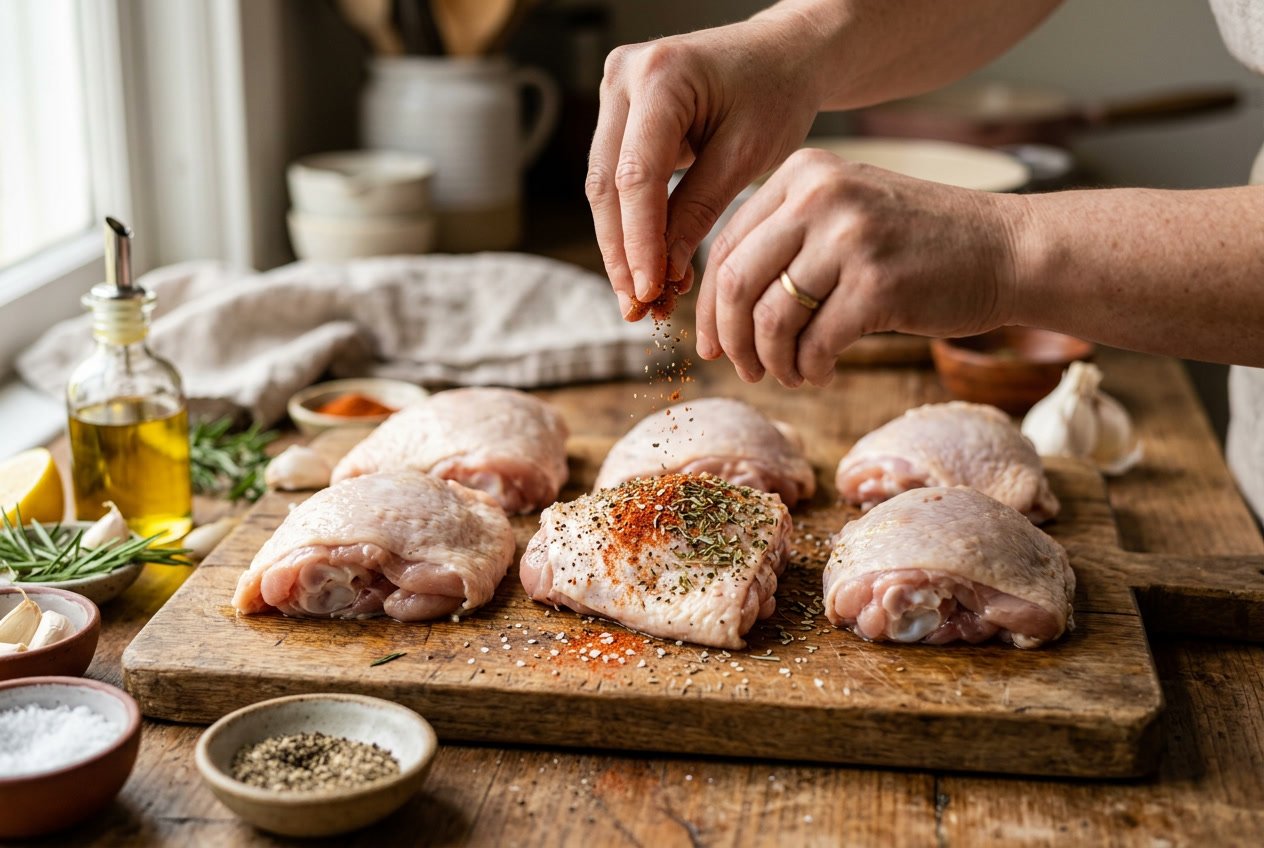
Salt and season at least 30 minutes before cooking—or up to overnight in the refrigerator—for deeper flavor and better texture. Timing matters for flavor, texture, and skin crispness, whether you bake, grill, or pan-sear.
Why Timing Matters When Seasoning Chicken Thighs
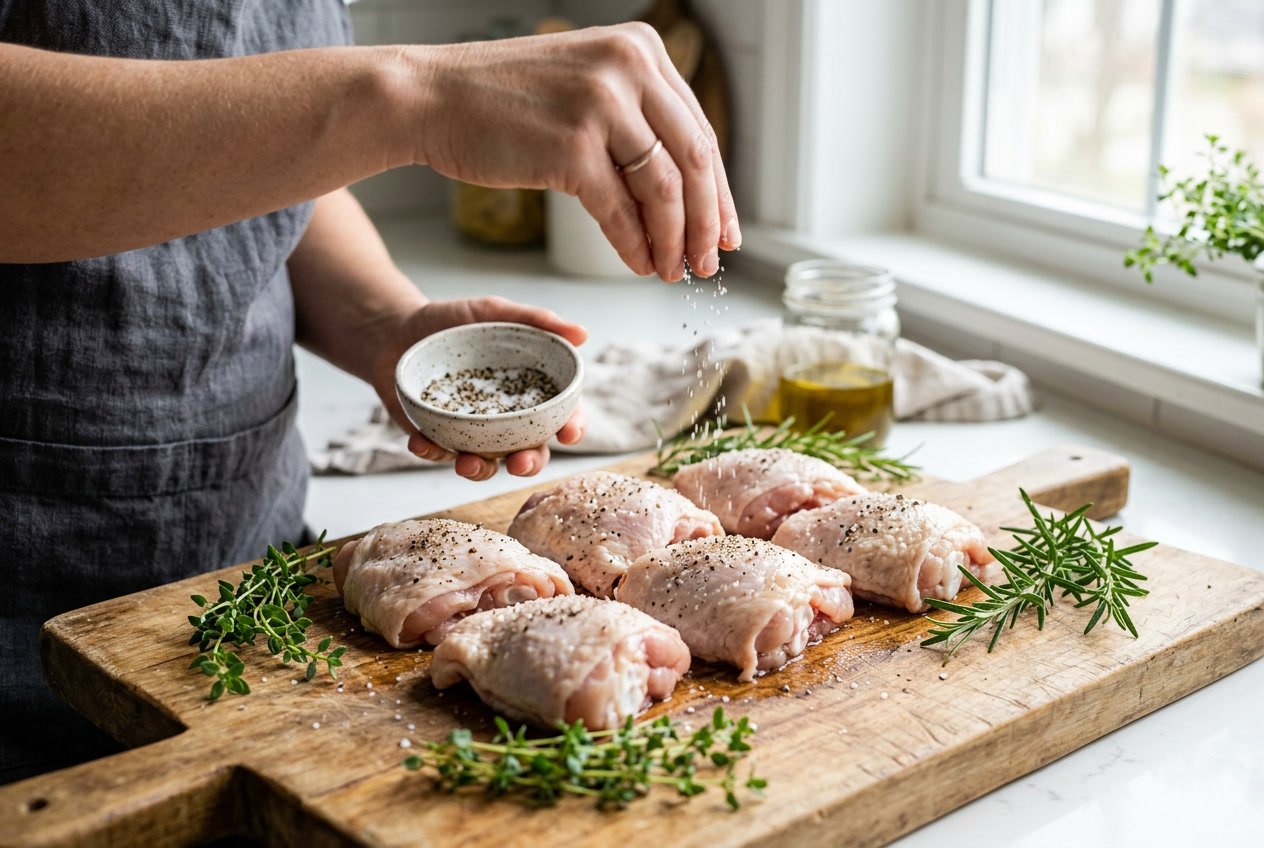
Timing controls how deeply flavors reach the meat. It also affects texture, browning, and how well skin crisps without drying the meat.
Flavor Absorption and Penetration
Salt and wet marinades need time to move from the surface into the meat. With bone-in, skin-on chicken thighs, salt requires several hours to work through the thicker tissue. A 1–24 hour dry brine lets salt dissolve muscle proteins and re-distribute juices, improving internal seasoning.
Oil-based marinades carry fat-soluble spices into the skin and outer meat faster, so a 2–6 hour soak gives noticeable flavor without over-saturating. Acidic components like lemon, vinegar, or yogurt speed flavor change but can denature proteins if left too long.
For thighs, keep acidic marinades to 2–8 hours to tenderize without turning the flesh mushy. If you only have 15–30 minutes, use a dry rub focused on the surface—paprika, garlic powder, and cumin help create a flavorful crust once seared.
Impact on Juicy Chicken Texture
Salt timing directly influences moisture retention. Short dry-brining (30 minutes to 2 hours) seasons the surface and improves skin crisping.
Longer dry-brining (up to 24 hours) lets salt pull out and then reabsorb moisture, which firms proteins and yields juicier chicken thighs after cooking. Oil-based marinades help lock moisture and protect the skin during high heat and work well up to 12 hours on thighs.
Acidic marinades, if left beyond about 8–12 hours, break down connective tissue too aggressively and can produce a soft, mealy texture. For juicy chicken, use a controlled dry brine or balanced oil-forward marinade and avoid long acid soaks.
Best Times to Season Chicken Thighs Before Cooking
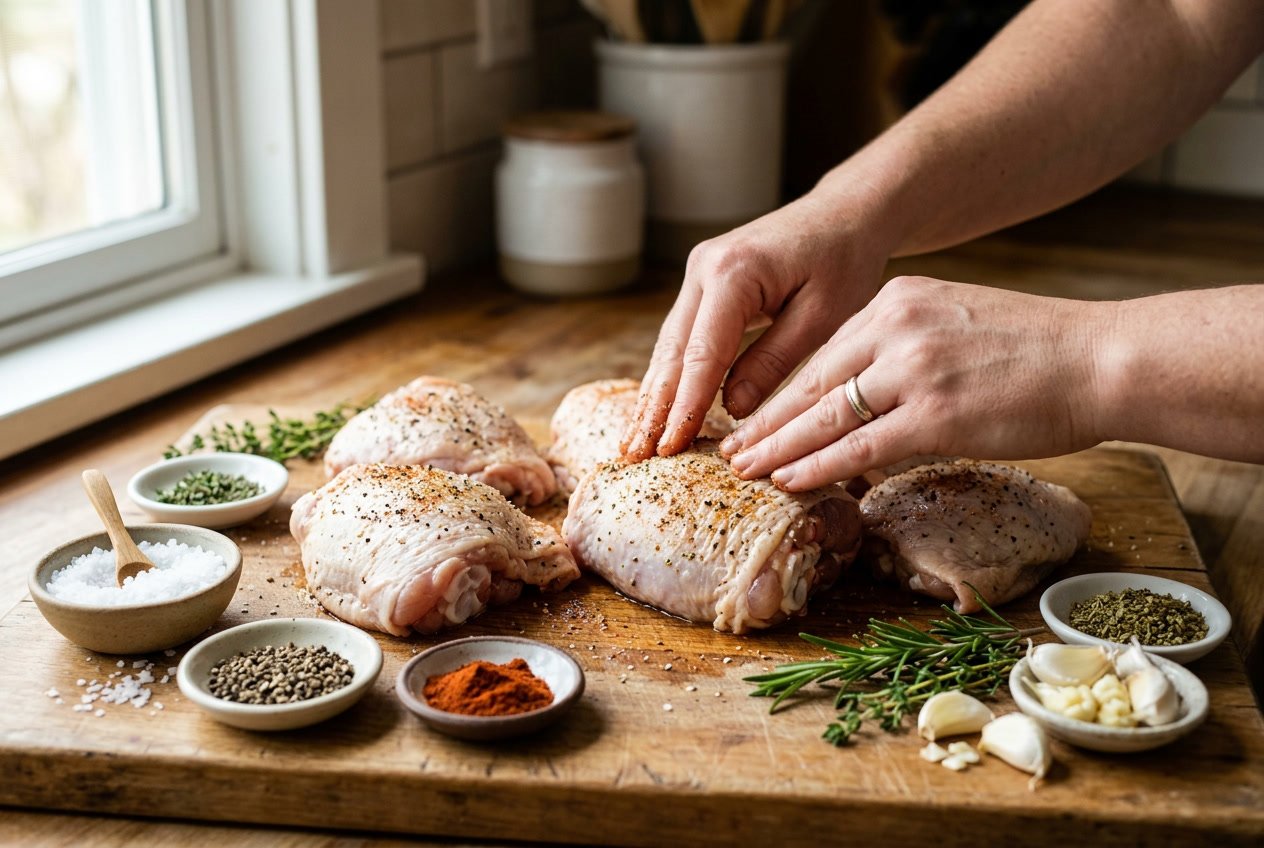
Seasoning timing affects flavor penetration, skin crispiness, and moisture. Choose immediate, overnight, or just-before-cooking based on your flavor and texture goals.
Immediate Seasoning vs. Early Preparation
Seasoning immediately before cooking works well for a quick dinner. Pat the thighs dry, then apply salt and pepper or a dry rub to both sides to prevent excess surface moisture.
If you use skin-on thighs, season under the skin by loosening it and rubbing a blend of salt, herbs, and a little oil directly on the meat. This adds flavor without waiting hours.
For bone-in thighs, immediate seasoning still produces good results because the bone helps retain juiciness during cooking. Keep spices simple and avoid overcrowding the pan or oven to ensure browning.
This method works when you have 10–30 minutes before cooking.
Overnight Seasoning Benefits
Marinating or salting chicken thighs overnight gives the deepest, most consistent flavor. Apply a wet marinade or a salt-based brine and refrigerate for 8–24 hours so the salt penetrates the meat.
This works especially well for thicker bone-in thighs. Use an airtight container or a sealed bag to avoid cross-flavors in the fridge.
Keep acidic marinades under 12–24 hours to prevent textural softening. For skin-on pieces, pat dry before cooking to help the skin crisp.
Seasoning Right Before Cooking
Seasoning right before cooking—within minutes of heat—optimizes crisp skin and bright surface flavor. Apply salt and any dry spices to dry thighs immediately before cooking.
This helps create an immediate crust when the meat hits high heat. For searing followed by oven finishing, season just before searing so the spices don’t burn.
For quick-cook methods like grilling or pan-frying, this timing gives sharp, fresh-tasting seasoning while preserving internal juiciness.
How to Apply Seasoning for Maximum Flavor
Control moisture, fat, and spice placement for deep flavor and a good crust. Drying, oil or marinade choice, and seasoning beneath the skin make the biggest difference.
Patting Chicken Dry
Pat each thigh thoroughly with paper towels before seasoning. Moisture on the surface prevents browning and dilutes salt and spice adherence.
For skin-on thighs, press until the skin feels tacky but not wet. For skinless chicken thighs, remove excess liquid and then blot again just before seasoning.
If you brine, rinse and dry after brining to avoid a soggy exterior. Drying also helps any oil or rub form a crust instead of sliding off during cooking.
Using Oil or Marinade
Choose a light oil with a high smoke point, like canola or avocado, when you want crisp skin. Rub a thin layer over skin-on thighs to help spices stick and to promote even browning.
For skinless thighs, use a marinade or vinaigrette that includes acid, oil, and your seasonings to penetrate the meat. Marinate for 30 minutes to overnight depending on acidity.
Short marinating (30–90 minutes) adds surface flavor, while overnight adds more depth. If you use dry seasoning, apply oil sparingly and then press a dry rub into the meat so it adheres.
Avoid heavy oil that will pool and wash away spices during cooking.
Seasoning Under the Skin
Gently loosen the skin from the meat with your fingers or the handle of a spoon, creating a pocket without tearing. Slide a mixture of salt, pepper, minced garlic, and herbs under the skin and spread it evenly.
Seasoning beneath the skin places flavors directly against the meat, where fat renders and carries taste inward as it cooks. For skinless chicken thighs, rub the same mixture directly onto the flesh and press it in.
Finish by seasoning the top of the skin or surface with a light sprinkle of salt and paprika for color. This two-layer approach ensures the fullest flavor for both bone-in, skin-on thighs and skinless thighs.
Seasoning Tips for Different Types of Chicken Thighs
Salt early enough to penetrate and use fat or acid to carry flavors where needed. Adjust timing and technique based on whether the thigh has bone or skin.
Bone-In vs. Boneless Chicken Thighs
Bone-in thighs take longer to cook and need bolder seasoning to reach the meat near the bone. Salt at least 30–60 minutes before cooking, or up to overnight in the fridge for deeper seasoning.
Use a rub with salt, pepper, and a mix of paprika and garlic powder. The bone and connective tissue handle stronger flavors and longer marinades well.
For boneless thighs, season closer to cooking time—15–30 minutes is usually enough. A lighter touch prevents surface saltiness before the shorter cook time finishes.
If you brine, shorten the brine to 20–30 minutes for boneless pieces to avoid overly soft texture.
Checklist:
- Bone-in: salt early, bolder rubs, longer marinate.
- Boneless: season shortly before cooking, brief brine only.
Skin-On vs. Skinless Chicken Thighs
With skin-on thighs, season under the skin and on top. Loosen the skin and press a thin layer of butter, oil, or herb paste and season beneath it to flavor the meat directly and help the skin crisp.
Generous salt on the skin aids browning; pat skin dry first to improve crispness. Skinless thighs benefit from marinades or sauces that add fat and moisture since they lack the skin’s protective layer.
Use acidic components for 30–60 minutes to tenderize, or a quick rub if you’re pan-searing. For both types, finish with a sprinkle of flaky salt after cooking.
Tips:
- Skin-on: season under skin, dry for crisping, more salt on surface.
- Skinless: use marinades or oil-based rubs, shorter acidic marinades.
Timing for Specific Cooking Methods
Salt first to improve texture. Add herbs and sugars later to avoid burning.
For quick, high-heat methods, season right before cooking. For roasting or longer rests, season 1–24 hours ahead depending on desired depth.
Seasoning for Baked Chicken Thighs
For baking, salt the thighs at least 1 hour before putting them in the oven to let the salt start penetrating the meat. If you have time, dry-brine in the refrigerator for 6–24 hours.
Pat the skin dry, sprinkle kosher salt and any dry rub, then leave uncovered to help the skin crisp. Apply sugar-based glazes or honey in the last 10–15 minutes of baking to prevent burning.
If you use an acidic marinade, limit it to 2–6 hours for thighs to avoid mushy texture. If you must bake immediately, season both sides right before the oven for good surface flavor.
Timing for Grilled Chicken Thighs
For grilling chicken thighs, marinate or season 2–12 hours ahead for best flavor penetration. Use oil-based marinades with herbs and spices.
Reserve sugary sauces for the final 5–10 minutes of grilling to prevent flare-ups and burnt sugar. Take thighs out of the fridge 20–30 minutes before grilling to promote even cooking.
For bone-in thighs, aim for a 6–12 hour seasoning window. For boneless, 1–4 hours is usually sufficient.
If you use a dry rub, apply 30 minutes to overnight. Dry rub with a 30-minute rest achieves surface seasoning; overnight dry brine yields juicier meat and crisper skin.
Pan-Searing and Stovetop Techniques
For pan-searing chicken thighs, season immediately before cooking to avoid drawing out moisture that interferes with a good sear. Pat thighs dry, then salt and pepper both sides just before adding to a hot pan with oil.
If you brine or marinate, limit acidic components to 30 minutes–2 hours for boneless thighs to prevent softening. For skin-on thighs, dry-brine up to 6 hours in the fridge if you want extra-crispy skin.
Return to room temperature for 15–20 minutes before searing. Add finishing herbs, citrus, or a quick pan sauce after cooking for bright flavor.
Common Seasoning Mistakes and How to Avoid Them
Get seasoning right to keep thighs juicy and flavorful. Small errors—too much or too little salt, uneven coating, or skipping rest time—affect your chicken thigh recipe.
Over-Seasoning or Under-Seasoning
Salt levels matter most. If you add too much salt before cooking, the surface can taste briny and the meat may dry as salt pulls moisture out.
If you add too little, the natural richness of the chicken thighs will taste flat. Measure salt by weight when possible: about 0.8–1.0% of the meat weight (roughly 3/4 to 1 teaspoon kosher salt per pound) gives reliable results.
Adjust other spices to match that baseline. Strong flavors like smoked paprika, cayenne, or soy should be applied conservatively.
Start with a light hand and add more after a quick taste test of the seasoning mix. When following a recipe that uses a marinade or brine, reduce added salt in the rub to avoid cumulative oversalting.
Uneven Application
Uneven seasoning creates spots that are bland and others that are overpowering.
Pat thighs dry with paper towels first. Wet skin or meat prevents spices from sticking and causes clumping.
Rub seasoning into both sides and into crevices. Use your fingers to press the rub so it contacts the meat, not just the surface.
For consistent coverage, use a two-step approach. Apply a light dusting immediately after drying, then add a second even-coated application after 10–15 minutes.
For bone-in or skin-on thighs, lift the skin and season the meat underneath to ensure flavor throughout.
If you grill or roast multiple pieces, mix the rub in a bowl and toss pieces together to distribute spices evenly.
Not Letting Seasoning Sit
Seasoning needs time to penetrate and bond to the meat. If you cook immediately, the surface will season but the interior will remain under-flavored.
Let seasoned thighs rest 15–30 minutes at room temperature to improve adhesion and even cooking. For deeper flavor, refrigerate them covered for 2–24 hours when using a dry rub or marinade.
Pay attention to salt timing. Short rests under an hour mainly help surface flavor.
Longer refrigeration with salt or brine lets salt penetrate and tenderize the meat. Always refrigerate marinated chicken thighs and discard any marinade used on raw meat unless you boil it first for a sauce.


