
When to Sauce Chicken Thighs: The Ultimate Timing & Tips Guide
You want saucy, tender chicken thighs without soggy skin or underdeveloped flavor. For bone-in thighs, add most sauces toward the end of cooking so the meat stays moist and the skin stays crisp.
For boneless thighs or braises, add sauce early so it can fully penetrate and tenderize the meat.
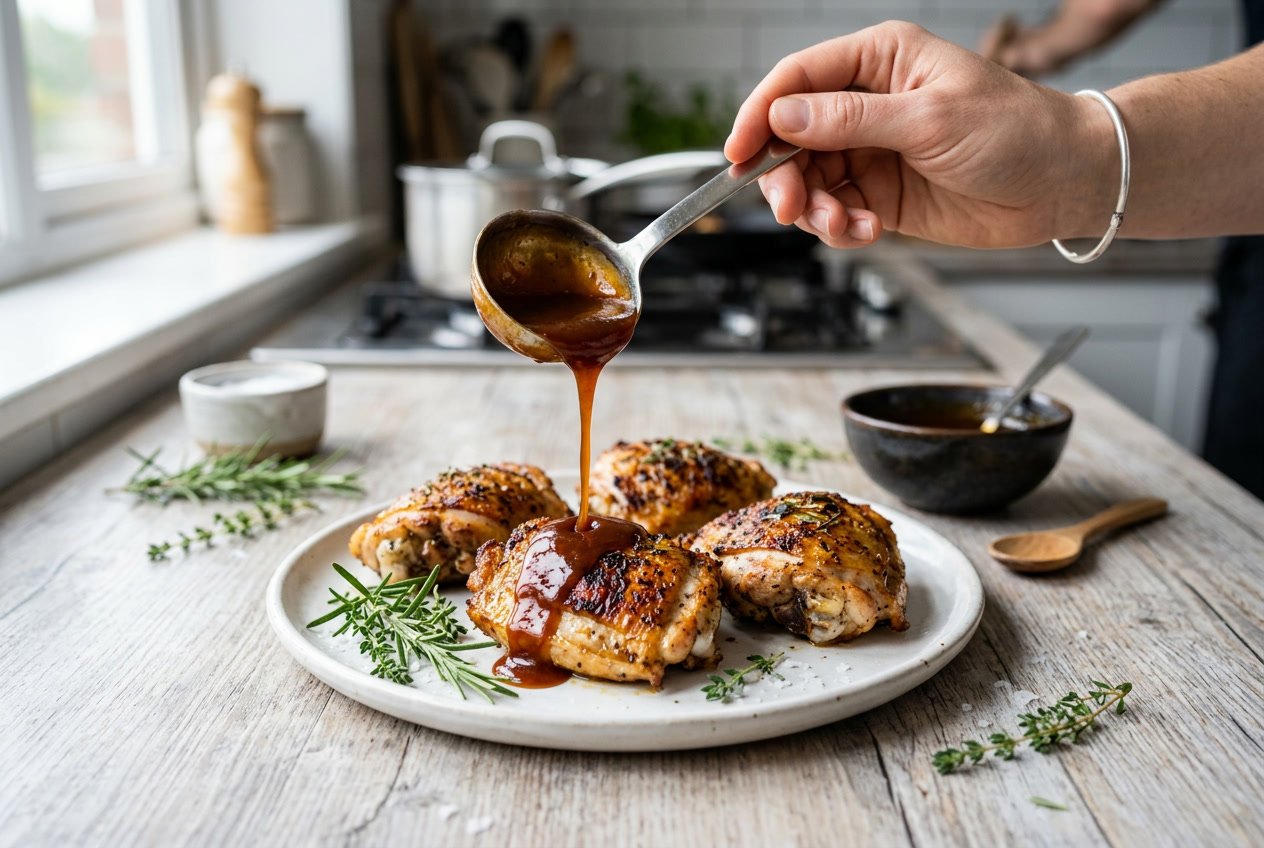
This guide explains timing for stovetop simmering, oven roasting, pan-searing, and grilling. Sauce type and thickness also affect when you should add it.
Follow simple principles and step-by-step timing to get consistent results.
Key Principles for Saucing Chicken Thighs
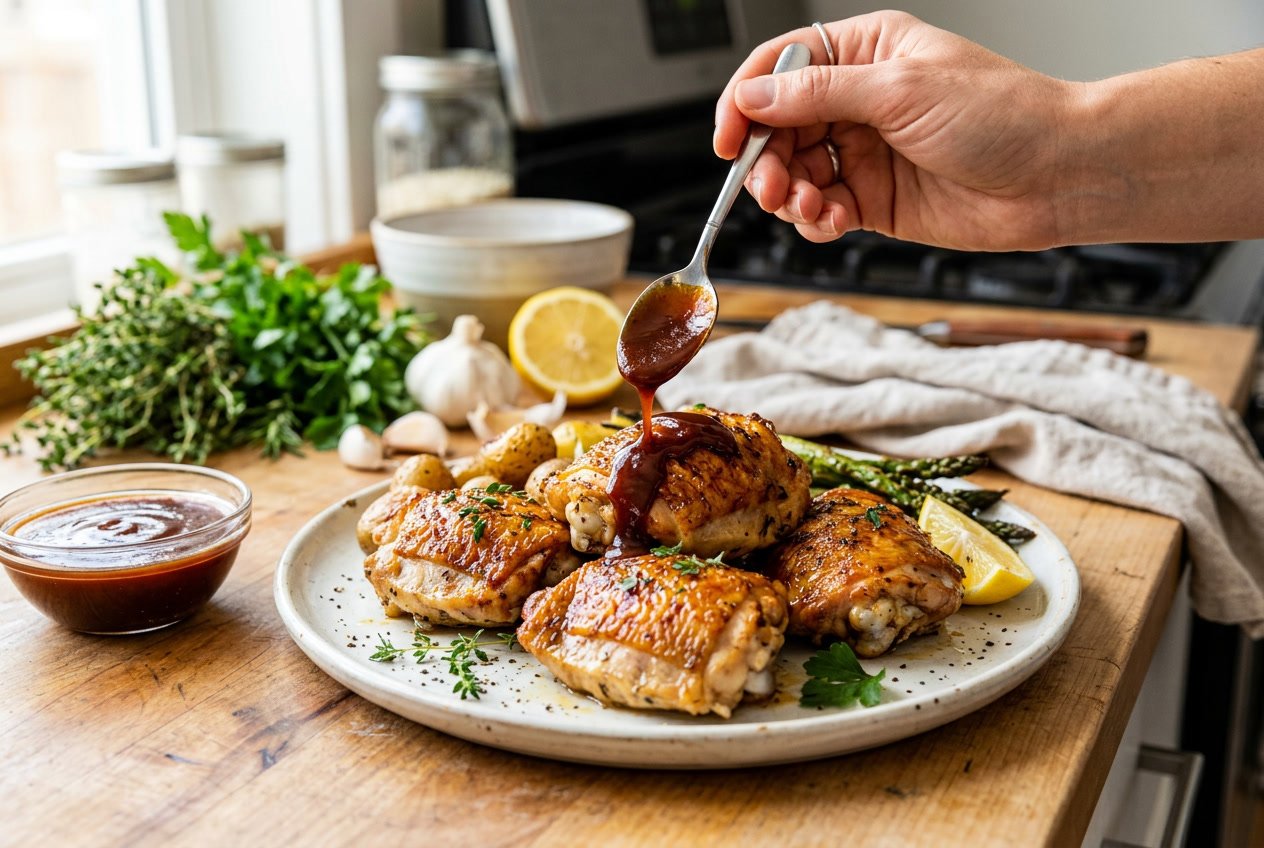
Saucing changes texture, doneness timing, and flavor extraction. Pay attention to sauce acidity, fat content, and when you add the thighs to control tenderness and sauce thickness.
Understanding the Role of Sauce
Sauce does more than coat the meat; it transfers heat, seasons the interior, and alters collagen breakdown. A high-acid sauce (tomato, wine, citrus) speeds flavor penetration but can tighten proteins if cooked too long.
Monitor acidic sauces after about 15–20 minutes to avoid a dry, mealy texture. Fat- or cream-based sauces protect and tenderize the meat while they meld flavors over longer simmering.
If your sauce contains butter, cream, or oil, you can safely simmer bone-in thighs longer to develop richness without curdling. Sear thighs first to build fond; that caramelized base deepens the sauce when you deglaze.
Why Timing Matters for Flavor and Texture
Timing affects safety, tenderness, and sauce consistency. Aim for an internal temperature of 165°F (74°C); use a thermometer in the thickest part away from bone.
Boneless thighs usually reach that temperature in 15–25 minutes of gentle simmering. Bone-in thighs often need 25–35 minutes, sometimes up to 45 minutes for very large pieces.
Short simmer times (15–20 minutes) preserve juiciness and brighter flavors, ideal for acidic or quick sauces. Longer simmering (25–45 minutes) breaks down collagen in bone-in thighs, producing silky sauce and fork-tender meat.
If sauce reduces too fast, add small splashes of stock to keep thighs moist without diluting flavor.
Choosing Bone-In vs. Boneless Chicken Thighs
Your choice affects cooking window and final texture. Bone-in chicken thighs insulate heat, slow cooking, and release marrow flavors into the sauce.
They withstand longer, low-temperature simmering and benefit from 25–35 minutes in most sauces. Use up to 45 minutes only with low-acid, fat-rich sauces.
Boneless chicken thighs cook faster and absorb sauce quickly. They reach safe temperature sooner, so keep simmer time to 15–25 minutes to avoid drying.
Use boneless for quick braises or when you want a thicker, quickly reduced sauce. Remove them early if the sauce needs extra reduction time.
Quick reference:
- Bone-in: sear, then simmer 25–35 min (165°F target), tolerate longer for gelatinous results.
- Boneless: sear, then simmer 15–25 min (165°F target), watch for overcooking.
When to Add Sauce: Timing for Different Cooking Methods
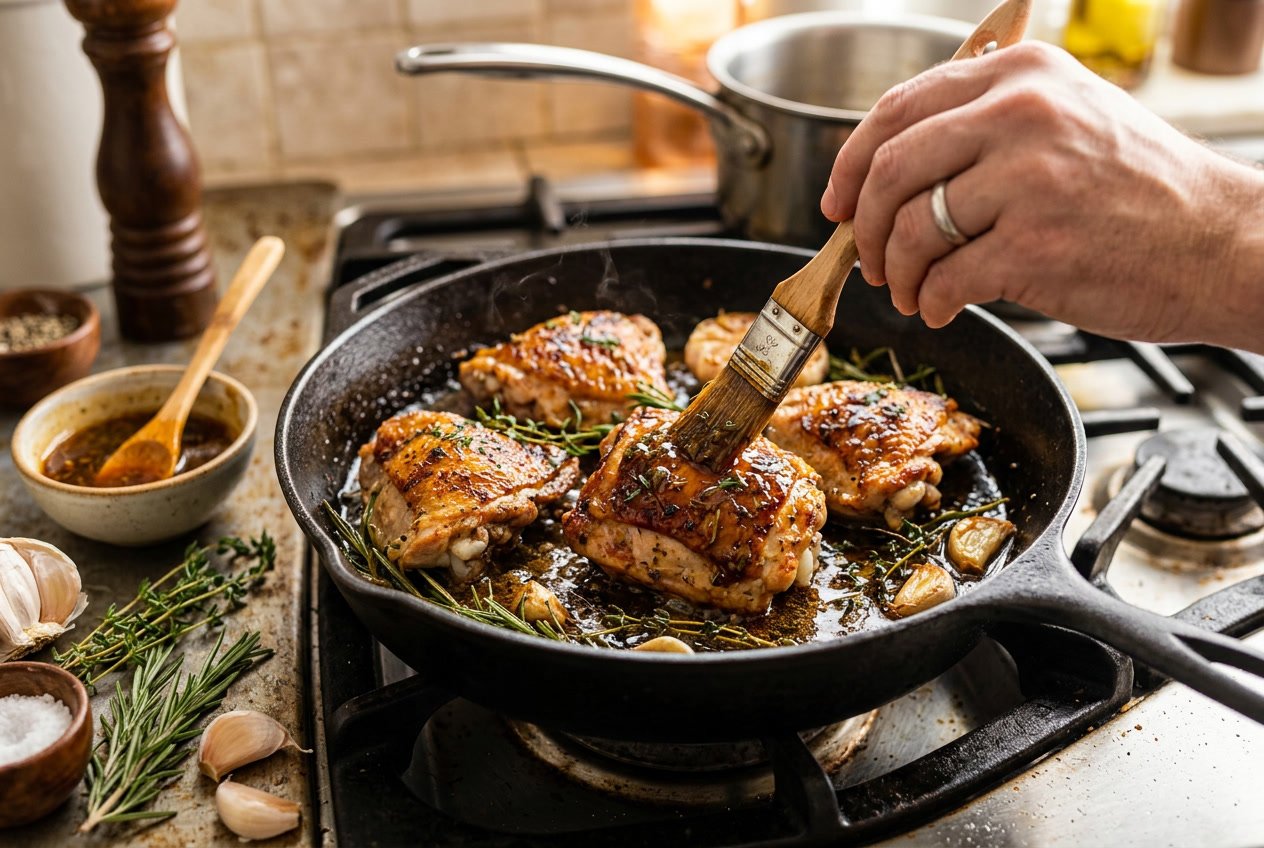
Sauce timing affects texture, flavor penetration, and final appearance. Match the sauce addition to the method: early for long, slow cooking; late for crisp skin or bright flavors.
Saucing During Baking
For bone-in chicken thighs, sear skin first if you want crispy skin, then add sauce partway through baking. Roast at 375°F (190°C); bake uncovered 20–25 minutes, pour sauce over and return for 10–15 minutes until internal temp reaches 165°F (74°C).
This lets the sauce finish cooking without turning the skin soggy. If you skip the sear, add sauce at the start for braise-like results and longer flavor infusion.
For boneless thighs, add sauce sooner because they cook faster. Check after 20–25 minutes and finish with sauce for the last 8–10 minutes.
Saucing During Stovetop Cooking or Simmering
Sear thighs first for best flavor, then remove and build the sauce in the pan. Return the chicken to the sauce and simmer gently until the internal temperature reads 165°F (74°C) and meat is fork-tender.
Bone-in thighs usually need 40–60 minutes total simmer; boneless thighs need 20–30 minutes. Keep the heat at a low simmer (small bubbles).
Reduce thick sauces separately and add near the end to avoid over-thickening or burning. Lower the temperature before adding acidic or dairy-based sauces to prevent curdling.
Grilling and Finishing Sauces
Brush sauce on boneless or bone-in thighs during the last 5–10 minutes of grilling to prevent sugars from burning. For direct high heat, apply thin layers 2–3 times in the final grilling stage so sauce caramelizes without charring.
If you want a sticky glaze, finish with a final brush off the heat and let thighs rest under tented foil for 5 minutes. For bold, fresh flavors, serve sauce on the side or drizzle after grilling rather than cooking it on the meat.
Slow Cooker and Instant Pot Techniques
Add sauce at the start with bone-in thighs in a slow cooker on low for 4–6 hours or high for 2–3 hours. This yields very tender meat and deep sauce flavor.
For boneless thighs, reduce time and monitor for overcooking; they can become too soft if left too long. In an Instant Pot, brown the thighs first using Sauté, then add sauce and pressure cook: 8–12 minutes for bone-in, 6–8 minutes for boneless, plus natural release for 5–10 minutes.
Thicken the sauce after pressure release by simmering or using a cornstarch slurry to control texture.
Selecting the Right Sauce for Chicken Thighs
Choose a sauce that matches your cooking method, desired texture, and how much caramelization you want on the skin. Consider saltiness, acidity, and sugar content so the sauce complements the thigh’s rich, fatty meat.
Classic and Creamy Sauces
Classic creamy sauces—like creamy mushroom or Dijon-based cream sauce—work best with roasted or pan-seared thighs. They rely on butter, cream or milk, and often sautéed mushrooms or mustard for depth.
Use creamy mushroom sauce when you want an earthy counterpoint to the thigh’s richness. Cook mushrooms first to concentrate flavor, then deglaze with white wine or stock before adding cream.
If you prefer mustard-forward creaminess, mix Dijon or whole-grain mustard with cream and a splash of chicken stock. That adds tang without overpowering the meat.
These sauces thicken on the stovetop. Spoon them over rested thighs to keep skin crisp.
Bold and Spicy Sauces
Bold sauces—buffalo, harissa, or chile-based glazes—pair well with grilled or high-heat pan-seared thighs. Buffalo sauce, with vinegar and cayenne, brightens the fatty meat.
Toss cooked thighs in the sauce or brush during the last minute of grilling. For thick, sticky heat, reduce spicy sauces with a bit of honey or brown sugar so they cling to the skin and caramelize.
Add garlic, smoked paprika, or soy for umami. Taste as you go and adjust salt and acid to keep balance.
Sweet, Tangy, and Savory Sauces
Sweet-tangy sauces—BBQ, teriyaki, or sweet-and-sour—work well as glazes or marinades for baking and grilling. BBQ sauce combines tomato, vinegar, and sugar; brush it on during the last 10 minutes of cooking so sugars caramelize but don’t burn.
Teriyaki sauce uses soy, mirin or sake, and sugar for glossy, savory-sweet results. Marinate for 30–60 minutes or glaze at the end for a sticky crust.
Sweet-and-sour sauce pairs vinegar and sugar with aromatics like ginger and garlic. It works well when you want a bright contrast to the thigh’s richness.
For all these sauces, watch cooking temperature. High heat creates a flavorful crust but can char high-sugar sauces quickly.
Best Practices for Saucing: Step-by-Step Timing
Manage heat, timing, and how you apply sauce to control flavor and glaze. Salt, pepper, and a light coating of olive oil set the foundation.
Timing the sauce prevents burning while building layers of flavor.
Searing or Browning Before Saucing
Sear skin-on thighs over medium-high heat for 3–5 minutes per side to render fat and create a crisp, browned surface. Pat the skin dry, season with salt and pepper, and rub a thin film of olive oil on the skin for even browning and reduced sticking.
Move the thighs to indirect heat or lower the oven to 375°F after initial searing so the interior cooks through without charring the exterior. Use a meat thermometer and aim for about 155–160°F internal before adding sugary sauces so carryover heat finishes to 165°F after saucing.
Simmering Chicken Thighs in Sauce
If you simmer thighs in sauce, dilute thick, sugar-heavy sauces by 10–20% with water, stock, or apple cider vinegar to prevent burning and ensure even heat transfer. Season the thighs with salt and pepper first; olive oil helps the sauce cling to the meat.
Maintain a gentle simmer and cook covered for 20–35 minutes depending on thickness, checking internal temperature periodically. Finish uncovered for 5–10 minutes to reduce and thicken the sauce, stirring occasionally so the sauce reduces evenly and the thighs develop a glossy coat.
Basting or Brushing During Cooking
Baste with a thin layer of sauce every 5–10 minutes during the final third of cooking to build up glaze without burning. Use a silicone brush or mop; dip, lift, and let excess drip off before brushing to avoid heavy, sugar-loaded globs that char.
Keep grill or oven heat at medium to medium-low while basting. Flip the thighs once between bastes to coat both sides evenly and move pieces to indirect heat if flames rise.
Lightly season with a final pinch of salt and cracked pepper after the last baste to sharpen flavors.
Adding Sauce for the Last Few Minutes
Apply the final, full-thickness sauce during the last 10–15 minutes of cooking for grilled or roasted thighs. Brush on one to three thin coats, allowing 2–4 minutes between coats to caramelize.
Remove the thighs from heat when they read 165°F and let them rest 5 minutes before serving. For oven finishes, use a short 1–2 minute broil after saucing to deepen color and keep the rack farther from the element to avoid scorched sauce.
Essential Tips for Success
Control sauce viscosity, confirm internal temperature, and time resting to keep thighs juicy and flavorful. Use a thermometer, adjust thickening agents deliberately, and let thighs rest in the warm sauce for better texture and flavor integration.
Controlling Sauce Thickness
Manage thickness in stages. If your sauce is too thin after simmering chicken thighs, remove the chicken and reduce the liquid over medium-high heat until it coats the back of a spoon.
Alternatively, whisk a cornstarch slurry (1 tbsp cornstarch + 1 tbsp cold water) and add a little at a time, simmering 1–2 minutes after each addition until you reach the desired body.
If the sauce is too thick before the chicken goes in, thin with measured chicken stock or water so the thighs simmer, not steam. For dairy-based sauces, temper cream by adding a small amount of hot sauce liquid before combining to prevent curdling.
Use low, steady heat to maintain smooth texture.
Ensuring Chicken Doneness
Always verify doneness with a digital meat thermometer. Insert into the thickest part of a bone-in chicken thigh; target 165°F (74°C).
For fall-off-the-bone tenderness, continue simmering gently after reaching 165°F until connective tissue softens. Monitor texture so meat doesn’t dry from overlong, high-heat cooking.
Check for even cooking by testing multiple pieces when sizes vary. If thighs are uneven, remove smaller pieces early and continue simmering larger ones.
Use visual cues: juices should run clear and meat should pull apart easily with a fork when properly simmered in sauce.
Resting Chicken in Sauce
Let thighs rest in the hot sauce off direct heat for 5–10 minutes. This helps juices redistribute and flavors meld.
Keep the pan covered or tent with foil to maintain warmth. This rest improves moistness and allows sauce to penetrate the meat.
If you plan to reheat later, cool the chicken quickly and refrigerate within two hours. When reheating, use a low oven (about 300°F / 150°C) or low stovetop heat to keep cream-based sauces from breaking.
Popular Sauce Pairings and Flavor Combinations
Choose sauces that match the cooking method and texture. Decide if you want a glaze, dip, or pan sauce, and pick flavors that balance the richness of the thigh.
Pairing Sauces with Boneless Chicken Thighs
Boneless chicken thighs cook quickly and absorb marinades well. Use thinner glazes or sauces like teriyaki, honey mustard, or a thin BBQ glaze.
Marinate for 20–60 minutes to build flavor without breaking down the meat. For fast pan-searing, finish with a glossy teriyaki or a splash of lemon-garlic.
These sauces cling to the surface and create caramelization. If you want creamy finishes, make a light creamy mushroom or lemon-cream sauce and spoon it over after resting.
For spicy profiles, toss cooked thighs in a vinegar-based buffalo or chili-garlic sauce just before serving. This keeps the heat bright and prevents sauce from burning during cooking.
Sauces for Bone-In Chicken Thighs
Bone-in thighs handle longer cooking and high heat. Use thicker, sugar-rich sauces like classic BBQ, sticky hoisin, or a dense spicy glaze.
Apply these sauces during the last 10 to 15 minutes of roasting or grilling. This timing lets sugars caramelize without burning.
Creamy mushroom sauce or mustard cream works well with slow braises and confits. The long cook time renders fat and helps the sauce coat the meat.
For braised or oven-roasted bone-in thighs, start with a savory base of onion, garlic, and stock. Add herbs, then finish with a bold sauce such as BBQ for smoky-sweet notes or spicy chili paste for concentrated flavor that matches the deeper texture around the bone.


