
When to Debone Chicken Thighs: Best Timing and Step-by-Step Methods
Decide based on convenience and the recipe. If you want faster cooking, easier slicing, or to stuff and roll the meat, debone before cooking.
If you want more flavor in braises or plan to make stock from the bones, leave them in. Debone when a recipe benefits from quicker cook times, easier serving, or the ability to marinate and shape the meat.
Keep bones when you want flavor or stock.
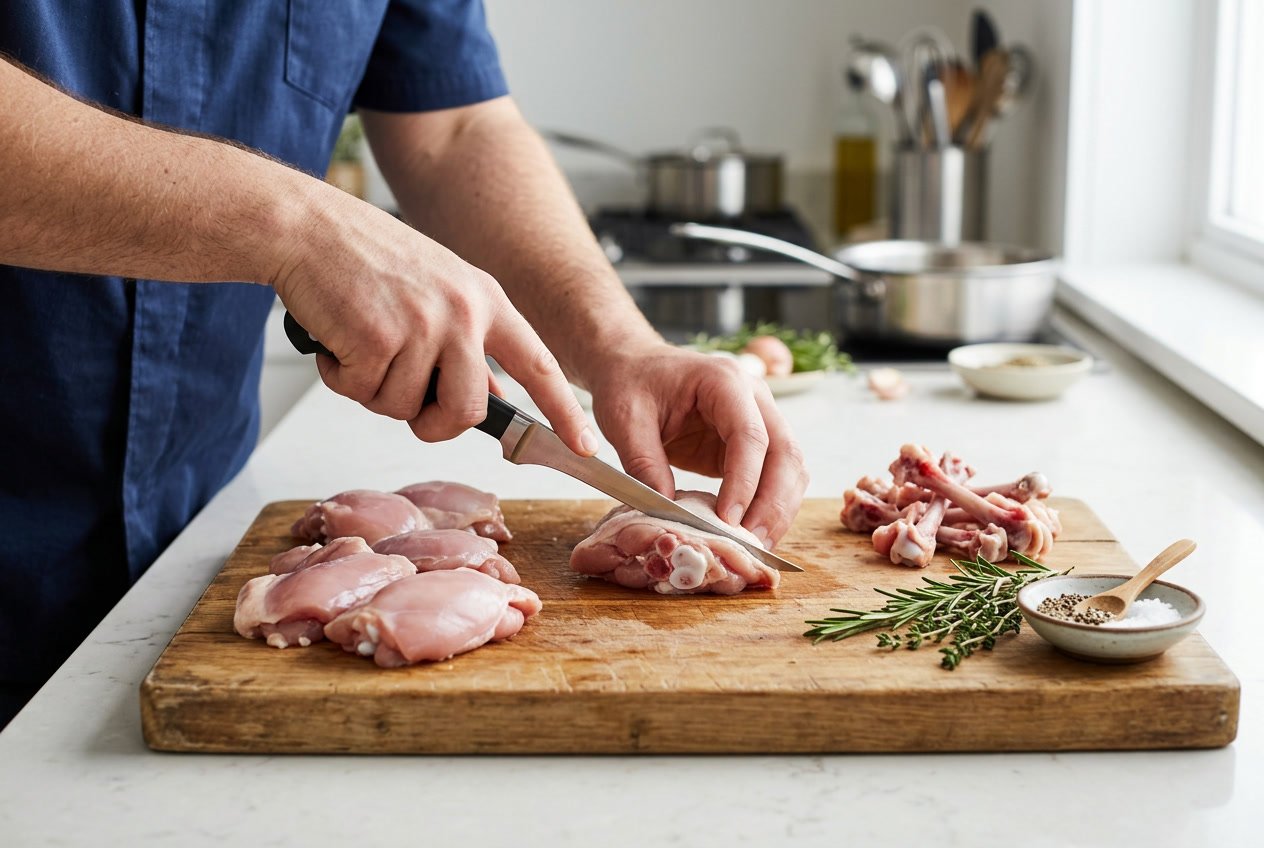
Bone-in thighs often cost less and keep the skin intact. Deboning at home saves money and gives you control over skin-on or skinless results.
The following sections outline the factors that guide your choice, the basic tools you need, safe step-by-step technique, when to work with raw versus cooked thighs, and practical uses for the bones and skin.
Key Factors for Deciding When to Debone Chicken Thighs
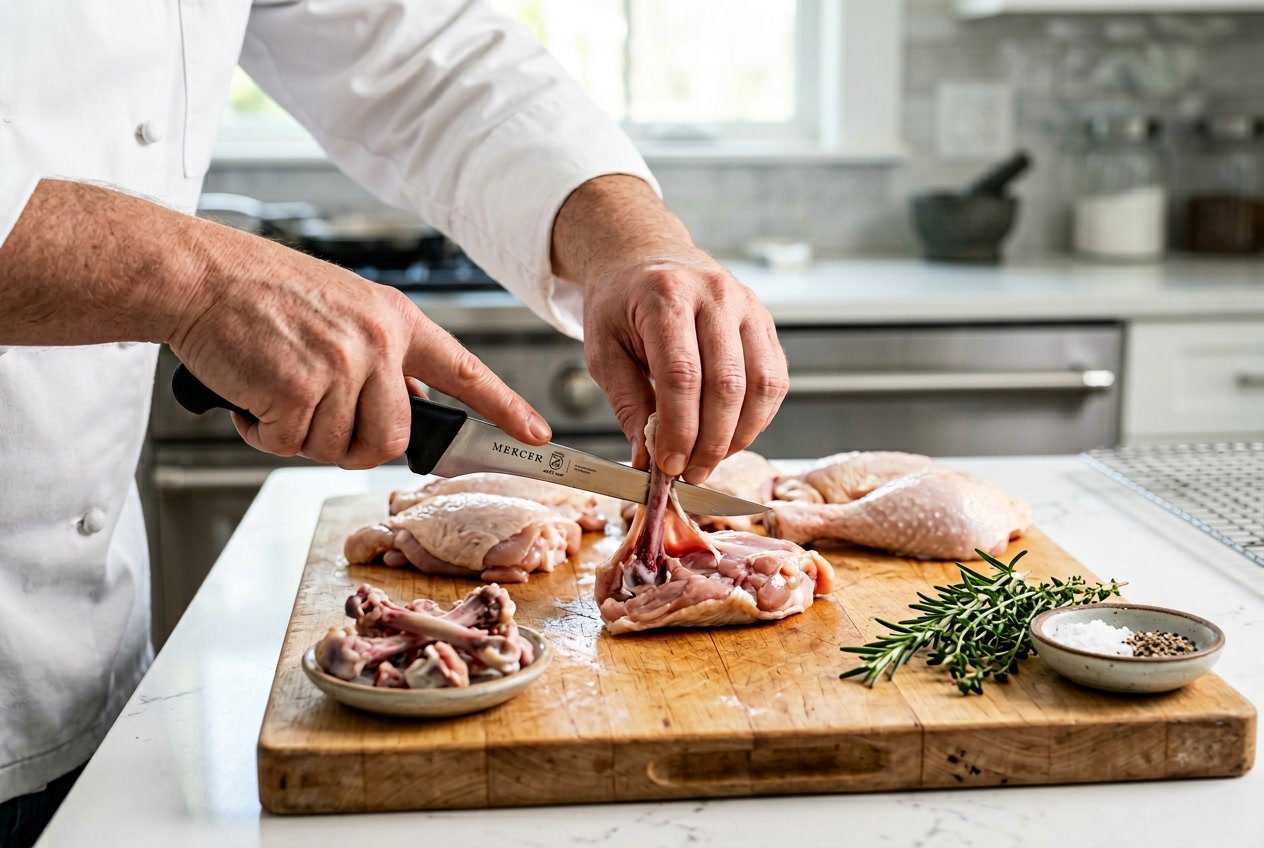
Consider cooking time, final texture, and whether you need easy-to-eat portions. Choose boneless thighs for fast, even cooking.
Keep bones for slow braises or when you want richer flavor.
Preparing for Quick Cooking
If you need dinner in 20–30 minutes, debone chicken thighs. Removing the femur lets heat reach the center faster, so pan-seared, grilled, or stir-fry recipes finish evenly without dry edges.
Use boneless chicken thighs for uniform thickness. Pound or trim to consistent size so pieces cook at the same rate.
Pat skin dry and season just before cooking to get a quick, even crust.
Avoid deboning if you plan to roast whole at very high heat and want protection from overbrowning near the bone. Bones slow heat, which can leave interiors undercooked in quick methods.
Using for Specific Recipes
Match bone status to the recipe requirement. For skewers, sandwiches, tacos, and stir-fries, boneless thighs give neat slices and easy eating.
For braises, stews, or whole-roast presentations, keep bone-in chicken thighs. Bones release collagen and marrow during long, moist cooking, which deepens sauce and mouthfeel.
If a recipe calls for crispy chicken skin, consider leaving skin on even when deboning. You can remove the bone and cook skin-on boneless thighs; this balances crisp texture with the convenience of boneless meat.
Optimizing for Flavor and Texture
Bones contribute flavor and help retain moisture during slow cooking. If you want maximum succulence in a low-and-slow dish, cook bone-in chicken thighs to extract gelatin into the sauce.
If you choose boneless thighs, protect juiciness with marinades, brines, or a shorter, higher-heat sear. Brining for 30–60 minutes and finishing in a hot pan preserves moisture and complements quick-cook recipes.
For crisp skin plus tender meat, debone and leave skin attached, or use bone-in and finish at high heat. Test internal temperature (165°F/74°C) and rest the meat to lock in juices before serving.
Essential Tools for Deboning Chicken Thighs
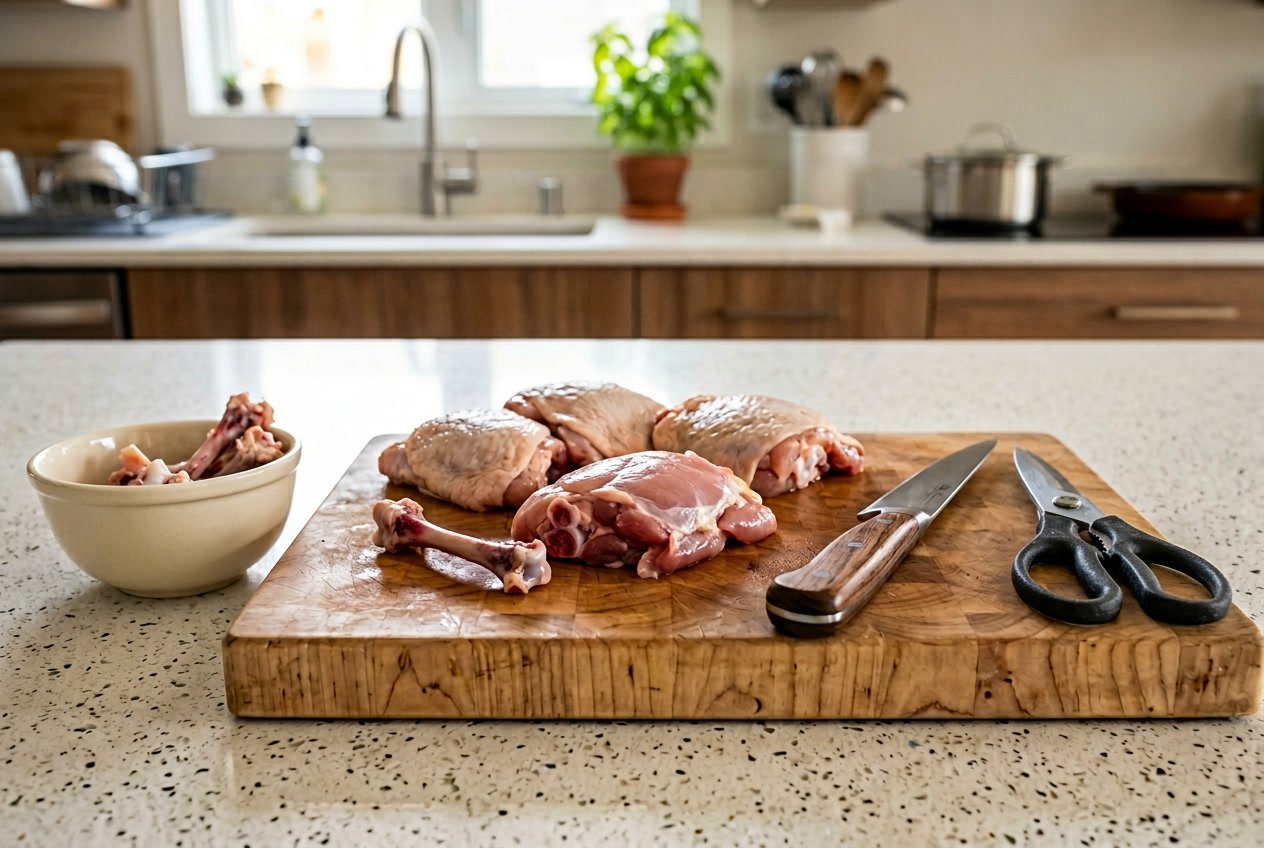
You need a sharp, narrow knife and a stable cutting board. A few optional helpers save time and keep the workspace safe.
Small choices like knife shape, board material, and a towel to stabilize the board make deboning faster and reduce accidents.
Choosing the Right Knife
Pick a boning knife with a narrow, flexible blade between 5–7 inches for most chicken thighs. The narrow profile lets you follow the bone contour, and flexibility helps when sliding under the bone without tearing meat.
A sharp blade is more important than brand. Hone before you start and keep a steel or sharpener nearby.
If you prefer a stiffer feel or do many small tasks, a 3–4 inch paring knife can assist trimming cartilage and skin after the main bone is removed. Avoid large chef’s knives for the actual bone work; they reduce precision and increase slip risk.
Hold the knife with a controlled grip and use short, deliberate strokes.
Selecting a Safe Cutting Board
Use a large, plastic or composite cutting board that won’t dull your knife and is easy to sanitize. Place a damp kitchen towel or non-slip mat under the board to prevent shifting during cuts.
Wood boards are acceptable if well-maintained, but avoid butcher blocks with deep grooves that trap bacteria.
Keep separate boards for raw poultry and other foods to avoid cross-contamination. Clean the board immediately after deboning with hot soapy water or run it through the dishwasher if the material allows.
Replace any board with deep cuts or warping. Those imperfections harbor bacteria and destabilize your work surface.
Optional Tools for Efficiency
A pair of kitchen shears speeds through joints and small bones. Use poultry shears to snip connective tissue or to separate thigh from drumstick at the joint.
Disposable or nitrile gloves improve grip and hygiene, especially if your hands get slippery.
A bone tweezer or small pliers helps remove pin bones or stubborn cartilage cleanly. Keep a tray for trimmed fat and discarded bits to keep your workspace tidy.
Consider a sharpening steel or small portable sharpener on hand. Maintaining edge during a session reduces accidents and keeps cuts clean.
Step-by-Step Guide: How to Debone Chicken Thighs
Prepare a clean work area. Find and follow the bone line through the meat.
Remove the femur or bone segment with controlled cuts. Trim excess fat, cartilage, or stray fragments.
Work deliberately and use a sharp boning knife for the cleanest results.
Preparing the Work Area
Sanitize a cutting board and clear space so you can work with both hands free. Place a damp towel under the board to prevent slipping.
Gather a sharp boning or small chef’s knife, kitchen shears, paper towels, and a bowl for bones and trimmings.
Have a separate plate for the trimmed boneless thighs and another for any skin you want to keep. Keep paper towels nearby to pat meat dry.
Wash hands and tools before and after handling raw poultry to avoid cross-contamination.
Locating and Exposing the Bone
Lay the thigh skin-side down so the bone’s shape and orientation are visible through the meat. Use your free hand to feel along the center of the thigh and identify the length and ends of the bone.
Make a shallow incision lengthwise along one side of the bone to expose it. Work with the tip of your knife close to the bone, using short, controlled strokes that separate meat from bone.
Pull the meat slightly away as you cut so you can see where the bone ends and any connective tissue remains.
Removing the Bone Cleanly
Cut along both sides to free the bone from the meat, keeping the knife angled toward the bone. Use your thumb and fingers to hold the bone steady and gently pry while you slice the remaining attachments.
Aim for smooth, continuous cuts to avoid ragged meat. When the bone loosens, lift it and cut any remaining connective tissue where it attaches.
If cartilage or a small bone fragment remains, use kitchen shears or the knife tip to snip it away. Inspect the cavity; a cleanly deboned thigh will hold its shape and cook evenly.
Trimming and Cleaning the Thigh
Trim away excess fat, silver skin, or stray cartilage with quick, precise cuts so the piece cooks uniformly. If you want skin-on boneless thighs, tuck the skin neatly or leave it flat.
For skinless, peel it back and discard or save for stock. Remove any dark spots or blood clots with a small paring motion.
Pat the finished thigh dry and place it on the prepared plate. Save the bones in a bag for stock if desired, and wash the board and knife immediately with hot, soapy water to prevent contamination.
Tips for Deboning Chicken Thighs Safely and Effectively
Work with a clean, well-lit station and prepare a sharp boning knife and towel. Keep a damp cloth under your cutting board to stop slipping.
Keep a small bowl nearby for trimmed fat and connective tissue.
Maintaining Knife Sharpness
A sharp boning knife shortens cuts and reduces slips. Hone the blade with a steel before each session and sharpen with a whetstone or professional sharpener when you notice resistance.
Use a thin, flexible 5–7 inch boning knife for better control around curves. Thicker blades tear meat; flexible blades let you run the edge flat along the bone to preserve flesh.
Store knives in a block or magnetic strip to protect the edge. Avoid dishwashers and hard surfaces that dull blades.
If you feel your knife tugging, stop and resharpen. Working with a dull knife risks both injury and ruined meat.
Avoiding Common Mistakes
Always start with chilled, not frozen, thighs. Firmness helps you feel the bone and joints.
Place the thigh skin-side down and locate the joint with your fingers before cutting to reduce unnecessary incisions. Keep the knife tip pointed away from your hand and use short, controlled strokes along the bone.
Don’t hack or force the blade. Follow the bone contour to minimize meat loss.
Trim fat and connective tissue last, using small snips or the knife’s tip. Wash hands, board, and utensils immediately to prevent cross-contamination.
If the meat slips, pause and dry your hands or use a towel for a safer grip.
Best Times to Debone: Raw vs. Cooked Chicken Thighs
Deboning raw thighs gives you faster, more uniform cooking and easier stuffing or shaping. Deboning after cooking preserves maximum flavor from the bone and reduces shredding if you’ll be pulling meat for salads or tacos.
Benefits of Deboning Before Cooking
Deboning raw chicken thighs shortens cook time and helps meat cook evenly. This matters when pan-searing, grilling, or stir-frying.
You can butterfly, stuff, or roll the thigh for recipes like roulades or stuffed cutlets because the meat lies flat without the bone.
Work with cold thighs and a sharp boning knife to minimize tearing and waste. Pat the skin dry if leaving it on; this helps you get crisp skin in high-heat methods.
If you plan to marinate, deboned thighs absorb marinade faster, so a shorter marinating time gives stronger flavor.
Trim excess fat and locate the femur before cutting along both sides to free the bone. Store raw deboned thighs in an airtight container and use within 24 hours or freeze for up to 3 months.
When to Debone After Cooking
Deboning after cooking keeps the bone’s flavor and moisture in slow-cooked dishes like braises or stews. If you braise, roast, or slow-cook thighs, leave the bone in to improve mouthfeel and depth of flavor.
Remove the bone when the meat is tender and cool enough to handle. Post-cooking deboning works best when you want shredded or chunked meat for tacos, salads, soups, or sandwiches.
Let the meat rest so juices redistribute. Use tongs and a fork or your hands to pull the bone away cleanly without tearing the meat.
If you need boneless portions for plating or portion control after roasting, use a small knife to separate meat from bone while warm for neat slices.
Save bones for stock to capture the flavor you retained during cooking.
What to Do With Leftover Bones and Skin
Leftover bones and skin from deboning thighs give you choices that add flavor and value to future meals. You can turn them into a rich liquid foundation for soups or preserve them for later use in stocks, braises, or compost.
Making Homemade Chicken Stock
Save bones and skin in the freezer until you have 2–4 pounds to make stock. That amount yields about 6–8 cups of liquid.
Use bones from skin-on chicken thighs or bone-in chicken pieces for the best gelatin and mouthfeel. Roast the bones and skin at 425°F for 20–30 minutes first to deepen flavor, then transfer to a stockpot.
Cover bones with cold water, add 1–2 carrots, 1 onion (halved), 2 celery stalks, 1–2 bay leaves, and 8–10 peppercorns. Simmer gently for 4–6 hours for clear but flavorful stock.
Skim foam in the first hour. Strain through a fine-mesh sieve, cool quickly, and refrigerate up to 4 days or freeze in portions for up to 6 months.
Saving for Future Recipes
If you won’t make stock immediately, freeze bones and skin in labeled bags for up to 6 months.
Flatten the bags before freezing so they stack neatly and thaw faster when you need them.
Separate usable skin from bones. Crisp the skin in an oven or skillet for garnish on salads, soups, or rice bowls.
Trim any meat left on the bones and freeze it for stews or stir-fries to boost flavor.
Keep small jars of concentrated bone broth in the freezer. Simmer the broth until syrupy to reduce it, then freeze a tablespoon at a time to add flavor to sauces and risottos without thawing large amounts.


