
When to Broil Chicken Thighs: Timing, Techniques & Safety
You want crisp, deeply browned skin and juicy meat without guessing at times or temperatures. Broil bone-in, skin-on chicken thighs about 15–20 minutes total (flip halfway) and cook until the thickest part reaches 165°F (74°C). Boneless thighs typically take about 8–12 minutes total.
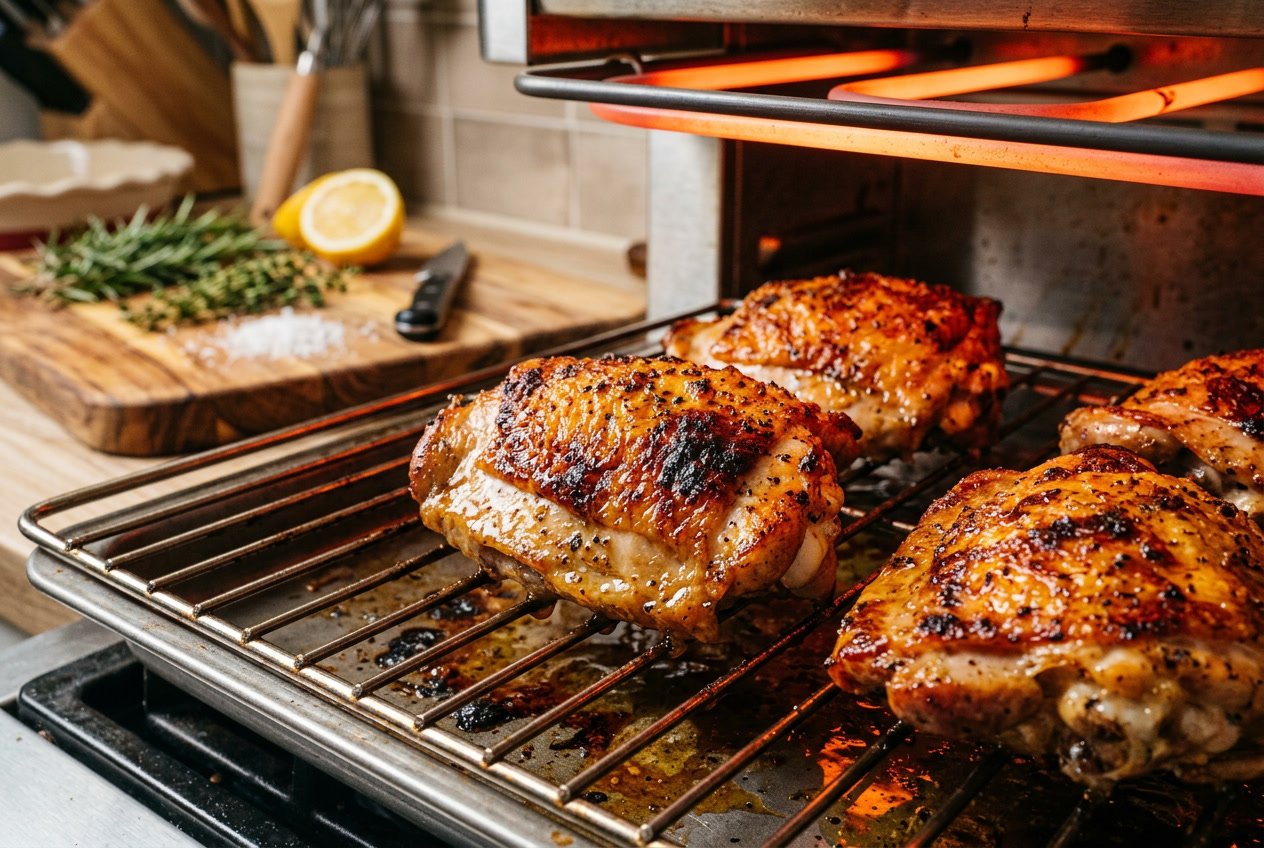
Broiling works well for thighs because you can brown the skin evenly while keeping the inside moist. You’ll find clear steps for prep, equipment notes, and quick fixes for common problems so you can broil with confidence.
Understanding Broiling for Chicken Thighs
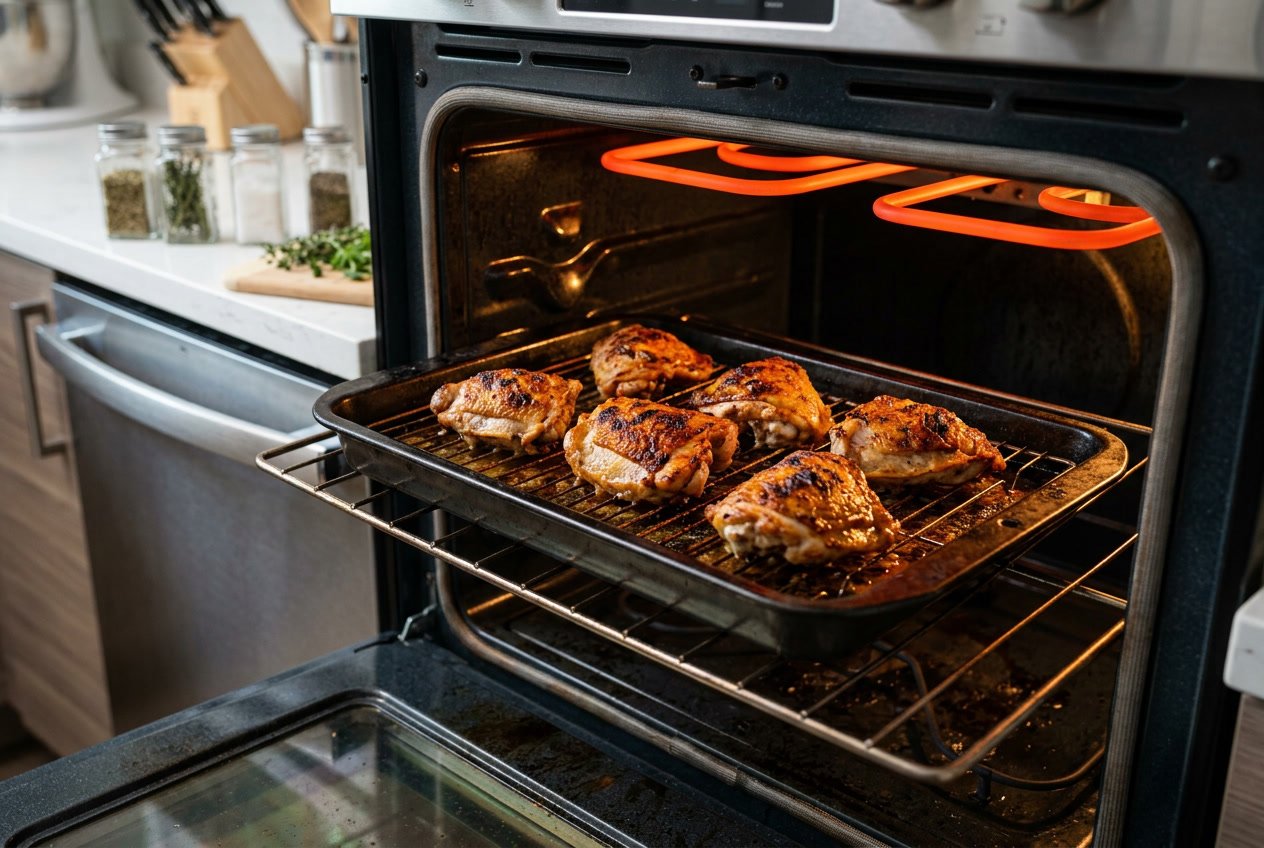
Broiling uses intense top-down heat to brown skin and sear meat quickly. You’ll focus on high heat, short cook times, and frequent checks to get a crispy exterior and fully cooked interior.
Broiling exposes chicken thighs to radiant heat from the oven’s heating element, which rapidly raises surface temperature. That quick sear creates Maillard browning on the skin and any exposed meat, forming a caramelized crust within minutes.
Heat penetrates less deeply than with baking or roasting, so boneless, thinner thighs cook faster than bone-in pieces. Flip halfway for even browning and move the rack up or down to adjust how fast the skin chars.
Use an instant-read thermometer and pull thighs at 165°F (74°C) for safety and juiciness. Lay thighs on a wire rack over a sheet pan so hot air circulates and drippings don’t steam the skin.
Thin marinades or oil help conduct heat and promote crisping. Add sugary glazes at the end to avoid burning.
Benefits of Broiling
Broiling crisps chicken faster than oven roasting and uses less surface oil than frying. You get grill-like charring without outdoor equipment and shorter cook times.
Broiling preserves moisture better than high-heat pan-searing when you avoid overcooking. You can control browning by adjusting rack height and broiler setting.
Broiling avoids flare-ups from fat drippings and lets you finish thicker bone-in thighs near the heating element. Use broiling when you want quick, crispy skin and tender meat with minimal added fat.
Best Times and Key Signs to Broil Chicken Thighs
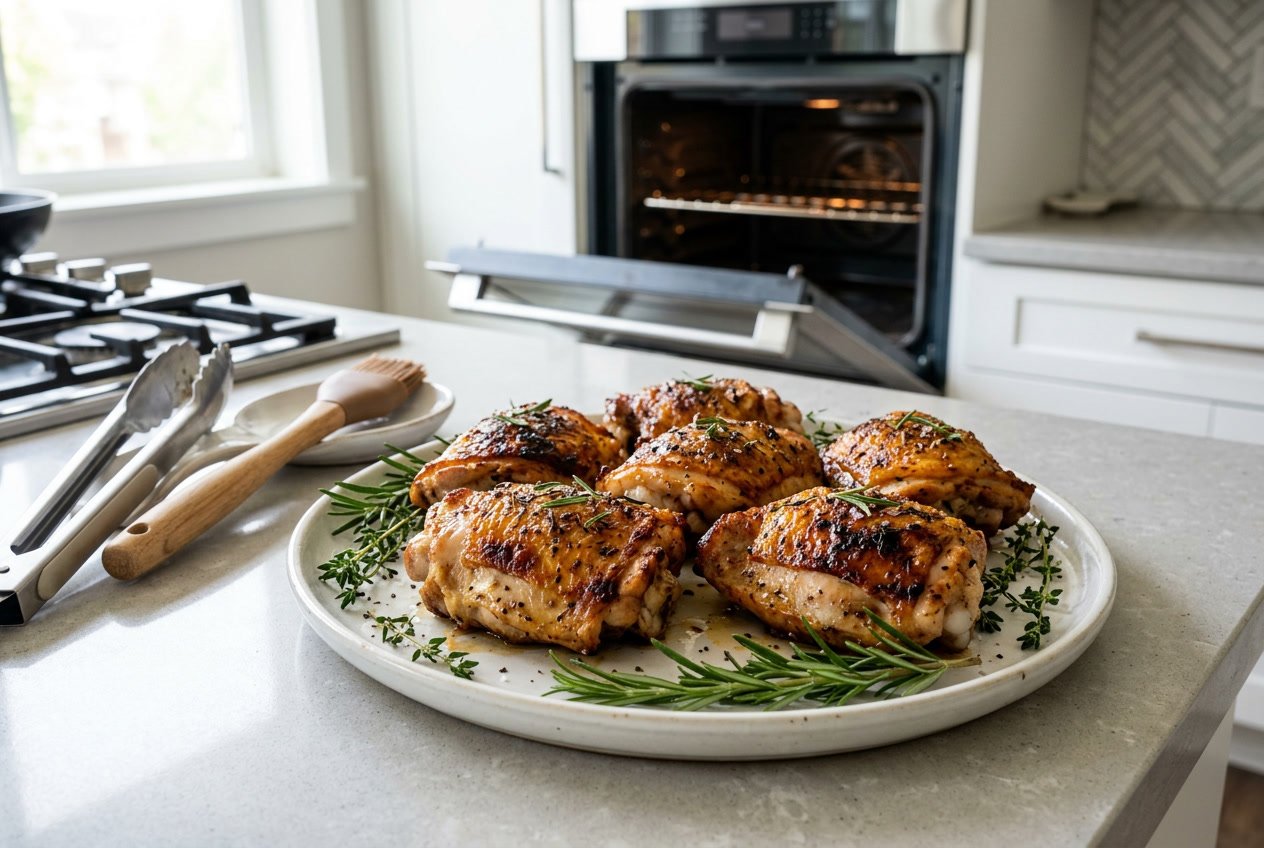
Choose broiling when you want fast, high-heat browning and crispy skin without extra oil. Broil boneless thighs when time is limited, and bone-in thighs when you want deeper flavor and a crisp skin finish.
Ideal Broiling Duration for Bone-In vs Boneless Thighs
Boneless, skinless chicken thighs typically broil in about 7–12 minutes total. Place them 4–6 inches below the broiler, cook 5–7 minutes on the first side, flip, then finish 2–5 minutes depending on thickness.
Thinner pieces need less time. Very thick pieces benefit from a lower rack position or short finishing time after flipping.
Bone-in, skin-on thighs need longer—usually 25–40 minutes total. Start with the rack 6–8 inches from the element and broil 8–12 minutes per side to get skin crisp without undercooking near the bone.
If the skin browns too fast, move the rack down or reduce broil intensity and finish until the thigh reaches safe temperature. Thaw frozen chicken thighs before broiling if possible.
Broiling from frozen risks uneven cooking. If you broil frozen thighs, expect much longer times and use lower placement plus a thermometer to confirm doneness.
How to Tell When Chicken Thighs Are Done Broiling
Look for deeply browned, blistered skin on skin-on thighs and even golden edges on boneless pieces. Juices should run clear when you pierce the thickest part, but always combine visual checks with temperature.
Check texture: a cooked thigh feels firm but still springy. Overly soft or floppy texture means undercooked; very tight and dry suggests overcooking.
Flip halfway to promote even browning and watch the last few minutes closely. Broiling can go from perfectly caramelized to burnt within a minute.
Broiled thighs vary with oven strength, rack distance, and thigh size, so monitor each piece individually.
Internal Temperature and Doneness Check
Check doneness with an instant-read thermometer. Insert it into the thickest part without touching bone.
Aim for 165°F (74°C); pull thighs at 165°F and rest for 5–10 minutes to allow juices to redistribute. For boneless thighs, you can remove them at 160–162°F and rest until the thermometer reads 165°F.
Do not undercook bone-in thighs; meat near the bone takes longer to reach 165°F. For broiled frozen thighs, check temperature in multiple spots because uneven heating is common.
If any spot reads below 165°F, return the thigh to the broiler or move to a lower temperature oven to finish cooking.
Preparing Chicken Thighs for Broiling
Select thighs with the right cut and condition. Remove excess moisture and decide whether to marinate or simply season.
How to Choose Chicken Thighs
Pick bone-in, skin-on thighs for the most flavorful, juicy result and crisp skin. The bone slows heat transfer and helps retain moisture.
Choose pieces that are uniform in size so they cook evenly. Trim any excessively long skin flaps that will burn under direct heat.
Use boneless, skinless thighs for faster cooking and easier slicing. Expect shorter broil times and the need for careful monitoring to avoid drying.
Check packaging dates and smell; fresh thighs should have a neutral scent and firm texture. For marinating, slightly thicker pieces absorb flavors better.
Score the surface lightly to help marinades penetrate.
Prepare Chicken Thighs for Broiling
Marinate thighs in a tray or resealable bag for 30 minutes to 4 hours. Avoid acidic marinades longer than 6 hours on boneless meat to prevent mushy texture.
For a simple rub, coat thighs with 1 tablespoon oil per pound and season with salt, pepper, and any dry spices. This helps browning under the broiler.
Place thighs skin-side up on a broiler pan, wire rack, or cast-iron skillet to allow hot air circulation and fat drainage. Position the oven rack 3–6 inches from the broiler element.
If using a sauce with sugar or honey, wait until the last 3–5 minutes of broiling to brush it on to prevent burning.
Pat Dry and Resting Recommendations
Pat both skin and meat surfaces dry with paper towels. Removing surface moisture is the most important step for crisp skin.
After drying, reapply a light coat of oil so seasonings stick and the skin browns evenly. Let marinated or seasoned thighs rest at room temperature for 15–20 minutes before broiling.
Resting reduces temperature shock and promotes even cooking. After broiling, tent the thighs loosely with foil and rest 5–10 minutes to let juices redistribute and raise internal temperature slightly.
Essential Equipment and Broiler Setup
You need the right pan and rack position to get crisp skin and even cooking. Preheating the broiler and choosing the correct surface keep juices in and prevent burning.
Choosing Between Broiler Pan, Baking Sheet, and Wire Rack
Use a broiler pan if you want fat to drip away and keep smoke low. The slotted top lets grease drain into the lower tray, reducing flare-ups and keeping the skin crisper.
A heavy-duty, foil-lined baking sheet works well for easy cleanup and even browning. Line with foil, then place the thighs skin-side up; the foil catches drips and protects the pan.
For best results, set the baking sheet on a preheated cast-iron skillet or use a second inverted baking sheet beneath to prevent warping. A wire rack over a baking sheet lifts the thighs so air circulates under the meat.
That promotes even browning and keeps the bottom from steaming. Use a stainless or chrome-coated rack rated for oven broiling.
Broiler Rack Position and Preheating Tips
Position the oven rack 4–6 inches below the broiler element for bone-in, skin-on thighs. Closer (about 3–4 inches) yields faster crisping but increases the risk of charring.
Farther (6 inches) cooks more gently and reduces burning risk for thicker pieces. Always preheat the broiler on high for 5–10 minutes with the rack in place.
A fully heated broiler delivers immediate radiant heat that crisps skin instead of slowly drying meat. If your broiler has variable intensity, choose high for quick caramelization and medium for thicker or bone-in thighs.
Keep an instant-read thermometer handy and check the thighs near the end of cooking. Rotate the pan or move pieces slightly if one side browns faster.
Seasoning and Flavor Techniques
Focus on salt, fat, and heat to get crispy skin and juicy meat. Use simple dry seasoning for quick broiled chicken thighs, or apply a short marinade for deeper flavor.
Finish with a glaze or high-heat blast for caramelization.
Seasoning Chicken Thighs for Broiling
Pat thighs dry with paper towels to remove surface moisture. Season both sides generously with kosher salt.
Salt at least 20–30 minutes before broiling or up to overnight in the fridge for better penetration. Add freshly ground black pepper and a primary dry spice: smoked paprika, garlic powder, or lemon pepper.
Keep spice blends balanced—about 1 tsp salt per pound of meat, and ½–1 tsp of each additional spice depending on intensity. Lightly brush skin with a neutral oil to promote even browning.
For boneless, skinless thighs, use a bit more oil and reduce broil time to avoid drying.
Marinades and Sauces to Enhance Flavor
Marinate chicken thighs for 30 minutes to overnight depending on acidity and salt. Use a basic ratio: 3 parts oil, 1 part acid (lemon juice, vinegar, or yogurt), salt, and aromatics.
Acidic marinades shorten marinating time—30–90 minutes—while yogurt or oil-based marinades can go overnight. If you use a sugar-based or honey glaze, apply it in the last 2–3 minutes of broiling to prevent burning.
For an easy broiled chicken thighs recipe, toss thighs in marinade, let rest refrigerated, then broil skin-side up until 165°F. Reserve a small portion of marinade (uncooked) or make a fresh sauce to serve.
Caramelized and Crispy Variations
Position the oven rack 6–8 inches from the broiler for optimal caramelization without burning. For extra crisp skin, dry the thighs in the fridge uncovered for 1–2 hours before seasoning.
Use a wire rack on a foil-lined sheet pan to let hot air circulate and fat render away from the skin. To get pronounced caramelized edges, finish broiling on high for 1–2 minutes after the interior reaches 155–160°F.
Carryover heat will push the final temperature to 165°F while the skin browns. Brush on a squeeze of citrus or a light glaze right after broiling to brighten flavors and add shine.
Step-by-Step Broiling Process
Preheat the broiler and position the oven rack so the chicken sits about 5–6 inches below the heating element. Use an oven-safe pan with a rack or a rimmed baking sheet to keep thighs elevated and let hot air circulate.
Arranging Chicken Thighs for Even Cooking
Place thighs skin-side up in a single layer with at least 1 inch of space between pieces. Spacing ensures the broiler’s direct heat reaches each skin patch.
Use a rimmed sheet with a wire rack if you have one. The rack lets fat drip away and promotes even browning.
If you use just a sheet, line it with foil for easier cleanup and flip the thighs sooner if the bottoms darken. Pat thighs dry and season immediately before broiling.
Dry skin browns faster, and a light brush of oil helps conduct heat and encourages uniform caramelization. Bone-in thighs will need a few minutes longer than boneless.
Flipping Halfway and Timing Adjustments
Start timing when you place the thighs under the broiler.
Flip the thighs roughly halfway through the total cook time to brown both sides evenly and lower the risk of burning the top.
Use these timing baselines: boneless skin-on thighs usually take 12–16 minutes total, about 6–8 minutes per side.
Bone-in, skin-on thighs typically need 20–25 minutes total, so flip at 10–12 minutes.
Adjust the timing based on thickness and your broiler’s strength.
Check doneness by inserting an instant-read thermometer into the thickest part without touching bone.
Pull the thighs at 165°F (74°C) and let them rest for 5 minutes so the heat can equalize and keep the meat juicy.
Broiling Tips for Juicy Results
Keep the skin dry and the pan hot.
Pat the thighs dry to remove surface moisture, which helps the skin crisp.
Preheat the broiler for 8–10 minutes to get immediate searing when you add the thighs.
Trim large fat deposits and use a pan that lets fat drip away to manage flare-ups.
If the edges char too quickly, move the rack down one position or lower the broiler intensity.
Finish with a quick sauce or a squeeze of acid after the thighs rest.
Brush on glaze in the last 1–2 minutes for extra flavor without making the skin soggy.
Refrigerate leftovers within two hours in an airtight container for up to four days.
Troubleshooting and Common Broiling Problems
Pay close attention to the distance from the heat, timing, and surface moisture.
Adjust the rack position, use a thermometer, and pat the thighs dry to avoid most issues.
Avoiding Burning and Overcooking
Keep the oven rack 4–6 inches from the broiler element for most thighs.
Move the rack higher only for very thin pieces.
Preheat the broiler for 5–10 minutes so the heat stays steady.
Watch the chicken after the first 6–8 minutes.
Trim excess fat and pat the skin or flesh dry with paper towels to reduce flare-ups and improve browning.
Use a rimmed baking sheet or broiler pan to catch drips.
Place foil under the rack for easier cleanup, but don’t cover the chicken.
If the edges brown too quickly, lower the rack one notch or reduce the broiler power if your oven allows.
Check the temperature with an instant-read thermometer.
Pull the thighs at 160–162°F and let them rest to reach 165°F.
Ensuring Even Cooking and Crispiness
Arrange the thighs skin-side up in a single layer with 1/2–1 inch between pieces to allow hot air to circulate.
Flip the thighs once halfway through cooking for even color and crisping, especially with thicker bone-in thighs.
For crisp skin, start with dry skin and brush lightly with oil to help browning.
If the skin softens from a marinade, pat it dry again before broiling or broil uncovered at full heat for the last 2–3 minutes.
Use a wire rack over the sheet pan to let fat drain and crisp the thighs from all sides.
If one side browns faster, rotate the pan at the halfway mark.
Remove smaller pieces earlier to avoid overcooking larger thighs.
Solutions for Under or Overdone Thighs
If thighs are underdone (internal temperature below 165°F), place them back under the broiler on a lower rack or finish cooking in a 350°F oven for 8 to 12 minutes. Let the thighs rest, tented with foil, for 3 to 5 minutes after cooking so the juices can redistribute.
If thighs turn out overdone and dry, slice them and serve with a sauce or pan jus to add moisture. You can also briefly simmer slightly overcooked pieces in a low-sodium broth or glaze for 2 to 4 minutes to rehydrate them.
Separate pieces by thickness and cook them in stages to address uneven doneness in a batch. Use a thermometer to track doneness and keep a simple log of rack position, broiler setting, and minutes per side for future reference.


