
When to Brine Chicken Thighs: Timing and Best Methods Explained
You want juicy, well-seasoned chicken thighs without overdoing the salt or wasting time. For most wet brines, brine chicken thighs for 30–60 minutes for the best balance of flavor and tenderness. For a simple dry brine, plan on about 2 hours.
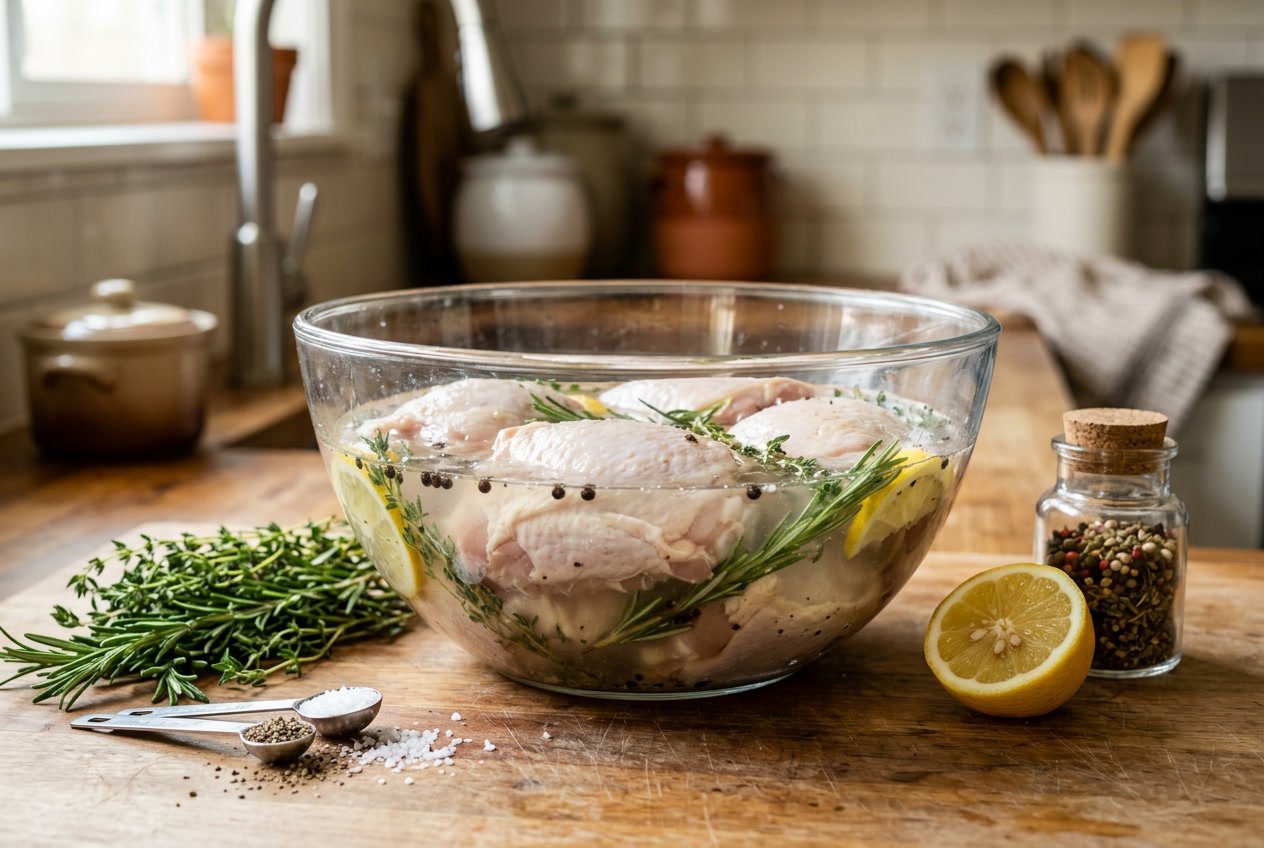
Timing matters because it affects flavor, tenderness, and saltiness. Different methods suit boneless and bone-in thighs, and knowing how to avoid mistakes helps you get the best results.
You’ll find step-by-step guidance on brine ratios, safety, and cooking techniques so your chicken thighs turn out tender and flavorful.
Brining Chicken Thighs: Timing & Methods

Brining adds salt and moisture to the meat and changes its texture. Choose a method and time based on how salty and tender you want the thighs.
Short wet brines give quick seasoning and juiciness. Dry brines take longer but need less attention.
How Long to Brine Chicken Thighs
For wet brines, brine boneless or bone-in thighs for 30–60 minutes. Thirty minutes gives light seasoning and a small tenderness boost. One hour usually produces juicier, well-seasoned meat without becoming overly salty.
If you want to brine longer, avoid exceeding 2 hours for a standard wet brine unless you reduce salt concentration or plan to serve the chicken with a sauce that offsets salt. Over-brining beyond 4 hours can create a cured, overly salty, or jammy texture.
For dry brines, plan 2 hours as a minimum and up to 24 hours for deeper seasoning and firmer skin when roasting. Refrigerate uncovered during longer dry brines to dry the skin and encourage browning.
Wet vs Dry Brine Comparison
Dissolve salt in water for a wet brine (for example, 4 cups water + 4½ tablespoons Morton’s kosher salt) and submerge the thighs. Wet brine seasons faster, boosts internal moisture, and works well when you have 30–60 minutes.
For a dry brine, rub salt directly on the skin and meat and refrigerate. Dry brine concentrates flavor and helps the skin dry for crisping. Dry brines require 2–24 hours but need no extra liquid and take up less fridge space.
Wet brine adds moisture quickly but risks over-salting if left too long. Dry brine improves texture and browning but takes longer for seasoning. Choose based on your time, equipment, and preference for crisp skin.
Best Brining Windows for Flavor and Texture
If you have only 15–30 minutes, use a wet brine for a light lift in flavor. This works best for thin or small pieces when you’re pressed for time.
Wet brining for 30–60 minutes yields juicy, tender thighs with balanced salt. Dry brining for about 2 hours gives good seasoning and improved skin for roasting or grilling.
For deeper seasoning or prepping ahead, dry brine for 2–24 hours or wet brine for up to 2 hours with salt reduction. Limit wet brining to 2 hours unless you lower salt. For dry brines beyond 12 hours, refrigerate uncovered to keep the skin dry.
Benefits of Brining Chicken Thighs

Brining locks salt and sometimes sugar into the meat. This helps thighs stay moist during high-heat cooking, adds seasoning throughout, and subtly changes the bite so it feels more tender.
Juiciness and Moisture Retention
Salt diffuses into the muscle and partially dissolves some proteins, which helps the meat hold water. Your cooked thighs lose less liquid during roasting, grilling, or frying.
A brief wet brine (30–60 minutes) raises retained moisture noticeably. A 1–2 hour dry brine improves juiciness without adding surface wetness.
Use cold brine and keep the thighs refrigerated to prevent bacterial growth. Rinse only if the surface seems overly salty, then pat dry to promote browning.
For eight thighs, a simple wet brine of 4 cups water and about 4½ tablespoons kosher salt produces juicier results.
Enhanced Flavor Profiles
Brining seasons the meat all the way through instead of just the surface. Salt in the brine penetrates into the muscle, giving consistent flavor in every bite.
You can add aromatics like garlic, peppercorns, citrus peel, or herbs to the brine for subtle notes. Sugar in the brine can balance saltiness and encourage better caramelization when searing or roasting.
Adjust quantities based on salt type. Measure by weight when possible.
Avoid over-brining. Keep wet brines to 30–120 minutes and dry brines to around 2 hours to prevent an overly salty final product.
Texture Improvements
Brining alters protein structure. Salt causes some proteins to unwind and then rebind, which makes the meat feel more tender and slightly firmer.
You’ll notice less of a stringy or dry chew, especially on grilled or roasted thighs. Longer brines can produce a soft, deli-like texture, so match time to your desired mouthfeel.
Short wet brines yield noticeable tenderness without loss of bite. Dry brine helps skin become crisper during cooking by drawing out excess moisture.
Keep brined chicken well-chilled and cook to a safe internal temperature (165°F/74°C) to preserve texture and ensure safety.
How to Brine Chicken Thighs Step by Step
Brining adds moisture and seasons the meat through salt penetration. Choose a wet brine for faster, juicier results or a dry brine for easier handling and crisper skin.
Measure salt carefully, control brine time, and refrigerate to keep the thighs safe and properly seasoned.
Preparing a Basic Wet Brine
Measure cold water and the correct salt by type: use 6 tablespoons Diamond Crystal kosher, 4½ tablespoons Morton’s kosher, or 3 tablespoons fine/table salt per 4 cups of water. Stir until salt dissolves. Optional: add 1 tablespoon garlic granules or a few peppercorns and a bay leaf.
Place thighs in a nonreactive container or a heavy zipper bag and pour enough brine to submerge them. If needed, make more brine in the same ratio.
Pat the thighs dry with paper towels after removing from brine. Do not rinse. Discard used brine.
Submerging and Refrigerating the Chicken
If brining for 30 minutes or less, leave the container at room temperature. For longer brines, refrigerate immediately.
Keep the chicken fully submerged. Weigh it down with a plate or use a zip bag inside a bowl for even contact.
Brine for 30–60 minutes for noticeable tenderness and juiciness. Two hours works for thicker pieces but can cause edge saltiness. Do not exceed 4 hours for thighs unless shredding or mixing into salads.
Keep the refrigerator at or below 40°F (4°C). When ready to cook, remove thighs, discard brine, and pat dry. Skip adding more salt if you brined longer than 30 minutes.
Dry Brining Process
For a dry brine, sprinkle salt evenly over chilled thighs using the same salt-type conversions as the wet brine. Use a light, even layer.
Optionally add garlic powder or ground black pepper. Place the salted thighs on a rack or plate uncovered in the refrigerator.
Two hours produces good results for thighs. Overnight (8–24 hours) gives deeper seasoning and firmer skin for roasting or grilling.
Do not cover if you want crisper skin. Cover only if protecting other foods.
Before cooking, pat excess surface moisture with a paper towel. Do not rinse. Skip extra salt in your recipe.
Brine Solutions: Ratios and Ingredients
Use a clear salt ratio and choose salt type deliberately. Add sugars or aromatics only when they serve a specific flavor goal.
Measure salts by weight when possible and always chill the brine before adding raw chicken.
Salt-to-Water Ratio for Chicken Thighs
Aim for a 5% salt solution for a reliable wet brine: dissolve 50 g (about 2 tablespoons kosher salt by weight) per 1 liter (4 cups) of water. This gives good moisture retention and seasoning for bone-in or boneless thighs.
For a shorter brine (30–60 minutes), use a 3–4% solution: 30–40 g salt per liter. For a long soak (4–12 hours), reduce to 3% to avoid excess salt.
Convert salt types as needed. If using table salt, cut the weight by about 30% because it’s denser than kosher salt.
For dry brines, sprinkle about 0.5–0.75% of the chicken’s weight in kosher salt. Pat skin dry and refrigerate uncovered.
Key Brine Ingredients and Variations
Start with water and salt as your base. Add 10–25 g sugar per liter for mild sweetness and better browning.
Use cold water or a mix of cold water and ice to keep the chicken below 40°F (4°C) while brining. Choose kosher salt for consistent results.
If you use sea salt or table salt, adjust amounts by weight. Add a small splash (1–2 tablespoons per liter) of acid only if you want tangy notes. Do not exceed 5% acid or the meat texture can change.
For a spicy brine, add crushed red pepper, sliced jalapeño, or chili flakes. Whole black peppercorns add background heat.
Always cool the brine fully before submerging chicken thighs.
Flavor Boosters: Herbs, Spices, and Citrus
Add fresh herbs like thyme, rosemary, or bay leaves—3–5 sprigs per liter—for herbal aromatics. Crush or bruise herbs to release oils.
Use citrus peels (zest or strips from 1 lemon or orange per liter) to brighten flavor. Avoid large amounts of juice to limit acidity.
Whole spices like coriander seeds, black peppercorns, or crushed garlic cloves give depth. Add sugar for caramelization when roasting or grilling.
Combine elements to match your cooking method. For grilling, add sugar and citrus peel. For braising, increase herbs and peppercorns.
Strain solids before cooking or pat thighs dry to ensure even browning and prevent burning.
Common Mistakes and Brining Safety
Brining boosts juiciness and flavor when done correctly, but small errors can leave thighs too salty, texturally off, or unsafe. Pay attention to salt concentration, time limits, and how you handle used brine to protect flavor and food safety.
Over-Brining and Its Effects
Too much brining makes chicken taste overly salty and gives it a mushy, cured texture. This happens when salt concentration is too high or brining time goes beyond recommended windows.
Limit bone-in thighs in a 2–3% salt wet brine to 3–6 hours. Boneless thighs often need only 1–3 hours.
If you notice a metallic or overly firm bite, the meat has likely been over-brined. Rinsing can remove surface salt, but it won’t reverse internal over-salting or textural changes.
Weigh salt against water and follow tested ratios: about 2–3% salt by weight for standard wet brines. With dry brines, use less salt and reduce time—about 2 hours for thighs is usually sufficient.
Brining Duration Limits
Different methods require different limits. Wet brines act faster, while dry brines penetrate more slowly.
For wet brine at 3% salinity, limit time to 90–180 minutes for boneless thighs. Use 3–6 hours for bone-in thighs.
For a weaker 2% brine, brine bone-in cuts for up to 6 hours. Avoid overnight brining unless you reduce salt to around 1–1.5% and keep the chicken refrigerated.
Always keep brining containers cold (below 40°F / 4°C) in the refrigerator. If you need to brine longer, lower the salt percentage instead of extending duration.
Keep a clock or timer visible so you don’t forget the thighs in the brine.
Discarding Used Brine Safely
Never reuse brine. Raw chicken juices and bacteria contaminate used brine, so reusing it causes cross-contamination and foodborne illness.
After removing the chicken, pour the brine down the drain and flush with hot water. For small amounts, dilute with plenty of water before disposal.
Treat the container and utensils as you would raw poultry. Wash hands, cutting boards, and utensils with hot, soapy water or a sanitizer after contact.
If you need to save a portion of seasoned liquid to baste cooked meat, prepare a fresh batch or bring the saved portion to a boil for several minutes before use.
Cooking Brined Chicken Thighs
Brined thighs hold more moisture and season-through. Use slightly less added salt and shorten cook time compared to unbrined chicken.
Cook with high, direct heat for a good sear, then finish to 165°F (74°C) internal temperature. Rest 5–10 minutes to let juices redistribute.
Grilled Chicken Thighs
Preheat the grill to medium-high (400–450°F). Oil the grates and pat thighs dry before placing them skin-side down.
Sear for 4–6 minutes per side for boneless thighs. For bone-in, sear 6–8 minutes per side and watch for flare-ups from rendered fat.
Check temperature with an instant-read thermometer in the thickest part near the bone. Remove at 160–163°F and tent for 5–10 minutes so carryover heat brings them to 165°F.
If you want char without overcooking, move thighs to indirect heat after the initial sear and finish with the lid closed.
Tips:
- Brush with oil or a light glaze in the last 1–2 minutes to avoid burning.
- Reduce additional salt in sauces and rubs because brined thighs are already seasoned.
- Let thighs sit at room temperature 15–20 minutes before grilling for even cooking.
Oven-Roasted and Smoked Chicken Thighs
For oven roasting, preheat to 425°F. Arrange thighs skin-side up on a wire rack over a rimmed sheet pan.
Roast bone-in thighs 25–35 minutes. Boneless thighs will take 18–25 minutes.
Aim for 160–163°F before resting. For smoking, set smoker to 225–275°F and smoke until internal temp reaches 155–160°F.
Finish with a 10–15 minute sear or raise smoker temp to reach 165°F. Smoking time varies; expect 60–90 minutes for bone-in thighs at 225°F.
Use hardwoods like apple or hickory for mild, complementary smoke.
Key practices:
- Keep skin dry and avoid overcrowding the pan or smoker.
- Use a probe thermometer for long cooks to prevent overcooking.
- Rest 5–10 minutes to let juices settle.
Preparing for Perfect Crispy Skin
Dry skin crisps when you remove surface moisture and apply enough heat to render fat. After brining, pat thighs thoroughly with paper towels to prevent leftover dampness from steaming the skin.
If you have time, dry-brine in the fridge uncovered for 1–4 hours after the wet brine. This step tightens the skin and draws out moisture.
Before cooking, rub a thin coat of oil and a pinch of baking powder (optional, 1/8 tsp per thigh) to raise pH and speed browning.
Start skin-side down on a hot surface to render fat quickly. Use a high oven temperature (425°F) or a hot grill to finish crisping the skin.
Avoid flipping too often. Let a crust form before turning.


