
When Smoking Chicken Thighs: Step-by-Step Guide for Juicy Results
Smoking chicken thighs gives you rich, forgiving meat that handles low-and-slow smoke better than lean breast meat. You’ll learn how to prep, season, set your smoker, hit the right internal temperature, and finish for crisp skin so every batch comes out juicy and flavorful.
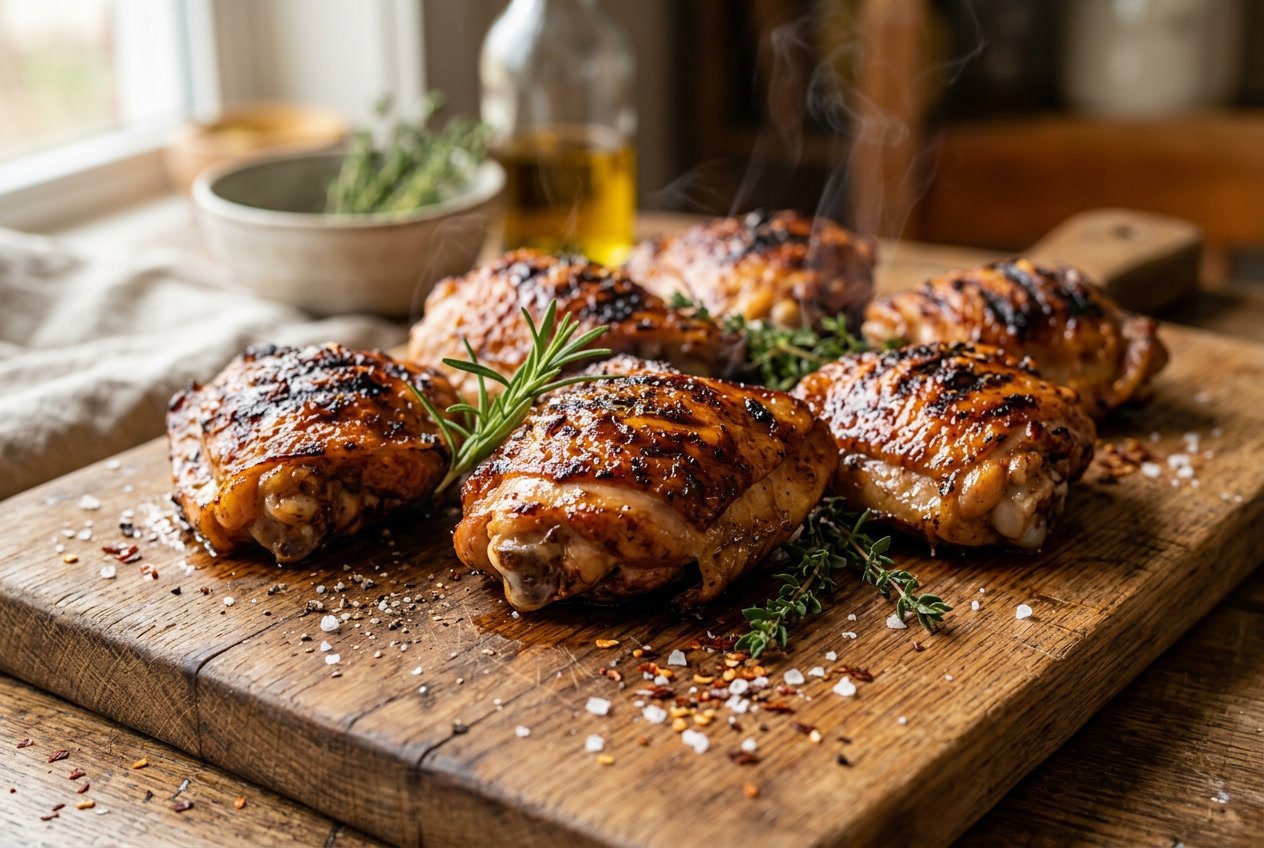
For reliably tender, juicy chicken thighs, smoke bone-in thighs between 225–275°F until the thickest part reaches about 175–180°F (or 165°F minimum for safety). Finish briefly over high heat for crisp skin.
Essential Preparation Steps
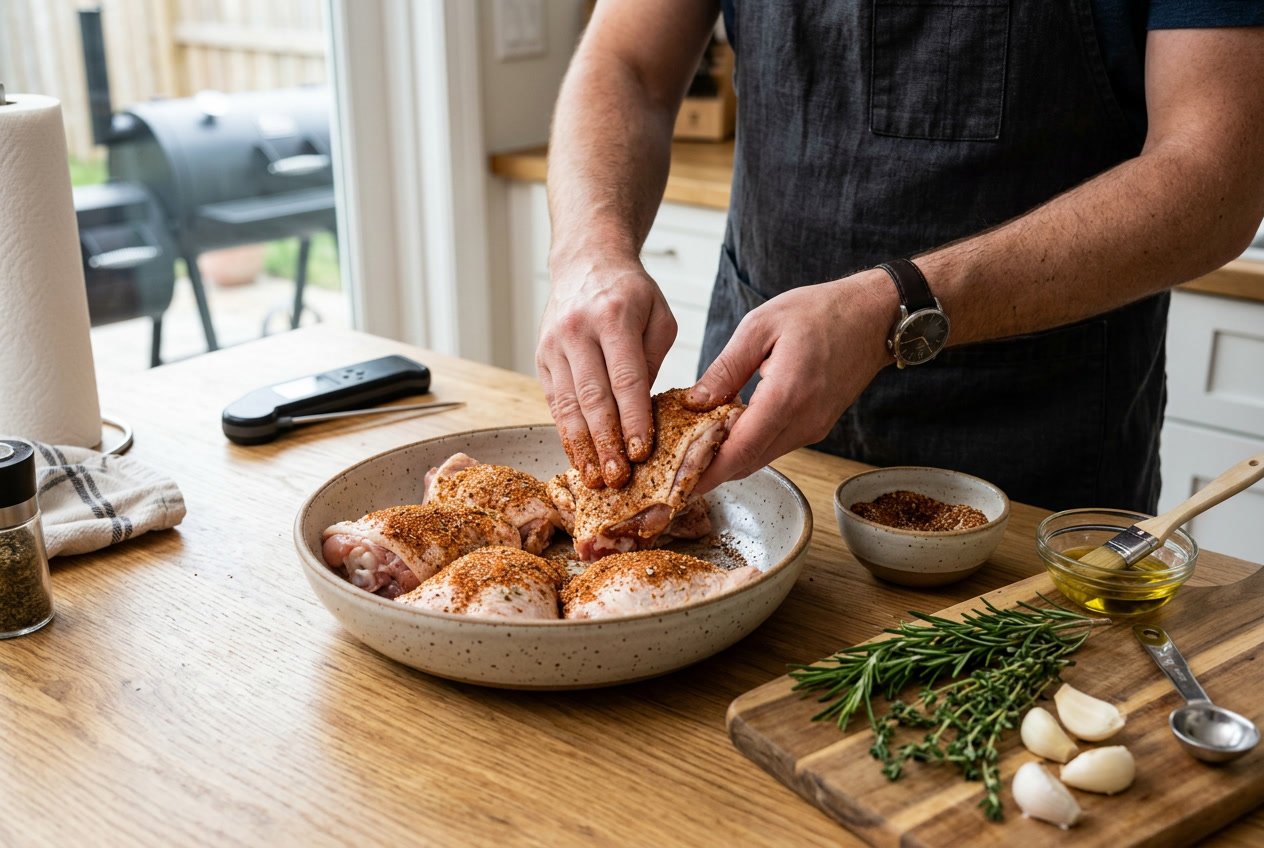
Focus on choosing the right thighs, trimming and cleaning to prevent flare-ups and uneven cooking, and using a brine when you want reliably juicy smoked chicken thighs.
Selecting Quality Chicken Thighs
Choose bone-in, skin-on thighs for the best combination of flavor, moisture, and protection during smoking. Inspect packages for even color and minimal blood spots.
Avoid torn skin or swollen packaging that indicates poor handling. Aim for thighs about 4–6 ounces each for consistent cook times.
Buy from a butcher or reputable brand if possible. Pasture-raised or higher-welfare birds often have better texture and fat distribution, which helps with smoke flavor.
If you buy frozen, thaw fully in the refrigerator for 24 hours before smoking to ensure even temperature and predictable cooking time.
Trimming and Cleaning the Thighs
Pat thighs dry with paper towels to remove surface moisture. Dry skin helps smoke adhere and creates crisper results.
Trim off large fat pads and loose skin flaps that can cause flare-ups or uneven rendering. Leave a thin layer of fat to baste the meat during smoking.
Remove stray bone fragments or cartilage with kitchen shears. If you brined, rinse lightly and pat dry again.
Arrange trimmed thighs skin-side up on a tray to rest 20–30 minutes at room temperature before seasoning so they cook more evenly.
Brining for Moisture Retention
Dissolve 1/4 cup kosher salt and 1/4 cup brown sugar per quart of water for a simple wet brine. Submerge thighs fully and refrigerate 4–6 hours for typical thigh size.
Reduce brining time to 2–3 hours for smaller pieces to avoid over-salting. Add aromatics like cracked peppercorns, smashed garlic, or thyme if desired.
After brining, rinse briefly under cold water and pat very dry. Air-chill in the fridge for 30–60 minutes if time allows to dry the skin further.
Seasoning and Marinating
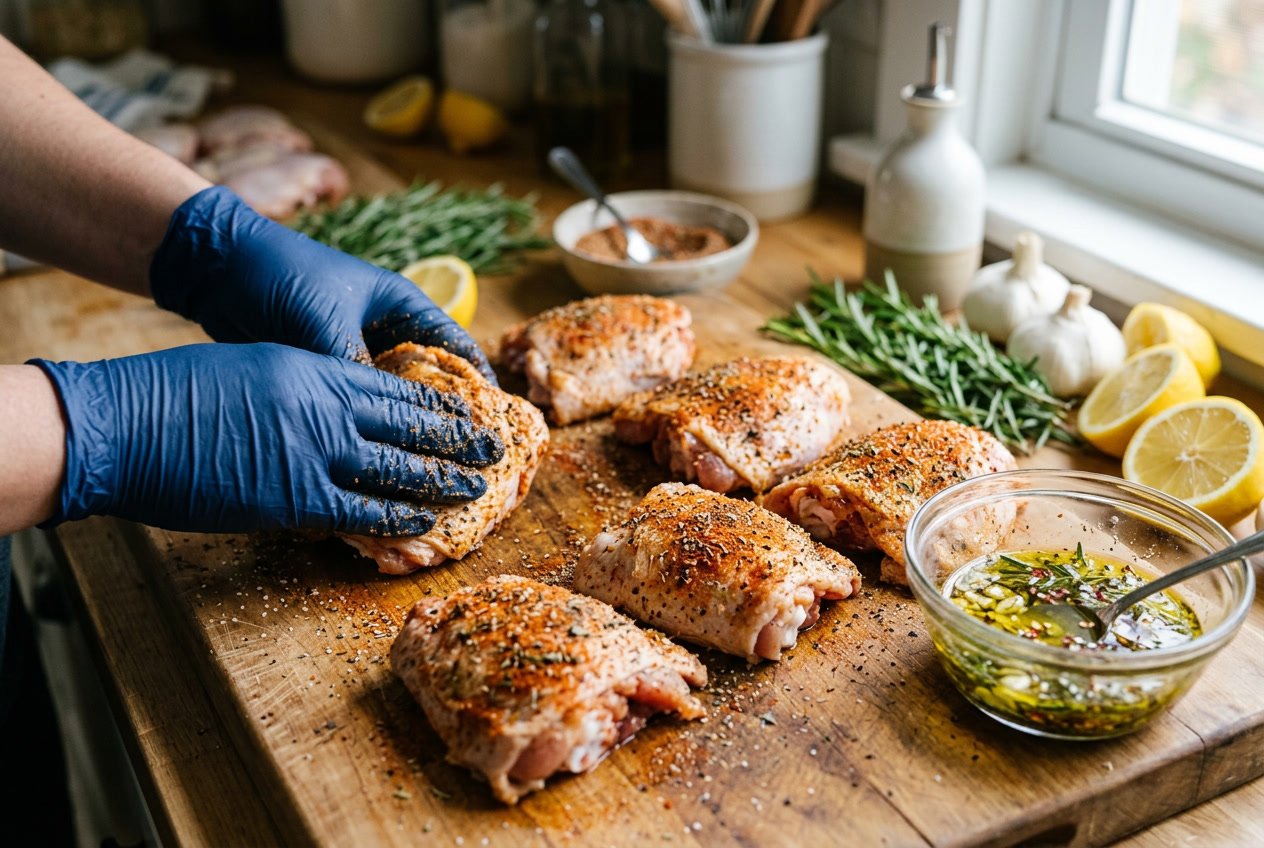
Choose between a dry rub for a crusty bark or a wet marinade for deeper moisture and subtle aromatics. Focus on salt level, balancing sweet and heat, and timing for best flavor.
Choosing the Right Dry Rub
Start with kosher salt and coarse black pepper as a base. Add 1–2 tablespoons brown sugar for caramelization.
Use 1 tablespoon paprika, and 1 teaspoon each garlic powder and onion powder for savory depth. Adjust heat with cayenne or chili powder.
For wood pairing, use apple or cherry with sweeter rubs and hickory or mesquite with bolder spices. Pat thighs dry before applying rub.
Apply the rub at least 30 minutes before smoking, or refrigerate up to 24 hours for deeper penetration. Let thighs sit at room temperature 20–30 minutes before smoking.
Homemade Rub Recipes
Classic Smoky Rub:
- 1 tbsp kosher salt
- 1 tbsp brown sugar
- 1 tbsp smoked paprika
- 1 tsp garlic powder
- 1 tsp onion powder
- ½ tsp black pepper
Spicy Citrus Rub:
- 1 tbsp kosher salt
- 1 tsp chili powder
- 1 tsp ground cumin
- Zest of 1 lemon
- ½ tsp cayenne (optional)
Herb & Lemon Rub:
- 1 tbsp kosher salt
- 1 tbsp dried thyme/rosemary mix
- 1 tsp lemon zest
- 1 tsp black pepper
Use roughly 1 tablespoon of rub per pound of meat. Massage evenly over skin and under where possible.
Reserve a small amount to sprinkle during the last 15 minutes of smoking if you want a refreshed flavor layer.
Marinating Methods
For a wet brine, dissolve ½ cup kosher salt and ½ cup sugar per gallon of water. Add aromatics like bay leaves, garlic, and peppercorns.
Submerge thighs for 4–6 hours in the fridge. Rinse and pat dry before smoking.
For acid-based marinades, combine ¼ cup olive oil, 2 tbsp lemon juice or vinegar, minced garlic, and herbs. Marinate 2–8 hours; avoid overnight with strong acids.
For buttermilk marinade, mix 2 cups buttermilk with 1–2 tbsp hot sauce and 1 tsp salt. Soak thighs 4–8 hours, then rinse lightly and pat dry.
Use lower smoker temps (225–250°F) to protect sugar in marinades from burning.
Setting Up the Smoker
Get the smoker stable before adding chicken thighs. Focus on a steady cooking temperature and choose a wood that complements poultry.
Arrange racks or vents so smoke moves evenly past every piece.
Preheating to the Ideal Temperature
Preheat the smoker to 225–275°F for classic low-and-slow results. For a faster cook with crisper skin, set it to 300–325°F.
Use a reliable digital probe for chamber temp and one for meat. Hold the smoker at temperature for 15–20 minutes before loading.
Leave at least 1–2 inches between thighs for airflow. If you use a water pan, fill it and place it below the meat.
Check the pellet hopper or heating element for consistent feed and fuel.
Best Types of Wood for Smoking
Choose milder fruit woods for chicken: apple, cherry, and maple add sweet, complementary notes. Use hickory sparingly for a traditional barbecue flavor.
Recommended pairings:
- Apple or cherry: mild, fruity
- Maple: subtle sweetness
- Hickory: stronger smoke, use in small amounts
- Mesquite: very strong; use for bold flavor only
Use wood chunks or chips soaked briefly if your smoker needs them. Pellet smokers need dry pellets.
Aim for thin white smoke rather than thick blue smoke.
Ensuring Even Smoke Circulation
Place thighs skin-side up on the grate with gaps between pieces. Put thicker pieces closer to the heat source if your smoker has hot spots.
Rotate racks every 45–60 minutes if needed. Orient the smoker’s exhaust and intake so smoke flows across the food toward the chimney.
Load from the back forward if your smoker has multiple racks. Use a smoker rack or wire mesh to keep pieces at a consistent height.
Monitor chamber temperature at several locations. Adjust vents, add or remove coals or wood, or rearrange meat to maintain uniform cooking.
Smoking Chicken Thighs: Method and Timing
Balance time, temperature, and internal doneness to keep meat juicy and flavorful. Choose a lower temp for more smoke penetration or a higher temp to shorten cook time and crisp skin.
Smoking at Low Temperatures (225–250°F)
At 225–250°F you’ll emphasize smoke flavor and slow collagen breakdown. Bone-in thighs take about 1.5–2 hours; boneless finish faster, often 60–75 minutes.
Use a probe thermometer and adjust for thigh size. Place thighs skin-side up to let fat render without burning the skin.
Use fruit woods like apple or cherry for a mild profile. For crisp skin at the end, increase heat for the last 5–10 minutes or briefly sear on a hot grill.
Maintain steady airflow and avoid opening the smoker frequently.
Smoking at Medium-High Temperatures (275–300°F)
Smoking at 275–300°F reduces cook time while still producing smoky flavor. Bone-in thighs often finish in 45–75 minutes; boneless may take 30–50 minutes.
Arrange thighs with some space between pieces for even circulation. Monitor with an instant-read probe.
If you want extra bark, apply sauce or glaze in the final 10–15 minutes. Check temperature more frequently near the target to avoid overcooking.
Internal Temperature and Doneness
Use internal temperature as your primary doneness guide. The USDA minimum safe temp for chicken is 165°F, but thighs benefit from higher temps for tenderness.
Aim for 175–180°F for bone-in thighs. Insert the thermometer into the thickest part without touching bone.
Rest thighs 5–10 minutes after removing them. If you want crispier skin, rest briefly then finish at 400°F for 5–10 minutes before serving.
Techniques for Crispy Skin
Control moisture, render fat, and finish with direct high heat to turn smoked chicken thighs skin from soft to crisp. Dry the surface, manage smoker temperature, and use a short, intense blast of heat at the end.
Finishing at High Heat
After smoking chicken thighs at 225–250°F until the internal temperature reaches about 155–160°F, move to a high-heat finish to crisp skin quickly.
Raise the smoker to 375–400°F for 10–15 minutes, transfer thighs to a hot grill or cast-iron skillet skin-side down, or broil in the oven 6–8 inches from the element for 3–5 minutes.
Pat thighs dry before the finish and brush with oil or melted butter. Watch closely; direct heat renders fat and evaporates moisture, but skin can char quickly.
Use a thermometer and visual cues like deep golden color and sizzling skin.
Avoiding Rubberiness
Dry-brine or air-dry thighs uncovered in the refrigerator for 8–24 hours to remove surface moisture. Pat dry again before seasoning and placing in the smoker.
Maintain steady smoker temps (225–250°F) so fat renders slowly. Avoid frequent spritzing or basting; excess liquid rehydrates the skin.
If you must spritz, use short bursts early and stop 30–45 minutes before finishing. Space thighs so air circulates and fat can render evenly.
If skin seems under-crisped after smoking, use the high-heat finish rather than extending the low-and-slow phase.
Serving and Flavor Enhancements
Let the thighs finish resting. Choose a sauce that complements the smoke without masking it, and pick sides that balance richness and texture.
Resting and Slicing the Meat
Let smoked chicken thighs rest 10–15 minutes, tented loosely with foil, after they reach 175–185°F.
Resting allows juices to redistribute and the collagen to finish breaking down, so slices stay moist and the bark keeps its texture.
For bone-in thighs, remove bones after resting or serve whole.
For boneless thighs, slice against the grain into 1/2-inch pieces for tender bites.
Use a sharp slicing knife or chef’s knife and wipe between cuts to keep the presentation clean.
If you plan to glaze, apply the glaze during the last 5–10 minutes of smoking or right after resting so it sets without steaming the skin.
Keep a probe thermometer handy while resting to ensure carryover heat doesn’t push the temperature above your target.
Pairing with BBQ Sauce
Match sauce intensity to smoke level.
Use lighter, vinegar-based or mustard sauces with mild apple or cherry smoke.
Choose thicker, sweet tomato-based sauces for stronger hickory or mesquite flavors.
Use hickory sparingly to avoid bitterness.
Prepare a simple BBQ sauce by combining 1 cup ketchup, 1/3 cup apple cider vinegar, 2 tbsp brown sugar, 1 tbsp Worcestershire, 1 tsp smoked paprika, and salt to taste.
Simmer 10 minutes to meld flavors, then cool.
Adjust sweetness or acidity to taste before brushing or serving.
Offer sauce on the side and brush a thin coat just before serving for shine and a fresh sweet-savory layer.
Provide a small bowl of sauce per guest to keep the smoked bark crisp and let each person control saucing.
Recommended Side Dishes
Pair smoked thighs with acid and crunch to cut richness.
A vinegar-based slaw, pickled red onions, or a simple green salad with lemon vinaigrette work well.
Starchy sides like smoked baked beans, grilled corn, or potato salad give comfort and soak up sauce.
For texture contrast, serve crisp pickles or fried shallots.
For a cohesive plate, add a fruit element such as grilled peaches or an apple-cabbage slaw when using fruitwood smoke.
Warm baked beans and a cold slaw hold well while you rest and slice the meat.
Label sauces (vinegar, mustard, tomato) so guests can pair based on their taste.
Variations and Advanced Tips
Choose bone-in for more flavor and forgiving cooking time, or boneless for shorter smoke time.
Your smoker type affects temperature stability and smoke intensity, and avoiding mistakes like under-resting or using wet wood improves results.
Boneless vs. Bone-In Chicken Thighs
Bone-in, skin-on thighs give you more margin for error.
The bone conducts heat and the skin protects the meat during long smoking sessions.
You can hold at 275°F for 50–75 minutes and still get juicy smoked chicken thighs.
Expect slightly longer cook times and a deeper flavor when you keep the bone.
Boneless thighs cook faster and work well for quick weeknight meals.
Trim excess fat, set smoker temp to 250–275°F, and check internal temp early (start probing at 35–40 minutes).
They finish in roughly 30–50 minutes, but watch for overcooking since boneless meat loses moisture quickly.
If you want crispy skin, choose bone-in and finish with a 450–500°F sear or a few minutes under a broiler.
For shreddable meat or quicker service, pick boneless and pull at 175–180°F for fall-apart texture.
Using Pellet Grills or Other Smokers
Pellet grills provide steady temp control and a consistent light smoke, which suits beginners.
Set pellets to 250–275°F, use fruit woods like apple for milder smoke, and monitor with a probe thermometer.
Charcoal or offset smokers deliver stronger smoke flavor but require more attention to vents and fuel.
Use a two-zone setup with coals on one side and thighs on the other, adding small wood chunks for smoke pulses.
Plan for temp swings and favor lower, longer cooks to avoid drying the meat.
Electric smokers give predictable temps but often lack smoke intensity.
Compensate by using stronger rubs or finishing with a flavored glaze.
Regardless of smoker type, place thighs skin-side up, keep the lid closed, and target 165°F internal for safe service, then rest before slicing.
Common Mistakes to Avoid
Skipping the rest period robs you of juiciness. Let thighs rest 5–15 minutes tented in foil so juices redistribute.
Longer rests, about 30 minutes, work if you hold at low heat. Cutting too soon causes clear juice loss and drier meat.
Wet or green wood creates bitter, sooty smoke. Use well-seasoned hardwoods and small wood chunks.
Avoid cooking at too-high temperatures to force crisping. High heat can dry the interior before the skin renders.
Smoke at a low temperature and finish hot briefly. Relying on time alone gives inconsistent results.
Use an instant-read or leave-in probe to check internal temps. Apply heavier sauces in the last 10–15 minutes to prevent masking the smoke flavor.


