
When Is Chicken Thighs Cooked? Safe Temperatures, Timing & Tips
You want to know exactly when chicken thighs are safe and perfect to eat, not guesswork.
Chicken thighs are done when the thickest part reaches 165°F (74°C) on an instant-read thermometer and the juices run clear. Use the thermometer to avoid dry or undercooked meat.
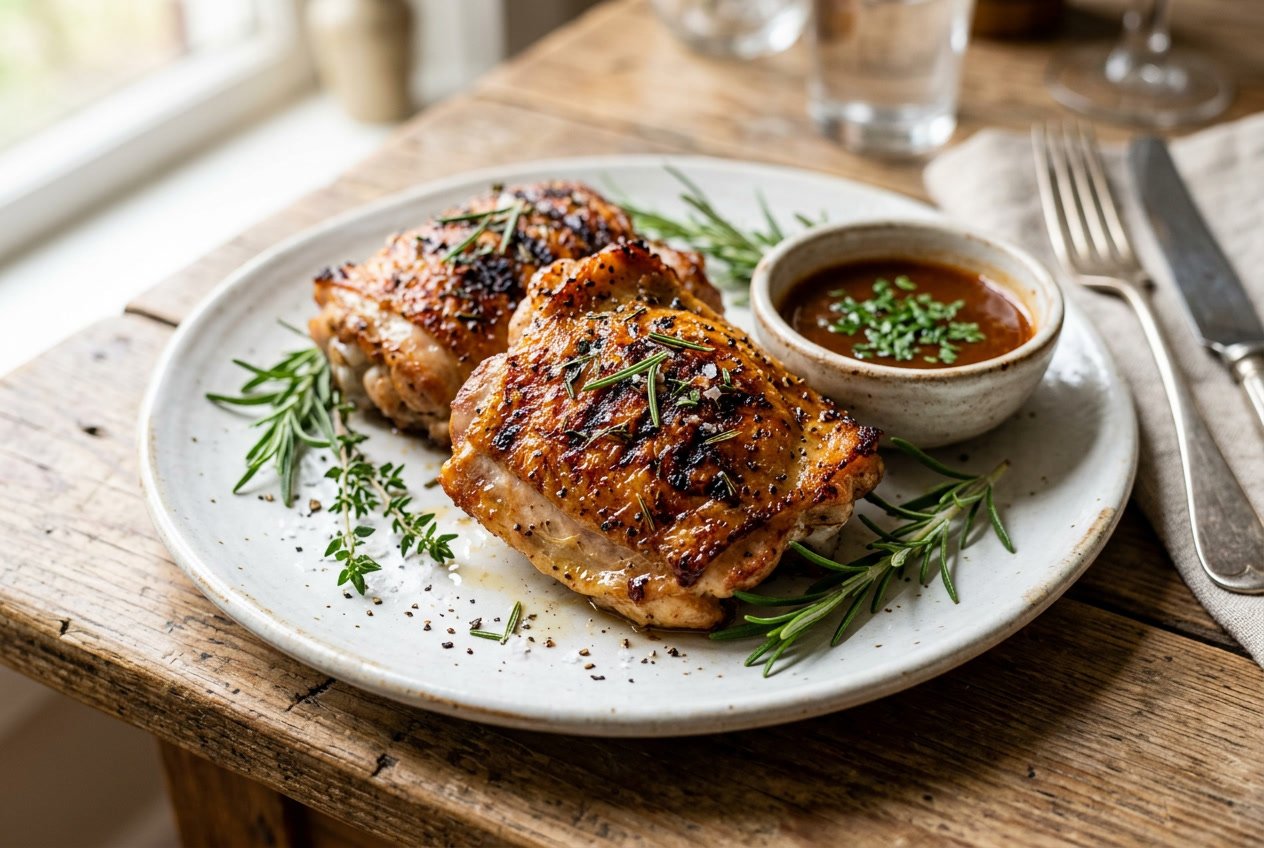
You can spot doneness by checking temperature, visual and tactile cues, and understanding how bone-in, skin-on, boneless, and skinless thighs differ.
Follow practical tips on thermometer use, timing for baking, grilling, or pan-searing, and quick prep tricks that keep thighs juicy every time.
Essential Signs Chicken Thighs Are Cooked
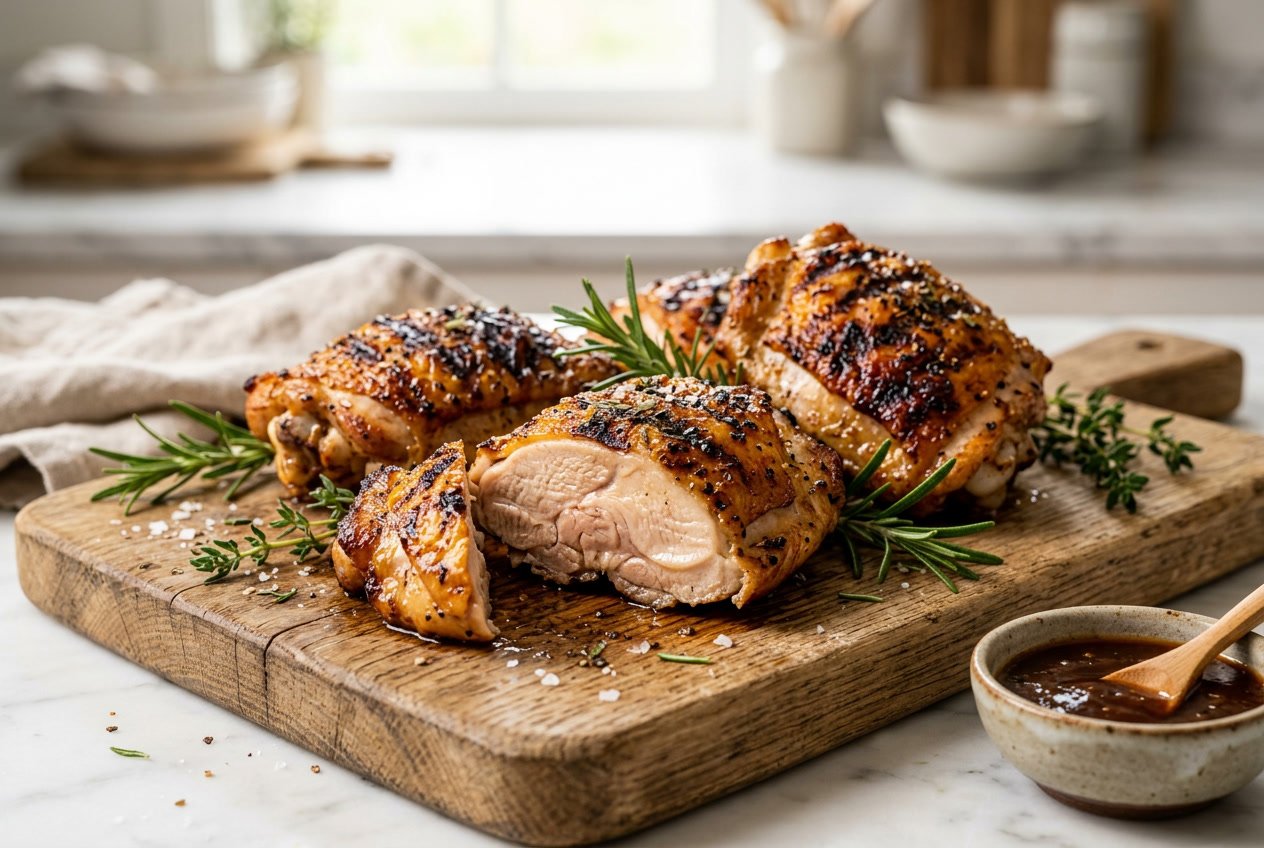
Use a precise temperature, clear visual and texture cues, and the color of juices to know a chicken thigh is done.
Use a thermometer as your primary check and confirm with appearance and firmness before serving.
Internal Temperature Guidelines
Insert a digital meat thermometer into the thickest part of the thigh, avoiding contact with bone.
The safe minimum internal temperature is 165°F (74°C); when the probe reads this, it destroys harmful bacteria like salmonella.
For juicier, more tender dark meat, cook bone-in thighs to 175–185°F (79–85°C) without safety concerns.
Those higher temperatures break down connective tissue and collagen, yielding tender chicken thighs that pull easily from the bone.
Boneless thighs usually reach doneness faster; check them in the center and expect shorter cook times.
Let thighs rest 3–5 minutes after removing them from heat so the temperature evens out and juices redistribute.
Visual Cues and Texture
Look for color change from translucent pink to opaque white or pale beige throughout the meat.
Cut into the thickest section to inspect; the area near the bone can stay slightly pink due to marrow pigments, so don’t rely on color alone.
Press the meat with a finger or tongs; cooked thighs feel firm but spring back, not soft and jiggly.
If the meat shreds easily and pulls away from the bone, connective tissue has broken down and thighs are tender.
Overly dry, stringy texture means overcooking; reduce heat or time next cook to keep thighs moist.
Juice Color Indicators
Pierce the thickest part of the thigh with a skewer or the tip of your thermometer and observe the juices.
Clear or slightly tinged juices indicate doneness and safety.
If you see pink or red juices, return the thighs to heat and recheck temperature later.
Small traces of pink near the bone can persist even at safe temperatures, so corroborate juice color with a temperature check to be certain your chicken thighs are fully cooked.
Using a Meat Thermometer for Accurate Results
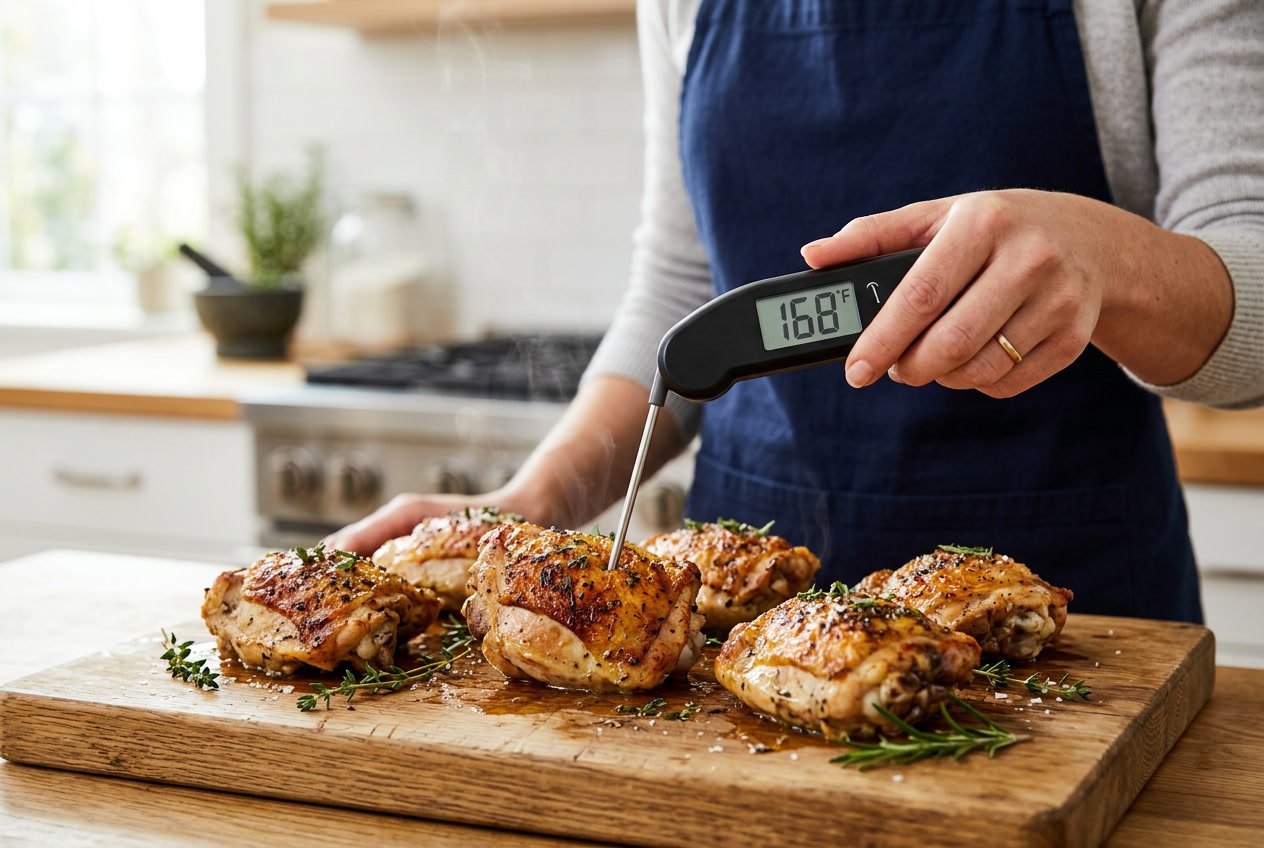
A meat thermometer helps you hit the safe minimum and the ideal pull temperature for juicy thighs.
Insert the probe into the thickest part, avoid the bone, and wait for the reading to stabilize.
Choosing the Right Meat Thermometer
Pick an instant-read digital thermometer for everyday cooking.
These give fast, reliable readings (usually within 2–5 seconds for high-quality models) and are easy to clean.
Look for accuracy ±1–2°F, a probe length of 2–3 inches for thighs, and a foldaway or removable probe for storage and washing.
Water resistance helps when you rinse the probe.
Battery life and a clear backlit display matter if you cook in low light.
If you want continuous monitoring while roasting, choose a leave-in probe thermometer rated for oven use.
Do not use an instant-read as a leave-in probe unless the manufacturer specifies it’s safe to leave in the oven.
How to Use an Instant-Read Thermometer
Insert the probe tip into the thickest part of the thigh, pushing until the sensing area is fully inside the meat.
Keep the probe at least 1/2 inch away from bone to avoid false high readings.
Hold the probe steady and wait for the display to stop changing before recording the temp.
If the thermometer offers a “hold” button, use it to lock the reading while you remove the probe.
Clean the probe with hot, soapy water before and after each use to prevent cross-contamination.
Calibrate your thermometer periodically using an ice-water or boiling-water test per the manufacturer’s instructions.
Replace the battery or the unit if readings drift or the device no longer responds quickly.
Best Places to Check Temperature
For bone-in thighs, place the probe in the center of the thickest meat near the bone but not touching it.
Bone conducts heat and can show a higher temp; avoid contact to prevent overcooking by mistake.
For boneless thighs, probe the thickest cross-section horizontally so the sensor sits fully inside the meat.
Check two spots if pieces vary in size or thickness to confirm uniform doneness.
If you’re using a leave-in probe while roasting multiple thighs, check the thickest piece or the piece nearest the center of the pan.
After removing from heat, verify a final reading before serving; carryover cooking can raise the internal temp a few degrees during resting.
How Long to Cook Chicken Thighs by Method
Aim for an internal temperature of 165°F (74°C) as the safe minimum, though thighs often benefit from higher temps for tenderness.
Time varies by method, bone-in vs boneless, and whether skin is on, so use a probe thermometer to finish precisely.
Oven-Baked Chicken Thighs
Bake bone-in, skin-on chicken thighs at 400°F (200°C) for about 35–45 minutes.
Boneless, skinless thighs take 20–30 minutes at the same temperature.
Start skin-side up on a rimmed sheet pan or in a roasting pan so fat renders and skin crisps.
Check doneness with an instant-read thermometer in the thickest part without touching bone.
Remove at 165°F for immediate serving or 175–185°F if you want connective tissue breakdown for a more tender, shreddable result.
For even browning, pat skin dry, season, and use a hot oven.
Let baked chicken thighs rest 5–10 minutes before cutting to let juices redistribute.
Air Fryer Chicken Thighs
Cook boneless, skinless thighs at 375°F (190°C) for 10–15 minutes, flipping once.
Bone-in, skin-on thighs need 18–25 minutes, flipping halfway.
Arrange thighs in a single layer with space between pieces for even air flow.
Use a light spray of oil on skin to promote crispness and a thermometer to confirm 165°F in the thickest part.
If you want extra-crispy skin, finish with 2–3 minutes at 400°F.
Avoid overcrowding to prevent steaming and longer cook times.
Grilled Chicken Thighs
Grill boneless thighs over medium-high (425–450°F) about 4–6 minutes per side.
For bone-in, start skin-side down over direct heat for 6–8 minutes, then move to indirect heat and cook another 10–15 minutes.
Aim for 165°F internally; if you prefer more tender meat, pull at 175°F.
Watch for flare-ups from rendered fat and keep a spray bottle or cooler zone to avoid charring.
Let grilled chicken thighs rest 5 minutes before serving.
This keeps juices in the meat and improves texture.
Fried and Braised Chicken Thighs
For fried chicken thighs, maintain oil at 325–350°F (160–175°C).
Boneless pieces take 6–8 minutes; bone-in pieces take 12–15 minutes.
Fry in batches and use a thermometer in the thickest spot for 165°F.
Braised chicken thighs combine searing and slow cooking.
Brown skin-side first in a hot pan 3–5 minutes per side, then simmer covered in liquid at low heat for 25–40 minutes for boneless, 35–50 minutes for bone-in.
Check for 165°F and fork-tender meat; higher temps (175–185°F) break down connective tissue for a silky texture.
For fried or braised thighs, rest briefly after cooking to settle juices and finish any carryover cooking.
Differences Between Boneless and Bone-In Chicken Thighs
Boneless thighs cook faster and more uniformly because they lack bone and are usually trimmed to consistent thickness.
Bone-in thighs take longer but give slightly more flavor and moisture near the bone; cooking method and piece size determine exact times.
Cooking Times for Boneless Thighs
Boneless chicken thighs typically reach safe doneness faster—expect about 15–25 minutes total depending on method and thickness.
Pan-sear small, 1/2–3/4-inch pieces for 6–8 minutes per side over medium-high heat.
Oven-bake at 400°F (205°C) usually takes 18–22 minutes for average-sized pieces.
Grill over direct medium heat for 6–8 minutes per side.
Use an instant-read thermometer and pull the thighs when the thickest point reads 165°F (74°C).
Rest the meat 3–5 minutes to let juices redistribute; internal temperature can rise a few degrees during rest.
If pieces vary in thickness, pound to even thickness or separate by size to avoid overcooking.
Cooking Times for Bone-In Thighs
Bone-in chicken thighs generally need 30–45 minutes, depending on size and cooking method.
Pan-searing then oven-finishing at 375–400°F (190–205°C) usually takes 25–35 minutes after browning.
Fully oven-roasted bone-in thighs can take 35–45 minutes.
Grill over indirect heat for longer periods, or use a two-zone method—sear over high heat, then move to cooler side to finish for 20–30 minutes.
Check doneness with an instant-read thermometer at the thickest meat near the bone; aim for 165°F (74°C).
Expect slightly longer times when skin-on or for larger supermarket “jumbo” thighs.
Allow 5–10 minutes resting time so juices redistribute and the meat near the bone finishes cooking.
Skin-On vs Skinless Chicken Thighs
Skin-on thighs give you richer flavor and a buffer against drying.
Skinless thighs cook faster and have less surface fat.
Choose skin-on when you want crispy texture and juicier meat, and skinless when you need lower fat or quicker, even cooking.
Crispy Skin Techniques
To get crispy chicken thighs, start with skin-on thighs that are patted dry.
Use a light dusting of salt and let them sit uncovered in the fridge for 30–60 minutes to dry the skin; this concentrates flavor and speeds crisping.
Sear skin-side down in a hot, preferably cast-iron, skillet without crowding the pan.
Render the fat slowly at medium heat for 6–10 minutes until the skin is deeply browned and releases easily.
Finish in a 400°F oven for 8–15 minutes for bone-in or 6–10 for boneless, depending on thickness.
For extra crisp, try a thin coating of baking powder (not baking soda) mixed with salt; it raises pH and dries the skin.
Avoid adding wet marinades to skin before searing; they prevent Maillard browning and produce soggy skin.
Moisture and Flavor Considerations
Skin-on chicken thighs retain moisture better during long cooking because the skin and underlying fat protect the meat.
If you cook bone-in, skin-on thighs to 175–185°F you’ll break down connective tissue and increase tenderness; use an instant-read thermometer placed into the thickest part without touching bone.
Skinless thighs cook faster and can dry if overcooked; aim for 165–175°F depending on desired texture.
To compensate, brine briefly (30–60 minutes) or marinate with oil and acid to add moisture and flavor before cooking.
For even cooking, flatten thick spots or use boneless, skinless thighs for quick pan-frying or stir-fries.
If you want crispy chicken thighs but prefer less fat, remove most skin after cooking.
The meat stays moist while you reduce surface fat.
Preparation and Marinade Tips for Perfect Texture
Control moisture, acid, and time to build flavor without turning the meat mushy.
Pat thighs dry, season or marinate as needed, and give cooked pieces a short rest so juices redistribute.
Marinating Chicken Thighs Safely
Marinate chicken in the refrigerator, not on the counter. Use a nonreactive container or a sealed plastic bag and keep the temperature at or below 40°F (4°C).
Balance your marinade by including oil for moisture, an acid like lemon, vinegar, or yogurt for tenderizing, and salt to season and help proteins retain moisture. Marinate for 30 minutes for surface flavor or 2–8 hours for deeper seasoning.
Limit acidic marinades such as citrus or vinegar to under 8–12 hours to avoid a mushy texture. You can safely marinate with yogurt or buttermilk overnight for extra tenderness.
Pat thighs completely dry before applying a dry rub or return them to the refrigerator uncovered for extra-crispy skin. Reserve a portion of marinade before adding raw chicken if you want to use it as a finishing sauce.
Rinse only if the recipe requires it. Otherwise, discard used marinade and cook the chicken to the recommended internal temperature.
Resting for Juiciness
Let cooked thighs rest for 5–10 minutes before cutting so juices redistribute. Resting helps keep the meat tender.
Loosely tent roasted or grilled thighs with foil to hold heat without trapping steam. For bone-in pieces, pull at 175°F–185°F before resting as carryover heat continues to break down collagen and improve mouthfeel.
Pull boneless thighs at 165°F and let them rest. Overcooking risks drying the meat.
If you reheat, use low, even heat such as a 300°F oven or gentle stovetop and add a splash of broth to preserve moisture.
Popular Chicken Thigh Recipes and Serving Ideas
Chicken thighs pair well with bold marinades, long braises, or quick high-heat finishes. Choose bone-in, skin-on for the most flavor and crispy skin. Use boneless, skinless for shredding or fast skillet dishes.
Family-Friendly Dishes
Shred large batches of chicken thighs for tacos, sandwiches, or casseroles. Slow-cook adobo or butter chicken for tender, saucy fillings that reheat and freeze well.
Pair thighs with vegetables like potatoes, carrots, or Brussels sprouts on a sheet pan. Roast at 400°F (200°C) for 35–45 minutes until the internal temperature reaches 165°F (74°C).
Use a simple seasoning blend of salt, pepper, garlic powder, and paprika or a bottle of BBQ sauce for quick prep. Pan-seared thighs with honey-mustard glaze or oven-baked Parmesan-crusted thighs offer familiar flavors with minimal effort.
Plan on one thigh per adult when serving with sides, or half a thigh if you include hearty starches.
Weeknight Quick Meals
Use boneless, skinless thighs and high heat to turn them into a 20–30 minute dinner. Sear the thighs on medium-high for 4–5 minutes per side.
Finish cooking them in a 425°F (220°C) oven for 8–10 minutes until they reach an internal temperature of 165°F (74°C). This method gives you a crispy exterior and juicy interior quickly.
Cut thighs into strips for stir-fries and curries so they brown fast and stay moist. For single-pan dinners, sauté onions and bell peppers, then add seasoned thigh pieces.
Deglaze the pan with soy sauce or white wine and simmer briefly. Serve the dish over rice, couscous, or pasta for a complete meal with minimal cleanup.


