
When Is Chicken Thigh Done Temp: The Definitive Internal Guide
You want to know exactly when a chicken thigh is done, not guesswork. Aim for an internal temperature of at least 165°F (74°C) for safety. For juicier, more tender bone-in thighs, pull them at about 175–185°F (79–85°C). Boneless thighs can be removed closer to 165–170°F.
Use an instant-read thermometer in the thickest part, avoiding bone, to get a reliable result.
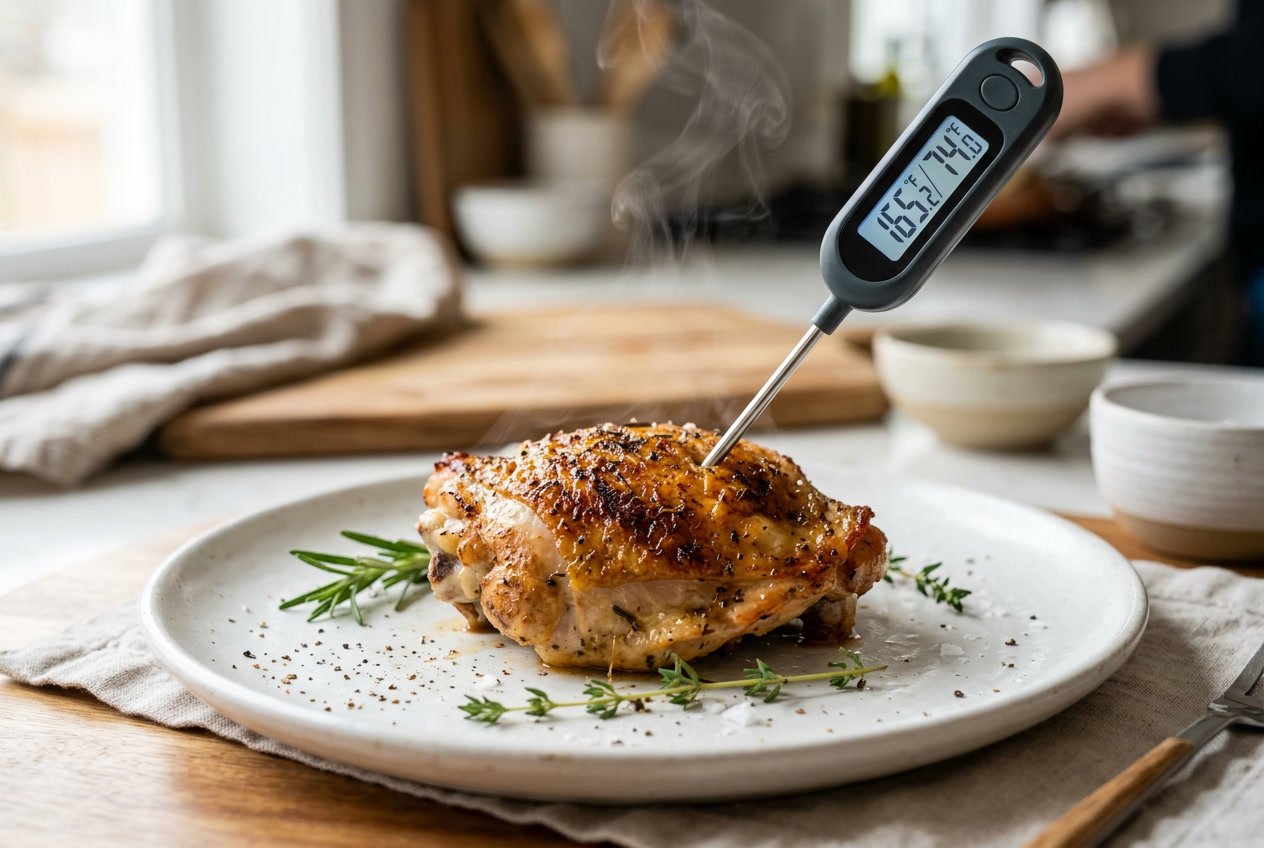
Thermometer placement, bone-in vs boneless differences, and cooking methods affect target temps and texture. Follow a few simple prep and checking steps to get consistent, flavorful results every time.
Safe Chicken Thigh Internal Temperature
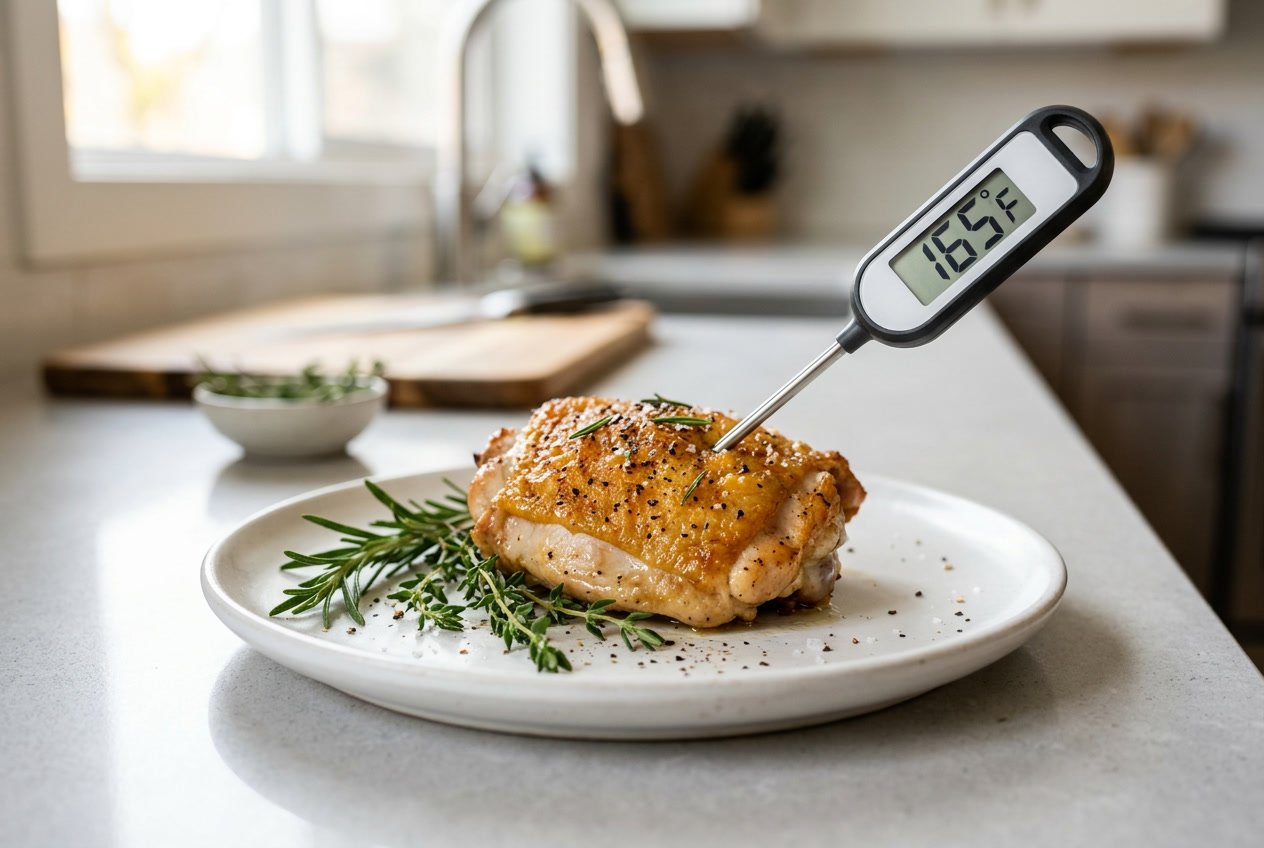
You need a clear temperature target for safety and another for texture. Follow the USDA minimum to prevent foodborne illness, then decide if a higher pull temperature will give you the tenderness you want.
Minimum Safe Temperature per USDA
The USDA sets the minimum safe internal temperature for poultry at 165°F (74°C), measured at the thickest part of the thigh without touching bone. Insert an instant-read thermometer into the flesh to confirm; visual cues like color are unreliable.
Check temperature toward the end of cooking, not at the surface. If the probe reads below 165°F, continue cooking and retest after a few minutes.
Optimal Temp Range for Juicy and Tender Thighs
Dark meat in thighs contains more collagen that benefits from higher heat. Pull bone-in, skin-on thighs at 175°F–185°F for more collagen breakdown and a silkier texture.
Boneless thighs have less connective tissue and are best removed at 165°F–170°F to avoid drying.
- 165°F: safe, slightly firmer texture (best for boneless).
- 175°F–185°F: more tender, fall-apart meat (best for bone-in or braises).
Insert the thermometer into the thickest portion, not touching bone. Let bone-in thighs rest 5 minutes to equalize temperature and improve juiciness.
Thermometer Accuracy: How to Check Chicken Thigh Doneness
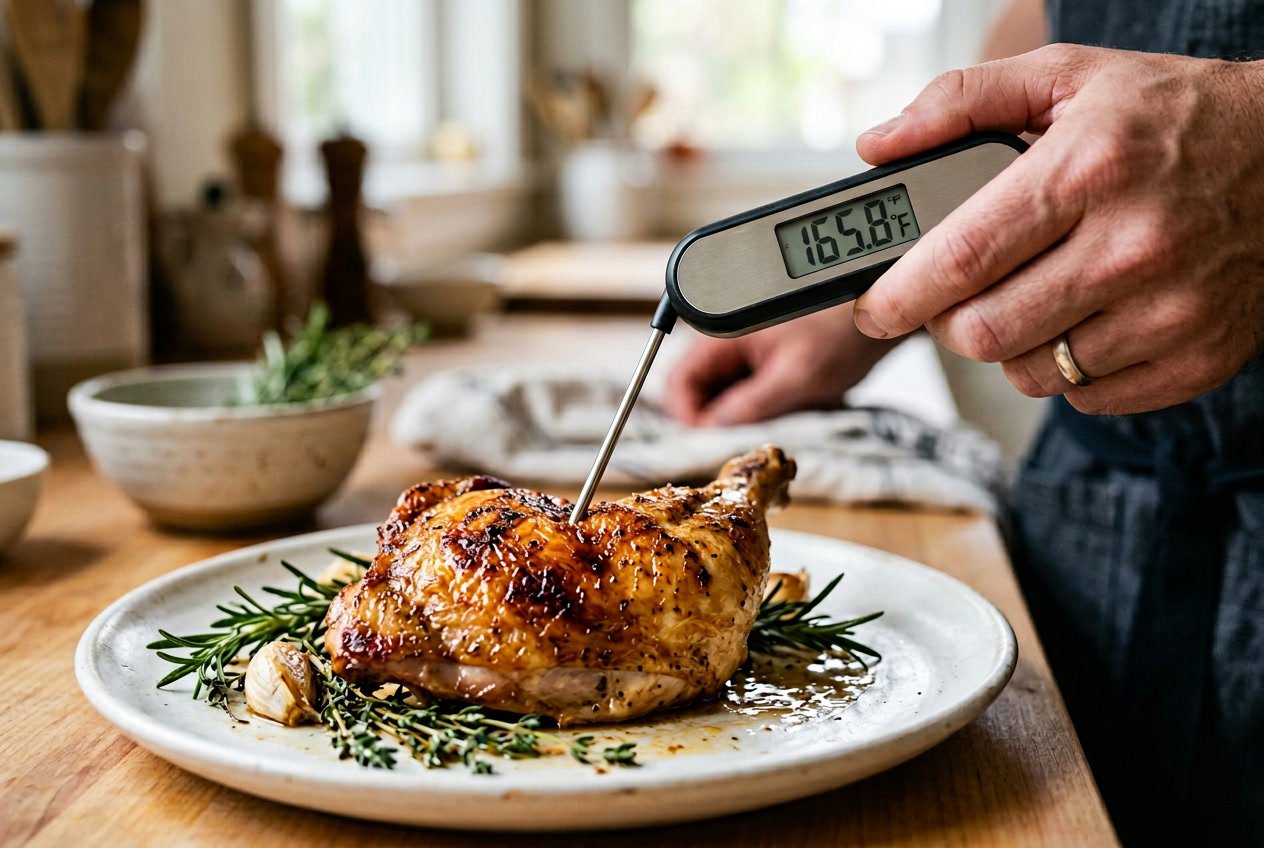
Use a reliable instant-read or probe thermometer and place it where the heat is lowest. Aim for a target internal temperature and avoid bone contact for accurate readings.
How to Use a Meat Thermometer Properly
Choose an instant-read digital thermometer with a thin probe for faster, more accurate readings. Calibrate if your model allows; test it in boiling water (should read ~212°F/100°C at sea level) or an ice bath (32°F/0°C) to confirm accuracy.
Insert the probe into the thickest part of the thigh. Push the probe deep enough to reach the center of the meat but stop short of the bone.
Hold the probe steady until the displayed temperature stabilizes, usually 2–10 seconds for instant-read models. Remove thighs when the thermometer reads 170–173°F (77–78°C) if you plan to rest them, since internal temperature often rises 2–5°F.
Clean the probe with hot, soapy water after each check to prevent cross-contamination.
Thermometer Placement and Reading Tips
Avoid touching bone, gristle, or the cooking surface. Bone conducts heat and gives falsely high readings.
Aim the probe at the geometric center of the thickest section, perpendicular to the skin surface when possible. Take at least two readings per piece when cooking unevenly sized thighs—one in the thickest spot and one nearby—to confirm consistency.
For bone-in thighs, angle the probe so it passes alongside the bone rather than resting on it. Read the display only after the number stabilizes.
If your thermometer has a fast-read feature, wait the manufacturer’s minimum time. If it’s slower, wait longer.
Bone-In Versus Boneless Chicken Thighs: Temperature Considerations
Bone-in thighs take longer to heat through and benefit from higher final temperatures to break down connective tissue. Boneless thighs cook faster and reach safe minimums sooner.
Use a probe thermometer at the thickest meat away from bone and expect carryover heat to raise the final reading by a few degrees after resting.
Ideal Temperatures for Bone-In Thighs
Bone-in chicken thighs contain more collagen and a cold bone that slows heat transfer. For tender results, aim for 175–195°F (79–91°C) at the thickest part of the meat, not touching the bone.
Pulling toward the upper end (185–195°F) melts more collagen and yields meat that pulls apart easily. Place the probe from the side so its tip sits centered in the flesh.
Expect cooking times longer than boneless pieces. Plan for 35–45 minutes at 400–425°F in the oven or similar grill timing using two-zone heat.
Rest 5–10 minutes; the internal temperature will creep up 2–5°F and juices will redistribute.
Temperature Guidelines for Boneless Thighs
Boneless chicken thighs reach safe temperatures faster because heat penetrates meat directly. Target 175–185°F (79–85°C) for juicy, sliceable thighs; you can safely stop at 165°F (74°C) if you prefer firmer texture and minimal cooking time.
Avoid relying on time alone—use a thermometer. Pan-searing plus oven finish or air fryer at 375–400°F commonly brings boneless thighs to target in 18–30 minutes depending on thickness.
Insert the probe into the center of the thickest part, check multiple spots if pieces vary in size, and rest 5 minutes to let carryover heat finish the meat.
Cooking Methods and Their Effects on Final Temperature
Different cooking methods change how quickly thighs reach safe and target temperatures. They also affect how much connective tissue breaks down and whether skin crisps or meat stays moist.
Pay attention to oven or grill temperature and use an instant-read thermometer in the thickest part without touching bone.
Baking Chicken Thighs for Doneness
Baking at 375–425°F gives predictable heat penetration and reliable timing. For bone-in, skin-on thighs, roast at 375°F for 40–50 minutes or 425°F for 30–40 minutes.
Check the thickest part for 165°F minimum, though 175–190°F yields more tender, gelatinized meat. Arrange thighs in a single layer with skin up to promote even browning.
Use a thermometer probe or instant-read; insert at least ¼ inch from the bone. Rest 5–10 minutes after baking to let carryover raise the internal temp slightly and redistribute juices.
If you want crispy skin, start hot (425°F) for the first 10–15 minutes, then reduce temperature. For boneless thighs expect shorter times (20–30 minutes at 400°F) and less connective-tissue breakdown.
Grilling Chicken Thighs for Proper Temp
Grill with two zones: direct high heat for searing and indirect medium heat for finishing. Sear skin or surface over direct heat 2–4 minutes per side, then move to indirect heat (350–400°F equivalent) until the thickest part reaches at least 165°F.
175–190°F gives more tenderness for dark meat. Avoid prolonged direct flames that char the exterior before the interior cooks.
Use a probe thermometer if you grill frequently; insert from the side into the thickest portion. For bone-in thighs plan for 20–30 minutes total; boneless will take closer to 10–15 minutes depending on thickness.
Sautéing, Braising, and Slow Cooking
Sautéing uses high, direct heat and finishes faster. Cook boneless thighs 4–6 minutes per side until 165°F.
Bone-in will need finishing in the oven or covered pan to avoid exterior overcoloring while the interior reaches temperature. Braising uses low simmering liquid and indirect heat, excellent for reaching 190–195°F slowly so collagen becomes gelatin.
Sear first for flavor, then simmer covered 30–60 minutes until probe shows desired tenderness. Slow cooking at low settings (200–225°F) in a crockpot lets thighs safely pass 165°F early and continue to tenderize over hours.
Expect 3–6 hours on high or 6–8+ hours on low. Always verify with a thermometer because appliance temperatures vary.
Achieving Perfect Texture and Flavor
Control internal temperature, use high heat for skin, and allow resting time for juices to redistribute. Aim for 175–195°F when you want tender, gelatin-rich thighs.
Use skin-side searing and a hot oven or pan for crispness. Rest meat 5–10 minutes to finish carryover cooking and lock in juices.
Tender Chicken Thighs: Why Temperature Matters
Chicken thighs get tender as collagen converts to gelatin. That transformation happens gradually between roughly 140°F and 195°F.
Holding the meat in the 175–195°F range breaks down connective tissue without drying the fibers. Use an instant-read thermometer and probe the thickest part of the thigh, staying at least 1/4″ from bone for an accurate reading.
Low-and-slow methods like braising at 300–325°F oven or finishing in a covered pan keep the internal temperature climbing steadily and give collagen time to dissolve.
If you prefer a quicker roast, remove thighs at about 175°F and rest; carryover cooking will push them a few degrees. For safety, ensure the meat reaches at least 165°F briefly.
Tips for Crispy Chicken Thighs
Dry skin equals crisp skin. Pat thighs completely dry, then salt and air-chill in the fridge for 30–60 minutes if time allows.
Heat the pan or oven well: skillet sear on high for 4–6 minutes skin-side down until deep brown, or roast at 425–450°F to render fat quickly. Use oil with a high smoke point (canola, grapeseed) and avoid overcrowding the pan.
For extra crunch, sprinkle a light dusting of baking powder (not baking soda) with salt—about 1/4 teaspoon per pound—then roast. Finish skin-side up and let fat render fully before flipping.
Monitor internal temp to avoid overcooking the flesh while chasing crust.
The Role of Resting and Carryover Cooking
Resting lets internal temperature continue to rise and juices redistribute. Expect carryover of 3–8°F for thighs; larger bone-in pieces trend toward the higher end.
Rest uncovered on a wire rack for 5–10 minutes to keep skin crisp while the interior finishes. Slice against the grain after resting to shorten muscle fibers and yield a juicier bite.
If you must hold cooked thighs before serving, keep them loosely tented with foil and on a warm tray (not sealed). Re-crisp skin briefly under a hot broiler or in a hot pan just before plating.
Preparation Techniques for Consistent Results
Control flavor and surface moisture before cooking to get even heat transfer and predictable doneness. Use a thermometer, manage marinade contact time, and get the skin or exterior properly dry and seasoned for crisping and consistent internal temperature.
Marinating Chicken Thighs Before Cooking
Marinades add flavor and can tenderize. Choose an acid (vinegar, citrus) or enzymatic component (pineapple, papaya) and balance it with oil and salt.
For boneless thighs, marinate 30 minutes to 2 hours. For bone-in, extend to 4–8 hours.
Avoid overnight acidic marinades that break down texture. Use a resealable bag or nonreactive container and press out air so the marinade contacts the meat evenly.
Reserve a portion of marinade separately if you plan to use it as a sauce; never reuse raw marinade unless boiled for safety. Pat excess marinade off before cooking to prevent flare-ups and ensure predictable browning.
If you want crisp skin, skip wet marinades that soak the surface. Apply a dry rub or brush on a thin glaze in the last 5–10 minutes of cooking.
For sous-vide, marinate then vacuum-seal. Finish with a high-heat sear to develop color.
Patting Dry and Seasoning for Optimal Cook
Pat thighs dry with paper towels until the surface feels matte rather than damp. Removing surface moisture shortens the time needed to form a crust and reduces steaming.
This helps the exterior reach higher temperatures quickly while the interior cooks predictably. Season early with salt to allow it to penetrate.
Let the meat rest for 20 to 30 minutes at room temperature or up to 24 hours in the refrigerator for deeper seasoning. Add pepper and other dry spices just before cooking to prevent burning during high heat.
For skin-on pieces, apply a light coat of oil to promote even browning. For boneless pieces, a little oil helps spices stick and prevents sticking.
Arrange thighs in a single layer with space between each piece to ensure consistent internal temperatures. Use an instant-read thermometer in the thickest part, avoiding bone, to confirm you’ve reached the target temperature.


