
When Is Chicken Leg Cooked? Essential Guide to Perfect Drumsticks
You want chicken legs that are safe and delicious, not surprise pink meat or dry rubbery bites. Aim for an internal temperature of at least 165°F (74°C) for safety, and 175–185°F (79–85°C) if you want tender, fall-off-the-bone results.
Use a good meat thermometer and check the thickest part without touching bone.
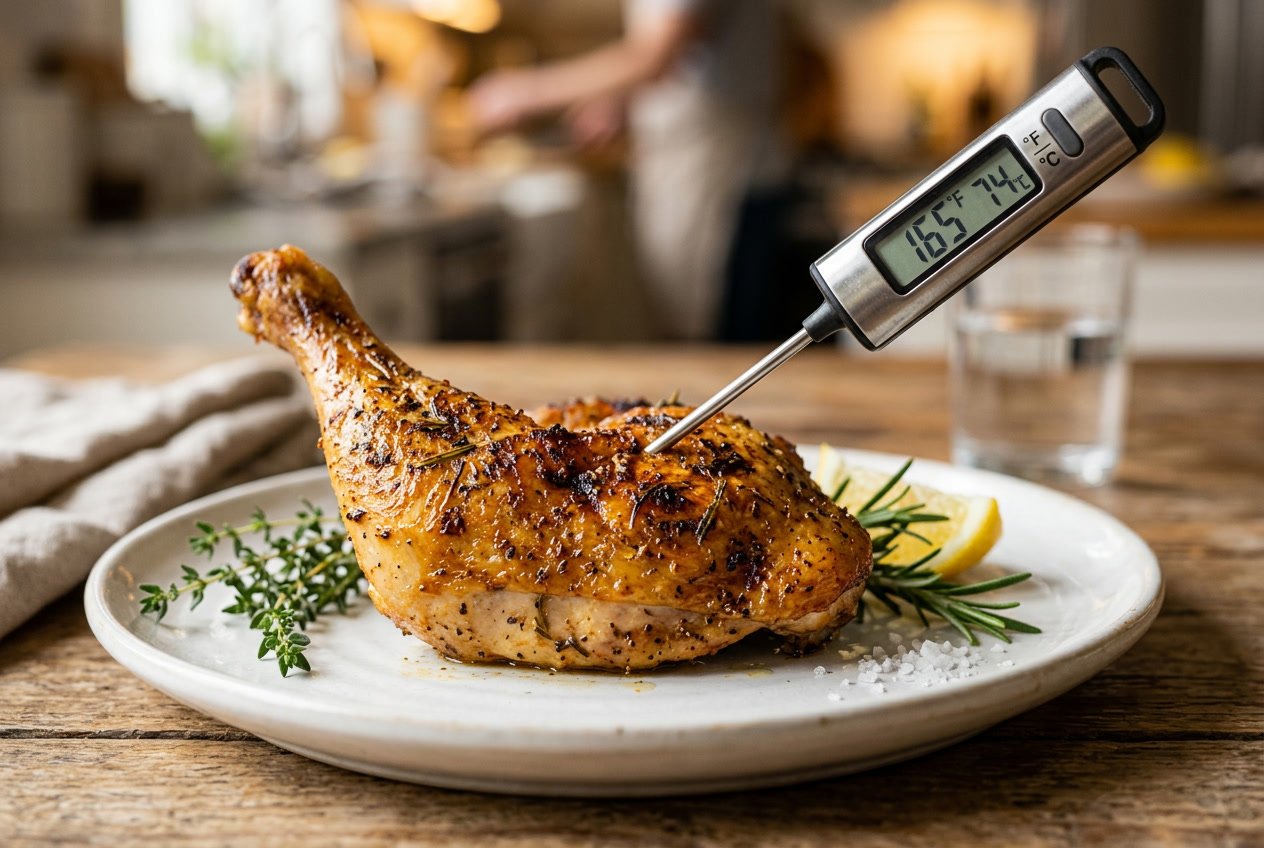
This article explains how to check doneness, how different cooking methods and temperatures change texture, practical cooking times, and simple tips to keep legs consistently juicy.
Expect clear, actionable steps and a few flavor ideas so your next batch comes out exactly the way you want.
Safe Internal Temperature for Chicken Legs
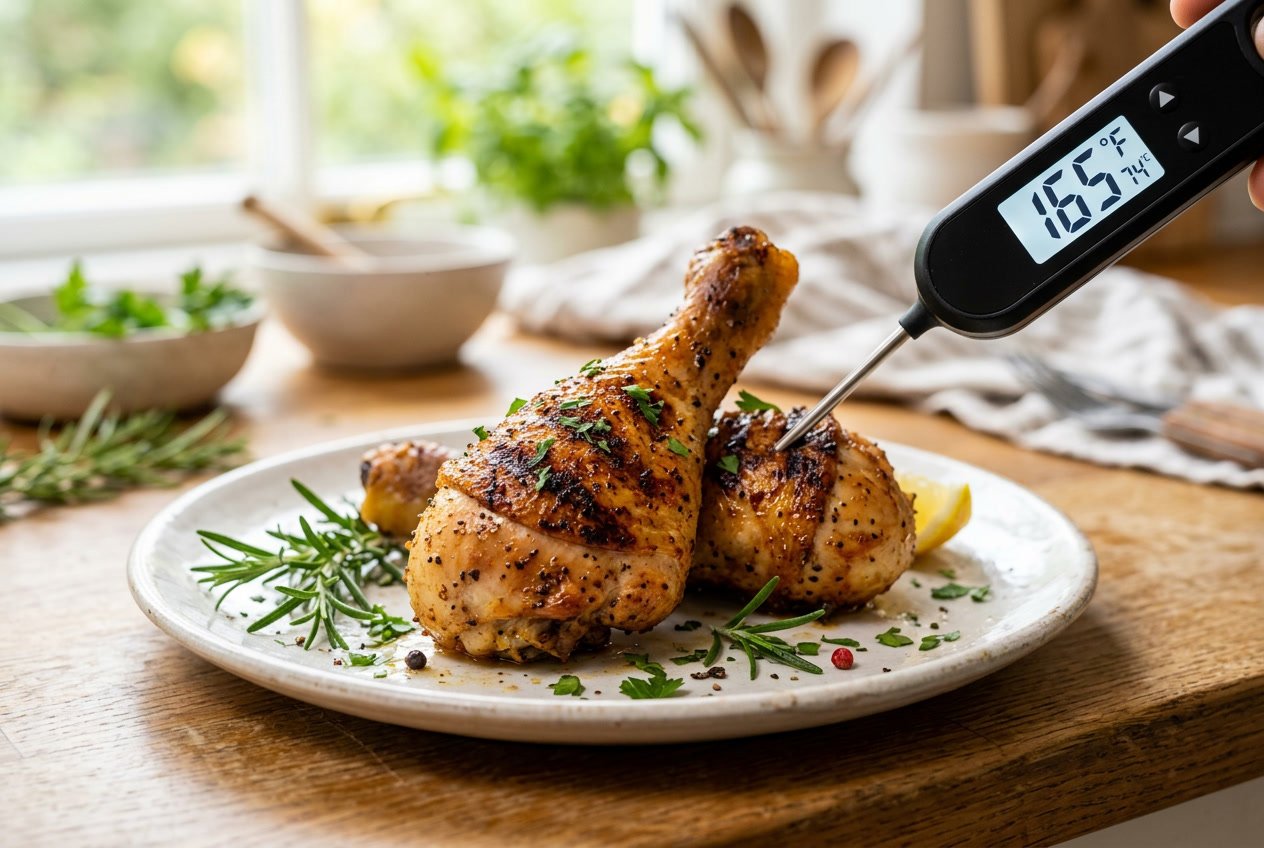
Check the internal temperature to know when chicken legs are safe and when they’ll be tender.
Use an accurate thermometer in the thickest part, avoid touching bone, and remember that food safety and preferred texture can require different target temperatures.
Why 165°F (74°C) Matters for Safety
Cooking chicken legs to an internal temperature of 165°F (74°C) reliably kills Salmonella, Campylobacter, and other common pathogens.
Insert a digital instant-read thermometer into the thickest part of the drumstick muscle, not touching bone, to get a correct reading.
If the thermometer reads 165°F (74°C) or higher, the chicken is safe to eat immediately.
Sanitize the thermometer probe after checking raw and cooked meat to prevent cross-contamination.
If juices run clear but the thermometer is below 165°F (74°C), continue cooking until the proper internal temperature is reached.
Optimal Doneness vs. Minimum Safe Temperature
Use 165°F (74°C) as the minimum safe internal temperature for chicken legs.
Aim for 175–185°F (79–85°C) when you want meat that’s more tender and fall-off-the-bone, because collagen and connective tissue in dark meat break down more at these higher temperatures.
Rest the legs 5–10 minutes after removing them from heat.
Carryover cooking can raise the internal temperature a few degrees and helps redistribute juices.
How to Check If Chicken Legs Are Cooked
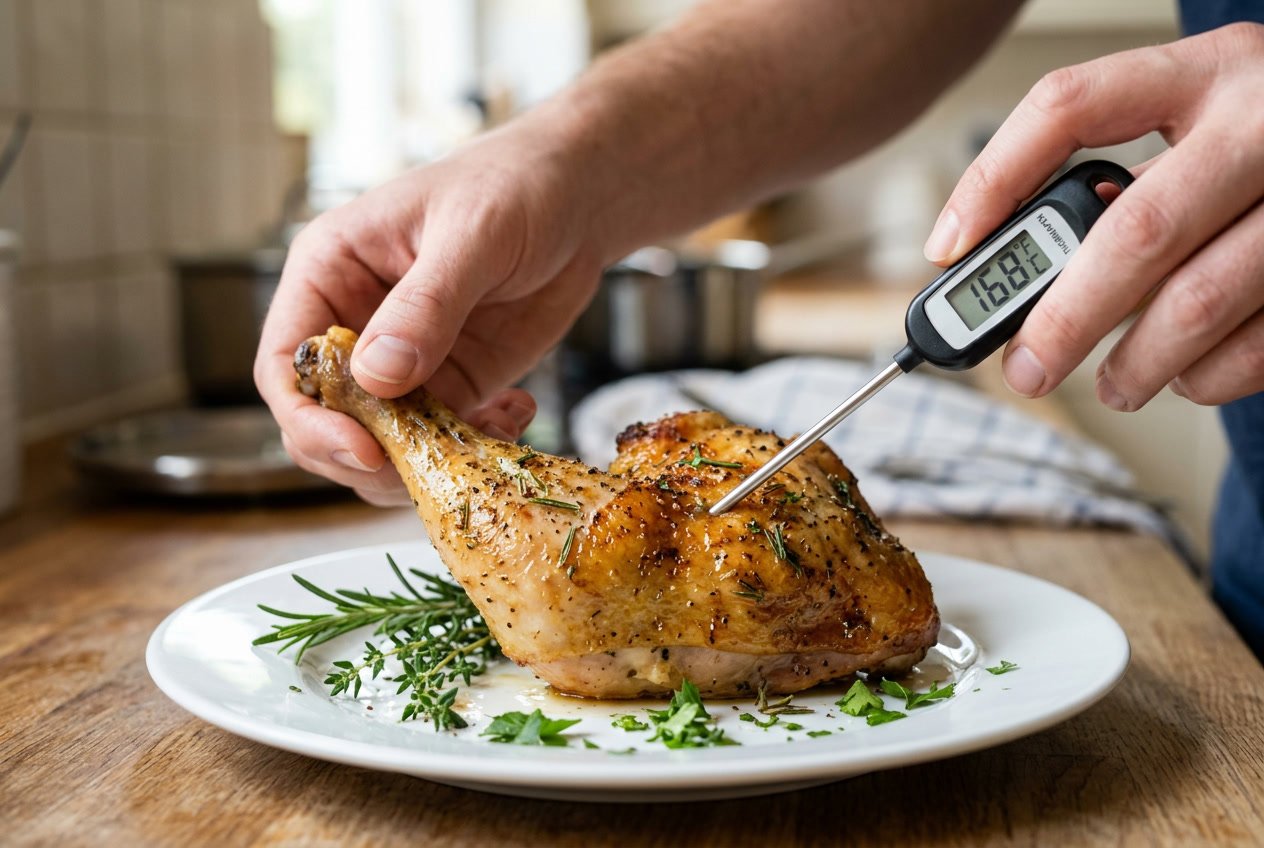
Check internal temperature with a reliable meat thermometer.
Insert it into the thickest part without touching bone, and confirm texture and juices.
Using a Meat Thermometer
A digital instant-read or probe thermometer gives the fastest, most accurate result.
Use a calibrated device; if it reads inconsistently, recalibrate or replace it.
Insert the thermometer at the last few minutes of cooking for instant-read types.
Leave probe thermometers in during cooking to monitor progress.
Wait for the stable reading shown on the display before deciding the leg is done.
Target temperatures: 165°F (74°C) is the USDA minimum for safety.
For juicier, more tender chicken legs, aim for 175–185°F (79–85°C) to break down collagen without drying the meat.
Record temperature in the thickest spot for consistency.
Where to Insert the Thermometer
Place the thermometer tip into the thickest part of the drumstick or thigh meat where heat penetration is slowest.
Avoid contact with bone; touching bone can register a falsely high temperature and give a false done reading.
Insert horizontally toward the center so the probe tip sits in the middle of the meat mass.
For bone-in legs, take readings in two spots opposite the bone to ensure even doneness.
If using a leave-in probe, position it before cooking so you can monitor without opening the oven or grill.
If juices run clear at the probe site and the thermometer reads at or above your target, the leg is cooked.
If the reading is lower than expected, continue cooking and recheck after a few minutes.
Visual and Texture Clues
Look for firm but springy meat when you press the thickest part with tongs or a finger.
The flesh should pull easily from the bone but still hold moisture; overly stiff meat usually means overcooked chicken legs.
Check juices by making a small cut near the bone: juices should run clear or slightly pink only if temperature is verified safe.
Slight pinkness near the bone can occur in darker meat even at safe temperatures, so rely primarily on your thermometer for final judgment.
Crisp skin, well-rendered fat, and a slight wobble in the joint indicate a properly cooked, tender leg when combined with a correct internal temperature.
Cooking Methods and How They Affect Doneness
Different cooking methods change how quickly the meat reaches safe temperature, how connective tissue breaks down, and how crisp the skin becomes.
Use a thermometer in the thickest part of the drumstick or thigh and avoid touching bone for accurate readings.
Oven-Baked Chicken Legs
Baking at 400–425°F gives you crispy chicken legs and even cooking.
Arrange drumsticks on a rimmed sheet with a wire rack if you want airflow under the skin; this speeds browning and helps fat render.
Check temperature in the thickest part of the thigh or drumstick; aim for at least 165°F for safety, and 175–185°F if you want fall-off-the-bone tenderness.
Timing typically runs 35–45 minutes at 425°F for average-sized legs, but ovens vary.
Start checking with a thermometer at 30 minutes.
Pat skin dry and rub with oil to encourage crispness.
Rest legs 5–10 minutes before serving so juices redistribute.
Grilled Chicken Legs
Grilling exposes the skin to direct heat and smoke, which enhances flavor and can char the outside before the inside is done.
Use two-zone heat: start over medium-high to sear skin, then move to indirect heat to finish cooking through.
Turn legs every 6–8 minutes to avoid burning and cook evenly.
Expect 30–40 minutes total depending on size and grill temperature.
Insert the probe into the thickest part away from bone; 165°F is safe, but 175–185°F yields more tender meat because connective tissue melts at higher internal temperatures.
Watch for flare-ups; trim excess fat and keep a spray bottle of water nearby to control flames without lowering grill temperature too much.
Pan-Fried Chicken Legs
Pan-frying gives a crispy exterior but requires attention to internal doneness.
Use a heavy skillet and enough oil to coat the pan; sear skin-side down to render fat and develop color, then lower heat and cover for even cooking.
Cook time typically totals 25–35 minutes for medium legs.
Sear 6–8 minutes per side then reduce to medium-low and cook covered, flipping occasionally.
Probe the thickest area for 165–175°F.
Don’t rely on color alone because the outside can look done while the bone end remains cool.
Finish under a broiler for 1–3 minutes if skin needs extra crisping, but monitor closely to prevent burning.
Slow Cooker and Air Fryer Methods
Slow cookers break down collagen over long periods, producing very tender meat but soft skin.
Cook legs on low for 6–8 hours or high for 3–4 hours.
Internal temperature will exceed 165°F comfortably, but transfer to a hot oven or broiler for 3–5 minutes if you want crisp skin.
Air fryers produce crispy chicken legs quickly by circulating hot air.
Preheat the basket, arrange legs without crowding, and cook at 375–400°F for 18–25 minutes, flipping halfway.
Use a thermometer regardless of method.
Air-fried legs brown faster, so check earlier.
Slow-cooked legs may read higher and benefit from a brief high-heat finish to improve texture.
Cooking Times by Method and Temperature
You need clear target temperatures and realistic time ranges for each method to guarantee safety and desired doneness.
Focus on internal temperature (165°F / 74°C), whether pieces are bone-in or boneless, and the oven, grill, or pan temperature you’ll use.
How Long to Bake Chicken Legs
Bake bone-in legs or thighs at 375°F (190°C) for 35–45 minutes.
Check the thickest part with a meat thermometer; aim for 165°F (74°C).
If skin crispness matters, finish at 425°F (218°C) for the last 5–10 minutes.
Boneless, skinless thighs take less time: 25–30 minutes at 375°F (190°C).
Arrange pieces on a rimmed baking sheet or in a shallow pan so air circulates and juices don’t pool.
Let legs rest 5–10 minutes after baking to let temperature even out.
Carryover raises the internal temp slightly.
Juices should run clear and meat near the bone should have no persistent pink.
For crisp skin, pat skin dry, season, and avoid overcrowding.
Grilling Time Guides
Preheat the grill to medium-high, about 400°F (204°C), and oil the grates.
For boneless thighs, grill 6–8 minutes per side.
For bone-in legs or thighs, grill 10–12 minutes per side, using indirect heat if flare-ups occur.
Move pieces to indirect heat when skin starts to char but internal temp isn’t done.
Target 165°F (74°C) in the thickest section without touching bone.
Flip only when the meat releases easily from the grate to preserve crust.
Use a two-zone fire for consistent results.
Sear over direct heat, then finish over indirect heat.
Rest grilled legs 5 minutes before serving to lock in juices.
Pan-Frying and Alternative Techniques
Pan-fry boneless thighs 6–8 minutes per side over medium heat, using a heavy skillet and a light oil with a high smoke point.
Bone-in pieces need 10–15 minutes per side; finish in a 375°F (190°C) oven if the exterior browns too fast.
If you cover the pan, steam and crispness will vary.
Use a lid briefly to cook through, then remove to re-crisp skin.
For shallow frying, maintain oil at 350–375°F (177–190°C).
Cook until internal temp reaches 165°F (74°C) and exterior is golden.
Braise at low simmer for 35–45 minutes until tender, or use a slow cooker on low for 4–6 hours for pull-apart texture.
Always verify doneness with a thermometer.
Tips for Consistently Juicy and Tender Chicken Legs
Focus on controlling moisture, even heat, and timing to prevent dry meat.
Small steps—resting, drying before seasoning, and proper pan setup—deliver big improvements in texture and flavor.
Resting After Cooking
Let cooked chicken legs rest for 5–10 minutes before cutting or serving.
Resting lets juices that moved toward the surface during cooking redistribute into the meat, which keeps the drumstick moist when you slice or bite into it.
Place the legs on a warm plate or a sheet pan loosely tented with foil.
Don’t press down on the skin or stack pieces; compressing forces juices out and reduces crispness.
Use a meat thermometer to confirm they reached at least 165°F (74°C) before resting.
Serve once the thermometer reads steady and the juices run clear.
Patting Dry and Seasoning
Pat each chicken leg dry with paper towels before seasoning.
Removing surface moisture helps the skin brown and crisp instead of steaming, and it lets salt and dry spices adhere better.
Season early when you can.
Salt 30–60 minutes before cooking if time allows, which improves seasoning depth.
If short on time, apply a dry rub just before cooking.
For oil-based marinades, brush a thin, even coat to promote even browning.
Avoid heavy wet coats that trap moisture.
Always season under the skin when possible for better flavor penetration.
Using Racks and Proper Pan Placement
Elevate legs on a wire rack set over a rimmed baking sheet when roasting or baking.
Air circulation around the legs promotes uniform browning and prevents soggy undersides caused by sitting in rendered fat.
Arrange legs with space between them—at least 1 inch—to allow hot air flow.
Place the pan in the middle of the oven for consistent heat.
Use the top rack only for final broiling to crisp skin.
For sheet-pan roasting, line the pan with foil for easier cleanup, but avoid covering the legs.
Flavor Variations and Chicken Leg Recipes
Try bold marinades, sticky barbecue finishes, and crisp fried or roasted styles that all hinge on proper seasoning and correct cooking times.
Each approach changes texture and flavor, so pick techniques that match your timing and equipment.
Marinades and Seasoning Ideas
Marinades add flavor and improve juiciness when you let the legs rest 30 minutes to overnight. Combine 3 tbsp olive oil, 2 tbsp soy sauce, 1 tbsp lemon juice, 3 crushed garlic cloves, 1 tsp smoked paprika, and 1 tsp salt for an easy all-purpose marinade. Marinate the chicken for 2–6 hours.
If you prefer acid-forward profiles, use yogurt or buttermilk with cumin, coriander, and turmeric for tender, spiced legs. This method works well for oven roasting at 375°F.
Dry rubs help when you’re short on time. Mix 1 tbsp brown sugar, 1 tsp each salt and black pepper, 1 tsp chili powder, and ½ tsp garlic powder. Rub the mix under and over the skin before cooking.
Pat the skin dry first for crispiness. For fresh herb notes, add chopped rosemary and thyme to the oil before brushing.
Barbecue and Crispy Styles
Grill chicken legs over medium heat, starting with indirect heat and finishing over direct heat for 25–40 minutes. Baste with sauce in the last 10 minutes to prevent burning.
Choose a sauce based on your flavor preference: vinegar-based for tangy, tomato-based with molasses for sweet-smoky, or a mustard-forward glaze for sharpness. Use a thermometer and remove the legs at 165°F. Let them rest 5–10 minutes.
To get crisp skin without frying, roast at 425°F for 35–45 minutes on a wire rack so air circulates. Coat with a thin layer of oil and sprinkle with coarse salt right after cooking to enhance crunch.
For deep-fried crisp, keep oil at 350°F and fry for 10–15 minutes, turning once. Finish in a 375°F oven for 5 minutes if needed to reach 165°F internal temperature.
Creative Chicken Leg Recipe Inspirations
Try global flavors. Make Korean-style legs with gochujang glaze and sesame, Moroccan-spiced legs with ras el hanout and preserved lemon, or Indian tandoori with yogurt, ginger, garlic, and garam masala.
You can grill, bake, or air fry each style with minor time tweaks.
For sheet-pan weeknight meals, arrange legs with potatoes and carrots. Season with smoked paprika and thyme, then roast at 400°F for 35–45 minutes.
The vegetables absorb the chicken juices as they cook.
For low-effort slow-cooker dinners, sear the legs first. Add barbecue sauce, onions, and a splash of broth, then cook on low for 4–6 hours until tender.
Use these recipes as templates. Swap spices, adjust sweetness or heat, and always check doneness with a thermometer.


