
When Grilling Chicken Thighs: Optimal Timing, Techniques, and Recipes
Grilling chicken thighs gives you reliable flavor and forgiving results, whether you choose bone-in or boneless. Aim for an internal temperature of 165°F and use a sear-then-indirect-heat method for bone-in pieces or direct high heat for boneless thighs to get crispy exterior and juicy interior.
This guide explains how to trim, season, and cook thighs so you avoid dry meat, burned skin, and uneven cooking.
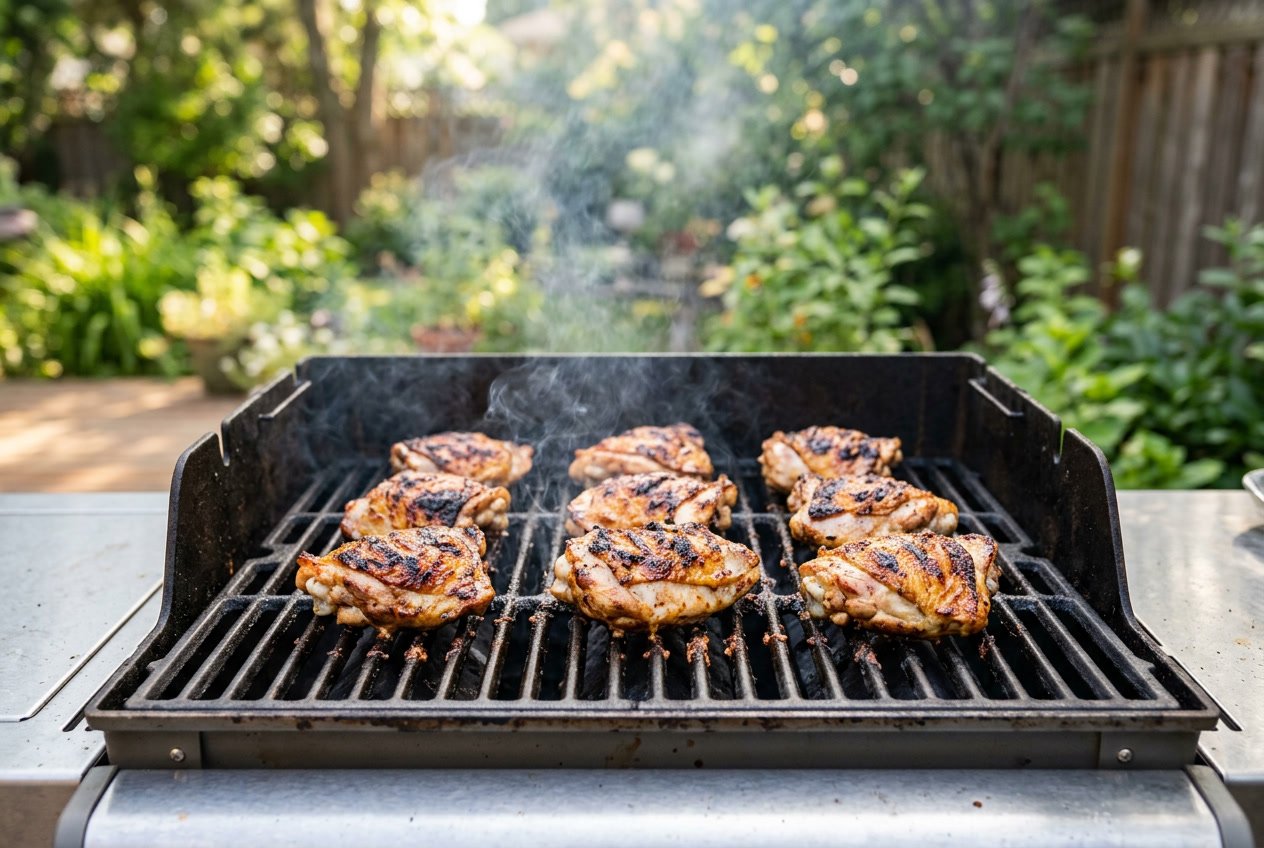
You’ll find practical techniques for timing and temperature, simple marinades and rubs, and flavor pairings that make weeknight meals special. Spend less time guessing at the grill and more time enjoying perfectly cooked chicken.
Essential Facts About Grilling Chicken Thighs
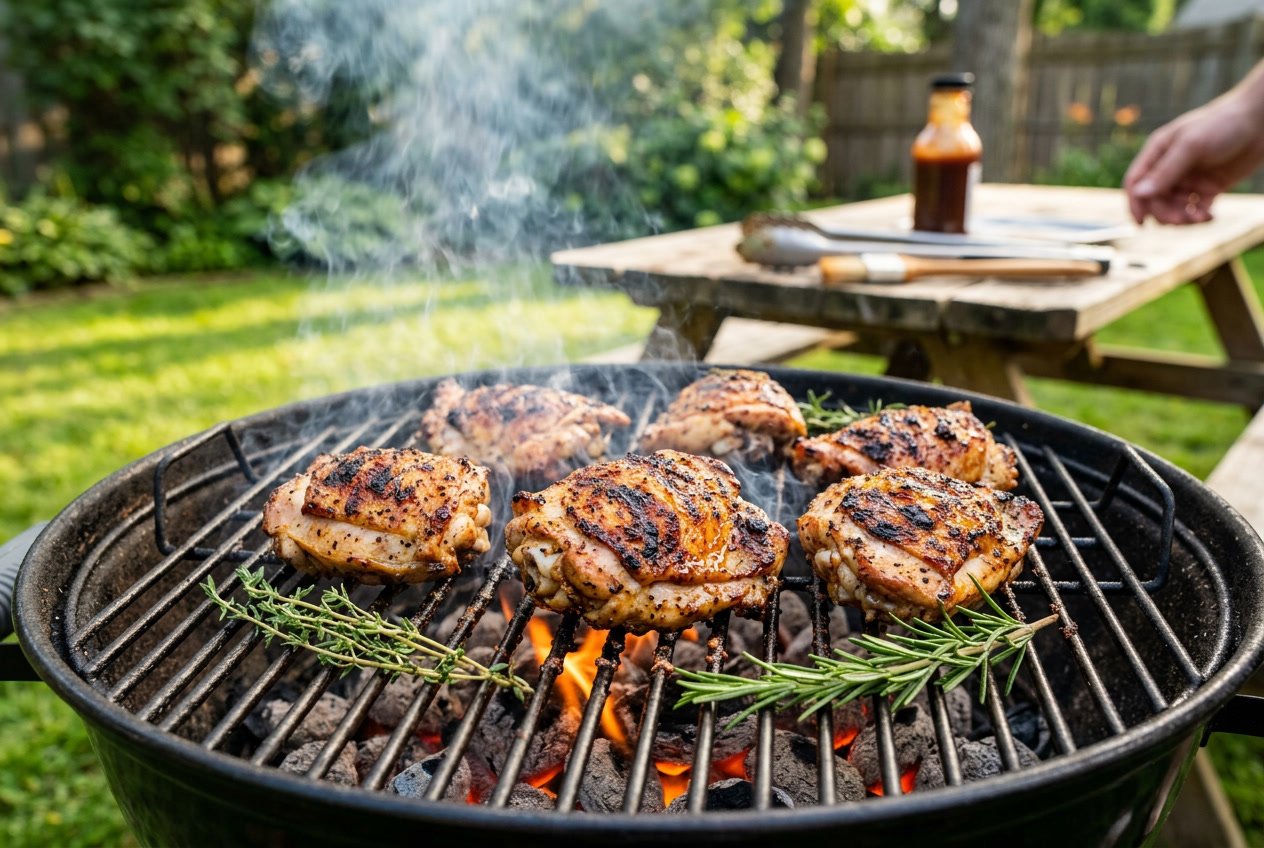
Pay attention to cut, cooking time, and whether the thighs have skin. Focus on internal temperature, heat zones, and resting time to keep thighs juicy and safe.
Why Grilled Chicken Thighs Stand Out
Chicken thighs have more fat and connective tissue than breasts, which helps them stay moist under direct heat. The extra fat renders during grilling and keeps the meat tender even if you cook it a bit longer.
Use a meat thermometer to check doneness—aim for 165°F (74°C) in the thickest part. Set up two heat zones on the grill: direct high heat for searing and indirect medium heat to finish.
Rest thighs for 5 minutes after grilling to let juices redistribute.
Seasoning and marinades cling well to thighs because of their texture. Use bold rubs, acidic marinades, or simple salt and pepper for juicy results.
Bone-In vs Boneless Chicken Thighs
Bone-in chicken thighs take longer to reach 165°F because the bone slows heat transfer. Expect roughly 8–12 minutes per side depending on grill temperature and thickness.
The bone adds flavor and helps the meat cook more evenly. Boneless thighs cook faster—commonly 5–8 minutes per side over medium-high heat—and they respond well to quick sears.
Thicker boneless pieces may need finishing over indirect heat to avoid burning the exterior. Choose bone-in for deeper flavor and firmer texture, or boneless for faster grilling and easier serving.
Always verify internal temperature rather than relying solely on time.
Skin-On vs Skinless Chicken Thighs
Skin-on chicken thighs develop a crispy exterior and help retain moisture as the fat under the skin renders. Start skin-side down over medium heat to render fat slowly, then finish skin-up to crisp.
Skinless thighs brown faster and absorb marinades more readily, but they lose moisture sooner under very high heat. Grill skinless chicken thighs over slightly lower heat and monitor internal temperature closely.
Choose skin-on and use two-zone grilling for crispy skin and juicy interior. Pick skinless for quick, uniform cooking and use a short marinade or oil before grilling.
Preparation: Trimming, Seasoning, and Marinating
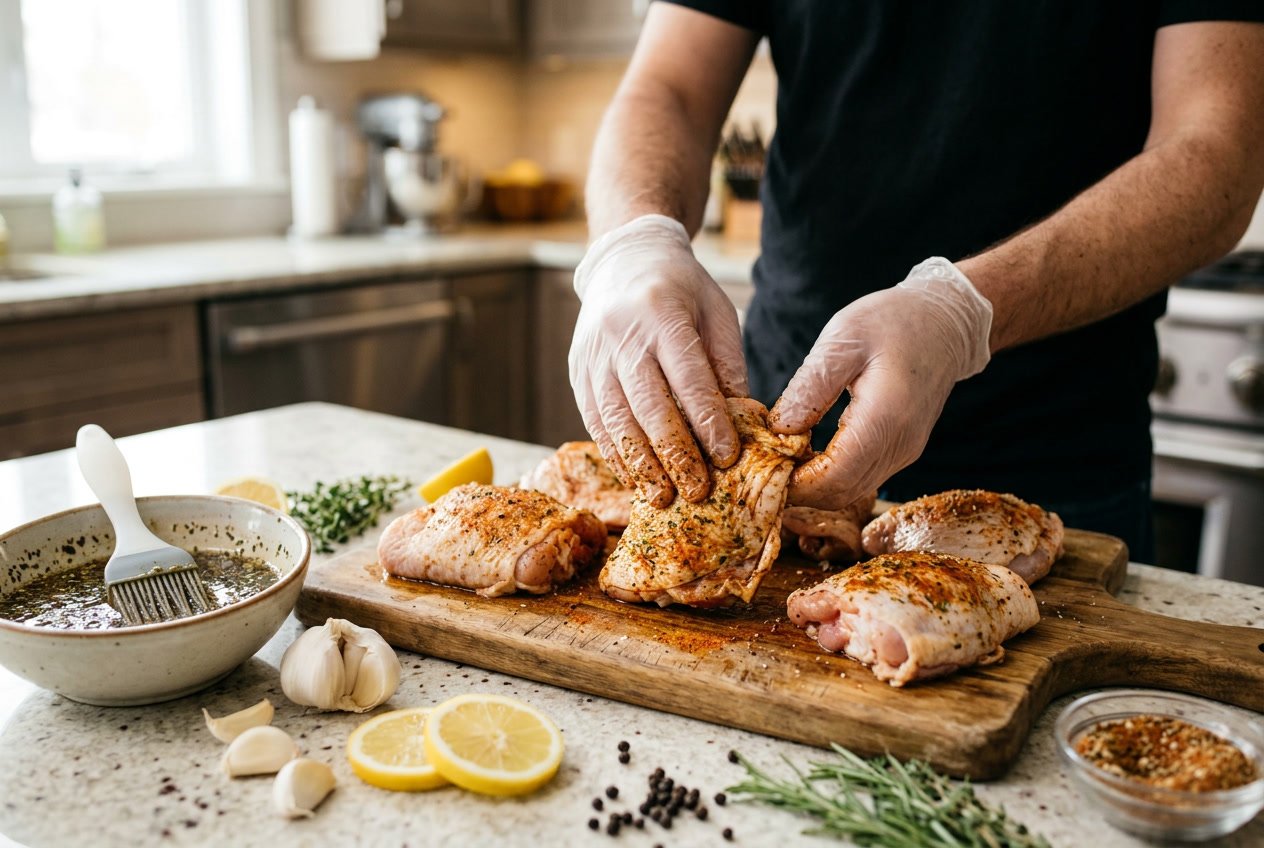
Trim excess fat and loose skin so the meat cooks evenly. Season boldly and use acid, oil, and aromatics in your marinade to boost flavor and keep thighs juicy.
How to Trim Chicken Thighs for Grilling
Place chilled thighs on a cutting board and pat them dry with paper towels. Use a sharp knife to remove large pockets of fat and any ragged skin edges, leaving a bit of fat for extra flavor.
For boneless thighs, check for small bone fragments or cartilage and pull them out. For skin-on pieces, trim long skin flaps so they don’t burn unevenly on the grill.
Trimmed pieces sear more predictably and accept rubs and marinades better. Clean cuts also reduce flare-ups and help you control cooking time.
Chicken Thigh Marinade Tips
Balance acid (vinegar or lemon), oil (olive or avocado), and salt for effective marination. Use about 1 part acid to 3 parts oil, plus 1–2 teaspoons kosher salt per pound of meat.
Add aromatics like minced garlic, grated ginger, and chopped herbs for complexity. Sugar or honey (1–2 tablespoons) helps with browning and creates a caramelized crust.
Marinate in a nonreactive container or sealed bag. Refrigerate 4–8 hours for best results, or 30–60 minutes for a quick flavor boost.
Never reuse marinade unless you boil it first.
Quick Marinades for Grilled Chicken Thighs
Try these three fast mixes:
- Citrus-Garlic: 1/4 cup olive oil, juice of 1 lemon, 2 minced garlic cloves, 1 tsp salt, 1/2 tsp black pepper. Marinate 30–60 minutes.
- Soy-Sesame: 3 tbsp soy sauce, 2 tbsp sesame oil, 1 tbsp rice vinegar, 1 tsp honey, 1 tsp grated ginger. Marinate 30–120 minutes.
- Yogurt-Herb: 1/2 cup plain yogurt, 1 tbsp lemon juice, 1 tsp cumin, 1 tsp salt, chopped parsley. Marinate 1–4 hours.
For boneless thighs, shorten marinating time to prevent mushy texture. Pat thighs dry before grilling to get a good sear.
How to Grill Chicken Thighs
Focus on controlling heat, managing fat flare-ups, and checking internal temperature to get juicy, well-seared thighs. Use specific timing, grill setup, and a thermometer to avoid overcooking or undercooking.
Direct vs Indirect Heat Methods
Use direct heat for crispy skin and sear marks. Preheat the grill to medium-high (350–400°F). Place skin-side down and cook undisturbed for 5–7 minutes to render fat and brown the skin.
Flip and move to a cooler zone if charring happens too fast. Use indirect heat to finish cooking without burning the exterior.
After the initial sear, transfer thighs to indirect heat and close the lid until internal temp reaches 165°F. This usually takes another 8–12 minutes for bone-in, less for boneless.
Adjust timing for bone-in vs boneless. Bone-in takes 15–25 minutes total. Boneless cooks in 10–15 minutes.
How to Prevent Flare-Ups When Grilling
Clean the grill to reduce trapped grease that causes sudden flames. Pat thighs dry and trim excessive fat to reduce dripping.
Move pieces away from direct flames and close the lid briefly to starve the fire of oxygen. Use a spray bottle of water for small flare-ups, but avoid dousing large flames.
Arrange a drip tray under the indirect zone for fatty cuts. Use two-zone grilling so you can slide meat to the cool side when flames spike.
Rotate pieces rather than stabbing them, and avoid pressing down on thighs to prevent extra fat loss.
Using an Instant-Read Meat Thermometer
Insert the thermometer into the thickest part of the thigh without touching bone. Aim for a steady 165°F to ensure safety and juiciness.
Check temperature at multiple spots for bone-in thighs because heat distributes unevenly. Probe near the bone and in the center of the meat.
Calibrate your thermometer occasionally by testing in ice water and boiling water. Use quick reads to avoid long lid openings.
If the reading is low, return the thigh to indirect heat and recheck after a few minutes. Rely on temperature rather than appearance to judge doneness.
Grilling Times and Temperatures for Chicken Thighs
Bone-in thighs take longer than boneless and benefit from moderate heat to cook through without charring. Target specific grill temperatures and use a thermometer to keep thighs juicy and safe.
How Long to Grill Bone-In Chicken Thighs
Grill bone-in thighs over medium heat (about 350–400°F / 175–205°C). Cook for roughly 8–10 minutes per side, then move to indirect heat if the exterior browns too quickly.
Total grilling time usually ranges from 20 to 30 minutes depending on size and bone placement. Insert a meat thermometer into the thickest part without touching bone.
If the exterior is done but the center lags, reduce direct heat and close the lid to finish cooking evenly. Monitor closely to avoid flare-ups.
How Long to Grill Boneless Chicken Thighs
Grill boneless thighs over medium-high heat (around 375–425°F / 190–220°C). Expect about 5–7 minutes per side for average 1/2–3/4-inch thickness.
Total time is usually 10–15 minutes. Thicker pieces may need an extra few minutes or a short stint on lower heat.
Flip once or twice to get an even sear. Marinated or oil-brushed boneless thighs brown faster, so watch for char and check internal temperature early.
Recommended Internal Temperatures
Set your safety target at 165°F (74°C) measured in the thickest part of the thigh, away from bone. For bone-in thighs you want more tender, some chefs go up to 175–185°F (79–85°C); this yields more tender meat while still safe.
Use an instant-read thermometer for best accuracy. Rest the thighs 3–5 minutes after grilling to let juices redistribute.
Flavor Pairings and Serving Suggestions
Choose sides and sauces that balance the thigh’s richness with acid, crunch, and fresh herbs. Aim for at least one creamy, one bright or acidic, and one crunchy or grilled vegetable on the plate.
Best Sides for Grilled Chicken Thighs
Pair grilled chicken thighs with a creamy potato salad or a crisp coleslaw to contrast the meat’s richness. Potato salad with mustard and chopped herbs keeps flavors bright.
Coleslaw made with a vinegar-based dressing cuts grease and adds crunch. Grilled corn on the cob complements smoky char—brush with butter, lime, and chopped cilantro.
Toss zucchini, bell peppers, and red onion in olive oil and grill until slightly blistered for more vegetables.
Top Sauces and Toppings
Use sauces that add acid and freshness, like lemon-herb vinaigrette or tzatziki sauce. Tzatziki pairs well with skin-on thighs and Mediterranean spices.
For bolder flavors, offer a sticky barbecue glaze, a soy-ginger glaze, or a chimichurri of parsley, oregano, garlic, and red pepper. Add finishing touches like chopped scallions, toasted sesame seeds, or crumbled feta.
Provide sauces in small bowls so guests can customize.
Leftover Ideas and Storage Tips
Store cooled leftovers in an airtight container in the refrigerator for 3–4 days. Keep sauces separate to preserve texture.
Use leftovers in different meals: shred for tacos, slice for grain bowls, or chop and fold into warm pasta with roasted peppers. Reheat gently in a 325°F oven until warmed through; add a splash of broth or olive oil to restore moisture.
Common Mistakes and Expert Tips
Control temperature, timing, and surface contact so your thighs stay juicy and develop flavor. Trim excess fat, use a reliable thermometer, and manage flare-ups to prevent charred or dry meat.
Avoiding Overcooking or Undercooking
Use an instant-read meat thermometer and pull thighs at 165°F (74°C) for safety. For a more forgiving result, remove bone-in thighs at 170°F (77°C) and let carryover bring them to temp while resting.
Check temperature in the thickest part without touching bone to avoid false highs. Start on indirect heat if your grill runs hot: 375–400°F (190–205°C) for bone-in, 425–450°F (218–232°C) for boneless.
Finish over direct heat for 1–2 minutes per side to add color. Flip once or twice to maintain even cooking.
If thighs look done but feel firm, let them rest 5–10 minutes under loose foil. Resting redistributes juices and raises internal temperature a degree or two.
Practice on a few pieces and note grill hotspots for consistent results.
Ensuring Crispy Skin
Dry the skin thoroughly with paper towels before seasoning. Any surface moisture creates steam and prevents crisping.
Apply a light coat of oil and a generous pinch of kosher salt right before grilling to promote even browning. Start skin-side down over medium-high direct heat to render fat and build a crisp crust.
Move to indirect heat to finish cooking through. For skin-on boneless thighs, briefly raise the grate temperature to tighten and blister the skin without burning.
Add heavy sugary sauces only during the last 3–5 minutes. Sugars burn quickly and will char before the meat cooks through.
For extra-crispy skin, finish under a hot grill lid or give the thighs a two-minute sear, watching closely for flare-ups.
Grill Maintenance for Better Chicken
Clean grates before cooking to prevent sticking and uneven sear marks. Use a wire brush or a heat-resistant scraper while the grill is hot.
Oil the grates lightly to create a nonstick surface for skin-on thighs.
Keep a two-zone fire: one side with coals or burners high for searing. Use the other side lower for indirect cooking.
This setup helps you control flare-ups and move thighs quickly when fat drips cause flames.
Empty grease traps and trim large fat caps on thighs to reduce smoke and charring.
Regularly check burner ports or coal distribution so heat remains even across the cooking surface. This directly affects how consistently your grilled chicken thighs finish.


