
When Frying Chicken Thighs: Expert Steps for Crispy, Juicy Results
You can get crispy, juicy chicken thighs every time by choosing the right cut, drying and seasoning the meat, and controlling oil temperature while frying.
Master those three moves—selection, prep, and heat—to cut down guesswork and achieve consistently great results.
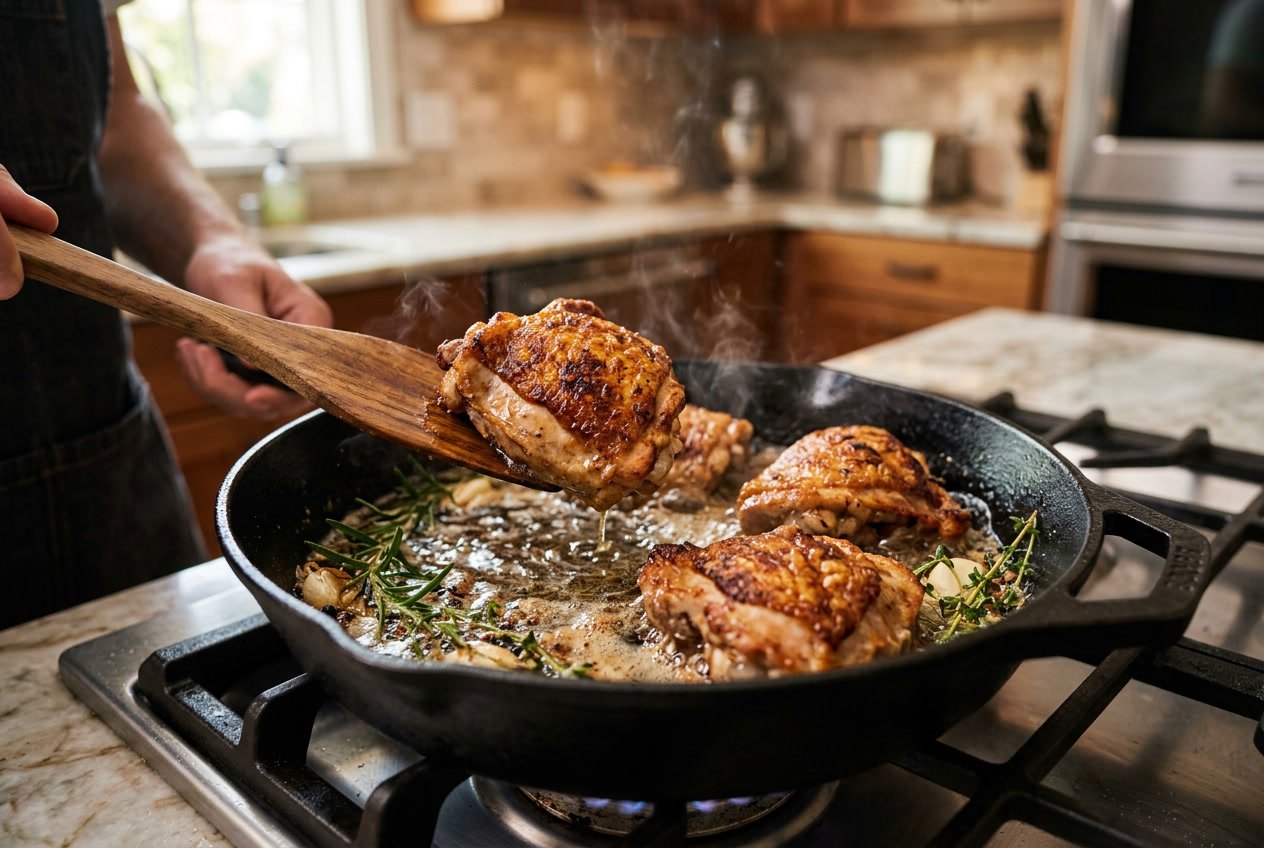
This guide shows you how to pick bone-in or boneless thighs, prep and season for maximum flavor, choose oil and equipment, and use frying techniques that deliver the best texture and doneness.
Follow these steps and tips to turn simple thighs into a weeknight favorite or a main dish for guests.
Choosing the Best Chicken Thighs
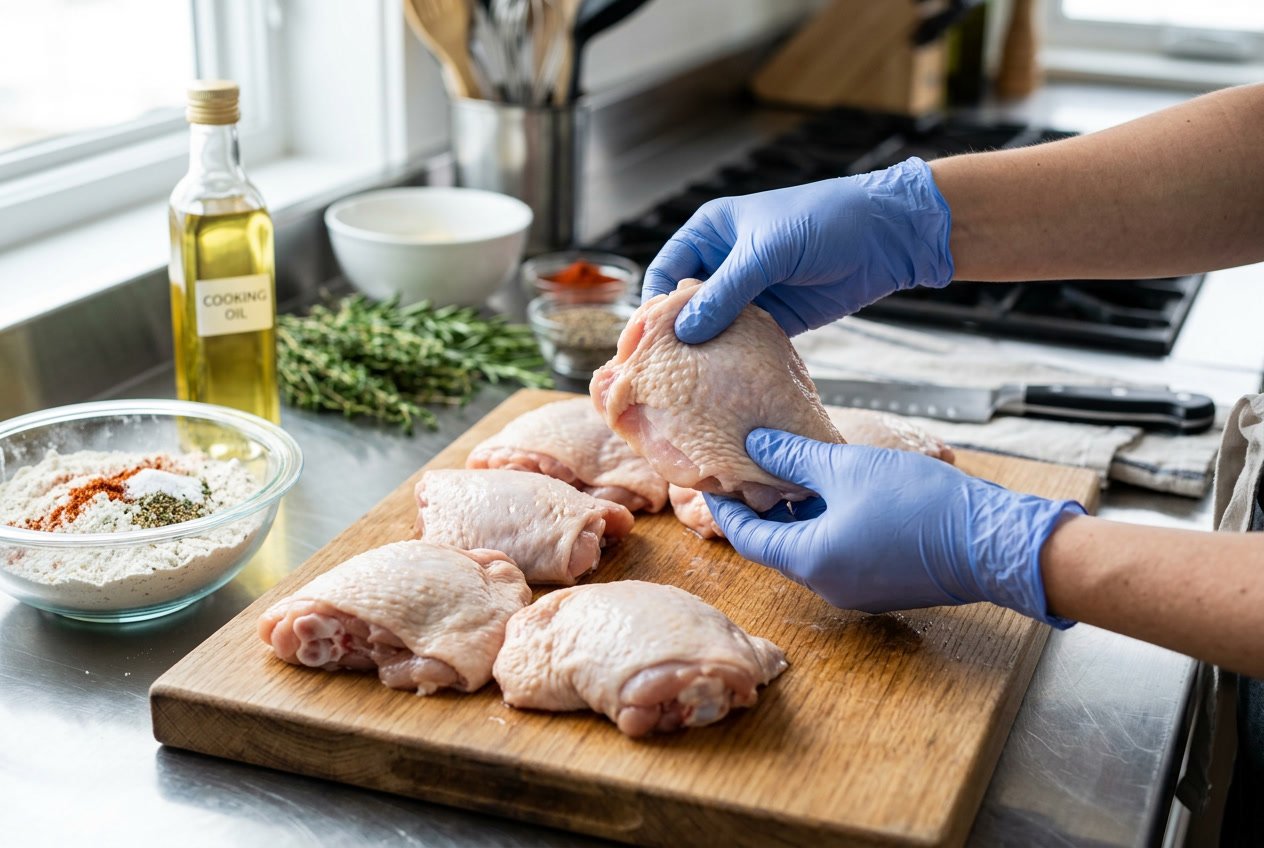
Pick thighs that suit your cooking plan and time.
Look for thighs that will give you crispy skin, even cooking, and good flavor.
Bone-In vs. Boneless Thighs
Bone-in thighs hold temperature better and stay juicier during longer frying times.
The bone slows heat transfer, so the meat cooks more evenly without drying.
Expect slightly longer cook times—about 20–25 minutes per side in a shallow fry at medium heat—so factor that into your prep.
Boneless thighs work faster and are convenient for quick pan-frying or thin-cut breaded pieces.
They crisp up quickly and are easier to eat, but they can overcook and dry out if you don’t monitor the internal temperature (165°F / 74°C).
Choose boneless if you need faster cooking or want uniform pieces for frying.
Skin-On vs. Skinless Chicken Thighs
Skin-on thighs are best for crispy chicken with a golden crust.
The skin’s fat bastes the meat during frying, creating a crunchy exterior and keeping the inside moist.
For pan-frying, start skin-side down and let the pieces cook undisturbed until the skin releases for the most consistent crisp.
Skinless thighs cook faster and are good for saucy dishes or if you want less surface fat.
They won’t produce the same crunchy skin, so use a crisping coating like seasoned flour or a light batter.
For skinless thighs, pat them very dry and consider a brief marinade to add moisture before breading.
Selecting Freshness and Quality
Look for thighs that are plump, pale pink, and have no strong odor.
Avoid packages with excess liquid or dark spots, which indicate age or poor handling.
If buying loose, press the meat lightly—good quality thighs spring back and feel firm, not slimy.
Check labels for sell-by dates and whether the thighs are fresh, previously frozen, or contain added solutions.
“No added solutions” is best if you want predictable seasoning and frying behavior.
Buy skin-on, bone-in fresh thighs or fully thawed, well-drained frozen thighs and pat them dry before seasoning and frying.
Preparing Chicken Thighs for Frying
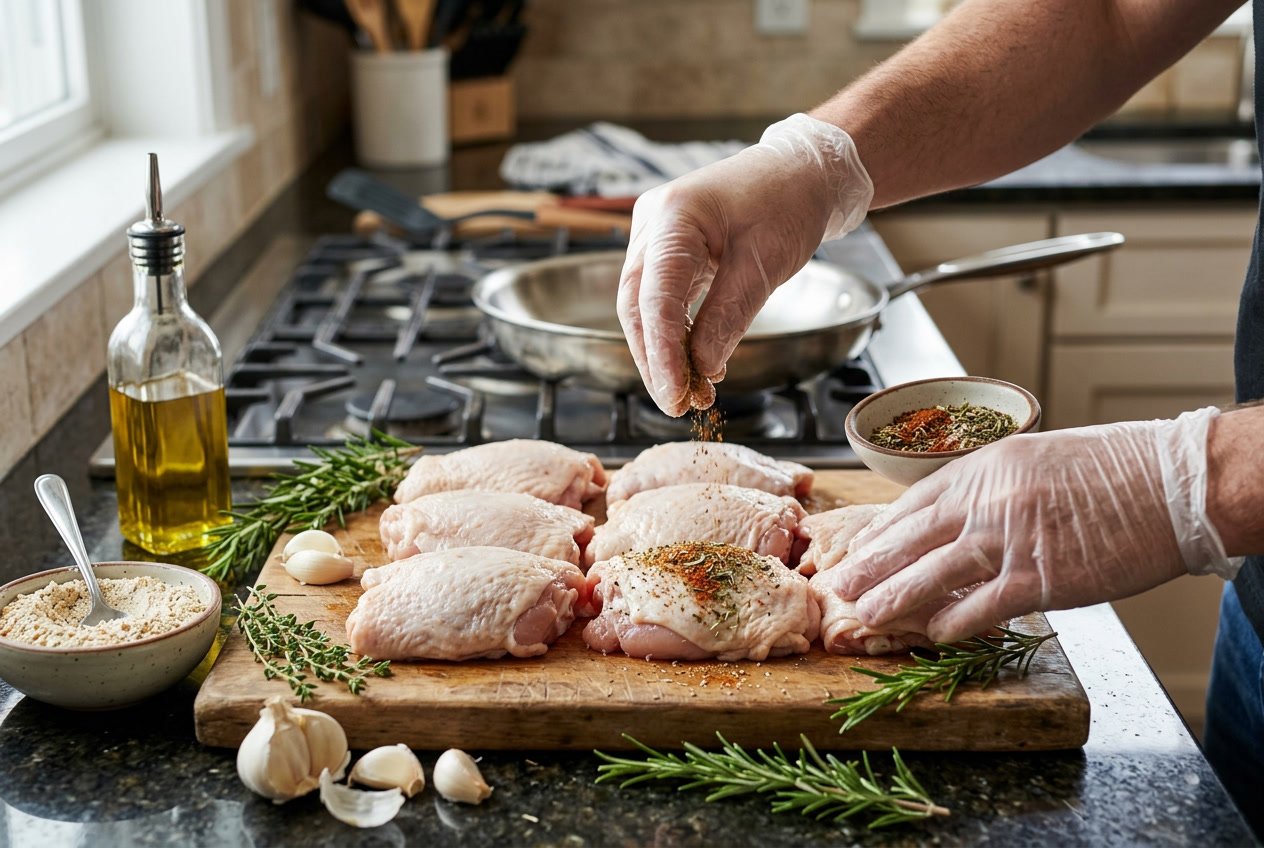
Start with dry, well-trimmed thighs.
Decide whether to brine or marinate for added flavor and moisture.
Bring the pieces close to room temperature before frying to promote even cooking and crisp skin.
Patting Dry and Trimming
Pat each thigh thoroughly with paper towels until the surface feels almost dry.
Removing surface moisture prevents oil sputter and helps the skin or breading crisp quickly.
Trim excess fat and loose skin with a sharp knife, leaving the skin intact if you want crispy, golden results.
If you prefer boneless or skinless thighs, remove the skin but expect less crispness and adjust frying time.
Season immediately after drying.
For a basic rub, use kosher salt and freshly ground black pepper.
For breaded thighs, season the flour or dredge.
Proper drying and trimming help create a crisp crust and juicy chicken.
Brining and Marinating Techniques
Brine thighs in a 5–8% salt solution (about ¼–½ cup kosher salt per quart of water) for 30 minutes to 2 hours for juicier meat.
Rinse and pat dry after brining to avoid overly salty crusts and ensure proper browning.
Use a buttermilk marinade to tenderize and add flavor.
Combine buttermilk with 1–2 teaspoons salt per pound, plus spices like paprika, garlic powder, and cayenne.
Marinate 30 minutes to 8 hours.
After marinating, dredge briefly in flour after shaking off excess buttermilk.
For a quick flavored soak, mix yogurt or acid-based marinades (lemon or vinegar) with oil and spices for 1–4 hours.
Always refrigerate while marinating and discard used marinade unless you cook it to a safe temperature.
Room Temperature Resting
Remove thighs from the refrigerator 20–30 minutes before frying to temper them.
Cold meat in hot oil increases cooking time and risks uneven doneness; resting helps the center cook through without overcooking the exterior.
After breading or seasoning, let thighs rest on a wire rack for 20–30 minutes to let coatings adhere and dry slightly.
This step reduces flaking during frying and promotes a crisp, even crust.
If pieces are thick, weigh them or score small slits to help heat penetrate.
Check internal temperature with a probe thermometer to ensure it reaches 165°F (74°C).
Seasoning and Breading for the Perfect Crust
Build flavor and texture with a bold spice mix, a starchy flour base for browning, and a reliable method to make the breading stick and stay crisp.
Adjust heat, salt, and texture to match your cooking method and desired crunch.
Essential Spice Blends
Pick spices that retain flavor after frying.
Combine 1 tsp garlic powder, 1 tsp onion powder, 1 tsp smoked paprika, ½ tsp black pepper, and ½–1 tsp salt per cup of flour or breadcrumbs.
Add 1/4–1/2 tsp cayenne pepper for heat.
Season each layer—flour, egg wash (or buttermilk), and crumbs—so the crust is seasoned throughout.
For a Southern-style flavor, add 1 tbsp powdered mustard and 1 tbsp dried oregano to the flour.
For a sharper crust, add 1–2 tbsp grated Parmesan to the breadcrumbs.
Taste your dry mix before coating by rubbing a pinch between your fingers.
If salt and spice come through, the final crust will too.
Store extra blend in an airtight jar for up to two weeks.
Flour and Cornstarch Dredge
Use 3 parts all-purpose flour to 1 part cornstarch for a light, crackly crust.
Cornstarch reduces gluten formation and promotes rapid browning, helping you get crispier fried chicken thighs without excess oil absorption.
Season the dredge with your spice blend.
Sift the flour-cornstarch mix into a shallow pan for even coating.
Shake off excess flour before the egg wash to avoid clumps.
For a thicker crust, double-dredge: flour, egg, then flour again.
For a lighter crust, use a single dredge and finish with panko or fine cornmeal.
Adhering Breading for Crispiness
Start with dry, well-patted chicken thighs; moisture prevents adhesion.
Dip into beaten eggs or buttermilk, then press into the breadcrumb or flour mix so the coating bonds tightly to the meat.
Press the crumbs firmly into the surface and let the breaded thighs rest on a wire rack for 10–15 minutes before frying.
This resting period sets the adhesion and reduces flaking during cooking.
Fry at a stable oil temperature (350–365°F / 175–185°C).
If the oil is too cool, the crust absorbs oil; if too hot, it browns before the thigh cooks through.
Reheat the oil between batches and avoid overcrowding to preserve crispiness.
Choosing the Best Oil for Frying Chicken Thighs
Pick an oil with a high smoke point and neutral flavor to get a crisp crust without off-flavors.
Choose an oil you can maintain at 350–375°F and one you’re comfortable reusing or discarding after frying.
Smoke Points and Oil Safety
Oil that smokes breaks down, produces off-flavors, and forms harmful compounds.
Choose oils with smoke points above 400°F for deep frying.
Maintain 350–375°F for chicken thighs so the crust browns and the interior reaches 165°F without burning the coating.
Monitor oil temperature with a thermometer.
Don’t overfill the pot; leave space for the oil to rise when you add thighs.
If oil smokes, lower the heat or replace it—do not add food to smoking oil.
Strain and store used oil if you plan to reuse it once or twice, but discard if it smells rancid or darkens.
Comparing Popular Oils for Frying
Vegetable oil and canola oil are budget-friendly, neutral-tasting options with smoke points around 400°F.
Peanut oil has a higher smoke point (about 450°F) and resists flavor transfer, which helps if you fry multiple batches.
Avocado oil offers a very high smoke point and mild flavor, but costs more.
Corn oil and safflower oil also work well; both have high smoke points and neutral flavors.
Choose based on price, availability, and whether you need a neutral flavor or extra heat tolerance.
Essential Equipment for Frying
Use precise temperature control, a sturdy cooking vessel, and safe ways to manage hot oil.
Each tool affects texture, doneness, and cleanup, so choose equipment that matches your cooking method and batch size.
Deep-Fry Thermometer and Meat Thermometer
A reliable deep-fry thermometer keeps oil between 325–350°F (163–177°C), the range that crisps the coating without overcooking the interior.
Clip-on or probe styles let you monitor temperature continuously.
Use a separate instant-read meat thermometer to verify internal doneness: insert into the thickest part of the thigh, avoiding bone, until it reads 165°F (74°C).
Calibrate your thermometers periodically by checking them in ice water (32°F/0°C) and boiling water (212°F/100°C).
Label or store thermometers where you can grab both at once.
Replace batteries and clean probes between uses to avoid cross-contamination.
Cast-Iron Skillet and Deep Fryer Options
Choose a cast-iron skillet for shallow frying or a heavy Dutch oven for small-batch deep frying.
Cast iron holds heat well and provides even browning.
Use enough oil to come 1/3–1/2 up the thigh for even contact when shallow frying.
Preheat gradually to avoid hot spots.
For frequent deep frying or larger batches, use a dedicated electric deep fryer or a deep pot (6–8 quarts) with a high smoke-point oil.
Deep fryers offer thermostatic control and baskets for safe lowering and draining.
For pots, use a heavy-bottomed Dutch oven and a reliable thermometer to maintain temperature.
Choose cookware with high sides to limit oil overflow.
Use heatproof tongs and a long-handled slotted spoon or spider to move pieces safely.
Splatter Prevention and Safety Tips
Pat thighs dry with paper towels before breading to prevent oil splatter.
Dredge and rest coated thighs on a rack to let the coating set, which reduces loose flour that fries into burnt bits.
Wear long sleeves, an apron, and oven mitts when handling hot oil.
Keep a metal lid or baking sheet within reach to smother small oil fires; never use water.
Maintain a clear zone around your stove and keep a Class K or multi-purpose fire extinguisher nearby.
Monitor oil temperature closely and fry in small batches to avoid temperature drops that increase oil absorption.
Let oil cool completely before straining and storing or disposing of it properly.
Frying Methods and Optimal Techniques
You control texture and doneness by choosing the right method, oil temperature, and timing.
Fat rendering, skin crisping, and internal temperature are the main goals across all techniques.
Pan Frying Chicken Thighs
Pan frying creates crispy skin without needing a deep fryer. Use a heavy skillet, preferably cast iron, and heat 2–3 tablespoons of oil over medium.
Place the chicken skin-side down and press lightly so the skin contacts the pan. This helps render fat and prevents curling.
Keep the heat at medium so the skin browns evenly without burning. Cook skin-side first for 12–18 minutes for boneless thighs or 18–25 minutes for bone-in, then flip and cook until the internal temperature reaches 165°F (74°C).
If the skin browns too fast, lower the heat and move the skillet to a 300°F oven for 5–10 minutes to finish. Use a splatter screen and drain the chicken on paper towels.
Test doneness with an instant-read thermometer near the bone for bone-in thighs.
Deep Frying Step-by-Step
Deep frying cooks chicken quickly and creates a uniform crust. Heat oil such as peanut, vegetable, or canola to 350°F (175°C) and monitor the temperature with a thermometer.
Fry bone-in thighs for 22–30 minutes and boneless thighs for about 12–15 minutes, adjusting for thickness and coating. Fry in batches so the oil temperature returns to 350°F quickly.
Drain fried chicken on a wire rack over a baking sheet to keep the crust crisp. Check the internal temperature at the thickest part and ensure it reaches 165°F (74°C).
Replace oil if it becomes cloudy, smokes, or smells burnt.
Double Fry Method for Extra Crispiness
Cook thighs at 300–325°F (150–160°C) until nearly done, about 15–25 minutes depending on whether they’re bone-in or boneless. This renders fat and cooks the meat without over-browning the crust.
Let the chicken rest briefly. Increase oil temperature to 400–425°F (205–218°C) and fry for 2–4 minutes to crisp the exterior.
Check with a thermometer to ensure the internal temperature reaches 165°F after the second fry. This method works well for breaded or battered thighs and reduces oil absorption.
Oven Finishing and Alternatives
After pan-frying skin-side down until golden, move the chicken to a 300–325°F (150–160°C) oven for 8–15 minutes until the internal temperature is 165°F. This ensures doneness without over-browning the skin.
You can also shallow-fry with more oil without fully submerging, or use an air fryer. Preheat the air fryer to 400°F and cook for 10–18 minutes, flipping once.
Rest the thighs for 5–7 minutes before serving to let juices redistribute.
Achieving the Best Texture and Doneness
Maintain oil between 350–375°F and aim for an internal temperature of 165°F at the thickest part near the bone. Pat the skin dry and avoid overcrowding.
Rest the thighs for 5–7 minutes after cooking to keep juices distributed and the crust crisp.
Monitoring Frying Time and Temperature
Use a digital probe or candy thermometer to keep oil steady at 350–375°F (175–190°C). Adjust heat in small increments to avoid spikes when adding cold chicken.
Start with the skin-side down to render fat and form a crisp crust. For bone-in thighs, cook about 8–12 minutes per side; for boneless or smaller thighs, 6–9 minutes per side is usually enough.
Flip only once to preserve the crust. Leave space between pieces for oil circulation.
If the oil temperature drops below 325°F, remove some chicken, let the oil recover, and continue. Crisp, golden skin and steady oil are better predictors of perfect fried chicken than time alone.
Checking Internal Temperature for Safety
Insert an instant-read thermometer into the thickest part of the thigh, avoiding the bone. Target 165°F (74°C) for safe, juicy fried chicken.
If the thigh reaches 160°F, resting will raise it a few degrees, but confirm at least 165°F before removing. For larger bone-in pieces, check multiple spots near the bone.
If the surface browns before the center is done, lower the oil to around 325°F and finish cooking gently. This prevents burning the crust while letting heat reach the bone.
Resting and Draining Properly
Place thighs on a wire rack set over a baking sheet for 5–7 minutes. This lets excess oil drip away and allows residual heat to finish cooking the inside.
Tent loosely with foil only if you need to keep them warm, but don’t wrap tightly to avoid softening the skin. If you use paper towels, do so briefly to prevent the crust from getting soggy.
If holding several pieces, stagger them on racks and keep the oven at about 200°F to maintain temperature. Proper resting and draining help ensure juicy, crispy fried chicken thighs.
Serving Suggestions and Classic Sides
Fried chicken thighs pair well with sides that balance richness, add texture, and soak up juices. Include a creamy starch, a crisp vegetable, and a tangy element for a complete plate.
Ideal Pairings for Fried Chicken Thighs
Serve fried thighs with mashed potatoes for a creamy, buttery base that soaks up juices and gravy. Make the mash with warm milk or cream and a touch of butter, and add roasted garlic for extra flavor.
Mac and cheese brings a cheesy, baked contrast. Use a sharp cheddar sauce and a crisp breadcrumb topping for texture. The starchiness of macaroni complements the crunchy chicken.
Add coleslaw for acidity and crunch. A vinegar-based slaw keeps the plate light, while a mayo slaw offers a creamy counterpoint. Serve the slaw chilled beside hot chicken to highlight contrasts.
Creating Comfort Food Meals
Combine mashed potatoes, mac and cheese, and coleslaw for varied textures and familiar flavors. Arrange the chicken so the crust faces up, with mashed potatoes on one side, mac and cheese in a ramekin, and coleslaw in a small bowl.
Offer gravy, hot honey, or spicy mayo on the side so guests can adjust richness and heat. Add a simple green like steamed green beans or a small salad for freshness.
Serve fried chicken within 10–15 minutes of cooking so the crust stays crisp and sides are at their best.
Storing and Reheating Fried Chicken Thighs
Store cooked thighs cool, dry, and separated so the coating stays crisp and the meat remains safe. Use airtight packaging and a reheating method that restores crispness without drying the meat.
Proper Storage Techniques
Let thighs cool at room temperature for no more than 1 hour after cooking. Pat any surface moisture with paper towels before packing to reduce steam.
Wrap each thigh loosely in aluminum foil or place parchment between layers so pieces don’t touch. Transfer to an airtight container and refrigerate at 40°F (4°C) or below within that hour.
Use within 3–4 days for best quality. For longer storage, freeze on a tray until firm, then transfer to freezer bags with as much air removed as possible.
Label with the date; frozen fried chicken keeps quality for about 2 months. Thaw overnight in the fridge before reheating.
Best Ways to Reheat Without Losing Crispy Texture
Use an air fryer or a 400°F (200°C) oven to restore crispness while heating the interior evenly.
Let thighs come to room temperature for 20–30 minutes first so the crust won’t overbake while the center heats.
For an air fryer, arrange thighs in a single layer and avoid overcrowding.
Heat at 375–400°F for 5–8 minutes until the surface is crisp and the internal temperature reaches 165°F (74°C).
For the oven, place thighs on a rack set over a rimmed baking sheet.
Bake at 400°F for 10–15 minutes, turning once if needed.
Avoid the microwave because it traps steam and softens the coating.
If you use a skillet, add a thin layer of oil over medium heat and flip frequently for 4–6 minutes.
Check the internal temperature with a probe thermometer and confirm it reaches 165°F before serving.


