
When Do Chicken Thighs Go Bad? Signs, Storage, and Safety Tips
You rely on chicken thighs for quick meals and meal prep. Knowing when they go bad keeps you safe and saves money.
Raw chicken thighs typically stay good in the refrigerator for about 1–2 days after purchase and up to several months in the freezer when properly wrapped.
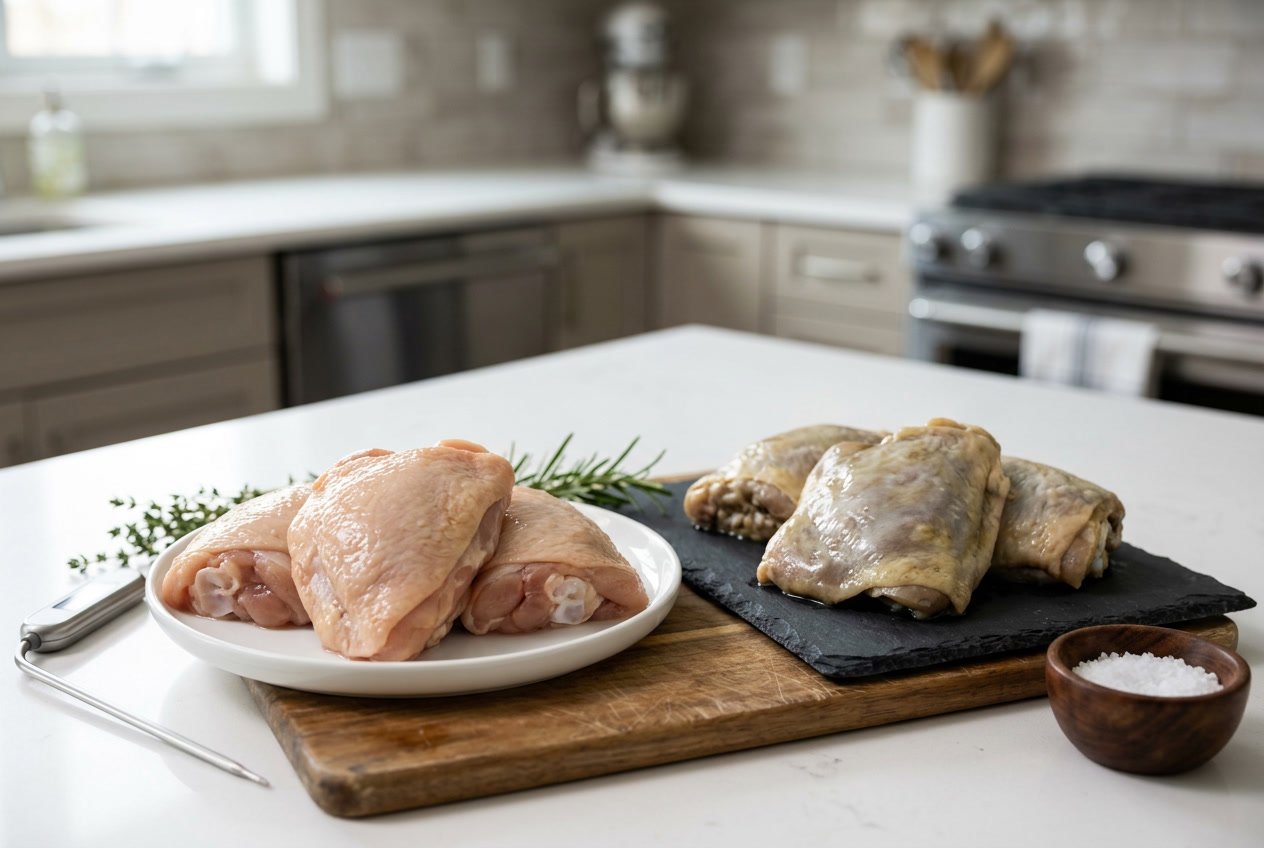
You can spot spoilage by checking color, smell, texture, and packaging. Practical fridge and freezer storage tips help extend quality.
You’ll also find safe thawing and refreezing guidelines, advice on freezer-burn effects, and information about the health risks of eating spoiled poultry.
How to Tell If Chicken Thighs Are Bad
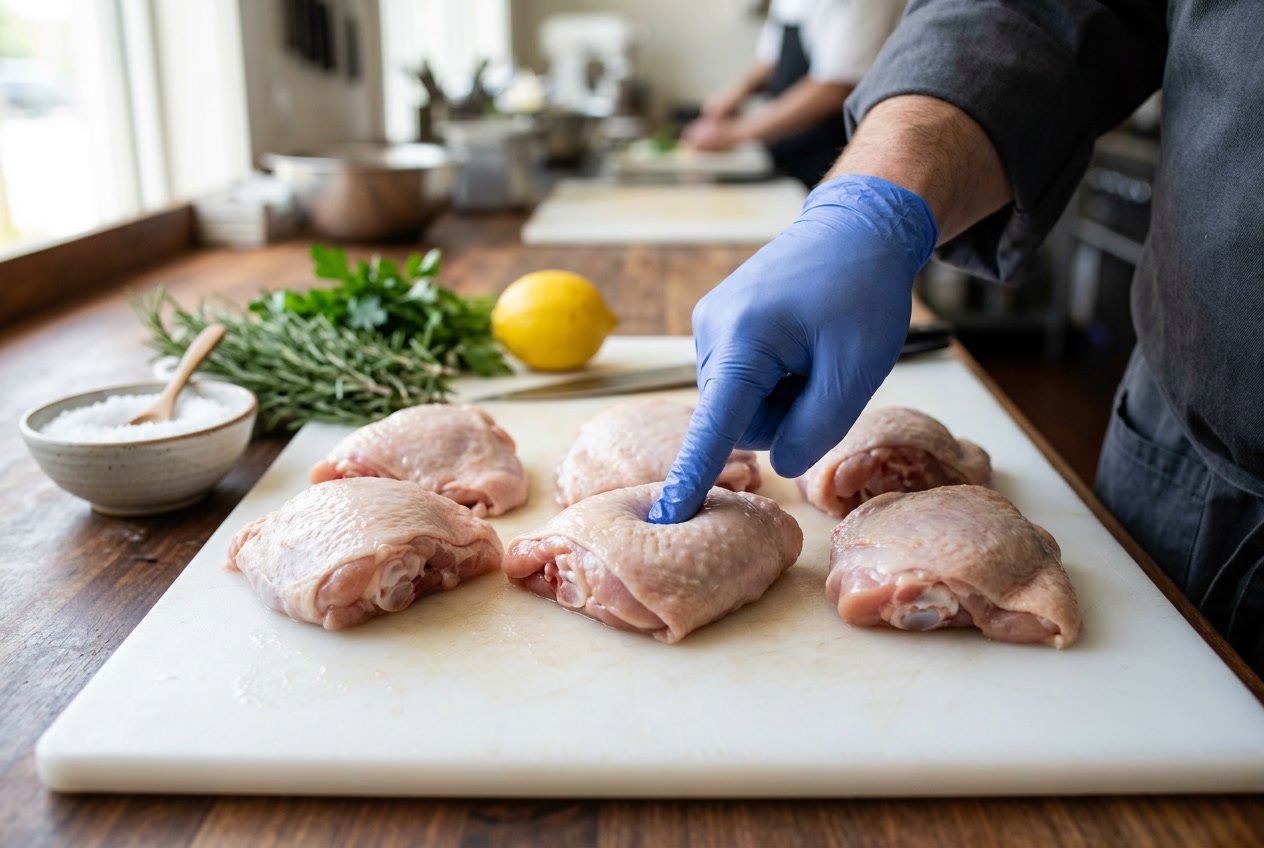
Check color, smell, texture, and packaging before you cook. Use all these cues together; several spoilage signs mean you should discard the thighs.
Visual Signs of Spoilage
Look for color shifts away from a fresh pink to gray, green, or an unusually yellow fat. Large discolored areas or greenish patches indicate bacterial or mold growth and mean the chicken thighs are spoiled.
Check for any surface film or fuzzy growth. White or green mold on the skin or in crevices means you should throw the meat away.
Also, look for excessive dryness or brown edges from freezer burn. That isn’t dangerous but it degrades quality.
Inspect the liquid in the package. Cloudy, thick, or strongly colored juices (rather than clear or slightly pink) signal tissue breakdown and likely spoilage.
Unpleasant Odors and Chicken Smell
Fresh raw chicken has little to no odor. If you notice a sour, putrid, or sulfur-like smell, your chicken thighs are likely spoiled.
Smell is one of the most reliable indicators of spoilage. Do not taste to test freshness.
Sniff the meat after opening the packaging and again after rinsing if you must. A persistent unpleasant odor at any point means you should discard the thighs immediately.
Some packaging or marinade odors can mask freshness, so rely on a clear sour or rotten scent rather than unfamiliar but harmless aromas.
Texture Changes to Watch For
Fresh chicken thighs feel moist and slightly springy when pressed. If the surface is tacky, sticky, or slimy even after rinsing, the thighs have likely developed bacterial film and are spoiled.
Press the flesh gently. If it leaves a deep indentation or feels mushy instead of resilient, the meat’s fibers are breaking down and you should dispose of it.
Freezer-thawed thighs may feel different. Dryness or grainy texture from freezer burn affects quality but not safety, while sliminess signals spoilage.
Packaging Damage and Leaks
Check packaging for punctures, tears, or swollen vacuum bags. Any compromise in the seal increases contamination risk.
Fluid leaks or excessive liquid pooled in the package can indicate thawing and refreezing or bacterial activity. Bulging packages, especially vacuum-packed chicken thighs, suggest gas-producing bacteria and spoilage.
Sticky residue on the outside of boxed or wrapped meat can point to leakage and contamination during transport or storage. If you find damaged packaging or unexpected thaw marks, discard the chicken.
How Long Chicken Thighs Last in the Fridge and Freezer
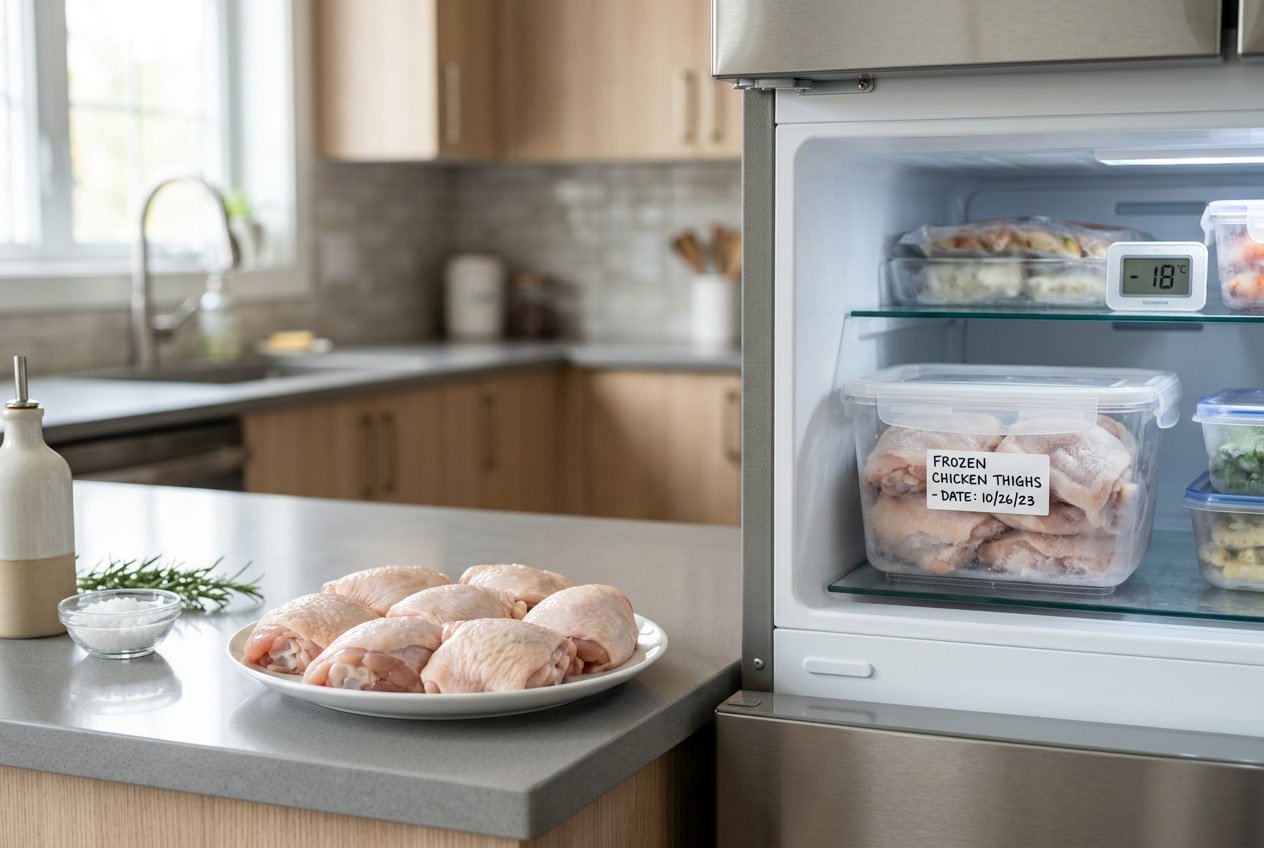
Raw chicken thighs remain safe in the refrigerator for a short window and last much longer in a properly maintained freezer. Use airtight packaging, keep the fridge at or below 40°F (4°C), and label packages with dates.
Refrigeration Timeframes
Raw chicken thighs stay good in the fridge for 1–2 days when stored at 40°F (4°C) or below. Place them on the lowest shelf in their original packaging or in an airtight container to prevent drips and cross-contamination.
Cooked chicken thighs last 3–4 days refrigerated. Refrigerate within two hours of cooking and always reheat to 165°F (74°C) before eating.
Check for spoilage before cooking. A sour or ammonia-like odor, slimy texture, or gray/green tint means you should discard the meat.
Use a fridge thermometer to ensure consistent temperature. If you won’t use raw thighs within 48 hours, freeze them to preserve quality.
Freezing Chicken Thighs for Maximum Shelf Life
Freeze chicken thighs at 0°F (-18°C) or below to stop bacterial growth and extend usable life. Raw thighs keep best quality for up to 9–12 months, though they remain safe longer.
Cooked thighs maintain quality for about 4 months. Vacuum-seal or wrap tightly in plastic wrap, then place in freezer bags to prevent freezer burn.
Remove as much air as possible and label with the freeze date. Thaw safely in the refrigerator, cold water (sealed bag, change water every 30 minutes), or microwave and cook immediately.
Avoid refreezing thawed thighs unless you cooked them after thawing.
Safe Handling and Storage Practices
Keep raw chicken thighs at 40°F (4°C) or below and freeze at 0°F (-18°C) for long-term storage. Handle raw meat on the lowest refrigerator shelf and move it to the freezer within 1–2 days if you won’t cook it.
Storing Chicken Thighs Safely
Store raw thighs in their original sealed packaging if you plan to use them within 1–2 days. Place the package on the lowest shelf or in a leak-proof container to prevent juices from contaminating other foods.
For longer storage, repackage into airtight freezer bags or vacuum-seal to prevent freezer burn and quality loss. Label bags with the date and use within 4–9 months for best quality.
Thaw frozen thighs in the refrigerator, in cold water changed every 30 minutes, or in the microwave. If you thaw in cold water or microwave, cook immediately.
Preventing Cross-Contamination
Always use separate cutting boards and utensils for raw chicken and ready-to-eat foods. Wash hands for 20 seconds with soap after touching raw chicken and before touching other surfaces or food.
Clean and sanitize counters, knives, and boards after contact with raw thighs. Use hot, soapy water followed by a disinfectant or a bleach solution (1 tablespoon bleach to 1 quart water) on nonporous surfaces.
Avoid refreezing thawed chicken thighs unless you thawed them in the refrigerator and they remained at 40°F (4°C) or below. If you cooked thawed thighs, you may safely freeze the cooked portions.
When refreezing raw thighs that were refrigerated continuously, wrap tightly and label with both original and refreeze dates.
Risks of Consuming Spoiled Chicken Thighs
Eating spoiled chicken thighs exposes you to harmful bacteria and toxins that can cause rapid illness and, in some cases, serious complications.
Foodborne Illnesses and Bacteria
Spoiled chicken often carries bacteria such as Salmonella, Campylobacter, and sometimes pathogenic strains of E. coli. These organisms multiply when chicken is stored too long, kept above 40°F (4°C), or left at room temperature.
Salmonella and Campylobacter are the most frequent culprits from poultry. Both can cause severe gastrointestinal infection.
E. coli is less common in chicken but can appear from cross-contamination or improper handling.
Bacterial growth may not always change the smell or appearance of the meat. Cooking to the recommended internal temperature (165°F / 74°C) kills most bacteria, but toxins produced by some bacteria before cooking may remain and still make you sick.
If you handle spoiled chicken, wash surfaces and hands thoroughly to prevent cross-contamination.
Symptoms of Food Poisoning
Symptoms from spoiled chicken usually start within 6–48 hours but can vary by pathogen and dose. You may experience nausea, vomiting, abdominal cramps, and watery or bloody diarrhea.
Fever and muscle aches are common with Salmonella and Campylobacter infections. Mild cases resolve in a few days with fluids and rest, but severe dehydration, persistent high fever, bloody stools, or symptoms lasting more than 72 hours require medical attention.
Certain groups—young children, older adults, pregnant people, and those with weakened immune systems—face higher risk of complications. If you suspect you ate spoiled chicken and develop severe or worsening symptoms, seek medical care promptly and mention possible exposure to poultry.
Freezer Burn and Quality Loss
Freezer storage keeps chicken safe but can damage texture and flavor over time. The following explains how to spot freezer burn and practical steps you can take to prevent it.
Recognizing Freezer Burn
Freezer-burned chicken shows dry, discolored patches, usually grayish-brown or white, on the surface. These areas feel leathery or grainy and may have ice crystals on the skin or in the package.
You may notice flavor and texture changes when you cook freezer-burned thighs. The affected meat tastes bland or slightly off and cooks up dry or tough, especially at the edges.
Freezer burn does not make chicken unsafe to eat, but it reduces eating quality. Check packaging for holes, tears, or frost inside the bag; those indicate that air reached the meat.
Also note the storage time. Even well-wrapped chicken loses quality after about 9 months in a 0°F (-18°C) freezer.
Tips to Prevent Freezer Burn
Use airtight packaging such as vacuum-seal bags or heavy-duty freezer bags with the air pressed out. Double-wrap with plastic wrap then foil if vacuum sealing isn’t available.
Portion the thighs before freezing so you only open what you need. Label each package with the date and use a 9-month quality window for raw thighs stored at 0°F (-18°C).
Remove as much air as possible when sealing. If using a zipper bag, submerge it in water up to the seal to force out air before closing.
Store packages flat for faster, more even freezing. Avoid temperature fluctuations by keeping the freezer door closed and filling empty space with containers or bags to stabilize cold.
If you see frost or holes when you open a package, trim away affected edges before cooking to improve texture and flavor.
Best Practices for Thawing and Refreezing Chicken Thighs
Thaw chicken thighs safely to prevent bacteria growth and preserve texture. Only refreeze under the right conditions.
How to Thaw Frozen Chicken Thighs
Thaw in the refrigerator whenever possible. Place sealed chicken thighs on a tray on the bottom shelf and allow 12–24 hours for a typical package.
Larger or tightly packed portions may take longer. This keeps the meat below 40°F and prevents bacterial growth.
If you need faster thawing, use the cold-water method. Keep thighs in a leakproof bag and submerge in cold water, changing the water every 30 minutes.
Expect 1–3 hours depending on portion size. Cook immediately after cold-water thawing.
Microwave thawing works if you plan to cook immediately. Use the defrost setting and rotate pieces often to avoid partial cooking.
Never thaw chicken thighs on the counter or at room temperature.
Guidelines for Refreezing
Refreeze only if the chicken stayed at refrigerator temperature (40°F) during thawing.
If you thawed in the fridge and the meat has no off-odors, slime, or discoloration, you can refreeze raw thighs. You can also cook them first, then freeze the cooked portions.
Do not refreeze chicken thawed by cold water or microwave unless you cook it first. Rapid thawing lets outer surfaces enter the danger zone even if the center stays cold.
Cooking removes most bacterial risk. Cool cooked thighs quickly and package them in airtight containers before freezing.
Use airtight packaging or vacuum seal to reduce freezer burn. Label with the date and use refrozen raw thighs within 2–6 months, or cooked leftovers within 2–3 months.


