
When Cooking Chicken Thighs in the Oven: Times, Temperatures & Tips
Baking chicken thighs in the oven gives you a reliable weeknight protein. You can get either crispy-skinned or tender and saucy results, depending on your approach.
For juicy thighs, cook until the thickest part reaches 165°F. Use higher heat (around 425°F) for 25–30 minutes for boneless thighs or 30–40 minutes for bone-in, skin-on pieces to balance crisp skin with moist meat.
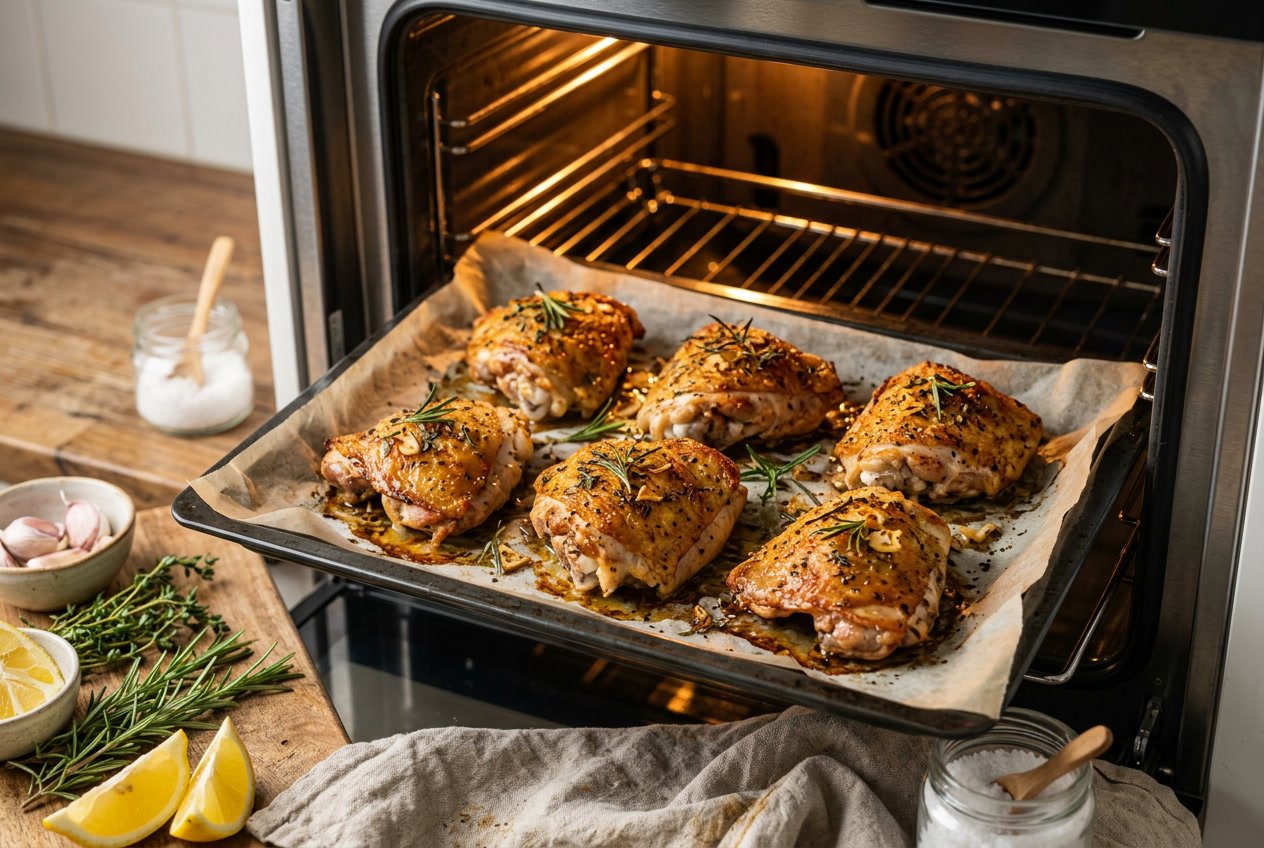
Learn how to pick the right thighs, prep them for even cooking, and choose oven temperatures and times that match your goal. Use simple techniques to get both crisp skin and juicy interior.
Follow the step-by-step method and recipe variations to turn a basic sheet-pan or skillet bake into a centerpiece for meals or meal prep.
Choosing Chicken Thighs for Baking
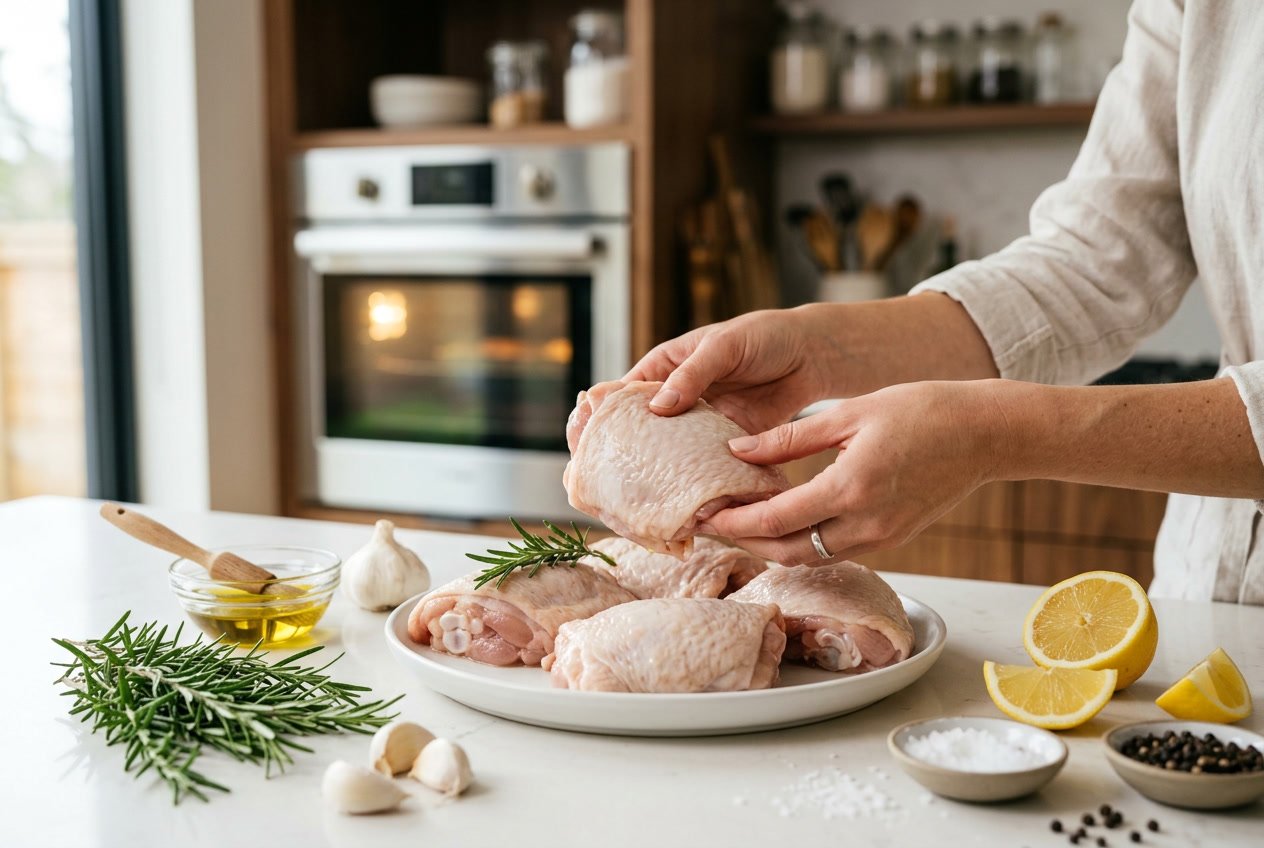
Pick thighs based on texture and cooking time. Fattier cuts deliver more flavor and stand up to longer baking, while leaner, boneless pieces cook faster and suit quicker meals.
Bone-In Skin-On Chicken Thighs
Bone-in skin-on chicken thighs give you the best chance of crispy skin and moist meat. The bone slows heat penetration, so the meat cooks more evenly and resists drying.
Plan for longer bake times, typically 35–45 minutes at 400°F/200°C depending on size. Leave the skin dry and lightly oil it to promote browning.
Salt the skin at least 15–30 minutes before baking, or overnight in the fridge, to improve texture and flavor. Use a rack in a rimmed sheet pan so air circulates under the thighs.
If you want extra crispness, finish under the broiler for 1–3 minutes while watching closely.
Boneless Skinless Chicken Thighs
Boneless skinless chicken thighs cook faster and work well for saucier preparations and weeknight dinners. Expect about 20–30 minutes at 400°F (adjust for thickness) and check internal temperature at 165°F (74°C).
Trim excess fat for even cooking, but retain a little fat to keep the meat juicy. Sear briefly in a pan or use higher oven heat to develop exterior color, then finish in the oven to reach safe doneness without drying.
Marinades and glazes penetrate more quickly in boneless thighs, so shorter marinating times still add noticeable flavor.
Selecting Quality Chicken Thighs
Choose thighs that feel firm and have consistent color with no strong odor. For bone-in skin-on chicken thighs, look for smooth, intact skin with a thin fat layer under it.
Avoid excessive bruising or dark spots. Check packaging dates and buy from reputable sources.
If possible, buy fresh rather than previously frozen for best texture. If you use previously frozen thighs, thaw fully in the fridge before baking for even cooking.
Consider labels (USDA inspection, organic, or pasture-raised) based on your preferences, but prioritize freshness and uniform size so pieces finish at the same time.
How to Prepare Chicken Thighs for the Oven

Prepare the thighs so they crisp evenly, stay juicy, and carry the flavors you choose. Focus on drying, trimming, seasoning, and a short rest before they go into a hot oven.
Trimming and Patting Dry
Trim excess fat and loose skin that can cause uneven rendering and flare-ups under high heat. Use kitchen shears to remove big fat flaps and excess connective tissue.
Leave a thin fat layer for flavor and moisture. Pat each thigh thoroughly with paper towels—press and blot until the skin surface feels dry.
Moisture on the skin causes steaming in the oven and prevents crisping. If you plan to sear first, score the skin lightly in a few places to help fat render faster.
For bone-in thighs, tuck any protruding skin under the thigh to promote even browning.
Seasoning and Marinades
Season generously with kosher salt and freshly ground black pepper at least 15–30 minutes before baking to let the salt penetrate the meat. For a quick rub, combine garlic powder, smoked paprika, and onion powder; pat the mix into the skin and under it where possible.
Use acidic marinades (lemon juice, vinegar, or yogurt) no more than 1–2 hours for bone-in thighs to avoid overly softening the surface. Oil in the marinade helps transfer heat and crisps skin; use 1 tablespoon of olive oil per pound of chicken.
If you prefer a dry rub, apply it right before baking to keep the skin crisp. For sauces (honey mustard, BBQ), reserve application for the last 10 minutes of baking or brush on after baking to prevent burning.
Resting Before Baking
After seasoning, let the thighs rest uncovered on a rack in the fridge for 30 minutes to overnight for better skin drying and deeper flavor. A chill in the fridge tightens skin and helps achieve crisp, evenly browned baked chicken thighs.
If you’re short on time, let them rest at room temperature for 15–20 minutes to reduce chill in the center. This promotes more even cooking when you bake chicken thighs.
Just before baking, re-pat any surface moisture, arrange thighs skin-side up on a wire rack over a baking sheet, and give them a final pinch of salt to enhance browning.
Oven Temperatures and Baking Times
Choose an oven temperature based on whether you want crispy skin fast or tender, slow-cooked meat. Use a meat thermometer to confirm doneness rather than relying solely on time.
Recommended Oven Temperatures
Set the oven between 350°F and 425°F depending on texture and time.
-
350°F (175°C): Use for bone-in, skin-on thighs for gentle cooking and maximum tenderness. Expect longer bake times but lower risk of drying.
-
400°F (200°C): A common balance for oven baked chicken thighs. It promotes browning and crisp skin while keeping meat juicy.
-
425°F (220°C): Choose this for the crispiest skin and faster cooking; monitor boneless thighs closely to avoid drying.
Position the rack in the middle or slightly higher for better skin browning.
How Long to Bake Chicken Thighs
Baking time depends on temperature, size, and whether thighs are bone-in or boneless.
-
Boneless, skinless: 18–25 minutes at 400–425°F; about 20–30 minutes at 375°F.
-
Bone-in, skin-on: 35–45 minutes at 400–425°F; about 45–55 minutes at 350–375°F.
Arrange thighs skin-side up and avoid crowding the pan. Check the thickest part of the thigh near the bone toward the lower end of the time range.
Adjusting for Bone and Skin
Bone-in thighs take longer because heat must penetrate to the bone. Plan an extra 8–12 minutes compared with boneless pieces at the same temperature.
Skin-on thighs crisp best when you pat skin dry and bake uncovered, preferably on a wire rack so hot air circulates. Boneless, skinless thighs cook faster and dry out sooner; lower the time or temperature slightly and consider a brief rest under foil to retain juices.
If thighs are larger than 6 ounces each, add 5–10 minutes. For smaller pieces, reduce time by a similar margin.
Using a Meat Thermometer
Measure at the thickest part of the thigh, avoiding bone contact for an accurate reading.
-
USDA safe minimum: 165°F (74°C).
-
For a more tender result on thighs, remove them at 170–180°F (77–82°C); carryover heat will raise the temperature a few degrees during resting.
Insert a digital instant-read probe toward the end of the predicted cook time. Rest thighs 5–10 minutes after removing from the oven so juices redistribute and the final internal temperature stabilizes.
Achieving Crispy and Juicy Results
Focus on dry skin, high initial heat, and finishing techniques that prevent overcooking. Target 165°F (74°C) internal temp while maximizing rendered fat and skin crisp.
Tips for Crispy Chicken Thighs
Pat each thigh thoroughly dry with paper towels. Trim excess loose skin and lightly coat skin with a thin layer of oil (1–2 tsp per thigh) to promote even browning and help seasonings adhere.
Season generously with kosher salt at least 30 minutes before cooking or right before roasting. Arrange thighs skin-side up on a wire rack over a sheet pan or on a rimmed baking sheet spaced 1–2 inches apart.
Start at a higher temperature—400–425°F (200–220°C)—to render fat quickly and color the skin. Sear skin-side down in a cold skillet over medium heat until fat renders, then transfer to the oven for an even crisp with less splatter.
Retaining Moisture and Tenderness
Target an internal temperature of 165°F (74°C) for safety, but remove thighs at 160–162°F and rest 5–10 minutes; carryover heat brings them to 165°F while keeping juices intact. Use bone-in, skin-on thighs for juicier chicken; the bone insulates and slows moisture loss.
Avoid overcrowding the pan. If using boneless, reduce oven time (typically 20–30 minutes at 400°F) and check temperature early.
Marinate briefly with oil and acid (lemon or yogurt) or use a light brine to boost tenderness and flavor without compromising crispness.
Broiling for Extra Crispiness
If skin isn’t as crisp as you want after roasting, move the pan to the top rack and broil on high for 2–4 minutes. Watch closely; broiling can go from golden to burnt in under a minute.
Before broiling, brush any exposed thick fat with oil and position thighs skin-side up at least 4–6 inches from the broiler element. Remove immediately when skin bubbles and deepens in color, then rest the thighs 5 minutes to let juices redistribute and the crust set.
Step-by-Step Method for Oven Baked Chicken Thighs
Follow a clear sequence: dry the skin, season thoroughly, arrange thighs skin-side up with space between pieces, bake at a high temperature until the thickest part reaches at least 165°F, then rest 5–10 minutes. Use a rack for extra crispiness and a thermometer to confirm doneness.
Arranging Chicken on the Baking Pan
Pat each chicken thigh completely dry with paper towels. Trim excess fat or loose skin for even contact with the pan.
Line a rimmed baking sheet with foil or parchment for easier cleanup. If you have a wire rack, set it in the sheet and place thighs skin-side up.
A rack promotes air circulation and crisper skin. If you don’t use a rack, space thighs at least 1 inch apart to let hot air circulate.
Brush or drizzle about 1 tablespoon oil per pound of thighs, then rub your seasoning blend under and over the skin. For a simple chicken thigh recipe, use salt, pepper, garlic powder, onion powder, and paprika.
Reserve any marinade juices and discard them if they touched raw meat.
Baking Process Walkthrough
Preheat your oven to 400–425°F (200–220°C). Higher heat crisps skin while cooking meat through.
Place the pan on the middle rack. Bake uncovered for about 25–45 minutes depending on size and whether thighs are bone-in or boneless.
Boneless smaller pieces tend toward 20–30 minutes. Bone-in larger thighs often require 35–45 minutes.
Start checking after 20 minutes to avoid overcooking. Use an instant-read thermometer in the thickest part, avoiding bone.
Pull thighs at 165°F (75°C) for safety. For extra crispness, broil 1–3 minutes at the end, watching constantly to prevent burning.
Resting and Serving
Transfer thighs to a clean plate and tent loosely with foil. Rest for 5–10 minutes to let juices redistribute.
After resting, spoon any collected pan juices over the meat or reduce them on the stovetop to make a simple pan sauce. Serve with mashed potatoes, roasted vegetables, or a salad.
Store leftovers in an airtight container for up to 4 days in the refrigerator or freeze for longer storage.
Recipe Variations and Serving Ideas
Use bold dry rubs, acidic marinades, or saucy glazes to change flavor quickly. Pair oven-baked chicken thighs with simple starches or roasted vegetables to make complete meals that finish in the same oven.
Different Seasonings and Sauces
Use dry rubs for crisp skin. Mix 1–2 tsp paprika, 1 tsp garlic powder, 1 tsp onion powder, 1 tsp salt, and ½ tsp black pepper per pound of thighs.
Pat thighs dry and rub with oil. Coat them evenly with the seasoning mix.
For herb-forward flavors, combine lemon zest, chopped thyme, oregano, and a little olive oil. Add lemon wedges before serving for brightness.
Try acidic marinades for tenderness. Use yogurt with garlic and cumin, or a mix of soy sauce, rice vinegar, and honey.
Marinate for 30 minutes to 4 hours. Avoid marinating much longer with citrus to prevent mushy texture.
Brush on BBQ sauce or a honey-soy reduction during the last 10 minutes of baking. This helps the sugar caramelize without burning.
One-Pan Dinners with Sides
Arrange chicken thighs on a rimmed sheet pan. Surround them with uniform veggies like quartered potatoes, halved carrots, or thick-cut Brussels sprouts.
Toss vegetables with oil and salt so they roast in the chicken fat. This helps them finish at the same time as the chicken.
Use a wire rack if you want crisper skin. Place vegetables underneath to catch drippings.
Increase bake time by 5–10 minutes if vegetables are dense.
Bake at 400–425°F (200–220°C). Root vegetables need about 35–45 minutes.
Add tender vegetables like asparagus or zucchini later. They need only 12–20 minutes.
For grain-based one-pan meals, par-bake potatoes or use quick-cooking rice in a separate ovenproof dish. You can bake this alongside the thighs.
Storing and Using Leftovers
Cool cooked thighs to room temperature within 2 hours after baking. Refrigerate them in airtight containers for up to 4 days.
For longer storage, wrap portions in foil or use freezer-safe bags and freeze for up to 3 months. Thaw the chicken overnight in the fridge before reheating.
Reheat gently to preserve juiciness. Use a 325°F oven for 10–15 minutes until warmed through, or microwave in short intervals covered to retain moisture.
Repurpose leftover baked chicken thighs into salads, tacos, pasta, or soup. Shred or chop the meat and add it to a vinaigrette salad, warm it in a skillet with sauce for tacos, or stir it into broth with vegetables for a quick chicken soup.


