
When Baking Chicken Thighs: Temperatures, Seasoning, and Tips
You want juicy, flavorful baked chicken thighs without guessing on time or temperature. Bake bone-in, skin-on thighs at 400°F for about 40–45 minutes (or until the thickest part reaches 165°F–175°F); bake boneless, skinless thighs at 400°F for about 20–25 minutes.
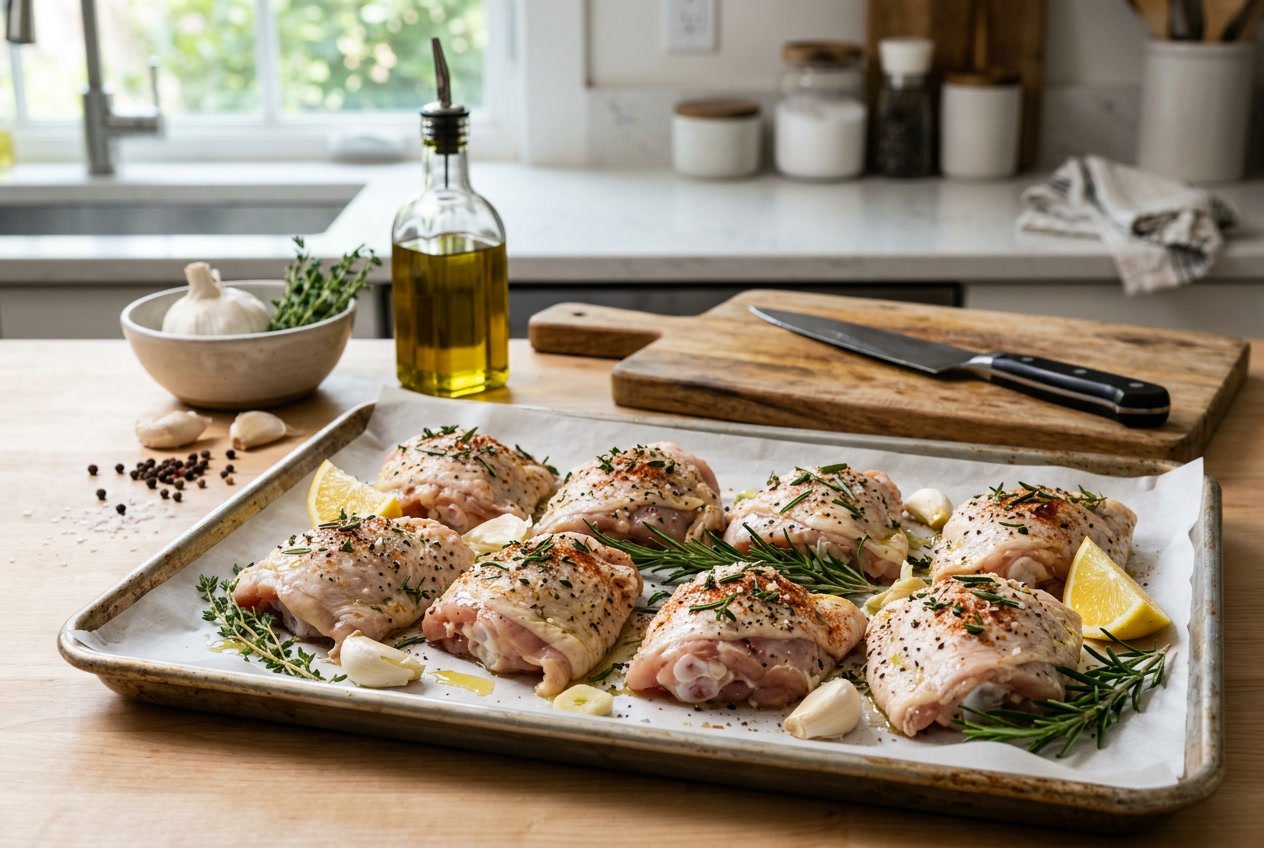
Choose the right thighs, prep them for maximum flavor, and set oven temperature and timing so your baked chicken thighs come out tender and safe every time.
You’ll also learn tricks for crispy skin, the best seasonings, how to check doneness, and easy serving ideas.
Choosing the Right Chicken Thighs
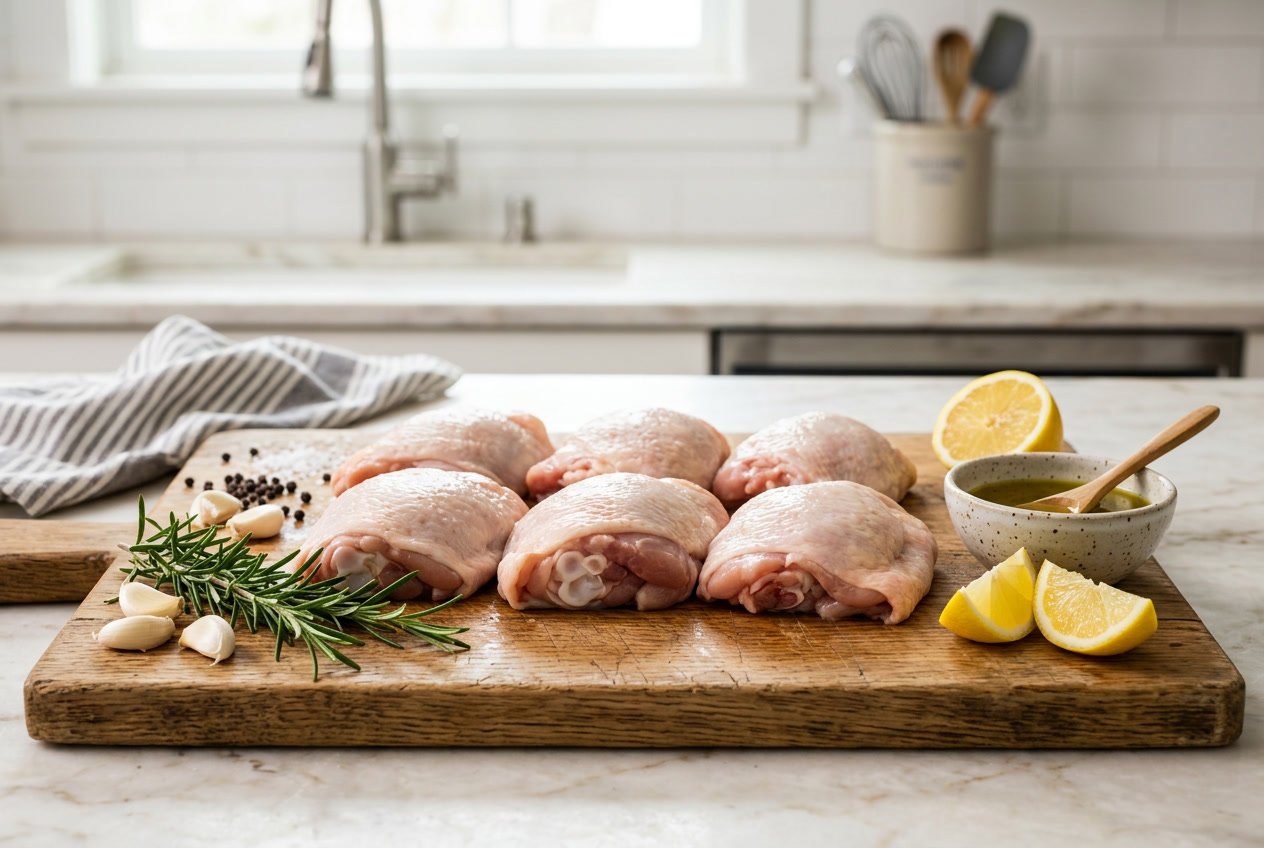
Pick thighs that match your timing and texture goals: choose bone-in for richer flavor and slower cooking, or boneless for speed and ease.
Decide on skin-on if you want crispy browning; pick skinless to cut fat and shorten crisping time.
Bone-In or Boneless Thighs
Bone-in chicken thighs retain more moisture and flavor because the bone conducts heat slowly and helps the meat stay juicy.
Bake bone-in, skin-on thighs at 400°F (204°C) for 35–45 minutes; they tolerate higher heat and a final broil to crisp skin without drying.
Boneless thighs cook faster and more uniformly, usually 20–30 minutes depending on thickness.
They work well when you need dinner quickly or plan to slice the meat for salads, tacos, or sandwiches. Use a meat thermometer and cook to 165°F (75°C) to avoid overcooking boneless pieces.
Skin-On vs Skinless Thighs
Skin-on chicken thighs give you the best chance for crisp, browned skin and concentrated flavor.
Pat the skin dry, season well, and bake skin-side up. Finish under the broiler for 2–3 minutes to boost crispness while keeping the meat juicy.
Skinless thighs reduce surface fat and cut baking time slightly. They don’t crisp in the same way and can dry faster.
If you choose skinless, brine briefly or coat with a thin oil-and-spice rub to help retain moisture and promote even browning.
Fresh vs Frozen Chicken Thighs
Fresh thighs give the most reliable texture and flavor, especially skin-on bone-in pieces that brown best when not previously frozen.
Let fresh thighs sit 15–20 minutes at room temperature before baking to promote even cooking.
You can bake frozen chicken thighs safely, but thawing gives better, more even results.
If you must bake from frozen, increase oven time and cover initially to prevent the exterior from overbrowning while the interior reaches 165°F (75°C). Use a thermometer when baking from frozen.
How Long to Bake Chicken Thighs and at What Temperature
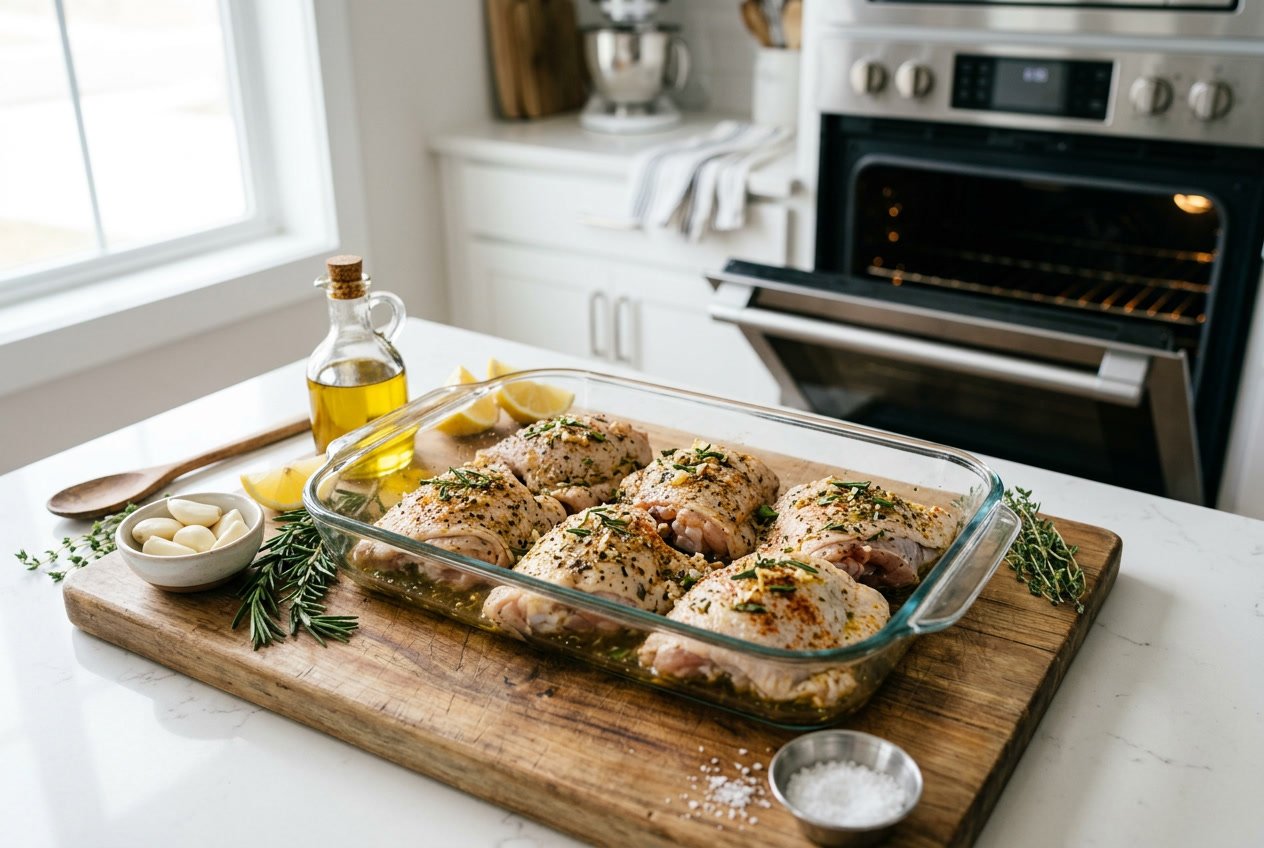
Use higher oven temperatures for crisp skin and shorter cook times.
Use lower temperatures for very tender, shreddable meat. Always confirm doneness with an instant-read thermometer.
Baking Times for Bone-In Thighs
Bone-in, skin-on thighs take longer because the bone slows heat transfer.
Bake at 400°F (204°C) for 35–40 minutes to get crispy skin and fully rendered fat. Raise the oven to 425°F (218°C) and roast 25–32 minutes for more browning, watching closely so the skin doesn’t burn.
For very tender, almost pull-apart meat, cook at 350°F (177°C) for 45–55 minutes. Always check the thickest part near the bone with a thermometer.
Pull at 160°F (71°C) and rest, or cook to 175–180°F (79–82°C) for fully rendered collagen and the most tender texture.
Baking Times for Boneless Thighs
Boneless thighs cook faster because there’s no bone to slow heat.
At 400°F (204°C), plan for 18–25 minutes for juicy, oven-baked chicken. For crisp edges, bake at 425°F (218°C) for 15–20 minutes and use a light coating of oil.
If you’re reheating or using very thin cutlets, reduce time to 12–15 minutes at 375–400°F.
Check internal temperature in the thickest part. Boneless thighs are safe at 165°F (74°C), but many cooks prefer 170–175°F (77–79°C) for improved tenderness.
Rest 5 minutes before serving to allow carryover cooking.
Oven Temperature Guidelines
Choose an oven temperature based on your texture goal: 350°F for tender, shreddable meat; 375–400°F for balanced crispness and juiciness; 425–450°F for maximum browning.
Most home cooks get the best combination of crispy skin and juicy meat at 400°F.
Brush with a high smoke-point oil (avocado, canola) when roasting above 425°F to prevent smoke.
Position the rack in the center or slightly higher for better skin browning. Keep thighs spaced at least 1 inch apart on a wire rack over a baking sheet to let hot air circulate.
Adjusting Bake Time for Size and Thickness
Weight and thickness change bake time more than oven brand.
Add 5–8 minutes for each extra ounce beyond a typical 5–7 oz bone-in thigh. Subtract 3–5 minutes for thinner boneless pieces.
A two-inch thick thigh needs significantly more time than a ¾-inch one.
Cold-from-fridge chicken will take about 3–6 minutes longer than room-temperature pieces.
Crowded pans increase cook time and soften skin; if thighs touch, you’ll get steaming instead of roasting.
Use an instant-read thermometer to know when your baked chicken is done.
Preparation Steps for Baking Chicken Thighs
Remove excess moisture and give each thigh a thin coat of fat to promote browning.
Arrange pieces on a rimmed sheet or shallow pan with space between them to allow hot air to circulate and crisp the skin.
Patting Chicken Thighs Dry
Use paper towels to blot both the skin and the underside until they feel tack-free.
Moisture on the surface creates steam in the oven, which prevents the skin from crisping.
If the thighs are wet from a brine or marinade, let them drain on a rack for 10–15 minutes before patting to avoid reintroducing liquid.
For frozen-thawed thighs, pat dry after thawing fully in the refrigerator to remove pooled juices.
Applying Oil or Butter
Lightly rub each thigh with 1/2 to 1 teaspoon of neutral oil (canola, vegetable) or melted butter to encourage even browning.
The fat helps transfer heat to the skin and aids in crisping without burning. Use oil with a smoke point above 400°F if you plan to bake at high temperature.
Season after oiling so salt and spices adhere evenly.
For extra-crispy chicken thighs, dust with baking powder mixed with salt (about 1/8 teaspoon per thigh). Use sparingly and only with skin-on pieces.
Arranging Thighs for Optimal Baking
Place thighs skin-side up on a rimmed baking sheet or shallow roasting pan, leaving at least 1 inch of space between pieces.
Crowding traps steam and softens the skin. Spacing allows hot air to circulate for crispy chicken thighs.
If available, set the thighs on a wire rack inside the pan to elevate them above rendered fat.
This keeps the skin crisp and promotes even cooking. Put the pan on the upper-middle rack for better browning.
Avoid covering the pan with foil during baking.
The Best Chicken Seasoning and Flavor Additions
Start with a reliable salt-and-pepper base and build layers with paprika, oregano, and thyme.
Choose between simple homemade rubs or a pre-made blend. Add citrus, vinegar, or brown sugar for brightness or caramelization.
Use BBQ or global spice profiles for a specific cuisine.
Classic Salt and Black Pepper
Salt and black pepper form the foundation of any baked chicken thighs.
Use coarse kosher salt for even seasoning; sprinkle about ¾–1 teaspoon per pound of chicken, more if using bone-in pieces.
Grind black pepper fresh for sharper aroma and apply to taste.
Pat thighs dry before salting so the skin crisps in the oven.
If time allows, salt the meat 30–60 minutes ahead or overnight in the fridge to improve flavor penetration and moisture retention.
Keep the salt distribution even.
Black pepper works with other spices, so treat it as a balancing element.
For milder heat, use less or add white pepper for a subtler finish.
Using Paprika, Oregano, and Thyme
Paprika adds color, mild sweetness, and a smoky or sweet note depending on variety.
Use 1–2 teaspoons per pound; smoked paprika gives a barbecue-like depth without a grill.
For brighter, sweeter flavor, choose sweet (non-smoked) paprika.
Oregano and thyme bring herbal complexity.
Use ½–1 teaspoon dried oregano and ½ teaspoon dried thyme per pound; increase with fresh herbs (about 1 tablespoon fresh each).
Oregano adds an earthy, slightly bitter tone. Thyme contributes savory, lemony notes that pair well with roasted garlic and lemon.
Combine paprika, oregano, and thyme with salt, pepper, and garlic powder for a balanced rub.
Rub under the skin where possible to infuse the meat.
These herbs stand up to the oven’s heat and won’t lose their character during a 30–40 minute bake.
Homemade and Store-Bought Rubs
Make a simple homemade rub: 1 tbsp paprika, 1 tsp garlic powder, 1 tsp onion powder, 1 tsp kosher salt, ½ tsp black pepper, ½ tsp dried oregano, ¼–½ tsp brown sugar (optional).
Mix and rub evenly over thighs, including under the skin if possible.
Store-bought chicken seasoning blends save time and ensure consistent results.
Look for blends listing paprika, garlic, onion, and salt near the top.
Check sodium level and avoid mixes with excessive fillers or artificial additives.
Use homemade rubs when you want control over heat and sweetness.
Choose store-bought for convenience or when replicating a specific brand flavor.
Toss excess rub into a bowl with oil to make a pan sauce after baking.
BBQ, Citrus, and International Flavors
For BBQ chicken thighs, combine smoked paprika, brown sugar, chili powder, and a touch of cumin.
Rub the thighs, bake at 400°F, and finish under the broiler or brush with your favorite BBQ sauce for caramelized glaze.
This gives the classic BBQ chicken thighs profile without a grill.
Citrus brightens and tenderizes. Use lemon or orange zest and a tablespoon of juice in a marinade with olive oil, garlic, and thyme.
Marinate 30 minutes to 2 hours.
Explore international flavors: cumin, coriander, and paprika for North African; soy, ginger, and five-spice for East Asian; or chili flakes, oregano, and smoked paprika for Mexican-inspired thighs.
Match accompaniments like rice, roasted vegetables, or a simple green salad to reinforce the chosen profile.
Achieving Crispy Skin and Juicy Meat
Dry the skin, use high oven heat, and choose bone-in, skin-on thighs.
Proper spacing, a hot pan or rack, and brief broiling (if needed) help lock in crispness while a short rest keeps juices inside.
Tips for Crispy Oven Baked Chicken Thighs
Pat each bone-in, skin-on thigh completely dry with paper towels.
Season generously with salt at least 20–30 minutes before baking to draw surface moisture out, or salt right before roasting if time is short.
Use a wire rack on a rimmed baking sheet so air circulates under the thighs.
Preheat the oven to 400–425°F (200–220°C).
Roast on the middle rack for 35–45 minutes depending on size, until skin is deep golden and internal temperature reads 165°F (74°C).
For extra crispness, start on a hot, oven-safe skillet (cast iron) for 6–8 minutes skin-side down, then transfer to the oven on the rack.
Avoid overcrowding and leave at least 1 inch between pieces.
When to Use a Broiler
Use the broiler only at the very end to finish skin texture. If the skin has browned but not blistered, place the pan 6–8 inches from the broiler and watch closely.
Broil for 1–3 minutes total and rotate the pan if needed. Stay at the oven and use short bursts because sugar in rubs or marinades can burn quickly under direct heat.
If thighs are undercooked, finish them in the oven until the internal temperature reaches 165°F (74°C). Avoid broiling undercooked thighs.
If you’ve air-dried the skin in the fridge beforehand, you’ll usually need little to no broiling. Broiling is optional for those who want a crisp, shatter-ready crust.
Letting Chicken Rest After Baking
Rest the thighs 5–10 minutes on a clean plate or cutting board after removing them from the oven. Resting lets internal juices redistribute instead of spilling out when you cut into the meat.
Tent loosely with foil to keep them warm but avoid sealing tightly to prevent steam from softening the skin. Use a thermometer to confirm the final internal temperature has settled at about 165°F (74°C).
After resting, transfer to serving plates or slice across the grain for tender chicken thighs.
Checking Doneness and Food Safety
You need a reliable way to know chicken thighs are safe and still juicy. Focus on internal temperature, where to measure, and a few visual and tactile checks to verify doneness.
Using a Meat Thermometer
Check the thickest part of the thigh with an instant-read meat thermometer, avoiding contact with bone. Insert the probe into the center of the meat for an accurate reading.
Cook to at least 165°F (74°C) for safety, but many chefs prefer 175°F (79°C) for tender dark meat. Remove the thighs when the thermometer reads the target temperature and let them rest for 3–5 minutes for carryover cooking and juice redistribution.
If you use an oven probe, place it in before cooking and monitor the final rise. Calibrate or test your thermometer periodically in boiling water (should read ~212°F / 100°C at sea level) to ensure accuracy.
Signs of Properly Cooked Chicken Thighs
Cut into the thickest part to inspect color and juices. The meat should be opaque and light-colored throughout, and juices should run clear, not pink or bloody.
Check texture by pressing the thigh. Cooked meat feels firm with slight springiness.
Look at exterior cues as well. Skin should be browned and slightly crisp if skin-on. Pair these visual and tactile checks with a thermometer for best results.
Serving Suggestions and Incorporating Chicken Thighs into Meals
Use baked chicken thighs as a flexible protein that pairs well with bright vegetables, starches that soak up pan juices, and simple sauces that highlight the seasoning.
Pairing with Side Dishes
Match the seasoning profile of your chicken thigh recipe to complementary sides.
- For herb- or lemon-roasted thighs, serve with roasted baby potatoes and a simple arugula salad tossed in lemon vinaigrette. The potatoes soak up pan juices, and the salad adds acidity and crunch.
- For BBQ or maple-mustard thighs, choose creamy coleslaw and grilled corn or baked sweet potatoes to balance sweetness and smoke.
- For Asian-style or teriyaki thighs, serve jasmine rice or coconut rice and quick-steamed broccoli or bok choy. Top with chopped scallions and toasted sesame for texture.
Aim for 1–2 vegetable sides and one starch per plate. This keeps dinners balanced and makes the chicken thigh a reliable centerpiece for an easy weeknight dinner.
Adding to Your Dinner Rotation
Rotate baked chicken thighs into your weekly menu as a go-to protein.
Bake 6–8 bone-in thighs with two different seasonings (such as Italian herb and spicy Cajun) and use half for immediate dinners. Refrigerate the rest for later meals.
Convert leftovers into new meals by shredding for tacos, dicing for grain bowls, or slicing for warm salads. These quick conversions save time and keep meals interesting.
Schedule thighs once or twice weekly to maintain variety without extra planning. Their forgiving cooking and diverse flavor possibilities make them ideal for a reliable dinner rotation.
Reheating and Storing Leftovers
Cool cooked thighs within two hours. Store them in airtight containers.
Refrigerate for up to 4 days or freeze for up to 3 months. Label containers with the date and seasoning to make reheating choices easier.
To reheat, use one of these methods:
- Oven: Heat at 325°F (160°C) for 12–18 minutes. Cover with foil to keep moisture in.
- Skillet: Sear skin side down in a lightly oiled pan over medium heat. Then cover and cook for 4–6 minutes until heated through.
- Microwave: Cover loosely and reheat in 60–90 second bursts, flipping once to avoid hot spots.
For crisp skin after refrigeration, briefly broil for 1–2 minutes at the end.


