
When Are Chicken Thighs Fully Cooked: Temperature, Signs, and Expert Methods
You want chicken thighs that are safe and juicy, not dry or risky.
Check the thickest part of the thigh with an instant-read meat thermometer. When the internal temperature reaches 175°F (79°C), the thighs are fully cooked, tender, and safe to eat.
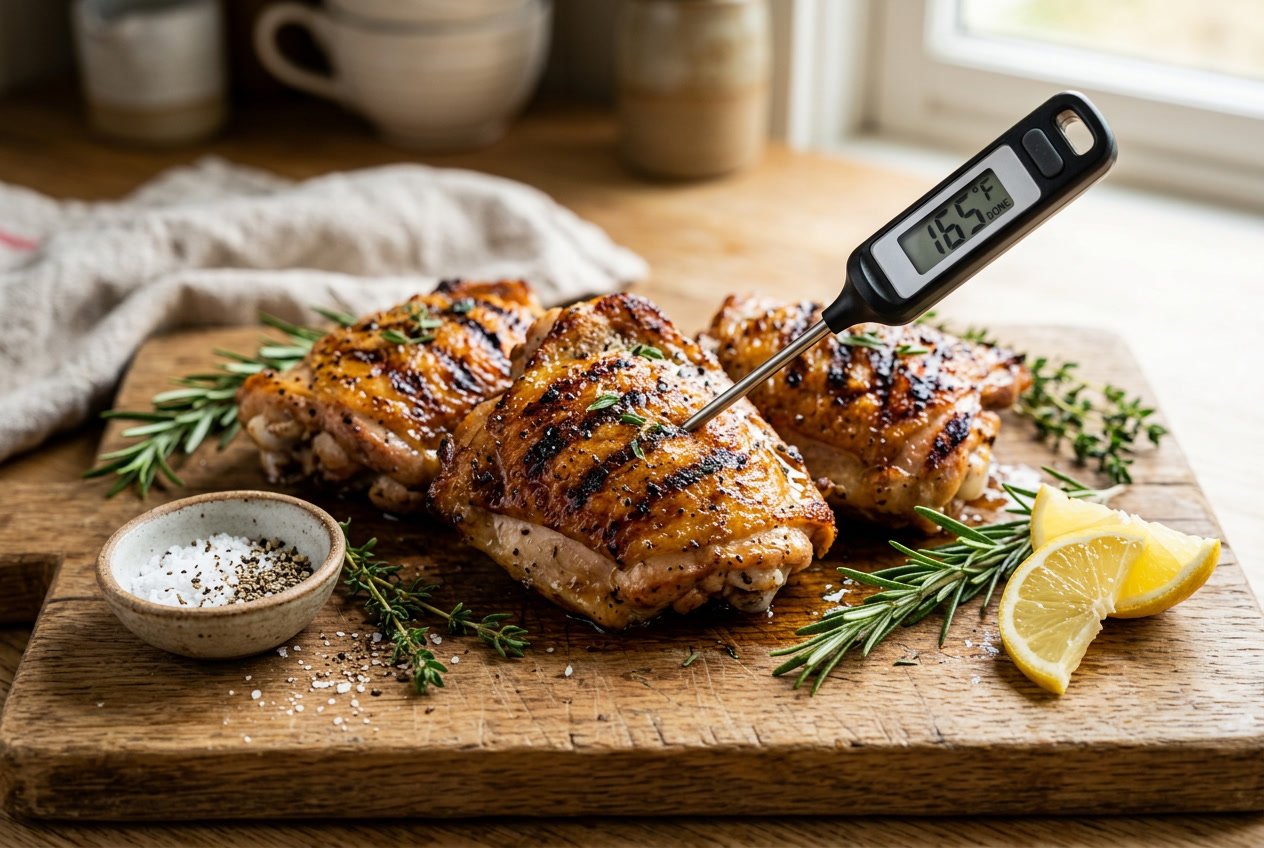
Measure the temperature correctly, recognize visual and tactile signs of doneness, and adjust cooking times by method and cut.
Follow practical tips for juicier results and understand differences between boneless and bone-in thighs.
Handle leftovers safely to get reliable results every time.
Safe Internal Temperature for Chicken Thighs
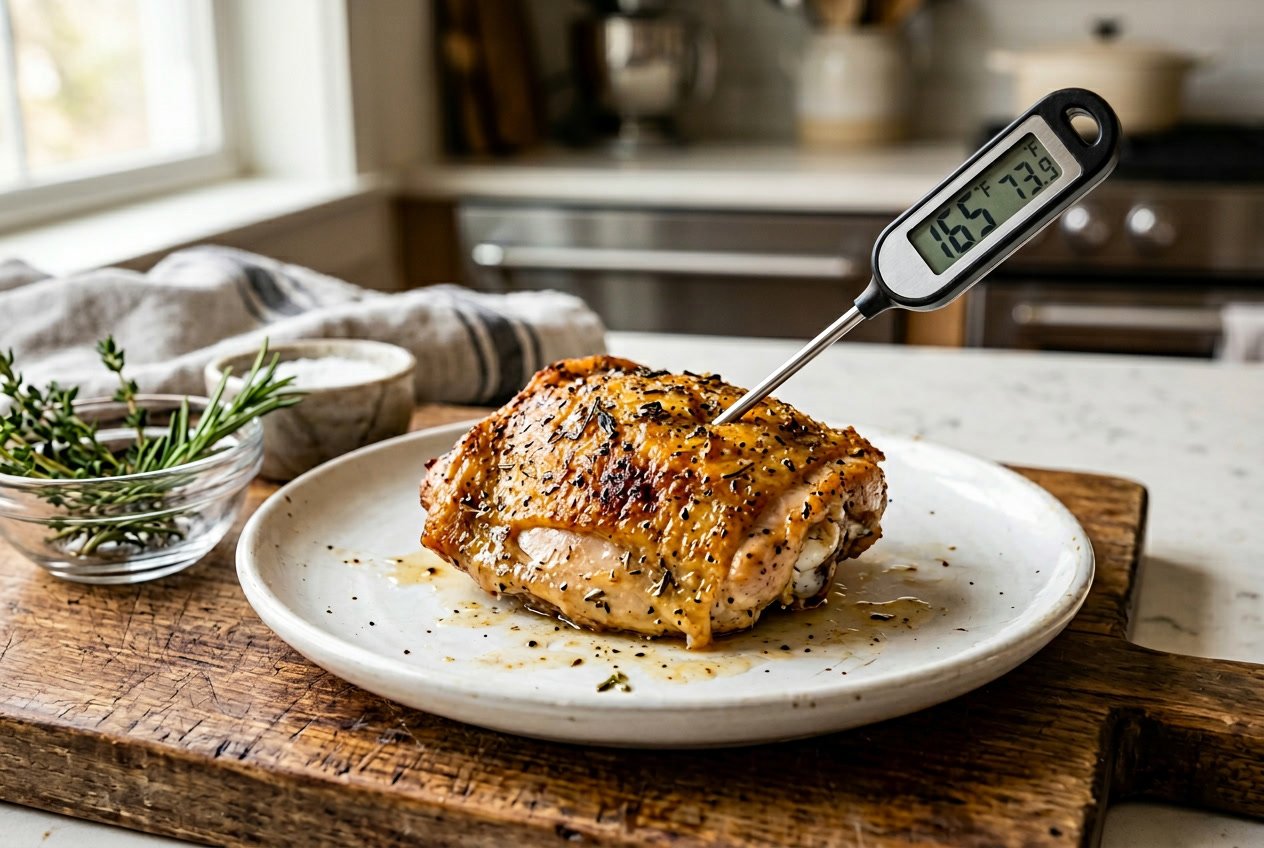
Cook chicken thighs to a temperature that guarantees safety while delivering the texture you want.
Use an instant-read thermometer in the thickest part of the meat, avoiding bone contact, and target the right temperature for best results.
Minimum and Optimal Temperatures
The USDA recommends a minimum safe internal temperature for poultry of 165°F (74°C).
Reach that temperature at the thickest, fleshiest point of the thigh and hold briefly to ensure pathogens are destroyed.
Insert the thermometer so the tip sits in the center of the meat, not touching bone or fat.
Many cooks pull thighs at higher temps for better texture.
Aim for 175°F–185°F for richer mouthfeel and more tender dark meat.
Boneless thighs usually require less carryover cooking than bone-in pieces, so monitor them closely to avoid drying.
Advantages of Higher Temperatures for Texture
Dark meat contains more collagen and connective tissue than breast meat.
As you heat thighs above 170°F, that collagen converts to gelatin, moistening and tenderizing the meat.
Higher internal temps also render fat under the skin, improving juiciness and producing a silkier texture.
If you want fall-off-the-bone thighs for shredding or braising, push toward 185°F for the softest results.
Temperature Guidelines for Bone-In and Boneless Thighs
Use these targets depending on the cut and your desired outcome:
- Bone-in, skin-on thighs: pull at 175°F–185°F for tender, juicy meat and fully rendered fat.
- Boneless, skinless thighs: pull at 165°F–170°F to avoid dryness while ensuring safety.
- For shreddable braised thighs: cook to 180°F–195°F slowly to break down connective tissue.
Always check the thickest point and avoid touching the bone.
If the thigh hits your target but looks pink near the bone, rely on temperature rather than color to tell if the meat is fully cooked.
How to Measure Internal Temperature Accurately
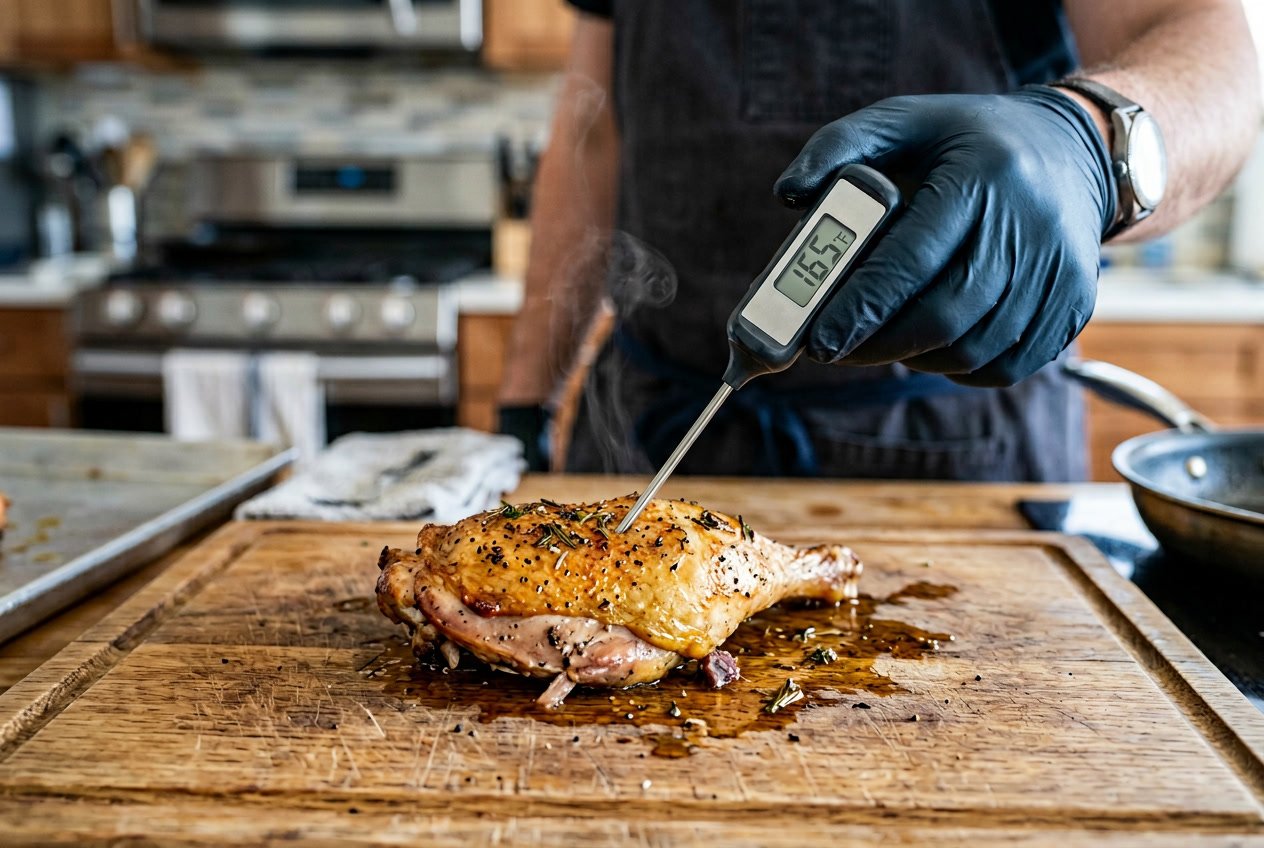
Use a reliable instant-read or probe thermometer and place the tip where the meat is thickest, avoiding bone and fat.
Check at least two places per piece and across several thighs to account for variability.
Correct Placement of Meat Thermometer
Insert the thermometer into the thickest part of the thigh, perpendicular to the bone.
If you have bone-in thighs, angle the probe so the tip sits beside the bone but does not touch it; touching bone reads hotter than the meat.
For boneless thighs, push the probe into the center of the thickest cross-section.
Avoid shallow insertion—ensure the sensing area (usually the last 1/2–1 inch of the probe) is fully inside the meat.
If using a pop-up or oven-safe probe, place it before cooking so the sensing tip stays in the same thick location.
With thin-skinned or folded pieces, gently unfold or separate layers so the probe reaches true muscle tissue, not skin or pockets of fat.
How to Use a Meat Thermometer
Choose the right type: an instant-read digital thermometer for quick checks, or an oven-safe probe thermometer for continuous monitoring.
Calibrate a dial model if needed by testing in ice water (32°F) and boiling water (212°F at sea level).
When checking, insert the probe, wait for the reading to stabilize (usually 2–5 seconds for instant-read digital; longer for dial types), then record the temperature.
For bone-in thighs, aim for 175°F if you want tender, fully rendered connective tissue.
For boneless, aim for 165–170°F to stay juicy without overcooking.
Clean and sanitize the probe between checks to prevent cross-contamination.
Avoid leaving an instant-read thermometer in the oven; use an oven-safe probe if you need continuous temperature tracking during cooking.
Checking Multiple Thighs for Consistency
Test at least three thighs per batch: one from the center of the pan, one from the edge, and one from any stacked or thicker piece.
Heat distribution varies with pan crowding and oven hot spots, so those positions often differ in doneness.
If readings vary more than 5–10°F, move undercooked pieces to a hotter zone or return to the oven until the target temperature is reached.
For large batches, rotate the pan halfway through cooking and recheck temperatures.
Keep a simple checklist: thermometer type, probe placement, target temp, and locations checked.
That record helps you repeat successful results and spot issues with equipment or cooking setup.
Visual and Tactile Signs of Doneness
You can confirm doneness without a thermometer by checking color and juices, feeling the meat’s firmness, and noting how the bone and skin behave.
These cues help you judge safety and whether the thighs will be tender and juicy.
Color and Clarity of Juices
Make a small cut into the thickest part of the thigh to inspect the meat and juices.
The meat should be opaque white to pale tan throughout; any raw-pink streaks near the bone indicate more cooking is needed.
Look at the juices that escape when you cut or pierce the thigh.
Clear juices (not pink or reddish) signal the proteins have coagulated and bacteria are likely destroyed.
If juices are cloudy or tinted, continue cooking and recheck every few minutes.
Use this test as a secondary check when you don’t have a thermometer.
It’s effective for spotting undercooked pockets that visual surface color might hide.
Texture and Firmness
Press the thickest part of the thigh with a finger or tongs to assess springiness.
Cooked thighs feel firm but still have slight give; undercooked meat will be soft and jiggly, while overcooked meat will be very tight and dry.
When you cut into a properly cooked thigh, the fibers should separate easily and the meat should shred with minimal resistance.
That texture indicates connective tissue has broken down, producing tender chicken thighs.
Combine this tactile check with the color-and-juices test for the best non-thermometer assurance.
If the meat seems gummy or resists pulling apart, it needs more time.
Bone Separation and Skin Appearance
If you’re cooking bone-in thighs, look for a slight gap forming where the meat meets the bone.
The bone may pull back a little as the meat cooks; that separation indicates internal proteins have contracted and the thigh is close to done.
Examine the skin: it should be golden-brown and crisp when roasted or pan-seared.
Pale, rubbery skin often means the interior hasn’t finished cooking, especially if the piece hasn’t visibly shrunk.
Measure multiple cues together—bone pullback, skin color, and texture—before serving.
Cooking Times and Methods for Chicken Thighs
You need clear targets for temperature, time, and technique to get juicy, safe chicken thighs every time.
Follow these method-specific timings and tips for bone-in or boneless cuts, and for cooking from frozen when applicable.
Baked Chicken Thighs
Bake bone-in, skin-on thighs at 375°F (190°C) for 35–40 minutes.
That range gives you fully cooked meat with rendered fat while keeping the interior juicy.
Check with an instant-read thermometer inserted into the thickest part (avoid the bone) for 165°F (74°C) minimum.
If you want crispier skin, raise the oven to 425°F (218°C) and roast bone-in thighs 35–40 minutes, then broil 2–3 minutes to brown the skin.
For boneless, skinless thighs, bake at 375°F for about 25–30 minutes.
They cook faster and dry out sooner, so watch them closely.
Pat skin dry, season well, and use a rack so air circulates under the thighs.
You can bake from frozen—expect roughly 50–60 minutes at 375°F for bone-in, adding time until the thermometer reads 165°F.
Grilling Chicken Thighs
Preheat your grill to medium heat (about 350–400°F).
Grill bone-in thighs 6–8 minutes per side over indirect or medium heat until internal temperature reaches 165°F at the thickest point.
Boneless thighs cook faster—typically 5–7 minutes per side depending on thickness.
Use a two-zone fire if possible: sear briefly over higher heat to render skin and create char, then move to cooler zone to finish cooking without burning.
Oil grates, keep a close eye on flare-ups from rendered fat, and use tongs to flip once for an even sear.
If grilling from frozen, thaw first for best texture; frozen thighs can cook unevenly and take significantly longer on the grill.
Pan-Frying and Sautéing
Heat a heavy skillet over medium-high and add 1–2 tablespoons of oil.
For boneless thighs, cook 5–7 minutes per side until the exterior is golden and the center reaches 165°F.
Bone-in thighs need 8–10 minutes per side, and you may finish them in a 375°F oven for 10–15 minutes to ensure even doneness without burning the surface.
Sear skin-side down first to render fat and crisp skin; press slightly for good contact.
Deglaze with a splash of broth or wine toward the end to create a pan sauce and keep meat moist.
Use an instant-read thermometer and avoid overcooking.
If starting from frozen, you must thaw for safe, even pan cooking.
Frozen thighs will steam rather than sear and will not develop a proper crust.
Slow Cooking and Pressure Cooking
In a slow cooker, cook bone-in thighs on low for 6–7 hours or high for 3–4 hours.
They will reach safe temperature and become very tender; the marrow and connective tissue break down, so internal temperature can rise above 165°F without drying.
Boneless thighs often need 3–4 hours on low or 2–3 on high.
In a pressure cooker or Instant Pot, cook fresh bone-in thighs 10–12 minutes at high pressure with a natural release of 5–10 minutes.
Boneless thighs usually take 8–10 minutes with a short natural release.
These methods work well for braises and shredded chicken.
When using these methods from frozen, pressure cooking is preferred.
Add 2–4 extra minutes depending on thickness, and ensure an instant-read thermometer shows 165°F before serving.
Tips for Perfectly Cooked Chicken Thighs
Control salt, surface dryness, and final temperature to get crispy skin and tender meat.
Use a reliable thermometer, plan for resting time, and avoid prolonged high heat that dries the thighs.
Brining and Marinating
Brine boneless or bone-in thighs in a 5–8% salt solution for 30 minutes to 4 hours to improve moisture retention and seasoning penetration.
Rinse and pat dry before cooking so the skin will crisp; excess surface moisture prevents browning.
When marinating, choose an acidic or enzymatic component (vinegar, citrus, yogurt) for 30 minutes to 2 hours to add flavor and slightly tenderize.
Avoid long acidic marinades (over 6 hours) for small thighs because they can make the texture mushy.
For spice rubs, apply at least 15 minutes ahead or refrigerate overnight for deeper flavor.
If you plan to get crispy skin, apply dry rub or oil after the thighs have dried in the fridge for 1–4 hours.
Resting and Slicing
Always rest cooked thighs 5–10 minutes on a warm plate or cutting board before slicing.
Resting allows juices driven toward the surface by heat to redistribute into the muscle, which keeps the meat moist when you cut it.
Use a meat thermometer to remove thighs at 160–163°F (71–73°C) if you prefer slightly higher carryover; target resting temp will reach at least 165°F (74°C).
Slice against the grain for tender bites and use a sharp knife to minimize juice loss.
When serving bone-in thighs, let them sit bone-side down for a few minutes.
That helps juices mingle near the bone and makes the meat pull away more easily.
Avoiding Overcooking
Overcooking dries thighs and toughens protein. Monitor temperature rather than time alone.
Insert a probe thermometer into the thickest part without touching bone. Stop cooking once the probe reads 165°F (74°C) for immediate safety, or remove at 160–163°F and rest to 165°F for juicier results.
Adjust cooking method to thigh type. Bone-in, skin-on thighs need slightly longer and benefit from searing then oven-roasting at 400°F (200°C) for an even finish.
Boneless thighs cook faster, so reduce oven time by 5–10 minutes. Reduce oven temperature or move the pan off direct heat if skin browns too fast.
If you use slow cookers, plan 3–4 hours on high or 6–8 hours on low. Avoid extended hold times after cooking, as prolonged low heat breaks down texture into mush rather than keeping the meat tender and intact.
Boneless vs Bone-In Chicken Thighs
Boneless thighs cook faster and more evenly. Bone-in thighs take longer but deliver more moisture and flavor.
Your choice affects cook time, target temperature, and how you handle resting and slicing.
Cooking Time Adjustments
Boneless chicken thighs typically finish faster because they have uniform thickness and no bone to slow heat transfer. In the oven at 375–400°F, expect about 20–30 minutes.
On the grill or in an air fryer, plan roughly 6–10 minutes per side or 18–22 minutes total at 375°F. Use an instant-read thermometer in the thickest part to confirm 165°F.
Bone-in chicken thighs require more time since the bone conducts heat slowly. Bake bone-in thighs at 400°F for about 35–45 minutes or grill over medium heat for 25–35 minutes, turning periodically.
Measure near the bone but avoid touching it with the probe. Aim for 165°F in the meat, and consider carrying to 175–185°F for extra-tender texture from connective tissue.
Flavor and Texture Considerations
Boneless thighs are convenient and versatile. They brown quickly and suit stir-fries, skewers, and quick sautés.
They contain less connective tissue and can dry out if overcooked, so monitor temperature closely and rest briefly after cooking to redistribute juices.
Bone-in chicken thighs deliver richer flavor and juicier texture because marrow and connective tissue release flavor during cooking. The bone helps retain moisture and often yields more forgiving results for longer methods like roasting or grilling.
If you prefer shreddable, fall-off-the-bone meat, cook bone-in thighs to higher temperatures and allow a 5–10 minute rest before carving.
Handling Leftovers and Reheating Chicken Thighs
Store cooked chicken thighs promptly and keep them cold. Reheat to a safe internal temperature without overcooking.
Follow clear timelines and use airtight containers. Apply reheating methods that preserve moisture and texture.
Storage Guidelines
Refrigerate leftover chicken thighs within 2 hours of cooking. If room temperature is above 90°F (32°C), refrigerate within 1 hour.
Place thighs in shallow, airtight containers or wrap tightly in foil or plastic wrap so they cool evenly and avoid the temperature danger zone.
Label containers with the date. Consume refrigerated chicken thighs within 3–4 days.
For longer storage, freeze thighs in freezer-safe bags or containers, removing excess air. Frozen cooked thighs keep best for up to 4 months for quality, though they remain safe beyond that time if kept frozen continuously.
When thawing frozen cooked chicken thighs, move them to the refrigerator overnight. For faster thawing, keep them sealed and place in cold water, changing the water every 30 minutes until thawed.
Never thaw at room temperature.
Safe Reheating Practices
Reheat chicken thighs until the internal temperature reaches 165°F (75°C). Insert an instant-read thermometer in the thickest part without touching bone to confirm safety.
Select a reheating method that matches the cut and your texture goals.
Oven: Set to 350°F (175°C), cover with a splash of broth, and heat for 15–20 minutes for bone-in thighs. Remove the cover for the last 5 minutes to crisp the skin.
Air fryer: Set to 350–375°F (180–190°C) and heat for 5–8 minutes in a single layer, flipping halfway.
Skillet: Use medium heat with a little oil or broth, cover, and heat for 5–10 minutes, turning occasionally.
Microwave: Use short bursts of 1–2 minutes, cover with a damp paper towel, add a tablespoon of water to retain moisture, and check the temperature frequently.
Reheat chicken only once. If chicken smells off, has a slimy surface, or an unusual color, discard it.


