
When Are Chicken Thighs Done Temp: Ultimate Guide to Safe, Tender Results
You want chicken thighs that are safe and delicious, not dry or underdone. Aim for an internal temperature between 175°F and 195°F. At 175°F, the meat is tender and fully cooked. At 190–195°F, connective tissue breaks down for meltingly tender results.
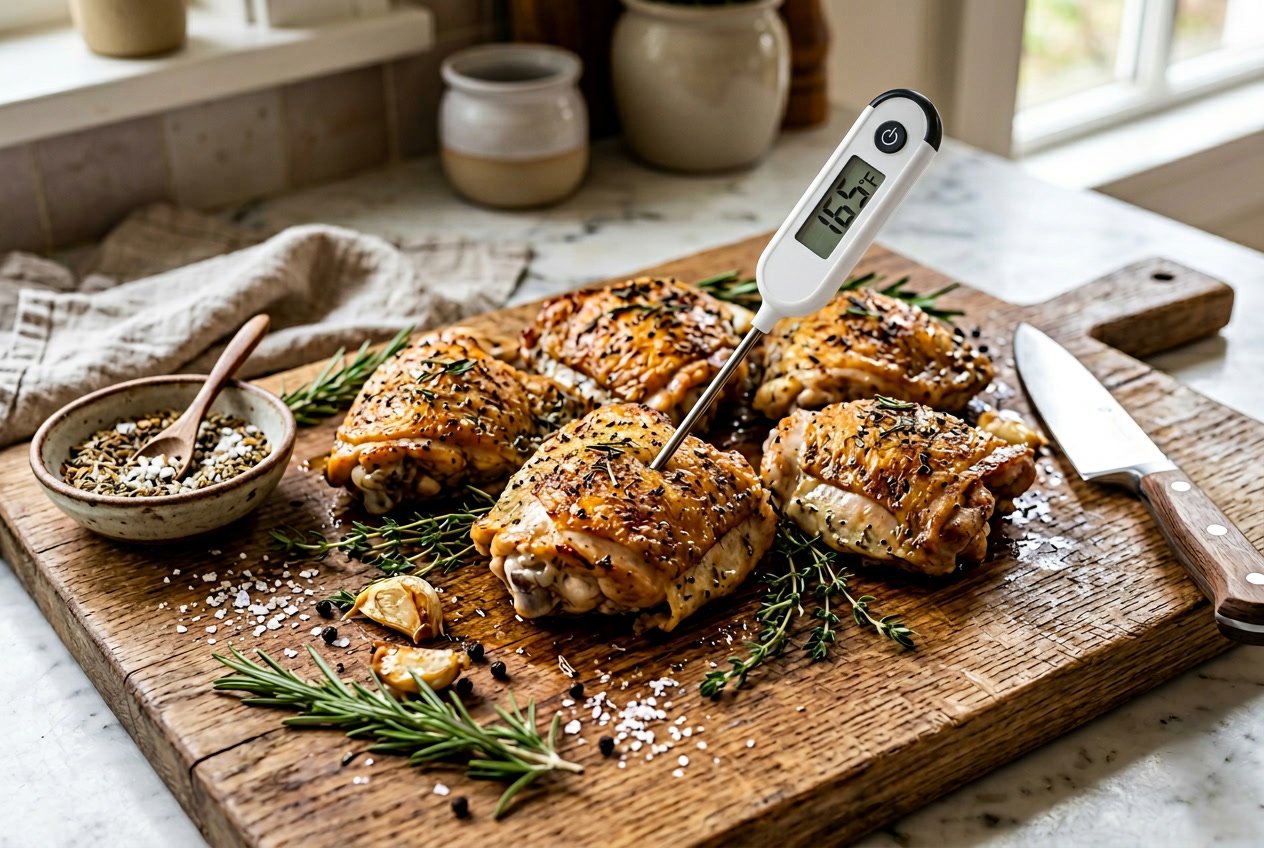
Learn how to test temperature accurately. Discover which cooking methods favor lower or higher target temps.
Watch for signs when thighs go past their prime. Use practical tips for oven temps, timing, and techniques to help you hit the right doneness every time.
The Ideal Done Temperature for Chicken Thighs
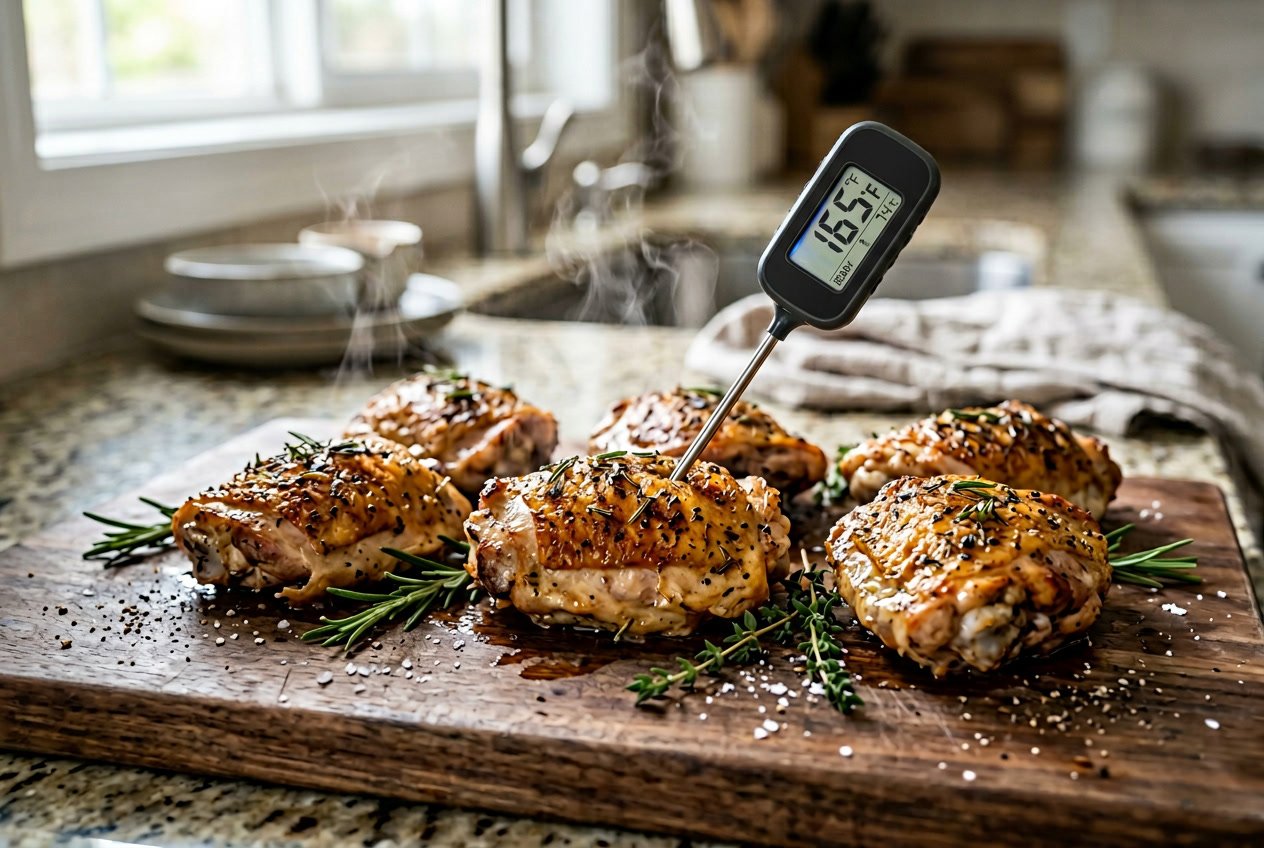
Aim for a specific internal temperature to guarantee safety and achieve your desired texture. Target temperatures depend on whether you prioritize safety or tenderness.
Minimum Safe Temperature for Chicken Thighs
The USDA sets the safe minimum internal temperature for all poultry at 165°F (74°C). Use an instant-read thermometer placed in the thickest part of the thigh, avoiding bone contact.
Reaching 165°F destroys harmful bacteria quickly. If you hold the meat at that temperature briefly, it is safe to eat.
Thighs contain more connective tissue, so hitting 165°F makes the meat safe but may not maximize tenderness. If you want firmer, fully cooked meat with some juiciness, 165°F meets food-safety requirements.
Optimal Internal Temperature Ranges
For tender, juicy thighs, aim higher than the minimum. Chefs and tests show collagen in ribs and thighs breaks down around 175–195°F (79–91°C).
- 175°F: Meat becomes tender while still clinging to the bone.
- 185°F: Connective tissue softens further, making the texture softer and more succulent.
- 190–195°F: Meat becomes very tender and almost shreddable.
Use an instant-read thermometer and remove thighs when the probe reads your target. Let the meat rest briefly; residual heat can raise the internal temperature a few degrees.
If you cook bone-in thighs, expect longer cook times than boneless at the same oven temp.
Why Higher Temperatures Improve Texture
Chicken thighs contain collagen and intramuscular fat that convert to gelatin as internal temperature rises. Between 175°F and 195°F, this conversion accelerates, producing a juicier, more tender bite.
Cooking to only 165°F leaves more intact collagen, resulting in a firmer texture. Taking thighs into the 190–195°F range gives you the soft, almost falling-apart quality found in braises and slow roasts.
Avoid exceeding 205°F, as meat can become stringy and lose flavor. Monitor temperature to decide when chicken thighs are done for your preferred texture.
How to Measure Chicken Thigh Temperature Accurately
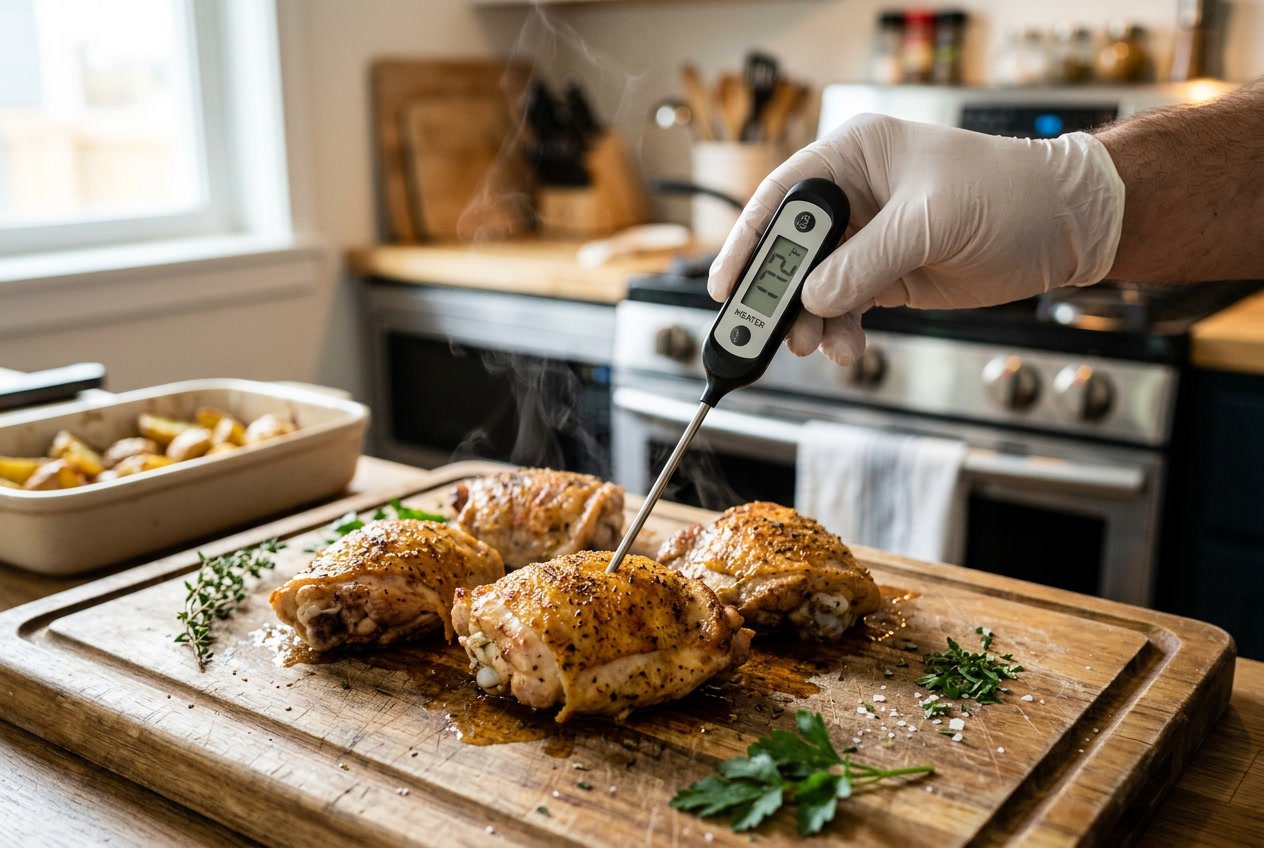
Use a reliable thermometer and insert it into the thickest part of the meat, avoiding bone or fat. Let the probe stabilize and factor in 5–10 minutes of resting for carryover cooking.
Using an Instant-Read Thermometer
Choose a digital instant-read thermometer for fast, precise readings. Look for a thin probe and a response time under 10 seconds.
Insert the probe so the tip sits in the center of the thickest part of the thigh. For boneless thighs, target the meatiest spot. For bone-in thighs, aim near the center but keep the tip clear of the bone.
Wait for the display to stabilize before recording the temperature. Clean the probe with hot, soapy water between checks.
Calibrate or check accuracy periodically using an ice bath (32°F / 0°C) or boiling water (adjust for altitude).
Proper Thermometer Placement
Placement determines accuracy more than thermometer brand. Insert the probe parallel to the bone when testing bone-in thighs so the tip reaches the muscle center without contacting bone.
For boneless thighs, push the probe straight into the thickest section to reach the center. Avoid pockets of fat or air near the skin.
Measure multiple spots on larger thighs or when cooking several pieces. Use the lowest internal temp you find to judge doneness.
Avoiding Common Temperature Checking Mistakes
Do not press the probe against bone, fat, or gristle. Avoid shallow insertion—the tip must reach the core of the muscle.
Don’t check immediately after removing thighs from heat. Rest the meat 5–10 minutes; carryover cooking raises the internal temperature a few degrees.
Avoid testing too close to the pan surface where localized heat can mislead you. Never rely solely on visual cues like clear juices or color.
Use a calibrated digital thermometer and test several pieces when cooking multiple thighs to ensure every piece reaches at least 165°F (74°C).
Factors That Influence Cooking Time and Doneness
These factors determine how long you cook thighs and the internal temperature you should target. Pay attention to bone presence, skin, and thickness—each changes heat transfer and the final temp.
Bone-In vs. Boneless Thighs
Bone-in chicken thighs cook more slowly because the bone absorbs and redistributes heat. Bone-in pieces take about 10–15 minutes longer than boneless thighs at the same oven temperature.
Use an instant-read thermometer placed next to the bone but not touching it. Aim for 175–185°F for optimal tenderness, though 165°F is the USDA minimum.
Boneless chicken thighs heat and cook through more evenly and faster. Check them earlier and more often. For boneless thighs, target 170–180°F for juicy results, and remove from heat when the thickest part reaches your chosen temp.
If you cook mixed pieces, stagger placement or remove boneless pieces first. When grilling, flip bone-in less frequently and let carryover heat finish the internal cooking.
Skin-On vs. Skinless Thighs
Skin-on chicken thighs provide a fat layer that shields meat from direct heat and helps retain moisture. Skin promotes browning and crisping; higher surface temperatures are fine because the skin insulates the flesh.
Expect slightly longer cooking times for skin-on pieces when aiming for the same internal temp. Skinless thighs lose moisture faster and can dry if cooked beyond 180°F.
They respond well to moderate, steady heat and short resting periods. For crisp exterior without drying, sear skin-on first or roast skinless at moderate temps and monitor internal temp closely.
Insert the thermometer into the thickest part of the meat, not the skin. Rest skin-on thighs uncovered for a few minutes to maintain crispness.
Thigh Size and Thickness
Thickness drives cooking time more than weight. A thin, flattened boneless thigh (about ¾ inch) can finish in 12–18 minutes at 400°F, while a 1½–2 inch bone-in thigh may need 35–50 minutes at 375–400°F.
Measure at the thickest point to judge doneness accurately. Even pieces cook more predictably.
If thighs vary, pound thicker ones to match or group similar sizes together. Use a leave-in probe for larger bone-in thighs.
Carryover cooking adds 2–5°F after removal. Factor that into your target pull temperature to avoid overcooking smaller or thinner pieces.
Recommended Oven Temperatures and Cooking Times
Choose a temperature based on how crispy you want the skin, how quickly you need dinner, and whether thighs are bone-in or boneless. Use a probe thermometer and target an internal temp of at least 165°F (74°C). Many cooks aim for 175–185°F (79–85°C) for juicier results.
350°F (175°C) for Roasting
Roast bone-in, skin-on thighs at 350°F (175°C) for gentle, even cooking and maximum tenderness. Expect about 40–50 minutes for bone-in thighs and 30–35 minutes for boneless thighs.
Check the thickest part without touching bone. This lower temperature gives time for connective tissue to break down, so meat becomes tender without drying.
If you want crispy skin, finish under the broiler for 1–3 minutes, watching closely.
375°F (190°C) for Even Cooking
Bake chicken thighs at 375°F (190°C) for a balance of juiciness and moderately crispy skin. Plan on 35–45 minutes for bone-in, skin-on thighs and 25–30 minutes for boneless.
Times vary with thigh size and whether meat is at room temperature. Use a thermometer to confirm 165°F (74°C) minimum; aim for 175°F (79°C) for more tender texture.
400°F (200°C) and 425°F (218°C) for Faster Results
Use 400–425°F (200–218°C) for faster cooking and crispier skin. At 400°F, expect 35–45 minutes for bone-in and 20–30 minutes for boneless. At 425°F, boneless thighs can finish in 20–25 minutes, while bone-in may take 30–40 minutes.
High heat reduces overall cooking time but increases risk of dry meat if thighs are small or overcooked. Rotate the pan halfway and check internal temperature early.
Remove thighs when thermometer reads 165–175°F (74–79°C) depending on preferred tenderness, then rest 5–10 minutes to let juices redistribute.
Signs Chicken Thighs Are Cooked Beyond Temperature
You can tell thighs have passed ideal doneness by visual and texture changes. Watch the color, skin, and how the meat responds when pressed or cut.
Visual Indicators of Doneness
Overcooked thighs often show a dry, stringy appearance where muscle fibers separate easily. The meat may look dull; collagen that turned to gelatin at higher temps can make pieces appear shredded and loose around the bone.
Crispy skin will lose crispness and look puckered or leathery if the thigh has been overcooked. Juices pooled on a cutting board will be clear and scarce.
Look for tight junctions where the meat pulls away from the bone. Large gaps or bone-naked areas mean connective tissue and gelatin have broken down too far.
Texture and Juiciness Cues
Press the thickest part with a finger or tongs. Properly cooked thighs feel springy and yield slightly. Overcooked thighs feel firm and resist, or can feel overly soft and fall-apart if collagen converted to gelatin excessively.
When you cut into the thigh, the meat should be moist and hold together. If it flakes into dry strands, you’ve gone past the sweet spot for tender chicken thighs.
Boneless thighs dry out faster and become dense and stringy once their muscle proteins have squeezed out moisture.
At 165°F the meat is safe, but if the thigh reaches 175–185°F the collagen melts into gelatin, making meat very tender. If the result is mushy rather than tender, you’ve exceeded the texture you likely intended.
Key Techniques for Juicy, Tender Chicken Thighs
Focus on timing, temperature, and simple steps that control moisture and texture. Small adjustments like resting time and skin treatment produce reliably tender thighs with crisp skin.
Resting Period Importance
Let thighs rest 5–10 minutes after cooking for small pieces, or 10–20 minutes for bone-in pieces. This equalizes internal temperature and redistributes juices.
If you slice or probe too soon, liquid will run out, leaving meat drier. Tent loosely with foil to protect the crust, but avoid sealing tight.
During resting, carryover cooking will raise the internal temperature a few degrees. Remove thighs at 2–5°F (1–3°C) below your target if you want precise doneness.
Use this time to finish sauces or vegetables so the meat can rest uninterrupted. Rely on an instant-read thermometer to confirm temperature after resting.
Breaking Down Collagen
Collagen in thighs converts to gelatin when you hold it between about 140°F and 195°F over time. This “collagen-breakdown sweet spot” yields tender, silky meat.
If you stop at 165°F, thighs are safe but less breakdown happens. Aiming toward 175–195°F produces more tender results for slow or braised cooking.
Slow, moist-heat methods like braising at a low simmer or roasting gently keep the meat in the collagen conversion range longer. For grilling or roasting, use indirect heat or lower oven temperatures (300–350°F) and extend the cook time instead of using high heat.
Check tenderness with a fork. The meat should feel soft and give easily without being stringy.
If the meat resists, cook it longer in the collagen-breakdown zone. If it turns stringy, it likely passed 210°F and lost its finished texture.
Achieving Crispy Skin
Dry the skin thoroughly before cooking. Pat with paper towels and, if time allows, air-chill uncovered in the fridge for several hours.
Salt the skin at least 15–30 minutes before cooking to draw surface moisture out and improve crisping.
Start with the skin-side down in a hot, lightly oiled pan. This lets you render fat and brown the skin.
Finish in the oven if needed to cook through without burning. For oven-only cooking, roast at 425°F for the last 10–15 minutes after the meat reaches near-target temperature to crisp the exterior.
Avoid covering the skin during resting. Tent loosely over the meat only.
Give a final blast under a broiler for 1–2 minutes if the thigh is fully cooked but not yet crisp.


