
When Are Chicken Thighs Done: A Complete Guide to Perfect Doneness
You want chicken thighs that are safe, tender, and juicy, not dry or undercooked. Use an instant-read thermometer and aim for about 170–185°F for the best texture, with 165°F as the minimum safe temperature.
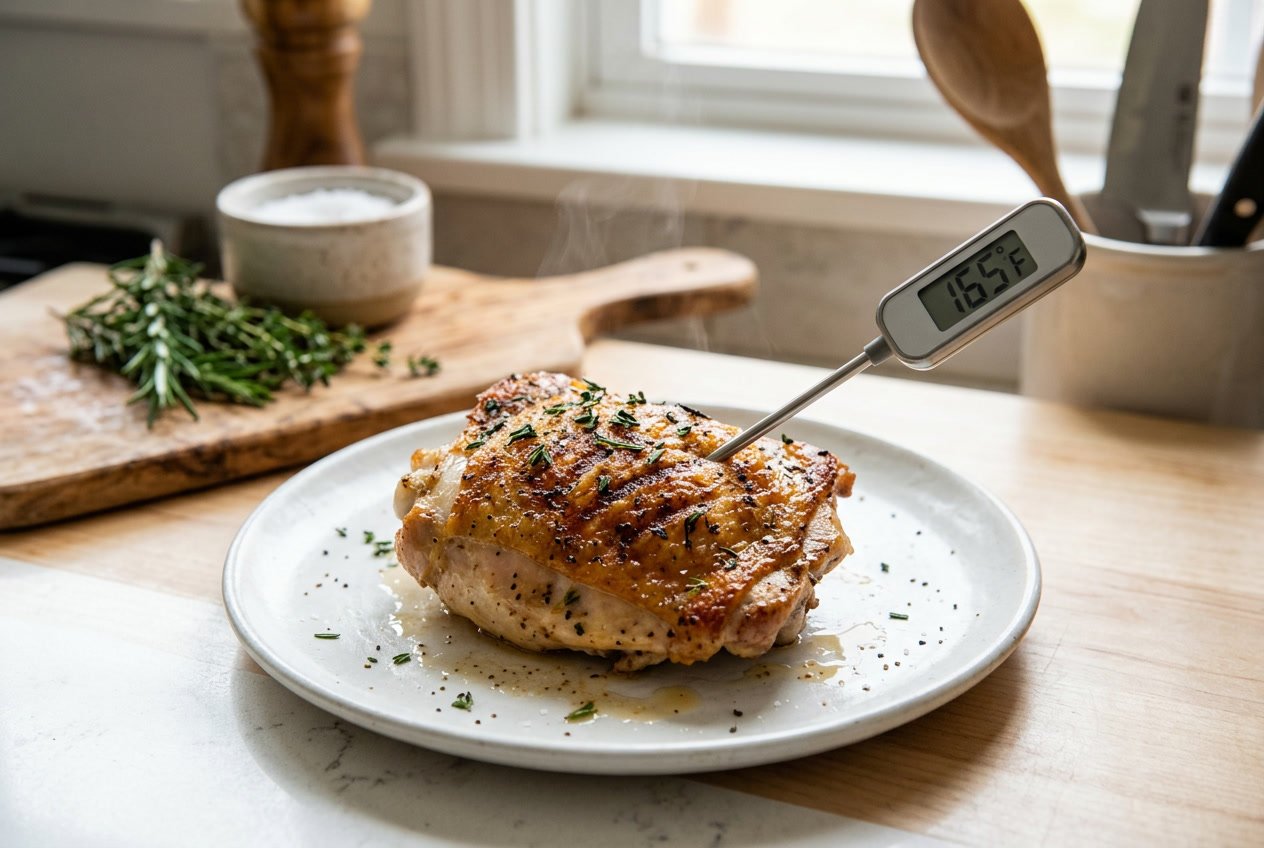
This guide explains what those numbers mean and how to check doneness with or without a thermometer. You’ll also find practical tips for timing and cooking methods.
What Does It Mean for Chicken Thighs to Be Done
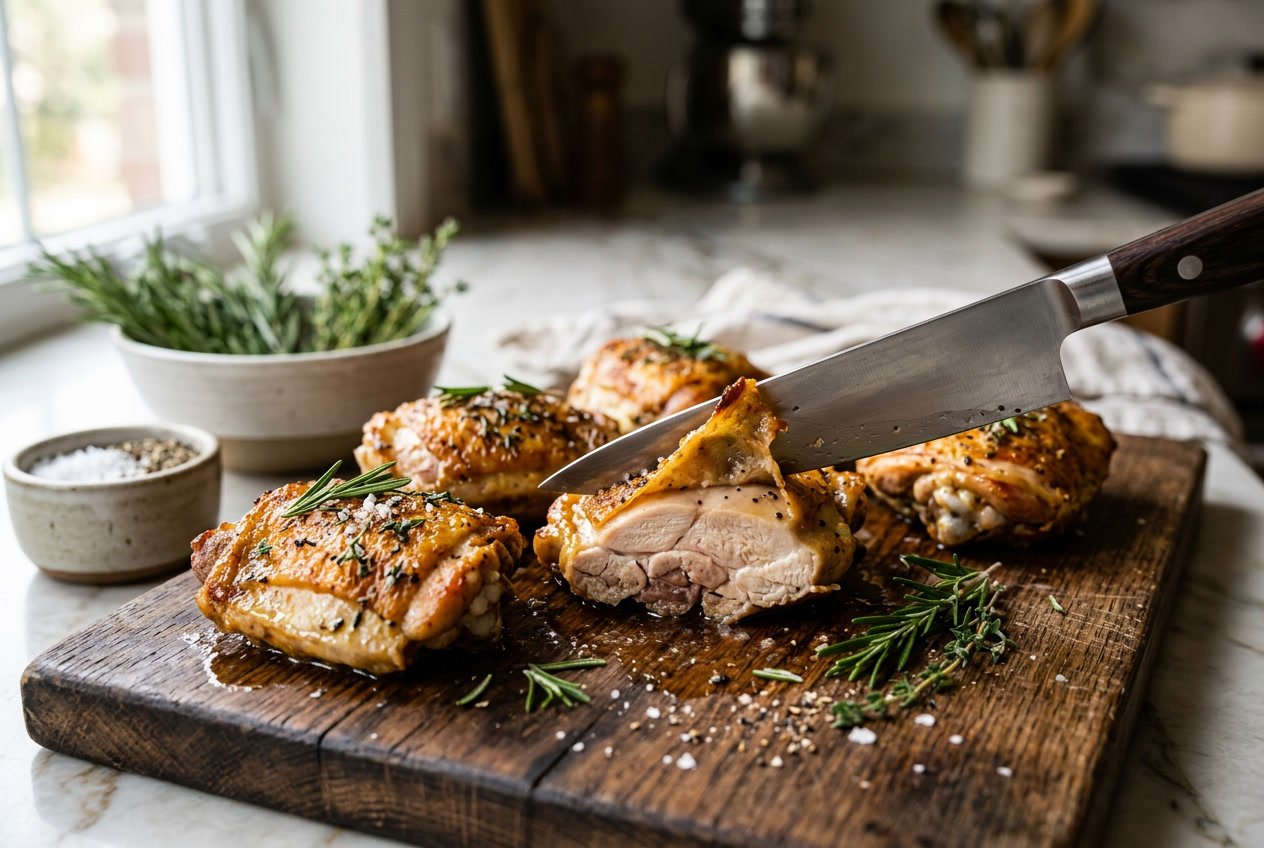
Doneness means the meat has reached a safe internal temperature, the juices run clear, and the texture feels firm but still tender. Use a thermometer as your main check, then confirm with visual and tactile cues.
Chicken Thigh Doneness Explained
Internal temperature is the main factor for chicken thigh doneness. Aim for about 175°F (79°C) for bone-in dark meat for tender, fully cooked thighs.
Insert an instant-read thermometer into the thickest part, avoiding the bone. When the temperature hits your target, remove the thighs and let them rest for 5–10 minutes.
Carryover cooking raises the internal temperature a few degrees and redistributes juices, keeping the meat moist. Look for opaque, light-brown-to-white meat and clear juices when you cut into the thickest spot.
The meat should feel firm with a little give, not floppy or mushy.
Risks of Undercooked or Overcooked Chicken
Undercooked thighs can carry Salmonella or Campylobacter, which cause foodborne illness. Pinkness near the bone and bloody juices are unreliable signs, so always check with a thermometer.
Overcooking removes moisture and breaks down proteins too much, resulting in dry, stringy thighs. High heat for too long also toughens connective tissue and ruins the skin’s texture.
Monitor temperature instead of relying only on time.
Essential Internal Temperatures for Chicken Thighs
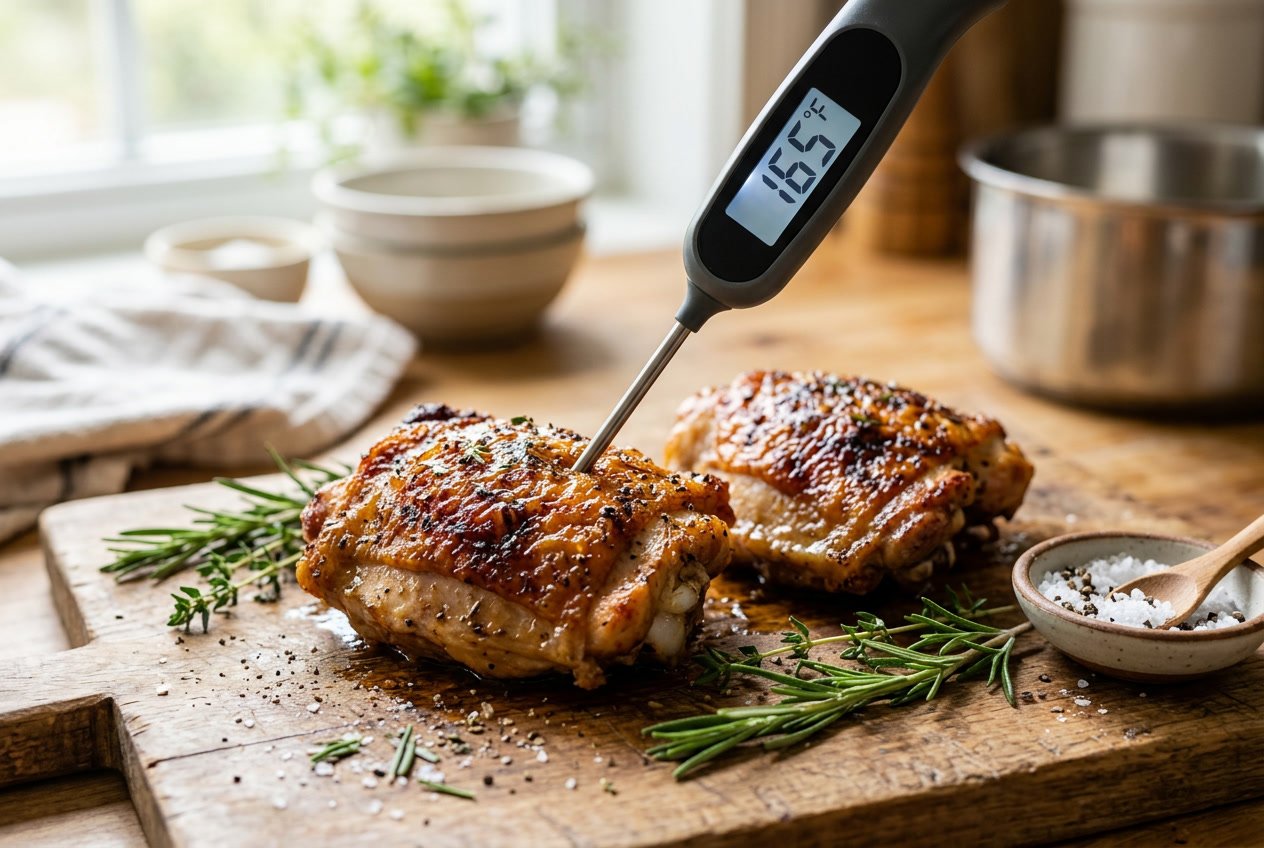
Cook chicken thighs until harmful bacteria are destroyed and connective tissue has broken down for your preferred texture. Use an instant-read thermometer in the thickest part, avoiding bone, and aim for the right temperatures.
Safe Minimum Internal Temperature
The USDA minimum for poultry is 165°F (74°C) measured at the thickest point. Insert the thermometer at least ¼ inch from the bone to avoid a false reading.
If you reach 165°F, the meat is safe to eat. For home cooking, use 165°F as your practical, safe target.
Visual cues like clear juices and no pink near the bone help, but they aren’t reliable alone. Rely on a thermometer for accuracy.
Optimal Temperature for Juicy and Tender Thighs
For more tenderness, many cooks take thighs to 175–195°F (79–91°C). At these higher temperatures, collagen turns to gelatin, making dark meat juicy and almost falling off the bone.
Aim for around 175°F for tender but still-firm meat. Push toward 190–195°F when braising or slow-roasting for meltingly tender results.
Avoid exceeding 210°F, as meat becomes stringy and loses flavor.
Boneless thighs in a hot skillet need about 6–8 minutes per side to approach 175°F. Bone-in thighs roasted at 400°F often take 35–45 minutes to reach the 175–190°F range.
Temperature Differences: Bone-In vs. Boneless
Bone-in thighs heat more slowly because the bone absorbs heat. Expect longer cook times, often 10–20 minutes more, compared with boneless thighs at the same oven temperature.
Boneless, skinless thighs cook faster and more evenly. They typically hit 165°F in 12–20 minutes when baked at 400°F, depending on thickness.
Thicker boneless pieces may still benefit from finishing to 175°F for better texture. Insert the probe into the thickest meat, not the bone.
For bone-in pieces, measure on the side away from the bone. Remove boneless pieces earlier to prevent overcooking.
How to Check Chicken Thigh Doneness with a Thermometer
Use a food thermometer and measure at the thickest spot without touching bone. Aim for a target temperature, insert correctly, and let the thighs rest after removing from heat.
Choosing and Using a Meat Thermometer
Pick an instant-read thermometer for quick checks. Leave-in probes work well for roasting multiple pieces.
Check accuracy by testing in ice water (should read 32°F / 0°C). Clean the probe before and after use.
Insert the probe perpendicular to the meat for a stable reading. Hold the probe steady until the display stabilizes.
Measuring Internal Temperature Properly
Insert the probe into the thickest part of the thigh, aiming for the center of the muscle. Avoid bone, gristle, or the pan, which will show higher readings.
Target 175°F (79°C) for bone-in thighs for tenderness. For boneless thighs, use the same approach and probe placement.
If using a leave-in thermometer, position the probe before cooking and route the cable away from direct flames. After you reach the target, remove the thighs and rest them 3–10 minutes.
Visual and Physical Cues for Doneness Without a Thermometer
Use visual checks and simple touch tests to judge doneness. Inspect the meat color and juices, press to assess firmness, and look for bone separation or shrinkage.
Checking Meat Color and Juices
Make a small cut in the thickest part of the thigh. Cooked thigh meat should be opaque and light-colored, not translucent or glossy.
Clear juices indicate doneness. Pink, red, or bloody juices mean the meat is undercooked.
Dab the juices on a white paper towel if lighting is poor. Check multiple spots on larger thighs or bone-in pieces.
Texture and Firmness Indicators
Press the thickest part of the thigh with your finger or tongs. Properly cooked thighs feel firm but still springy.
Undercooked meat feels soft and squishy, while overcooked meat feels dry and stiff. Use short presses to avoid squeezing out juices.
If you cut into the thigh, observe the grain and moisture. Tender chicken thighs will separate along muscle fibers and retain juices.
Bone Separation and Shrinkage
Look for slight pullback of meat from the bone on bone-in thighs. When the meat shrinks back and exposes the bone tip, the thigh has cooked through.
Check the joint area where drumstick meets thigh; loosening or slight movement at the joint suggests doneness.
Combine shrinkage with clear juices and firm-yet-springy texture to confirm the thighs are cooked.
Cooking Times and Methods for Chicken Thighs
Choose a cooking method that matches the texture you want, such as crispy skin, fall-off-the-bone, or quick prep. Use a thermometer to confirm doneness.
Oven Baking and Roasting
Bake bone-in, skin-on thighs at 375°F (190°C) for 35–40 minutes for cooked meat and crisp skin. Roast at 425°F (220°C) for about 30–35 minutes for faster browning and finish 1–3 minutes under the broiler for extra crispness.
Boneless, skinless thighs take 25–30 minutes at 375°F. Arrange thighs on a rack or sheet pan for air circulation.
If cooking from frozen, add about 50% more time and bake covered until the thermometer reaches 165°F. Pat skin dry and season right before cooking.
Grilling Chicken Thighs
Preheat your grill to medium-high (about 400–450°F). Grill bone-in thighs 6–8 minutes per side over direct heat, then move to indirect heat to finish if needed. Total time is typically 20–30 minutes.
Boneless thighs need about 6–8 minutes total, turning once. Sear over direct heat to crisp the skin, then transfer to the cooler side to finish.
If grilling from frozen, thaw first for even cooking.
Pan-Frying and Sautéing
Heat a heavy skillet over medium-high and add a small amount of oil. Sear skin-side down for 6–8 minutes until browned, then flip and reduce heat to medium.
Bone-in thighs need about 10–12 minutes per side. Boneless thighs cook 5–7 minutes per side.
Cover the pan for the last few minutes to cook through without over-browning. Finish pan-seared thighs in a 375°F oven for 8–10 minutes for more even cooking.
Deglaze the pan with stock or wine for a quick pan sauce.
Slow Cooking and Pressure Cooking
Set a slow cooker on low for 4–6 hours or high for 2–3 hours for bone-in thighs. Use liquid and low heat for shreddable texture and flavor absorption.
In a pressure cooker, cook thawed thighs for 8–12 minutes at high pressure with a natural release. Boneless thighs need 6–8 minutes.
Add one cup of liquid and use the pot’s sear function first for color. When cooking from frozen in a pressure cooker, add 2–4 extra minutes and ensure internal temp reaches 165°F.
Rest meat 5–10 minutes before shredding or serving.
Tips for Flavorful and Juicy Chicken Thighs
Use salt, acid, fat, and time to build flavor and keep meat tender. Pay attention to seasoning and carryover heat to keep your thighs juicy and safe to eat.
Marinating and Brining Techniques
A basic wet brine uses 1/4 cup kosher salt per quart of water for 1 to 4 hours. This method firms the meat, seasons it throughout, and helps create juicy, tender chicken thighs.
Rinse and pat the meat dry before cooking. This prevents diluted surface seasoning and allows the skin to crisp if present.
For a quicker option, use a dry brine. Sprinkle 1/2 teaspoon kosher salt per thigh and refrigerate uncovered for at least 1 hour or up to 24 hours.
This method concentrates flavor and dries the skin for better browning.
Marinades add layered flavor. Combine acid such as lemon juice or vinegar, oil, salt, and aromatics.
Marinate boneless thighs for 30 minutes to 4 hours or bone-in thighs for 2 to 12 hours. Avoid long acid-heavy marinades over 12 hours or the texture can become mushy.
Thaw frozen chicken safely in the refrigerator first for even seasoning absorption. If cooking frozen thighs directly, increase cooking time and use a thermometer to check doneness.
Resting Chicken Thighs After Cooking
Resting allows juices to redistribute so slices stay moist instead of leaking onto the cutting board.
Transfer thighs to a warm plate and tent loosely with foil. Rest boneless thighs for 5–10 minutes or larger bone-in pieces for 10–15 minutes.
Use a probe thermometer to check the internal temperature. Aim for 175–180°F (79–82°C) for tender, juicy thigh meat, and note that the meat can rise a few degrees during rest.
If you plan to reheat or store the chicken, cool it quickly after resting. Refrigerate within two hours to keep leftovers safe for up to four days, or freeze for longer storage.


