
When Are Chicken Thighs Cooked? Timing, Temperature & Best Practices
You want chicken thighs that are safe, juicy, and never overcooked. Use an instant-read thermometer and remove the meat when the thickest part reaches 165°F. That internal temperature means the thighs are safely cooked and ready to serve.
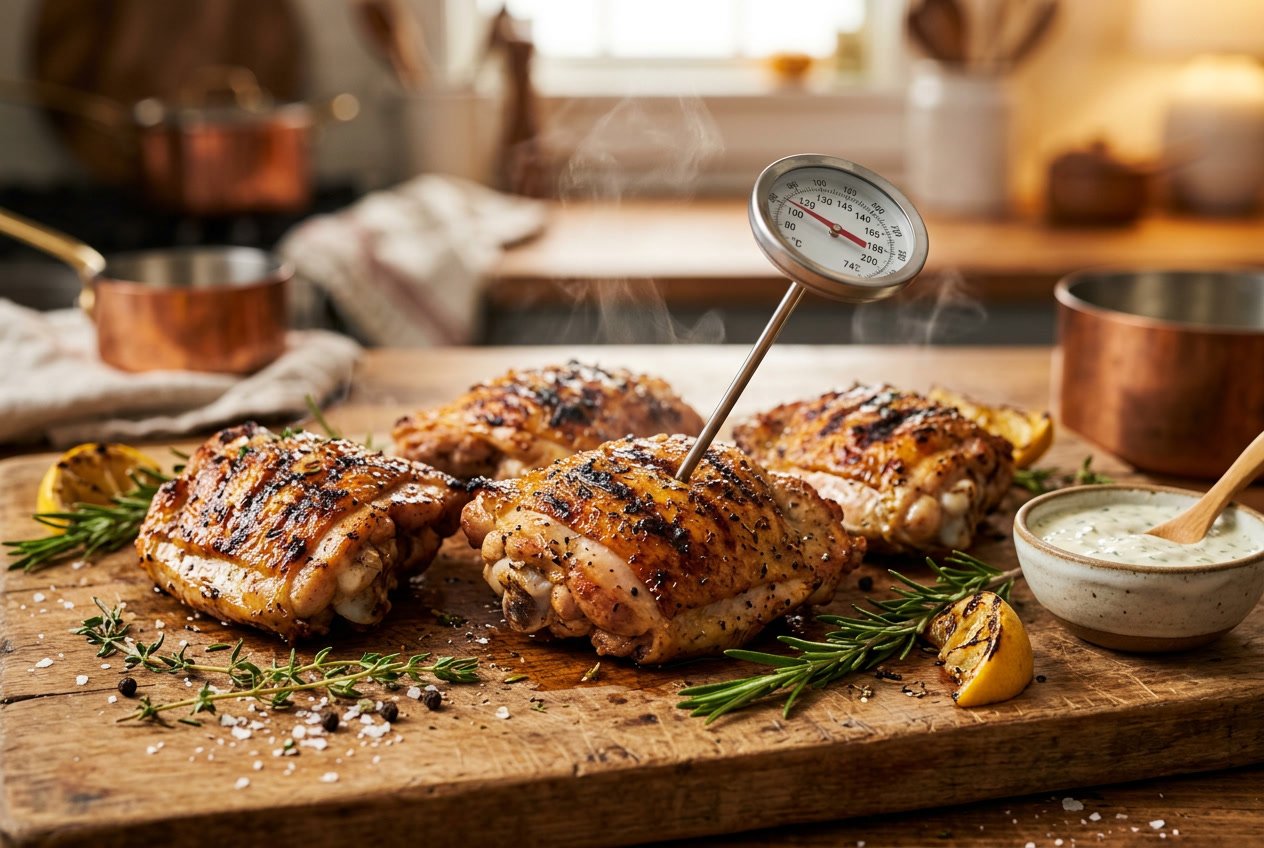
Check for doneness with visual and tactile cues: clear juices, opaque meat, and a springy but not hard texture. These signs help confirm the thighs are cooked.
Safe Internal Temperature for Chicken Thighs
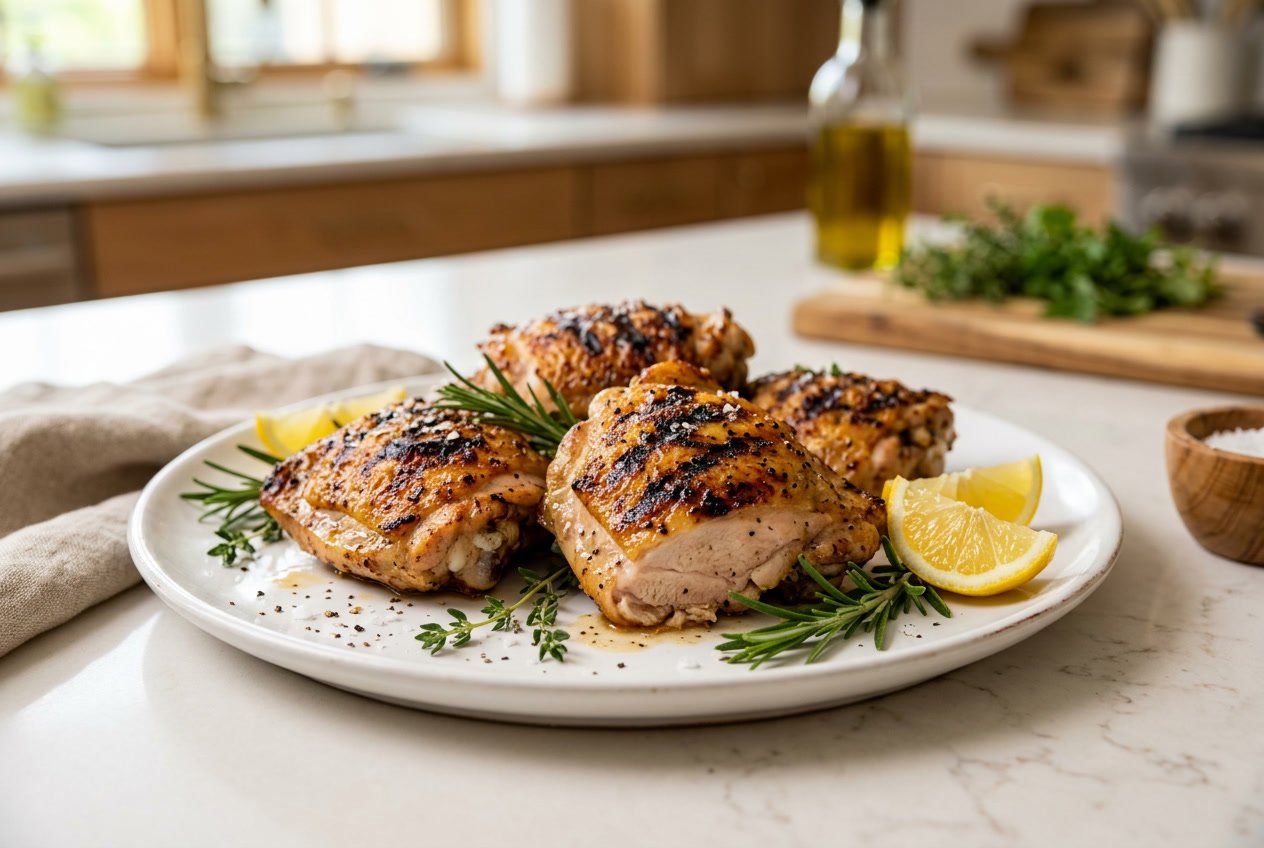
Cook chicken thighs to a safe internal temperature to kill bacteria and keep your meal safe. Use an instant-read thermometer in the thickest part, avoiding the bone.
USDA Guidelines and Food Safety
The USDA sets the safe minimum internal temperature for all poultry at 165°F (74°C). When the thickest part of a thigh reaches 165°F on a reliable thermometer, harmful pathogens like Salmonella and Campylobacter are destroyed.
Check temperature after the main cooking step, whether roasting, braising, or grilling. Insert the probe perpendicular to the bone and wait for a steady reading.
For whole birds or mixed cuts, test multiple spots. For individual thighs, check the meatiest area.
Keep raw thighs chilled below 40°F and refrigerate cooked thighs within two hours. Rely on temperature, not color, to judge doneness.
Why Internal Temperature Matters
Internal temperature ensures microbial safety. Cooking to 165°F reduces harmful bacteria to safe levels, regardless of browning or juices.
Use an accurate thermometer and calibrate it occasionally. Undercooking increases the risk of illness, and overcooking dries out the meat.
If you use slow methods or reheating, make sure the final internal temperature reaches 165°F. For ground poultry, always reach 165°F throughout.
Optimal Range for Juicy Thighs
Thighs have more connective tissue and fat than breasts. While 165°F (74°C) is the safety baseline, many cooks let dark meat reach 175–185°F for extra tenderness.
Use this guide:
- 165°F (74°C) — USDA safe minimum; good for boneless, skinless thighs.
- 175°F–185°F — Best for bone-in, skin-on thighs; yields a more tender texture.
- 185°F–195°F — For braises and shredded meat.
Remove thighs from heat at your target temperature and let them rest 5–10 minutes. Resting evens the internal temperature and lets juices redistribute.
How to Check Doneness
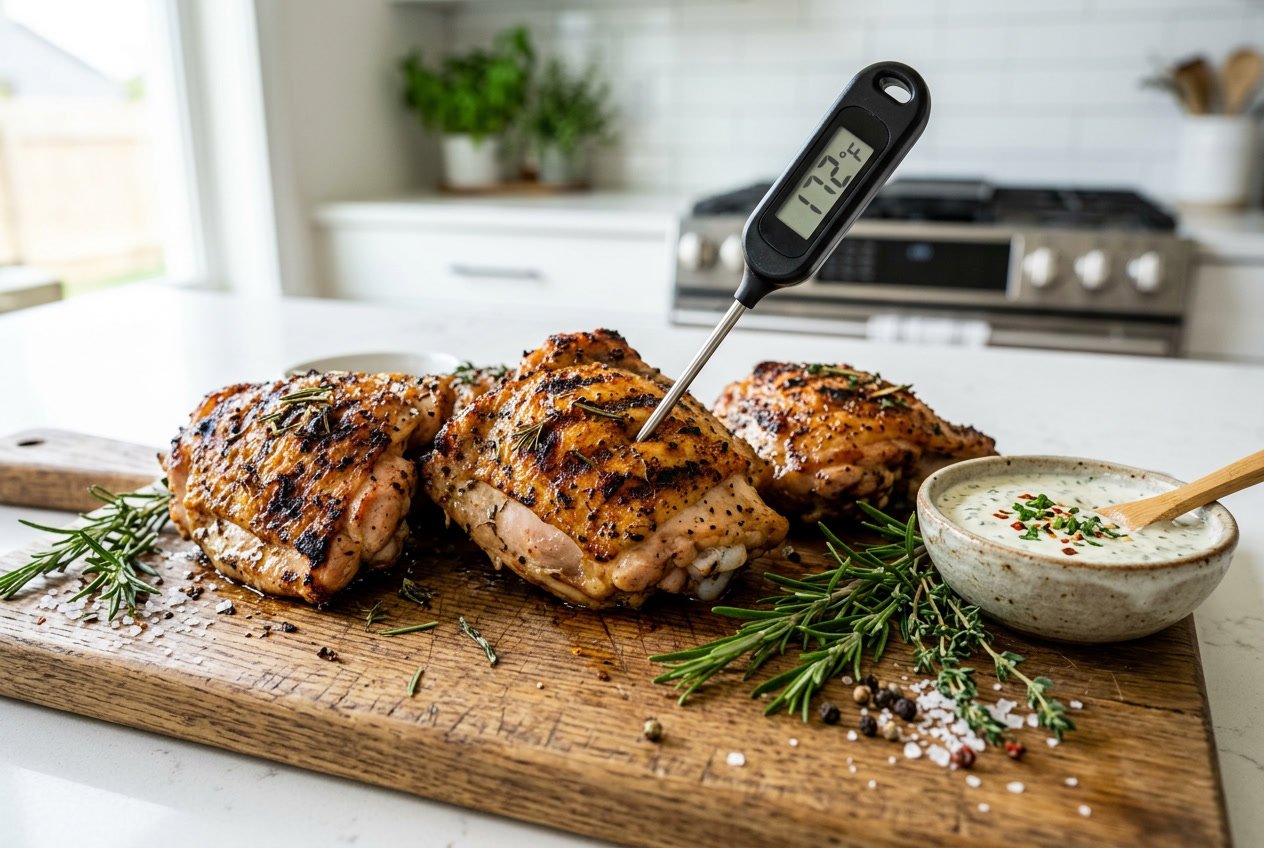
Use a thermometer for precision, and check with visual and tactile cues if you don’t have one.
Using a Meat Thermometer
Insert an instant-read meat thermometer into the thickest part of the thigh, avoiding the bone. Aim for an internal temperature of 175°F (79°C) for dark meat thighs for safe, juicy results.
Take the reading once the probe reaches the center and holds steady. If the temperature is below target, return the thighs to heat and check again after a few minutes.
Digital instant-read models provide faster, more reliable results. Let the meat rest 5–10 minutes after removing from heat. Carryover cooking raises the internal temp slightly and helps juices redistribute.
Visual and Textural Signs
Cut into the thickest part of the thigh to inspect the meat. Cooked thighs should be opaque and uniformly light in color.
Touch the meat gently; it should feel firm but still springy. If it feels soft and squishy, it’s undercooked. Very tight and dry means overcooked.
Observe the skin or exterior: a golden-brown, slightly crisp surface often signals proper cooking, but don’t rely on color alone. Always pair visual and tactile checks with temperature.
Checking Juices and Color
Make a small incision at the thickest point and press to release juices. Clear juices indicate doneness; pink or reddish juices mean more cooking is needed.
Check meat color near the bone, where undercooking can hide. If you see pink near the bone, cook longer and recheck temperature.
Some marinades or smoke can tint meat. Use juices and a thermometer together for accuracy.
Cooking Times and Temperatures by Method
Use an instant-read thermometer and adjust cooking time for bone-in vs. boneless, skin-on vs. skinless, and whether you start from frozen.
Baking and Roasting Chicken Thighs
Bake bone-in, skin-on thighs at 375°F (190°C) for about 35–45 minutes, until the thickest part reaches 165°F (74°C). Higher internal temps (175–185°F) make the meat more tender.
For crispy baked chicken thighs, raise the oven to 425°F (218°C) and roast 30–40 minutes, then broil 2–3 minutes to brown the skin. Convection ovens shorten time and promote crispness; check earlier.
Boneless, skinless thighs cook faster: 25–30 minutes at 375°F or 18–22 minutes at 425°F. If baking from frozen, expect about 50% longer cooking time and always confirm 165°F in the center.
Grilling and Broiling
Grill thighs over medium heat (350–400°F), about 6–8 minutes per side for bone-in pieces. Use indirect heat for larger pieces: sear 3–4 minutes per side over direct heat, then move to indirect heat until 165°F.
Broiling uses high, direct heat. Place skin-side up about 6 inches from the element and broil 10–15 minutes for bone-in, turning once if needed.
Boneless thighs grill quicker: 4–6 minutes per side. Always use a thermometer near the bone for bone-in thighs.
Sautéing, Pan-Searing, and Skillet Cooking
Sear skin-on, bone-in thighs skin-side down in a hot pan for 3–6 minutes to render fat and crisp the skin. Finish in a 375°F oven for 20–30 minutes until 165°F.
For boneless thighs, cook 5–7 minutes per side over medium-high heat in a skillet. A covered pan with a splash of broth reduces cooking time and keeps meat moist.
Work in batches to avoid crowding. Use the thermometer at the thickest point, avoiding bone contact.
Slow Cooker, Instant Pot, and Sous Vide
In a slow cooker, cook on low for 6–8 hours or high for 3–4 hours for bone-in thighs. The meat will be tender but the skin won’t crisp.
Instant Pot takes 10–12 minutes on high pressure for bone-in thighs plus natural release; boneless need 8–10 minutes. Finish under a broiler to crisp skin after pressure cooking.
Sous vide gives precise doneness. Set 165°F for traditional texture or 140–150°F for juicier, slightly firmer meat. Cook 1.5–4 hours depending on thickness. Sear briefly after sous vide to brown the skin.
Key Techniques for Perfectly Cooked Chicken Thighs
Focus on moisture and flavor from brining or marinade, a clear seasoning plan, and a temperature routine that yields crispy skin and juicy meat.
Marinating and Brining Tips
Brine bone-in thighs in a 5–7% salt solution (50–70 g salt per liter of water) for 1–4 hours to improve juiciness and seasoning. Add sugar, garlic, and rosemary to the brine for aromatics. Rinse and pat dry before cooking to promote crisp skin.
For a marinade, use an acid (vinegar or lemon juice), oil, and flavorings like smoked paprika and garlic powder. Marinate 30 minutes to 4 hours. Always refrigerate while marinating and discard used marinade or boil it before using as a baste.
Seasoning Strategies
Season in two stages: under the skin and on the surface. Gently separate skin from meat and rub a mix of salt, black pepper, smoked paprika, and garlic powder directly on the meat.
On the skin, use a light dusting of salt and a small amount of baking powder to boost crispness in the oven. For stovetop-to-oven methods, season after patting the skin dry. Use more smoked paprika for smoky notes; add a pinch of sugar for caramelization when roasting.
Achieving Crispy Skin
Dry the skin thoroughly—air-dry uncovered in the fridge for 2–12 hours or pat with paper towels. Heat a heavy skillet until shimmering before adding thighs skin-side down. Let them cook undisturbed for 6–8 minutes to render fat and form a crisp crust.
If roasting, preheat oven to 425°F (220°C) and transfer the skillet or place thighs on a wire rack over a sheet pan. Bake until the thigh reaches the target internal temperature and skin is browned. Baste sparingly with pan juices in the last 5 minutes for flavor.
Resting and Slicing
Rest cooked thighs for 5–10 minutes covered loosely with foil to let juices redistribute. For bone-in thighs, rest on the bone to retain moisture.
When slicing, cut against the grain and remove the bone for even servings. For shredded meat, pull with forks while still warm and use reserved pan juices or a light sauce to rehydrate if needed. Store cooled leftovers within two hours in shallow airtight containers.
Factors Affecting Cooking Results
Cut type, skin presence, piece size, and oven accuracy all affect how chicken thighs turn out. Each factor changes the time and technique you should use to reach 165°F (74°C) while keeping meat juicy and, if desired, skin crisp.
Bone-In vs Boneless Chicken Thighs
Bone-in chicken thighs take longer to reach safe internal temperature because the bone slows heat transfer. Expect bone-in, skin-on thighs to need roughly 35–50 minutes at 375–400°F (190–204°C), depending on size.
The meat near the bone stays moister, so bone-in pieces tolerate longer cooking without drying. Boneless chicken thighs cook faster and more evenly. At 400°F, boneless, skinless thighs often finish in 20–30 minutes.
They heat through quicker but lose moisture more readily if overcooked. Use a thermometer and remove them as soon as the thickest part hits 165°F (74°C).
Skin-On vs Skinless
Skin-on chicken thighs benefit from direct heat that renders fat and crisps the skin. Bake skin-side up at higher temperatures (400–425°F) to get browned, crisp skin while the meat stays juicy.
Use a rack or elevated pan to allow hot air under the thighs and avoid soggy skin. Skinless thighs cook faster and have less surface fat to protect the meat.
They dry out sooner if left too long at high heat. If you use skinless thighs, consider a short brine, marinade, or lower oven temperature (350–375°F) with a bit more cooking time to preserve moisture.
Size and Thickness
Thicker thighs take longer to reach 165°F. Two identical thighs can require different times if one is noticeably larger.
Measure across the thickest point. Group similar sizes together on the baking sheet to avoid uneven doneness.
If pieces vary, start the larger ones earlier or remove smaller pieces sooner. Flatten very thick thighs slightly with a meat mallet to even thickness and reduce cooking time.
For accuracy, check the thickest part with an instant-read thermometer. Do not rely on time alone.
Oven Accuracy and High Heat
Many home ovens run hotter or cooler than the set temperature. A variance of ±25°F changes cooking time significantly.
Place an oven thermometer on the middle rack to confirm actual temperature before you cook. Adjust recipes if your oven consistently runs hot or cold.
High heat (400–425°F) speeds skin browning and shortens bake time, but it increases risk of uneven cooking. The exterior can overbrown before the interior hits 165°F.
Use high heat for skin-on thighs when you want crisp skin. Lower the temperature if the outside begins to darken too quickly.
Combine a confirmed oven temperature with frequent thermometer checks for reliable results.
Using and Storing Leftover Chicken Thighs
Store cooked chicken promptly and cool it quickly. Reheat only what you will eat.
Use airtight containers and label with the date. Plan meals so leftovers are eaten within safe timeframes.
Proper Storage and Food Safety
Place cooled chicken thighs in shallow airtight containers or heavy-duty resealable bags within two hours of cooking. Refrigerate at 40°F (4°C) or below and use within 3–4 days.
For longer storage, freeze portions in freezer-safe bags or vacuum-sealed packs. Frozen cooked chicken maintains quality up to four months.
Remove excess air to prevent freezer burn and label each package with date and contents. When packing, separate bone-in pieces from shredded meat so you can thaw only what you need.
Thaw in the fridge overnight or in cold water in a sealed bag. Never thaw at room temperature.
Discard any chicken with off odors, slimy texture, or signs of spoilage.
Reheating Techniques
Reheat only the portion you plan to eat. Bring the internal temperature back to 165°F (74°C).
Use a food thermometer to check temperature at the thickest part or in the center of shredded pieces.
Oven: Preheat to 350°F (175°C). Place thighs in a baking dish with a splash of broth or sauce, cover with foil, and heat 15–20 minutes for even warming. This preserves moisture and texture.
Stovetop: For shredded or diced meat, sautée briefly over medium heat with a little oil or broth until steaming hot.
Microwave: Cover loosely, use medium power, stir or rotate halfway, and check temperature to avoid cold spots.
Avoid repeated reheating. Cool and refrigerate leftovers once only.
Inspiration for Chicken Thigh Recipes
Shred or dice your leftover chicken thighs to quickly create more meal options. Use shredded chicken for tacos, quesadillas, fried rice, or chicken salad. Each recipe uses about 1–2 cups of meat.
Simmer 2 cups of shredded thighs with 4 cups of broth, aromatics, and vegetables for 15–20 minutes to make a quick soup. Turn diced thighs into a skillet hash with potatoes and peppers for breakfast. Add eggs on top.
Layer shredded chicken into casseroles or pasta bakes for family meals. Three to four cups of shredded meat typically fills a 9×13 casserole.
Marinate the chicken or toss it with sauces like barbecue, teriyaki, or tzatziki to refresh the flavor and match different cuisines with little prep.


