
When Are Chicken Thighs Bad: Signs, Storage, and Safety Tips
Check color, smell, texture, and dates. If chicken thighs look gray or green, smell sour or rotten, feel sticky or slimy, or the sell-by date has passed, throw them out.
If any of those signs appear, the chicken is spoiled and unsafe to eat.
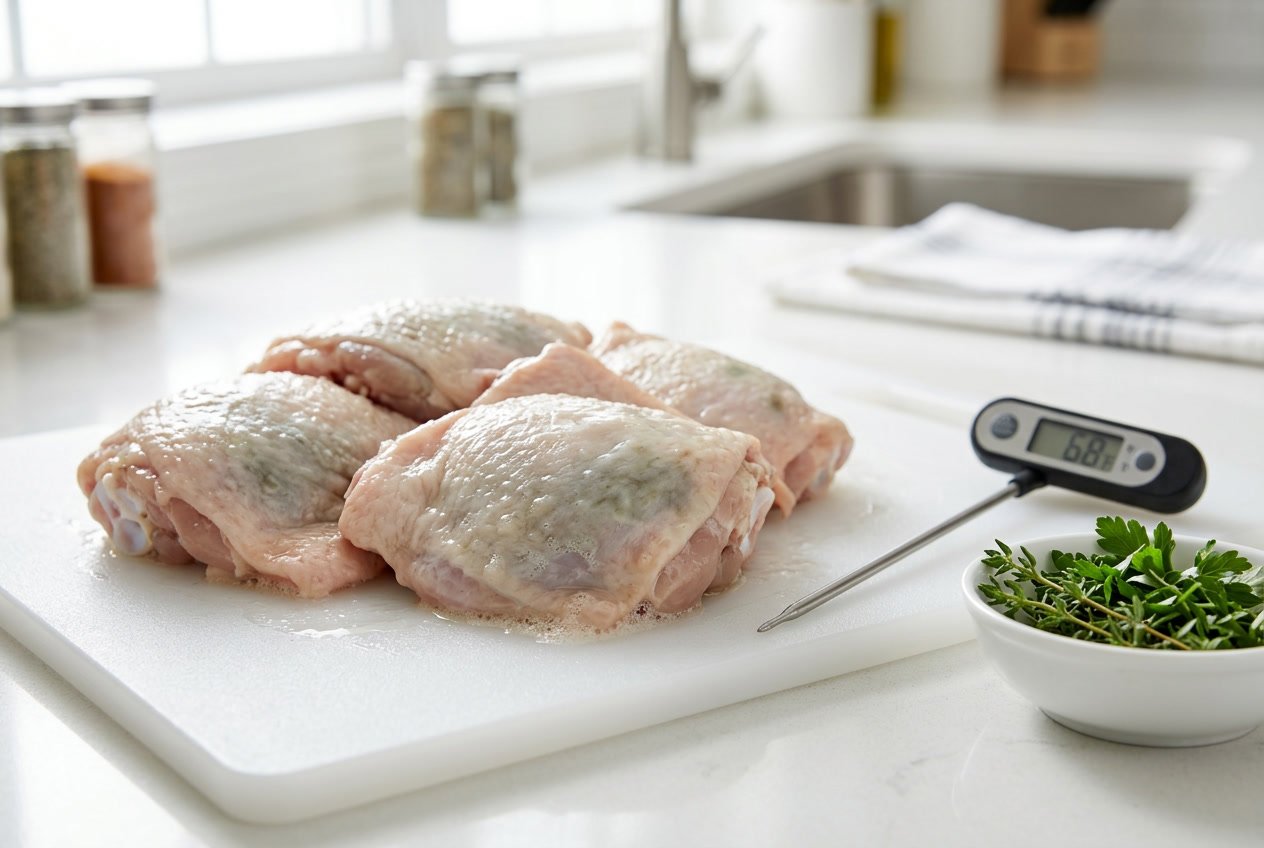
You can spot subtle and obvious spoilage by examining the meat. Learn about safe storage, shelf-life, and the health risks of ignoring warning signs.
Follow the checks and handling tips ahead to keep meals safe and avoid foodborne illness.
How to Tell If Chicken Thighs Are Bad
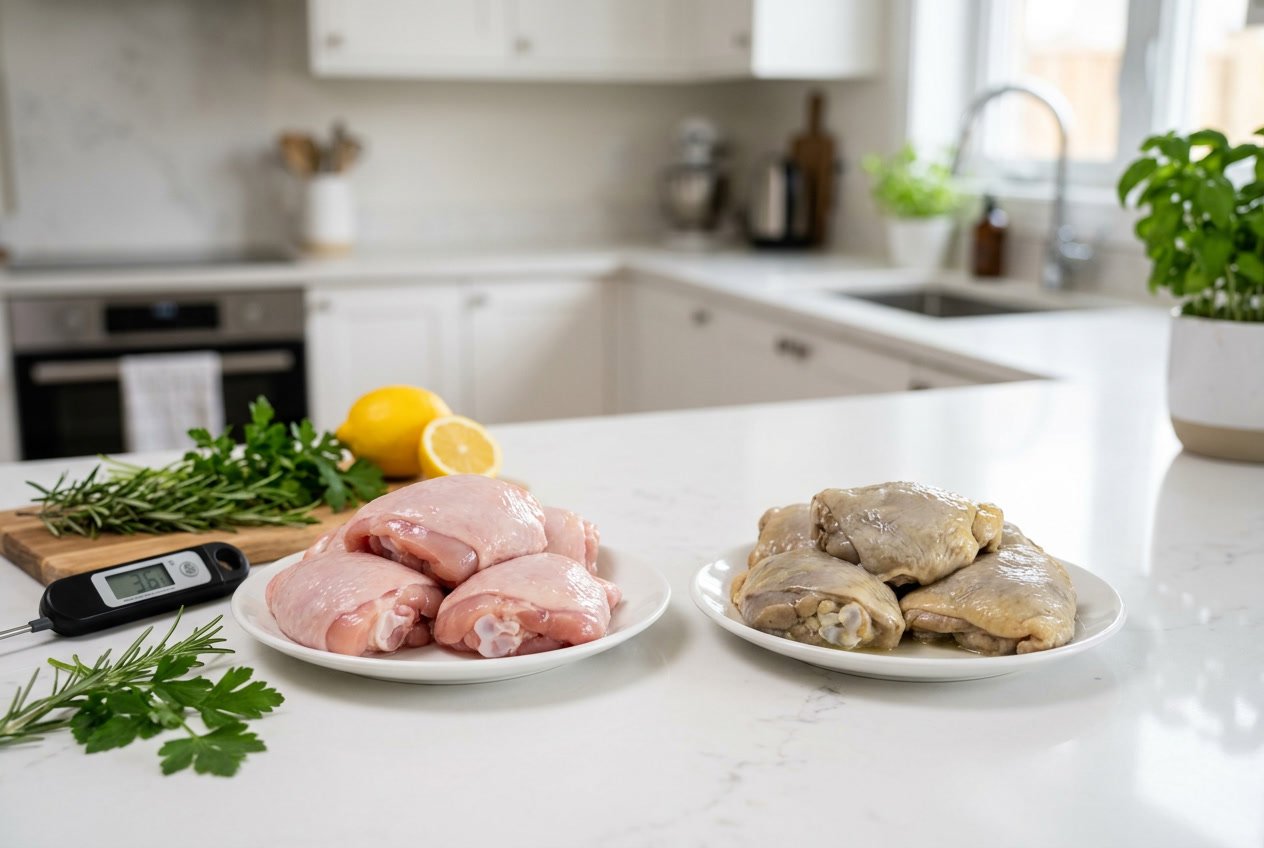
Check the color, smell, and texture of chicken thighs carefully. These three checks help you decide if the meat is safe.
Look for abnormal colors, sour or sulfur-like odors, and slimy or tacky surfaces. Any one of these is a strong reason to discard the meat.
Visual Signs of Spoilage
Inspect raw chicken thighs under good light. Fresh thighs are pink with white fat and minimal discoloration.
If you see gray, green, or yellow patches, or any fuzzy mold, throw the thighs away.
Watch for unusual dryness or dark spots on the surface. Excessive pooling of cloudy or bloody liquid inside the packaging can signal age or temperature abuse.
Fat that turns bright yellow often appears in older, spoiled chicken thighs.
Treat the product as compromised if packaging is bloated, leaking, or if vacuum seals are broken.
Visual cues are more reliable than sell-by dates when checking chicken thigh freshness.
Assessing Odor and Smell
Smell the chicken thighs before handling them. Fresh raw chicken has little to no odor; a faint “raw meat” scent is normal.
A sour, ammonia-like, or rotten-egg smell means the thighs are spoiled and you should discard them immediately.
Even faint off-odors can signal spoilage, especially with other warning signs. If the chicken was frozen and smells strongly after thawing, throw it out instead of cooking.
Sniff near the opening after unsealing rather than through the plastic. Odor is one of the most reliable indicators of bad chicken.
Texture and Feel Changes
Handle the thighs with clean hands to check texture. Fresh chicken feels moist and slightly slippery but not sticky.
If the surface feels tacky, slimy, or leaves residue on your fingers, bacterial films have likely developed and you should discard the thighs.
Press the meat gently. Fresh flesh springs back and feels firm.
If the meat is excessively soft, mushy, or leaves a lasting indentation, it has deteriorated.
Rinsing won’t remove true sliminess. If the texture remains slick after rinsing, don’t risk cooking it.
Combine texture checks with color and smell. Multiple spoilage signs confirm the chicken thighs are bad.
Understanding Key Indicators of Chicken Thigh Spoilage
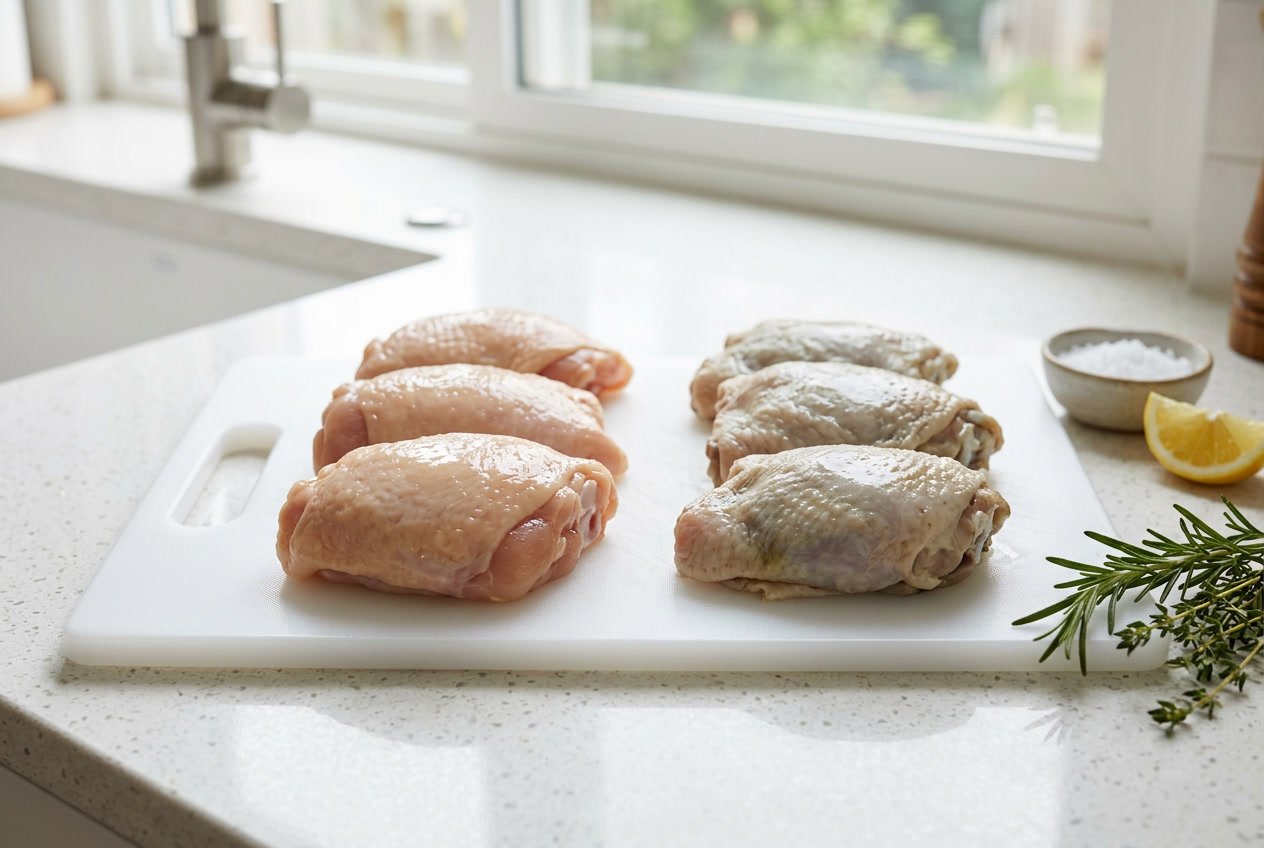
Check the chicken’s color, smell, texture, and packaging closely. These cues help you decide if chicken thighs are safe to cook.
Color Changes in Raw and Cooked Chicken Thighs
Fresh raw chicken thighs have a light pink color and white fat marbling.
If the meat turns gray, greenish, or dull brown, spoilage has occurred and you should not eat it.
Look for unusual colors at the bone or near the skin, as discoloration can start there.
Cooked thighs should have an opaque white to light-brown interior with no green or gray patches.
If cooked meat shows green, gray, or black spots, or if the juices look cloudy and off-color, throw it out.
Freezer burn can cause dry, grayish patches that affect quality, though not always safety.
Odor Differences: Fresh vs. Bad Chicken Thighs
Fresh chicken thighs have little to no odor; expect a mild, neutral poultry scent at most.
A strong sour, putrid, or sulfur-like smell means spoilage.
Smell the chicken immediately after opening the package and again after rinsing if you do that.
Even a faint rotten or tangy odor is a red flag. Do not try to mask or cook away the smell.
If in doubt, discard the chicken.
Texture Issues Indicating Spoilage
Raw chicken thighs should feel moist and slightly slick, not sticky.
When you touch the meat, it should spring back slightly. Excessively soft, mushy flesh points to bacterial activity.
Sliminess that persists after rinsing is a strong spoilage sign.
Watch for a sticky film on the surface or an imprint that doesn’t bounce back when pressed.
Cooked chicken that’s excessively dry, crumbly, or slimy after cooling may have been stored improperly or spoiled.
Mold, Packaging, and Fluid Leaks
Visible mold on chicken thighs—white, green, or black spots—means the meat is unsafe and must be thrown out.
Never try to cut away mold; it penetrates soft meat and can harbor toxins.
Check packaging for tears, excessive bloating, or leaking fluids.
Cloudy, discolored liquids inside the package or frozen liquids that suggest thaw-refreeze cycles mean increased spoilage risk.
If the sell-by or use-by date has passed and you see packaging damage or leakage, discard the chicken.
Storage Guidelines for Chicken Thighs
Store raw thighs at 40°F (4°C) or below and put them in the coldest part of your refrigerator.
If you won’t use them within two days, freeze them to preserve safety and quality.
Refrigeration Best Practices
Keep raw chicken thighs in their original sealed packaging if you’ll cook them within 1–2 days.
Place the package on the lowest shelf or in a meat drawer to prevent drips and cross-contamination.
Use a refrigerator thermometer to confirm the temperature stays at or below 40°F (4°C).
If you remove thighs from original packaging, transfer them to an airtight container or wrap tightly in plastic wrap plus aluminum foil.
Cooked chicken thighs last 3–4 days refrigerated.
Label containers with the date you cooked or opened them so you use the oldest items first.
Freezing Chicken Thighs for Longevity
Freeze thighs if you won’t use them within two days. This stops bacterial growth and preserves quality.
For best texture and flavor, use frozen raw thighs within 4–9 months. Quality drops after that, but food remains safe if kept at 0°F (-18°C).
Wrap each piece in plastic wrap, then place several wrapped pieces in a heavy-duty freezer bag or vacuum-seal pouch.
Squeeze out excess air or use a vacuum sealer to extend shelf life.
Write the freeze date on each bag. Store at 0°F (-18°C) or lower and leave a small gap between packages for air circulation.
Preventing Freezer Burn
Freezer burn happens when air reaches the meat and dehydrates the surface, causing dry, discolored patches and off-flavors.
Remove as much air as possible from packaging and seal tightly.
Use vacuum sealing for the best protection.
If you don’t have a vacuum sealer, double-wrap thighs: first in plastic wrap or cling film, then in a labeled freezer bag with the air pressed out, or wrap in heavy-duty aluminum foil over the bag.
Rotate your stock and use older packages first.
Avoid repeated partial thaw-and-refreeze cycles.
Safe Thawing and Refreezing Methods
Thaw thighs in the refrigerator on a plate or shallow pan to catch juices.
Allow 24 hours for a standard package to thaw safely.
You can thaw in cold water or the microwave if you plan to cook immediately after. Change the water every 30 minutes when using cold water.
If you thaw in the refrigerator, you may refreeze raw or cooked thighs within 1–2 days without cooking, though expect some quality loss.
If you thaw using cold water or microwave, cook the thighs fully before refreezing.
Always cook thawed chicken to an internal temperature of 165°F (74°C).
Label refrozen packages with both original freeze date and refreeze date.
Shelf Life of Chicken Thighs
Storage method, temperature, and whether the meat is raw or cooked affect how long chicken thighs stay safe.
How Long Raw Chicken Thighs Stay Good
Raw chicken thighs typically stay safe in the refrigerator for 1–2 days when kept at or below 40°F (4°C).
If you won’t use them within that time, freeze them promptly.
In the freezer at 0°F (-18°C) or lower, raw thighs keep best quality for about nine months.
They remain technically safe longer, but texture and flavor decline.
Check freshness by smell, color, and texture.
Fresh thighs are pinkish and firm. Discard them if you detect a sour or ammonia-like odor, gray or greenish tints, or a slimy surface.
Storage Duration for Cooked Chicken Thighs
Cooked chicken thighs generally last 3–4 days in the refrigerator when stored airtight.
Refrigerate within two hours of cooking.
If you freeze cooked thighs, use them within about 2–4 months for best quality.
After that, they can dry out or become mushy, though they remain safe if frozen continuously.
When reheating, bring the internal temperature to 165°F (74°C).
If cooked thighs smell off, feel sticky, or show unusual discoloration, discard them.
Effects of Temperature and Packaging on Shelf Life
Temperature controls bacterial growth. Keep your fridge at or below 40°F (4°C) and your freezer at 0°F (-18°C).
A warmer fridge shortens safe refrigerated time for raw thighs.
Packaging affects air exposure and moisture loss.
Use airtight containers, heavy-duty freezer bags, or vacuum sealing to reduce freezer burn and slow odor transfer.
Label packages with dates to track storage time.
If you thaw thighs in cold water or the microwave, cook immediately. Don’t refreeze unless you cooked them first.
Health Risks Linked to Consuming Bad Chicken Thighs
Eating spoiled chicken thighs exposes you to harmful bacteria and toxins that cause gastrointestinal illness and, in some cases, more serious complications.
You can get sick from contaminated meat, cross-contamination in the kitchen, or improper cooking and storage.
Campylobacter and Other Foodborne Pathogens
Campylobacter often appears on raw chicken and is a leading cause of bacterial gastroenteritis.
If you eat contaminated chicken thighs that are undercooked or handled poorly, you risk infection that often begins 2–5 days after exposure.
Symptoms can last about a week, and severe cases may need antibiotics or hospitalization.
Salmonella and certain strains of E. coli also pose risks.
These bacteria can survive on spoiled chicken even if it looks or smells only mildly off.
Bacterial growth increases when chicken sits at unsafe temperatures.
Thawing at room temperature or leaving cooked chicken out longer than two hours raises your risk.
Cross-contamination—using the same cutting board or utensils for raw chicken and ready-to-eat foods—can spread these pathogens.
Common Symptoms of Food Poisoning
Food poisoning from spoiled chicken thighs usually causes diarrhea, abdominal cramps, nausea, and vomiting.
Fever and headache often occur with bacterial infections like Campylobacter and Salmonella.
Symptoms usually appear within hours to several days after eating contaminated meat.
Watch for danger signs that need medical attention: high fever (over 101.5°F/38.6°C), bloody diarrhea, persistent vomiting, or signs of dehydration such as dizziness, dry mouth, or low urine output.
Young children, pregnant people, older adults, and those with weakened immune systems face higher risk of severe outcomes and should seek care sooner.
Best Practices for Handling and Maintaining Chicken Thigh Freshness
Keep chicken thighs cold from store to home. Check packaging for leaks or tears.
Plan to cook or freeze raw thighs within a couple of days.
Focus on temperature control, separation from ready-to-eat foods, and prompt refrigeration to limit bacterial growth.
Shopping and Transport Tips
Choose packages with intact seals and no excess liquid. Excess juice can indicate age or temperature abuse.
Inspect the color and look for a light pink hue. Avoid gray, green, or unusually yellowed thighs.
Buy chicken thighs last during shopping. Use a chilled or insulated bag for the trip home if travel exceeds 20–30 minutes.
Keep the package separate from produce and ready-to-eat items to prevent cross-contamination.
Place raw thighs on the lowest shelf in the refrigerator immediately. Set the refrigerator at 40°F (4°C) or below.
Freeze the thighs flat in airtight bags if you won’t cook them within 1–2 days. This method preserves freshness and reduces freezer burn.
Safe Preparation and Cooking Guidelines
Wash your hands and sanitize surfaces before and after you handle raw chicken thighs to prevent the spread of bacteria.
Use separate cutting boards and utensils for raw poultry and other foods.
Pat the thighs dry with a paper towel if needed. Avoid rinsing them under running water, since this can spread bacteria.
Cook chicken thighs to an internal temperature of 165°F (74°C). Insert a calibrated thermometer into the thickest part without touching the bone.
Store cooked chicken thighs in shallow, sealed containers. Refrigerate them within two hours of cooking.
Eat refrigerated cooked thighs within 3–4 days or freeze them for longer storage. Label containers with the date to track freshness.


