
What’s Healthier: Chicken Thighs or Breasts? Nutrition & Comparison
You can pick a winner between chicken thighs and breasts depending on what matters most to you: calories and lean protein, or flavor, fat and satiety.
If you want the leanest option with more protein per calorie, choose chicken breasts. If you prefer richer flavor, more iron and zinc, and greater fullness from fat, choose chicken thighs.
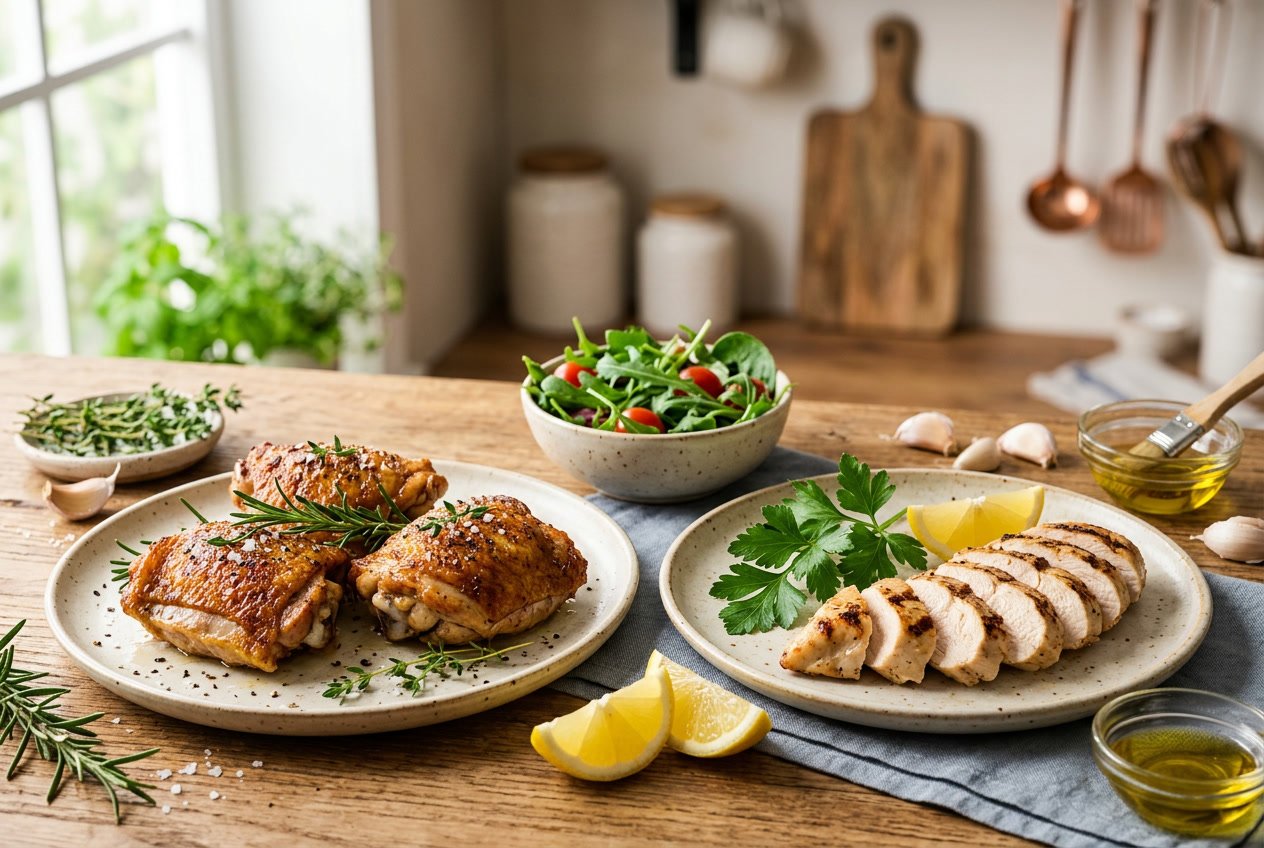
This article explains the key differences in nutrition, health benefits, and potential downsides. Cooking methods and your dietary goals can change which cut works best for your meals.
You’ll see practical comparisons of calories, protein, fat, micronutrients, and tips for cooking each cut so you can choose the one that fits your plan.
Key Differences Between Chicken Thighs and Breasts

You’ll find meaningful differences in fat, protein, flavor, and cost between the two cuts. Each cut behaves differently in recipes and contributes distinct qualities to your plate.
Cuts of Chicken Explained
Chicken breasts come from the bird’s chest. Butchers typically sell them boneless or bone-in, skin-on or skinless.
Boneless, skinless chicken breasts are the leanest and are easy to portion for recipes.
Chicken thighs come from the upper leg. Stores often offer them boneless or bone-in, with or without skin.
Thighs contain more connective tissue and intramuscular fat, which keeps them moist during longer cooking.
When a recipe calls for “poultry” without specifying cut, check if it expects a quick-cooking white meat or a fattier dark meat. Substituting thighs for breasts usually requires longer cooking or more moisture.
If you use breasts in a slow, braised recipe, the meat may dry out.
White Meat vs Dark Meat
White meat refers to chicken breasts. Dark meat refers to thighs and legs.
Chicken breasts are lower in total fat and saturated fat per 100 g and tend to offer slightly more protein by weight. Breasts are a common choice if you track calories or aim for higher protein density.
Thighs contain more fat, including monounsaturated and some saturated fat, which increases calorie content but also supplies flavor and juiciness. Dark meat also contains higher amounts of certain minerals like iron and zinc, and slightly more B12.
If you manage macronutrients tightly, choose skinless chicken breasts. If you need sustained energy or richer micronutrient intake, occasional thighs add value.
Flavor and Texture
Chicken breasts cook quickly and become firm when fully done. They can dry out if overcooked.
Their mild flavor makes them versatile for marinades, quick sautés, and grilling.
Thighs stay tender and moist because of higher fat and connective tissue. They deliver deeper poultry flavor and a softer bite, which benefits slow braises and high-heat roasting.
Choose breasts for a neutral canvas that absorbs sauces. Choose thighs for bold flavor and forgiving cooking.
Price and Accessibility
Retail pricing often favors thighs over breasts on a per-pound basis. Thighs tend to cost less, making them a budget-friendly protein.
You’ll commonly find both cuts in supermarkets. Bulk and sale pricing can make thighs the economical choice for feeding families.
Boneless, skinless chicken breasts may carry a premium due to demand and processing costs. Processed or pre-seasoned options for either cut can add sodium and price, so check labels if cost or additives matter.
Consider the cooking method and serving size: thighs stretch further in slow-cooked dishes, while breasts allow precise portion control for calorie-focused meals.
Nutrition Facts: Chicken Thighs vs Breasts
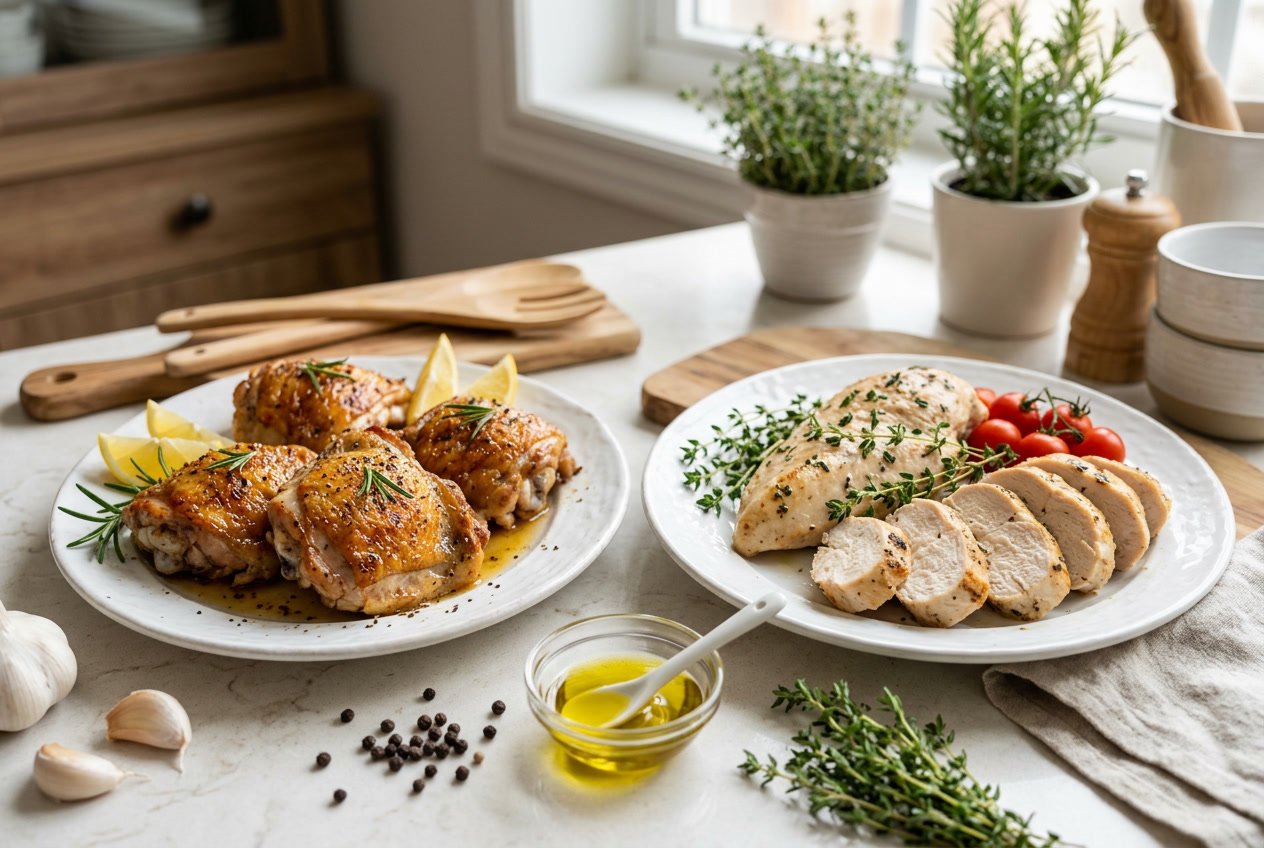
You’ll see meaningful differences in calories, fat, and some vitamins between thighs and breasts. Those differences affect calorie goals, fat intake, and micronutrient choices.
Calories and Macronutrients
A 100-gram cooked portion of skinless chicken breast provides about 165 calories and around 31 grams of protein. The breast is one of the leanest sources of protein, with protein density useful for muscle maintenance and calorie-controlled meals.
A 100-gram cooked portion of skinless chicken thigh contains roughly 209 calories and about 26 grams of protein. The thigh delivers more calories because it has higher fat content, which lowers protein-per-calorie ratio.
If you track macros, choose breast for higher protein and lower calories. Choose thigh for slightly more fat and fewer grams of protein per calorie, which can increase satiety and flavor.
Micronutrient Content
Chicken thighs and breasts differ in several vitamins and minerals. Breasts tend to be higher in vitamin B6—about 0.64 mg per 100 g versus roughly 0.38 mg in thighs.
Thighs generally offer higher amounts of iron, zinc, and certain B vitamins per similar portion because dark meat has more myoglobin and connective tissue.
Both cuts provide niacin (vitamin B3), selenium, and phosphorus. The specific micronutrient differences are modest, so your overall diet will determine whether the slight variation matters for your nutrient targets.
Saturated Fat and Total Fat Content
Skinless chicken breast contains considerably less total fat and saturated fat than skinless thigh. A 100-gram cooked breast has about 3–4 grams of fat, with saturated fat under 1 gram.
Skinless thighs contain around 8–10 grams of total fat per 100 grams, with saturated fat around 2–3 grams. The extra fat in thighs increases calories and contributes to a juicier texture and more flavor during cooking.
If you keep your saturated fat intake low, prioritize skinless chicken breast. If you want richer taste and don’t have strict saturated fat limits, skinless thighs give more mouthfeel and culinary flexibility.
Health Benefits of Chicken Breasts
Chicken breast delivers high protein with low fat and provides several vitamins and minerals that support metabolism and immune function. You get a compact source of nutrition that fits calorie-controlled meals and post-workout recovery.
Why Choose Lean Protein
Choosing skinless chicken breast gives you about 22–25 g of protein per 100 g with roughly 2 g of fat. That makes it practical when you track macros, want to preserve lean muscle, or need a higher-protein meal around training sessions.
Lean protein from chicken breast also helps with satiety and muscle repair. Protein stimulates muscle protein synthesis and slows carbohydrate absorption when combined with fiber or healthy fats.
You can prepare chicken breast quickly by grilling, baking, or poaching to preserve nutrients. Removing the skin cuts calories and saturated fat further, while simple seasonings and marinades keep meals varied.
Nutrients in Chicken Breast
Skinless chicken breast is a reliable source of vitamin B6. A typical 3-ounce (85 g) cooked portion supplies a substantial share of your daily need.
Chicken breast also supplies phosphorus and selenium. Phosphorus contributes to bone health and cellular energy transfer, while selenium acts as an antioxidant cofactor for enzymes that protect cells from oxidative damage.
Beyond those, chicken breast provides niacin (vitamin B3) and modest amounts of potassium and magnesium. The overall profile makes it useful when you want nutrient-dense meals that support metabolism, immunity, and tissue maintenance.
Advantages of Chicken Thighs
Chicken thighs offer higher fat content and a richer nutrient profile than breasts. You get more iron, zinc, and flavor per ounce, especially in skinless thighs prepared without heavy added fats.
Key Vitamins and Minerals in Thighs
Thighs contain more iron and zinc than breast meat, which supports oxygen transport and immune function. The dark-meat muscle has higher myoglobin levels, which both gives the meat its color and supplies bioavailable iron.
Per 100 g, boneless, skinless thighs provide noticeably more iron and zinc than the same amount of breast, alongside B vitamins like B6 and niacin.
If you choose skinless chicken thighs, you keep those micronutrient benefits while lowering added saturated fat from the skin. Cooking methods that avoid heavy added oils help preserve these nutrient advantages.
Fullness and Satiety
The higher fat content in thighs slows gastric emptying, so you feel full longer after a meal compared with lean breast meat. That slower digestion can reduce snacking and help you maintain steady energy between meals.
Fat also enhances flavor and mouthfeel, which makes portions more satisfying. People often find they can eat smaller portions of thighs and still feel content.
If weight control is the goal, pair skinless chicken thighs with vegetables and whole grains and monitor portion size. That approach captures the satiety benefits while keeping overall calorie and saturated-fat intake in check.
Potential Downsides and Considerations
You should watch total fat, saturated fat, and added sodium when choosing between thighs and breasts. Pay attention to whether the meat has skin or has been processed.
Saturated Fat and Heart Health
Chicken thighs contain more total fat and more saturated fat than skinless chicken breast. If you eat skin-on thighs regularly, each serving can add several grams of saturated fat compared with a similar portion of skinless breast.
That higher saturated fat intake can raise LDL cholesterol in some people, which is a measurable risk factor for cardiovascular disease.
You can reduce saturated fat by choosing skinless chicken or trimming visible fat before cooking. If you prefer thighs for flavor or satiety, balance them with lower-fat choices across the day.
Use skinless chicken thigh or mix breasts and thighs in meals. Also monitor portion sizes: a standard 3-ounce cooked serving of skinless thigh has noticeably more total fat than the same amount of skinless breast.
Sodium Content in Processed Poultry
Processed poultry—such as pre-brined, injected, or deli-sliced chicken—often contains added sodium that can double or triple the sodium level of fresh, skinless cuts. High sodium intake raises blood pressure in many people and can undermine heart-health benefits.
Check labels for terms like “enhanced,” “solution,” or “brined,” and compare sodium per serving. If you buy processed chicken, rinse it under cold water and pat dry to remove surface solution, or opt for unseasoned, skinless chicken breast or thigh and season at home.
When eating out, request unbrined or unsalted preparations, and pair poultry with low-sodium sides to keep your total daily sodium within recommended limits.
Cooking Methods and Their Nutritional Impact
Cooking method and whether you leave the skin or add breading change calories, fat, and sodium more than the cut itself. Choose techniques that limit added fat and preserve protein to control energy intake.
Healthiest Ways to Cook Chicken
Baking, grilling, and poaching rank among the healthiest options for both breasts and thighs. Baking at 350–400°F on a rack lets fat drip away and produces baked chicken with minimal added oil.
Grilling adds flavor without extra fat. Cook to 165°F internal temperature to ensure safety.
Poaching or steaming keeps meat moist without added fat, which is useful for skinless chicken breast. If you use oil, measure it—1 tablespoon of olive oil adds about 120 calories.
Air frying can mimic frying texture while using far less oil, reducing the calorie gap between fried and non-fried preparations.
Impact of Skin and Breading
The skin adds noticeable calories and saturated fat. A 100 g skin-on thigh can contain roughly 25–30% more calories than the skinless equivalent.
Removing skin cuts that extra fat and narrows the calorie difference between thighs and breasts.
Breading and frying increase calories because the coating absorbs oil. Fried chicken can add 100–300 extra calories per serving compared to the same piece baked or grilled.
If you prefer texture, use whole-grain crumbs and shallow pan-sear with a measured teaspoon of oil. Air-fry to keep a crispy exterior while limiting added fat.
Key practical tips:
- For lower fat, choose skinless chicken and bake or poach.
- For flavor with control, grill or roast on a rack and use measured oil or marinades low in sugar and salt.
Choosing Based on Dietary Goals
Select the cut that fits your calorie target, meal timing, and flavor needs. Small swaps like choosing skinless breast for lower calories or thigh for added fat and satiety can change how full you feel and how a meal fits into your daily macros.
Best Choices for Weight Loss
If you aim to lose weight, prioritize lower-calorie, higher-protein options that help preserve muscle while reducing total energy intake.
Skinless chicken breast delivers about 106 kcal and 22–23 g protein per 100 g, making it efficient for meeting protein goals with fewer calories.
Use portion control. A 3–4 ounce cooked breast provides a solid meal protein without excess fat.
Keep preparation lean. Grill, bake, or poach without added butter or heavy sauces.
Add fiber-rich vegetables and a source of healthy fat, like one teaspoon of olive oil, to improve satiety without overshooting calories.
Muscle Gain and Protein Needs
When you focus on muscle growth, you need consistent protein across meals. Chicken breast is slightly higher in protein per calorie, so it works well around workouts or when you must hit precise protein targets.
A typical 4-ounce cooked breast gives roughly 25–30 g protein, useful for post-workout recovery.
Thighs also provide valuable protein and supply more fat, which helps meet total calorie needs during bulking phases.
Combine both by using breast for controlled protein portions and thighs when you need extra calories or longer-lasting fullness.
Track total daily protein, aiming for 0.6–1.0 g per pound bodyweight for many lifters, and adjust portions accordingly.
Flavor Preferences and Practicality
Taste and convenience influence how well you stick to a plan. Thighs have higher fat content, which gives richer flavor and juicier texture, reducing the urge to add calorie-dense sauces.
Breasts are milder and faster to dry out, but they work well in quick meals like stir-fries, salads, and sandwiches.
Consider cooking method and meal prep. Use thighs for slow-cooked dishes and weeknight one-pan meals.
Use breasts for lean meal prep portions or when you need predictable macronutrients.
Keep skinless options on hand if you want lower saturated fat. Keep a few skin-on thighs for recipes that benefit from browning and depth.
When to Consider Turkey as an Alternative
Turkey provides a middle ground for some goals.
Skinless turkey breast matches the caloric and protein values of chicken breast but often comes in larger single portions. This can help with meal planning.
You can use ground turkey with lean-fat blends to mimic the richness of thighs while controlling the fat percentage.
Choose turkey if you want variety or a slightly different micronutrient profile.
Larger roasts work well for gatherings.
Use turkey breast for low-fat, high-protein meals.
Pick fattier ground turkey for recipes where you want juiciness without using chicken thighs.


