
What’s Chicken Thigh Fillets? Everything You Need to Know
You might have seen “chicken thigh fillets” at the store and wondered how they differ from other cuts.
Chicken thigh fillets are boneless, skinless pieces from the thigh that keep the dark-meat flavor and tenderness. They cook faster and more uniformly than bone-in thighs.
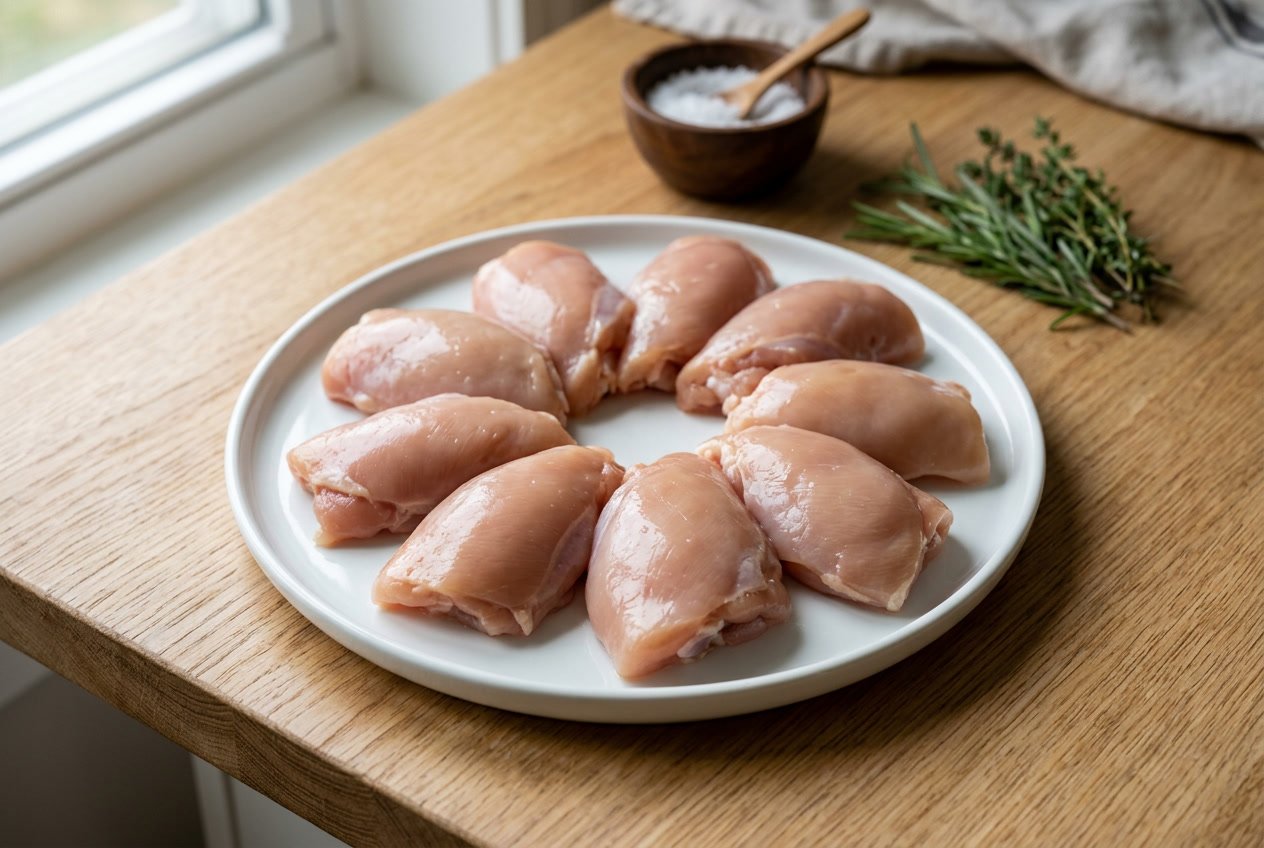
This guide explains what chicken thigh fillets are, how they compare to whole thighs, their nutritional value, and the best ways to cook and store them.
You’ll also find tips for buying and when to use fillets instead of bone-in thighs.
What Are Chicken Thigh Fillets?
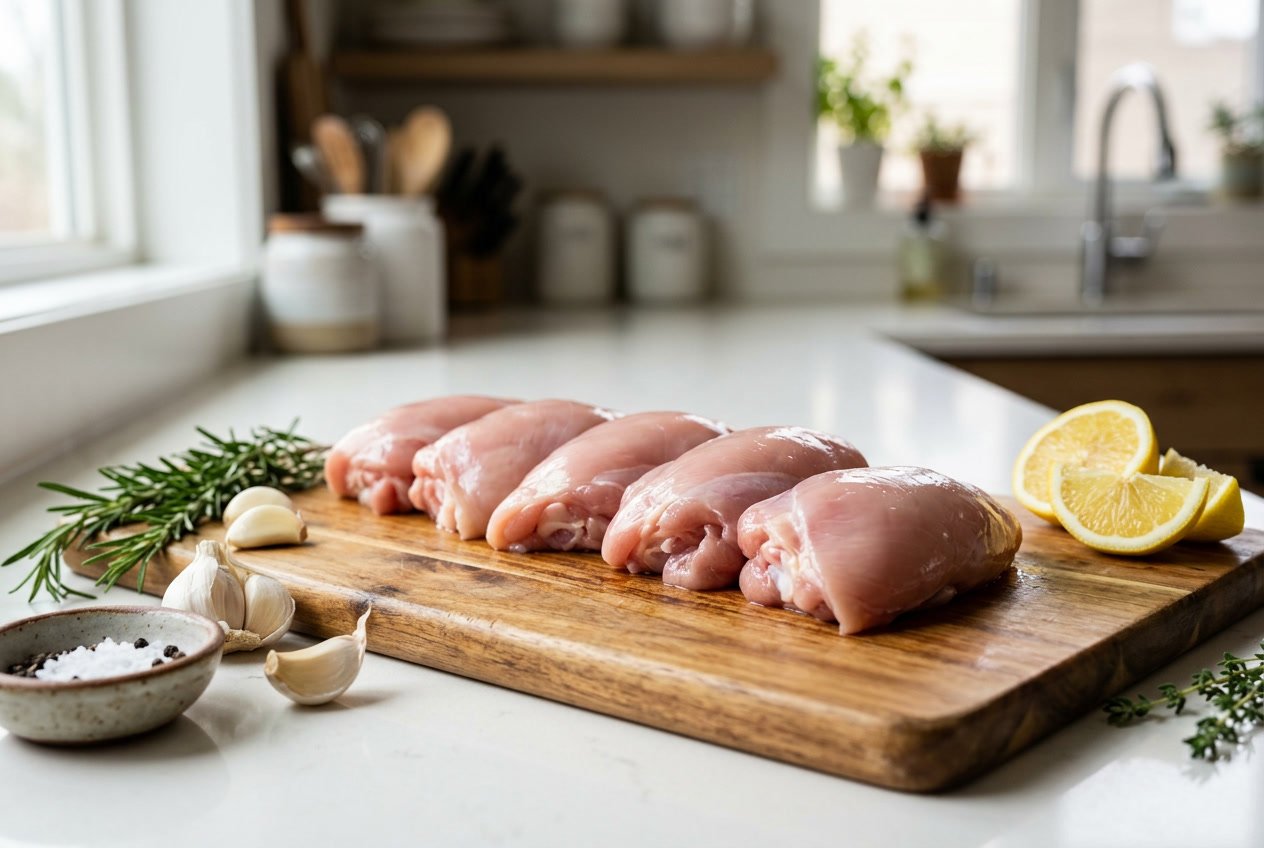
Chicken thigh fillets are boneless, usually skinless portions from the upper leg of the bird.
They offer concentrated dark meat, connective tissue, and fat for flavor and juiciness.
Definition and Composition
A chicken thigh fillet is the boneless cut from the thigh muscle, often trimmed of excess fat and skin.
It keeps the darker meat fibers and a higher intramuscular fat content than breast meat.
Thigh fillets contain more collagen and myoglobin, which add to their richer flavor and brown color when cooked.
Nutritionally, thigh fillets provide more fat and slightly more iron than white meat, while still offering a high protein content.
That fat helps carry seasonings and keeps the meat moist during high-heat cooking or longer braises.
How Chicken Thigh Fillets Are Prepared
Butchers or processors remove the bone from the thigh and trim away skin and excess fat to make a fillet.
You may find thigh fillets sold as whole pieces or sliced thin for stir-fries and cutlets.
At home, pat fillets dry, trim loose connective tissue, and marinate to tenderize or flavor the meat.
Because thigh fillets contain more collagen, you can cook them quickly on a grill or pan-sear, or slowly in a braise or stew.
Adjust cooking time and temperature to avoid overcooking; they tolerate higher heat without drying out compared to breast meat.
Typical Appearance and Texture
Thigh fillets have a pink-to-deep-red hue when raw and turn to a darker brown when cooked.
Their grain is finer than whole bone-in thighs but still more pronounced than breast meat.
Properly cooked, the texture is tender and slightly springy, with a moist, glossy interior from retained fat and collagen.
Overcooked thigh fillets become stringy rather than dry, so aim for an internal temperature of about 74°C (165°F) to keep them juicy.
You’ll notice irregular edges where the bone was removed and occasional thin connective strands.
Packaging often labels them as “boneless thigh,” “thigh fillet,” or “thighs, boneless, skinless.”
Chicken Thigh Fillets vs Chicken Thighs

Fillets are the boneless, trimmed portions from the thigh, while whole chicken thighs include bone and often skin.
Expect differences in cook time, moisture retention, and how much flavor the meat brings to sauces or braises.
Key Differences
Chicken thigh fillets are boneless and usually skinless, making them thinner, more uniform, and faster to cook than whole chicken thighs.
Whole chicken thighs keep the bone and commonly the skin.
The bone adds weight and slows cooking; the skin adds fat and browning.
Fillets often cost more per pound because trimming adds labor and waste.
Fillets thaw and marinate faster, while whole thighs suit slow-cook methods and are less likely to dry out.
If you want consistent portion sizes, choose fillets.
Flavor and Texture Comparison
Whole chicken thighs taste richer because bone and skin carry fat and marrow flavor.
The dark meat around the thigh contains more intramuscular fat, which keeps the meat tender during longer cooking.
Fillets have a milder, more neutral profile and less connective tissue and fat, so they feel leaner.
Fillets work well when you want the sauce, rub, or seasoning to be the main flavor.
Whole thighs tolerate braising and roasting without drying; fillets do best with quick, high-heat methods or short marinades to keep them juicy.
Culinary Uses and Suitability
Use whole chicken thighs for roasting, braising, grilling with skin on, or slow-cooked stews where sustained heat and fat render produce depth of flavor.
Choose chicken thigh fillets for stir-fries, quick sautés, sandwiches, or skewers where uniform thickness matters.
If you swap fillets for thighs, reduce cook time and watch the internal temperature.
If you use thighs instead of fillets, add more cooking time and consider removing the bone after cooking for presentation.
Nutritional Value of Chicken Thigh Fillets
Chicken thigh fillets deliver concentrated protein, moderate fat, and B vitamins and minerals that support energy and oxygen transport.
Removing skin cuts calories and total fat, and your cooking method further changes the final values you consume.
Protein Content
Chicken thigh fillets provide a substantial amount of high-quality animal protein.
A typical 4 oz (about 113 g) cooked boneless, skinless thigh gives you about 25–30 grams of protein.
Protein in thighs contains all essential amino acids, similar to breast meat, but is slightly lower per ounce because thighs retain more moisture and fat.
If you track macros, use cooked entries when logging after preparation.
Fat and Calorie Differences
Fat and calories in chicken thighs vary most by skin presence and cooking method.
A 4 oz raw boneless, skinless thigh typically contains about 120–140 kcal and 4–6 g fat.
The same portion with skin or when fried can reach 220–350+ kcal and 16–24 g fat or more.
Most fat in thighs is a mix of monounsaturated and saturated fats; monounsaturated fats form a large share.
When you bake or grill skinless fillets, excess fat renders away and calorie counts stay lower.
Frying or battering adds oil and carbs, often doubling calories.
Remove skin after cooking to reduce surface fat absorption while preserving flavor.
Vitamins and Minerals
Chicken thigh fillets contain several micronutrients you rarely get from white meat alone.
Per serving, thighs supply iron and zinc, which support oxygen transport and immune function.
They also provide B vitamins—especially niacin (B3), B6, and B12—important for energy metabolism and nervous system health.
Dark meat in thighs contains more heme iron than breast, so you get better iron bioavailability.
Selenium appears in meaningful amounts too, aiding antioxidant defenses.
Sodium varies widely; store-bought or brined thighs can contain high added sodium, so check labels if you monitor salt intake.
Popular Cooking Methods for Chicken Thigh Fillets
Chicken thigh fillets adapt to high-heat searing, quick stir-frying, and roasting.
Choose grilling for char and smoke, pan methods for fast crisp edges, and the oven for even cooking.
Grilling and Barbecuing
Grilling gives char, rendered fat, and concentrated flavor from direct heat.
Preheat the grill to medium-high (about 400–450°F).
Grill boneless thigh fillets 4–6 minutes per side; for thicker pieces, sear over direct heat then move to indirect heat to finish to 165°F.
Pat fillets dry and oil lightly to prevent sticking.
Use a marinade with oil and an acid like soy, lemon, or vinegar; marinate 30 minutes to 8 hours.
Watch for flare-ups from dripping fat and avoid pressing the meat to keep juices in.
Pan-Frying and Stir-Frying
Pan-frying crisps the exterior quickly and keeps interiors juicy.
Heat a skillet over medium-high, add oil, and sear fillets 3–5 minutes per side.
For skinless thigh fillets, press into the pan for a good crust.
Stir-frying uses high heat and constant motion.
Slice fillets thin against the grain, cook in a hot wok or skillet in small batches, and remove once just cooked.
Season toward the end with sauces to glaze pieces without overcooking.
Rest briefly before serving to let juices redistribute.
Baking and Roasting
Oven methods deliver even doneness and suit batch cooking.
Preheat to 400°F for roasting to get browned edges without drying.
Lay fillets on a wire rack over a rimmed sheet pan so air circulates and fat drips away; bake boneless fillets about 20–25 minutes, checking with a thermometer.
For skin-on or bone-in thighs, increase time to 35–45 minutes and aim for 175–185°F if you want a more gelatinous texture.
Use a simple rub or brush with oil and herbs; avoid covering with foil.
Finish under the broiler for 2–3 minutes for extra color.
Buying and Storing Chicken Thigh Fillets
Buy fillets that look fresh, feel firm, and are wrapped or stored to prevent leakage.
Store promptly at or below 40°F (4°C) and use raw fillets within 1–2 days or freeze for longer storage.
How to Choose Quality Fillets
Look for fillets with a uniform pink color and minimal visible fat.
Avoid packages with excessive liquid; that often signals older product or poor packaging.
Check the sell-by or use-by date and choose the latest date if you won’t cook them the same day.
Smell the fillets if possible; they should have a neutral, slightly meaty odor, not sour or ammonia-like.
Prefer vacuum-sealed or airtight-packaged thigh fillets for longer fridge life.
If buying loose from a counter, ask staff when the batch was prepared and whether the fillets are skin-on or boneless.
Storage Tips and Shelf Life
Refrigerate raw thigh fillets at 40°F (4°C) or below and place them on the lowest shelf to prevent drips onto other foods.
Raw fillets are safe for 1–2 days in the fridge; cooked fillets last 3–4 days.
Freeze raw thigh fillets if you won’t use them within two days.
Wrap tightly in plastic wrap or use vacuum seal to prevent freezer burn.
Label with date; use within 6–9 months for best quality.
Thaw frozen fillets in the fridge overnight or under cold running water if needed.
Never thaw at room temperature.
Always reheat cooked fillets to 165°F (74°C).
Cost and Availability
Thigh fillets usually cost less per pound than boneless, skinless chicken breast and often come in bulk packs at supermarkets.
You’ll find them year-round in grocery chains, butcher shops, and online retailers.
Prices vary by region and whether the product is organic, free-range, or conventional.
Compare unit price on the shelf label.
Consider buying larger packs and freezing in meal-sized portions to save money.
Local butchers can offer fresher thigh fillets and let you choose skin-on or boneless cuts, which affects price and cooking options.
Selecting Between Chicken Thighs and Chicken Thigh Fillets
Choose based on cooking method, flavor needs, and prep time.
Consider bone-in, skin-on thighs for slow, flavor-forward dishes.
Pick boneless, skinless thigh fillets for quick, uniform cooking and easier portioning.
Which Is Better for Your Recipe?
If you braise, stew, or roast low and slow, bone-in chicken thighs deliver more flavor and stay moist because connective tissue and fat render into the sauce.
Use them for curries, coq au vin, or any recipe where long cook time and rich mouthfeel matter.
For stir-fries, quick grills, sandwiches, or salads, chicken thigh fillets work better.
They heat through evenly, take marinades quickly, and require no trimming or deboning.
Fillets also crisp faster under high heat.
Adjust timing: fillets cook several minutes faster than thighs with bone.
If substituting, reduce cook time or use a thermometer to reach 165°F (74°C).
Personal Preferences and Dietary Goals
If you want maximum flavor and juiciness, choose chicken thighs. The skin and bone increase fat and collagen, which add taste and a silkier texture in slow-cooked dishes.
If you track calories or prefer convenience, choose chicken thigh fillets. They have less surface fat and are easier to portion.
Thighs often cost less per pound but include bone and skin, which affects yield. Fillets give you more edible meat per package and save prep time.


