
What’s Better: Chicken Breast or Thigh? Nutrition & Taste Compared
Pick the cut that fits your goal. If you want lower calories and higher protein per ounce for weight control or post-workout meals, choose chicken breast.
If you want richer flavor, more iron and zinc, and meals that keep you full longer, choose thighs.

Both cuts are healthy. Breast works well for lean, protein-focused meals, while thigh offers satiety and micronutrients.
Rotating based on your goals and cooking method gives you flexibility.
This article breaks down calories, protein, fat, micronutrients, cooking effects, and practical trade-offs so you can decide which cut to use today.
Chicken Breast Versus Thigh: Key Differences

You’ll notice clear differences in flavor, texture, and nutrient content between chicken breast and chicken thigh.
Your choice often depends on cooking method, calorie and fat goals, and whether you prioritize juiciness or leanness.
Taste and Texture Contrast
Chicken breast tastes mild and has a firmer, denser texture. It dries out faster when overcooked, so use shorter cooking times or moist methods like poaching, sous-vide, or covered roasting to keep it tender.
Chicken thigh brings a richer, more pronounced flavor and a softer, more succulent texture. The higher fat content helps it stay juicy through longer cooking and high-heat methods such as braising, grilling, or slow-roasting.
If you want bold flavor and forgiving cooking, choose thighs. If you prefer a neutral canvas for sauces or quick, lean protein, choose breasts.
White Meat and Dark Meat Explained
White meat comes from the breast muscles, which the bird uses less for sustained activity. These muscles store less fat and more glycogen, producing a milder taste and lighter color after cooking.
Dark meat comes from the thigh and drumstick, muscles used for standing and walking. These muscles contain more myoglobin and connective tissue, giving them a darker color, greater fat, and a deeper, meatier flavor.
You should expect different cooking behaviors. White meat benefits from quick, even heating. Dark meat tolerates and often improves with slow, moist cooking that breaks down collagen.
Nutritional Summary at a Glance
- Calories: Breast is lower. For 100 g cooked skinless meat, expect about 165 kcal (breast) vs about 179 kcal (thigh).
- Protein: Breast generally contains more protein per 100 g (about 30–32 g) than thigh (about 24–25 g).
- Fat: Thigh has about twice the total fat of breast; saturated fat is higher in thigh.
- Micronutrients: Thigh typically provides more iron, zinc, and vitamin B12. Breast often has slightly more vitamin B6 and choline.
Removing skin cuts 25–30% of added fat and calories from either cut. Choose breasts to meet tight calorie or high-protein targets. Choose thighs when you want extra flavor, iron, or dishes that require longer cooking.
Nutrition Profile Comparison
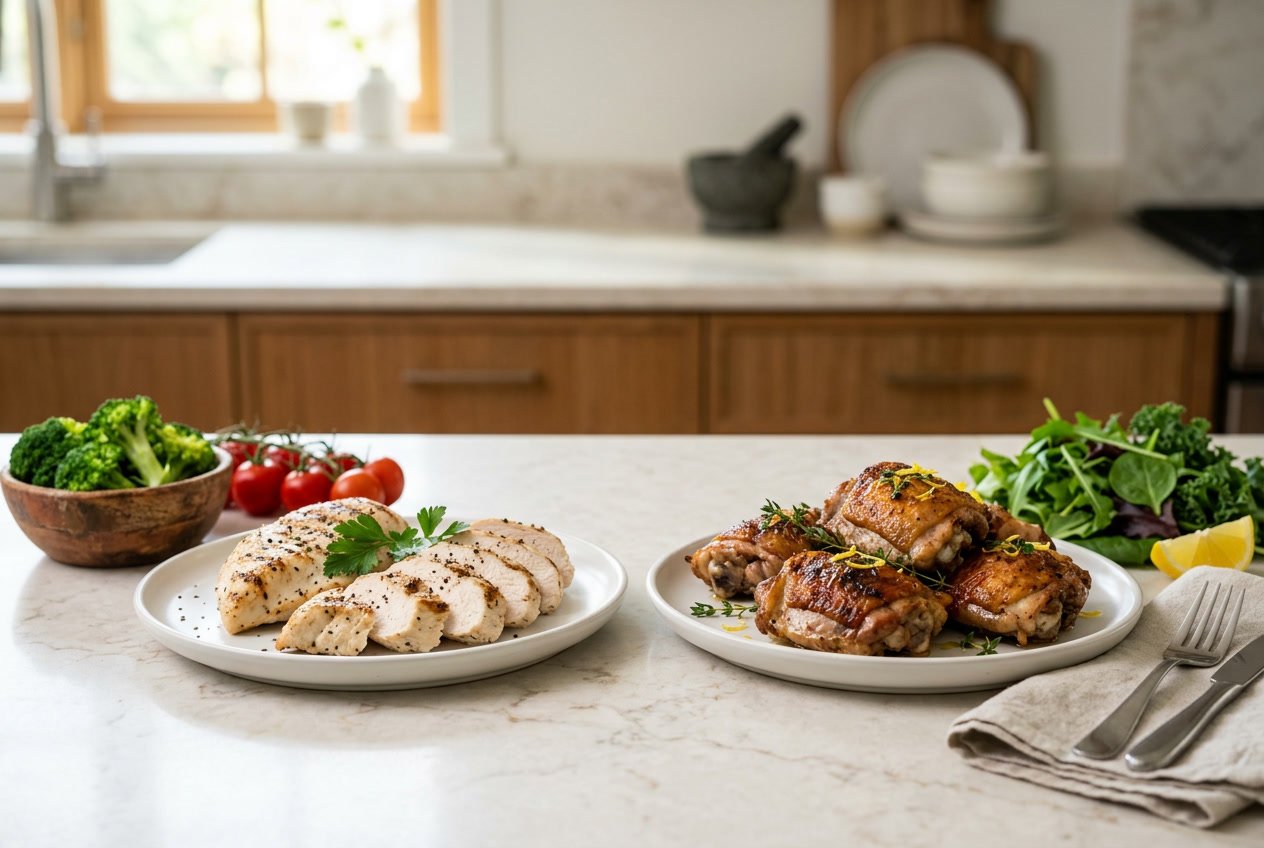
Chicken breast and thigh differ mainly in calories, fat, and protein density. One is leaner with more protein per ounce; the other has more fat, flavor, and some different micronutrient levels.
Calorie and Macronutrient Breakdown
Per 100 g cooked, skinless chicken breast typically provides roughly 165 kcal, about 31 g protein, and 3.6 g fat.
Per 100 g cooked, skinless chicken thigh typically provides roughly 209 kcal, about 26 g protein, and 10.9 g fat.
- Calories: Thighs are higher by about 40–50 kcal per 100 g when skinless. Skin adds about 60–100 kcal depending on size.
- Protein: Breast gives more protein per gram. Choose breast if you prioritize protein density.
- Fat: Thighs contain more total and saturated fat. They also retain more monounsaturated and polyunsaturated fats that contribute to juiciness and flavor.
- If you need extra calories (bulking or higher energy needs), thighs help. If you want lower calories with high protein (weight loss or lean gains), pick breast.
Micronutrients and Vitamins
Micronutrient differences are modest but meaningful for some needs. Chicken breast tends to be higher in vitamin B6, selenium, and phosphorus per serving.
Thighs typically contain slightly higher iron and zinc and more niacin in some comparisons.
- B vitamins: Breast often provides more vitamin B6, which supports metabolism and may be relevant if you track micronutrient intake closely.
- Minerals: Selenium and phosphorus are abundant in both cuts. Choose breast if you want a higher selenium-per-calorie ratio.
- Iron and zinc: Thighs can have modestly higher amounts, useful if you need more heme iron or zinc for recovery.
- Omega profile: Thighs contain more omega-6 fatty acids. Neither cut is a significant omega-3 source, so pair with other foods like flax or walnuts if you want more omega-3s.
Protein Quality and Content
Both cuts supply complete animal protein with all essential amino acids. The difference lies in quantity per serving and how that fits your goals.
- Amino acid completeness: You get all essential amino acids from either cut, supporting muscle repair and maintenance.
- Protein per portion: A 100 g portion of cooked breast generally yields 4–6 g more protein than the same weight of thigh.
- If you aim for a specific daily protein target, breast makes it easier to reach that target with smaller portions.
- Overcooking can denature proteins and dry out breast faster than thigh. Consider cooking method to preserve both protein and palatability.
Benefits of Chicken Breast
Chicken breast offers a high-protein, low-fat option that supports lean meals, essential micronutrients, and convenient use in structured eating plans.
Lean Protein for Weight Management
Chicken breast delivers about 22–25 grams of protein per 100 g cooked portion while remaining low in fat and calories.
That protein density helps you preserve or build lean muscle without adding many calories, which can support a calorie deficit when paired with portion control.
Protein in chicken breast also increases satiety compared with carbohydrate-only meals. Eating a breast at lunch or dinner can reduce late-afternoon snacking and help you meet daily protein goals with fewer total calories.
Cook it simply—grilled, baked, or poached—to keep added fats minimal and predictable for more accurate calorie tracking.
Notable Vitamins and Minerals
Chicken breast provides concentrated amounts of B vitamins, notably vitamin B6 and niacin (B3), per typical USDA nutrient data.
Vitamin B6 supports protein metabolism and neurotransmitter synthesis, while niacin helps cellular energy production.
You also get selenium and phosphorus in meaningful amounts. Selenium acts as an antioxidant cofactor and supports immune function, and phosphorus helps bone health and energy transfer.
Because breast is low in fat, it contains minimal fat-soluble vitamins. Pair it with modest healthy fats when eating vitamin A, D, E, or K–rich sides to aid absorption.
Role in High-Protein Diets
If your plan emphasizes higher protein—whether for muscle gain, athletic recovery, or appetite control—chicken breast is a reliable source.
Its predictable protein-per-serving makes meal planning and tracking straightforward, which helps you hit targets like 0.6–1.0 grams per pound of body weight if that’s your goal.
You can portion, weigh, and batch-cook breasts easily for consistent macros across meals.
Swap cooking methods and seasonings to avoid palatability fatigue while maintaining the same protein advantage.
For balanced meals, combine the breast with vegetables, whole grains, and a small amount of healthy fat to round out nutrients and improve satiety.
Benefits of Chicken Thighs
Chicken thighs deliver more calories and fat than breast meat, which helps with satiety and flavor. They also provide higher amounts of certain minerals and adapt well to slow, high-heat, and moist cooking methods.
Higher Fat Content for Fullness
Chicken thighs contain noticeably more total and saturated fat than skinless breast meat, which increases calorie density and keeps you feeling full longer after a meal.
If you aim to stay satisfied between meals or consume more calories without larger portions, a single 100 g serving of roasted, skinless thigh provides roughly 8 g fat versus about 3.6 g in breast, translating to higher energy per bite.
Fat also carries and enhances fat-soluble flavors and aromas. That makes thighs less likely to dry out during cooking and better suited for methods that need long braises or roasting.
If you track macros, factor the extra fat into your daily targets. If you eat intuitively, the added richness often reduces snacking later.
Mineral and Micronutrient Advantage
Chicken thighs supply higher amounts of zinc and iron compared with breast meat, nutrients that support immune function and oxygen transport.
For example, a 100 g portion typically yields more than 1.9 mg zinc in thighs versus about 1.0 mg in breast, which matters if you rely on poultry as a regular protein source.
Thighs also provide slightly more vitamin B12 and certain trace minerals tied to red blood cell health.
If you have marginal iron stores or higher zinc needs—common in some women and people with restrictive diets—choosing thighs more often can help close gaps without supplements.
Monitor total intake across foods to avoid excess when combining with fortified products.
Flavor and Culinary Versatility
You get richer taste and more forgiving texture with chicken thighs, which tolerate long cooking times and high-heat searing without drying out.
The higher fat content and connective tissue break down into gelatin during slow cooking, improving mouthfeel and sauce body.
Thighs also accept bold marinades and strong seasonings without losing moisture, making them ideal for grilling, smoking, or frying.
If you want crisp skin, roast bone-in thighs at high heat. If you need shred-ready meat, braise for 45–90 minutes.
Use thighs when you want consistent results and concentrated flavor with less attention to precise timing.
Downsides and Considerations
You should weigh how fat content, digestion, and portion choices affect health and satisfaction. Breasts and thighs each carry trade-offs for cholesterol, fullness, nutrient absorption, and calorie control.
Saturated Fat and Heart Health
Chicken thighs contain more total fat and a higher share of saturated fat than skinless chicken breast.
If you regularly eat thighs with the skin on, your saturated fat intake can rise substantially, which may raise LDL cholesterol over time.
Aim to remove skin or limit frequency if you have high LDL, existing heart disease, or a family history of cardiovascular risk.
If you choose thighs for flavor or juiciness, balance them with low-saturated-fat foods that day such as steamed vegetables, legumes, or whole grains.
You can also use cooking methods that drain fat (grilling, baking on a rack) and trim visible fat before cooking to reduce saturated-fat intake.
Satiety and Absorption Differences
Fat slows gastric emptying, so thighs typically keep you fuller longer than breasts. That extra fat can help reduce snacking and steady blood sugar between meals.
Conversely, lean chicken breast digests faster and may leave you hungry sooner, especially if you don’t include other sources of fat or fiber.
Fat also aids absorption of fat-soluble vitamins from the meal. If you eat breast without added healthy fats, you might impair uptake of vitamins A, D, E, and K present in your side dishes.
To get both benefits, pair breast with a small source of unsaturated fat such as olive oil dressing, avocado, or a handful of nuts to improve satiety and nutrient absorption.
Potential for Overconsumption
Thighs have more calories per ounce than breasts, so portion control matters if you track energy intake.
Regularly choosing large portions of thighs or leaving the skin on can push daily calories higher than you intend, undermining weight goals.
Weigh or eyeball portions: about 3–4 ounces cooked is a standard serving of protein for most meals.
With breasts, the risk is different. Because they’re very lean, you might compensate by adding calorie-dense sauces, breads, or fried coatings that negate the lower-calorie advantage.
Monitor accompaniments and cooking methods. Broiling or poaching breast and using light sauces preserves its lean benefit, while moderate servings of thighs work when you control added fats.
How Cooking Methods Affect Nutrition
Cooking changes calories, fat, and nutrient retention. Removing skin and choosing dry-heat methods reduce added fat, while frying and leaving skin on increase calories and saturated fat.
Impact of Skin-On Versus Skinless
Keeping the skin adds about 25–30% more calories and fat compared with skinless cuts. If you eat a 100 g portion, skin-on chicken thigh contains several grams more total and saturated fat than skinless chicken thighs.
For chicken breast, removing the skin yields a bigger relative drop in fat because the breast starts leaner. Skinless chicken breast gives the highest protein-to-calorie ratio.
Practical tips:
- Remove skin before cooking to cut fat and calories.
- If you prefer skin for flavor, roast on a rack so fat drips off.
For steady protein intake with lower fat, choose skinless chicken thighs or skinless chicken breast depending on flavor preference.
Effect of Grilling, Baking, and Frying
Grilling, baking, and roasting use dry heat and let fat drip away, lowering the final fat content compared to pan-frying. Baking skinless chicken breast or thighs preserves protein while keeping calories low.
Grilling adds smoky flavor without extra oil. Charred surfaces can form compounds, so avoid excessive charring.
Frying increases both calories and total fat, especially if you bread the meat. A battered, fried chicken thigh has about double the calories of a roasted skinless thigh.
To reduce added fat when you want a crisp exterior:
- Use an air fryer or shallow oil spray.
- Bread with whole-grain crumbs and bake instead of deep-frying.
Pat meat dry and use a thermometer to avoid overcooking. This preserves juiciness in lean chicken breast and prevents excess oil absorption.
Choosing Based on Individual Goals
If you prioritize lower calories and higher protein density, choose lean cuts. If you need extra calories, flavor, or richer texture, pick fattier cuts.
Weight Loss and Muscle Gain
For weight loss, choose chicken breast more often. A 100 g serving of skinless chicken breast provides more protein per calorie than chicken thighs, helping you meet protein targets while staying in a calorie deficit.
Protein supports satiety and preserves lean mass during dieting, so aim for higher-protein portions at meals.
For muscle gain, use chicken thighs when you need extra calories and variety. Thighs contain more fat and more calories per serving, which helps you reach a caloric surplus without eating large volumes.
If you prefer thighs but want more protein, increase portion size or pair them with other high-protein foods such as Greek yogurt, a whey shake, or egg whites. Remove skin to lower saturated fat when desired.
Practical tips:
- Weigh portions: 120–170 g of cooked breast delivers a solid protein boost for most workouts.
- Track calories and add thighs when daily calories fall short.
Combine breast for pre- or post-workout meals and thighs for higher-calorie dinners.
Balanced Diet and Variety
Rotate between chicken breast and chicken thighs to balance nutrients and keep meals interesting. Breast gives lean protein and nutrients like B6 and selenium. Thighs supply more iron, zinc, and flavorful fat that improves meal satisfaction.
Adjust cooking techniques to manage fat. Remove skin to reduce saturated fat. Grill or bake rather than deep-fry to control added oils.
Use thighs in slow-cooked dishes where collagen and fat improve texture. Reserve breast for salads, stir-fries, and lean protein-focused plates.
Aim for at least 2–3 servings of varied poultry per week as part of diverse protein sources.
Budget and Convenience
If cost or prep time matters, choose based on price-per-pound and cooking speed.
Chicken thighs usually cost less per pound than boneless skinless breast, making them a better option when feeding multiple people or stretching a grocery budget.
Thighs tolerate longer cooking and reheating without drying out.
For quick meals and meal prep, slice or pound breasts thin so they cook quickly. They fit well into batch-cooked high-protein meals.
Thighs need a bit more time for even cooking but handle slight overcooking well.
Buy family packages of thighs for stews and braises. Choose breasts when you want lean, quick-to-cook portions.


