
What’s a Good Chicken Thigh Recipe? The Essential Guide to Juicy Dinners
If you want a dependable answer, choose bone-in, skin-on chicken thighs and cook them hot and long enough to crisp the skin while keeping the interior juicy.
Bold techniques and simple marinades take chicken thighs from bland to memorable without hours of fuss.
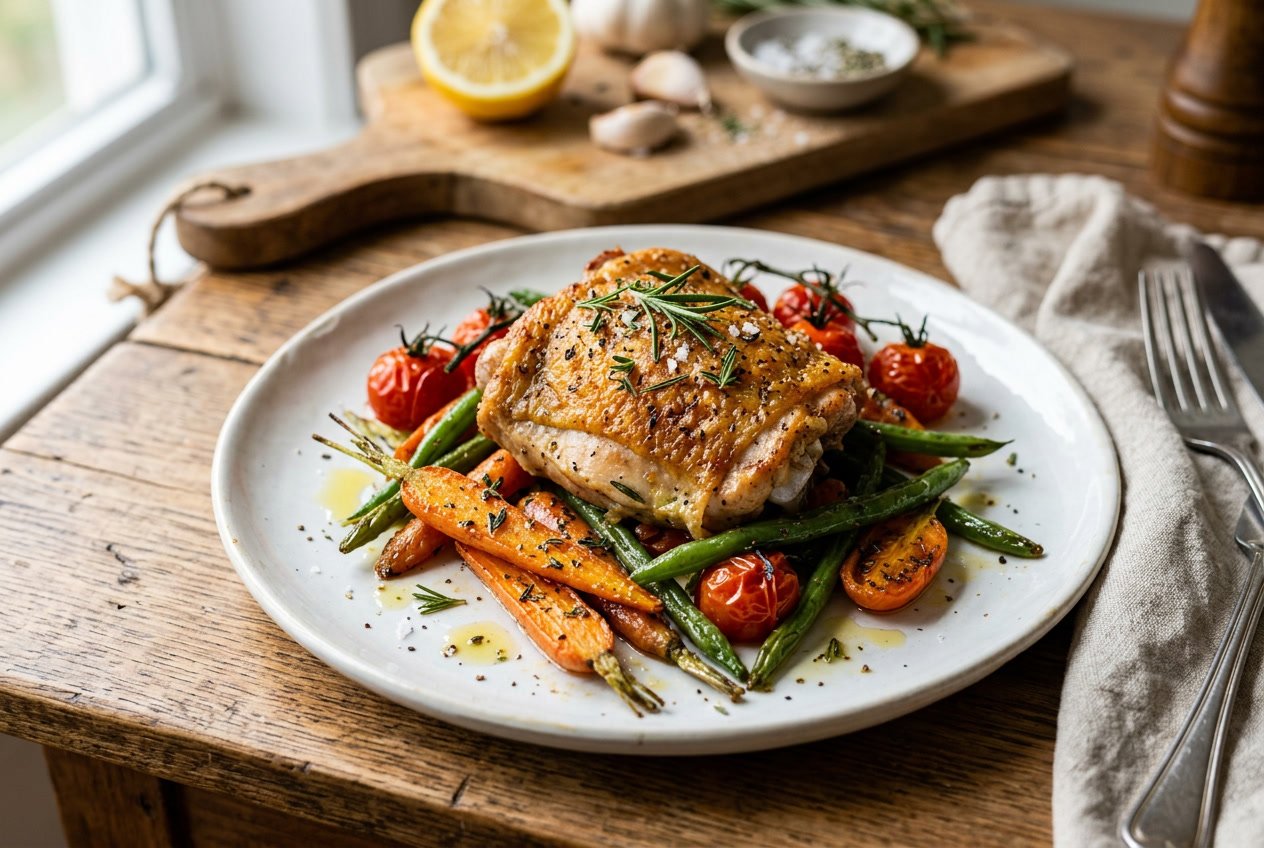
Learn how to pick the best thighs at the store.
Discover which cooking methods—grilling, roasting, braising, or pan-searing—suit each meal.
Find marinades and seasonings that bring bold flavor.
Explore easy recipes, classic and international inspirations, and practical tips for juicy thighs every time.
Choosing the Best Chicken Thighs
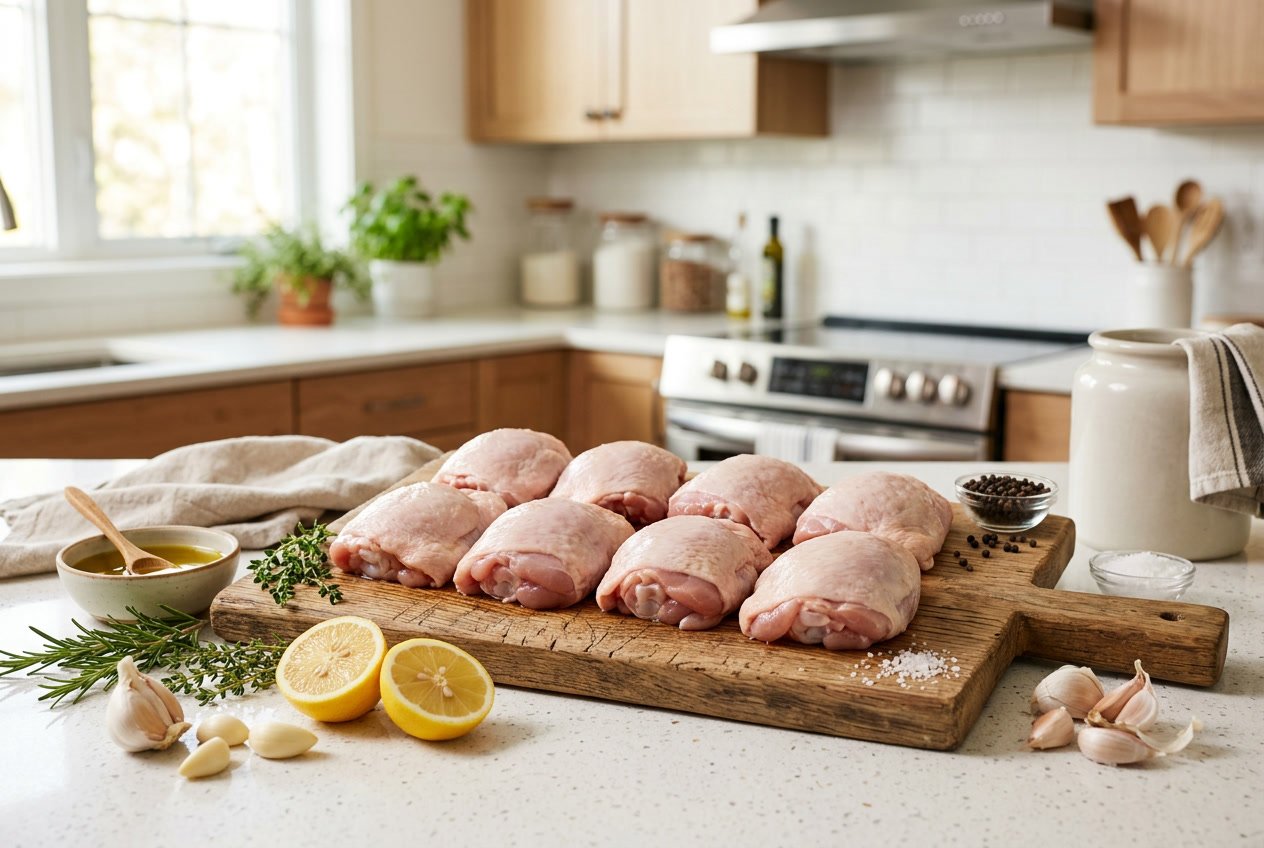
Pick thighs that match your cooking method, time, and texture goals.
Bone-in thighs bring deeper flavor and suit slow cooking, while boneless thighs work for quick sautés and slicing.
Decide if you want skin for crispness or skinless for leaner, saucier dishes.
Bone-In Versus Boneless Varieties
Bone-in chicken thighs keep moisture and add flavor during roasting, braising, or slow cooking.
The bone slows heat transfer, which helps the meat stay juicy and develop a richer mouthfeel.
Choose bone-in for oven-roasted or braised recipes that need longer cook times.
Boneless chicken thighs cook faster and are easier to cut or cube for stir-fries, skewers, and sautés.
They absorb marinades more thoroughly and give you uniform pieces for even browning.
Pick boneless thighs for quick, sliceable pieces or lower prep time.
Skin-On or Skinless Options
Skin-on chicken thighs produce crisp, golden skin when roasted or pan-seared.
The rendered fat bastes the meat for extra juiciness.
Use skin-on for high-heat methods like roasting at 400°F or using a hot skillet.
Expect slightly higher fat and calories.
Skinless chicken thighs work well in saucy dishes, curries, and slow-cooker recipes where the sauce clings directly to the meat.
They also trim prep time and reduce surface fat.
Choose skinless for leaner results or when you want a tender texture.
Tips for Buying Fresh and Quality Thighs
Look for thighs with a clean, pale pink color and moist texture.
Avoid grayish shades or sour smells.
Check sell-by dates and buy from reputable sources that rotate stock frequently.
Inspect packaging for minimal liquid and intact seals.
At the butcher counter, ask about the cut and whether the thighs were fresh or previously frozen.
If you plan to brine or marinate, buy thighs with more surface fat and skin for better flavor retention.
For meal prep, portion and freeze raw thighs within two days and thaw in the refrigerator.
Popular Cooking Methods for Chicken Thighs
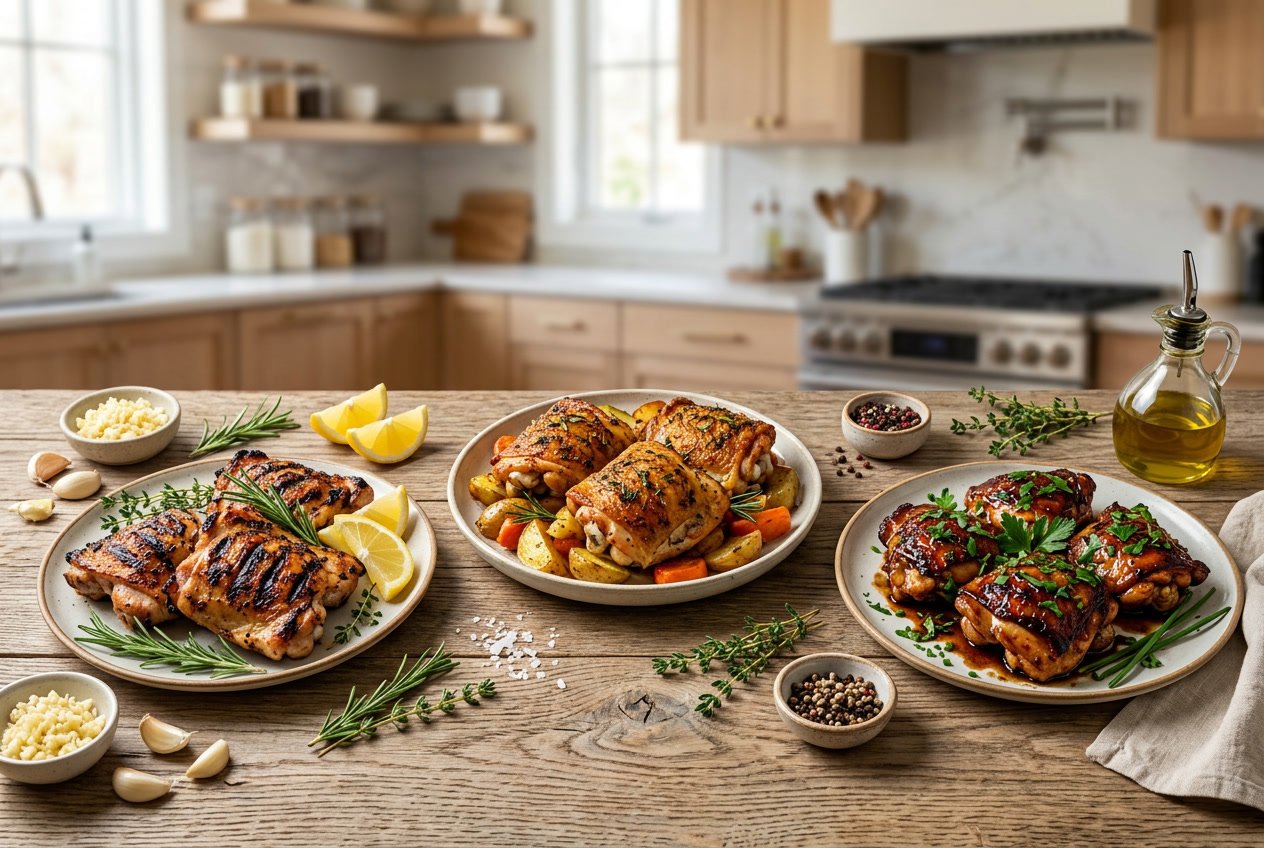
Use three reliable ways to get tender, flavorful thighs: dry-heat oven methods for even cooking and crisp skin, direct-heat grilling for smoky char, and stovetop searing for fast browning and controlled finish.
Each method highlights different textures and requires slightly different prep, temperatures, and timing.
Baking and Roasting
Baked or roasted chicken thighs deliver consistent results with minimal hands-on time.
For bone-in, skin-on thighs, preheat the oven to 400°F (200°C).
Pat the skin dry, season or brine, and roast on a rimmed sheet or in an oven-safe skillet for 30–40 minutes until the internal temperature reaches 175°F (79°C).
Start skin-side up and avoid overcrowding the pan for crispy baked chicken thighs.
Use a wire rack for extra airflow.
Finish under the broiler for 1–3 minutes if you want extra browning.
Boneless thighs need about 20–25 minutes, so check temperature earlier.
Tips:
- Dry skin and a hot oven create crispiness.
- Use a thermometer for doneness.
- Rest thighs 5 minutes before serving.
Grilling for Smoky Flavor
Grilled chicken thighs pick up char and smoke that amplify simple seasonings.
Preheat your grill to medium-high, about 375–425°F.
For bone-in, grill skin-side down first to render fat and crisp the skin.
Move thighs to indirect heat to finish cooking through without burning.
Expect 20–30 minutes total, flipping occasionally.
For boneless thighs, grill 4–6 minutes per side over direct heat until charred spots form and internal temp reads about 165–175°F.
Use marinades or dry rubs with sugar carefully, as they can burn.
Add wood chips or a smoke box for deeper smoke flavor.
Tips:
- Oil the grates and the skin to prevent sticking.
- Move thighs away from direct flames to control flare-ups.
- Let grilled thighs rest briefly before cutting.
Pan-Searing and Stovetop Techniques
Pan-seared chicken thighs give you fast, deeply browned skin and flexible finishing options.
Heat a heavy skillet until hot.
Sear skin-side down in a thin layer of oil until deeply golden, about 6–8 minutes.
Keep the thighs still while searing to promote an even, crispy crust.
After searing, finish in the oven at 350°F for 12–20 minutes for bone-in, or simmer in a sauce on the stovetop for boneless thighs.
Deglaze the pan with wine, stock, or citrus to make a pan sauce.
Aim for an internal temp between 165–185°F depending on the texture you want.
Quick checklist:
- Use a hot pan and dry skin.
- Sear first, then finish gently.
- Make a pan sauce from the browned bits for concentrated flavor.
Flavorful Chicken Thigh Marinades and Seasonings
Choose herbs, acids, salts, and oils to build layers of flavor and reliable texture.
Small adjustments—more acid, less salt, a touch of sugar—change how your marinated chicken thighs caramelize and taste.
Classic Herb Blends
Use a simple herb base for herb roasted chicken thighs.
Combine chopped rosemary, thyme, and parsley with minced garlic, lemon zest, and olive oil.
Add 1 tsp kosher salt and 1/2 tsp freshly cracked black pepper per pound of chicken.
For a lemon chicken variation, swap half the olive oil for fresh lemon juice and include 1 tablespoon Dijon mustard.
Marinate 4–12 hours; use shorter time for boneless thighs and longer for bone-in.
Rub excess marinade from the skin before roasting to promote crisping.
Roast at 400–425°F until the internal temperature reaches 165°F.
Let the thighs rest 5–8 minutes.
Bold Global Flavors
Explore global profiles for stronger, more distinctive marinated chicken.
For an Asian-inspired option, mix soy sauce, honey, sesame oil, garlic, and grated ginger.
For Mexican flavors, use lime juice, cumin, smoked paprika, garlic, and a splash of oil.
For Mediterranean, try olive oil, lemon, oregano, and a pinch of crushed red pepper.
Adjust salt and sugar based on the cooking method.
Grilling benefits from slightly sweeter marinades for caramelization.
When braising or slow-cooking, use more acid and aromatics.
Finish with fresh herbs, sesame seeds, or sliced scallions.
Marinating Tips for Maximum Juiciness
Control time, temperature, and ingredient ratios for juicy and tender thighs.
Use a 3:1 oil-to-acid ratio for most marinades.
Reduce acid for delicate flavors and increase for quick tenderizing.
Use about 1 tsp kosher salt per pound of chicken.
Marinate in the refrigerator only.
For boneless thighs, 30 minutes to 6 hours works well.
Bone-in thighs benefit from 4–12 hours.
Avoid over-marinating overnight in strong acidic blends.
Pat the skin or surface dry before cooking to improve crust formation.
Reserve a small portion of marinade before it touches raw meat if you plan to glaze the thighs later.
Bring used marinade to a boil for at least 3 minutes before applying.
Easy and Delicious Chicken Thigh Recipes
These recipes focus on hands-off cooking, bold but simple sauces, and methods that keep thighs juicy while developing browned skin or a sticky glaze.
Find sheet-pan shortcuts, low-and-slow braises, and quick Asian flavors that work with bone-in or boneless thighs.
One-Pan and Sheet Pan Dinners
Roast chicken thighs with vegetables in a single oven cycle for an easy dinner.
Season thighs with salt, pepper, and smoked paprika or lemon zest.
Arrange on a rimmed sheet pan with potatoes, carrots, and onions.
Roast at 425°F until skin crisps and internal temperature reaches 165°F.
Toss vegetables in a little oil and space them so they caramelize.
Brush thighs with a glaze, such as apricot jam thinned with soy sauce and rice vinegar, for variation.
Make a simple pan sauce by deglazing with chicken broth and finishing with butter.
Bone-in, skin-on thighs work best for crispiness.
Boneless thighs cut cook time by about half.
Slow Cooker and Instant Pot Favorites
Use a slow cooker for tender, fall-off-the-bone chicken thighs.
Layer onions and aromatics under thighs, season, and add 1/2–1 cup of liquid.
Cook on low 4–6 hours for tender meat and a concentrated sauce.
Stir in apricot preserves during the last 30 minutes for a glaze.
For the Instant Pot, sear thighs first on Sauté.
Pressure-cook with a cup of liquid for 8–10 minutes.
Use the pot to finish a glaze by reducing the cooking liquid with soy, honey, or teriyaki sauce.
Weeknight-Friendly Asian-Inspired Dishes
Marinate boneless thighs in a mixture of soy sauce, mirin or rice vinegar, honey or apricot jam, minced garlic, and grated ginger for 15–30 minutes.
Pan-sear over medium-high heat until caramelized.
Lower the heat and glaze with the marinade reduced to a glossy sauce.
For a quick sheet-pan or skillet teriyaki, use bottled teriyaki or make your own with soy, brown sugar, mirin, and cornstarch.
Garnish with toasted sesame and scallions.
Roast at 425°F after glazing to set the sauce without burning.
Classic and International Chicken Thigh Dishes
Explore how chicken thighs excel in braises, pan-roasts, curries, and slow-simmered dishes.
Find bold sauces, long-simmered flavors, and methods that keep thighs moist while building deep savory layers.
Italian and Mediterranean Recipes
Enjoy bright, herb-forward dishes that balance acidity with savory chicken.
In chicken cacciatore, brown bone-in, skin-on thighs first, then braise with crushed tomatoes, bell peppers, onions, garlic, olives, and a splash of red wine.
Salt the thighs ahead and brown until the skin crisps to render fat for the sauce.
Finish Italian chicken thighs with lemon zest and parsley.
Try a skillet Provençal approach: sear thighs, then add capers, olives, lemon, and chicken stock.
Braise until tender and spoon the pan sauce over roasted potatoes.
For a lighter option, roast thighs with oregano, rosemary, and cherry tomatoes on a sheet pan.
Indian and Asian Classics
Butter chicken starts with marinated, grilled or pan-seared thighs, then cooks in a tomato-cream sauce with garam masala, fenugreek, and butter.
Use boneless thighs for faster cook time and a silkier result.
Chicken adobo pairs soy, vinegar, garlic, and bay leaves.
Braise until the thighs are falling off the bone and reduce the sauce to a glaze.
For stir-fry styles like bourbon chicken or sweet chile-glazed thighs, cut thighs into pieces, sear quickly, then toss with a reduced sweet-savory sauce so each bite is glossy and caramelized.
Comfort Food Favorites
Comfort versions use pan sauces, creamy bases, or long braises. Sear chicken thighs, remove them, sauté mushrooms and onions, deglaze with stock, and finish with sour cream for a velvety sauce over egg noodles.
The thighs stay juicy and stand up to the tangy cream. Thighs release rich gelatin into classic chicken noodle soup, making the broth flavorful.
Simmer thighs with mirepoix, herbs, and whole spices. Shred the meat into the broth and add noodles at the last minute.
Coat thighs in a bourbon or brown-sugar BBQ glaze for barbecue or oven-baked comforts. Roast until edges caramelize and serve with mashed potatoes or coleslaw.
Tips for Perfectly Juicy Chicken Thighs Every Time
Remove surface moisture, control heat, and cook to the right temperature so the meat stays tender. Pat dry, salt ahead, and use an instant-read thermometer for best results.
Ensuring Crispiness and Moisture
Pat each thigh completely dry with paper towels, pressing into skin folds to remove trapped moisture. A dry surface allows browning and crisp skin.
Salt the skin at least 1 hour before cooking or leave it overnight uncovered in the fridge. Salt draws moisture out and then helps it reabsorb, seasoning deeper and improving texture.
Start skin-side down in a cold skillet or use a hot oven (400–425°F) with a wire rack over a rimmed pan. For pan-searing, let the fat render slowly until the skin releases naturally.
For oven or air fryer, avoid crowding so air circulates. Use a light dusting of baking powder in the dry rub for extra browning (use baking powder, not baking soda).
Common Mistakes to Avoid
Don’t rely on time alone. Use an instant-read thermometer.
Pull boneless thighs at about 165°F. Pull bone-in, skin-on thighs at 175°F to 185°F to convert collagen to gelatin and keep them juicy.
Temperature prevents dryness. Avoid overcrowding the pan or air fryer.
If thighs overlap, they steam in their own juices and never crisp. Give at least 1 to 1.5 inches between pieces, or work in batches.
Pat the thighs dry and salt them. Avoid acidic marinades longer than 8 to 12 hours; they can break down proteins and cause a mushy texture.
If you braise or slow-cook, finish the thighs under a broiler or in a hot pan briefly to restore surface texture.


