
What to Use Chicken Thighs For: Creative Meals & Cooking Tips
You want a cut that stays juicy, tolerates bold flavors, and works across grills, ovens, slow cookers, and skillets. Chicken thighs do all of that with less fuss than breasts.
Use chicken thighs for roasting, braising, grilling, air-frying, or shredding into soups, tacos, pasta, and one-pan dinners when you need reliable flavor and tenderness.
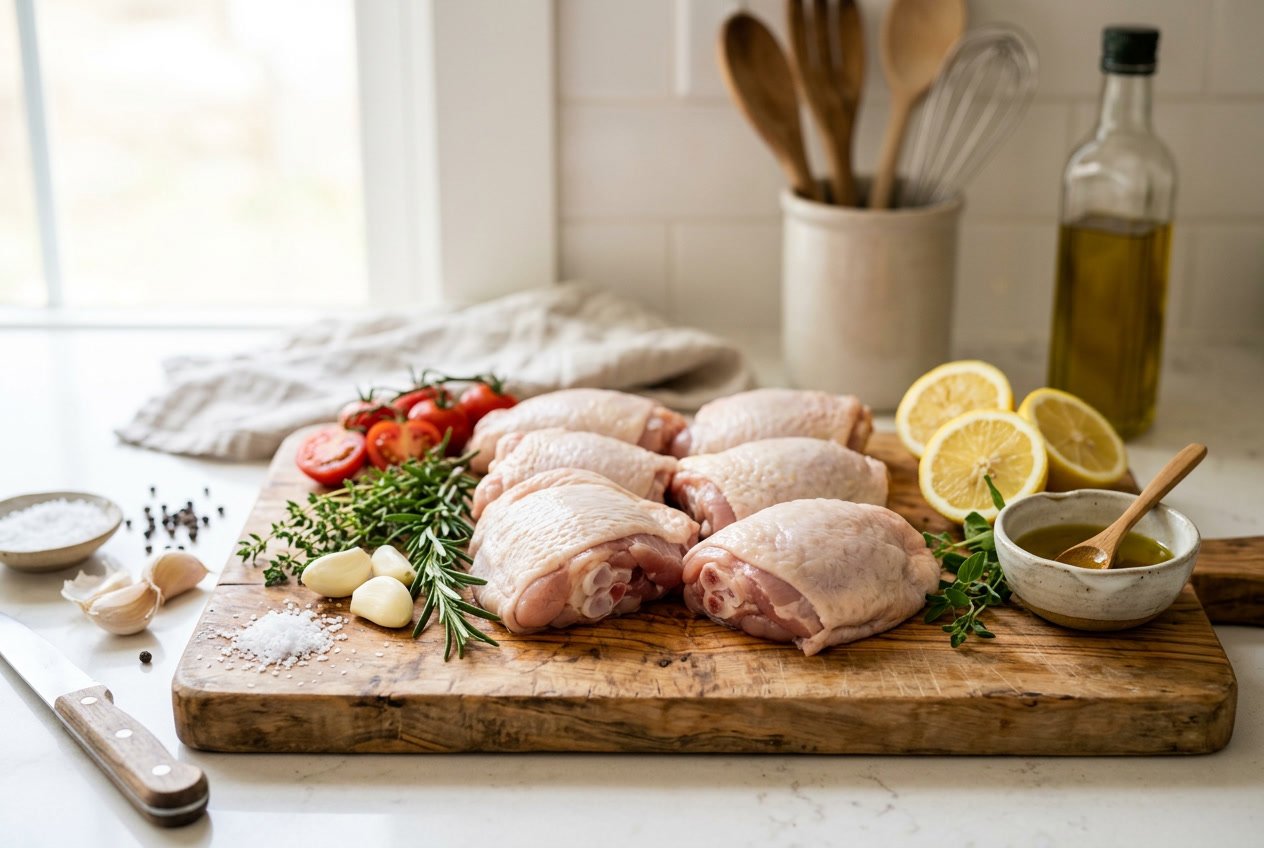
Different thigh cuts change cook time and texture. Some methods crisp skin or yield shreddable meat.
You can pivot thighs into global sauces, quick weeknight meals, or cozy soups. Practical tips can make weeknight cooking faster and weekend meals more interesting.
Understanding Chicken Thigh Cuts
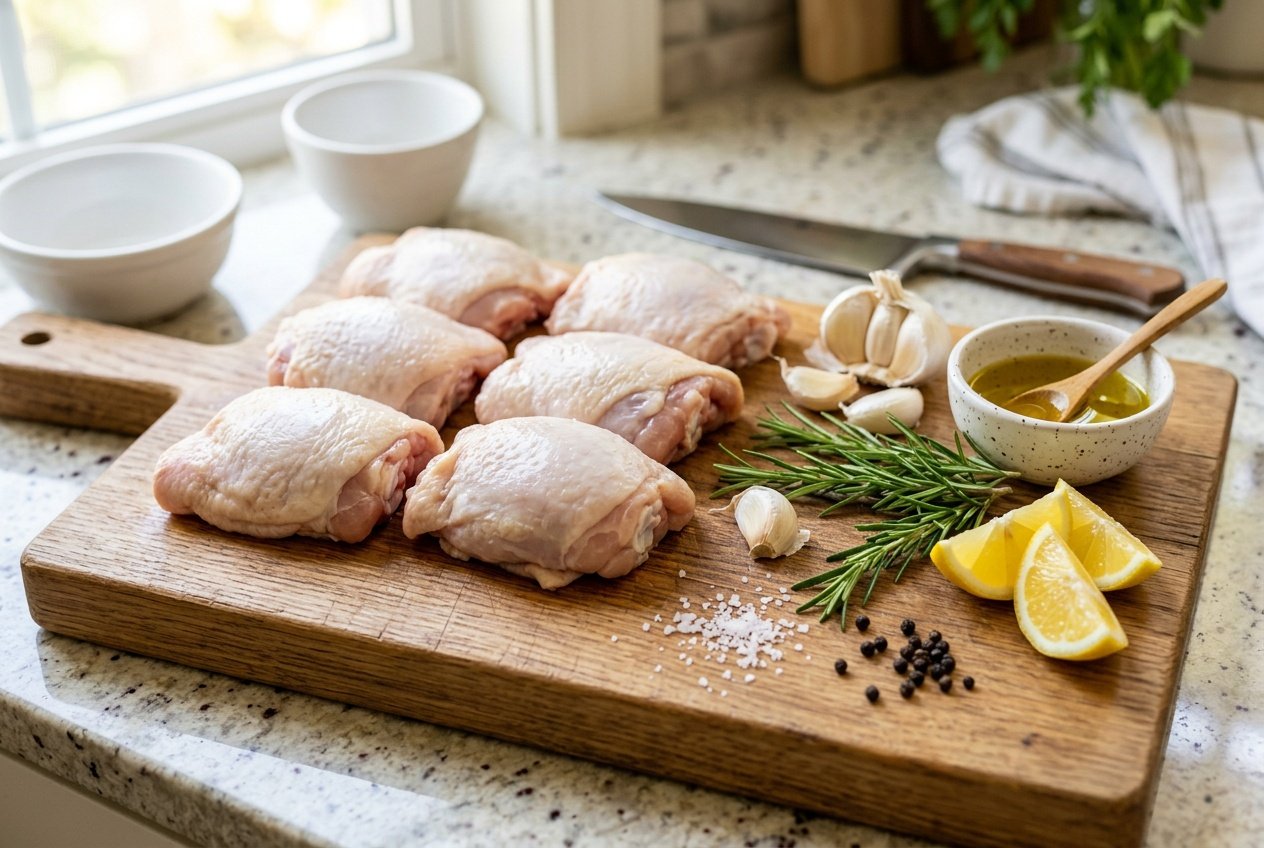
Chicken thighs offer rich flavor, forgiving texture, and flexibility across cooking methods. Choose between bone-in or boneless, and skin-on or skinless, based on how you plan to cook and serve the dish.
Bone-In vs. Boneless Chicken Thighs
Bone-in chicken thighs keep more flavor and moisture during long, slow cooking. Bones conduct heat differently, so braises, roasts, and stews benefit because the meat stays juicier and often tastes deeper.
Expect slightly longer cook times and more careful carving when you use bone-in thighs. Boneless chicken thighs save time and simplify eating.
They cook faster and are ideal for stir-fries, quick pan-searing, or breaded tenders where uniform thickness matters. Boneless thighs are easier to marinate thoroughly, so they soak up flavor quickly.
Watch internal temperature closely to avoid overcooking and drying the meat.
Skin-On vs. Skinless Chicken Thighs
Skin-on chicken thighs deliver crisp, flavorful results when roasted or pan-finished. The skin renders fat, bastes the meat, and produces a brown, crunchy exterior that contrasts with tender meat inside.
For crispy skin, start skin-side down in a hot pan or roast at high heat. Skinless chicken thighs reduce fat and create a leaner final dish.
They suit recipes where you want sauces to cling directly to the meat—curries, braises, or shredded preparations. Skinless thighs cook faster and are easier to portion for kebabs, tacos, or packed lunches.
They remain tender if not overcooked.
Choosing the Right Cut for Your Recipe
Match the cut to method. Use bone-in, skin-on thighs for roasting, grilling, and long braises when you want juicy chicken thighs with crisp skin.
Their structure holds up to heat and adds mouthfeel to the dish. Pick boneless, skinless thighs for quick sautés, frying, or skewers where speed and uniform bites matter.
They work well for shredded chicken in tacos or sandwiches because they shred easily while staying tender. For maximum juiciness with minimal fuss, sear boneless thighs then finish in a covered pan to retain moisture.
Popular Cooking Methods for Chicken Thighs
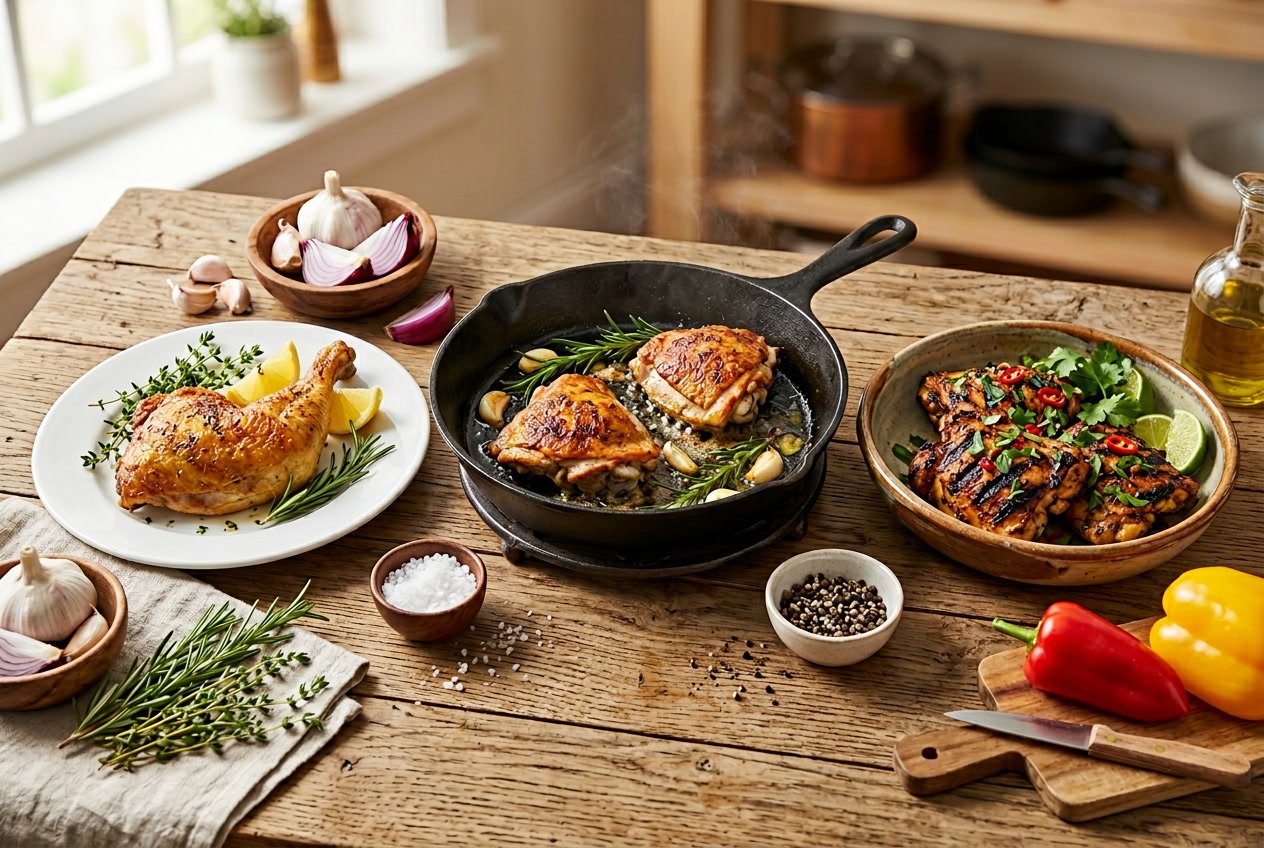
You can get crispy skin, deep braise-like tenderness, or smoky char by choosing the right method and temperature. Control surface dryness, heat source, and timing to hit the texture you want.
Baked Chicken Thighs
Baking gives you hands-off, reliable results for both bone-in and boneless thighs. Preheat the oven to 400–425°F, place thighs skin-side up on a wire rack over a rimmed sheet pan, and roast until the internal temp reaches 175°F for bone-in or 165–170°F for boneless.
Use a rack so fat drips away and hot air crisps the skin. Pat the skin dry and season well; a light dusting of baking powder in the rub speeds browning and crispness.
Bone-in thighs need about 35–45 minutes. Boneless take 20–30 minutes.
If you want extra-crispy results, finish under a high broiler for 2–4 minutes, watching closely to avoid burning.
Grilled Chicken Thighs
Grilling adds char and a smoky note that pairs well with bold marinades or dry rubs. For bone-in, use a two-zone fire: sear skin-side down over direct high heat for 5–6 minutes, then move to indirect heat and cover until the meat hits 175°F (about 20–25 more minutes).
For boneless thighs, grill over medium-high and cook 5–7 minutes per side depending on thickness. Manage flare-ups by trimming excess fat and moving pieces away from flames.
Brush with sauce in the last few minutes only. Sugar-heavy sauces will burn if applied too early.
Slow Cooker Chicken Thighs
The slow cooker turns thighs into shreddable, deeply flavored meat with minimal effort. Add liquid (stock, sauce, or tomatoes) so the thighs remain moist and cook on low for 6–7 hours or high for 3–4 hours.
Bone-in thighs benefit from longer, lower heat because the collagen converts to gelatin, creating a silky texture perfect for tacos, stews, or sandwiches. If you want any skin texture, transfer thighs to a hot oven or broiler for 3–5 minutes after slow cooking.
Avoid over-salting before long cooks; flavors concentrate during extended simmering.
One-Pan and Sheet Pan Chicken Thigh Dinners
You can get a full meal with minimal cleanup by roasting chicken thighs alongside vegetables or baking them into hearty casseroles. Focus on even-size vegetables, high oven heat for crisp skin, and timing so starches and protein finish together.
Sheet Pan Chicken and Vegetables
Roast bone-in or boneless chicken thighs on a hot sheet pan with potatoes, Brussels sprouts, carrots, or broccoli. Pat the thighs dry, season with salt, pepper, and a flavoring like smoked paprika, za’atar, or a honey-harissa glaze.
Arrange vegetables in a single layer so air circulates and everything browns evenly. Use a preheated pan or 425–450°F oven to crisp skin without overcooking.
Toss root vegetables in oil and salt. Add quicker-cooking items like asparagus or cherry tomatoes during the last 10–15 minutes.
Finish with a sprinkle of Parmesan or a squeeze of lemon. Leftover roasted chicken and vegetables work well in salads, grain bowls, or reheated with pasta.
Chicken and Rice Casseroles
Build a casserole that keeps thighs juicy by combining seared or partially roasted thighs with rice, stock, aromatics, and vegetables before baking. Choose long-grain or wild rice blends; wild rice needs longer liquid time, so par-cook if using mixed varieties to avoid dry edges.
Layer flavors by sautéing onions, garlic, and mushrooms, then add rice and stock with herbs like thyme. Nestle thighs skin-side up so they brown while the rice steams.
For creamy textures, stir in a bit of cream, sour cream, or cheese toward the end of baking. You can adapt this template into a chicken enchilada casserole by swapping rice for tortillas, adding enchilada sauce and cheddar.
Or turn it into chicken and dumplings by using biscuit dough topping and more broth for a stew-like finish.
Braised, Stewed, and Instant Pot Chicken Thigh Dishes
These approaches emphasize long, moist cooking to tenderize thighs and concentrate flavor. You can brown, choose liquids, and select the best method for your timing and texture goals.
Braised Chicken Thighs
Start braising with a hot sear to develop a deep brown crust, then finish in a shallow braising liquid. Use bone-in, skin-on thighs for the best flavor and mouthfeel because they render fat that enriches the sauce.
Common braising liquids include stock plus wine, canned tomatoes, or a mix of citrus and honey for a brighter finish. Aromatics like onion, garlic, and carrots, plus a bay leaf and herbs such as thyme, build the base.
Cook at a gentle simmer in the oven at 325°F or on the stove until the meat pulls easily from bone, usually 45–75 minutes depending on size. Finish by skimming fat and reducing the braising liquid to a glossy sauce.
Serve over mashed potatoes, polenta, or crusty bread to soak up the juices.
Instant Pot Chicken Thighs
The Instant Pot cuts braising and stewing times dramatically while still producing tender thighs. You can cook fresh or frozen thighs; set high pressure for about 10–15 minutes for boneless and 12–18 minutes for bone-in, with a natural release for best texture.
Use the Sauté function first to brown skin and develop fond. This step improves depth of flavor in recipes like chicken cacciatore or chicken adobo.
Add a cup or more of liquid (stock, wine, or a mix of soy and vinegar for adobo). For layered dishes such as biryani or butter chicken, pressure-cook aromatics, then finish with yogurt or cream off heat.
The Instant Pot also works well for saucy recipes like teriyaki, curry, and tagine-style dishes. Thighs remain juicy because pressure traps steam.
Thicken the sauce afterwards with a quick reduction or cornstarch slurry.
Slow Cooker Saucy Chicken
The slow cooker excels at set-it-and-forget-it saucy chicken that benefits from low, long heat. Use bone-in thighs and plan 4–6 hours on High or 6–8 hours on Low for fork-tender results.
Sauces range from tomato-based cacciatore and barbecue to coconut curry and adobo-style braises. Consider browning thighs first to concentrate flavor.
Add sturdy vegetables (potatoes, carrots) early and delicate items (peas, bell peppers) in the last hour. For slow-cooker BBQ chicken thighs, add sauce in the final 30–60 minutes to prevent burning and to keep sugars from over-concentrating.
If you need a thicker sauce, remove the lid in the last 30 minutes or lift thighs and reduce the liquid on the stovetop. The result is shreddable, well-seasoned meat that pairs with rice, noodles, or toasted buns.
Global Flavors & Saucy Creations with Chicken Thighs
Chicken thighs take marinades, braises, and glazes exceptionally well. Use them for rich curries, sticky glazes, slow braises, or quick pan sauces that soak into the dark meat and stay tender through longer cooking.
Chicken Curry and Asian-Inspired Dishes
Use bone-in or boneless thighs for curries because the fat keeps the meat moist during simmering. For Indian-style chicken curry, brown thighs first, then simmer in a tomato-onion base with garam masala, turmeric, and coconut milk for a saucy finish that clings to rice or naan.
In Korean dishes, marinate thighs in gochujang, soy, garlic, and sesame. Grill or roast to create spicy, caramelized gochujang chicken.
The thigh’s fat helps the glaze stick and develop char. Japanese-style preparations like oyakodon benefit from sliced boneless thighs.
Quickly cook thighs with dashi, soy, mirin, and sugar. Pour beaten egg over the meat and serve on steaming rice for a silky chicken-and-egg rice bowl.
Teriyaki chicken also works well with thighs. Sear, then reduce a soy-sake-mirin glaze until glossy.
Mediterranean and Italian Chicken Thigh Recipes
For Italian chicken thighs, use braising liquids like crushed tomatoes, white wine, and herbs. Brown thighs with onions, peppers, mushrooms, tomatoes, and a splash of red wine for chicken cacciatore.
Simmer until the sauce reduces and coats the meat. Mustard chicken benefits from a pan-gravy: sear thighs, deglaze with white wine, then whisk in Dijon and cream or stock for a tangy sauce.
Roasted Mediterranean thighs take olive oil, lemon, oregano, and garlic. Marinate briefly, roast at high heat, and serve with roasted vegetables or orzo.
These methods emphasize herbs and acidity to balance the thigh’s fattiness.
Latin American and Tex-Mex Chicken Thigh Dishes
Use thighs in slow-simmered classics like chicken adobo and shredded fillings. For adobo, braise thighs in soy, vinegar, garlic, and bay leaves.
Reduce the sauce until glossy and spoon it over rice. Shredded thigh meat also works for chicken tacos and enchiladas—braise with chiles and cumin, then assemble fresh tortillas.
Tex-Mex favorites include green chile chicken and white chicken chili. Roast or simmer thighs with roasted green chiles, onions, and cumin for a stew-like filling.
For white chicken chili, shred poached or roasted thighs and simmer with white beans, poblano, and tomatillo or green chiles for a creamy, savory bowl. Marinated chicken thighs (lime, cumin, garlic) make fast carnitas-style tacos when grilled and rested before chopping.
BBQ and Southern-Style Chicken Thighs
Bold sweet-savory glazes and low-and-slow barbecue approaches make chicken thighs shine. For classic BBQ chicken thighs, apply a dry rub, smoke or roast slowly, then brush barbecue sauce on toward the end to prevent burning.
Honey garlic chicken thighs and bourbon chicken use the same method. Build flavor in the pan, then finish with a sticky glaze of honey, soy, garlic, or bourbon-reduced sauce for a glossy coating.
Southern-style preparations include pan-fried or oven-fried thighs with crisp skin. Brining or marinating first helps keep them moist.
Use thighs in brothy dishes as well. Chicken tortilla soup and hearty braises benefit from thigh meat, which stays together under long simmering and absorbs spices without drying out.
Quick Weeknight Ideas with Chicken Thighs
Choose chicken thighs for fast, reliable dinner proteins that stay juicy and handle bold flavors well. Use a high-heat sear or a quick marinade and plan one-pan sides for easy cleanup.
Air Fryer and Seared Chicken Thighs
Air fryers crisp skin quickly and give you crispy chicken thighs without extra oil. Pat the skin dry, season with salt, pepper, and smoked paprika, then air fry at 400°F (200°C) for 18–22 minutes, flipping once. Make sure the internal temperature reaches 165°F (74°C).
Bone-in, skin-on thighs stay juicier than boneless in this method. For stove-to-oven seared chicken thighs, heat a heavy skillet until very hot, add a thin layer of oil, and sear skin-side down for 6–8 minutes to build a brown crust.
Transfer the skillet to a 400°F oven for 8–12 minutes to finish. This method gives you seared chicken thighs with crisp skin and a tender interior.
Serve with quick pan sauces. Deglaze with white wine or chicken stock, add butter and herbs to keep the meat moist and flavorful.
Marinated and Meal Prep Options
Marinating boosts flavor and helps keep chicken thighs juicy. Use an acidic base like yogurt, lemon, or vinegar with oil, garlic, and spices. Marinate 30 minutes for thin cuts or up to 12 hours for bone-in pieces.
Try a simple mix: 1/2 cup plain yogurt, 2 tablespoons lemon juice, 2 cloves minced garlic, 1 teaspoon cumin, and salt. This works for grilling, baking, or air frying.
For meal prep, roast or bake a tray of thighs at 425°F for 25–30 minutes. Cool and portion with grains and roasted vegetables.
Store in airtight containers in the fridge for up to 4 days. Reheat gently in the oven or air fryer to restore crispy skin, or slice and toss into salads and wraps for quick meals.
Comfort Food and Soup Recipes Using Chicken Thighs
Chicken thighs add rich flavor, tender meat, and body to broths and stews. Use bone-in thighs for deeper stock, or boneless for quicker shredding and easier eating.
Chicken Soup and Stews
Build a savory base by simmering 1–2 pounds of bone-in chicken thighs with onion, carrot, celery, and a bay leaf for 30–45 minutes. Remove the thighs, shred the meat, and return it to a strained broth for a clearer soup.
For a heartier stew, brown thighs first to develop flavor, then deglaze the pan with wine or stock before adding root vegetables and herbs. Slow-simmer vegetables like potatoes and parsnips until tender.
The fat from thighs enriches the mouthfeel, so you can use less butter or cream. Season gradually and finish with fresh parsley, lemon juice, or a splash of vinegar to brighten the pot.
Freeze portions without noodles to preserve texture.
Chicken Noodle and Wild Rice Soups
Use boneless chicken thighs for classic chicken noodle soup. Shred them easily for a silkier broth.
Cook the thighs gently in clear stock. Add diced carrots and celery early.
Drop in egg noodles during the last 8–10 minutes so they stay al dente. Toss in fresh dill or parsley at the end.
For chicken and wild rice soup, brown the thighs briefly. Simmer them with long-grain wild rice or a wild rice blend for 35–45 minutes until the grains open and flavors meld.
Add mushrooms or leeks for extra umami. Finish with a splash of cream or coconut milk if you want a creamier texture.
If you plan to have leftovers, cook noodles or rice separately. Add them when serving to avoid soggy results.


