
What Temperature Is Chicken Thighs: Safe Cooking & Juicy Results
You want a simple, reliable answer so your chicken thighs turn out safe and delicious every time.
Cook chicken thighs to at least 165°F for safety, but for the best tenderness and flavor aim for 175–195°F depending on whether you prefer a juicy bite (around 175°F) or meltingly tender, collagen-broken-down meat (190–195°F).
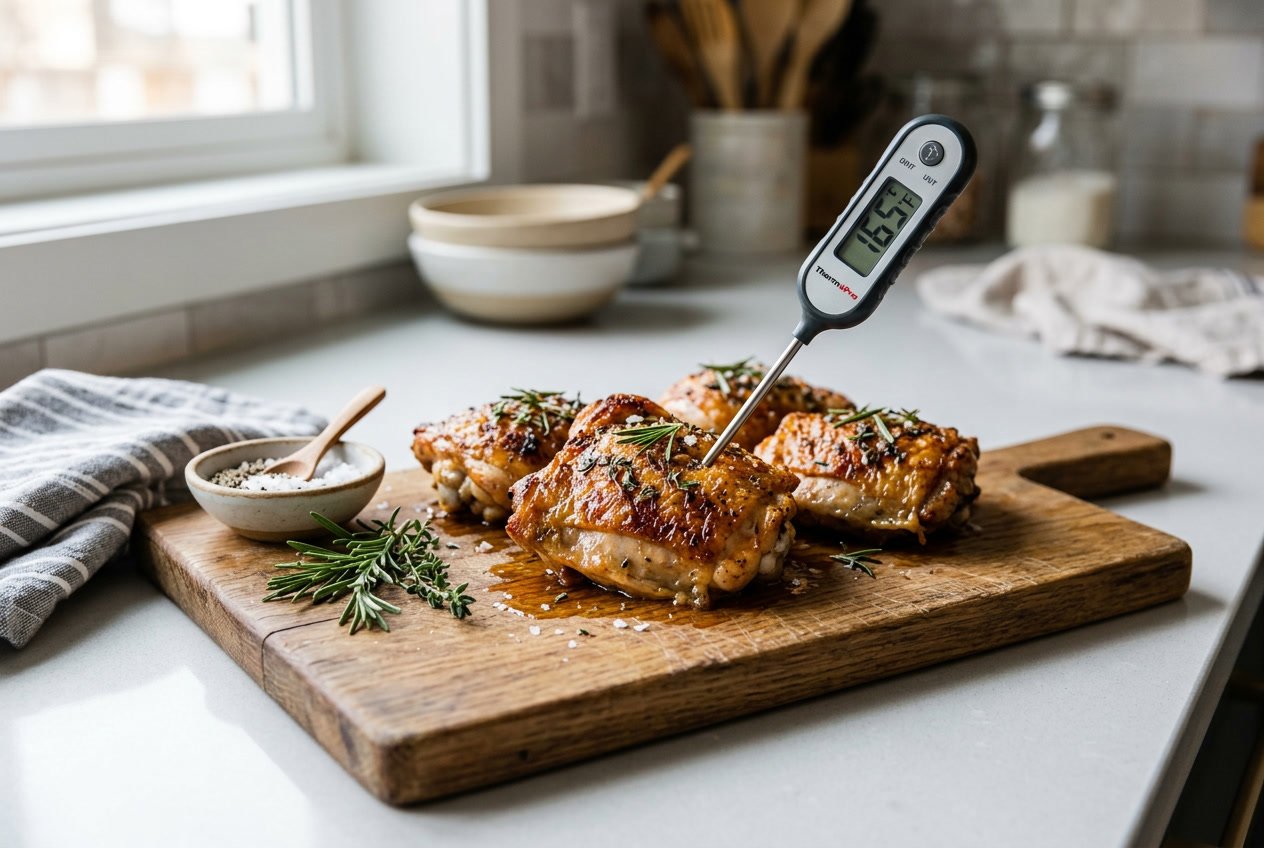
Learn how to check temperature accurately with an instant-read thermometer.
Different cooking methods can favor lower or higher end temps, and time-at-temperature affects both safety and texture.
Follow these techniques and food-safety limits to get consistent results from roasting and grilling to braising and sous-vide.
Recommended Internal Temperature for Chicken Thighs
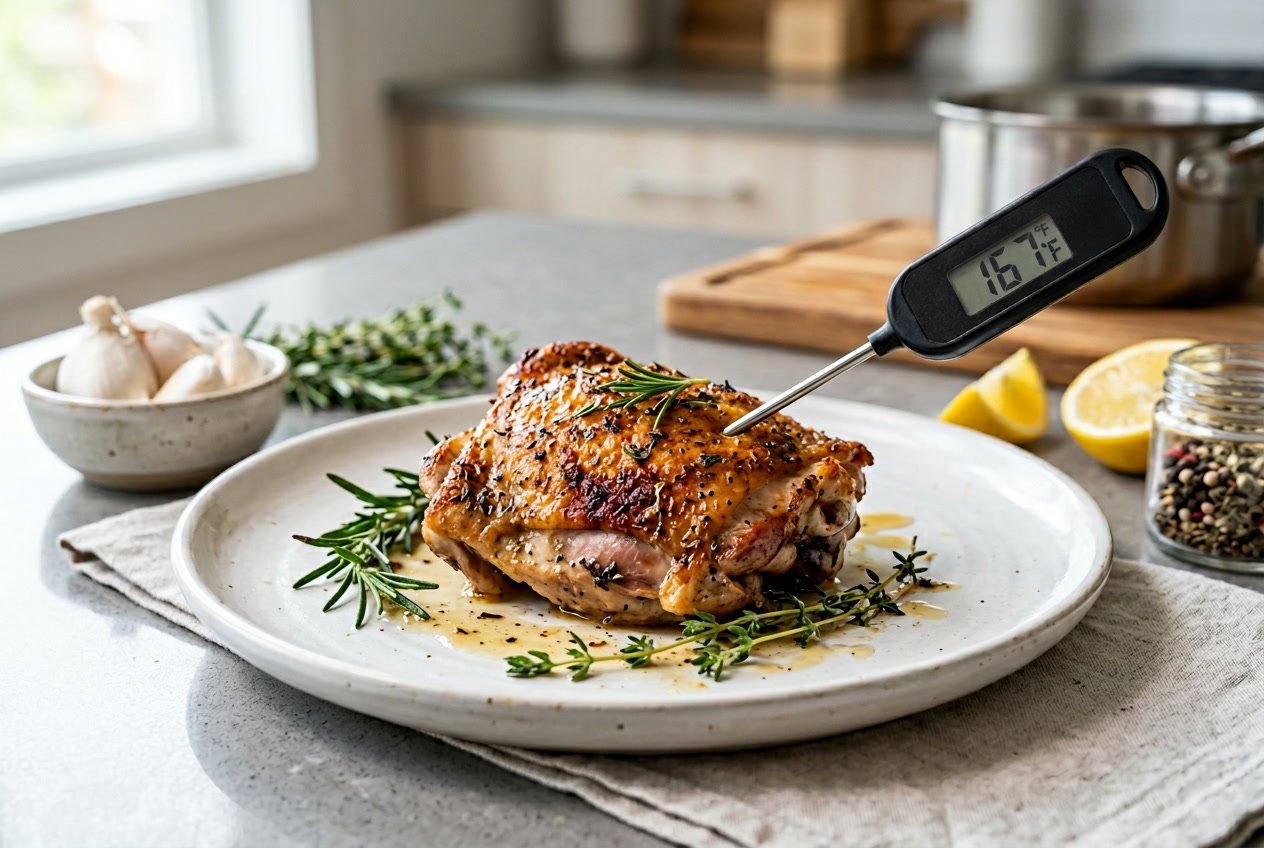
Cook dark meat to a safe minimum and understand how higher temperatures change texture.
Use an instant-read thermometer in the thickest part of the thigh, avoid bone contact, and target a temperature that matches your preferred texture.
USDA Guidelines and Food Safety
The USDA recommends cooking all poultry to an internal temperature of at least 165°F (74°C) measured with a reliable instant-read thermometer.
That 165°F target ensures pathogens like Salmonella are destroyed when the meat reaches the temperature throughout.
Insert the probe into the thickest part of the thigh, keeping it at least 1/4 inch from bone for an accurate reading.
If you prefer lower endpoint temperatures, remember that time at temperature matters: lower temps require longer hold times to achieve the same level of microbial kill.
For home cooks, following the USDA 165°F (74°C) guideline is the simplest and safest approach.
Ideal Temperature for Juicy and Tender Thighs
For more tender, fall-off-the-bone thighs, many chefs recommend letting dark meat climb higher than the USDA minimum.
A practical range is 175–195°F (79–91°C).
At 175°F the meat becomes noticeably more tender.
By 190–195°F connective tissue has broken down into gelatin, producing a very soft, succulent texture.
Use higher targets for roasting or braising.
Pan-searing or quick roasting can finish at 165–175°F for a firmer bite.
Avoid exceeding about 210°F, where the meat can turn stringy and lose its characteristic flavor.
Why Dark Meat Differs from White Meat
Chicken thighs contain more connective tissue and intramuscular fat than breasts.
This extra collagen breaks down into gelatin as you heat the meat, so thighs often improve with higher temperatures and longer cooking time.
White meat is leaner and dries out if taken much above 165°F (74°C).
Dark meat tolerates—and often benefits from—temperatures up to 195°F because the extra collagen converts to gelatin, increasing juiciness.
Adjust your target temperature depending on whether you want safety, a firmer bite, or maximum tenderness.
Checking Chicken Thigh Temperature Accurately
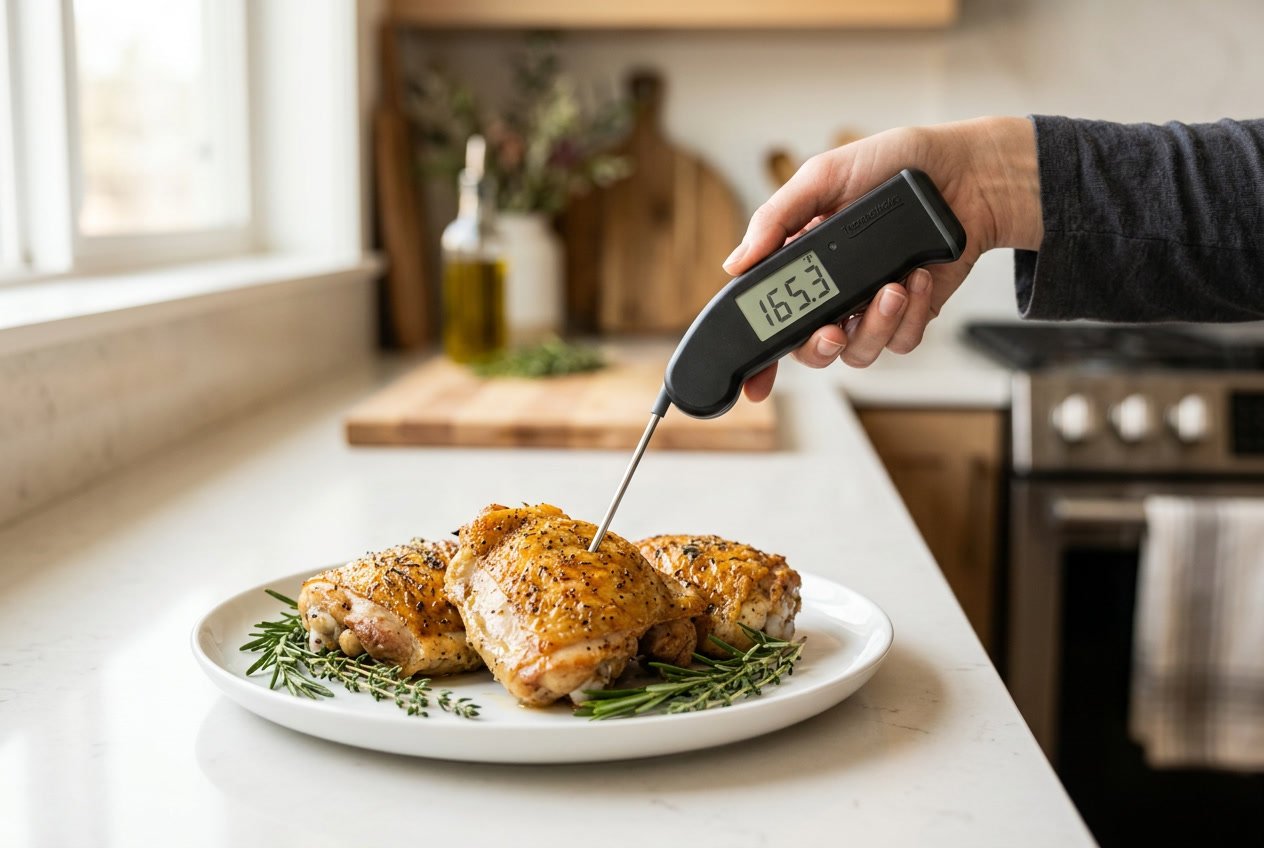
Get reliable readings by using a fast, accurate instant-read thermometer.
Probe the thickest part of the meat away from bone, and account for a few degrees of carryover cooking before resting.
How to Use a Meat Thermometer
Choose an instant-read thermometer rated accurate to ±1–2°F.
Digital models with thin probes penetrate quickly and reduce heat loss.
Calibrate if possible using the ice bath method.
Let the probe stabilize between uses to avoid lagging readings.
Insert the probe into the thickest part of the thigh.
For bone-in pieces, angle the probe so the tip sits at least 1/4 inch from bone and centered in meat.
For boneless thighs, aim for the center of the thickest cross-section.
Wait for a steady number—most quality thermometers update in 2–5 seconds.
Take multiple readings on different pieces when cooking a batch.
Clean and sanitize the probe between checks.
Where to Measure on Bone-In and Boneless Thighs
For bone-in thighs, insert the probe from the underside or side so the tip ends in the meatiest area, at least 1/4 inch from the bone and midway through the flesh.
With boneless thighs, probe straight down into the thickest spot.
Avoid hitting gristle or thin edges.
If thickness varies, test the thickest pieces—those determine total cook time.
If you cook several thighs together, check two or three locations across the pan or tray.
Inconsistent placement or crowded pans can create hot and cool zones that produce mixed doneness.
Best Practices for Consistent Results
Target a safe minimum of 165°F, but expect juicier thighs if you finish them between 175–195°F for more collagen breakdown.
Account for 3–10°F of carryover cooking while the thighs rest, especially larger or bone-in pieces.
Take readings toward the end of cooking and again after a short rest to verify final temperature.
Use the thermometer probe quickly to avoid heat loss, and verify accuracy periodically with an ice-water or boiling-water check.
Keep a log of times, temps, and methods so you can reproduce results.
Proper placement, a quality instant-read thermometer, and factoring carryover cooking together give consistent, safe, and tender chicken thighs.
Cooking Techniques and Methods
Choose a technique based on time, desired skin crispness, and whether thighs are bone-in or boneless.
Temperature control and where you check the internal temp matter more than cooking time alone.
Oven Baking and Roasting Temperatures
Roast bone-in, skin-on thighs at 375°F (190°C) for even cooking and moderate browning.
Expect roughly 35–45 minutes depending on size; check the thickest part without touching bone.
For crisper skin, raise the oven to 400–425°F (204°C) for the last 10–15 minutes or start at 425°F and drop to 375°F after 10 minutes.
Use a rimmed sheet or a roasting pan and arrange thighs skin-side up with space between pieces to allow hot air circulation.
If you use a convection oven, reduce the set temperature by about 25°F (15°C) or shorten cooking time.
Rest thighs 5–10 minutes after removing from the oven to let juices redistribute and finish rising a few degrees.
Grilling Chicken Thighs
Grill bone-in thighs over indirect medium heat to avoid flare-ups.
Aim for a grill surface around 375–400°F; cook 20–30 minutes, turning occasionally, until the internal temp hits 175–185°F for tender meat.
For boneless thighs, use direct medium-high heat (around 400–450°F) and flip once; they typically need 8–12 minutes total.
Sear first over high heat for 1–2 minutes per side for a charred crust, then move to indirect heat to finish.
Always insert a probe into the thickest part away from bone.
Baste or apply sauce in the last few minutes to prevent sugars from burning.
A two-zone fire (one hot, one cooler) gives you control over searing and final cooking.
Broiling, Searing, and Pan-Frying
Broiling applies intense top heat.
Position thighs 6–8 inches from the element and broil at 450°F (232°C) for short bursts to brown skin.
Watch closely; broiling can char quickly.
Finish by moving to a lower rack or reducing heat to avoid overcooking the interior.
Sear in a hot skillet to create a Maillard crust.
Heat oil until shimmering, sear skin-side down for 4–6 minutes, then flip and reduce heat to finish to 175–185°F.
Use an oven-safe pan if you plan to transfer to a 375–400°F oven to complete cooking.
For pan-frying, maintain consistent medium-high heat and don’t overcrowd the pan.
Cook in batches if needed; this preserves pan temperature and gives even browning.
Optimizing Flavor and Texture
Build layers of flavor before cooking, control surface moisture for crisp skin, and use salt-based brines to retain juice while breaking down connective tissue.
Seasoning and Marinading Chicken Thighs
Season thighs generously and early.
Pat the skin dry, then apply kosher salt (about ¾–1 tsp per pound) and freshly ground black pepper.
Salt before cooking helps the meat absorb seasoning and improves texture.
Add aromatics like garlic powder, smoked paprika, and a little brown sugar for balance; rub onto both skin and exposed meat for even flavor.
For marinading, use an acid (lemon, vinegar, or yogurt) combined with oil and aromatics.
Limit acidic marinades to 30–90 minutes for boneless thighs and up to 4 hours for bone-in to avoid mushy proteins.
If you marinate overnight, reduce acid and increase oil and herbs.
Always refrigerate and discard used marinade or boil it before using as a sauce.
Techniques for Crispy Skin
Start with dry skin.
Leave salted thighs uncovered in the fridge for 4–24 hours to dry the skin surface; this promotes browning.
Before cooking, bring to near room temperature for 20–30 minutes to reduce cook time and improve crisping.
Use high initial heat for skin-side browning: sear in a skillet over medium-high heat until deeply golden, about 6–8 minutes, then finish in a 375°F oven until the internal temperature reaches your target.
Alternatively, roast at 425°F for 25–35 minutes for quicker crisping.
For oven-roasted thighs, finish under a broiler for 1–2 minutes to sharpen the skin—watch constantly to avoid burning.
Brining for Juiciness
Use a basic wet brine: 1 cup kosher salt per gallon of water, plus ¼–½ cup sugar and aromatics (bay leaf, peppercorns, garlic).
Submerge thighs for 1–4 hours for boneless and 4–8 hours for bone-in.
Rinse briefly and pat dry before seasoning to avoid over-salty crusts.
For a quicker option, use a dry brine: sprinkle ½–¾ tsp kosher salt per pound, refrigerate uncovered for 4–24 hours.
The dry brine draws out moisture, then reabsorbs it, producing more tender, juicy chicken and helping the skin crisp during cooking.
Both methods reduce moisture loss and contribute to juicier chicken once the meat reaches your chosen internal temperature.
Understanding Food Safety Risks
Treat chicken thighs as a potential source of harmful bacteria.
Handle, cook, and store them with specific steps to protect yourself.
Focus on internal temperature, cross-contamination control, and proper refrigeration to reduce risk.
Dangers of Undercooking Chicken
Undercooked chicken can carry live pathogens that cause vomiting, diarrhea, fever, and sometimes severe complications.
Eating thighs that haven’t reached a safe internal temperature exposes you to those risks because harmful bacteria survive below the recommended heat threshold.
Symptoms often appear within hours to days and can require medical care, especially for children, pregnant people, older adults, or anyone with a weakened immune system.
Use a calibrated instant-read thermometer in the thickest part of the thigh—avoid touching bone—to confirm doneness rather than relying on color or juices.
Common Bacteria in Chicken Thighs
Salmonella and Campylobacter are the bacteria most commonly linked to raw poultry.
Both can colonize the surface and interior of thighs and only die when the meat reaches sufficient internal temperature.
Salmonella often causes high fever and abdominal cramps.
Campylobacter typically causes bloody diarrhea and cramping.
Both can lead to dehydration or secondary complications in vulnerable people.
Proper cooking and avoiding cross-contamination stop these organisms from reaching your plate.
Prevention of Foodborne Illness
Cook thighs to at least the USDA-recommended safe minimum internal temperature measured with a thermometer.
Insert the probe into the thickest part, not touching bone, and verify multiple spots if pieces vary in size.
Prevent cross-contamination by keeping raw chicken separate from ready-to-eat foods.
Wash hands and surfaces after contact, and sanitize utensils and cutting boards.
Refrigerate at 40°F (4°C) or below within two hours of cooking.
Discard leftovers after 3–4 days.
Storage and Handling After Cooking
Cool cooked chicken thighs quickly, store them airtight, and label with the date so you can track freshness.
Keep your refrigerator at or below 40°F (4°C) and refrigerate within two hours of cooking.
Proper Storage of Leftover Chicken Thighs
Place cooled thighs into shallow airtight containers or heavy-duty resealable bags to speed chilling and reduce bacterial growth.
Remove as much air as possible and divide large batches into meal-sized portions so you only thaw what you need.
Store cooked thighs on the lowest fridge shelf to prevent cross-contamination.
Consume them within 3–4 days.
If you won’t eat them in that window, freeze them flat in labeled bags.
Raw-quality texture is best if frozen within a few days, and cooked thighs keep well in the freezer for 2–6 months depending on packaging.
Always check for spoilage before reheating.
An off odor, slimy surface, or unusual color means you should discard the chicken.
Reheating Tips for Quality and Safety
Heat leftovers to an internal temperature of 165°F (74°C) to ensure safety. Check the thickest part of the thigh with an instant-read thermometer, avoiding the bone.
Try these reheating methods:
-
Oven: Set the oven to 325–350°F (160–175°C). Cover with foil for even heating and heat for 15–25 minutes, depending on portion size.
-
Stovetop: Slice the meat and cook it in a skillet over medium heat. Add a splash of broth to keep the meat moist.
-
Microwave: Cover the meat and rotate it while heating. Check the temperature in several spots and let it rest for one minute.
Reheat only once. If you thaw frozen thighs in the microwave or cold water, cook them right away.


