
What Temperature Chicken Thighs: The Guide to Juicy, Safe Results
You want juicy, safe chicken thighs with crisp skin. Aim for an internal temperature of 165°F (74°C) for safety. Many cooks pull dark meat a bit higher (175–195°F) for fork-tender texture.
Your choice of finish temperature depends on whether you prioritize moistness or fall-apart tenderness.
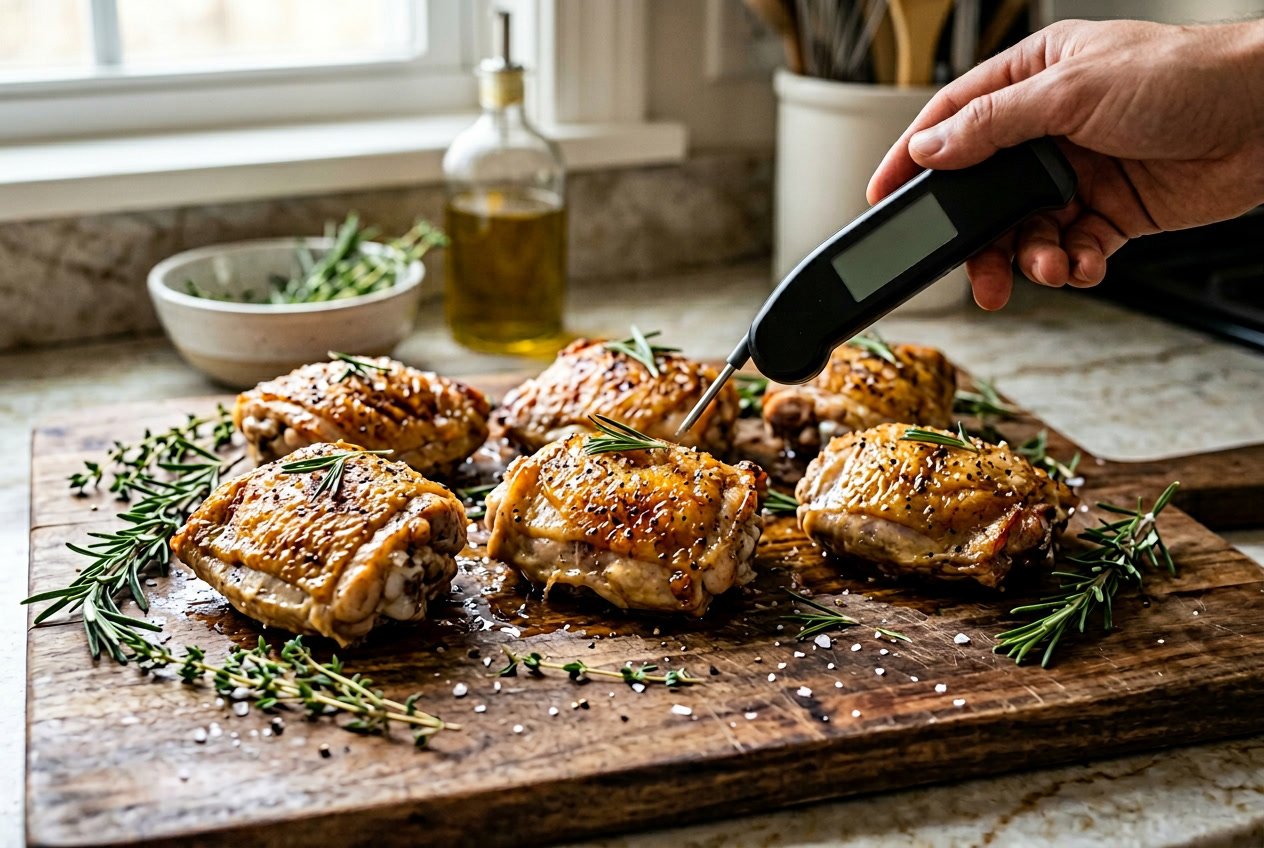
Use an instant-read thermometer to check the internal temp in the thickest part of the thigh. That single check makes the difference between underdone poultry and a perfect dinner.
This guide explains why temperature matters, how to measure it, which oven temps and cooking methods work best, and how timing and flavor techniques affect the final result.
Optimal Internal Temperature for Chicken Thighs
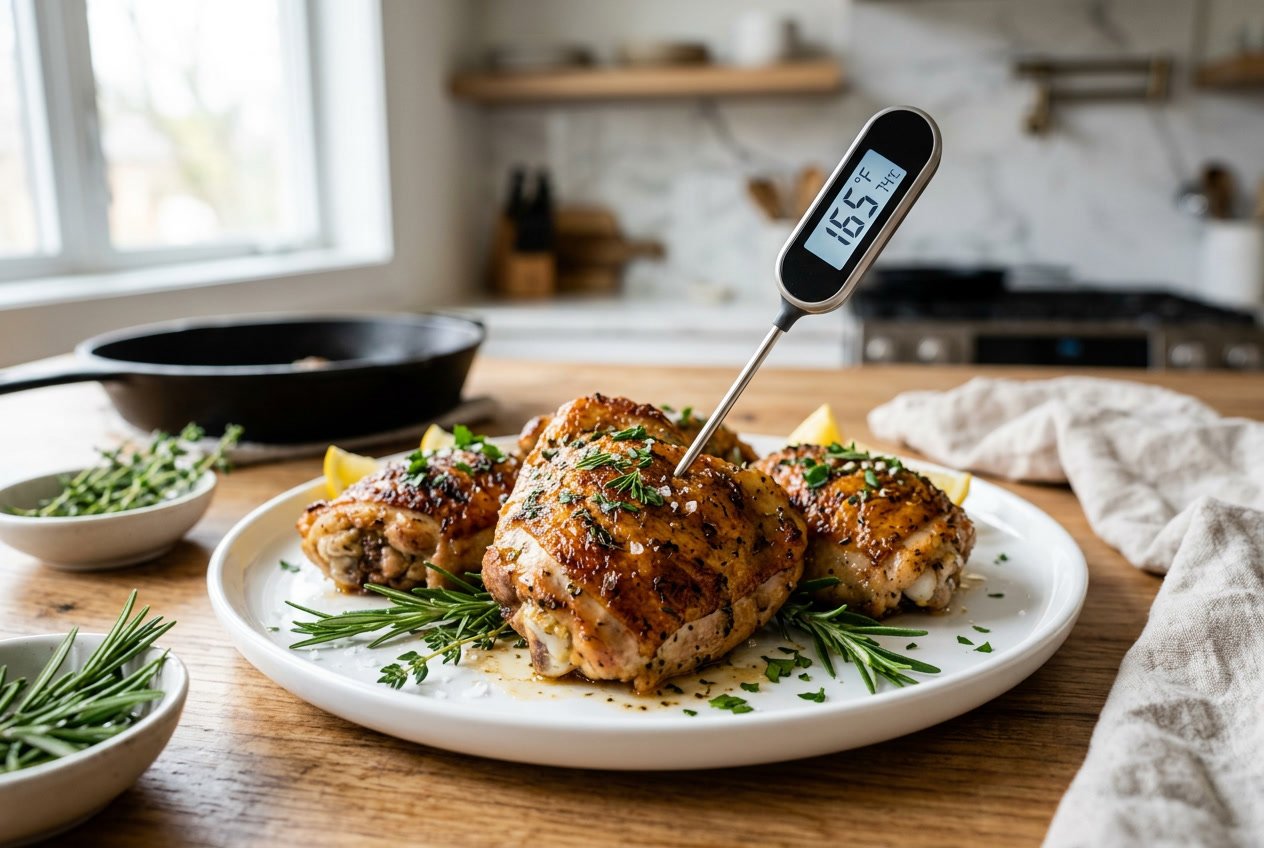
Target temperatures that ensure safety and maximize tenderness. Measure the thickest part of the thigh (avoiding bone) with an instant-read thermometer for accuracy.
USDA Safe Minimum Internal Temperature
The USDA sets the safe minimum internal temperature for all poultry at 165°F (74°C). Insert an instant-read thermometer into the thickest part of the thigh, at least 1/4 inch away from bone, and confirm the temperature for a few seconds.
Reaching 165°F kills common pathogens like Salmonella when the temperature is achieved throughout the meat. If you hold the thigh at slightly lower temperatures, maintain that temperature for longer to achieve equivalent pathogen reduction.
For home cooking, following the 165°F guideline is the simplest and most reliable method to ensure safety.
Best Temperature for Tender, Juicy Results
Chicken thighs become more tender as connective tissue converts to gelatin between 175°F and 195°F (79–91°C). Cooking thighs to about 175°F (79°C) improves juiciness and texture while still clinging to the bone.
Pushing toward 190–195°F produces very soft, almost fall-off-the-bone meat because collagen has more fully broken down. Use gentle, even heat—slow roasting, braising, or indirect grilling—to keep the meat in the collagen-conversion range longer.
Rest the thighs 5–10 minutes after cooking. Carryover heat can raise the internal temperature a few degrees and redistribute juices.
For consistent results, use an instant-read thermometer rather than relying on cooking times.
Risks and Drawbacks of Overcooking
If you exceed 205–210°F (96–99°C), the meat becomes stringy and loses characteristic chicken flavor. Overcooking dries out lean cuts like breast, but thighs can still suffer from a grainy texture and diminished juiciness.
Other drawbacks include loss of flavorful juices and tougher mouthfeel if you apply high, fast heat without allowing collagen to convert. Prevent overcooking by monitoring temperature and using appropriate methods.
Remove thighs from heat when they reach your target temperature to avoid overshoot during resting.
How to Measure Internal Temperature Accurately
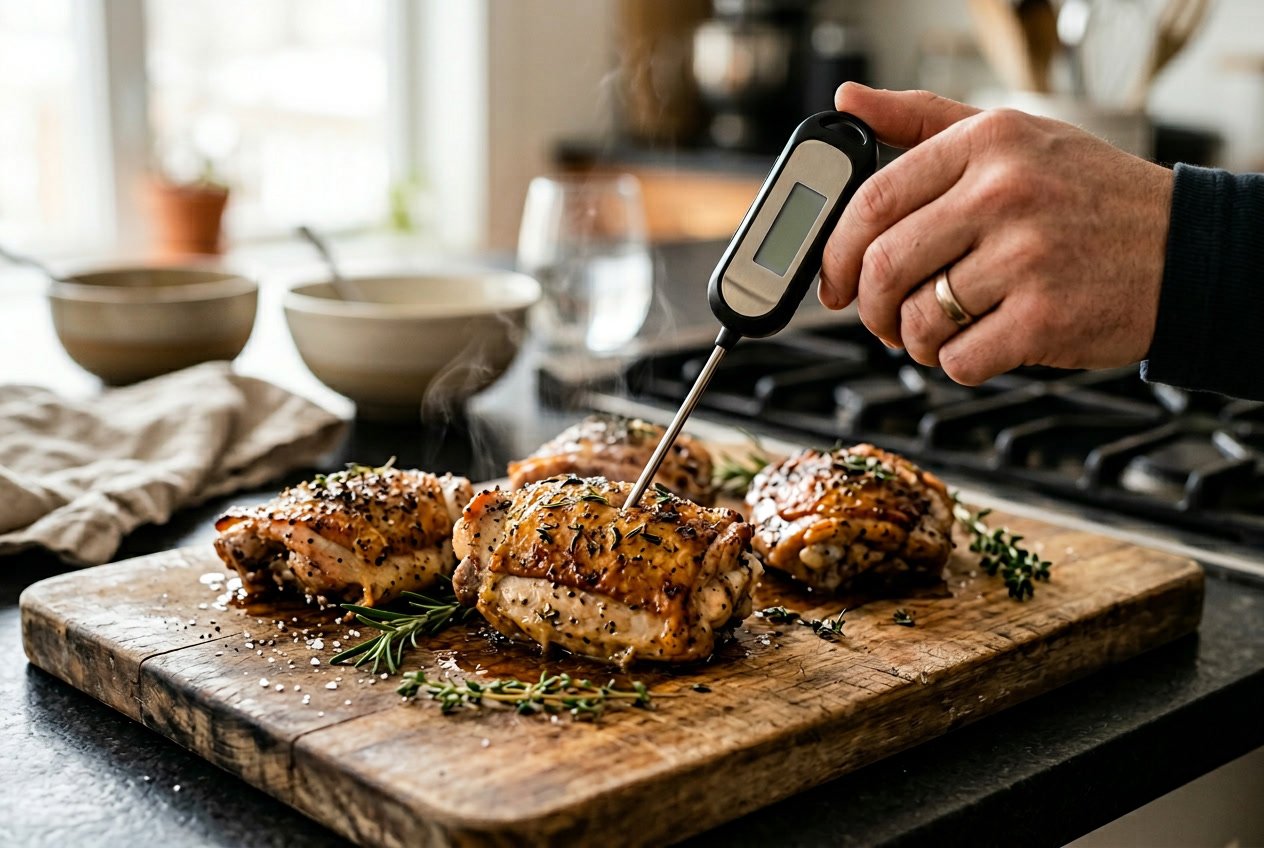
Use a reliable thermometer, steady technique, and correct placement to know when thighs are done and safe. Measure the thickest part, avoid the bone, and allow a short rest for the temperature to stabilize.
Using a Meat Thermometer Correctly
Choose a calibrated meat thermometer designed for poultry or a digital instant-read model. Insert the probe into the thickest part of the thigh, avoiding bone or gristle, for the most representative reading.
If you use a leave-in probe for roasting, place it early and monitor the reading without opening the oven often. For electric or dial oven probes, set an alert a few degrees below your target to allow for carryover during resting.
Clean and sanitize the probe between uses to prevent cross-contamination. Occasionally check calibration with the ice-water or boiling-water method.
Replace batteries or probes that lag or fluctuate.
Instant-Read Thermometer Tips
Use an instant-read meat thermometer for quick checks just before you think the thighs are done. Insert the probe sideways into the thickest part, push at least 1–2 inches into the meat, then wait for a stable digital reading.
Avoid leaving an instant-read thermometer in the oven. Probe through the skin after removing the pan or during a brief oven pause.
Carryover heat will raise internal temp by 3–5°F, so consider pulling bone-in thighs at 175°F if you want them tender. Pull boneless at 165°F.
Store and handle the instant-read carefully. Don’t dunk the display in hot liquids and recalibrate if readings drift.
Thermometer Placement and Avoiding Bones
Place the probe tip in the center of the thickest muscle, not near the surface or the bone. Bone conducts heat, so touching it gives a falsely high reading and can make you undercook the meat elsewhere.
If the thigh is uneven, aim for the deepest portion of the flesh, angling the probe parallel to the bone but stopping short of contact. For bone-in thighs, insert from the side toward the bone and then retract slightly to ensure the tip sits in flesh.
For boneless thighs, insert vertically into the center. When using a wire probe during cooking, check multiple thighs if sizes vary.
Oven Temperatures and Baking Chicken Thighs
Choose an oven temperature that balances safety, cook time, and crispness. The target internal temperature remains 165°F (74°C). Oven choice controls how quickly you reach it and how the skin and texture develop.
Recommended Oven Temperature Ranges
Use 350–450°F (175–230°C) depending on your priorities. Bake at 375°F (190°C) for even cooking and tender meat with moderate crispness.
Bone-in thighs take roughly 35–45 minutes. Boneless thighs take about 25–35 minutes.
If you want crisp skin faster, raise the oven to 425°F (220°C) and check at 30–40 minutes for bone-in. At 450°F (232°C) you can brown quickly but risk uneven cooking.
Use this quick guide:
- 350°F (175°C): gentler roast, juicier interior, longer time.
- 375°F (190°C): balanced bake for most home ovens.
- 425°F (220°C): best for crisp skin without broiling.
- 450°F (232°C): high-heat finish or quick roast; monitor doneness.
Preheat fully and check internal temperature in the thickest part, avoiding bone contact.
Differences Between Bone-In and Boneless
Bone-in chicken thighs cook more slowly because the bone absorbs heat and changes heat distribution. Bone-in pieces need about 10–15 minutes more than boneless at the same oven temperature.
Measure doneness at the thickest meat, not near the bone, and target 165°F (74°C). Bones can make the meat near them seem hotter, so use an instant-read thermometer toward the center.
Boneless thighs cook faster and more evenly on a sheet pan. They take less time at 375°F (190°C)—often 20–30 minutes—and respond well to quick searing before baking.
If you switch between bone-in and boneless, reduce or increase time by roughly 25–40% rather than changing the oven temperature dramatically.
Skin-On Versus Skinless Chicken Thighs
Skin-on thighs need higher surface heat to render fat and crisp the skin. Bake skin-on at 400–425°F (204–220°C) for best crispness; finish under the broiler 1–3 minutes if needed.
Pat skin dry and season before roasting to maximize browning. Skinless thighs dry out faster, so cook them at 350–375°F (175–190°C) and reduce time by several minutes.
Use oil, marinade, or a brief sear to protect moisture. Rest either type 5 minutes after baking to let juices redistribute before serving.
Cooking Methods and How Temperature Impacts Each
Different cooking methods create crisp skin, tender meat, or pull-apart texture. Pay attention to whether thighs are bone-in or boneless and use an instant-read thermometer for precise doneness.
Roasting Chicken Thighs
Roast bone-in, skin-on thighs at 400°F–425°F for 35–45 minutes to get crisp skin and rendered fat. Position thighs skin-side up on a wire rack over a rimmed sheet pan so hot air circulates and drippings fall away.
Check the thickest part near the bone with a thermometer. Pull boneless thighs at 165°F. Pull bone-in at 175°F–185°F for more gelatin and a tender, shredded texture.
Let roast rest 5–10 minutes to redistribute juices before serving.
Tips:
- Pat skin dry and salt ahead for better crispness.
- Avoid covering with foil; that traps steam and softens skin.
Grilling and Sautéing Techniques
For grilling, sear skin-side down over direct high heat for 4–6 minutes, then move to indirect heat. Aim for 175°F for bone-in thighs. For boneless, cook 5–7 minutes per side until 165°F.
Use a two-zone fire to prevent flare-ups from dripping fat. When sautéing in a skillet, start skin-side down in a cold pan to slowly render fat, then raise heat to medium-high.
Flip only once. Cook boneless thighs about 8–12 minutes total; bone-in will take longer and may finish in a 375°F oven to ensure even cooking.
Quick checklist:
- Thermometer placement: thickest part, avoid bone.
- Keep 1–1.5 inches between pieces to avoid steaming.
Slow Cooking and Braising Methods
Use low, steady heat for shreddable, fall-apart thighs. In a slow cooker, cook bone-in thighs on low 6–7 hours or high 3–4 hours.
In a braise, simmer at 180°F–200°F (gentle simmer) until meat reaches 185°F–200°F for maximum collagen breakdown. Pressure-cook (Instant Pot) on high for 10–12 minutes with a natural release for similar tenderness in less time.
After slow cooking, broil or pan-sear briefly if you want to restore some surface color or texture.
Notes:
- Slow methods benefit from higher final internal temp (175°F–185°F+) to convert collagen to gelatin.
- Avoid aiming only for 165°F when you want shred-ready results.
Timing and Resting: How Long to Cook Chicken Thighs
Follow specific oven temps and times for predictable results. Use a probe thermometer and aim for a final reading rather than relying only on minutes.
How Long to Bake Chicken Thighs at Popular Temperatures
Bone-in, skin-on thighs typically take 35–50 minutes depending on oven temp and size. At 375°F (190°C) expect about 45 minutes for average 6–8 oz thighs.
At 400°F (200°C) plan 35–45 minutes. Boneless, skinless thighs cook faster: 20–30 minutes at 400°F, or roughly 30–35 minutes at 375°F.
Use internal temperature as the primary indicator. Insert the thermometer into the thickest part without touching bone.
For safety, reach at least 165°F (74°C). For more tender results aim for 175–185°F (79–85°C) which breaks down connective tissue in thighs.
If you bake thighs with vegetables or in a casserole, expect the longer end of the time range. Crowding the pan or starting from cold ingredients increases cook time by 5–15 minutes.
Flip or rotate the pan halfway for even browning when roasting at higher temperatures.
Resting Chicken Thighs for Juiciness
Rest thighs for 5–10 minutes after you remove them from the oven. Resting allows juices to redistribute.
Keep thighs loosely tented with foil to retain heat without steaming the skin. If you pulled the thighs at 165°F, carryover heating may raise the internal temp a few degrees during rest.
For thighs you cooked to 175–185°F, a short 5-minute rest is usually enough to settle juices and firm the meat for slicing.
When serving with a sauce, rest on a warm plate to preserve temperature. Use residual pan juices to baste during resting if you want extra moisture and flavor on the skin.
Flavor, Marinades, and Test Kitchen Notes
Marinades, surface treatment, and cooking method determine whether thighs deliver deep flavor and crisp skin. Aim for a balance of acid, salt, fat, and aromatics, and use temperature and time to control tenderness and safety.
Marinating Chicken Thighs for Optimal Results
Marinate bone-in or boneless thighs for 30 minutes to 12 hours, depending on intensity. For a quick flavor boost, combine 2% salt by weight, 1–2 tablespoons acid (vinegar or citrus) per pound, 2 tablespoons oil, and aromatics like garlic and herbs.
Use milder acids and add sugar or soy for marinades lasting 6–12 hours to achieve deeper browning. Avoid highly acidic blends beyond 12 hours to prevent a mushy texture.
Pat thighs dry before cooking to concentrate surface flavors and encourage crisping. Reserve or reduce the marinade before using it as a sauce, or make a fresh pan sauce to avoid contamination.
Tips for Crispy and Flavorful Thighs
Dry the skin and use high initial heat for the crispiest results. Start thighs skin-side down in a cold, dry skillet or roast at 425–450°F for 20–30 minutes to render fat and brown the skin quickly.
On the grill, sear over direct heat, then move to indirect heat to finish cooking to the target internal temperature. Use a light coating of oil and a pinch of sugar or soy to enhance browning without burning.
Finish with compound butter or glaze after resting for extra flavor. Rest thighs for 5–10 minutes to let juices redistribute.
Insights from Notes from the Test Kitchen
The Test Kitchen explains that dark meat benefits from longer cooking, which converts collagen into gelatin. Aim for a range of temperatures based on your texture preference.
Their tests show thighs at 175°F are tender. At 190–195°F, thighs become meltingly soft.
Use an instant-read thermometer and insert it into the thickest part, avoiding bone contact for accurate readings. The Test Kitchen recommends gentle techniques like braising or indirect grilling to keep thighs in the collagen-breakdown window longer, which enhances succulence.
A fast, accurate thermometer and a heavy skillet or two-zone grill setup give the most repeatable results. These tools help you achieve both crisp skin and a juicy interior when you marinate chicken thighs.


