
What Temp Is Chicken Thighs Done: Safe, Juicy & Perfect Results
You want chicken thighs that are safe and juicy, not dry or rubbery. Aim for an internal temperature of about 175°F for tender, fully cooked thighs. Consider 190–195°F if you want them meltingly tender. 165°F is the USDA minimum for safety but often yields firmer texture.
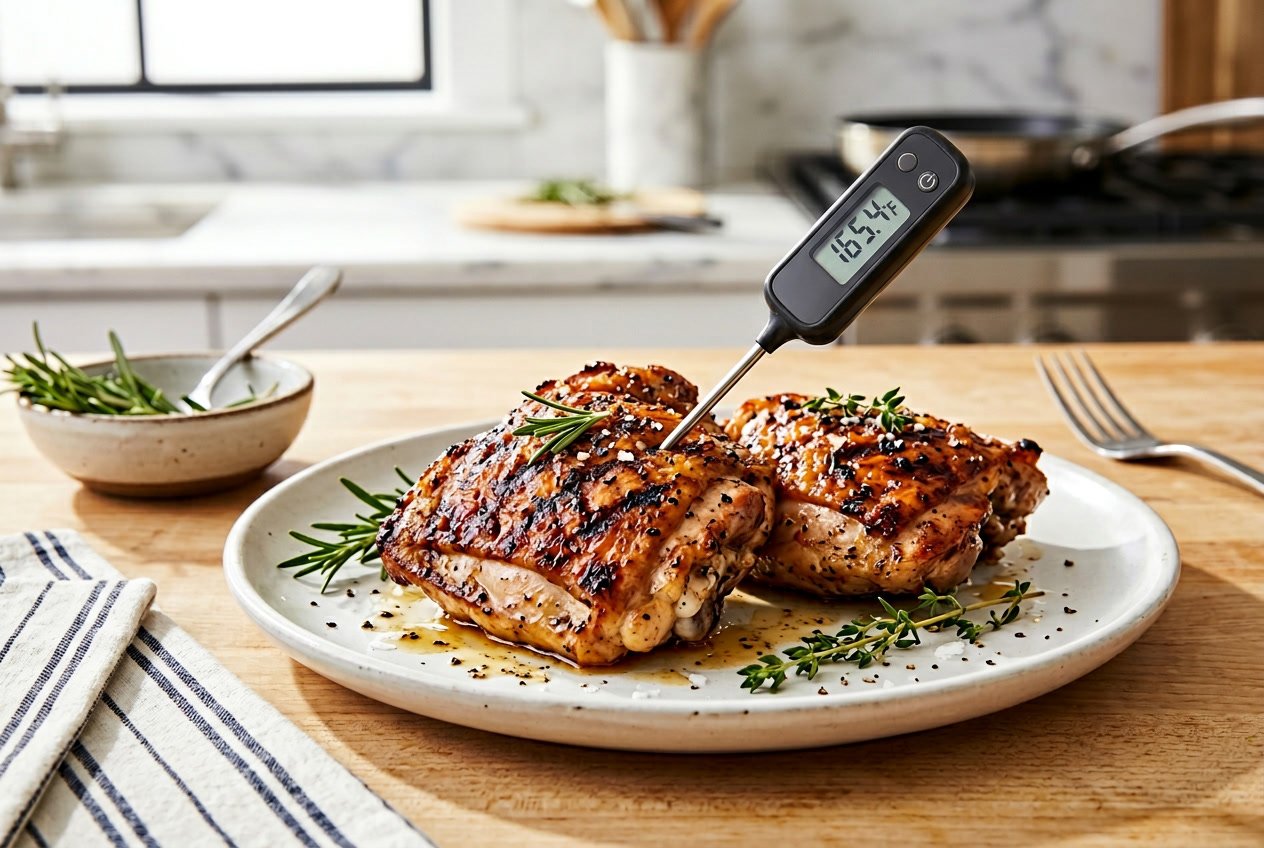
The target temperature shapes how long you cook, your choice of roasting or braising, and where you place your probe thermometer.
Chicken Thigh Internal Temperature: Key Facts
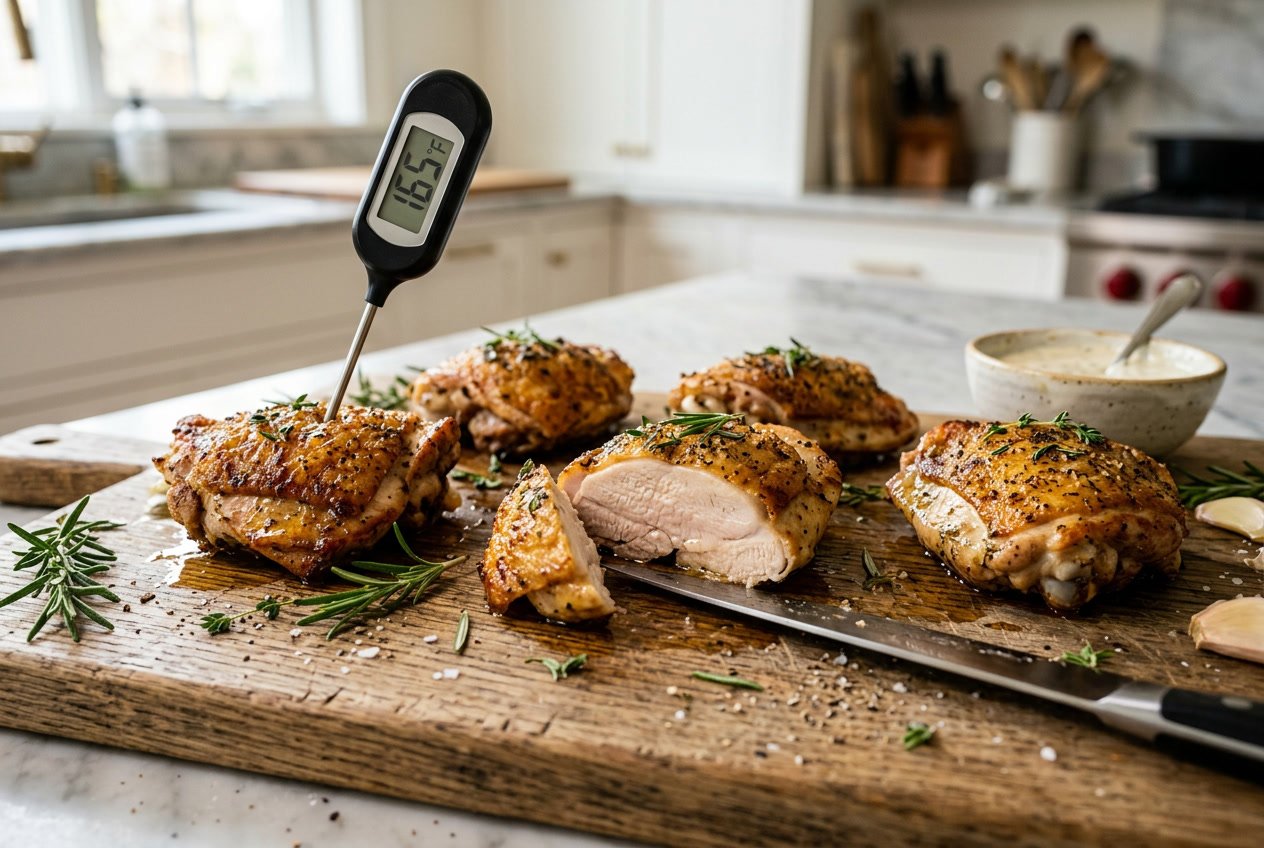
You need to know the safe minimum and the temperatures that produce different textures. Measure at the thickest part of the thigh, avoiding bone, and use an instant-read thermometer for accuracy.
USDA Minimum Safe Temperature
The USDA sets the minimum safe internal temperature for all poultry at 165°F (74°C). Reaching 165°F kills harmful bacteria like Salmonella when the entire piece reaches that temperature.
Insert the thermometer into the thickest part of the chicken thigh without touching bone. A reading of 165°F means the meat is safe to eat immediately.
Ensure the thermometer reads 165°F and that juices run clear. If you’re cooking multiple pieces, check several thighs because they cook at different rates.
Optimal Temperature for Juicy Chicken Thighs
Many cooks pull bone-in, skin-on thighs at 175°F (79°C) to 180°F (82°C) for a juicier, more tender result. At those temperatures, collagen and connective tissue begin converting to gelatin, which moistens and enriches the meat.
If you stop at 165°F you’ll be safe, but thighs often feel firmer and less richly textured than when taken to 175–180°F.
For boneless, skinless thighs, aim closer to 165°F–170°F to avoid drying. Use the higher range (175°F–180°F) mainly for bone-in thighs or recipes where you want fall-apart tenderness.
Higher Temps for Tender Results
Temperatures above 180°F (82°C) push thighs toward “fall-off-the-bone” tenderness. Long braises, slow-cooker recipes, or oven methods that allow thighs to climb beyond 185°F produce very soft, shreddable meat.
Expect longer cook times and more rendered fat as you target these higher temps. That extra cooking converts more collagen to gelatin, improving mouthfeel but also changing texture from sliceable to shreddable.
If you want crispy skin plus a tender interior, cook to the higher internal temp first, then briefly broil or sear skin-side up to crisp. Always confirm final internal temp with a thermometer before serving.
Why Temperature Matters for Chicken Thighs
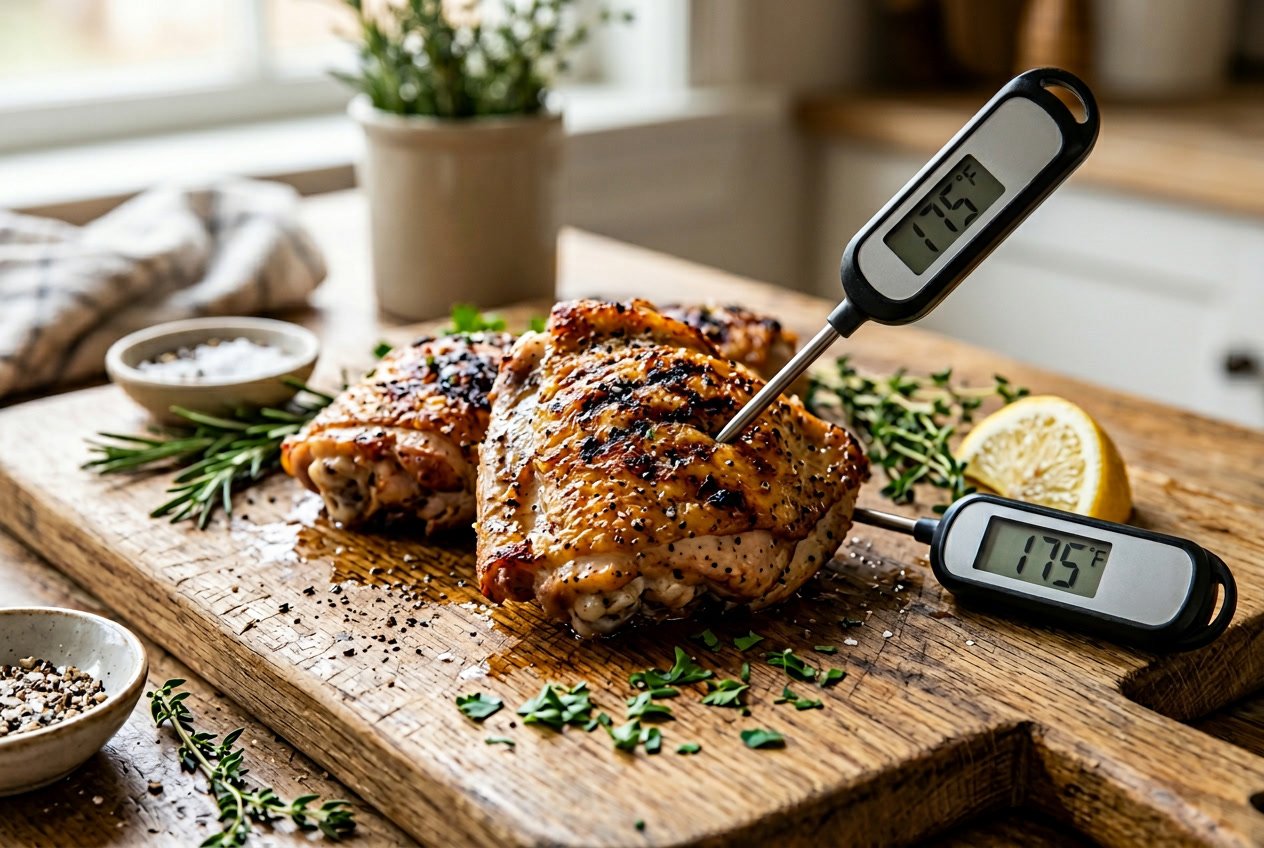
Temperature controls both safety and eating quality. Cooking to the right internal degree eliminates pathogens while converting connective tissue into tender, juicy meat.
Food Safety and Harmful Bacteria
You must reach at least 165°F to kill Salmonella and other common poultry pathogens throughout the thickest part of the thigh. Insert an instant-read thermometer into the meat, avoiding the bone, and check the temperature near the end of cooking.
Uneven cooking can leave cold pockets near the bone. For bone-in thighs, aim higher or use a probe thermometer left in place during resting to confirm even heat.
If you slice too early, residual cool spots can allow bacteria to survive. Resting for 5–10 minutes after removing from heat evens internal temperature and continues safe carryover cooking.
Impact on Texture and Flavor
Thighs contain more collagen than breasts. At 165°F the meat is safe but collagen remains largely intact, which can make the texture firmer.
When you push bone-in thighs to about 175°F–185°F, collagen begins to break down into gelatin. That transformation yields tender chicken thighs with a silkier mouthfeel and improved juiciness.
Be mindful with boneless thighs: they have less collagen and will dry if taken much above 165°F–170°F. Use target temps based on cut—165°F for boneless, 175°F+ for bone-in—to balance safety and the best texture.
How to Accurately Check Chicken Thigh Doneness
Use a reliable method to confirm the internal temperature. Insert the probe into the thickest part without touching bone.
Compare visual cues to thermometer readings to avoid undercooking or overcooking.
Using a Meat Thermometer
A digital instant-read meat thermometer gives the fastest, most reliable result. Aim for an internal reading of 170–175°F (77–79°C) for tender, fully cooked thighs. 165°F is safe but can leave connective tissue slightly firmer.
Insert the probe, wait for a stable number, then remove. Clean the probe between uses to prevent cross-contamination.
If you check several pieces, test the thickest one. Thinner pieces will reach temperature sooner.
For ovens, consider a leave-in probe with an alarm so you don’t overcook. Calibrate cheap thermometers occasionally by testing in boiling water (should read about 212°F/100°C at sea level) or an ice bath (32°F/0°C).
Where to Insert the Thermometer
Insert the probe into the thickest part of the thigh—the meaty center, not the bone end. Angle the probe toward the center so the tip sits well within the flesh.
Avoid touching bone, fat, or gristle. Bone conducts heat and will give a falsely high reading.
For bone-in thighs, enter from the side so the tip ends near the center of the meat, not the bone. If your thermometer’s probe is short, pick the largest piece and test it.
For multiple thighs, test two or three pieces in different spots to confirm even cooking, especially when sizes vary.
Visual Signs vs. Accurate Readings
Visual checks help but can mislead. Clear juices, opaque meat, and shrinking are useful cues, yet they don’t guarantee a safe internal temp.
Use these visual checks only as supplementary confirmation:
- Cut a small slit at the thickest point. The meat should be opaque and the juices clear.
- Press the thigh; cooked meat feels firm with a slight spring, not squishy.
Rely on the thermometer for safety. When visual signs conflict with the probe, trust the temperature reading and continue cooking until the recommended range is reached.
Variations: Bone-In, Boneless, Skin-On and Skinless Thighs
Different thigh types change cooking time, texture, and how you check doneness. Know whether you have bone-in or boneless, and skin-on or skinless, to choose the right target internal temperature and technique for juicy results.
Bone-In Versus Boneless Thighs
Bone-in thighs take longer to reach the same internal temperature as boneless because the bone slows heat transfer. Expect about 10–15 minutes more in the oven at 400°F (200°C) for bone-in pieces.
Insert your thermometer into the thickest part close to—but not touching—the bone for an accurate reading.
Bones also help retain moisture and add flavor during long, slow cooking. If you aim for 175–195°F for very tender dark meat, bone-in thighs respond well to the higher range because the connective tissue breaks down without drying out.
For quick weeknight meals, pick boneless skinless thighs; they reach 165–175°F faster and crisp more evenly under high, direct heat.
Skin-On Versus Skinless Chicken Thighs
Skin-on thighs create a barrier that helps keep meat moist and allows you to crisp the exterior. Roast or pan-sear skin-on thighs skin-side down first to render fat; then finish until the internal temp reaches 175–195°F depending on your tenderness preference.
Use higher oven temps (400°F/200°C) or a broil finish to get golden, crispy skin without overcooking the meat.
Skinless chicken thighs cook faster and brown differently because they lack the fat layer. They work well for marinades, stir-fries, or dishes where you need shorter cook times and a lower risk of flare-ups on the grill.
Target 165–175°F for skinless thighs to ensure safety and juiciness. Check temp in the thickest part and rest for a few minutes so juices redistribute.
Temperature Guidelines by Cooking Method
Follow specific internal temps and timing for each method to get safe, tender results and, when desired, crispy skin or fall-off-the-bone texture. Use an instant-read thermometer at the thickest part of the thigh, avoiding the bone, and let bone-in thighs rest 5 minutes to allow carryover cooking.
Oven Roasting and Baking
Roast skin-on, bone-in thighs at 400–425°F for best color and skin crispness. Expect 35–45 minutes; check for an internal temperature of 175°F for tender, gelatin-rich meat.
Boneless thighs roast faster—aim for 165–170°F and roughly 20–30 minutes depending on thickness.
Place thighs on a wire rack over a rimmed sheet pan so fat can drip away and hot air circulates under the meat. Do not cover with foil; trapping steam softens skin.
If you prefer safety-first timing, pull at 165°F, but push bone-in thighs higher for better texture.
Grilling Chicken Thighs
Use a two-zone fire for bone-in thighs. Sear skin-side down over direct high heat for 4–6 minutes, then move to indirect medium heat until the thickest part reaches 175°F (about 20–25 more minutes).
For boneless thighs, grill over direct medium-high heat for about 5–7 minutes per side until 165–170°F.
Watch for flare-ups from rendered fat and avoid pressing down on the meat. Use tongs and a thermometer probe. If you want crisp skin, finish briefly over direct heat but monitor color to prevent burning.
Rest thighs 5 minutes for juices to redistribute.
Pan Frying and Sautéing
Start skin-side down in a cold or medium-hot skillet to render fat slowly. Cook skin until golden and crisp, about 7–10 minutes undisturbed.
Flip and continue cooking until boneless thighs reach 165°F and bone-in reach 175°F–180°F near the bone.
Avoid overcrowding the pan; leave 1–1.5 inches between pieces so steam escapes and skin crisps. If exterior browns before interior reaches temperature, finish in a 350°F oven until the correct internal temp is reached.
Use an instant-read thermometer for accuracy.
Slow Cooking and Pressure Cooking
Slow cook on low for 6–7 hours or on high 3–4 hours. Internal temps typically exceed 175–185°F, which breaks down collagen into gelatin and yields shreddable, very tender meat.
In a pressure cooker, bone-in thighs reach tender doneness in roughly 10–12 minutes at high pressure with natural release. Internal temps will often be in the 175°F+ range after release.
If you want any skin texture after these moist methods, transfer thighs to a hot broiler or skillet for 2–4 minutes to crisp the surface.
Best Practices for Juicy, Tender Chicken Thighs
Control temperature, allow carryover to finish the cook, and use brines or acidic marinades to break down connective tissue. Salt early, cook slowly when aiming for higher internal temps, and rest before serving to keep thighs moist.
Resting and Carryover Cooking
After you remove thighs from heat, tent them loosely with foil and rest for 5–10 minutes for boneless, 10–15 minutes for bone-in. Carryover cooking raises internal temperature by 5–10°F.
A thigh removed at 185°F can finish near 190–195°F, which helps collagen melt and yields tender meat.
Use an instant-read thermometer when you pull the meat, not after resting, to track where you are in the collagen breakdown range. Resting also redistributes juices so they don’t all run out when you slice.
If you need crispy skin, rest on a cooling rack rather than directly on a plate. That prevents steam from softening the skin while still allowing internal juices to settle.
Marination and Seasoning Tips
Salt early, ideally 1–24 hours before cooking. This seasons through and helps the muscle retain moisture.
For quick marinades, marinate for at least 30 minutes. For deeper flavor and tenderness, use a wet brine with salt, water, and aromatics for 4–12 hours.
Include acid such as vinegar, citrus, or yogurt only sparingly for long marinades. Too much acid for extended time makes meat mushy.
Use enzymatic ingredients like pineapple or papaya cautiously and briefly to help break down connective tissue.
Finish by searing or broiling at high heat to render fat and crisp skin. Pat thighs dry before searing, brush with a light oil, and season again just before cooking to build flavor layers.


