
What Temp Chicken Thighs in Oven: Optimal Temperatures and Tips
Want juicy meat and crispy skin without wasting oven time? Set your oven between 375°F and 425°F depending on whether you want maximum juiciness (lower end) or extra-crispy skin (higher end).
Cook until the internal temperature reaches 165°F (74°C) for food safety, and use a meat thermometer to know exactly when to pull the thighs.
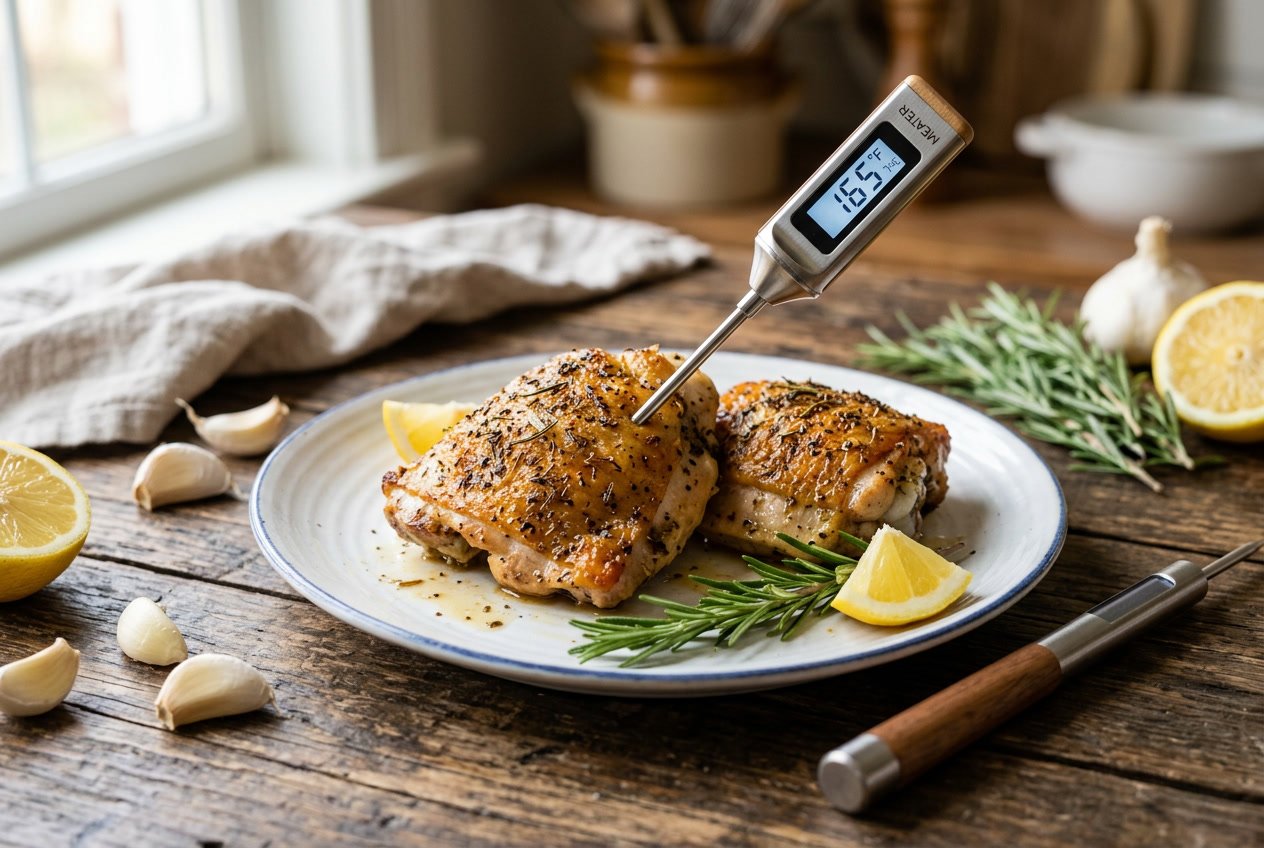
This guide explains which oven temps suit bone-in vs. boneless and skin-on vs. skinless thighs. You’ll also get tips for brining, searing, and finishing under the broiler for flavorful, perfectly textured thighs.
Optimal Oven Temperatures for Chicken Thighs
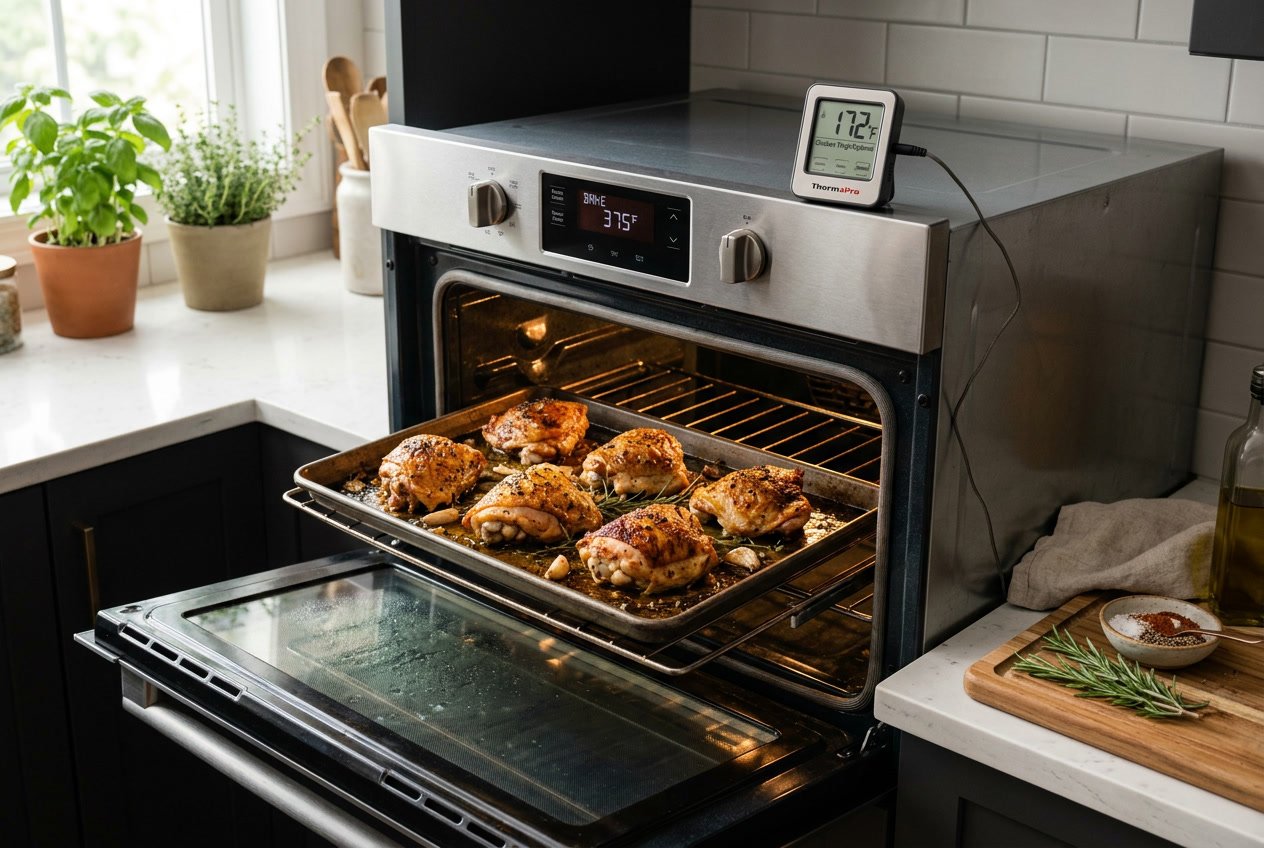
Choose a temperature that matches the texture you want and the cut you’re cooking. Lower temperatures keep meat tender. Higher temperatures give crispier skin but shorten the cooking window.
Recommended Baking Temperatures
- 350°F (175°C): Use for bone-in, skin-on thighs when you want gentle, even cooking. Expect about 50–55 minutes; check with a thermometer.
- 375°F (190°C): A reliable middle ground for both bone-in and boneless thighs. Plan on roughly 45–50 minutes for bone-in and 22–28 minutes for boneless.
- 400°F (200°C): Best for turning skin crisp without overcooking the meat. Bone-in thighs usually need 40–45 minutes; boneless take about 20–25 minutes.
- 425–450°F (218–232°C): Use for very crispy skin and faster browning. Bone-in thighs often finish in 35–45 minutes. Avoid 450°F for small boneless pieces unless you watch closely.
Always verify doneness by measuring internal temperature at the thickest point. The USDA safe minimum is 165°F (74°C), though many cooks prefer 175–180°F for more tender thighs.
How Different Oven Temps Affect Texture
Lower temps (350–375°F) let connective tissue break down slowly, yielding juicier, more tender meat. The skin won’t crisp as much, so pat it dry and finish under higher heat if needed.
Moderate heat (400°F) balances moisture retention and browning. You’ll get a reliably crisp skin with minimal drying of the interior.
High heat (425–450°F) accelerates skin rendering and browning, producing very crispy chicken thighs. The exterior can finish before the interior reaches your target temp, so use a probe thermometer and let thighs rest briefly after cooking.
Roasting vs. Baking Chicken Thighs
Roasting uses higher, direct heat to develop color and crispness. Baking uses steadier, lower heat for even doneness.
Roast at 400–450°F on a rack for crispy oven-baked chicken thighs. For tender, pull-apart meat, bake bone-in thighs at 350–375°F, covered or uncovered depending on skin preference.
When roasting, place thighs skin-side up and avoid overcrowding. For baking, use a rimmed sheet or casserole and monitor internal temperature instead of relying on time.
Internal Temperature and Food Safety
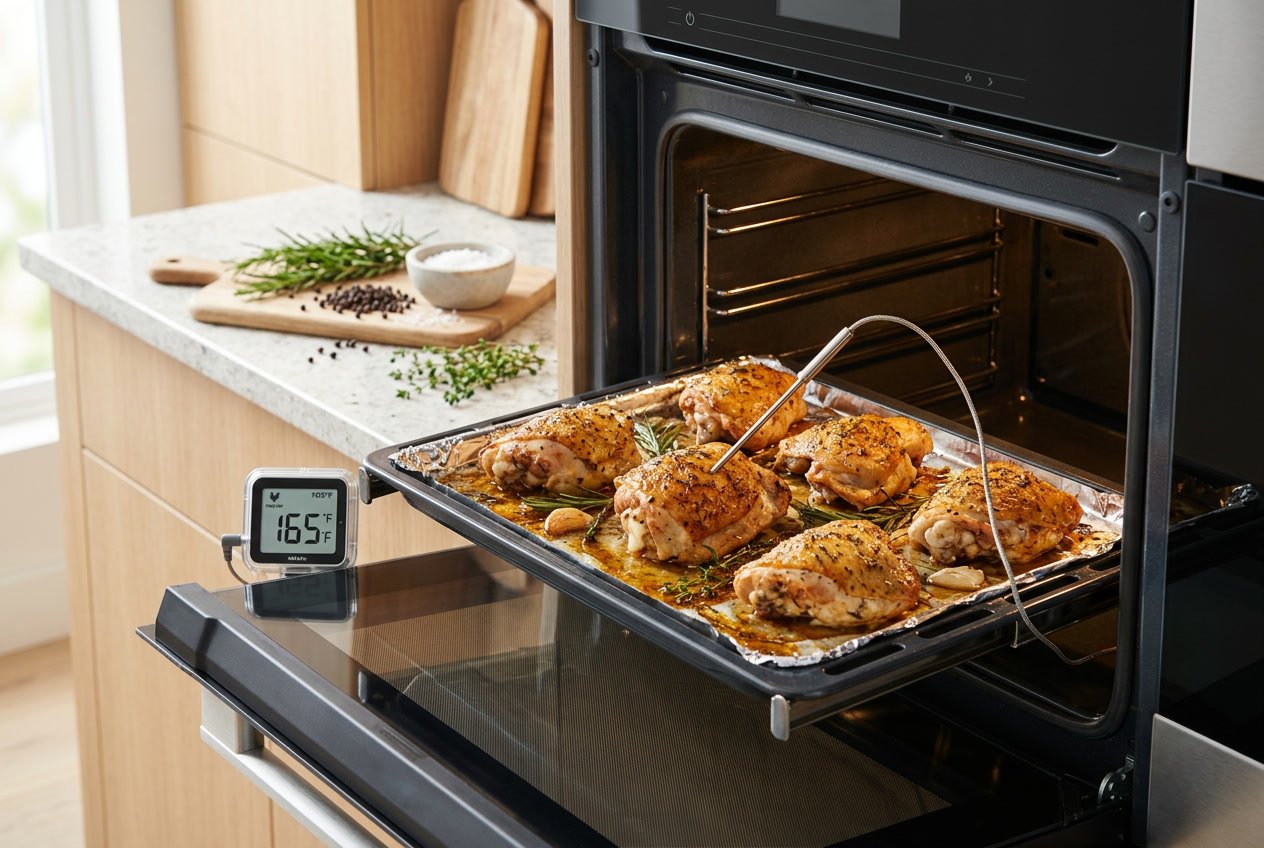
You need a clear target temperature, a reliable thermometer, and an understanding of why that number matters for both safety and texture.
Follow specific temperature guidelines, check the thickest part of the thigh, and let carryover heat finish the job when appropriate.
Safe Internal Temperature According to USDA
The USDA sets the minimum safe internal temperature for all poultry at 165°F (74°C). That ensures harmful bacteria like Salmonella and Campylobacter are reduced to safe levels when the entire thickest part of the thigh reaches 165°F.
Measure at the thickest part of the meat and avoid touching bone, which reads hotter than surrounding tissue. Store cooked thighs in the refrigerator within two hours and consume within four days to maintain safety.
Using a Meat Thermometer
Use an instant-read digital thermometer for fast, accurate readings. Insert the probe into the thickest part of the thigh, perpendicular to the bone, avoiding contact with bones or the pan surface.
Wait until the reading stabilizes before recording the temperature. Calibrate your thermometer periodically by testing it in ice water and boiling water.
Clean and sanitize the probe between uses to prevent cross-contamination. If you cook multiple thighs, spot-check a few of the largest pieces.
Why 165°F Is Important
Reaching 165°F is essential for food safety because that internal temperature destroys bacteria in poultry. The USDA’s guideline prevents foodborne illness.
You may choose higher pull temperatures for texture—thighs become more tender around 175–185°F because connective tissue breaks down—but those are culinary choices.
Oven temperature and surface browning don’t guarantee the interior has reached 165°F. Always verify with a meat thermometer.
Cooking Time Based on Temperature and Type
Baking temperature and whether the thigh is bone-in or boneless determine how long you should cook chicken thighs. Higher oven temps shorten cooking time and crisp skin faster. Bone-in pieces need more time than boneless.
Cooking Time for Bone-In Chicken Thighs
Bone-in, skin-on thighs usually need 35–45 minutes at 400°F (200°C).
If you lower the oven to 375°F (190°C), plan for about 40–50 minutes.
Use a meat thermometer in the thickest part without touching bone. Target a minimum internal temperature of 165°F (74°C) for safety, though many cooks prefer 175°F–180°F (79°C–82°C) for more tender meat.
For crispier skin, start at 425°F (220°C) for the first 10–15 minutes then drop to 375°F.
If thighs are larger than average, add 5–10 minutes and check temperature frequently.
Timing for Boneless Chicken Thighs
Boneless, skinless thighs cook faster: about 20–30 minutes at 425°F (218°C) or 20–25 minutes at 400°F (200°C).
At 375°F (190°C) expect roughly 18–25 minutes depending on thickness.
Because boneless thighs lack a bone that insulates heat, insert the thermometer into the thickest part. Pull them as soon as they hit 165°F to avoid drying out.
For boneless skin-on thighs, crisp the skin in the last 5–10 minutes under higher heat or a short broil.
If you start from refrigerated rather than room temp, add a few minutes to cooking time.
Factors Affecting Chicken Thigh Cooking Time
Size and thickness matter: larger or thicker thighs take longer.
Bone presence adds about 10–15 minutes compared with boneless pieces of similar size.
Oven variability changes results. Convection ovens reduce time by about 10–15% and promote crisper skin.
Starting temperature also affects timing. Frozen thighs require much longer and should be thawed or adjusted per package instructions.
Seasoning and marinades with sugar can brown faster; watch skin to avoid burning.
Rest the thighs 5–10 minutes after cooking so juices redistribute. That brief rest also raises internal temp slightly.
Step-by-Step: How to Bake Chicken Thighs
You will prepare thighs for even cooking, arrange them to promote crisp skin, and use a thermometer to confirm doneness.
Follow specific steps for patting dry, seasoning, oven placement, and resting to get juicy, crispy baked chicken thighs.
Preparing Chicken Thighs for the Oven
Pat each thigh dry with paper towels until the skin is no longer damp. Dry skin prevents steaming and helps you achieve crispy baked chicken thighs.
Trim excess fat and remove loose skin pieces. If using a marinade, let thighs sit in it for at least 30 minutes, or up to 4 hours in the fridge. For a dry rub, apply 15–30 minutes before baking.
Bring chilled thighs to near room temperature for 15–20 minutes before roasting. Preheat the oven to your chosen temperature. Line a sheet pan with foil or parchment for easy cleanup and set a wire rack on the pan if you want maximum air circulation.
Arranging and Seasoning
Place thighs skin-side up, spaced 1–2 inches apart so hot air circulates and skin crisps. Overcrowding steams the skin and gives uneven results.
Season just before baking: sprinkle kosher salt evenly, freshly ground black pepper, and any dry spices such as paprika, garlic powder, or thyme. For extra color and crispiness, rub a thin coat of oil on the skin first.
If you roast vegetables on the same pan, choose items that finish in the same time and place them around, not under, the thighs. For the crispiest skin, use a wire rack; for simpler cleanup, roast directly on the lined pan but flip veggies midway.
Checking Doneness
Insert an instant-read thermometer into the thickest part of the thigh without touching bone. USDA minimum is 165°F; aim for 175–180°F for bone-in thighs to render connective tissue and yield juicy meat.
Watch visual cues: skin should be golden-brown and juices should run clear when pierced. If skin looks done but internal temp is low, continue baking at 375–400°F and recheck every few minutes.
Let thighs rest 5–10 minutes after removing from oven to redistribute juices. Resting preserves juiciness and makes slicing easier. Serve skin-side up to keep it crisp.
Type Variations: Bone-In, Boneless, Skin-On, Skinless
Different cuts change how you set oven temperature and timing. Choose higher heat for crisp skin and lower heat for gentle, even cooking of thicker pieces.
Best Temperature for Bone-In Thighs
Bone-in chicken thighs benefit from moderate to high oven heat because the bone slows heat transfer and helps retain moisture. Roast at 400–425°F (200–218°C) for 35–45 minutes, depending on thigh size.
Use a meat thermometer to check the thickest part near the bone. Pull at 175–180°F (79–82°C) for tender texture, though USDA minimum is 165°F.
Pat skin dry and roast skin-side up on a rack or a lined sheet to promote airflow and even browning. If you want gentler cooking, drop to 375°F (190°C) and add 5–10 minutes.
Ideal Temp for Boneless and Skinless Thighs
Boneless skinless chicken thighs cook faster and are more prone to drying. Bake at 375–400°F (190–200°C) for about 18–25 minutes, checking internal temperature at the thickest point.
Remove when the thermometer reads 165°F (74°C). Resting 5 minutes will let carryover heat finish cooking and preserve juiciness.
Arrange boneless skinless thighs in a single layer with a light oil coating to prevent sticking and help browning. For crispier edges without overcooking, sear briefly in a hot pan, then finish in a 375°F oven.
Expert Tips for Juicy and Crispy Chicken Thighs
Focus on two practical goals: get the skin blistered and brown, and keep the meat tender by using the right temperature and minimal moisture loss.
Achieving Crispy Skin
Pat each thigh completely dry with paper towels. Surface moisture creates steam and prevents crisping.
Score the skin lightly with ¼-inch cuts. This helps fat render and promotes even browning.
Arrange bone-in, skin-on thighs skin-side up on a wire rack over a rimmed baking sheet. Hot air will circulate under and around the pieces.
This setup prevents soggy bottoms and produces crispy chicken thighs.
Set your oven to 400°F (200°C) for balanced crisping and cooking.
For extra crunch, start at 450°F for 10–15 minutes, then reduce to 400°F.
You can also dust the skin lightly with a 1:3 baking powder-to-salt mix to raise pH and dry the surface. Use this mix sparingly.
Finish with a 1–2 minute broil if needed. Watch closely to avoid burning.
Retaining Juiciness
Generously season the meat and brine boneless thighs for 2 to 4 hours using ¼ cup salt per quart of water to help retain moisture.
For bone-in thighs, cook until the internal temperature reaches about 175°F (80°C). This higher temperature breaks down connective tissue and makes the meat juicier and more tender than stopping at 165°F.
Insert an instant-read thermometer into the thickest part without touching the bone to check the temperature accurately.
Let the thighs rest for 5 to 10 minutes after you remove them from the oven so the juices redistribute.
If you use boneless, skinless thighs, brine or marinate them and reduce cook times to 20 to 30 minutes at 400°F to prevent overcooking.
When reheating, use the oven or air fryer to keep the texture, instead of the microwave.


