
What Temp Chicken Thighs Done: Internal Temperature Guide
Cook chicken thighs to at least 165°F for safety. Many chefs cook them to 175–195°F for more tenderness as the connective tissue breaks down.
If you want reliably safe meat, target 165°F. For meltingly tender thighs, aim higher and use a thermometer to track progress.
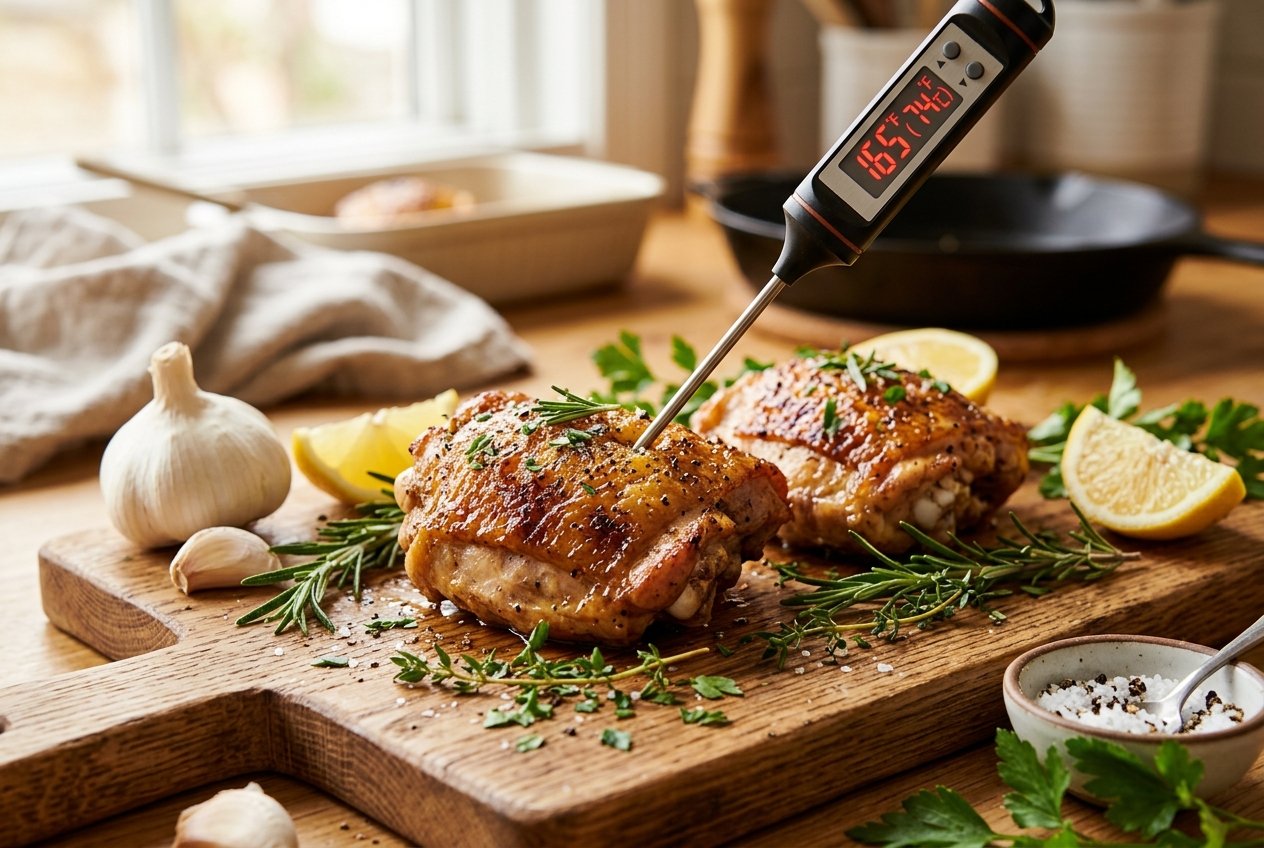
You can measure internal temperature accurately with an instant-read thermometer. Higher temperatures affect texture, and different cooking methods help you control both safety and juiciness.
Follow these steps and tips to stop guessing and serve consistently great chicken thighs.
Safe Internal Temperature for Chicken Thighs
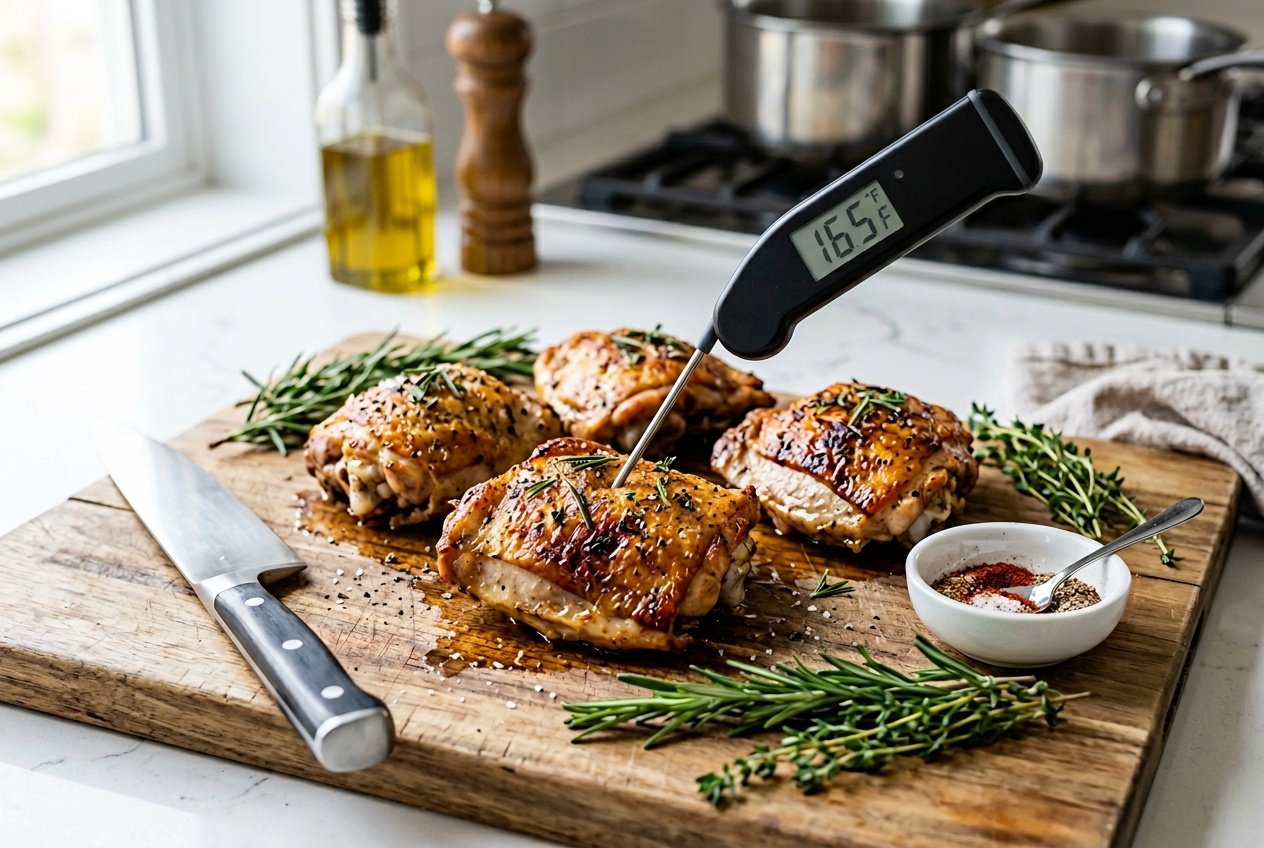
Cook chicken thighs to a temperature that destroys pathogens and delivers your preferred texture. Use an instant-read thermometer in the thickest part of the thigh, avoiding bone contact, for an accurate reading.
USDA Guidelines for Chicken Thigh Safety
The USDA sets the minimum safe internal temperature for all poultry at 165°F (74°C). Measure this with a calibrated instant-read thermometer.
When thighs reach 165°F and hold briefly, harmful bacteria like Salmonella are destroyed. Lower temperatures can be safe if you hold the meat at that temperature long enough for proper pathogen reduction.
Insert the probe into the meatiest spot of bone-in thighs and stay at least 1/4 inch from the bone. After removing thighs from heat, rest them for 3–5 minutes so carryover heat can raise the internal temp by a few degrees.
Why Temperature Matters in Poultry
Temperature impacts both safety and texture for chicken thighs. Dark meat contains more connective tissue and collagen than breast meat.
Collagen starts breaking down above 140°F and becomes tender around 175–195°F. Cooking to 165°F is safe, but many cooks target 175–190°F for extra tenderness.
Monitor moisture if you cook thighs to higher temps and avoid exceeding 210°F, which can make meat stringy. Use an instant-read thermometer, check the thickest part, and adjust your cooking method to control tenderness.
Optimal Temperature for Tender Chicken Thighs
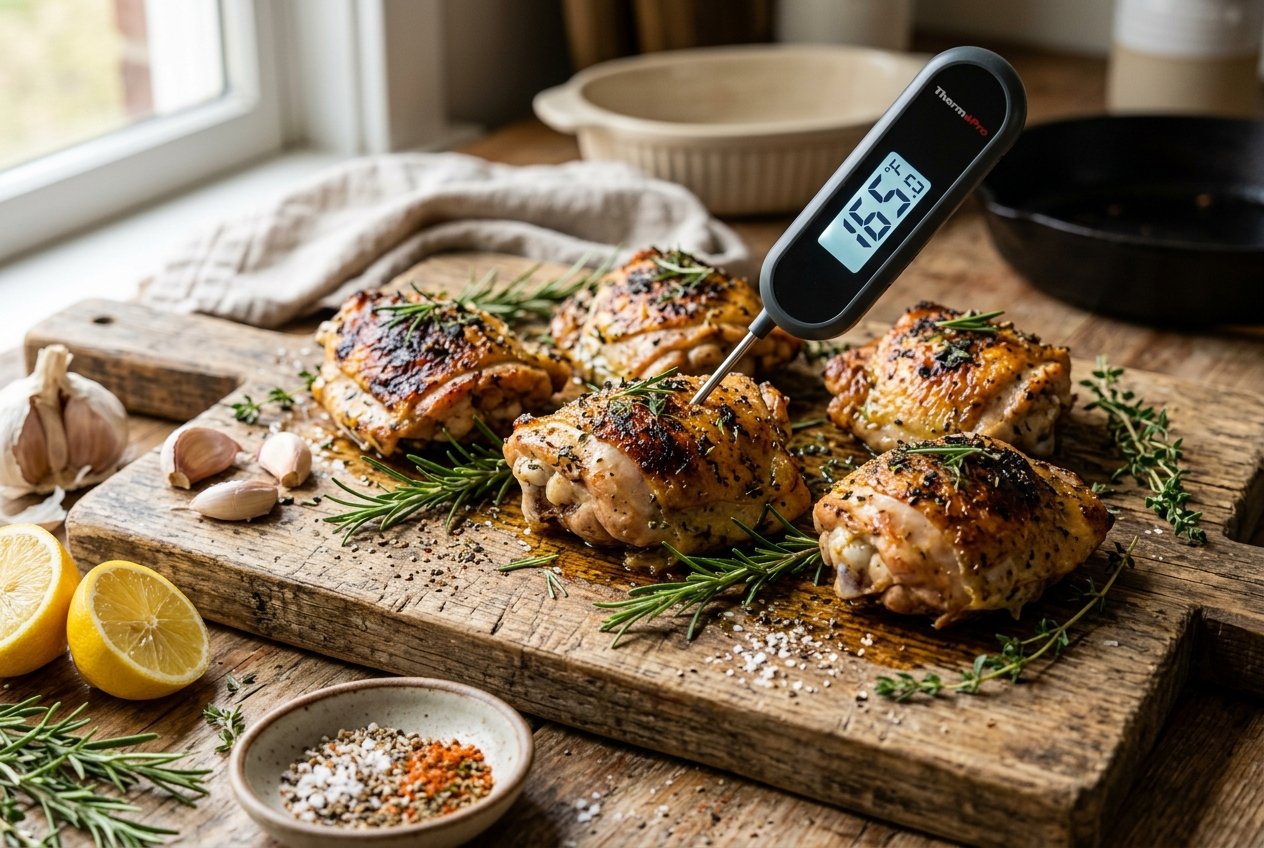
Aim for safe, juicy, and tender thighs without drying them out. Target the right internal temperature and understand how connective tissue breaks down for consistent results.
Best Internal Temp for Juicy and Tender Results
Aim for an internal temperature between 175°F and 195°F (79°C–91°C) for the most tender chicken thighs. At 165°F the meat is safe, but it becomes more tender as you reach 170–175°F.
Pushing toward 190–195°F converts more collagen to gelatin for a melt-in-your-mouth texture. Insert an instant-read thermometer into the thickest part, avoiding bone.
Check temperature in several spots on bone-in pieces. After roasting or braising, let thighs rest 5–10 minutes for juices to redistribute and the thermometer reading to stabilize.
How Connective Tissue Affects Doneness
Thighs have more connective tissue than breast meat, and this tissue needs time and heat to turn into gelatin. Collagen breaks down above about 140°F and the process speeds up as you reach 170–195°F.
Choose cooking methods that hold the internal temperature in this range for longer periods. Braising, slow roasting, or indirect grilling work well.
If you prefer quick sears or high-heat roasting, finish thicker thighs in the oven at a moderate temperature. This allows connective tissue to soften without overcooking the exterior.
How to Accurately Measure Chicken Thigh Internal Temperature
Get a reliable reading from the thickest part of the thigh, avoiding bone and gristle. Use a calibrated instant-read thermometer and check near the bone for bone-in thighs or the center for boneless pieces.
Using an Instant-Read Meat Thermometer
Insert the probe into the thickest part of the thigh, reaching the center without touching bone. For bone-in thighs, place the probe parallel to the bone.
For boneless thighs, aim at the center from the side. Wait for the thermometer to stabilize, which takes 2–10 seconds with digital models.
Record the temperature when the display stops changing. For texture, pull bone-in thighs at 175°F–185°F and boneless at 165°F–170°F.
Calibrate your thermometer monthly using an ice-water or boiling-water test. Clean the probe with hot, soapy water between checks to avoid cross-contamination.
Avoiding Common Mistakes When Checking Temperature
Don’t check only the surface; the interior is what matters. Always probe the thickest part and test multiple thighs when cooking a batch.
Avoid inserting the probe through skin folds or gristle, which can give false readings. Don’t rely on oven time or color, as these are not reliable indicators of doneness.
If you use a leave-in probe, verify it with a second instant-read probe before removing the meat. Replace batteries and recalibrate if readings seem off or take too long to stabilize.
Visual and Textural Signs Chicken Thighs Are Done
You can check doneness without a thermometer by looking at the color of juices and the meat’s texture. Use clear juices, opaque meat, and a firm-but-springy feel as practical indicators.
Juices and Color Indicators
Cut into the thickest part of the thigh or pierce it with a skewer to check juices. If juices run clear or pale, the meat is likely cooked.
If juices are pink, red, or bloody, return the thigh to heat. Look at the meat color near the bone; fully cooked thigh meat appears opaque white to light tan, not translucent or deep pink.
A slight pink hue near the bone can persist in young chickens, so rely on juices and texture as well. Check the skin and exterior for crispy, evenly browned skin and slight shrinkage of the meat away from the bone.
Texture and Firmness Check
Press the thickest part of the thigh with a finger or tongs. Cooked thighs feel firm but slightly springy.
Very soft or squishy means undercooked, while rock-hard means overcooked. Use a poke test: soft, then springy, then firm.
When the meat pushes back and the fibers feel set, proteins have coagulated for safe eating. Rest thighs for 5–10 minutes after cooking to let the texture firm and juices redistribute.
If you’re unsure, combine these tactile signs with a quick temperature check for reliable results.
Recommended Cooking Methods and Temperatures
Aim for a safe minimum of 165°F for doneness. Target higher temps for bone-in thighs to convert collagen into gelatin and improve texture.
Choose a method that matches your desired finish and use an instant-read thermometer to confirm internal temperature.
Baking and Roasting Chicken Thighs
Set your oven to 400–425°F. Arrange thighs skin-side up on a wire rack over a rimmed sheet pan for crisp skin and even browning.
Bake bone-in, skin-on thighs for about 35–45 minutes. Boneless thighs typically need 20–25 minutes.
Pull bone-in thighs when the thickest part reaches 175°F for tender, juicy meat. Boneless can be removed at 165–170°F to avoid drying.
Season and pat dry before cooking. For extra crispness, refrigerate uncovered for an hour or overnight after salting.
Use the broiler for 2–4 minutes at the end for additional color, watching closely to avoid burning.
Grilling Chicken Thighs for Best Results
Preheat a two-zone fire with high direct heat for searing and medium-low indirect heat to finish. Sear skin-side down over direct heat for 4–6 minutes.
Move thighs to indirect heat and cover the grill. Cook bone-in thighs until they reach 175°F, which takes about 20–30 more minutes depending on size.
Cook boneless thighs 5–7 minutes per side over medium-high heat and pull at 165–170°F. Watch for flare-ups from fat and avoid pressing the meat.
Insert a thermometer into the thickest part without touching bone. Let grilled thighs rest 5–7 minutes before serving to let juices redistribute.
Pan-Frying and Sautéing Techniques
Start skin-side down in a cold or room-temperature skillet. Heat to medium-high to render fat and crisp the skin.
For bone-in thighs, sear 7–10 minutes skin-side down until browned, then flip and finish in a 375–400°F oven or reduce heat and cover until the interior reaches 175°F.
Boneless thighs sear 4–6 minutes per side and usually finish at 165–170°F. Avoid overcrowding the pan so liquid can evaporate and the surface sears.
Pat thighs dry and season well. For quicker meals, cut thighs into thinner pieces for faster, more even cooking while monitoring temperature closely.
Tips for Achieving Perfectly Cooked Chicken Thighs
Control temperature, timing, and resting to keep thighs tender and juicy. Use a reliable instant-read thermometer and adjust seasoning or marinating time to match your cooking method.
Resting Chicken Thighs After Cooking
Rest thighs for 5–10 minutes after removing them from heat so juices redistribute. Cutting immediately forces juices out.
For bone-in pieces, rest closer to 10 minutes. Boneless thighs need about 5 minutes.
Tent loosely with foil to retain warmth without steaming the skin. During this time, verify doneness by inserting an instant-read thermometer into the thickest part away from bone.
Target 175–185°F for very tender, slightly pull-apart thighs, or 165°F if you prefer firmer boneless thighs. Resting also finishes carryover cooking by a few degrees, so pull bone-in thighs when the thermometer reads about 5°F below your target.
Use the resting time to skim fat from pan drippings for a quick pan sauce. Letting thighs sit on a wire rack keeps skin crisp compared to resting in a pile on a plate.
Seasoning and Marinating for Flavor
Season the meat generously with salt at least 30 minutes before cooking. This improves moisture retention and flavor penetration.
Use a basic ratio of 1 teaspoon kosher salt per pound, adjusting for brines or high-sodium marinades. Marinate with acidic mixes like vinegar, lemon, or yogurt for 30 minutes to 4 hours to tenderize the meat.
Avoid marinating in acid overnight, as this can create a mealy texture. For long flavor infusion, brine the meat in water, salt, sugar, and aromatics for 1 to 4 hours to keep it tender during high-heat cooking.
Apply oil and aromatics such as garlic, paprika, or herbs right before cooking. This helps promote crisp skin when roasting or pan-searing.
If you plan to grill, pat the thighs dry first. Brush them with a thin coating of oil to prevent flare-ups and encourage even browning.


