
What Temp Chicken Thighs Cooked: Safe, Juicy, and Perfect Results
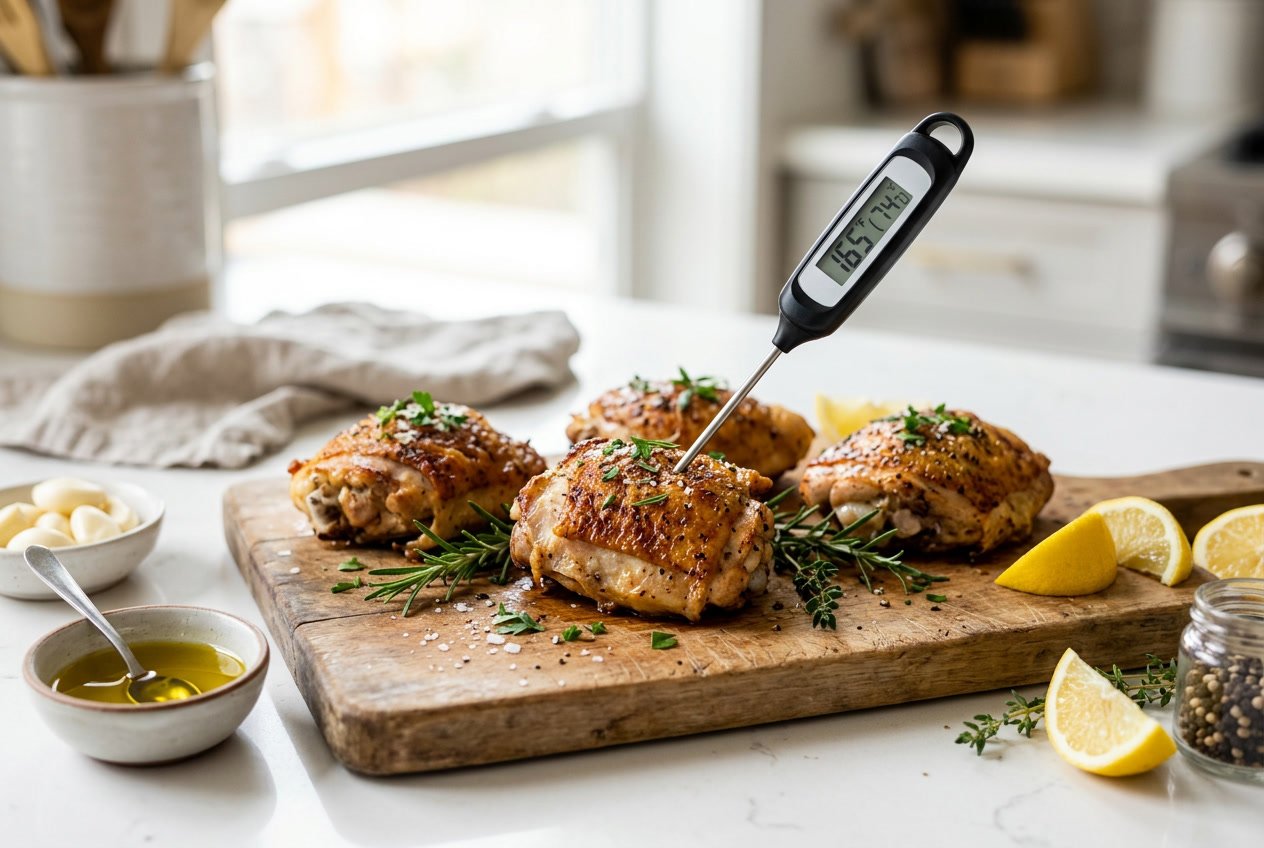
Cook chicken thighs to a safe minimum of 165°F. For the juiciest, most tender results, aim for 175°F to 195°F, depending on the texture you prefer.
Cook to at least 165°F for safety; for melt-in-your-mouth dark meat, target 175–195°F.
This guide explains how oven temperature, cooking method, and accurate thermometer placement affect your results. You’ll find tips on measuring temperature, ideal tenderness ranges, timing for different cuts, and safe storage.
Required Internal Temperature for Chicken Thighs
You need to know the minimum safe temperature, when higher temps improve texture, and how to measure and handle cooked thighs to prevent illness.
USDA Guidelines for Chicken Thighs
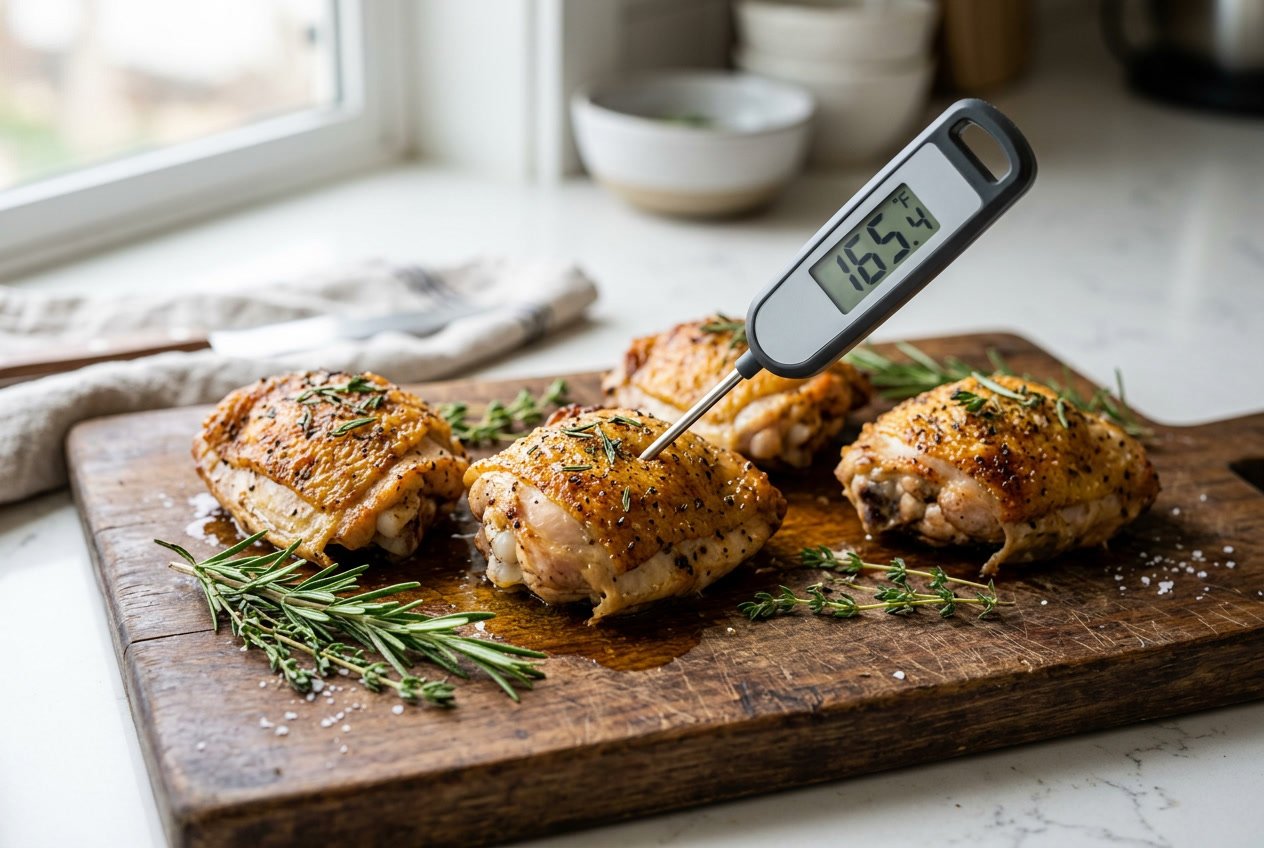
The USDA requires poultry, including chicken thighs, to reach an internal temperature of 165°F (74°C) to be considered safe. Insert an instant-read thermometer into the thickest part of the thigh, avoiding bone, and confirm it reads 165°F at the deepest point.
The 165°F target destroys harmful bacteria such as Salmonella. This standard ensures safety even if the texture is not your preference.
Use the thermometer after resting for a minute so carryover heat can raise the temperature slightly. This minimum applies equally to bone-in and boneless thighs.
Always check several pieces in a batch, since size and placement in the pan or oven cause variation.
Benefits of Cooking Above the Minimum Temperature
Cooking bone-in thighs to 175–185°F often yields better texture because thighs contain more collagen than breasts. As collagen heats above about 170°F, it converts to gelatin and tenderizes the meat.
Boneless thighs have less connective tissue, so pulling them near 165–170°F prevents drying. For very tender shredded meat, you can push temps toward 185–195°F.
Aim for the higher range when you want tenderness and don’t need perfectly pink meat. Use the thermometer to target your preference: 165°F for safety and a firmer bite, 175–185°F for richer tenderness.
Food Safety Considerations
Measure internal temperature with a calibrated instant-read thermometer placed in the thickest flesh at the bone-free zone. If the probe touches bone, readings can be false-high, so reposition and recheck until you get a consistent reading.
Don’t rely on color alone; cooked thighs can remain slightly pink near the bone even at safe temperatures. After reaching the target, hold cooked thighs at 140°F or above if you plan to keep them hot before serving.
Cool leftovers quickly by refrigerating within two hours in shallow containers and use within four days. Reheat to at least 165°F before serving.
Optimal Temperature Range for Best Texture
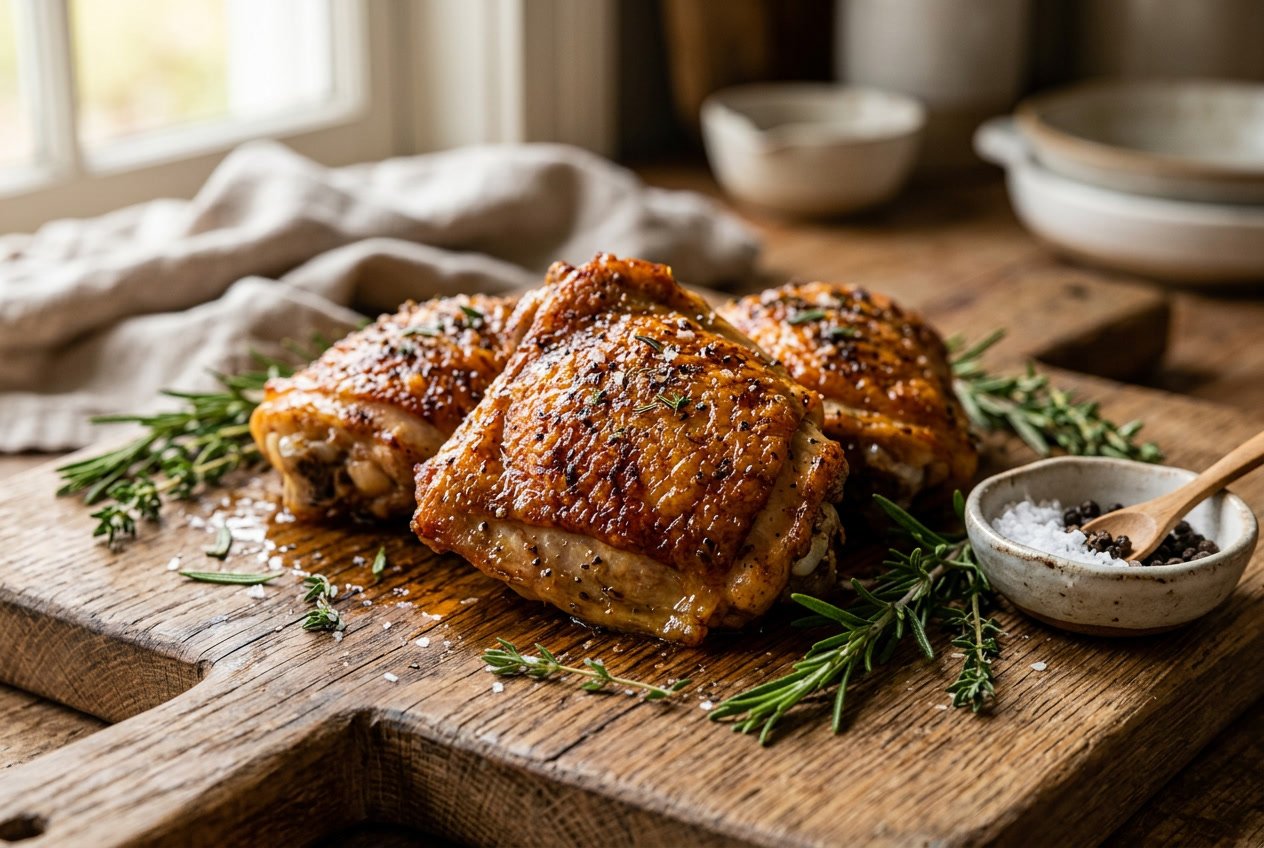
Cook chicken thighs to a temperature that balances safety, collagen breakdown, and skin crisping. Aim for a target range to control tenderness and juiciness.
How Connective Tissue Affects Juiciness
Chicken thighs contain more connective tissue than breasts, mainly collagen. As collagen heats, it slowly converts to gelatin, starting above 140°F and accelerating as you approach 175–195°F.
Gelatin increases juiciness and gives thighs a silky mouthfeel. If you stop at 165°F the meat is safe, but the connective tissue stays mostly intact, so thighs can feel firmer.
Letting thighs reach about 175°F softens tissue while keeping structure. Pushing toward 185–195°F increases tenderness further, especially for bone-in cuts.
Use an instant-read thermometer in the thickest part, avoiding the bone. Rest the thighs 5–10 minutes to let juices redistribute and the gelatin set, which enhances juiciness.
The Role of Higher Finishing Temperatures
Higher finishing temperatures break down more collagen and encourage crust formation. Pulling thighs at 175–185°F yields tender meat with some chew and good moisture retention.
Finishing to 190–195°F produces a more falling-off-the-bone texture due to additional collagen conversion. For crisp skin and browning, use a hot oven or broiler step.
Roast at 375–400°F (190–204°C) or sear in a pan to caramelize the surface. Apply high heat for the last 5–10 minutes to target 190°F inside while producing a flavorful crust.
Monitor internal temperature closely; cooking time varies with thigh size, bone-in vs boneless, and starting temperature. A thermometer prevents overcooking and helps you decide whether to focus on juiciness or maximum tenderness.
Avoiding Overcooking and Dryness
Overcooking dark meat happens when muscle fibers shrink excessively or prolonged high heat evaporates moisture. Thighs tolerate higher internal temps before drying, but going beyond about 205°F risks stringy, flavorless meat.
Roast at moderate oven temperatures (375–400°F / 190–204°C) and finish with a brief high-heat step for browning. For boneless thighs, reduce cook time and target the lower end of the tenderness range (175–185°F).
For bone-in, allow more time to reach 185–195°F safely. Use these tactics to prevent dryness:
- Insert thermometer into the thickest part, not the bone.
- Remove thighs 3–5°F below your target (carryover will raise temp during rest).
- Rest covered loosely for 5–10 minutes to let juices redistribute.
How to Measure Chicken Thigh Temperature Accurately
Use a reliable instant-read meat thermometer, insert the probe into the thickest part of the thigh while avoiding bone, and check visual cues like clear juices and fully opaque meat.
Using an Instant-Read Thermometer
Use an instant-read thermometer for quick, reliable readings. Calibrate it occasionally in ice water (32°F / 0°C) to ensure accuracy.
Choose a probe with a thin tip to reach the center of the meat without creating a large hole. Insert the probe near the end of cooking, not before the final minutes.
Wait for the display to stabilize; most quality instant-read thermometers settle in 2–5 seconds. If you use a probe-style thermometer during roasting, place the probe so it remains in the thickest part throughout cooking and monitor without opening the oven often.
Clean the probe with hot, soapy water between uses. Avoid touching the bone or pan when taking a reading, because that gives a falsely high temperature.
Where to Insert the Probe
Find the thickest part of the thigh—the center of the meat, not the bone or the skin. Insert the probe horizontally from the side so the tip sits in the center of the muscle.
Avoid touching the femur bone. For bone-in thighs, angle the probe toward the center, stopping about 3/4 of the way through the meat.
For boneless thighs, push the probe fully into the middle without penetrating the opposite side. If you check multiple pieces, test the thickest one.
Record the highest temperature you find to ensure safety.
Visual Signs of Doneness
Use visual checks as a backup to temperature measurements. Cut into the thickest part and look for opaque, uniformly colored meat and clear, not pink, juices.
Juices that run clear indicate near-doneness but are not as reliable as a thermometer. Confirm with a meat thermometer to reach at least the safe minimum.
Check texture: properly cooked thighs feel firm but still yield slightly to pressure and pull apart easily when shredded. If meat looks rubbery or the juices are pink, continue cooking and recheck with your instant-read thermometer.
Impact of Cooking Method and Oven Temperature
Your choice of method and oven temperature affects cooking time, moisture retention, and skin texture. Balance internal doneness (165°F target) with how crisp and browned the exterior becomes.
Baking vs. Roasting Chicken Thighs
Baking uses steady, moderate heat and works well for even cooking and hands-off timing. Set the oven to 350–375°F for baking bone-in thighs; expect 35–50 minutes depending on size.
Boneless thighs finish faster, often 20–30 minutes at 375°F. Roasting applies higher heat and encourages browning and rendered fat.
Roast at 400–425°F for crispier, more caramelized skin and slightly shorter cook times. Use a rimmed sheet or roasting pan so hot air circulates around skin-side up pieces.
For uniform doneness with tender meat, bake at 375°F. For a deeper crust and faster finish, roast at 400–425°F.
Always verify with a meat thermometer inserted into the thickest part, away from bone.
Temperature Guidelines for Common Methods
Use these practical targets:
- 350°F: slower, gentler baking; useful for thicker batches or when you’ll braise or add sauce.
- 375°F: balanced baking—good for juicy meat and moderate skin crisping.
- 400–425°F: roasting range for crisp skin and faster cook times; 425°F gives the most immediate browning.
For bone-in, skin-on thighs, plan 35–45 minutes at 400°F or 30–40 minutes at 425°F depending on size. For boneless, skinless thighs, plan 20–30 minutes at 375°F.
Check internal temperature of 165°F; if you prefer slightly more tender texture you can remove at 160–162°F and rest to reach 165°F through carryover.
Adjust times for convection ovens by reducing temperature about 25°F or shortening time by about 10–15%. High temperatures speed fat rendering but increase risk of burning spices or skin if left unchecked.
Achieving Crispy Skin
Dry the skin thoroughly with paper towels before seasoning; moisture prevents crisping. Lightly oil the skin and use coarse salt to help draw out moisture and encourage browning.
Cook skin-side up on a wire rack or directly on a hot baking sheet so air circulates. Avoid overcrowding.
Start at 400°F–425°F to render fat and crisp the skin. If you used a lower temp, finish under the broiler for 2–4 minutes while watching closely.
Convection mode improves crispness by circulating hot air. For best results: pat dry, let thighs come to room temperature for 15–20 minutes, roast at 425°F for crispy chicken thighs, and confirm internal temperature of 165°F before resting.
Cooking Time and Temperature for Different Cuts
Aim for an internal temperature of at least 165°F (74°C) for safety. Plan cooking time based on whether the thighs are bone-in or boneless.
Adjust oven temperature and resting time to get crispy skin and tender meat without overcooking.
Bone-In Chicken Thighs: Timing and Ideal Temperature
Bone-in chicken thighs need more time because the bone slows heat transfer. Roast at 375°F (190°C) for 35–45 minutes for medium-sized thighs, or 40–55 minutes at 350°F (175°C) for gentler, more even cooking.
Target an internal temperature of 175–185°F (79–85°C) in the thickest part near the bone to break down connective tissue and get tender meat.
Use a probe thermometer inserted without touching bone. Rest thighs 5–10 minutes after removing from the oven to let juices redistribute.
For crispier skin, place thighs on a wire rack in the pan or finish under the broiler for 1–2 minutes while watching closely.
Boneless Chicken Thighs: Timing and Adjustments
Boneless thighs cook faster because there’s no bone to slow heat. Bake at 400°F (200°C) for about 20–30 minutes, or 375°F (190°C) for 25–35 minutes depending on thickness.
Aim for 165–175°F (74–79°C) internal temperature; higher temps can improve tenderness but watch for dryness.
Pat thighs dry and spread them in a single layer so they cook evenly. If pan-searing first, sear fat-side down on medium-high for 4–6 minutes, then finish in a 375°F oven for 10–15 minutes.
Always check the thickest point with a thermometer and let the meat rest briefly before serving.
How to Store Cooked Chicken Thighs Safely
Store cooked chicken thighs in airtight containers or heavy-duty freezer bags. Cool them quickly, and keep your refrigerator at 40°F (4°C) or below.
Label with the cook date and use within recommended timeframes to prevent spoilage and foodborne illness.
Cooling and Storage Best Practices
Cool cooked thighs to room temperature within two hours after cooking. If ambient temperature exceeds 90°F (32°C), cool them within one hour.
Split large batches into shallow airtight containers with a maximum depth of two inches to speed chilling. Seal containers or use heavy-duty zip-top freezer bags, squeezing out excess air to limit moisture loss and bacterial exposure.
Store containers on a low shelf or in the coldest part of your fridge at 40°F (4°C) or below. Keep cooked chicken separate from raw meats to avoid cross-contamination.
Label each package with the date cooked. Use refrigerated cooked chicken within three to four days.
If you need longer storage, freeze the chicken promptly. Cool completely before freezing to reduce ice crystal formation.
Use freezer-safe containers or vacuum-seal bags. Frozen cooked thighs maintain best quality for four to six months.
Reheating for Maximum Quality
Heat chicken to an internal temperature of 165°F (74°C) before serving. Use a probe thermometer in the thickest part without touching bone to verify temperature.
Reheat only the portion you plan to eat. Oven or stovetop methods keep the chicken juicier than a microwave.
For oven reheating, preheat to 325°F (160°C). Place thighs in a covered dish with a splash of broth and heat until they reach 165°F.
For stovetop, gently warm chicken in a covered skillet over medium-low with a bit of oil or liquid. Turn the pieces to heat them evenly.
If you use a microwave, cover the chicken and use medium power. Rotate or stir to avoid cold spots and check the temperature in multiple spots.
Do not reheat chicken more than once. Discard any chicken that smells off, is slimy, or shows visible mold.


