
What Temp Chicken Thighs: Perfect Internal Temperatures & Best Cooking Tips
You want juicy, safe chicken thighs without guessing. Aim for an internal temperature between 175°F and 195°F for the best balance of tender, gelatin-rich dark meat.
175°F gives reliably tender results, while 190–195°F produces an even more melting texture if you want fall-off-the-bone richness.
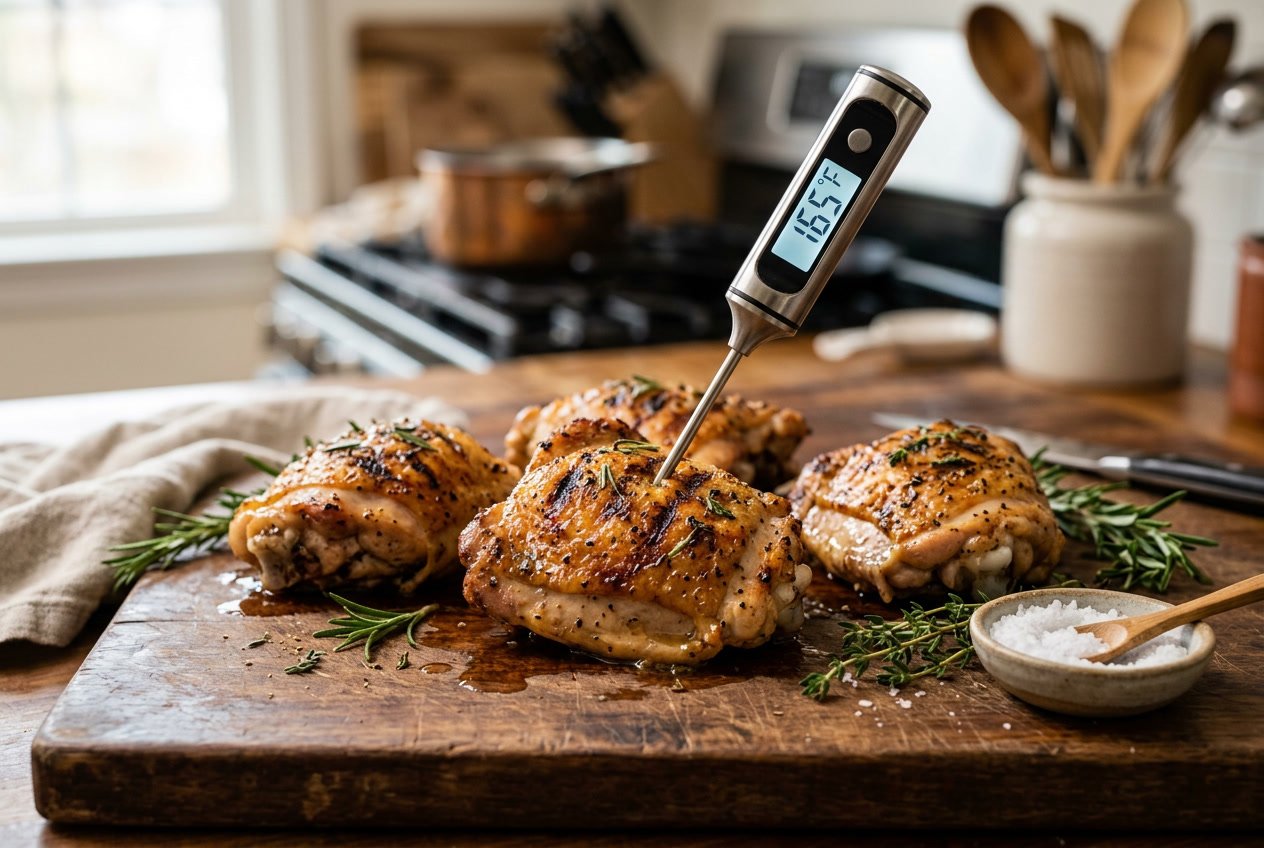
You can test temperature accurately with an instant-read thermometer. Use time-and-temperature guidelines for baking and other methods to avoid dry or stringy meat.
Follow these steps and you’ll hit the sweet spot every time.
What Temperature Should Chicken Thighs Be Cooked To?
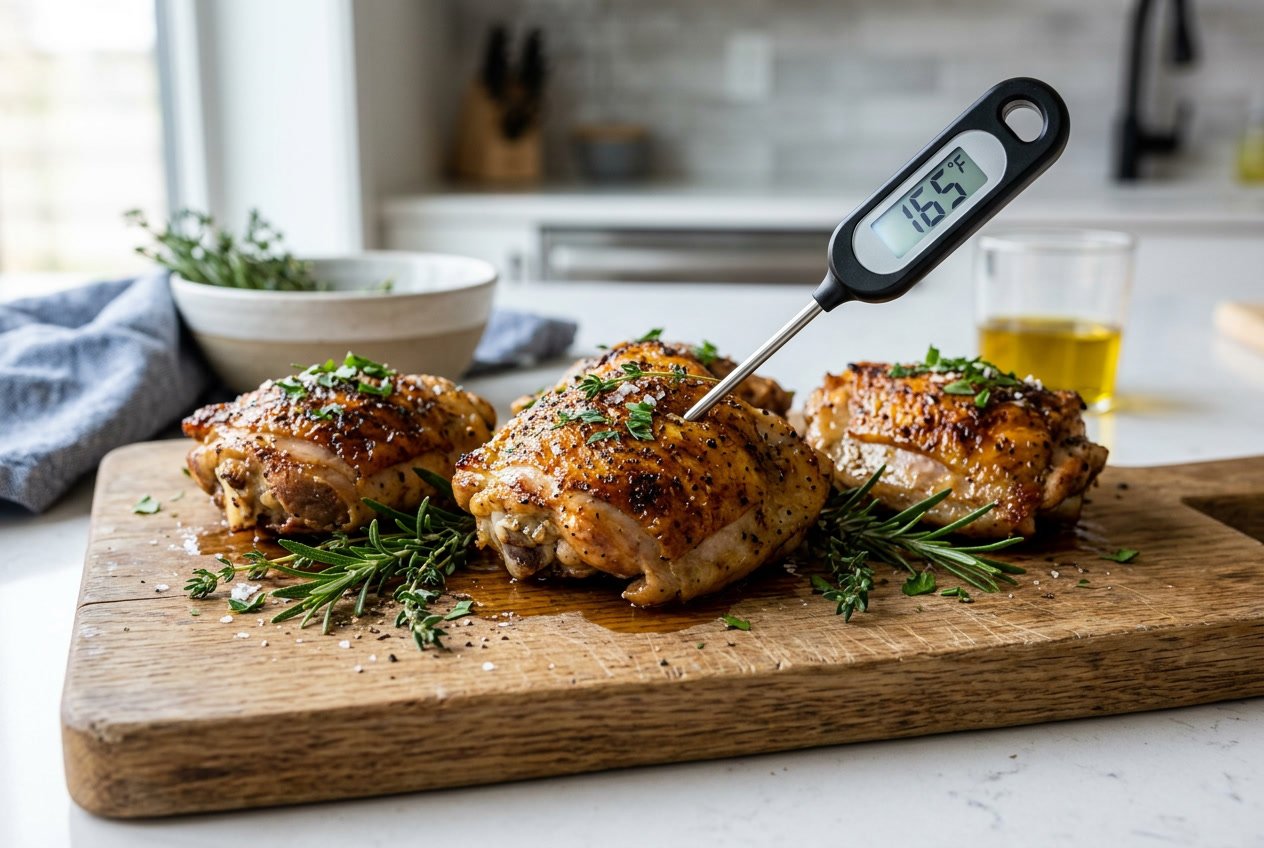
Chicken thighs need a balance between food safety and texture. You need a specific minimum temperature to eliminate pathogens, but a higher finish temperature can make dark meat more tender and flavorful.
USDA Safe Minimum Temperature
The USDA recommends cooking all poultry to a minimum internal temperature of 165°F (74°C). Measure this with an instant-read thermometer in the thickest part of the thigh, avoiding bone contact.
This temperature ensures that common pathogens like Salmonella are reduced to safe levels quickly.
If you prefer sous-vide or low-temperature long-time methods, remember that time-at-temperature matters. Lower temperatures can be safe only when held long enough to achieve the same microbiological reduction.
For home roasting or grilling, use 165°F as the practical safety target and verify with a calibrated thermometer.
Optimal Temperature Range for Juicy Thighs
For best texture, many cooks aim for a higher internal temperature than the USDA minimum. Chicken thighs often improve between 175°F and 195°F (79–91°C) because connective tissue breaks down into gelatin, making the meat more tender and moist.
Practical guidance:
- 165°F — safe and fully cooked, slightly firmer.
- 175°F — tender, still clings to bone.
- 190–195°F — very tender, almost shreddable, richest mouthfeel.
Use an instant-read thermometer inserted into the thickest part of the thigh, at least 1/4″ from bone. Allow a few seconds for an accurate reading.
Why Higher Temperatures Improve Texture
Thighs contain more collagen than white meat. As collagen heats, it converts to gelatin.
That process accelerates above 160°F and becomes pronounced by 175–195°F. The result is softer, juicier meat.
Cooking technique matters. Slow, gentle heat (braising, low oven or indirect grilling) lets collagen dissolve without drying the muscle fibers.
If you roast at higher oven temperatures for crisp skin, remove thighs once the internal temp reaches your chosen target. Rest them 5–10 minutes to let juices redistribute and the final temp stabilize.
How to Test Chicken Thigh Temperature
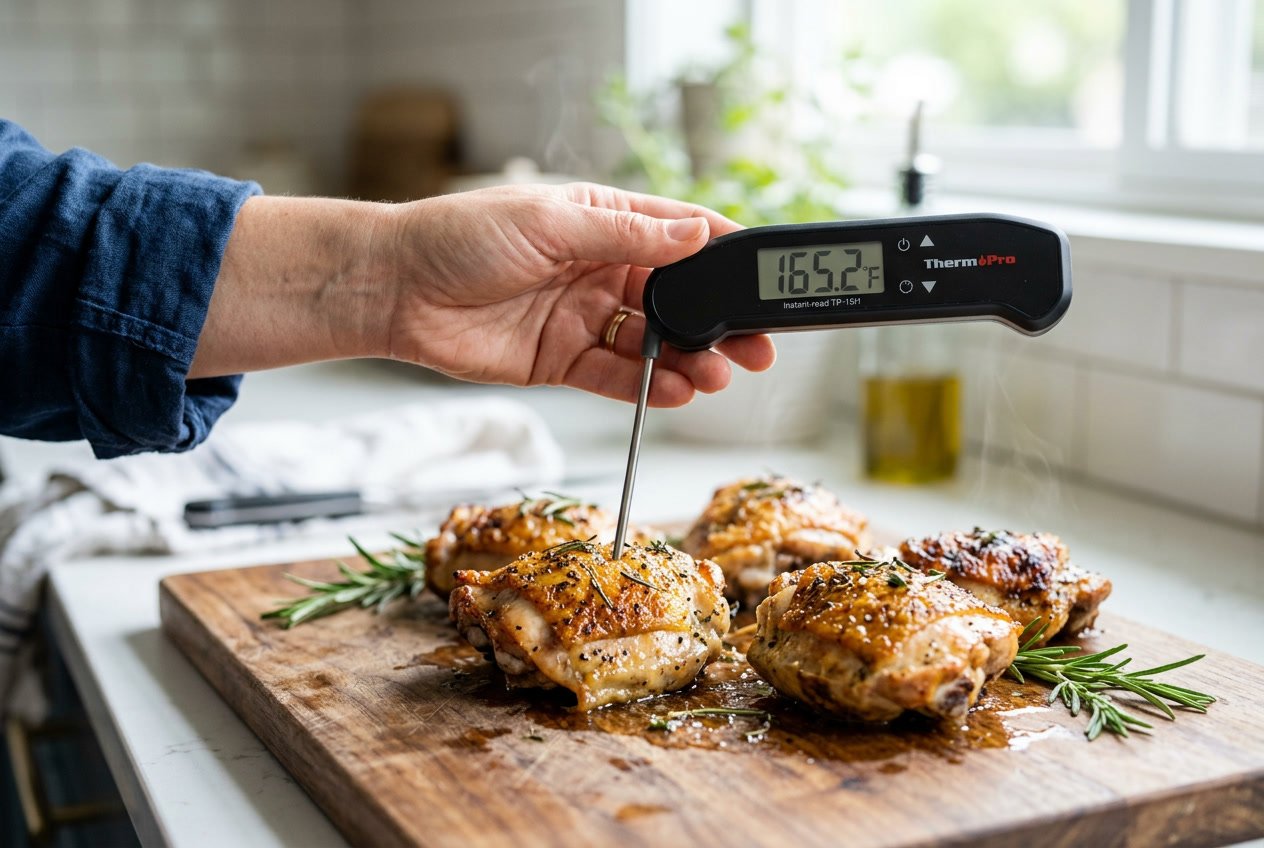
You need an accurate internal temperature, steady technique, and awareness of common errors to get juicy, safe thighs. Use an instant-read thermometer and check visual and textural cues alongside the thermometer.
Using an Instant-Read Thermometer
Insert the probe into the thickest part of the thigh, avoiding bone and cartilage. Bone gives a falsely high reading.
Hold the probe in place for the time your thermometer manufacturer recommends—usually 2–5 seconds for digital models—and read the temperature once it stabilizes.
Aim for the target based on cut. Boneless thighs are fine at 165°F (74°C) while bone-in, skin-on thighs taste better at 175°F–185°F (79°C–85°C).
If you cook to 175°F, collagen converts to gelatin and the meat becomes more tender without safety risk.
Always clean the probe with hot, soapy water between checks to prevent cross-contamination. If you test multiple pieces, check a few thighs in different pan or rack locations.
Avoiding Temperature Mistakes
Don’t touch bone with the probe. Bone conducts heat and will overstate doneness.
Insert the probe sideways into the meatiest part, parallel to the bone, for the most reliable reading. Avoid measuring temperature at the surface; surface temps don’t reflect the center.
Wait for the reading to stabilize. If your thermometer is slow or inconsistent, calibrate it in boiling water (212°F at sea level) or replace batteries.
Account for carryover cooking. Meat continues to rise a few degrees after you remove it from heat.
Pull boneless thighs at 165°F and bone-in at about 170°F if you want them to rest to the ideal final temp.
Visual and Textural Signs of Doneness
Look for clear juices that run when you cut near the thickest part. Pinkish juices can indicate undercooking in some cases.
Properly cooked dark meat will be uniformly opaque and no longer translucent. Press the thigh with tongs.
Cooked thigh feels springy and offers slight resistance, while undercooked meat is soft and jelly-like. For skin-on thighs, crisp, browned skin plus rendered fat at the edges usually accompanies a properly cooked interior.
Use these signs as secondary checks. Always confirm with an instant-read thermometer for food safety and consistent results.
Baking Chicken Thighs: Time and Temperature Guidelines
You need a specific oven temp and target internal temperature to get juicy meat and crisp skin. Cooking time depends on whether the thighs are bone-in or boneless and on oven temperature.
Use a thermometer for safety.
Recommended Oven Temperatures
Use 375°F (190°C) for a balanced result. The skin will crisp and the meat stays juicy without overcooking quickly.
If you want faster browning and crispier skin, raise the oven to 425°F (220°C). Watch the thighs closely to avoid burnt spots.
For gentler, more forgiving cooking that yields very tender meat, 350°F (175°C) works well for thicker bone-in pieces. Expect longer cook times.
Always remove from oven when the thickest part reaches 165°F (74°C) and let rest 5–10 minutes. Carryover heat can raise the temperature slightly.
Baking Times for Bone-In vs Boneless Thighs
Bone-in thighs generally take longer because the bone slows heat penetration. At 375°F, plan on 35–45 minutes for average-sized bone-in thighs.
At 425°F, that drops to about 30–40 minutes. Boneless thighs cook faster.
At 375°F expect 20–30 minutes depending on thickness. At 425°F plan on 18–25 minutes.
Use a meat thermometer inserted into the thickest part (away from bone) and remove at 165°F (74°C). If you lack a thermometer, check that juices run clear and there’s no pink near the bone or center.
Tips for Crispy and Tender Results
Dry the skin with paper towels and lightly oil the surface to promote browning. Preheat the oven fully so the thighs start crisping immediately.
For extra crispness, finish under a hot broiler for 1–3 minutes, watching continuously. Brining or a short marinade adds moisture and flavor.
For quick brine, dissolve 1 tbsp salt per cup of water and soak 30–60 minutes. Searing the skin-side down in a hot pan for 2–4 minutes before baking speeds crisping and adds color.
Rest the thighs 5–10 minutes after baking to let juices redistribute. Slice only after resting to preserve moisture.
Cooking Methods and Their Effect on Temperature
Different cooking methods change how heat moves through chicken thighs and how long you’ll need to reach a safe, juicy internal temperature. Pay attention to surface heat, bone presence, and resting time.
Grilling and Barbecuing
Grilling uses direct high heat that sears the skin and can raise surface temperature quickly. For bone-in thighs, sear skin-side down over direct heat for 4–6 minutes to develop color.
Move them to indirect heat and cook covered until the thickest part reaches 175°F. That higher finish temperature helps break down collagen around the bone and gives a tender result.
For boneless thighs, cook over medium-high direct heat about 5–7 minutes per side until they register 165°F–170°F. Let the meat rest 5–10 minutes after grilling so residual heat evens out the internal temperature.
Watch for flare-ups from dripping fat. Use a probe or instant-read thermometer inserted into the thickest part, avoiding bone.
Sautéing and Pan-Frying
Pan methods concentrate heat on one side and render fat under the skin. Start skin-side down in a cold or preheated skillet to slowly render fat, then increase to medium-high to crisp the skin.
For bone-in thighs finish in a 375°F oven if needed until the thickest point reaches 175°F. Total stovetop plus oven time often runs 25–40 minutes depending on size.
Boneless thighs cook faster: 8–12 minutes total in the pan, flipping once, until you hit 165°F–170°F. Pat the skin dry, don’t overcrowd the pan, and leave at least 1–1.5 inches between pieces so moisture escapes.
Always check temperature at the thickest spot and rest the thighs briefly to let juices redistribute.
Slow Cooking and Braising
Slow, moist methods keep the internal temperature well above food-safety minimums for long periods. Texture improves when collagen converts to gelatin at higher temps.
In a slow cooker, bone-in thighs become tender after 3–4 hours on high or 6–7 hours on low. They’ll pass 165°F early, but the meat benefits from reaching 175°F–185°F for shreddable tenderness.
Braising on the stovetop or in the oven at low simmer achieves similar results. Cook covered at 300°F–325°F until the thighs easily pull apart, often 1.5–3 hours depending on size.
If you want crisp skin after braising, transfer to a hot broiler or skillet for 3–5 minutes to re-crisp while monitoring internal temp.
Marinating and Seasoning Chicken Thighs for Best Texture
Proper salt, acid, and time make thighs tender without turning them mushy. Season to draw moisture out, then let flavors penetrate.
Balance pH and fat so your thighs stay juicy and develop a good crust.
How Marinating Affects Doneness
Marinades with acid (lemon, vinegar, yogurt) break down surface proteins and slightly tenderize, but they act slowly on thighs. Because thighs contain more collagen than breasts, you don’t need long acid contact to improve texture.
2–8 hours is ideal for flavor and tenderizing without mushiness. For deeper collagen conversion into gelatin you must rely on heat, not marinade.
Cook bone-in thighs to 175°F–185°F for a silky bite. Boneless thighs need less time and hit safe doneness at 165°F.
Over-marinating them with acid increases the risk of a mealy texture. Salt in a marinade or a dry-brine draws out then reabsorbs moisture, seasoning the meat through and helping skin crisp.
Pat thighs dry before high-heat cooking to promote browning and set internal doneness targets with an instant-read thermometer.
Flavorful Marinades and Rubs
Choose marinade components with purpose. Use oil and acid for carry and penetration, aromatics for surface flavor, and sugar or honey for browning.
Try a basic ratio: 3 parts oil to 1 part acid, plus 1–2 teaspoons salt per pound of meat and aromatics (garlic, ginger, herbs). Marinate 2–8 hours.
For fast prep or air-fryer cooking, use a dry rub: 1 tablespoon kosher salt, 1 teaspoon black pepper, 1 teaspoon smoked paprika, and ½ teaspoon garlic powder per pound. The dry rub seasons through salt action and preserves skin dryness for crisping.
If you want tender chicken thighs with a good crust, combine a short yogurt or buttermilk soak (2–6 hours) for tenderizing with a final pat-dry and a dry rub before high-heat searing or roasting.
Common Mistakes and How to Avoid Overcooking
Avoid extremes in temperature and time. Use a reliable thermometer and let thighs rest so connective tissue relaxes.
Small adjustments in heat, timing, and carryover cooking keep thighs tender and prevent dry, stringy meat.
Understanding Overcooked vs Undercooked Thighs
Overcooked thighs feel dry, stringy, and tight when you slice them. The juices run clear but the meat lacks tenderness.
Undercooked thighs may still be pink near the bone and feel soft or gelatinous. That raw texture and temperature below 165°F (74°C) create a food-safety risk.
Check the thickest part with an instant-read thermometer, avoiding bone contact. For safe but juicy thighs, aim for 165°F (74°C) as the minimum safe temperature for immediate eating.
When braising or slow-roasting for fall-apart, gelatin-rich tenderness, cook to 185–195°F (85–90°C).
Adjust your method to your goal. Use high heat (375–400°F) for crispy skin and pull the thighs when they reach around 165°F.
Use low-and-slow or sous-vide to reach higher internal temps without drying the meat. Watch cooking time more than color.
Relying on feel or visual cues often leads to overcooking.
Resting and Serving for Maximum Juiciness
Resting lets carryover cooking finish and redistributes juices inside the thigh. After you remove thighs from heat, tent them loosely with foil and rest for 5–10 minutes for bone-in thighs or 3–5 minutes for boneless pieces.
During rest, the internal temperature can rise 3–8°F (2–4°C). Pull thighs a few degrees shy of your target if you want precise doneness.
Slice against the grain to shorten muscle fibers and lock in moisture. Serve immediately after resting.
If you cook to higher temps for tender, braised thighs, let them rest longer (10–15 minutes). This allows gelatin to cool slightly and the meat to firm up for easier serving.


