
What Should Chicken Thighs Temp Be? The Complete Temperature Guide
You want chicken thighs that are both safe and delicious.
Aim for an internal temperature of at least 165°F (74°C) to meet USDA safety guidelines. Consider cooking dark meat higher—around 175–195°F—for more tender, collagen-rich results.
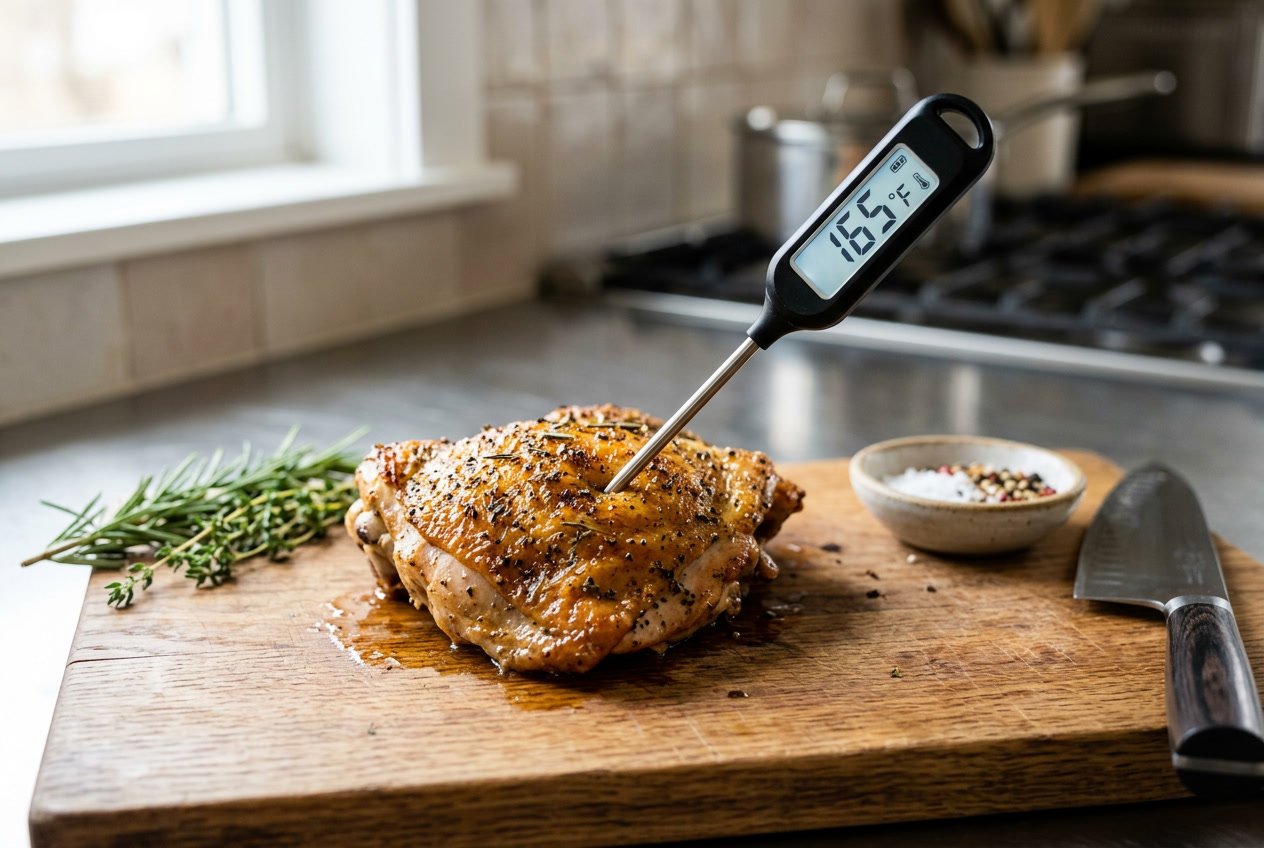
Different target temperatures affect texture and flavor. Check the temperature accurately and adjust your cooking methods as needed.
Follow this guidance to get safe, juicy thighs every time.
Optimal Chicken Thighs Temperature
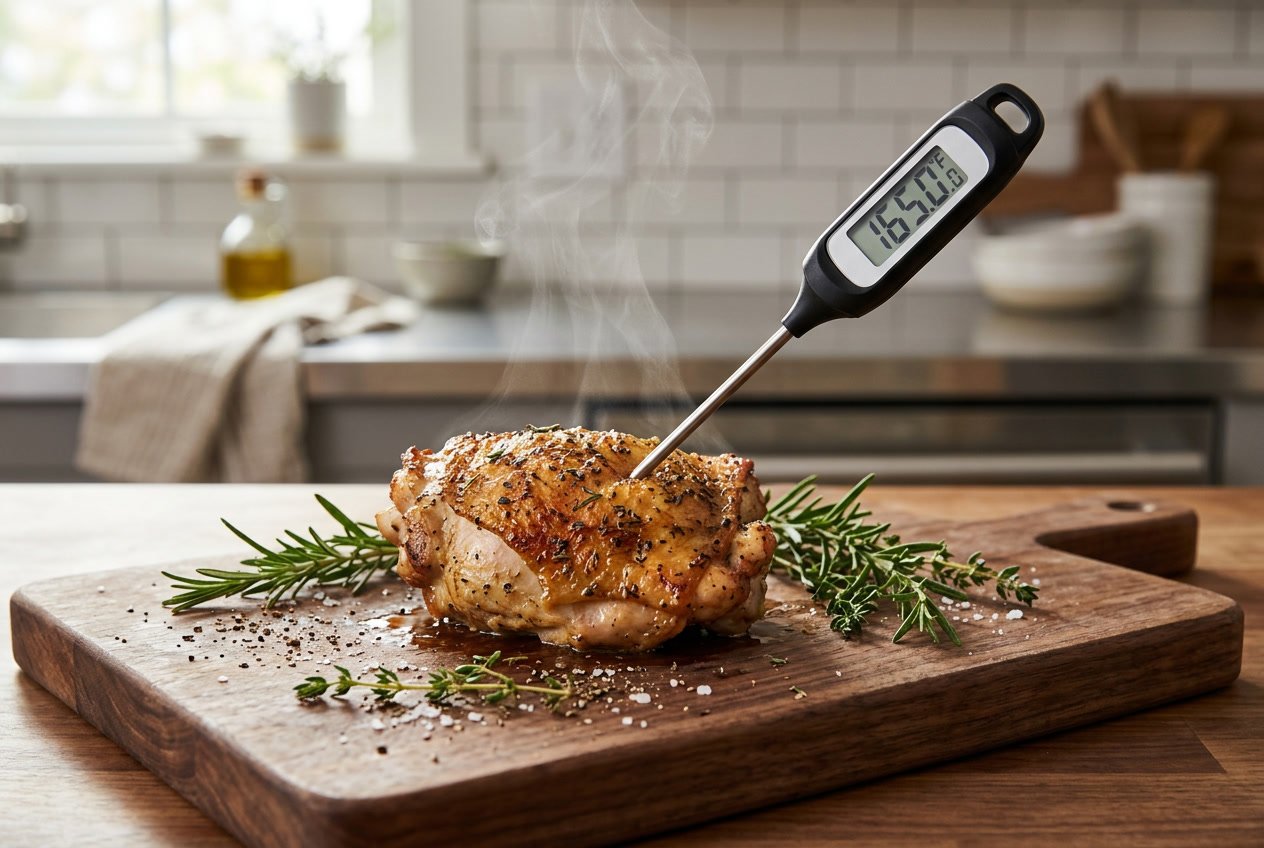
Cook chicken thighs to a safe minimum or to a higher target for maximum tenderness.
Use an instant-read thermometer in the thickest part of the thigh, avoiding bone, to confirm the internal temperature.
Recommended Internal Temperature Range
Aim for at least 165°F (74°C) to meet USDA safety guidance for poultry. Insert the probe into the thickest part of the thigh without touching bone and hold until the readout stabilizes.
For more tender, almost fall-off-the-bone thighs, target 190–195°F (88–91°C). At this range, connective tissue converts to gelatin, making the meat more succulent.
Many chefs prefer 175°F for a balance of juiciness and structure.
If you choose a lower endpoint than 165°F, you must maintain that lower temperature for a specific time to achieve equivalent pasteurization. This requires precise time-and-temperature control.
Why Temperature Matters for Chicken Thighs
Dark meat contains more connective tissue and fat than breast meat.
That collagen needs heat and time to break down into gelatin, which increases juiciness and tenderness.
Temperature determines texture. At 165°F the meat is safe and firm but can still be juicy.
Between 175°F and 195°F you’ll notice progressive softening as collagen dissolves.
Beyond about 210°F the muscle fibers can become stringy and lose characteristic chicken flavor.
Use an instant-read digital thermometer to remove guesswork. Oven and grill conditions vary, and thigh size differs.
Effects of Overcooking and Undercooking
Undercooked chicken thighs pose a food-safety risk from bacteria like Salmonella and Campylobacter.
Even if the exterior looks done, pockets near the bone can stay cool; probe multiple thighs when cooking a batch.
Overcooking at high temperature or for too long can dry and toughen muscle fibers, especially above 210°F where the meat becomes stringy.
Slow, prolonged cooking that reaches 190–195°F yields very tender, gelatin-rich thighs, so method and temperature curve matter more than peak temperature alone.
Cook to your chosen target temperature, rest the thighs for 5–10 minutes to allow residual carryover heating, and then check texture.
Resting also evens juices and improves final tenderness.
Safe Minimum Temperature According to USDA
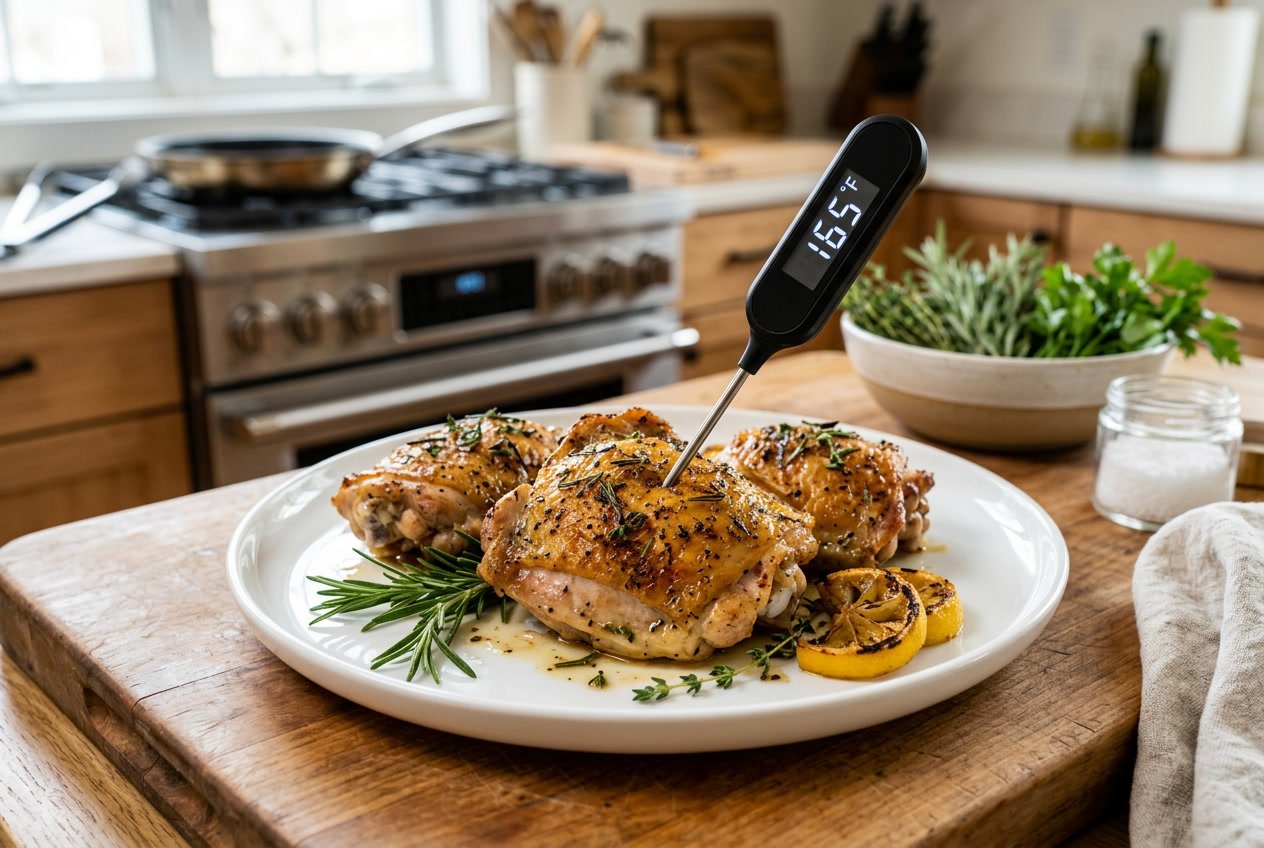
The USDA sets a clear numeric target for safe poultry cooking and emphasizes using a probe thermometer in the thickest part of the meat.
Follow that temperature and measure properly to avoid both undercooking and unnecessary overcooking.
165°F and Food Safety
The USDA requires chicken thigh internal temperature to reach 165°F (74°C) measured at the thickest point, typically near the bone.
Use an instant-read or probe thermometer; insert the tip into the center of the thigh, avoiding contact with bone or fat for an accurate reading.
Hold the thermometer until the reading stabilizes.
Once the center hits 165°F, pathogens such as Salmonella and Campylobacter are effectively reduced to safe levels.
Rest the thighs for 5–10 minutes after removing them from heat; carryover heating can raise the internal temp slightly while juices redistribute.
Apply this rule to whole birds, bone-in thighs, boneless thighs, and ground poultry.
Do not rely on color or juice clarity—those cues can be misleading, especially with dark meat that may remain slightly pink even when safe.
Risks of Undercooked Chicken Thighs
Eating chicken thighs that haven’t reached 165°F raises the risk of foodborne illness from bacteria commonly found in raw poultry.
Symptoms can include nausea, vomiting, abdominal cramps, fever, and diarrhea.
Vulnerable people (young children, elderly, pregnant people, and immunocompromised individuals) face greater severity.
Cross-contamination multiplies risk. Raw juices can transfer bacteria to utensils, cutting boards, and ready-to-eat foods.
Clean and sanitize surfaces and tools after handling raw thighs, and never place cooked meat back on a plate that held raw pieces.
If you suspect undercooked thighs, return them to heat and verify the center reaches 165°F.
When reheating leftovers, bring them back to 165°F throughout to ensure safety.
Preferred Temperatures for Best Texture and Flavor
Use a thermometer and target specific temps to control juiciness, collagen breakdown, and skin crispness.
Small changes in final internal temperature make noticeable differences in texture and ease of carving.
175–185°F for Juiciness
At 175–185°F the connective tissue in thighs has begun to break down, releasing gelatin that keeps the meat moist and gives a tender mouthfeel.
The meat pulls cleanly from the bone at the upper end of this range while still holding together for slicing.
Aim for 175°F if you want a slightly firmer bite that’s still juicy.
Push toward 185°F for a softer, almost shreddable texture without becoming stringy.
Insert an instant-read thermometer into the thickest part of the thigh, avoiding bone, and rest the meat 5–10 minutes to let juices redistribute.
Texture Differences at Various Temperatures
165°F: Safe per USDA, meat is fully cooked but can feel firmer and less succulent than higher temps.
Best when you need quick cooking and minimal shredding.
175–185°F: Collagen begins melting; thighs feel moist and tender while retaining structure.
This range suits roasted, grilled, or baked thighs when you want both texture and presentation.
190–195°F: Collagen conversion advances; meat becomes very tender and may begin to shred.
Choose this for braises, slow-roasts, or when you want fall-apart thighs.
Above 205°F: Avoid this range; muscle fibers can dry and turn stringy, losing characteristic chicken flavor.
Temperature Chart Breakdown
| Internal Temp | Expected Texture | When to Use |
|---|---|---|
| 165°F | Firm, safe | Quick weeknight roasts; mixed dishes |
| 175°F | Juicy, slightly firm | Roasts with crisp skin; plated servings |
| 180–185°F | Tender, juicy | Best balance for tenderness and presentation |
| 190–195°F | Very tender, shreddable | Braises, pulled-chicken recipes |
| 200–205°F | Risk of stringy | Not recommended |
Use the chart to match your cooking method and final dish.
Calibrate your thermometer and take readings at the thickest point, ¼ inch from bone, for accurate chicken thigh temperature.
Measuring Chicken Thighs Internal Temperature
You need a reliable reading from the thickest part of the thigh, avoiding bone and skin, to know when the meat is safe and at the texture you want.
These practical steps and tools will help you get consistent results every time.
Using an Instant-Read Thermometer
Use a digital instant-read thermometer for fastest, most reliable readings.
Insert the probe into the center of the thickest part of the thigh, angling slightly to avoid the bone.
Bone conducts heat and gives a falsely high reading.
Wait until the thermometer reading stabilizes. Most models take 2–5 seconds.
For bone-in thighs aim for 175°F–185°F if you want tender, gelatinized meat.
Pull boneless thighs at about 165°F–170°F to avoid drying.
Calibrate your thermometer periodically by testing it in an ice bath (32°F) and boiling water (adjust for elevation).
Clean the probe with hot, soapy water between uses to prevent cross-contamination.
Tips for Accurate Temperature Measurement
Measure in multiple spots when cooking larger batches; thighs vary in size and thickness.
Always check the thickest portion and, for bone-in pieces, measure near but not touching the bone.
If you rotate or rest meat, take a final reading after a 5-minute rest because carryover cooking raises internal temp a few degrees.
Avoid inserting the probe through skin folds; you’ll hit air pockets and get low readings.
Use the thermometer’s tip, not the shaft; many instant-read probes only measure at the last 0.5–1 inch.
Keep the thermometer clean and store it at room temperature to preserve accuracy.
Alternatives to Thermometers
If you don’t have an instant-read thermometer, use practical cues but treat them as secondary methods.
A fork or knife test: meat should be opaque with juices running clear, and fibers should separate easily.
This is most reliable for bone-in thighs cooked to higher temperatures.
Press the thigh with tongs; it should feel springy but not hard.
Oven time guides work when pieces are uniform.
At 400°F bone-in thighs typically take 35–45 minutes, boneless 20–25 minutes.
These estimates depend on size and oven variability, so use them only when a thermometer is unavailable.
Purchase a digital instant-read thermometer when possible; it’s the simplest way to guarantee safety and desired texture.
Temperature Guidelines by Type of Chicken Thigh
Target internal temperatures vary with cut and cooking method.
Aim for safe minimums but adjust higher when you want more connective-tissue breakdown for tender, juicy thighs.
Bone-In Chicken Thighs
Bone-in thighs take longer to reach temperature because the bone slows heat transfer.
Use an instant-read thermometer inserted into the thickest part of the meat, not touching bone.
Follow the USDA minimum of 165°F (74°C) for safety.
For the best texture cook bone-in thighs to 175–195°F (79–90°C) depending on desired tenderness.
At about 175°F the meat will be fully cooked and still cling to the bone.
Pushing to 190–195°F breaks down more collagen and yields very tender, almost pull-apart meat.
Cooking times vary.
At 400°F oven roast expect about 35–45 minutes for medium-sized bone-in thighs.
Braising at 300°F will take significantly longer.
Always rest the thighs 5–10 minutes; carryover heat can raise the internal temp a few degrees.
Boneless Chicken Thighs
Boneless thighs heat faster and are thinner, so they reach target temperature sooner.
Insert the thermometer into the center of the thickest part of the fillet.
Follow 165°F (74°C) as the safe minimum.
For juicier results, you can cook to 170–175°F (77–79°C); the extra few degrees help render fat without drying out the piece.
Boneless thighs benefit from quick, high-heat methods such as pan-searing, grilling, or 425°F oven roasting.
Expect a short cook time (typically 12–20 minutes depending on thickness).
For marinades or stir-fries, cut into uniform pieces to ensure even cooking and check multiple pieces with your thermometer.
Skin-On vs Skinless Chicken Thighs
Skin adds insulation and fat; it slows heat penetration and affects crisping.
For skin-on thighs, target 175–195°F (79–90°C) if you want rendered fat and crisp skin.
Roast at higher initial heat (425°F) or finish under a broiler to crisp skin while ensuring the meat reaches the desired internal temp.
Place thermometer probe under the skin but not against bone.
For skinless thighs, cook more quickly and monitor closely.
Aim for 165–175°F (74–79°C) depending on juiciness preference.
Skinless pieces dry out faster, so use shorter cook times, brines, or sauces to retain moisture.
In both cases, avoid probe contact with bone and let thighs rest 5 minutes to allow juices to redistribute.
Cooking Methods and Their Temperature Impacts
Different cooking techniques change how heat moves through thighs and how connective tissue breaks down.
Adjust target temperatures and timing depending on method and desired texture.
Pay attention to internal temp, surface heat, and resting time to get the results you want.
Baking Chicken Thighs
Preheat the oven between 375°F and 425°F, depending on how crispy you want the skin and how much time you have. For bone-in, skin-on thighs at 400°F, bake for about 35–45 minutes and check with an instant-read thermometer in the thickest part, avoiding the bone.
Aim for an internal temperature of at least 165°F (74°C) to meet USDA safety guidelines. If you want very tender, falling-apart dark meat, bake until 190–195°F so the collagen converts to gelatin and the texture becomes silkier.
To get crispy skin, pat the skin dry and start the thighs on a hot sheet or in a preheated cast-iron pan. Move them to the oven at 425°F for the last 10–15 minutes.
Let thighs rest for 5–10 minutes before slicing so juices redistribute.
Grilling and Pan Searing
Sear thighs over medium-high heat to brown the skin and render fat. Move them to indirect heat or a lower oven to finish cooking.
On the grill, sear both sides for 3–5 minutes, then cook over indirect heat at 350–375°F until the internal temperature reaches 165–175°F for juicy meat. Grill to 190–195°F for very tender results.
Use an instant-read thermometer in the thickest part and keep the grill lid closed to maintain even heat. For boneless, skinless thighs, reduce sear time and monitor closely because they reach 165°F faster and can dry out if left on direct high heat too long.
Slow Cooking and Braising
Slow cooking or braising uses low, moist heat to break down collagen. Set your slow cooker to low (around 190–200°F internal environment) or braise in a 300–325°F oven.
Cook until the thigh’s internal temperature reaches 175–195°F so connective tissue turns to gelatin and the meat becomes tender. Since these methods keep moisture, you can hold thighs at lower internal temperatures longer than with dry heat, but still check with a thermometer near the bone.
Finish with a quick high-heat sear if you want a caramelized exterior after braising.
Handling and Storing Cooked Chicken Thighs
Cool and store cooked chicken thighs promptly in airtight containers. Reheat to a safe temperature before eating to prevent bacterial growth and preserve texture and flavor.
Resting Time After Cooking
After you remove thighs from heat, rest them for 5–10 minutes to let juices redistribute and finish carryover cooking. Carryover can raise internal temperature by a few degrees, so check that the meat reached at least 165°F (74°C) before serving.
Rest on a clean rack or plate. Avoid covering tightly while hot because trapped steam softens the skin.
If refrigerating within two hours of cooking, loosely tent with foil for a few minutes, then transfer to an airtight container once the surface cools to room temperature.
For large batches, divide into shallow containers so the chicken cools quickly through the 140–70°F danger zone. Rapid cooling reduces bacterial growth and improves safety for storing leftovers.
How to Store Cooked Chicken Thighs
Store cooked chicken thighs in airtight containers or resealable bags to limit air exposure and moisture loss. Label containers with the date and refrigerate at 40°F (4°C) or below; use within 3–4 days.
If freezing, wrap thighs tightly in plastic wrap and aluminum foil or use vacuum-seal bags to prevent freezer burn. Properly wrapped cooked thighs keep their best quality for up to 4 months, though they remain safe beyond that but may lose texture and flavor.
Keep raw and cooked chicken separate in the fridge. Place cooked containers on higher shelves to avoid cross-contamination from raw juices.
Discard any cooked chicken left at room temperature for more than two hours, or one hour if the temperature is above 90°F (32°C).
Reheating and Checking Leftover Chicken
Heat leftovers until the internal temperature reaches 165°F (74°C) at the thickest part of the thigh. Use a food thermometer for accuracy instead of relying on appearance.
Reheat in the oven at 325–350°F (160–175°C) for 10–15 minutes for whole thighs. For sliced portions, use the microwave in short, covered intervals.
Warm chicken in a skillet with a splash of broth to keep it moist. Thaw frozen thighs in the fridge overnight before reheating.
Check leftover chicken thighs for off odors, slimy texture, or visible mold. If you notice any of these signs, discard the chicken immediately.
If you are unsure about storage time or safety, throw it out. The risk of foodborne illness is not worth it.


