
What Should Chicken Thighs Temp At: Safe, Tender, and Juicy Results
You want safe, juicy chicken thighs without guessing at the thermometer. Aim for an internal temperature around 175°F for reliably tender thighs, and consider 190–195°F when you want them meltingly soft from long, slow cooking.
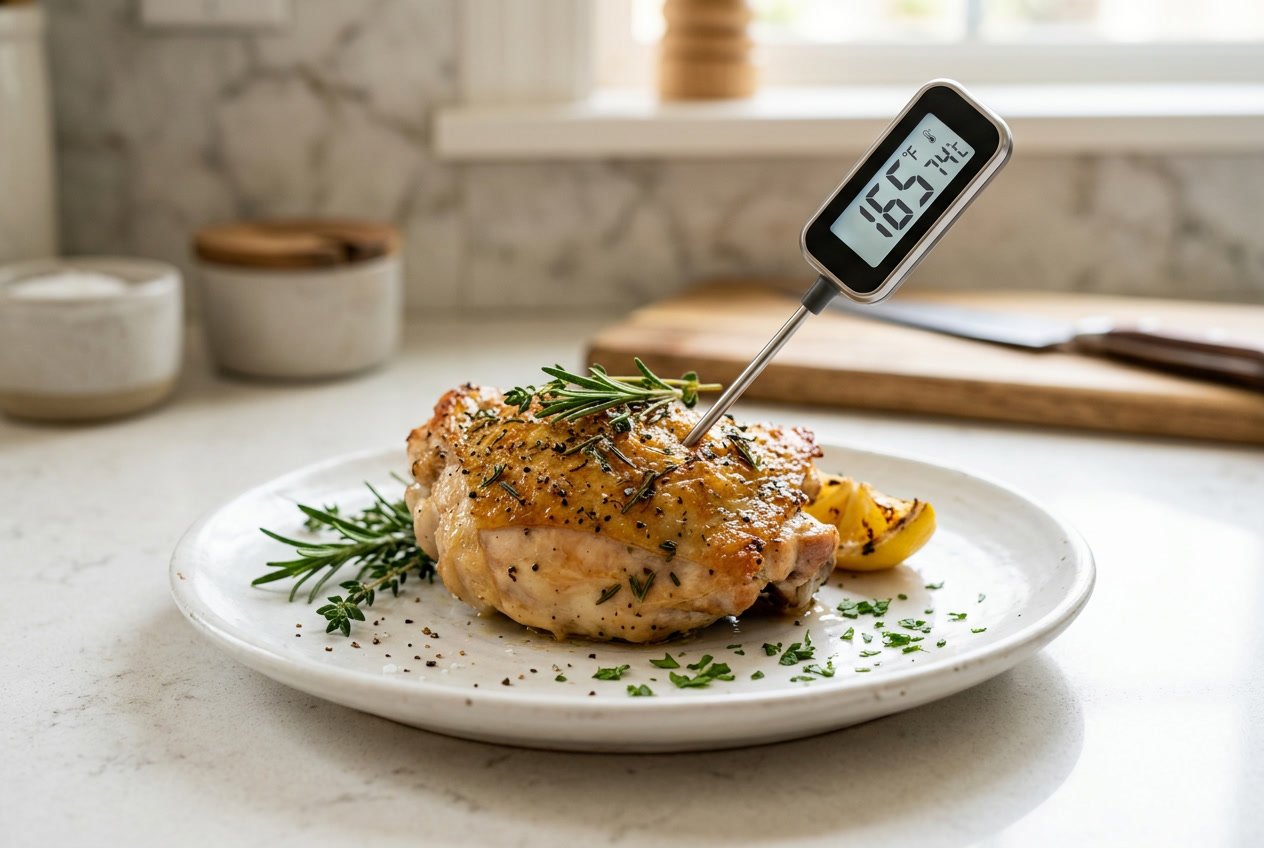
You’ll learn why those temperatures differ for bone-in versus boneless pieces. You’ll also learn how to check the thickest part without touching bone, and which cooking methods make each target temperature shine.
Keep the thermometer ready. Small timing and temp changes make the difference between dry meat and restaurant-quality thighs.
Recommended Chicken Thigh Internal Temperature
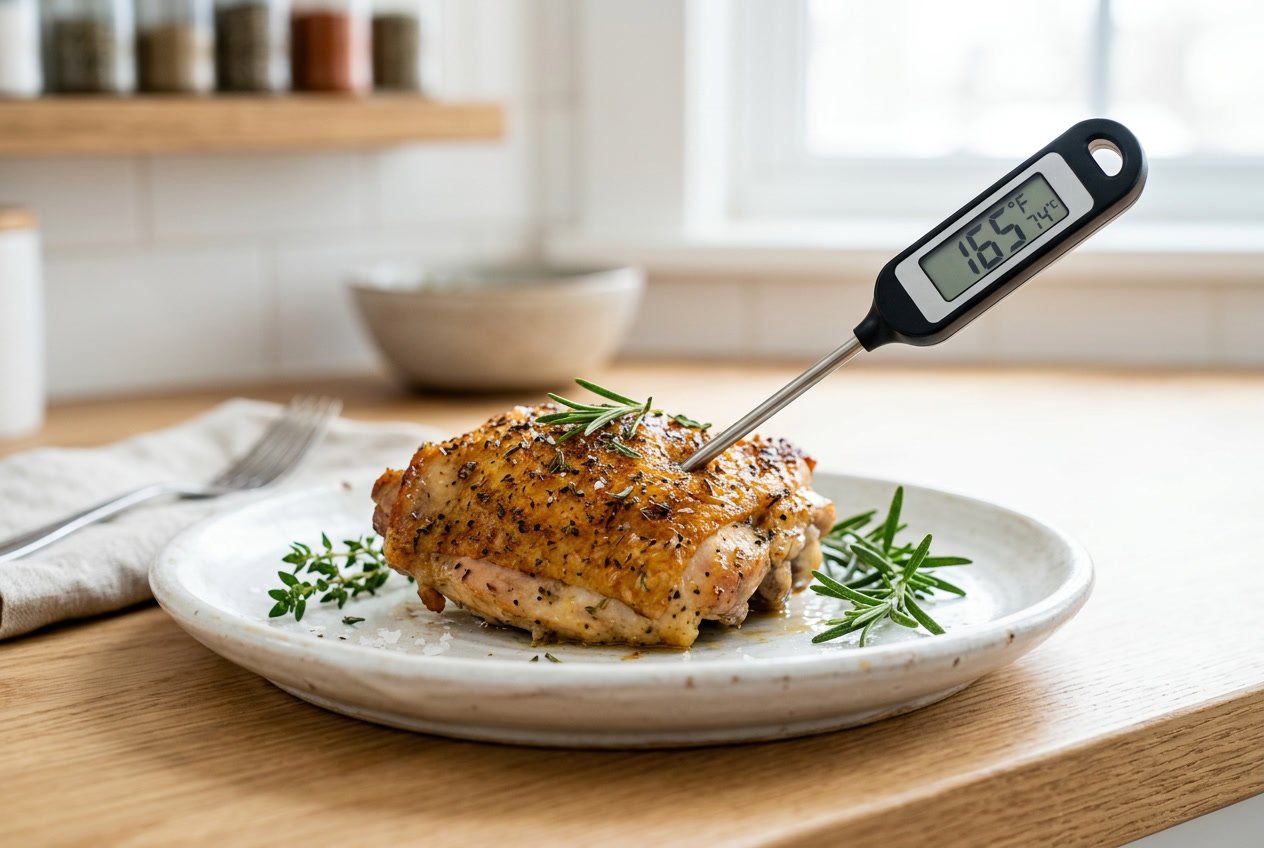
Cook chicken thighs to a temperature that guarantees safety while matching the texture you want. Use an instant-read thermometer in the thickest part without touching bone for accurate readings.
USDA Food Safety Guidelines
The USDA sets the safe minimum internal temperature for all poultry at 165°F (74°C). You must reach that temperature to kill harmful bacteria like Salmonella.
Insert your thermometer into the thickest part of the thigh, avoiding bone. Confirm the reading in several spots for larger pieces.
After hitting 165°F, you can hold the thighs for a short carryover period. Residual heat will not make undercooked meat safe if the thermometer never reached 165°F.
Ideal Range for Juiciness and Tenderness
For bone-in, skin-on thighs, you will often get better texture by letting the internal temperature rise to 175–185°F (79–85°C). Collagen in dark meat converts to gelatin in that range and produces a silkier, more tender bite.
For boneless, skinless thighs, aim for 165–170°F (74–77°C) to avoid drying. Boneless thighs have less connective tissue, so higher temps can make them dry.
If you want fall-off-the-bone thighs or plan to shred them, target the upper end near 185°F.
Visual Signs Versus Temperature
Visual cues like clear juices, firm texture, and no pink near the bone can help but sometimes mislead. Color can remain slightly pink even at safe temperatures, so rely on thermometer readings rather than appearance alone.
Use a checklist: thermometer reads target temp in the thickest part, juices run clear when pierced, and meat pulls away from the bone for higher-temp results.
Bone-In vs. Boneless Chicken Thighs Temperature Differences
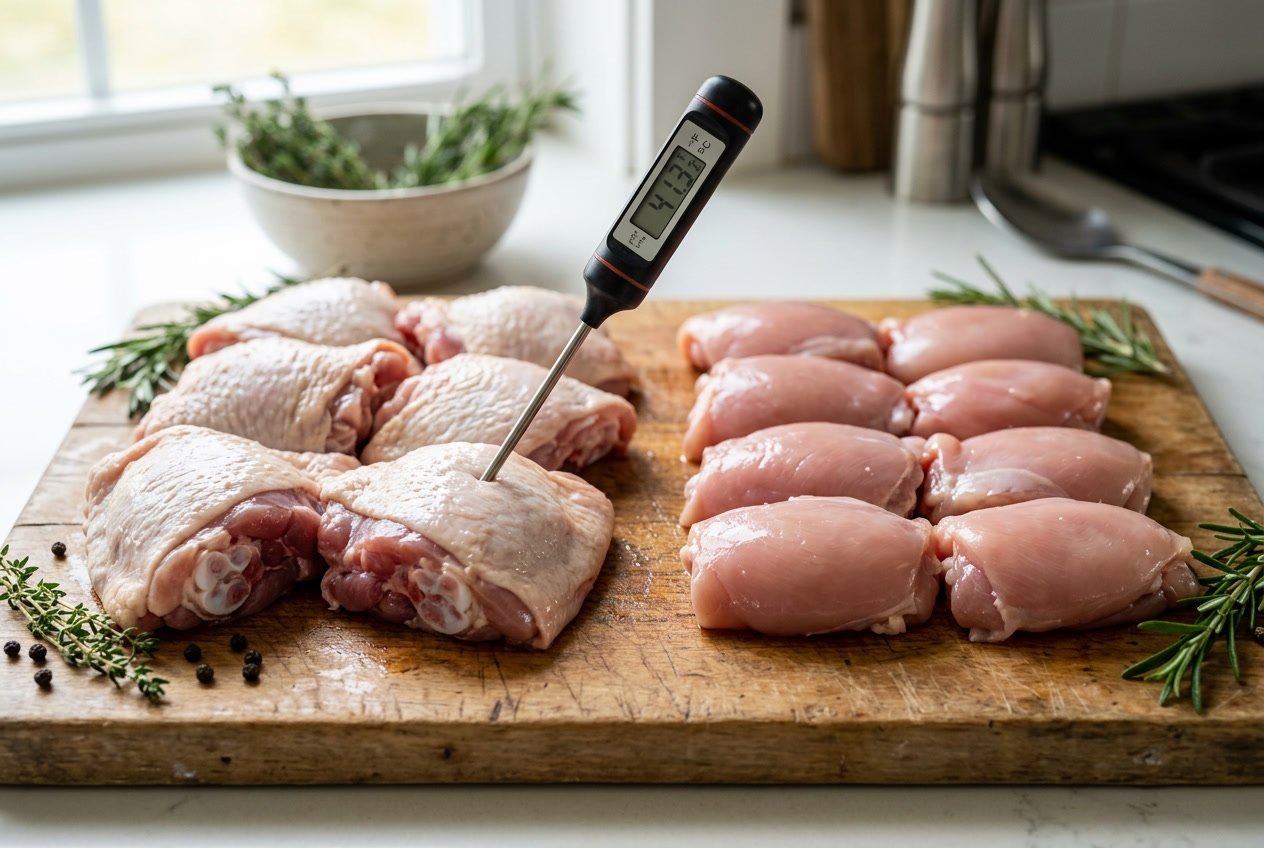
Bone-in thighs take longer to reach target temperature and often benefit from higher end temperatures for crisp skin. Boneless thighs heat faster and need careful timing to avoid drying while still reaching a safe internal temp.
Temperature Needs for Bone-In Chicken Thighs
Bone-in chicken thighs require more cooking time because the bone slows heat penetration. Aim for at least 165°F (74°C) for safety, but often cook them to 175–195°F for more tender, gelatinized meat.
The bone and connective tissue break down as temperature climbs toward 190–195°F and produce a richer texture. Use an instant-read thermometer inserted into the thickest part of the thigh, avoiding the bone.
If roasting or grilling, cook at moderate oven temps (375–425°F) or use indirect heat on the grill so the interior reaches your target without burning the skin. Rest for 5–10 minutes; carryover cooking will raise the internal temp slightly.
Best Temp for Boneless Chicken Thighs
Boneless chicken thighs heat faster and reach safe temperature sooner, so watch them closely. Cook to at least 165°F (74°C); many cooks stop at 170–175°F to balance juiciness and texture.
Going beyond 175°F risks dry, stringy meat since boneless cuts have less connective tissue to convert to gelatin. For quick methods like pan-searing or high-heat grilling, use higher surface temperatures (400–450°F) to develop browning while checking the internal temp early.
For even cooking, press the thermometer into the center of the thickest part. Short rest time (3–5 minutes) lets juices redistribute without significant additional temperature rise.
How to Measure Chicken Thigh Temperature
Use an instant-read meat thermometer to check the thickest part of the thigh. Avoid the bone and pull bone-in thighs at a higher target than the USDA minimum for better texture.
Where to Insert the Instant-Read Meat Thermometer
Insert the probe into the thickest, fleshiest part of the thigh, not against or through the bone. Bones conduct heat and give falsely high readings, so position the tip in the center of the meat where collagen is highest.
For boneless thighs, aim for the center of the fillet. For bone-in, angle the probe parallel to the bone and push past the outer meat until the tip sits deep in the flesh, about 1–1.5 inches from the surface.
Hold the probe steady for the time your thermometer’s instructions recommend, usually 2–10 seconds for instant-read models. Always verify the probe tip makes contact with meat and not leakage or skin.
If readings vary, check two locations on the same thigh: one near the bone and one in the opposite thick point. Use the lower reliable value.
Avoiding Common Measurement Mistakes
Avoid touching bone, fat pockets, or gristle with the probe; these areas register higher or inconsistent temperatures. Do not trust a single quick poke if the probe sits shallow.
Keep the thermometer clean and calibrated. Wipe the probe between checks and perform a quick calibration check in ice water (should read 32°F/0°C) or boiling water (adjusted for altitude).
Replace batteries or the probe if the thermometer lags or fluctuates. Don’t measure immediately after removing the thigh from heat if you need a quick decision; the surface cools faster than the interior.
Check in the thickest spot and allow carryover cooking if you plan to rest the meat. Factor in a few degrees of rise for bone-in pieces.
Tips for Consistent Results
Use the same instant-read thermometer every time to build calibration familiarity. Insert the probe to the same depth and location on each thigh for repeatable accuracy.
Check temperature toward the end of the expected cook time rather than early. For batches, rotate pieces and test the thickest-looking thigh as representative.
Record the thermometer reading and target (e.g., 175°F for bone-in thighs, 165°F minimum for safety) so you and others follow the same standard. If you sear or broil after sous-vide or slow cooking, test after finishing to confirm the surface method didn’t overcook the interior.
Store your thermometer in a protective sheath to protect the probe and preserve accurate measurements.
Cooking Methods and Optimal Temperatures
You should target an internal temperature that ensures safety and gives the texture you want. Adjust cook time and technique to reach 165°F for safety or 175°F when you want more collagen breakdown and a more tender thigh.
Baking Chicken Thighs
Preheat the oven to 375–400°F (190–200°C). Arrange bone-in, skin-on thighs on a rimmed baking sheet or in a roasting pan with the skin up so hot air crisps the surface.
Use an instant-read thermometer inserted into the thickest part without touching bone. For safe, juicy thighs aim for at least 165°F (74°C); for more tender, shreddable meat aim for 170–180°F (77–82°C).
At 400°F expect about 30–45 minutes for bone-in thighs. Boneless thighs finish faster, often 20–30 minutes.
Pat skin dry and season beforehand. Let thighs rest 5–10 minutes after removing from the oven to allow juices to redistribute and the final internal temp to stabilize.
Grilling Chicken Thighs
Preheat your grill to medium heat (about 350–400°F / 175–200°C). Use two-zone grilling when possible: direct heat to sear, indirect heat to finish cooking without burning the skin.
Sear skin-side down first 4–6 minutes, then move to indirect heat to bring the internal temperature up. Monitor with a probe thermometer in the thickest part.
Target 165°F (74°C) minimum; for more tender thighs aim for 175°F (79°C). Turn occasionally to prevent flare-ups and ensure even browning.
For boneless thighs, shorten grilling time and watch closely. Let grilled thighs rest 5 minutes before serving.
Slow Cooking and Pressure Cooking
Use a slow cooker for fall-off-the-bone thighs or a pressure cooker for faster braising. Both methods break down collagen but require different internal temp thinking and timing.
In a slow cooker set to low, cook 6–8 hours; on high, 3–4 hours. Verify the thickest part reaches 165°F; for shreddable results aim for 190–205°F (88–96°C) where collagen converts to gelatin.
In a pressure cooker, cook 10–15 minutes under high pressure, then natural release. Check that the meat reaches at least 165°F and increase time if you want more tenderness.
Avoid leaving thighs in a hot slow cooker beyond the recommended time to prevent texture loss. Use a thermometer at the end.
Pan Frying and Sautéing
Heat a heavy skillet over medium-high heat and use oil with a high smoke point. For skin-on thighs, start skin-side down to render fat and crisp the skin for 6–8 minutes before flipping.
After searing, lower heat to medium and continue cooking until the thickest part reads 165–175°F depending on your texture goal. Boneless thighs cook faster; expect 8–12 minutes total depending on thickness.
Use a lid briefly to finish through without burning the exterior if needed. Finish thicker pieces in a 350°F oven after searing to ensure even cooking.
Always rest the meat 3–5 minutes before slicing to keep juices locked in.
How Long to Cook Chicken Thighs for Best Texture
Cook until the internal temperature reaches your target and the connective tissue has softened. Timing varies by cut, method, and whether thighs are bone-in or boneless.
Oven Cooking Time Guide
For bone-in, skin-on thighs, roast at 400°F (204°C) for 30–40 minutes. Start skin-side up on a rimmed sheet or in an ovenproof skillet; check at 30 minutes with an instant-read thermometer.
Remove when the thickest part reads 175°F–185°F for tender, pull-apart texture, or 165°F–170°F if you prefer slightly firmer meat. Boneless, skinless thighs cook faster: 20–25 minutes at 400°F.
Pull them at 165°F–170°F to avoid drying. If you want crisp skin on boneless thighs, broil 1–2 minutes at the end.
For even cooking, bring thighs to room temperature for 15–20 minutes before roasting.
Grill and Stovetop Timing
On the grill, preheat to medium-high (about 375°F–450°F). Sear skin-side down for 4–6 minutes over direct heat to crisp skin, then move to indirect heat for 12–20 minutes for bone-in thighs, or 8–12 minutes for boneless.
Aim for the same internal temps: 175°F–185°F for fall-apart tenderness, 165°F–170°F for firmer results. On the stovetop, pan-sear skin-side down over medium-high for 6–8 minutes until browned and rendered.
Flip and reduce heat to medium; cover and cook bone-in for 18–25 minutes, boneless for 10–15 minutes. Use a thermometer rather than timing alone.
Resting Period After Cooking
Let thighs rest uncovered or lightly tented for 5–10 minutes after cooking. Carryover cooking raises internal temperature 3°F–7°F, so remove slightly below your target if you want precise doneness.
Resting also lets juices redistribute, improving juiciness and texture. For very hot, thick bone-in thighs, extend resting to 10–12 minutes to stabilize internal temperature and make carving easier.
Serve within 20 minutes of resting for the best balance of temperature and tenderness.
Tips for Juicy and Tender Chicken Thighs
Focus on techniques that break down connective tissue, lock in moisture, and build flavor without masking the chicken. Small steps like temperature control, salt timing, and method choice have the biggest impact on tenderness and juiciness.
Marination and Seasoning Techniques
Salt early. Dry-brine bone-in thighs with ½–1 teaspoon kosher salt per pound and refrigerate uncovered for 1–24 hours to season deeply and improve moisture retention.
If you’re short on time, salt at least 30 minutes before cooking.
Use acidic marinades sparingly. Soak thighs for 15–30 minutes in a mixture with 1–2 tablespoons of acid (vinegar or lemon) per cup of liquid to add flavor.
Acidic marinades can toughen meat if left too long. For longer marination, choose yogurt or oil-based blends with herbs and garlic.
Add umami and fat. Mix in soy sauce, fish sauce, or tomato paste and a tablespoon of oil to help the thighs brown and taste richer.
Pat thighs dry before searing or roasting to encourage Maillard browning.
Skin-On vs. Skinless for Texture
Choose bone-in, skin-on thighs for the best texture and protection against drying. The skin bastes the meat during cooking and the bone conducts heat more gently.
If you want crispy skin, start skin-side down in a hot pan for 6–8 minutes. Finish cooking in a 400–425°F oven until the internal temperature reaches your target.
For skinless thighs, reduce high-heat searing time. Use braising or slow roasting to prevent toughness.
Remove skin after cooking if desired. Leaving the skin on while cooking preserves moisture and texture.
Avoiding Overcooking
Aim for appropriate internal temperatures. 165°F is safe, but 175–195°F gives more tender dark meat as collagen converts to gelatin.
Use an instant-read thermometer in the thickest part. Avoid bone contact for an accurate reading.
Cook low and slow for connective-tissue breakdown. Braise at 300–325°F or hold thighs at 140–160°F for extended periods to reach tenderness without dryness.
Let thighs rest 5–10 minutes after cooking so juices redistribute. Slice against the grain and serve immediately to maintain juiciness.


