
What Should Chicken Thighs Look Like: A Complete Visual Guide
You want to know at a glance whether chicken thighs are safe and perfectly cooked. Look for golden-brown, opaque meat that yields easily to a fork, with clear juices and an internal temperature of 165°F (74°C) in the thickest part. That combination tells you the thigh is done without drying it out.
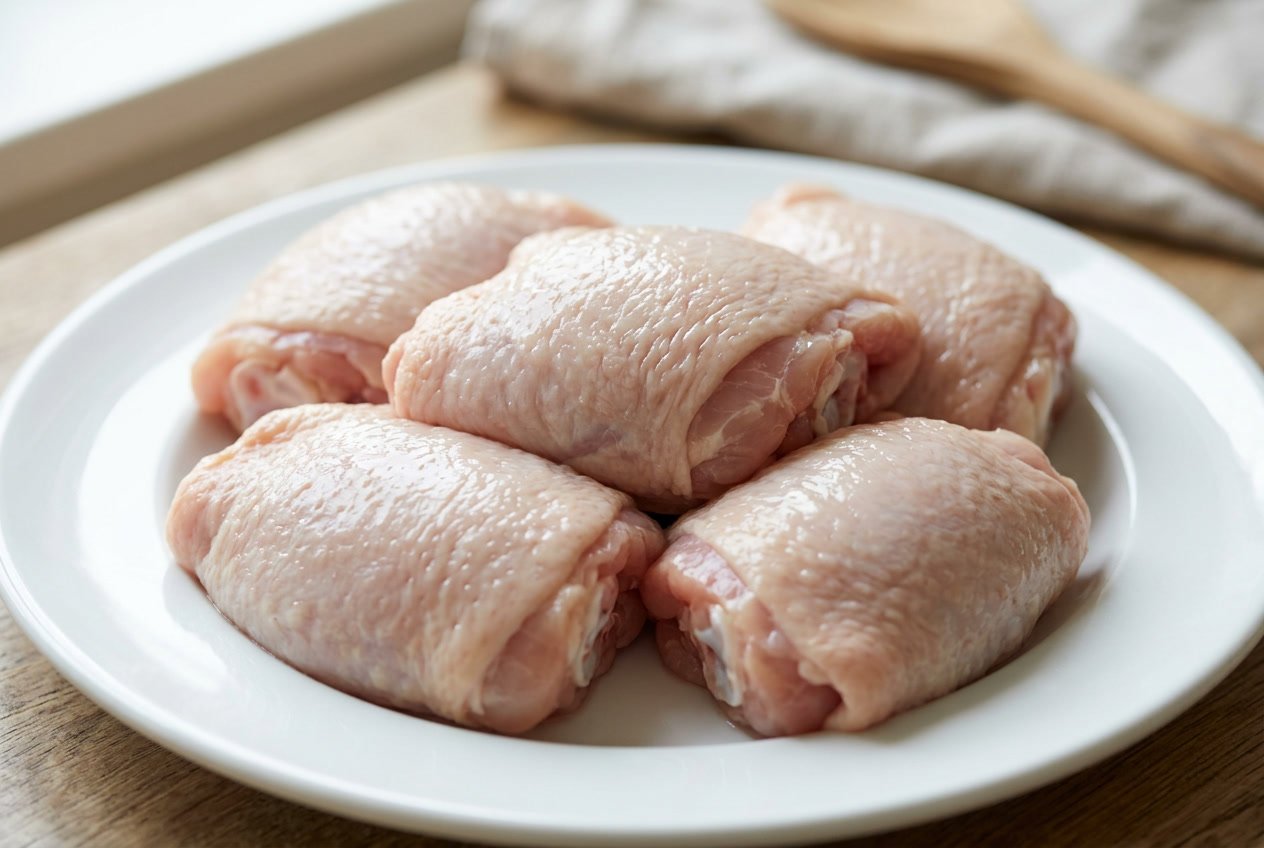
This post shows how raw thighs normally look and what visual and texture cues change as they cook. You’ll also learn how different cooking methods affect color and texture so you can pick the approach that delivers juicy, flavorful results.
Understanding Chicken Thighs
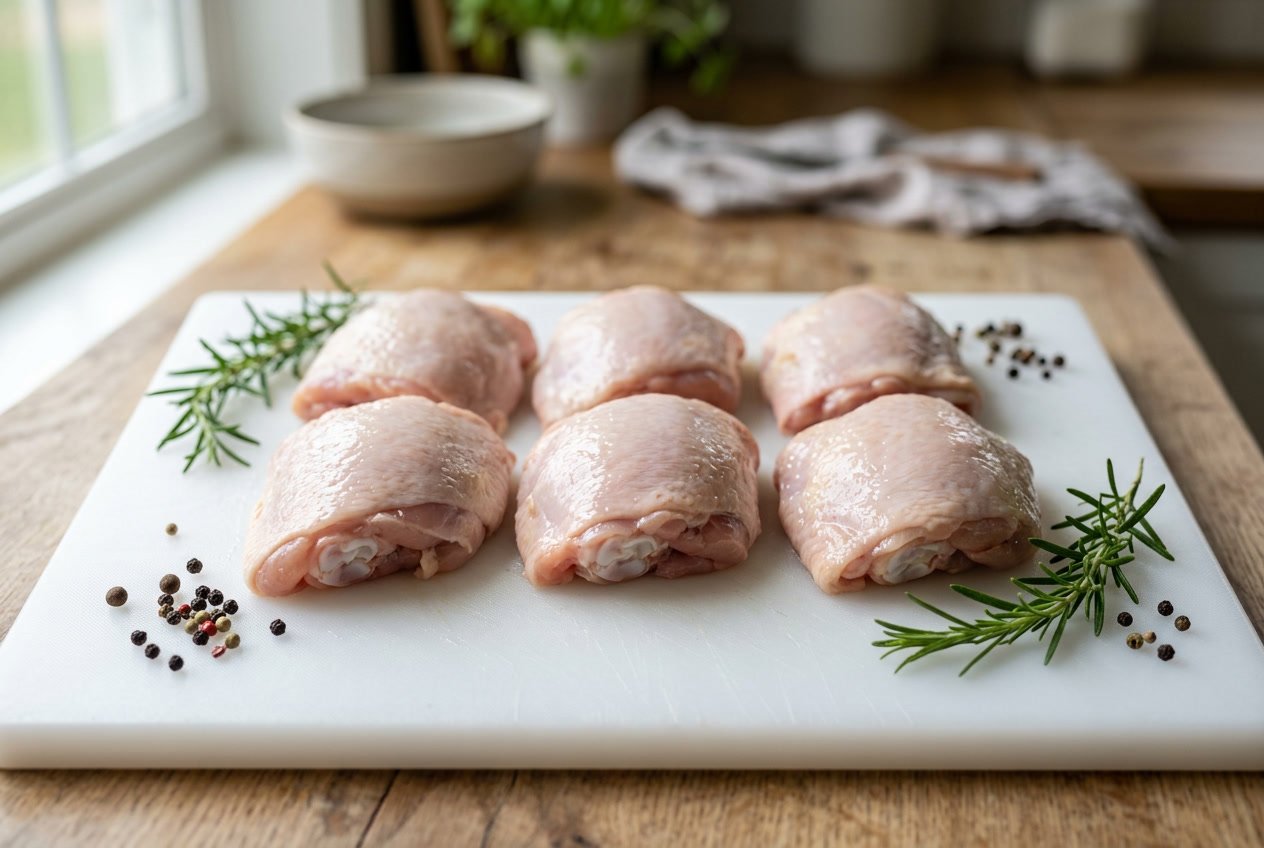
Chicken thighs are the upper part of the bird’s leg and contain more fat and connective tissue than breasts. Appearance and cooking behavior vary depending on bone, skin, and cut.
Types of Chicken Thighs
You’ll commonly find four retail forms: bone-in skin-on, bone-in skinless, boneless skin-on, and boneless skinless. Bone-in skin-on thighs keep moisture and develop crisp skin when roasted or pan-seared.
They show a rounded shape with the femur and joint visible as a central bone. Boneless skinless thighs are trimmed of bone and skin, appear flatter and more uniform, and cook faster.
Skin-on but boneless cuts give you crisp exterior without the bone. They often come tied or flattened.
Inspect packaging for “dark meat” or specific descriptors. Knowing the type helps you judge expected shrinkage, cook time, and final texture.
Dark Meat Characteristics
Dark meat has higher fat and myoglobin than white meat, so thighs appear deeper pink before cooking and remain juicier afterward. When cooked to a safe internal temperature (165°F/74°C), the meat should be opaque, tender, and slightly firm.
Residual pink near bone can occur in larger bone-in thighs without indicating undercooking. The connective tissue breaks down with moderate heat, producing a succulent mouthfeel.
Cooked skin turns golden brown, while the exposed meat shifts from pink to off-white or light tan. If you buy skinless or boneless thighs, expect less visible fat but the same richer flavor profile.
Raw Chicken Thigh Appearance
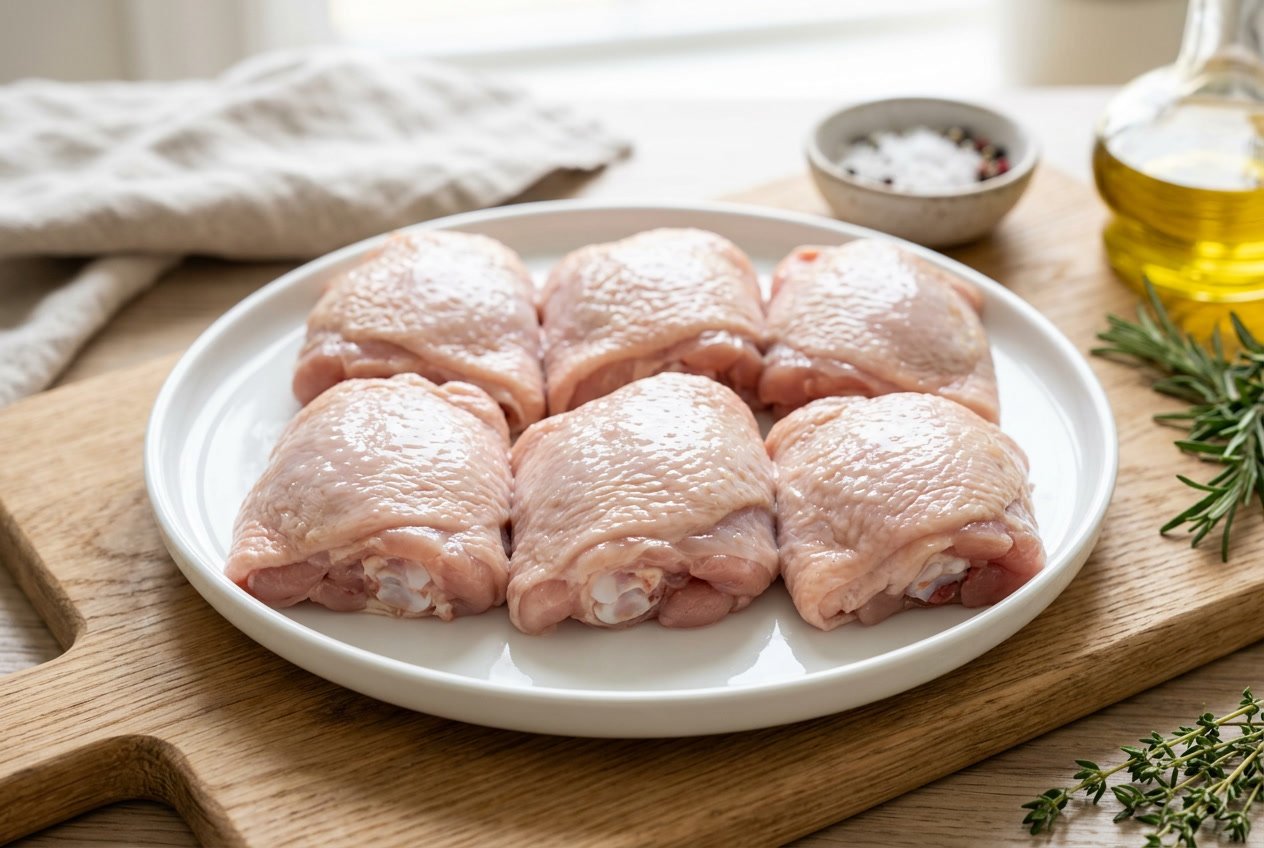
Expect a plump, slightly curved piece of meat with visible fat and a moist surface. Color, feel, and the presence or absence of bone and skin determine handling and cooking choices.
Shape and Size
A typical chicken thigh is roughly pear-shaped: wider at one end and tapering where it joins the drumstick. Most retail thighs weigh between 3 and 6 ounces each.
If you buy bone-in chicken thighs, you’ll notice the rounded contour around the femur and a firmer feel where the bone sits. Boneless chicken thighs have been trimmed and compressed, so they look flatter and more uniform.
Pay attention to plumpness. A full-looking thigh with some give when pressed indicates normal moisture and fat content.
Avoid pieces that look shrunken, with puckered edges or excessive liquid in the package.
Color and Texture
Raw chicken thighs should be a pale to medium pink, sometimes with slightly deeper red-pink near the bone. The color varies by breed and age, but a gray, green, or very dull hue signals spoilage.
The surface should be moist but not slimy. Run your finger lightly—slippery, tacky residue suggests bacterial growth and you should discard the piece.
You may see visible white fat marbling and a glossy sheen from natural moisture. These features help keep thighs juicy during cooking.
Bone-In Versus Boneless
Bone-in chicken thighs include the femur, which you can see or feel as a firm core running through the meat. The bone adds weight and helps conduct heat, so bone-in thighs often cook more evenly and resist drying.
Boneless chicken thighs have had the bone removed and are usually trimmed of connective tissue. They cook faster and are easier to cut into even pieces for stir-fries or kabobs.
When checking freshness, bone-in pieces may show a slightly darker area around the bone. This is normal.
Any strong odor or tacky texture at the bone-bone junction is a red flag.
Skin-On Versus Skinless
Skin-on chicken thighs display a layer of skin that ranges from pale yellow to cream. It may show small pinfeather dots or visible fat underneath.
The skin adds flavor and insulation during cooking, helping retain moisture and produce crisp exterior when roasted or grilled. Skinless chicken thighs expose the meat surface directly and will look uniformly pink with visible fat streaks and connective tissue.
They offer quicker absorption of marinades and shorter cook times, but require careful temperature control to stay juicy.
Inspect skin for tears or excess discoloration. A slimy film under the skin or a strong sour smell indicates spoilage regardless of whether the thigh is bone-in, boneless, skin-on, or skinless.
How Cooked Chicken Thighs Should Look
Expect clear visual and tactile signs of doneness: skin browned and slightly crisp, meat opaque with possible faint pink near the bone, clear juices, and meat that yields to gentle pressure without feeling mushy.
Ideal Color and Juices
The skin of a cooked chicken thigh should be golden brown to deep amber. If you see evenly browned, blistered skin, the surface reached high enough heat to render fat and develop flavor.
When you pierce the thickest part, the juices should run clear. Avoid red or bloody juices; pink near the bone can occur in bone-in thighs but isn’t concerning if the internal temperature is 165°F (74°C).
Use a thermometer and aim for the probe in the thickest meat, not touching bone.
Texture and Firmness
Press the center of the thigh. It should feel firm but springy, not soft and squishy or rock-hard.
Properly cooked chicken thighs will give slightly and the meat will flake or pull apart with a fork.
Overcooked thighs become dry and stringy because collagen and fat have fully rendered out. Undercooked thighs feel mushy and resist flaking.
Rest the thighs 5–10 minutes after cooking so juices redistribute and the meat firms slightly.
Visual Cues for Doneness
Look for opaque, uniformly colored flesh away from the bone. Translucent or glassy spots in the thickest area indicate undercooking and need more time on the heat.
For bone-in thighs, slight separation of meat from the bone is a helpful sign but not definitive.
Combine cues: golden skin, clear juices, fork-tender meat, and 165°F internal temp signal safe, properly cooked chicken thighs. If any single cue conflicts with the others, rely on the thermometer and finish cooking until the temperature and texture match.
Checking Doneness Safely
Use a reliable method to ensure chicken thighs are both safe and juicy. Focus on internal temperature and proper thermometer technique to avoid undercooking or overcooking.
Internal Temperature Guidelines
Cook chicken thighs until the thickest part—avoiding bone—reaches at least 165°F (74°C). This temperature kills common pathogens like Salmonella and Campylobacter and is the USDA minimum for safety.
Dark meat can tolerate slightly higher temperatures for tenderness, but aim for 165°F as the baseline.
Check multiple thighs when cooking a batch. Heat can vary across a pan or oven.
If you roast or braise, probe the largest piece. Rest the thighs 3–5 minutes after removing them from heat so the juices redistribute and the internal temperature can rise a few degrees.
Visual cues help, but don’t rely on them alone. Use temperature as your primary doneness indicator.
Using an Instant-Read Thermometer
Use an instant-read digital thermometer for fast, accurate readings. Insert the probe into the thickest part of the thigh, parallel to the bone, without touching bone or fat.
Wait for the thermometer display to stabilize. Clean the probe with hot, soapy water between uses to prevent cross-contamination.
Calibrate periodically according to the manufacturer’s instructions or check accuracy in ice water. If you cook chicken thighs from frozen, expect longer cook times and test several spots.
For pan-seared or grilled thighs, check temperature near the center and toward the bone for even doneness. When reheating cooked thighs, confirm they reach 165°F before serving.
How Cooking Methods Affect Appearance
Different cooking methods change color, skin texture, and juice clarity. Pay attention to surface browning, internal opacity, and any pink near the bone to judge doneness.
Baking Chicken Thighs
Baked thighs develop an even, golden-brown skin when you set the oven to 400–425°F (200–220°C). Use a rimmed sheet or oven-safe skillet and space pieces so hot air circulates.
Insert an instant-read thermometer into the thickest part without touching bone. The target is 165°F (75°C).
Clear juices and opaque meat show doneness even if a faint pink tint remains near the bone on some birds.
For crispier skin, broil for 1–3 minutes at the end, watching closely to avoid charring.
If you brine or marinate, expect deeper color and slightly firmer texture due to salt penetration.
Grilling Chicken Thighs
Grilled thighs get pronounced sear marks and a smoky crust from direct heat. Preheat the grill to medium-high and oil the grates so skin separates cleanly and browns instead of sticking.
Cook skin-side down first to render fat and create color, then move to indirect heat to finish through without burning the exterior.
Aim for an internal temperature of 165°F in the thickest area. The meat will be opaque and the juices should run clear.
If you use bone-in thighs, allow slightly longer cook time and check near the bone for any stubborn pink. For boneless thighs, shorter sear times produce the same golden surface with juicier interior.
Pan-Frying and Other Methods
Pan-frying (searing then finishing) gives you a deeply caramelized crust and controlled browning. Start skin-side down in a hot, oven-safe skillet to render fat and crisp skin, then transfer to a 375–400°F oven to complete cooking evenly.
Searing alone can over-brown the surface while leaving the center underdone, so combine methods or finish with lower heat.
For shallow frying, maintain oil at 325–350°F to avoid greasy, dark crusts.
Other methods like braising or slow-cooking produce little or no skin browning but yield very tender, uniformly colored meat.
If you want both tenderness and a browned appearance, quickly broil or pan-sear after slow cooking.
Tips for Cooking Perfect Chicken Thighs
Focus on temperature, even cooking, and finishing for crispy skin and juicy meat. Use a thermometer, avoid crowding, and rest the thighs before serving to lock in juices.
Avoiding Common Mistakes
Overcrowding the pan or baking sheet is one of the most frequent errors. Give each thigh at least 1 inch (2.5 cm) of space so air and heat circulate.
Cook in batches if needed. Rely on an instant-read thermometer rather than color alone.
Insert it into the thickest part without touching bone. Aim for 165°F (74°C) and remove a few degrees early if you’ll rest the meat.
Don’t cook entirely at one high temperature. For pan-to-oven methods, sear skin-side down to render fat, then finish in a 400°F (200°C) oven to cook through without drying.
Avoid constant flipping. Let the skin develop a crust.
Resting and Serving
Let thighs rest 5–10 minutes after cooking. This short rest lets juices redistribute so the meat stays moist when you cut into it.
While resting, tent loosely with foil to retain warmth but avoid steaming the skin.
If you want extra-crispy skin, place finished thighs under a hot broiler for 1–2 minutes just before resting.
When slicing, cut perpendicular to the bone or serve whole. Serve immediately after resting with pan juices spooned over, or slice and return briefly to the pan to re-crisp before plating.
Flavor and Recipe Variations
Marinades and rubs change texture and flavor quickly. A simple mix of salt, pepper, garlic powder, and a bit of sugar helps the chicken brown.
Acid-based marinades like yogurt, lemon, or vinegar tenderize the meat. Limit these marinades to 1–4 hours to prevent mushy chicken.
Try these approaches depending on the recipe:
- Oven-bake at 400°F (200°C) for 30–40 minutes with the skin facing up.
- For pan-seared then oven-finished, sear 6–8 minutes skin-side down, then bake for 12–20 minutes.
- Braise or slow-cook chicken thighs in liquid at low heat for 1.5–3 hours until they become shreddable.
Adjust seasoning and finish with herb butter, glaze, or pan sauce to match your chosen recipe.


