
What Makes Chicken Thighs Crispy: Essential Tips and Methods
Crispiness comes from dry, well-rendered skin and enough heat to evaporate moisture while browning the fat beneath it. Dry the skin thoroughly, season with salt, and cook at high heat (or start skin-side down to render fat) to get reliably crispy chicken thighs.
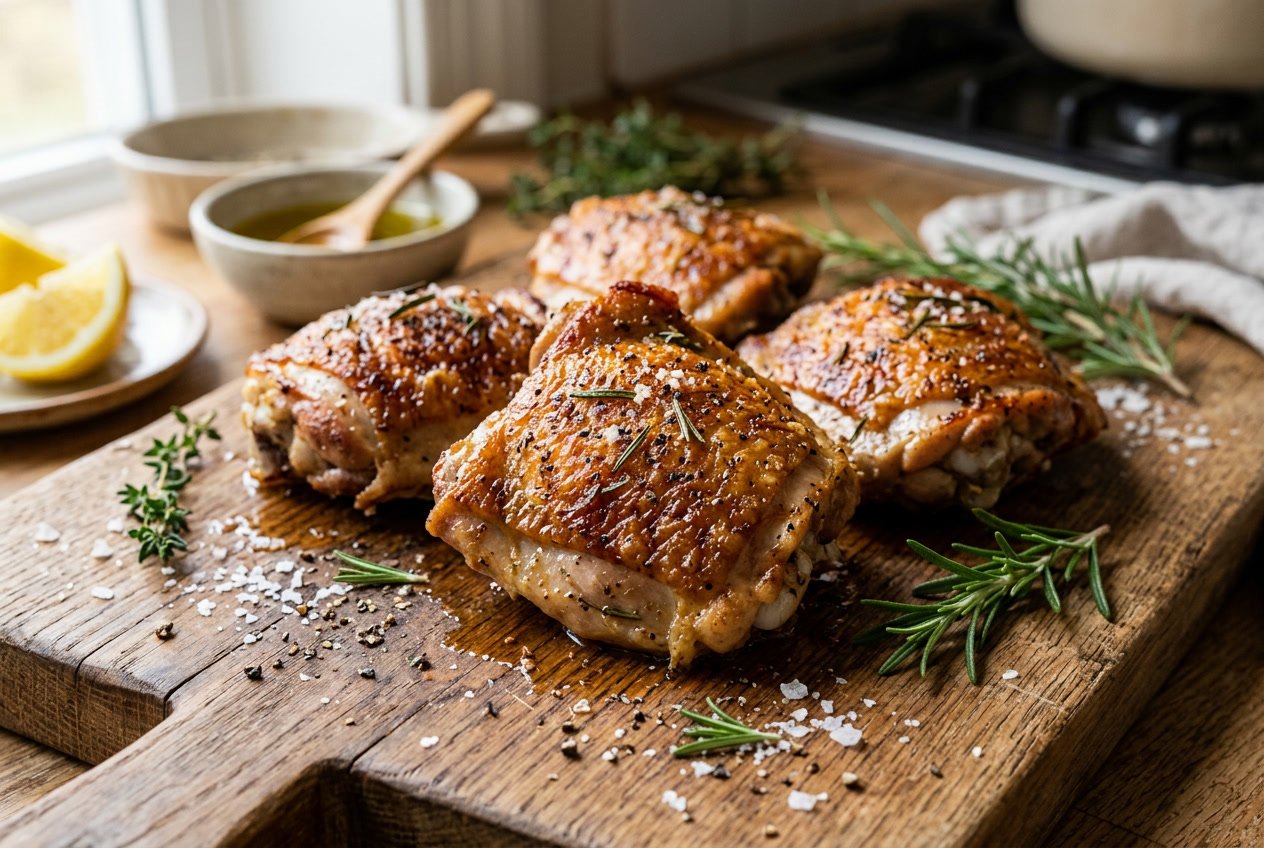
Browning happens when you expose dry skin to high heat and render the fat beneath it. Choose bone-in, skin-on cuts, season for flavor without sogginess, and use the right cooking methods—oven, skillet, or air fryer—for the best results.
The Science Behind Crispy Chicken Thighs
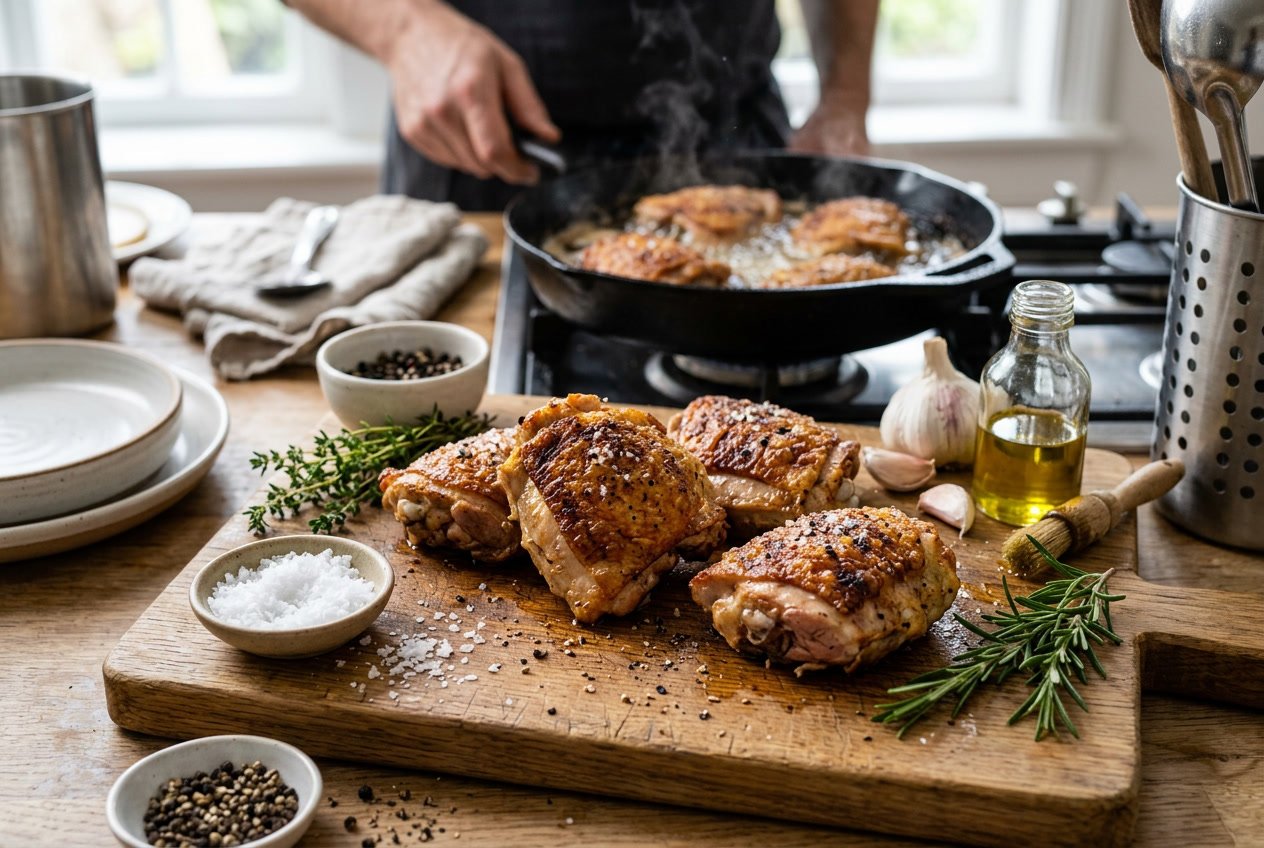
Dry skin, high heat, and well-rendered fat create a crisp surface while keeping the meat juicy. Small changes in pH, surface moisture, and cooking temperature affect how proteins and fats behave and determine whether the skin crisps or stays rubbery.
Why Chicken Thighs Are Best for Crispiness
Chicken thighs contain more fat and thicker skin than breasts, which helps develop a crunchy exterior without drying the meat. The extra subcutaneous fat melts during cooking, basting the meat and feeding the Maillard reactions that brown and crisp the skin.
Dark meat tolerates longer, hotter cooking because it contains more connective tissue and intramuscular fat. You can push oven temperatures (425–475°F / 220–246°C) or finish under a broiler to create crisp skin without drying out the interior.
How Moisture Affects Skin Texture
Surface moisture steams the skin and prevents crisping. Any water on the skin must evaporate before browning begins, which delays Maillard reactions and can leave skin soft.
Pat the thighs thoroughly and, when possible, refrigerate uncovered for several hours to dry the skin’s surface. Air-chilled poultry starts drier than water-chilled. Brief salt rubs draw moisture out, and using a wire rack raises thighs so air circulates and evaporation speeds up. Avoid heavy batters or wet marinades if you want crisp skin.
The Importance of Fat Rendering
Rendered fat makes the skin thin and brittle rather than greasy. Rendered fat lubricates the surface, promotes even heat transfer, and carries flavor while leaving behind dry, crackling skin when it fully escapes.
Start at medium-high heat to coax fat from the skin, then sustain high oven temperature to evaporate residual moisture and drive browning. Scoring thick skin, using a wire rack, and applying a small amount of baking powder help rendering and promote faster browning.
Preparation Techniques for Perfectly Crisp Skin
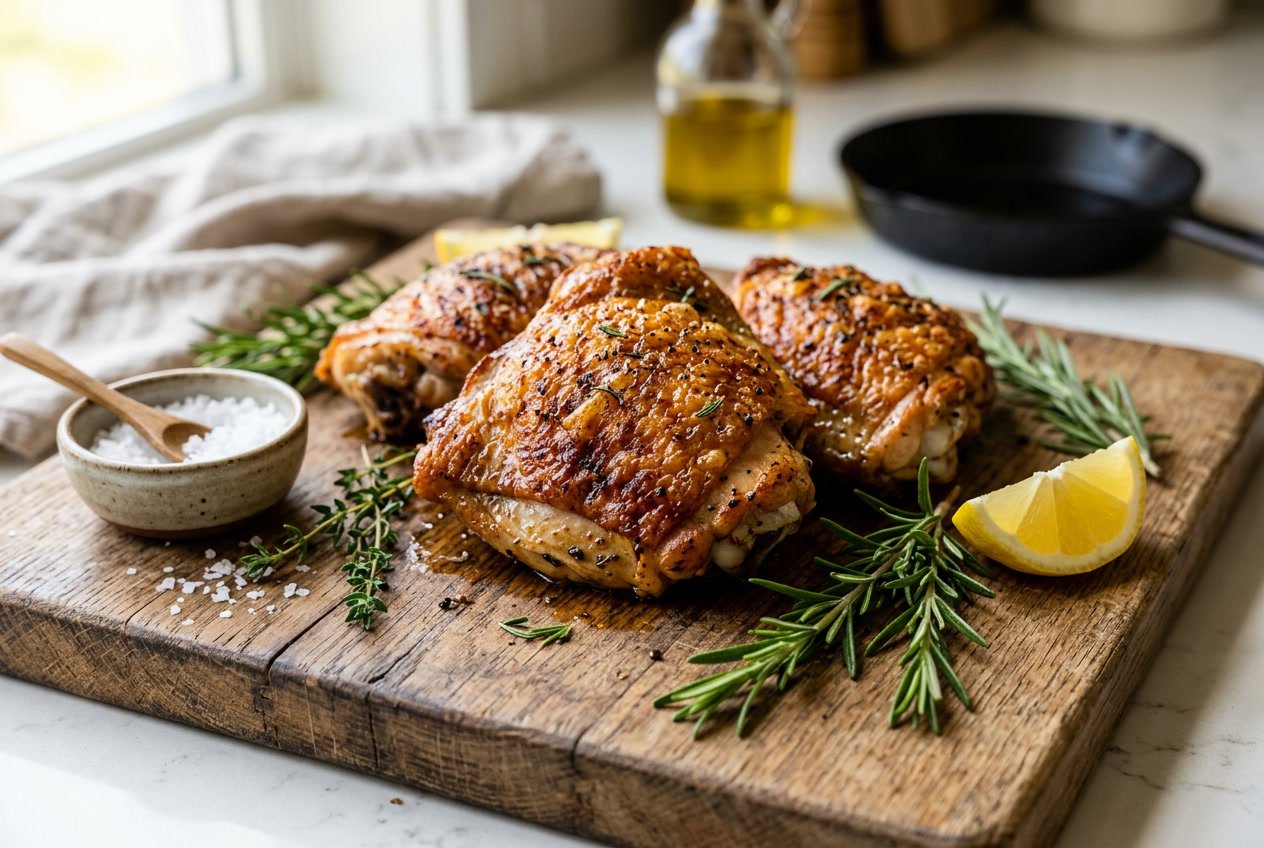
Remove surface moisture, use salt-based treatments to draw moisture and season, and apply a light alkaline agent for extra browning. Follow each step carefully for bone-in, skin-on chicken thighs to get reliably crispy skin.
Drying the Chicken Thighs Thoroughly
Pat each thigh with paper towels until the skin feels dry. Moisture on the skin creates steam during cooking and prevents the fat under the skin from rendering, so get the surface as dry as possible.
After patting, refrigerate uncovered on a wire rack for at least 1 hour or up to 24 hours. The fridge’s dry air will dehydrate the skin further.
If you’re short on time, use a fan or place thighs near a low-heat oven (turned off) for 20–30 minutes. Avoid adding oil at this stage; oil can trap moisture if the skin isn’t fully dry.
Brining and Seasoning Methods
Use a simple wet brine (4 cups water, 3 tbsp kosher salt, 2 tbsp sugar) for 30–60 minutes for medium-sized thighs. Brining increases internal juiciness and seasons through to the bone, while salt helps extract some surface moisture. Pat dry thoroughly after brining.
For a dry brine, rub ½–1 tsp kosher salt per thigh under and on top of the skin and refrigerate on a rack uncovered for 6–24 hours. This method tightens the skin and promotes rendering when cooking.
Finish seasoning just before cooking with spices like paprika, garlic powder, and black pepper. Keep oil minimal—a light brushing helps conduct heat and encourage browning without making the skin soggy.
Using Baking Powder for Extra Crunch
Coat the skin lightly with a blend of 1 tsp baking powder per pound of chicken plus your dry spices. Baking powder raises surface pH, speeds Maillard reactions, and helps the skin blister and crisp during high-heat cooking.
Use aluminum-free baking powder to avoid metallic flavors. Apply a thin, even dusting; too much produces an off taste or an odd crust.
Bake or roast skin-side up at 425°F (220°C) or sear in a hot skillet before finishing in a 400°F oven. The baking powder method works especially well on bone-in, skin-on thighs because the rendered fat and raised pH create a crisp exterior without drying the meat.
Must-Know Cooking Methods for Crispy Thighs
You need high, dry heat on the skin and enough time to render fat. Use bone-in, skin-on thighs, season well, and give the skin contact with the heat source without crowding.
Oven-Baked Chicken Thighs
Preheat the oven to 425°F (220°C) for crispy baked chicken thighs. Pat the skin thoroughly dry with paper towels; any surface moisture turns to steam and prevents crisping.
Place thighs skin-side up on a wire rack set over a rimmed baking sheet so hot air circulates under the skin and fat drains away. Season with salt and any dry rub. Avoid wet marinades that rehydrate the skin unless you pat dry before roasting.
Bake on the middle rack until the skin is deep golden and an instant-read thermometer reads 175–185°F at the thickest part. For extra surface crunch, finish with 1–3 minutes under a hot broiler while watching closely to avoid burning.
Pan-Seared and Skillet Techniques
Heat a heavy skillet (cast iron preferred) over medium-high, add a thin film of oil, then place well-dried thighs skin-side down and leave mostly undisturbed so the skin slowly renders and browns.
Press gently for full contact, then when the skin is deeply golden, flip and reduce heat to finish cooking through. Transfer to a 350°F oven if the thighs are thick or you want guaranteed doneness without burning the skin.
Use a splatter screen and keep the pan temperature controlled. If the pan is too hot, the skin chars before fat renders; if too cool, the skin gets rubbery.
Air Fryer and Broiler Approaches
Air fryers deliver crispness by circulating very hot, dry air around the thighs. Preheat the air fryer to 400°F (200°C), arrange thighs skin-side up in a single layer, and cook 18–25 minutes depending on size, flipping once for even browning. Pat dry and lightly oil the skin for best results.
Broiling works as a quick finish to crisp already-roasted or pan-seared thighs. Position the rack 4–6 inches from the broiler element, broil skin-side up for 1–3 minutes until bubbling and golden, and watch constantly to prevent burning.
Choosing the Best Ingredients and Cuts
Pick thighs with skin intact and use fats and oils that withstand high heat. Choose pieces that will render fat, dry quickly, and brown evenly for the crispest skin.
Selecting Bone-In, Skin-On Thighs
Choose bone-in, skin-on chicken thighs because the bone preserves moisture and the skin crisps when its fat renders. Look for thighs with pale, intact skin and a thin layer of subcutaneous fat. Very lean or damaged skin will not blister and crack properly.
Avoid pre-brined or overly wet-packaged thighs unless you plan to dry them thoroughly. Excess surface moisture prevents browning.
Buy thighs with consistent thickness for even cooking. If pieces vary, use a meat mallet lightly to even them or sort by size on the tray. When prepping, pat each thigh dry with paper towels and optionally salt the skin 30–60 minutes ahead to draw out extra moisture.
Recommended Oils and Fats
Use fats with high smoke points and a mild flavor to encourage even browning without burning. Neutral oils like canola, grapeseed, or refined avocado oil tolerate 400–450°F (200–230°C) roasting temperatures and help conduct heat across the skin.
For pan-searing, a tablespoon of oil combined with a little chicken schmaltz or butter added late gives flavor while minimizing early smoke. Avoid extra-virgin olive oil for high-temperature searing or broiling; it can smoke and impart bitterness.
If you want more flavor, finish with a small pat of butter or an herb oil after the thighs come out of the oven rather than using low-smoke fats during the initial high-heat stage.
Seasonings and Flavor Boosters
Use salt to draw moisture from the skin and build a flavorful crust. Pair it with a focused set of spices or a short marinade to concentrate flavor without adding soggy moisture.
Classic Spice Blends
A simple, effective dry rub combines kosher salt, freshly ground black pepper, and smoked paprika. Use about 1 teaspoon kosher salt per pound of thighs; adjust pepper and paprika to taste.
Add garlic powder and onion powder (1/2 teaspoon each) for savory depth without overpowering the skin. Apply the rub directly to dry skin and under the skin where possible.
For a spicier option, swap smoked paprika for cayenne (1/4–1/2 teaspoon) and include 1 teaspoon brown sugar to aid caramelization.
Incorporating Fresh Herbs like Rosemary
Rosemary works well with chicken thighs, especially in a rosemary chicken recipe where you want aromatic notes without wetting the skin. Chop fresh rosemary leaves finely and mix them with salt and olive oil to make a herb paste.
Lightly loosen the skin and spread the paste between skin and meat to infuse flavor directly. Tuck whole sprigs into the pan or on the rack during roasting for background aroma. Remove sprigs before serving to avoid woody bits.
Combine rosemary with lemon zest and a pinch of red pepper flakes for brightness and contrast. Keep any herb coating thin so the skin remains dry enough to crisp.
Creative Marinades and Variations
Short, high-acid marinades (20–30 minutes) using lemon juice or vinegar add brightness and help tenderize without compromising crispness. Combine 2 tablespoons lemon juice, 1 tablespoon olive oil, 1 teaspoon salt, and minced garlic for a quick marinade. Pat thighs thoroughly dry before cooking.
Buttermilk or yogurt marinades give tang and adhesion for dredges if you plan to flour or breadcrumb the thighs for extra crunch. If using dairy, shake off excess and let the skin air-dry in the fridge for 30–60 minutes to restore crisping potential.
For a glaze finish, reserve a small amount of sauce to brush on during the last 5 minutes of cooking. This preserves the crispy skin while adding glossy flavor.
Common Mistakes and Troubleshooting
Control surface moisture, heat, and spacing to get reliably crispy chicken skin and juicy thighs. Make small adjustments like drying the skin, using the right oven or pan temperature, and giving each thigh room.
Handling Excess Moisture
Pat each thigh thoroughly with paper towels, pressing around the edges and under the skin where possible. Moisture on the surface turns to steam as the meat heats, which prevents the fat from rendering and stops the skin from crisping.
If you brine or marinate, rinse and then dry the thighs for at least 20–30 minutes in the fridge on a wire rack. For extra crispness, salt the skin and let it rest uncovered in the refrigerator for several hours; the salt draws out moisture and firms the skin.
Avoid wet basting during the initial high-heat stage. If you need a glaze, apply it in the last 5 minutes of cooking or after resting. Sugars in sauces can quickly burn and soften the skin.
Temperature Control Issues
Use high heat to render fat and brown the skin. Roast at 400–450°F (200–230°C) or sear skin-side down in a hot skillet before finishing in the oven.
Lower temperatures prolong cooking and allow fat to collect under the skin. This creates soggy results.
Check internal temperature with an instant-read thermometer. Remove thighs at 160–163°F (71–73°C) and let them rest to reach 165°F (74°C).
Rapid, consistent heat keeps the meat juicy and the skin crisp.
If the skin browns too fast, move the tray lower in the oven or reduce broiler time. For pan-cooking, adjust burner heat instead of moving the pan often.
Steady contact helps form a uniform crust.
Avoiding Overcrowding
Give each thigh at least 1 inch of space on a baking rack or sheet pan. This allows air to circulate and fat to drip away.
Crowded pans trap steam between pieces. The trapped steam softens skin and prevents the Maillard reaction that creates a crisp surface.
When you pan-sear, cook in batches instead of piling pieces in one skillet. Wait until the oil shimmers again before adding the next batch, since overcrowding drops pan temperature quickly.
Use a wire rack over a sheet pan for oven roasting to keep thighs elevated. This setup keeps the skin exposed to direct heat and prevents thighs from sitting in rendered fat.


