
What Is Thigh Part in Chicken? Full Guide to Cuts & Cooking
You can spot the thigh on a chicken as the upper part of the leg, sitting between the body and the drumstick. It’s a dark-meat cut known for richer flavor and more moisture than the breast.
The thigh delivers juicy, flavorful meat that stands up to long cooking and bold seasonings. Choose it when you want taste and texture over leanness.
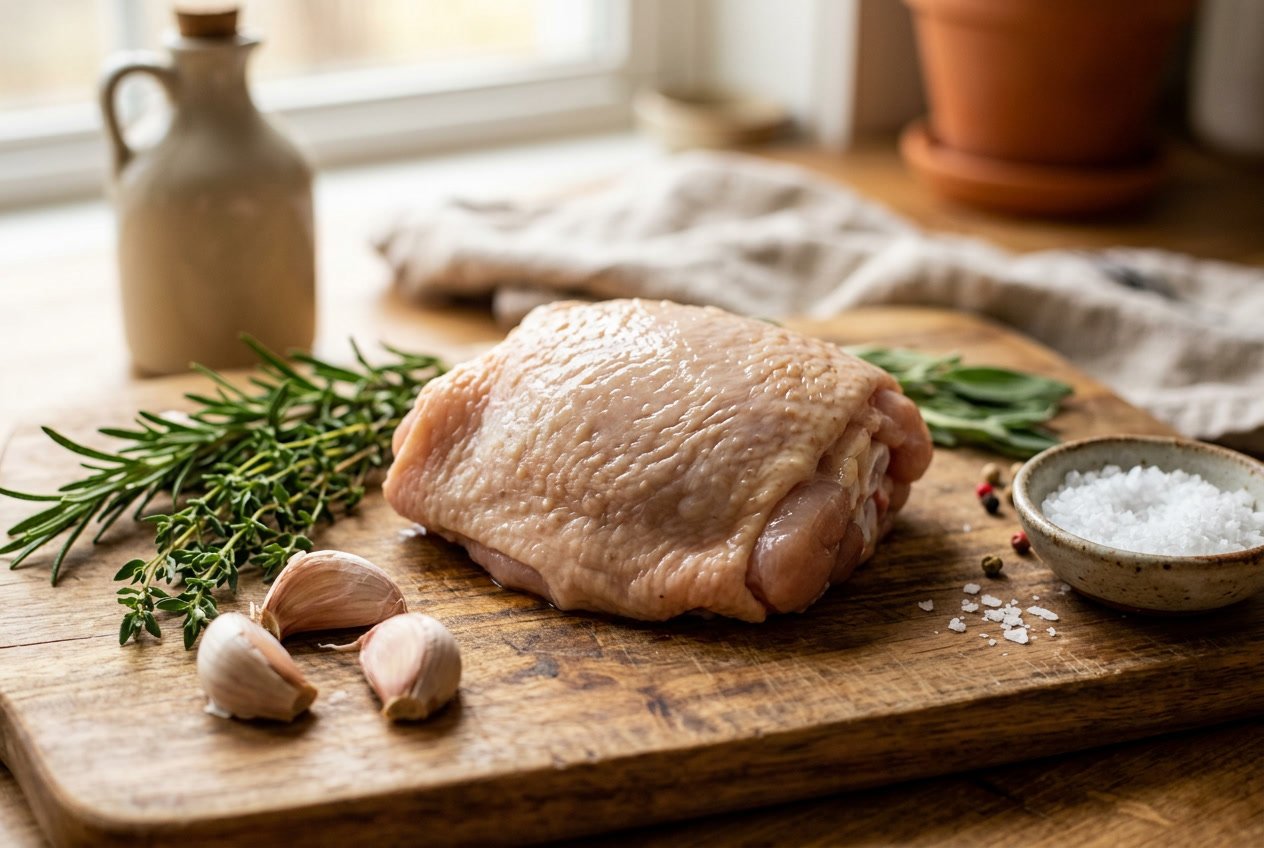
This guide explains what the thigh is, how it appears in different retail cuts, and the common types you’ll buy. You’ll also get practical tips on prep, storage, and the best methods to cook this versatile cut.
Understanding the Thigh Part in Chicken
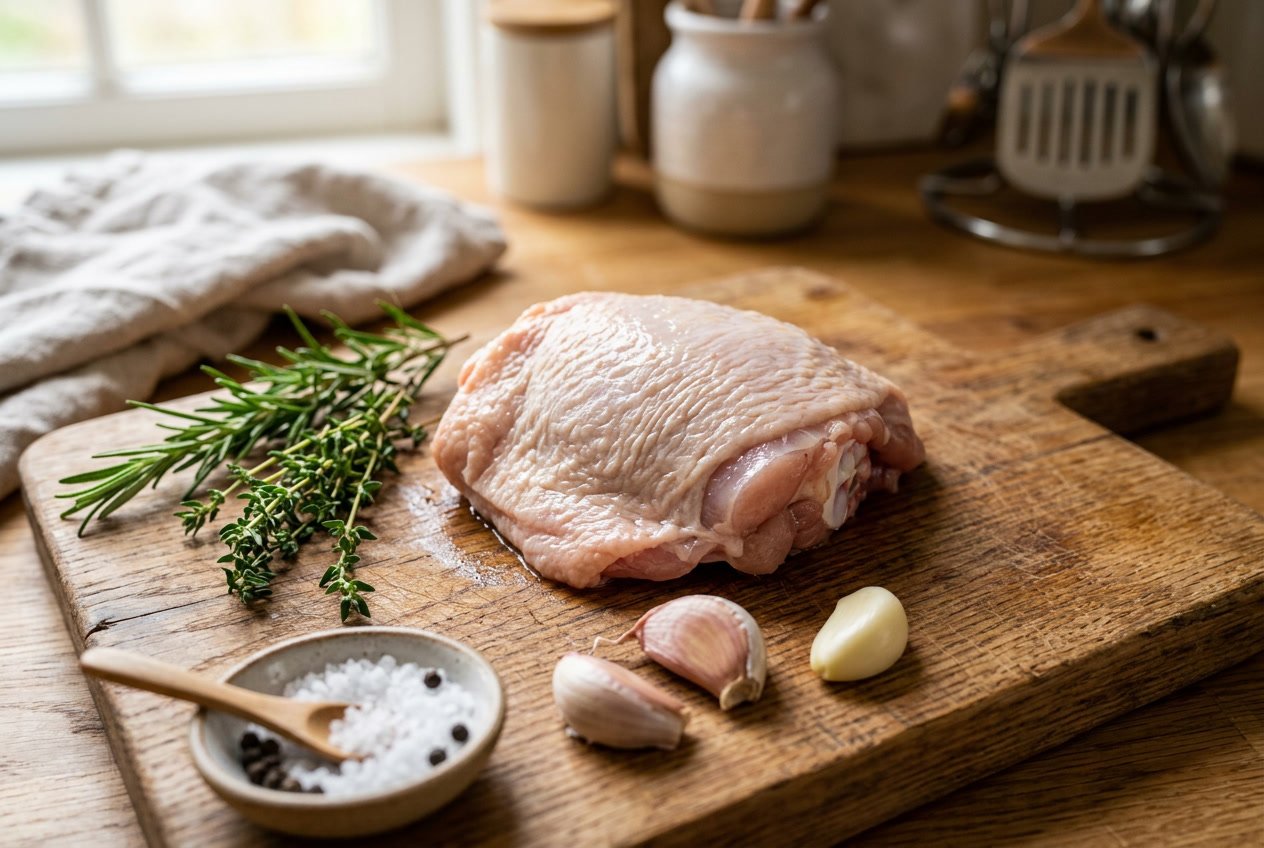
The thigh is the upper portion of the chicken leg and contains more fat, connective tissue, and flavor than the breast. It sits on the bird between the hip and knee joints and differs from the drumstick and breast in muscle composition and cooking properties.
Location and Anatomy of the Chicken Thigh
The thigh sits between the hip joint and the knee joint on each side of the bird. It connects the body to the drumstick and includes the femur bone surrounded by primary thigh muscles and a layer of skin and fat.
Key features:
- Bone: femur adds structure and flavor during cooking.
- Muscles: larger, more-used muscles than the breast with more connective tissue.
- Skin and fat: often left on for crispness and moisture.
When you buy thighs, you’ll find bone-in skin-on, boneless skinless, or skin-on boneless options. Bone-in thighs take longer to cook but stay juicier. Boneless thighs cook faster and suit quick sautés or kebabs.
Difference Between Thigh, Drumstick, and Breast
The thigh is the upper leg. The drumstick is the lower leg, and the breast is the chest muscle.
The thigh and drumstick together form the whole leg, sometimes sold as a leg quarter.
- Thigh: compact, rectangular when deboned, with rich flavor and higher fat.
- Drumstick: rounder, with a single long bone, ideal for finger food and grilling.
- Breast: larger, triangular, and white meat; leaner and milder.
Choose thighs for moisture and forgiving cooking. Pick drumsticks for casual serving and grilling. Use breasts when you want low-fat, quick-cooking slices.
Dark Meat vs. White Meat
Thigh meat is dark meat, while breast meat is white. Dark meat contains more myoglobin, which gives it a darker color and richer taste.
- Flavor: higher fat and myoglobin in thighs create deeper, meatier flavor.
- Texture: more connective tissue and collagen means thighs stay moist and become tender with longer, lower-temperature cooking.
- Nutrition: thighs have slightly more fat and calories per ounce, but provide similar protein and more iron and zinc.
Use high-heat methods for crispy skin or low-and-slow braising to break down collagen. Thigh meat tolerates longer cooking without drying out.
Types of Chicken Thigh Cuts
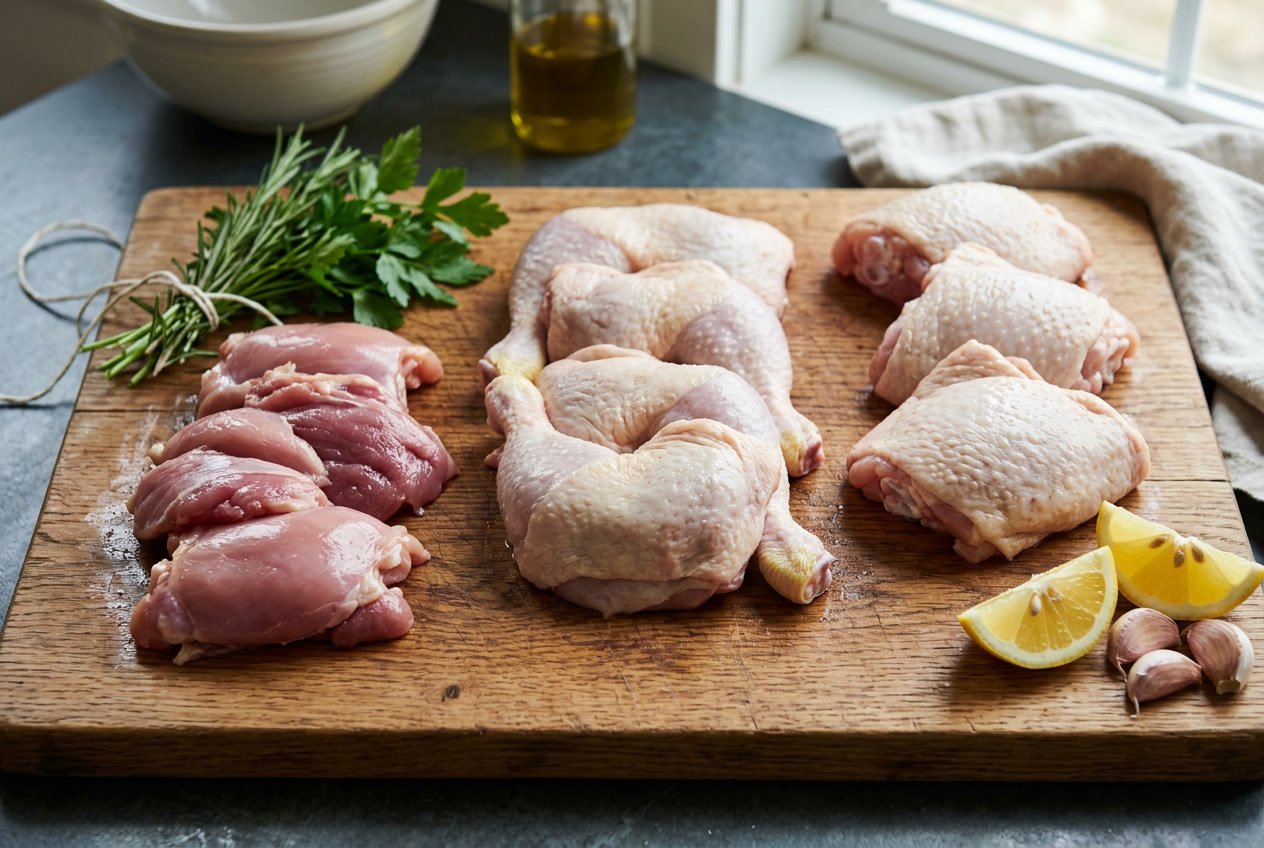
You’ll find chicken thighs sold in several forms that affect cooking time and flavor. Choose bone-in for slow cooking and flavor, boneless for quick sautés, skin-on for crisping, and check labels for farming methods.
Bone-In Chicken Thighs
Bone-in chicken thighs keep the femur and joint intact. The bone adds flavor during braising, roasting, and stewing because marrow and connective tissue release gelatin and taste as they cook.
Bone-in thighs take longer to cook than boneless. Use bone-in thighs for moist meat with a deeper mouthfeel.
Boneless Chicken Thighs
Boneless chicken thighs have the bone removed and often the skin too. They work well for quick pan-frying, grilling, stir-fries, and kebabs because they cook evenly and take marinades quickly.
Boneless thigh meat retains juiciness but can dry faster if overcooked. Use a thermometer or cut to check doneness.
Skin-On vs. Skinless Thighs
Skin-on thigh adds fat and flavor, and crisps under high heat. The skin insulates the meat, keeping it moister during roasting or braising.
Skinless thigh reduces fat and shortens cook time. It absorbs marinades faster and is preferred in recipes where you want the sauce or rub to be primary.
Organic, Free-Range, and Conventional Thighs
Organic thighs come from birds raised without synthetic pesticides or antibiotics; they often cost more and may have firmer texture. Free-range chicken thighs indicate birds had some outdoor access, which can influence flavor and fat distribution.
Conventional thighs are the most affordable and consistent in size and fat content. When buying, read labels carefully to match your preferences.
Chicken Thighs Within the Whole Chicken
The thigh is the upper portion of the chicken leg that connects the leg to the body and contains darker, more flavorful meat than the breast. It appears in packaged forms like whole leg quarters, separated legs, or trimmed thighs.
Leg Quarter and Whole Leg
A chicken leg quarter includes the thigh plus the drumstick and a section of the back. Leg quarters add flavor in roasting or braising and increase cooking time compared with isolated pieces.
Leg quarters are often cheaper per pound than separated cuts. If you want even cooking and faster roast times, separate the thigh from the drumstick before cooking.
Thigh with Back Versus Standalone Thigh
A thigh attached to a piece of the back retains extra fat and skin from the carcass, which boosts flavor and browning during roasting. A thigh-with-back cooks slightly more slowly near the spine and yields richer pan juices.
A standalone thigh—boneless or bone-in—provides more predictable portioning and faster, more even cooking. Boneless, skinless thighs suit quick sautés; bone-in thighs deliver deeper flavor for grilling and roasting.
Choose the format based on your recipe. Use thigh-with-back or whole-leg cuts for braises and oven roasts, and standalone thighs for sautés or kebabs.
Relation to Other Chicken Parts
The thigh sits between the breast and the drumstick and is part of the chicken’s leg anatomy. It connects at the hip joint to the back and supports motion, making it dark meat with higher myoglobin and slightly more fat than the breast.
Compared with drumsticks, thighs are flatter and meatier. Compared with breasts, thighs tolerate higher internal temperatures without drying. When you buy a whole chicken, the thighs remain attached unless butchered into separate cuts.
Cooking Methods for Chicken Thighs
Chicken thighs respond well to high heat for crisp skin, low slow heat for tender meat, and moist methods for braises and stocks. Choose bone-in, skin-on for grilling, roasting, and frying; use boneless for quicker pan-sears or stir-fries.
Baking and Roasting
Roast bone-in, skin-on thighs at 400–425°F on a wire rack set over a rimmed sheet pan to keep skin crisp. Bone-in takes about 35–45 minutes; boneless about 20–25 minutes.
Pat thighs dry, season or marinate, and salt ahead of time to draw out moisture and concentrate flavor. Use a probe thermometer: pull boneless at 165°F and bone-in at 175°F. Rest for 5–10 minutes before slicing.
Grilling and Barbecuing
Preheat the grill to medium-high and set up two zones: direct high heat for searing and indirect for finishing bone-in thighs. Sear skin-side down 4–6 minutes, then move to indirect heat and cook until 175°F.
For boneless thighs, cook 5–7 minutes per side over direct heat. Use marinades like soy-ginger or chipotle-lime for charred flavor.
Frying and Braising
For crispy fried chicken thighs, brine or marinate in buttermilk, dredge in seasoned flour, and fry at 325–350°F until internal temp reaches 165°F for boneless or 175°F for bone-in. Drain on a rack to preserve crispness.
For braises, brown thighs first to develop flavor. Simmer in a flavorful liquid at low heat until tender, usually 45–90 minutes depending on size.
Slow Cooking and Sous Vide
Slow cook bone-in thighs on low for 6–7 hours or high for 3–4 hours for fork-tender meat. Use aromatic vegetables and stock to build depth; finish under a broiler if you want skin color.
Sous vide gives precise control. Seal thighs with herbs and a bit of fat, cook at 165°F for 1–4 hours for a juicy, uniform texture, or 175–185°F for more gelatinized results. Sear briefly after sous vide to crisp skin.
Popular Dishes and Recipes Featuring Chicken Thighs
Chicken thighs appear across cuisines because they hold moisture, handle bold flavors, and brown well. They are used in saucy braises, pan-seared dishes, and barbecue recipes that benefit from their higher fat content.
International and Regional Dishes
You’ll find thighs in many regional classics where slow cooking or bold marinades are central. In Basque-style stews and Sicilian skillet recipes, bone-in, skin-on thighs braise with peppers, olives, and capers for rich stock and robust texture.
In Asian preparations like char siu–style chicken or gochujang-glazed thighs, the meat soaks up sweet-salty marinades while remaining tender under high heat.
Japanese oyakodon (chicken-and-egg rice bowl) often uses diced thigh meat for juiciness and quick cooking.
Latin dishes such as chicken fajitas use sliced, marinated thighs for better flavor retention than breasts. They caramelize on high heat and stay moist in tortillas.
Chicken Thighs in Comfort Food
Thighs anchor many comfort-food recipes because they add depth and mouthfeel to pies, stews, and one-pan meals.
Chicken pot pie uses shredded or diced thigh meat. Its fat keeps the filling silky and prevents it from drying when baked under a crust.
In braises like beer-braised chicken and onion or classic chicken provencal, thighs create a richer pan sauce and hold their shape during long cooking.
One-pot dishes such as chicken and orzo or chicken and rice use thighs to infuse grains with savory juices. This reduces the need for added fats.
Thighs work well in casseroles and in dishes that call for shredding. Thighs shred into succulent strands that carry sauce through every bite.
Thighs in Barbecue and Wing Recipes
You can treat thighs like wings for bold, sticky, or spicy barbecue dishes.
Barbecue wings and barbecue-thigh recipes both benefit from glazing. Thighs handle sweet sauces and high-heat finishing without drying.
For buffalo-style preparations, toss boneless thigh pieces in spicy butter-vinegar sauce. They deliver the same tangy heat with a meatier bite than traditional wings.
When grilling or roasting barbecue wings and thighs, crisp the skin first over direct heat. Move them to indirect heat while basting to build layers of caramelized flavor.
If you want ready-to-eat finger food, cut thighs into wing-sized pieces, season, and roast or fry for a juicier alternative to classic buffalo wings.
Nutritional Profile and Health Considerations
The thigh is a nutrient-dense, dark-meat cut that delivers more fat and iron than white meat cuts like a skinless chicken breast.
You get a higher calorie and monounsaturated fat content per ounce, plus useful amounts of B vitamins and minerals.
Protein, Fat, and Calories
A cooked, boneless, skinless chicken thigh (about 3 oz / 85 g) typically provides about 20–25 g of protein. That protein quality matches white meat cuts and supports muscle repair and satiety.
Thighs contain more total fat than skinless chicken breast. Expect roughly 7–10 g fat per 3 oz cooked thigh when skin is removed. Much of that is monounsaturated and contributes to flavor and slower digestion.
Calories for a similar portion run about 150–190 kcal cooked (skinless). The calorie count increases if the skin is kept or the piece is fried.
If you track macros, count thighs as a moderate-protein, moderate-fat choice. For higher-protein, lower-fat needs, choose skinless chicken breast. For ketogenic or higher-calorie meals, thighs with skin give more energy per serving.
Vitamins and Minerals
Thigh meat contains higher levels of iron and zinc than white meat cuts because it’s dark muscle tissue.
A typical thigh supplies meaningful amounts of vitamin B12, niacin (B3), and vitamin B6, which support energy metabolism and red blood cell formation.
You’ll also find phosphorus and selenium in useful amounts. These micronutrients are especially relevant if your diet limits red meat, since thighs deliver heme iron that your body absorbs more readily than nonheme iron from plants.
If you need to manage sodium, check for added brines or marinades. Store-bought and restaurant thighs often contain more sodium than plain, home-cooked portions.
Skin-On vs. Skinless: Nutrition Differences
Keeping the skin on adds flavor and moisture, but it increases calories and total fat.
One medium thigh with skin can add roughly 50–80 extra calories and several grams of fat compared to the same piece skinless. Much of that additional fat sits in the skin layer rather than the muscle.
Removing the skin lowers saturated fat and total calories while preserving most of the protein and micronutrients.
You can also cook with the skin on and remove it after cooking to reduce absorbed fat while keeping moisture.
For health-focused meals, choose boneless, skinless thighs or pair skin-on thighs with plenty of vegetables to balance caloric density.
If you follow a low-fat or calorie-restricted plan, swap to skinless chicken breast for lower fat and calories per serving.
Handling, Storage, and Preparation Tips
Keep raw thighs separated from other foods. Work on a clean cutting board and use a reliable instant-read thermometer to confirm doneness.
Use bones and trimmings for stock and save tenderloins for quick sautés. Thaw safely to preserve texture.
How to Debone Chicken Thighs
Place the thigh skin-side down on a cutting board and locate the curved thigh bone.
Use a sharp boning or paring knife to cut along one side of the bone, exposing it by slicing connective tissue and muscle away with short, controlled strokes.
Grip the bone with your fingers or pliers and run the knife along the bone to free it.
Remove any cartilage and the small chicken tender (tenderloin) attached near the front. Trim excess fat or silver skin, then pat the thigh dry.
Save removed bones, trimmed meat, chicken backs, necks, and gizzard for making stock. They add deep flavor.
If you need boneless, skin-on thighs, leave the skin intact while deboning.
For faster work, buy boneless skinless thighs and reserve necks and giblets for stock instead.
Thawing and Marinating Techniques
Thaw frozen thighs in the refrigerator on a tray for 24 hours per 1–2 pounds to keep them below 40°F.
For quicker thawing, submerge sealed thighs in cold water, changing the water every 30 minutes. Cook immediately after this method.
Never thaw at room temperature.
Marinate in an acid-base blend for 30 minutes to 8 hours depending on cut size.
Use yogurt or buttermilk for tenderizing, or a mix of oil, acid (vinegar or lemon), salt, and aromatics for flavor.
If you plan to brine, dissolve 1/4 cup kosher salt per quart of water and soak 1–4 hours. Rinse before cooking.
Always discard used marinade that touched raw meat or bring it to a full boil before using as a sauce.
Safe Storage Practices
Refrigerate raw thighs at 40°F (4°C) or below and use within 1–2 days. Store them on the bottom shelf in a sealed container to prevent drips onto other foods.
Cooked thighs last 3–4 days in the refrigerator.
Freeze thighs for longer storage at 0°F (-18°C). Wrap them tightly or vacuum-seal to avoid freezer burn.
Label packages with the date and use within 6–9 months for best quality.
If you plan to freeze giblets, necks, or feet for stock, store them the same way.
Always reheat cooked thighs to 165°F (74°C) before serving.


