
What Is the Temperature for Chicken Thighs? Safe & Juicy Results
When you cook chicken thighs, aim for an internal temperature that balances safety and tenderness. Target 175–195°F for the best texture, with 165°F as the USDA minimum safe temperature.
Hitting the right number transforms chewy dark meat into something gelatinous and succulent. You do not need to gamble with food safety to get juicy results.
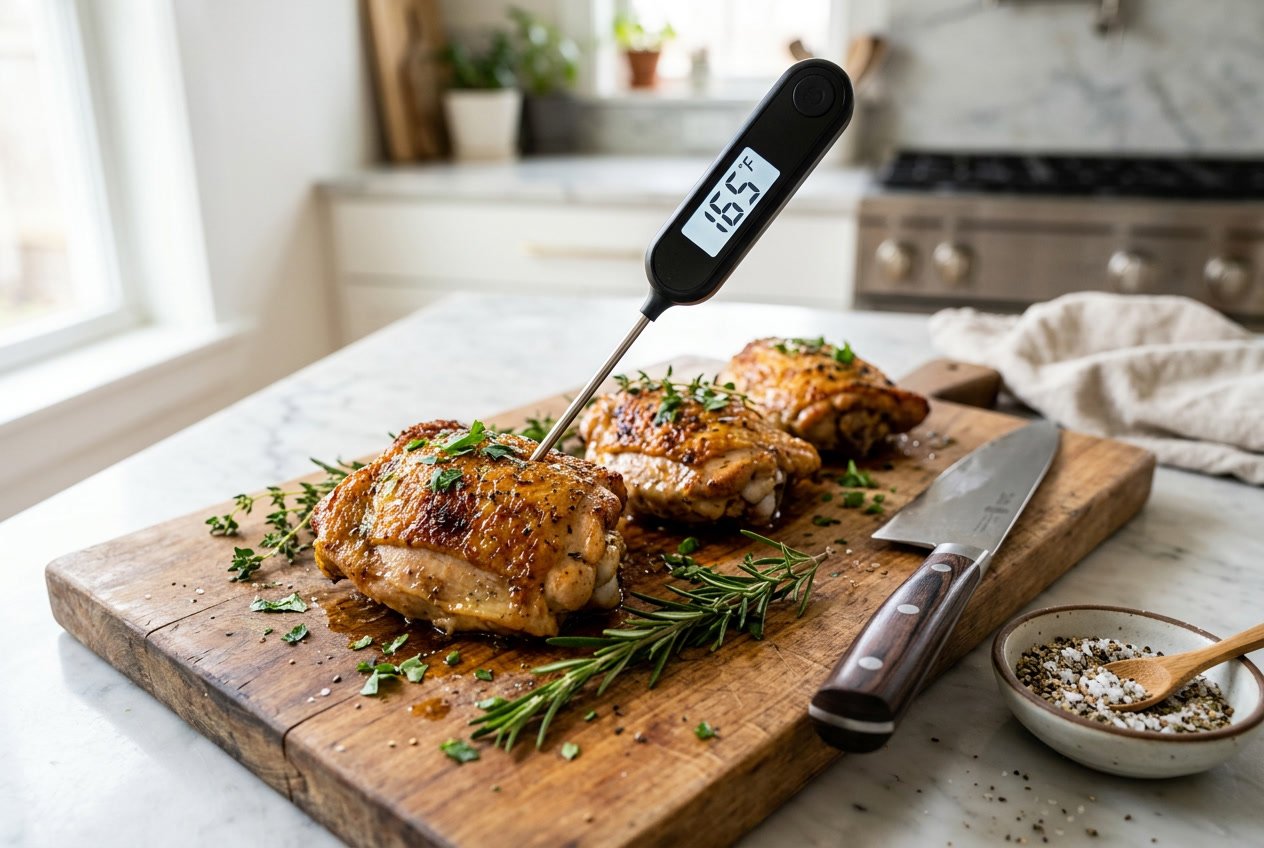
You’ll learn why the higher range improves tenderness and how long lower temperatures must hold to be safe. Discover the best ways to check the thickest part of the thigh without touching bone.
Practical tips on oven temps, cooking methods, resting, and quick recipe ideas will help you turn that temperature target into consistently great results.
Optimal Internal Temperature for Chicken Thighs
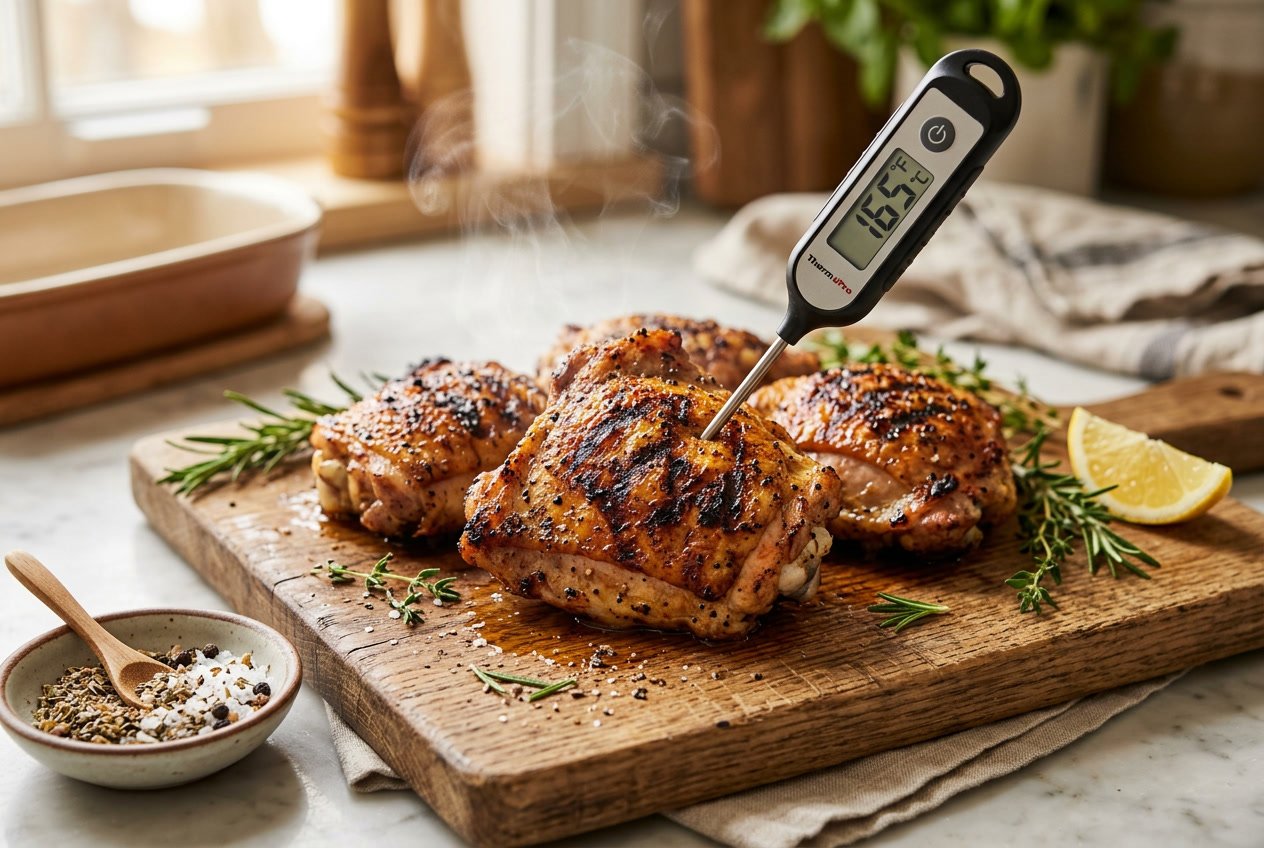
Aim for a safe minimum while considering higher targets that improve texture. Measure the thickest part of the thigh, avoiding the bone, and choose a temperature target based on tenderness and cooking method.
USDA Guidelines and Safety Standards
The USDA sets 165°F (74°C) as the minimum temperature to inactivate common pathogens like Salmonella. Insert an instant-read thermometer into the thickest part of the thigh, keeping the probe at least 1/4 inch from bone to avoid a false high reading.
Holding the meat at a lower temperature for a specific time can still pasteurize it, but that requires precise control. For home cooking, use 165°F (74°C) as the baseline for safety.
Calibrate your thermometer and check several pieces when cooking a batch. Visual cues alone can lead to undercooking near the bone.
Recommended Temperatures for Juicy and Tender Meat
Many cooks prefer higher internal temps for juicier, more tender dark meat. Aim for 175–195°F (79–90°C) when you want meat that’s gelatinous and falling-apart tender.
- 165°F (74°C): safe minimum, firmer texture.
- 175°F (79°C): more tender, still pulls from bone.
- 190–195°F (88–90°C): very tender, collagen converted to gelatin, best for slow roasting or braising.
Cook at slower, gentler heat when targeting higher temps to avoid drying the exterior. Use indirect heat, low oven temperatures, or braising liquids to keep thighs moist.
Bone-In vs Boneless Chicken Thighs
Bone-in thighs take longer to reach target temps because bone slows heat transfer. Expect 10–20% longer cooking time than boneless pieces.
Measure temperature in the meatiest area but stay clear of the bone by about 1/4 inch. Boneless thighs heat faster and are easier to cook uniformly; they reach 165°F (74°C) sooner and can dry out if pushed toward 190–195°F without extra moisture.
If you want higher tenderness with boneless thighs, use braising or cover them during roasting to retain juices. When cooking mixed batches, remove boneless pieces earlier or start bone-in pieces first.
Why Temperature Matters: Food Safety and Bacteria
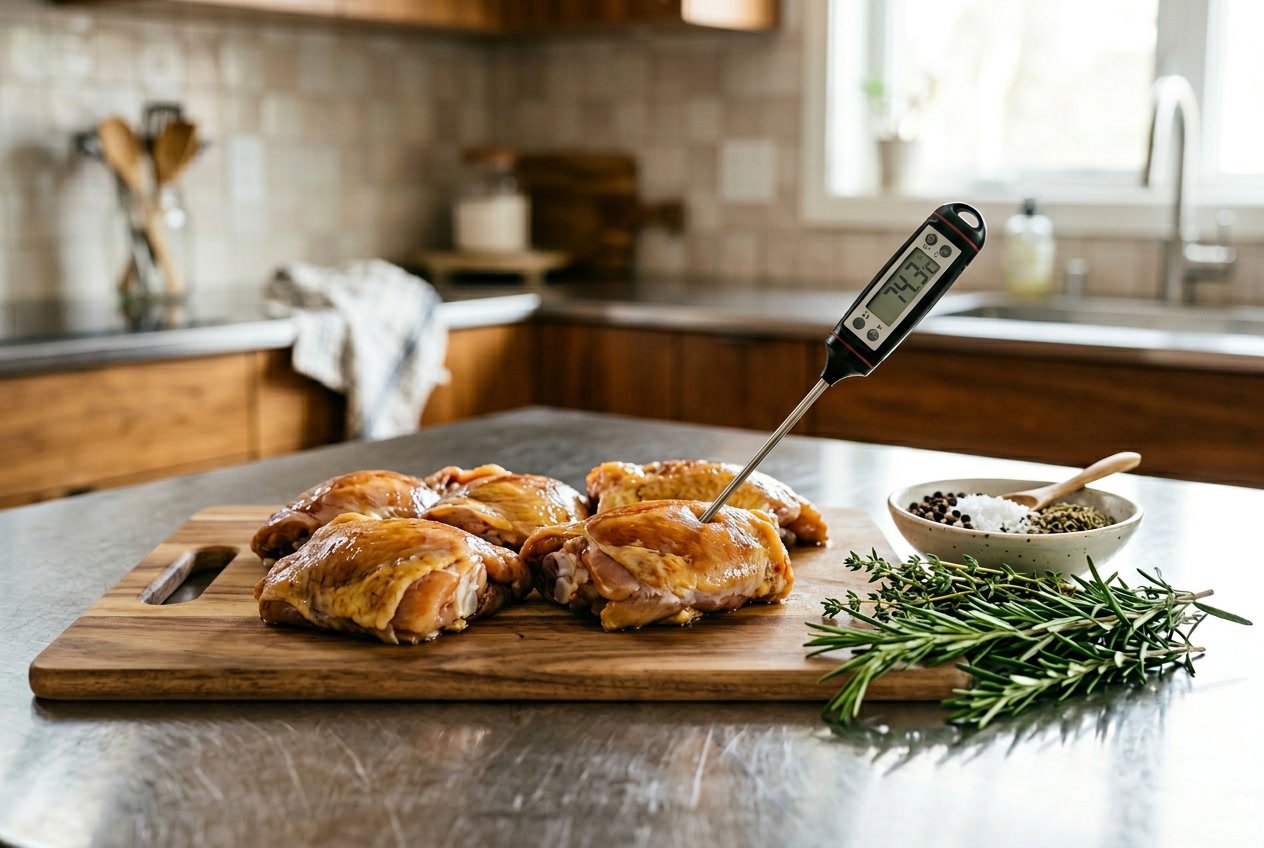
Cooking temperature determines whether chicken thighs are safe to eat and how much harmful bacteria remain. Proper heat destroys pathogens and also affects texture and moisture.
Risks of Undercooked Chicken Thighs
Undercooked thighs can harbor live bacteria that cause illness when you eat them. If the internal meat doesn’t reach the temperature and time needed to kill pathogens, you risk symptoms ranging from stomach cramps to severe dehydration.
Cross-contamination can happen if juices from raw thighs touch cutting boards, utensils, or other foods. Clean and separate them immediately to prevent spreading bacteria.
Color alone is unreliable. Thighs can look slightly pink even after reaching a safe temperature, and browned meat can be underdone. Use an instant-read thermometer in the thickest part without touching bone to verify doneness.
Dangers of Salmonella and Campylobacter
Salmonella and campylobacter are the two bacteria most commonly linked to raw poultry. Both can cause foodborne illness with symptoms such as diarrhea, fever, abdominal pain, and nausea.
These bacteria survive at lower temperatures and die when the meat reaches sufficient internal heat for the required time. Campylobacter is fragile but abundant on poultry surfaces; salmonella can be present throughout the meat.
Treat raw thighs as potentially contaminated and follow safe handling. Refrigerate promptly, avoid cross-contact, and cook to a safe internal temperature.
Washing raw chicken spreads bacteria by splashing. Skip rinsing and rely on proper cooking instead.
How Proper Cooking Prevents Foodborne Illness
When you reach the correct internal temperature in the thickest part of the thigh, you inactivate salmonella and campylobacter. Use a calibrated instant-read thermometer and insert the probe away from bone for accuracy.
Temperature plus time matters. Holding lower temperatures long enough can also kill bacteria, which is why methods like sous-vide use precise schedules.
After cooking, rest the meat for a few minutes so residual heat evens out and juices redistribute. Reheat leftovers to at least 165°F to destroy any bacteria introduced during storage.
How to Measure Chicken Thigh Temperature Accurately
Use a reliable instant-read meat thermometer, correct probe placement, and avoid common errors to get accurate readings. Follow these habits for consistent results every time.
Using a Meat Thermometer
Choose an instant-read digital meat thermometer for quick, accurate readings. A model with ±1–2°F accuracy and a thin probe works best.
Turn the thermometer on and let it stabilize before inserting. Insert the probe into the thickest part of the thigh, avoiding bone and fat.
Leave the probe in place until the display stops changing, usually 2–5 seconds. Clean the probe with hot, soapy water between checks.
Thermometer Placement Tips
Insert the probe at least ¼ inch away from the bone and aim for the center of the meatiest part of the thigh. Bone conducts heat and will read higher, so avoid touching bone.
For bone-in thighs, angle the probe parallel to the bone and push until the tip reaches the center of the muscle. For boneless thighs, insert straight into the thickest point.
If cooking multiple pieces, check the thickest one. If one reaches the target temp, others may still need time.
Avoiding Common Mistakes
Do not rely on cooking time or color alone. Never insert the thermometer through skin at an angle that hits the bone.
Avoid letting the probe touch the pan surface, grill grates, or bone. Calibrate your thermometer periodically and replace batteries promptly.
Store the device clean and dry to maintain accuracy.
Best Oven and Cooking Temperatures for Chicken Thighs
Choose an oven temperature that balances safe internal doneness with skin crisping and meat juiciness. Below are specific temperature choices and a time/temperature chart.
Oven Temperatures: 350°F, 400°F, 425°F, 450°F
350°F (177°C) cooks thighs gently. Use it for bone-in thighs when you want very tender meat and plan to roast for longer (40–55 minutes).
The skin won’t crisp as quickly, so pat dry and consider finishing under the broiler for 2–3 minutes. 400°F (204°C) is a reliable mid-point for baking chicken thighs.
It produces good browning and reaches the USDA-recommended internal temperature of 165°F (74°C) in about 25–35 minutes for bone-in pieces. Use convection if available to shorten time and improve crisping.
425°F (218°C) accelerates rendering of fat and crisps skin well while still allowing the interior to stay juicy. Expect roughly 25–30 minutes for bone-in thighs.
450°F (232°C) gives fastest skin crisping but increases risk of uneven cooking or burning. Use for smaller, boneless thighs or to finish larger pieces after lower-temp roasting.
Cooking Time and Temperature Chart
Use the chart below as a starting point. Adjust for thigh size and whether bone-in or boneless.
- Bone-in, skin-on:
- 350°F — 40–55 minutes
- 400°F — 30–40 minutes
- 425°F — 25–30 minutes
- 450°F — 20–25 minutes (watch closely)
- Boneless, skin-on or skinless:
- 350°F — 25–35 minutes
- 400°F — 20–25 minutes
- 425°F — 18–22 minutes
- 450°F — 12–18 minutes
Always use a digital meat thermometer. Insert into the thickest part without touching bone; remove at 165°F (74°C).
Let thighs rest 5–10 minutes. Carryover heat will even internal temperature and redistribute juices.
Achieving Crispy Skin and Juicy Chicken
Dry the skin thoroughly with paper towels before seasoning. Moisture prevents crisping.
Lightly oil the skin and season well. Salt the skin at least 15–30 minutes before cooking to draw out surface moisture.
Start at a moderate-high oven temp (400–425°F/204–218°C) to render fat and set the skin. If you roast at 350°F, finish under a preheated broiler or increase oven to 425–450°F for the last 5 minutes.
Use a wire rack on the baking sheet to let fat drain and air circulate for crisper results. Use a thermometer rather than time alone to avoid dryness.
For extra succulence, brine briefly (30–90 minutes) or apply a light oil-based marinade. Rest the thighs after cooking so juices redistribute and the skin stays crisp.
Cooking Techniques and Preparation Tips
Use these techniques to control surface texture, internal temperature, and moisture. High heat creates crisp skin, acids or salt improve tenderness, and low, precise temperatures ensure even doneness.
Searing and High Heat Methods
Sear skin-side down in a hot pan (medium-high to high) for 4–6 minutes to render fat and produce crisp skin. Use a heavy skillet or cast iron and a thin film of oil with a high smoke point.
Press gently to ensure full skin contact. Do not overcrowd the pan.
After browning, finish in a 375–400°F oven for bone-in thighs until the internal temperature reaches 175–185°F, or 165–175°F for boneless. For grilling, start over direct high heat to color the skin, then move to indirect medium heat to finish cooking.
Use an instant-read thermometer in the thickest part, avoiding bone contact. Rest thighs 5–10 minutes before serving.
Seasoning, Marinating, and Brining
Season liberally with salt at least 30 minutes before cooking, or up to overnight in the fridge. Dry brine (salt and aromatics on the skin) firms the skin and improves moisture retention.
Wet brines (water, salt, sugar, aromatics) for 1–4 hours add moisture and even seasoning for larger pieces. Limit acid-based marinades to 30–60 minutes for thighs to avoid overly softening the surface.
Use oil and aromatics in marinades to promote even browning. Pat thighs dry before searing to ensure a good Maillard reaction.
Apply spice rubs just before cooking for fragile herbs, or an hour ahead for dry rubs to adhere. Discard any marinade that contacted raw chicken or boil it before using as a sauce.
Sous Vide and Slow Cooking
Sous vide gives precise control. Cook boneless or bone-in thighs at 165–175°F for 1–4 hours for tender, safe results.
Finish sous vide thighs with a quick high-heat sear or use a blowtorch to crisp skin and develop flavor. For slow cooking or braising, brown thighs first for color, then simmer in liquid at low heat until internal temp reaches about 175°F and connective tissue softens.
Use 300°F oven braising or low slow-cooker settings. Check tenderness rather than relying solely on time.
Both methods benefit from finishing on high heat for texture. Use a thermometer to confirm safe minimums and achieve the preferred tenderness for your recipe.
Resting Period and Serving Chicken Thighs
Let thighs rest briefly after cooking so carryover heat finishes the job and juices stay inside the meat.
Use a tent of foil and carve so the hottest, thickest pieces reach safe temperature while remaining moist.
Importance of Resting for Juiciness
Resting for 5–10 minutes after removing from heat allows the internal temperature to rise about 3–10°F (2–6°C), completing cooking safely without overexposing the meat to heat.
If you pull bone-in thighs at around 160°F (71°C), they will reach the USDA-recommended 165°F (74°C) during rest and retain more juice.
Tent thighs loosely with foil to keep them warm without trapping steam.
For bone-in thighs, rest for 8–10 minutes; boneless thighs need 5–7 minutes.
Check the thickest part with an instant-read thermometer (avoiding bone) to confirm it reaches 165°F after resting.
Carving and Serving Suggestions
Slice against the grain when carving to shorten muscle fibers and improve tenderness.
For bone-in thighs, cut along the bone to remove it, then slice the meat for easier portioning.
Serve right after resting while the skin stays warm.
If you want extra crispness, briefly broil or pan-sear skin-side up for 1–2 minutes.
Use a shallow platter to catch juices.
Spoon pan juices over sliced pieces if desired.
Chicken Thigh Recipes and Serving Ideas
Choose bone-in, skin-on thighs for the best texture and flavor.
Cook them to 175–195°F depending on whether you want them tender or falling apart.
Roast, braise, or pan-sear then finish in the oven for crispy skin and juicy meat.
Classic Baked Chicken Thighs
Preheat your oven to 400°F for crisp skin and even cooking.
Pat thighs dry, season with salt, pepper, and a teaspoon of smoked paprika per pound.
Roast on a wire rack over a sheet pan for 30–40 minutes until the thickest part reads 175–185°F.
Start skin-side down in an ovenproof skillet over medium heat for 4 minutes, flip to skin-up, then transfer to the oven.
Let thighs rest 5–10 minutes before serving so juices redistribute.
Serve with roasted potatoes or a simple arugula salad.
For a sheet-pan meal, add quartered onions and halved carrots to roast alongside the thighs.
Flavorful Chicken Thigh Recipes
Try a honey-garlic glaze: brown thighs, brush with a mix of 2 tablespoons honey, 1 tablespoon soy sauce, and minced garlic, then finish in a 375°F oven to 180–185°F.
For braised thighs, sear them, then simmer in 1–2 cups of stock with tomatoes and olives at low heat until the meat reaches 190–195°F for fall-apart tenderness.
Use spice rubs like cumin, coriander, and brown sugar for a warm, caramelized crust.
Or marinate in yogurt, lemon, and garlic for 2–8 hours to tenderize and add tang.
Adjust oven times by thigh size and whether bones remain.
Boneless thighs cook faster by 5–10 minutes.
Tips for Leftovers and Storage
Cool leftovers to room temperature within two hours. Refrigerate them in shallow airtight containers.
Use leftovers within 3–4 days for best quality. Freeze portions for up to 3 months.
Label containers with the date and contents.
Reheat gently by covering and warming in a 325°F oven until the internal temperature reaches 165°F. You can also slice and reheat in a skillet with a splash of broth to prevent drying.
For salads or tacos, shred cold thighs and toss with a quick dressing of lime juice, oil, and chopped cilantro to refresh the flavor.


