
What Is The Chicken Leg Quarter? Your Complete Guide to Preparation and Recipes
You often spot chicken leg quarters in the grocery case, but what are they and why choose them for dinner?
A chicken leg quarter combines the thigh and drumstick (plus a bit of back), giving you bone-in, skin-on dark meat that stays juicy and carries more flavor than white cuts.
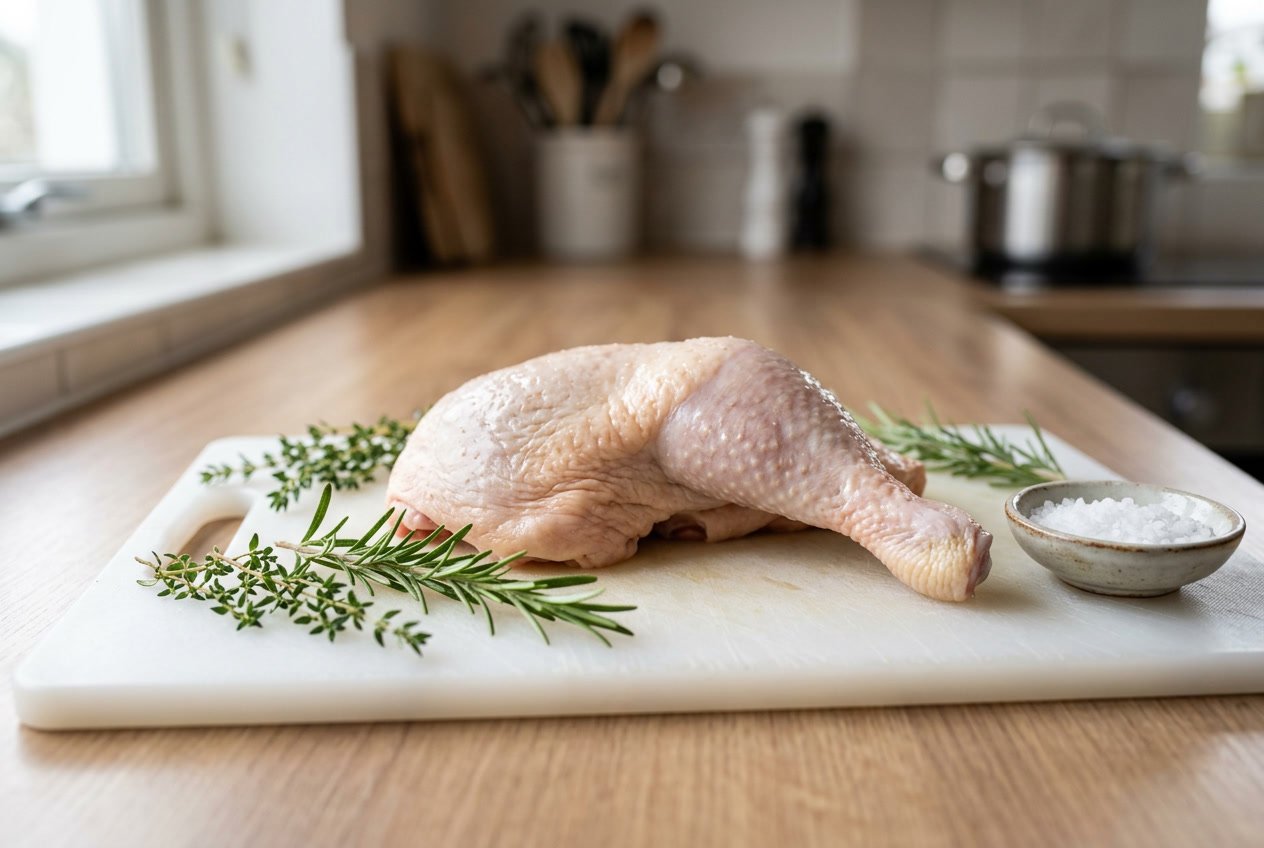
A chicken leg quarter is the hind portion of the bird made up of the thigh and drumstick. It offers rich taste, moist texture, and versatility for roasting, grilling, braising, and baking.
You’ll find practical nutrition points, easy seasoning tricks, and reliable cooking methods to turn this affordable cut into crisp-skinned, succulent meals.
What Is a Chicken Leg Quarter?
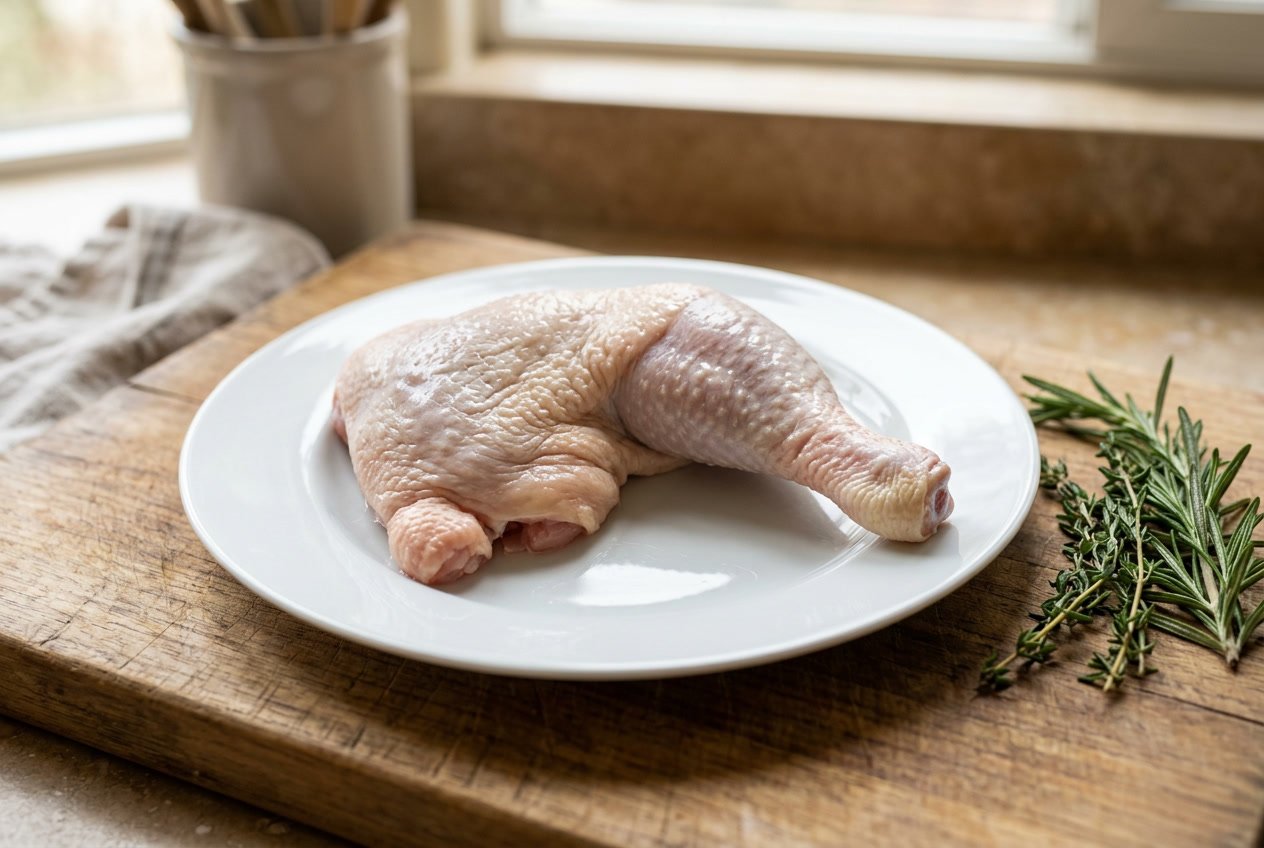
A chicken leg quarter is the combined whole leg of the bird: the thigh, the drumstick, and a small section of the back.
It delivers dark meat with higher fat content than breast meat, which helps keep it juicy during longer cooking.
Parts Included in a Chicken Leg Quarter
A leg quarter includes three visible components: the thigh (upper portion attached to the body), the drumstick (lower portion ending at the ankle), and a portion of the back where they connect.
The joint stays intact, so you get bone-in meat that adds flavor during roasting or braising.
The skin usually stays attached, which helps brown and seal moisture.
If a recipe calls for separate pieces, you can cut the quarter at the knee joint into a drumstick and a thigh.
Difference Between Leg Quarters and Other Chicken Cuts
Leg quarters differ from chicken breasts and wings by offering only dark meat, making them fattier and more flavorful.
Compared with boneless thighs, leg quarters are bone-in and typically cheaper per pound.
Leg quarters handle longer, slower heat—roasting, braising, or grilling—without drying.
They also yield richer stock from the bones than boneless cuts.
Terminology: Chicken Quarters vs. Leg Quarters
Many people use “chicken quarters” and “leg quarters” interchangeably, but “quarter” broadly means a fourth of the bird.
In retail and recipes, a “leg quarter” refers to the hindquarter composed of thigh and drumstick.
When shopping, check labels. “Whole leg” may mean the same as leg quarter, while “quarter” alone sometimes needs confirmation that it’s the hindquarter and not a breast quarter.
Nutritional Profile and Benefits
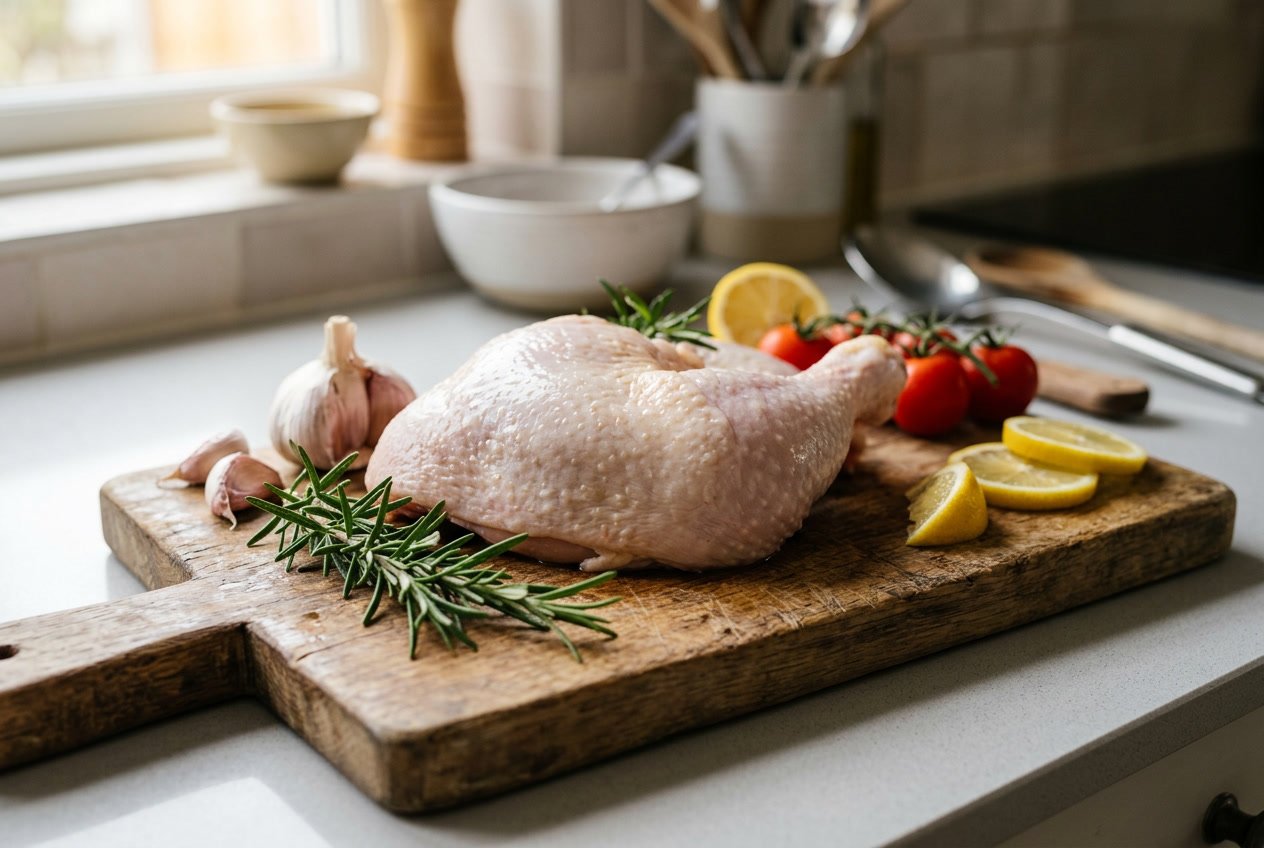
Chicken leg quarters provide concentrated protein, B vitamins, iron, and a mix of saturated and unsaturated fats.
Calorie count varies by cooking method and whether you keep the skin.
You get a nutrient-dense portion that often costs less per pound than breast meat and offers flexible portion control.
Protein and Vitamins in Chicken Leg Quarters
A cooked chicken leg quarter (about 112 g / 4 oz) typically delivers roughly 17–31 g of protein depending on whether the piece is skinless and how it’s trimmed.
Protein in the leg quarter supports muscle repair and satiety.
Leg quarters also supply B vitamins—especially niacin (B3) and pyridoxine (B6)—which aid energy metabolism and nervous system function.
You’ll find modest amounts of iron and phosphorus, useful for oxygen transport and bone health.
If you remove the skin, you reduce fat while retaining most protein and B vitamins.
Fat Content and Caloric Value
Chicken leg quarters contain more fat and calories than white meat, largely concentrated in the skin and dark meat.
A 112 g serving with skin often ranges around 250–290 calories and about 24–25 g of fat.
Removing skin can cut those numbers substantially, often by 25–40%.
Fat breakdown includes saturated and unsaturated fats; saturated fat typically contributes several grams per serving.
How you cook the leg quarter matters. Roasting or grilling drains fat and yields fewer added calories than frying.
- Roasted, skin-on (112 g): about 250–290 kcal, about 24 g fat
- Roasted, skinless (100–112 g): about 190–220 kcal, about 8–12 g fat
- Fried, breaded (varies): higher calories and fat due to oil and coating
Affordability and Cost Comparison
Chicken leg quarters rank among the most affordable cuts of poultry by weight.
Retail prices per pound typically fall below boneless skinless breast meat, giving you more protein per dollar.
A leg quarter includes both thigh and drumstick, so it yields more edible weight than small bone-in pieces.
If you budget for protein, leg quarters let you stretch resources. Buy in bulk, roast a tray, and use leftovers across multiple meals.
Portion Control Advantages
The leg quarter’s defined shape makes portioning simple. One quarter equals a clear single serving for many adults.
You can further control calories by removing skin, trimming visible fat, or dividing the piece to match appetite.
For meal planning, a 4 oz cooked portion offers predictable protein and calorie counts.
When you prepare several leg quarters at once, you can pre-portion them into meal containers and combine with measured sides for consistent nutrition.
Popular Cooking Methods for Chicken Leg Quarters
These methods help you get juicy dark meat and flavorful skin while matching different timeframes and equipment.
You’ll see which techniques create crisp skin, which yield fall-off-the-bone tenderness, and how to control timing and temperature.
Oven-Baked and Crispy Baked Chicken Leg Quarters
Oven baking at 400–425°F gives you even cooking and the best chance for crispy skin.
Pat the skin dry, season well, and roast skin-side up on a rimmed baking sheet or wire rack to allow air circulation.
For extra crispness, start at high heat (425°F) for 15–20 minutes, then lower to 375°F until the thigh reaches 165°F.
Finish briefly under the broiler if you want extra browning. Watch closely to prevent burning.
Use a thermometer to avoid overcooking. Dark meat tolerates slightly higher final temperatures but aim for moist texture.
For easy baked chicken, toss vegetables on the same tray and baste once for flavored pan juices.
Grilled and Barbecued Chicken Leg Quarters
Grilling creates smoky flavor and well-rendered skin.
Sear skin-side down over direct heat for 3–5 minutes to render fat and get grill marks, then move to indirect heat and cook covered at medium (around 325°F) until the thigh reads 165–175°F.
Control flare-ups by trimming loose skin and keeping a spray bottle handy.
For barbecue, use charcoal or wood chips for a pronounced smoke profile.
Brush with sauce in the final 5–10 minutes to avoid burning sugars.
Rotate quarters so thicker parts face cooler zones if pieces vary in size.
Let the chicken rest 5 minutes before serving to redistribute juices and keep the skin intact while slicing.
Braising and Slow Cooking Techniques
Braising yields tender, fork-tender meat by combining initial browning with low, moist heat.
Sear quarters skin-side down in a Dutch oven, remove excess fat, then add aromatics and liquid (broth, wine, or a mix) to reach halfway up the pieces.
Cover and simmer gently on the stovetop or in a 300–325°F oven for 1.5–2 hours until meat pulls from the bone.
Reduce the braising liquid into a sauce or spoon it over the chicken for concentrated flavor.
For slow cooker use, brown first for better texture, then cook on low 4–6 hours.
This method is forgiving and works well when you want tender meat without constant monitoring.
Seasoning and Spice Blends
Use simple, targeted ingredients to build flavor and texture: salt, pepper, garlic, and a single bold spice like smoked paprika.
Balance drying agents (salt, sugar) with oil or acid when marinating to improve moisture and crust.
Basic Seasoning for Chicken Leg Quarters
Start with kosher salt and freshly ground black pepper as your foundation.
Salt drawn into the meat seasons evenly and helps the skin crisp.
Aim for about ¾–1 teaspoon kosher salt per pound applied across skin and cavity.
Layer flavor with granulated garlic and onion powder rather than fresh garlic for even distribution and less risk of burning.
Use about ½ teaspoon of each per pound, rubbing them into the skin so they adhere.
Finish with smoked paprika for color and a mild smoky note.
A single teaspoon per pound gives clear flavor without masking the chicken.
Pat the skin dry first and apply a thin coat of neutral oil to help the rub stick and promote browning.
Popular Spice Blends and Marinades
Choose a dry seasoning blend for a crisp exterior and a wet marinade for tenderized, deeply flavored meat.
Classic dry blends include: 1 part salt, 1 part smoked paprika, ½ part granulated garlic, ½ part onion powder, and a touch of sugar.
For a simple marinade, combine oil, acid (lemon or vinegar), granulated garlic, salt, pepper, and chopped herbs.
Marinate 30 minutes minimum; overnight gives deeper flavor but avoid over-acidic mixes if marinating more than 6 hours.
For a barbecue-style glaze, use brown sugar, smoked paprika, chili powder, salt, and a splash of vinegar.
Apply rub before cooking and brush glaze in the last 10 minutes to prevent burning.
Always reserve any sauce used during serving unless you’ve boiled it first.
Tips for Crispy and Flavorful Skin
Dry the skin thoroughly with paper towels before seasoning; moisture prevents browning.
If time allows, salt the skin and refrigerate uncovered for 1–12 hours to dry the surface and concentrate flavor.
Apply a light layer of neutral oil before your seasoning blend to promote even browning.
Avoid overloading the skin with sugar or wet marinades early; sugar burns easily and wet surfaces steam instead of crisping.
Use direct high heat briefly to render fat and develop color, then move to indirect heat or lower oven temperature to finish cooking to 165°F internal.
Let the quarters rest 5–10 minutes before serving so juices redistribute and the skin stays crisp.
Step-by-Step Guide: How to Bake Chicken Leg Quarters
You’ll prepare, season, bake, and check doneness so the skin crisps and the dark meat stays juicy.
Focus on drying and trimming, applying flavor both under and over the skin, choosing the right oven temperature and time, and using an instant-read thermometer.
Preparation and Trimming Tips
Pat each leg quarter thoroughly with paper towels to remove surface moisture.
Dry skin browns and crisps better.
If any flaps of excess fat or loose skin remain, trim them with kitchen shears so they don’t burn or cause uneven cooking.
If the backbone or a bit of rib is attached and you prefer uniform pieces, use a sharp knife to remove it.
For food safety, keep raw chicken cold and work on a clean surface.
Optionally, score the thickest part of the thigh skin lightly to help heat penetrate without tearing the skin.
Arrange pieces skin-side up on a rimmed baking sheet or shallow roasting pan.
Leave at least 1 inch between pieces so hot air circulates and the skin crisps instead of steaming.
Applying Seasonings and Marinades
Dry brine by sprinkling ¾–1 teaspoon salt per pound over the skin and under it if possible.
Refrigerate uncovered for 1–12 hours to improve flavor and texture.
If time is short, pat dry, then rub with 1–2 tablespoons oil or melted butter per 4 quarters to help seasonings stick and promote browning.
For rubs, mix 2 tsp paprika, 1–2 tsp garlic powder, 1 tsp black pepper, and 1 tsp salt per 4 quarters.
Gently lift the skin and distribute a small portion of the rub directly onto the meat for deeper flavor.
For wet marinades, combine acid (lemon juice or vinegar), oil, and aromatics; marinate no more than 4 hours to prevent meat texture change.
Brush or drizzle any remaining oil or marinade on the outside before baking.
Avoid heavy sugary glazes early in the bake; apply them in the last 5–10 minutes to prevent burning.
Baking Time and Temperature Recommendations
Select the temperature based on your desired result. Bake at 375°F (190°C) for even cooking and tender meat. Use 400–425°F (205–218°C) for crispier skin and a shorter cook time.
Bake smaller quarters for 35–40 minutes at 400°F. Larger pieces may need up to 50 minutes at 375°F.
Place the pan on the center rack for balanced heat. If the skin browns too quickly, loosely cover with foil and continue baking.
Broil for 2–4 minutes at the end if you want crispier skin. Watch closely to prevent burning.
Here are some time and temperature pairs to guide you:
- 375°F — 45–50 minutes
- 400°F — 35–45 minutes
- 425°F — 30–40 minutes
Adjust time for altitude, oven calibration, or convection settings. Reduce time by about 10–15% when using convection.
Using an Instant-Read Thermometer
Insert an instant-read thermometer into the thickest part of the thigh, avoiding the bone, to get an accurate reading. Aim for 175°F (79°C) for dark meat texture. The minimum safe internal temperature is 165°F (74°C).
Check the temperature near the lower end of the expected cook time. If it’s below target, return the chicken to the oven and check again every 5–7 minutes.
Let the pieces rest for 5–10 minutes after baking. The temperature will rise by 3–5°F and juices will redistribute.
Clean and sanitize the thermometer probe between uses to avoid cross-contamination. Check your oven’s temperature with a separate oven thermometer for accuracy.
Recipe Ideas and Serving Suggestions
Try practical ways to cook chicken leg quarters and pair them with sides that balance flavor and texture. You can use oven, grill, or sauce-based methods and choose sides that balance richness and acidity.
Classic Chicken Leg Quarter Recipes
Make oven-roasted chicken leg quarters with a simple spice rub of smoked paprika, garlic powder, salt, and black pepper. Pat the skin dry, rub with oil and seasoning, and roast at 400°F (200°C) for 40–55 minutes until the internal temperature reaches 165°F (74°C).
For crispier skin, brush with melted butter or oil during roasting and baste juices over the meat.
If you want a sticky glaze, mix honey and Dijon or BBQ sauce and brush it on in the last 10–15 minutes of cooking.
To shred for tacos or salads, bake until very tender, let the meat rest for 10 minutes, then pull from the bone with two forks.
International and Creative Variations
Change up chicken leg quarters by using different marinades and spices.
For an Asian flavor, marinate in soy sauce, fresh ginger, garlic, and honey. Bake or grill and finish with sesame seeds.
For a Mediterranean version, use lemon, oregano, rosemary, and olive oil. Roast with potatoes in the same pan.
For Cajun style, coat with cayenne, paprika, garlic, and onion powder. Roast or smoke for a spiced crust.
You can use slow-cooker or Instant Pot methods for a tender, braised texture. For crispy skin after slow cooking, broil briefly or pan-sear skin side down.
Serving Pairings Like Chicken and Coleslaw
Pair rich chicken leg quarters with acidic, crunchy sides to cut through fat.
Classic coleslaw made with cabbage, carrot, and a vinegar or mayo dressing provides brightness and a cooling contrast to spicy or BBQ-glazed quarters.
Serve a scoop alongside or pile it into tacos with shredded chicken.
Roasted potatoes, corn on the cob, or simple steamed green beans go well with roasted and herb-forward preparations.
For Mediterranean variations, serve lemon rice, a tomato-cucumber salad, or pita and tzatziki.
When you use sweet glazes like maple-Dijon or honey-sriracha, add a bitter green such as arugula or a vinegar-based slaw to keep flavors balanced.


