
What Is Chicken Thighs Internal Temp? The Essential Guide to Safe & Juicy Results
Cook chicken thighs to at least 165°F (74°C) to meet USDA safety guidelines. Many cooks aim for 175–195°F for richer texture and more tender meat.
Aim for 165°F for safety. Target 175–195°F for meltingly tender, collagen-rich thighs.
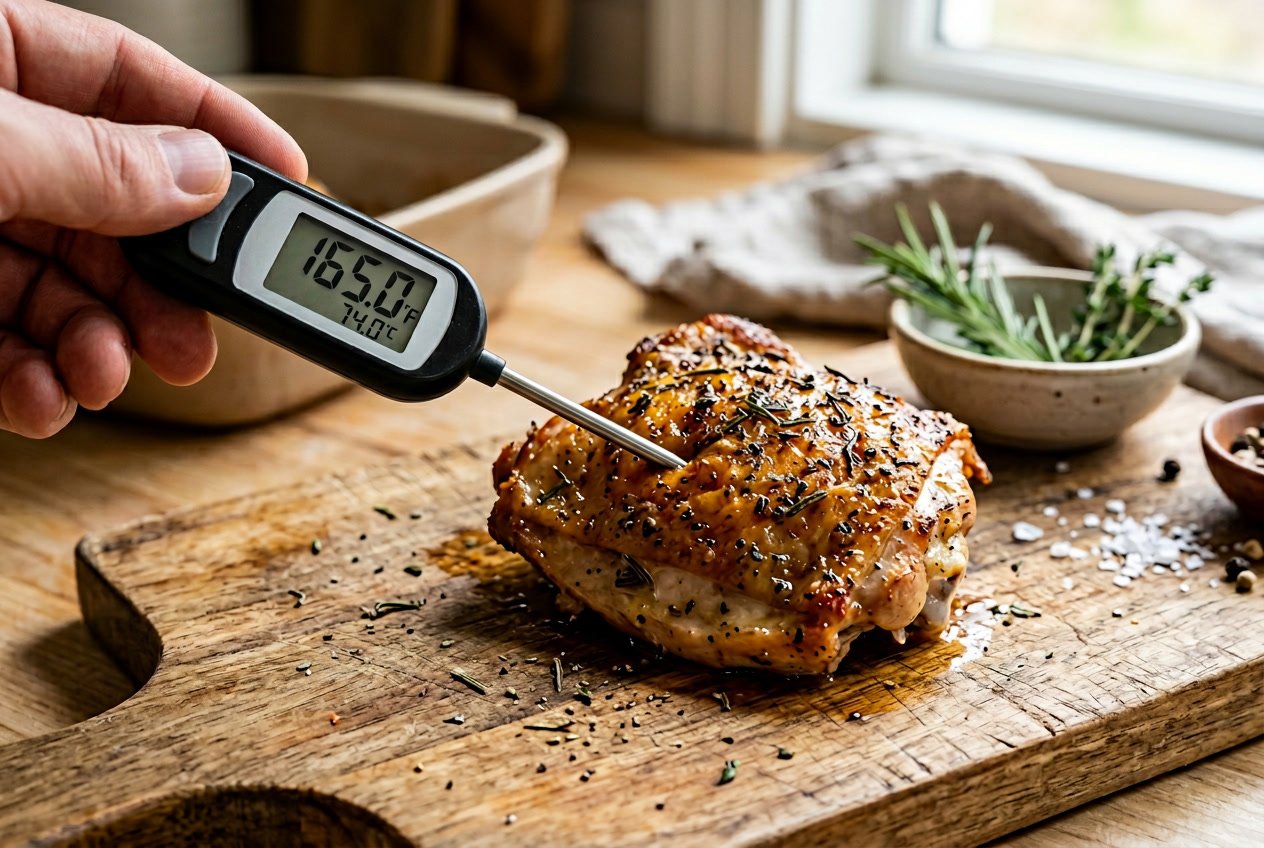
Lower times at 165°F can still be safe. Higher temps break down connective tissue for succulence.
Learn which thermometer technique gives the most reliable reading. The article also covers cooking methods, timing, visual cues, common mistakes, and tips for resting and serving.
Safe Internal Temperature for Chicken Thighs
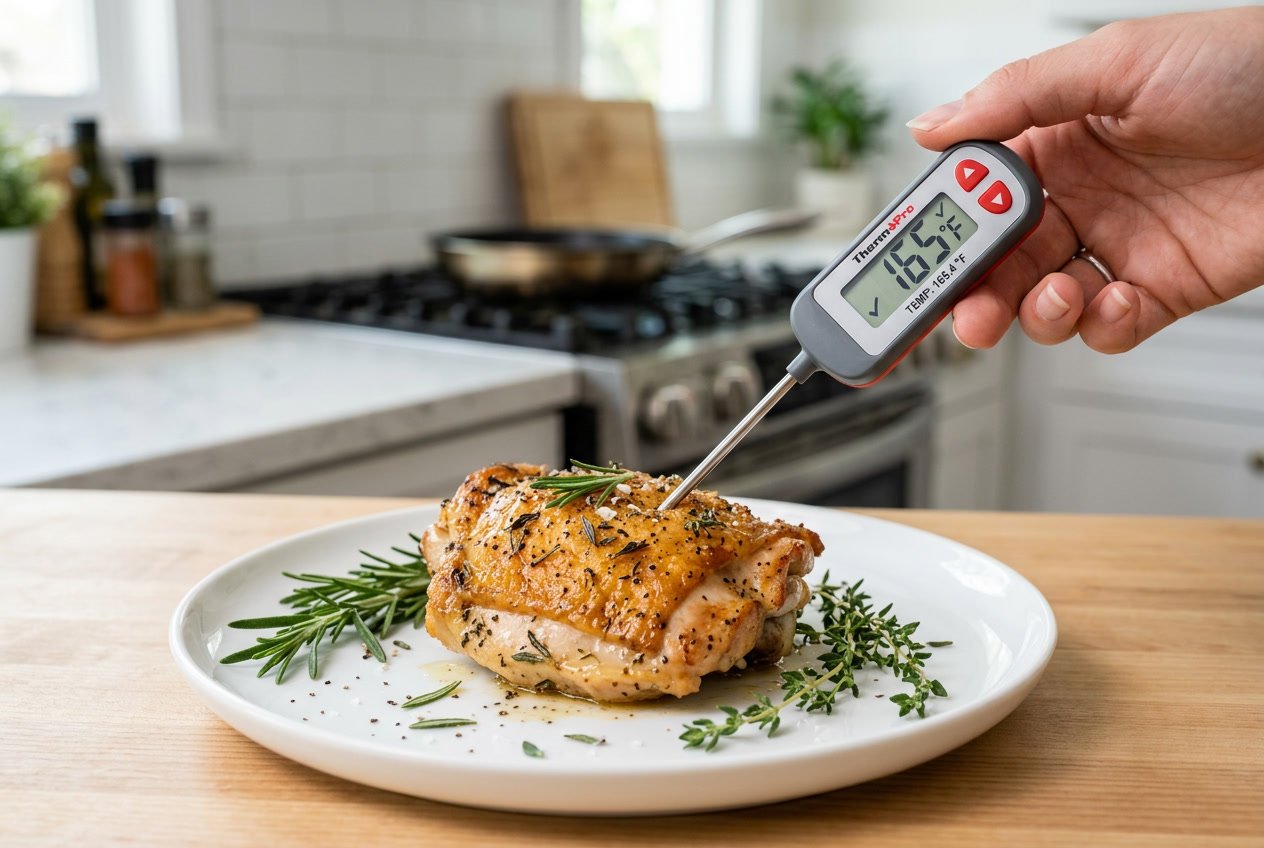
Cook chicken thighs to a temperature that destroys harmful bacteria while delivering the texture you want. Measure temperature in the correct spot and note whether thighs are bone-in or boneless.
USDA Guidelines and Food Safety
The USDA sets the safe minimum internal temperature for all poultry at 165°F (74°C). Insert an instant-read thermometer into the thickest part of the thigh, avoiding bone, until it reads 165°F.
That temperature kills pathogens like Salmonella and Campylobacter quickly, making the meat safe to eat. Measure after resting for a minute or two to avoid false high readings from surface heat.
For large or bone-in thighs, check two spots: near the bone and in the thickest muscle. If you use an oven probe, confirm calibration periodically for accuracy.
Why Dark Meat Benefits from Higher Temperatures
Chicken thighs have more collagen and connective tissue than breasts. When you raise the internal temperature above 165°F—typically to 175–185°F for bone-in thighs—collagen converts to gelatin, which increases tenderness and juiciness.
For boneless skinless thighs, stop closer to 165–170°F to prevent drying. For bone-in, skin-on thighs, pull at 175–185°F for a silkier mouthfeel and fall-apart texture.
Use higher temperatures for collagen-rich dark meat. Use lower temperatures for leaner pieces.
Best Internal Temperatures for Texture and Flavor
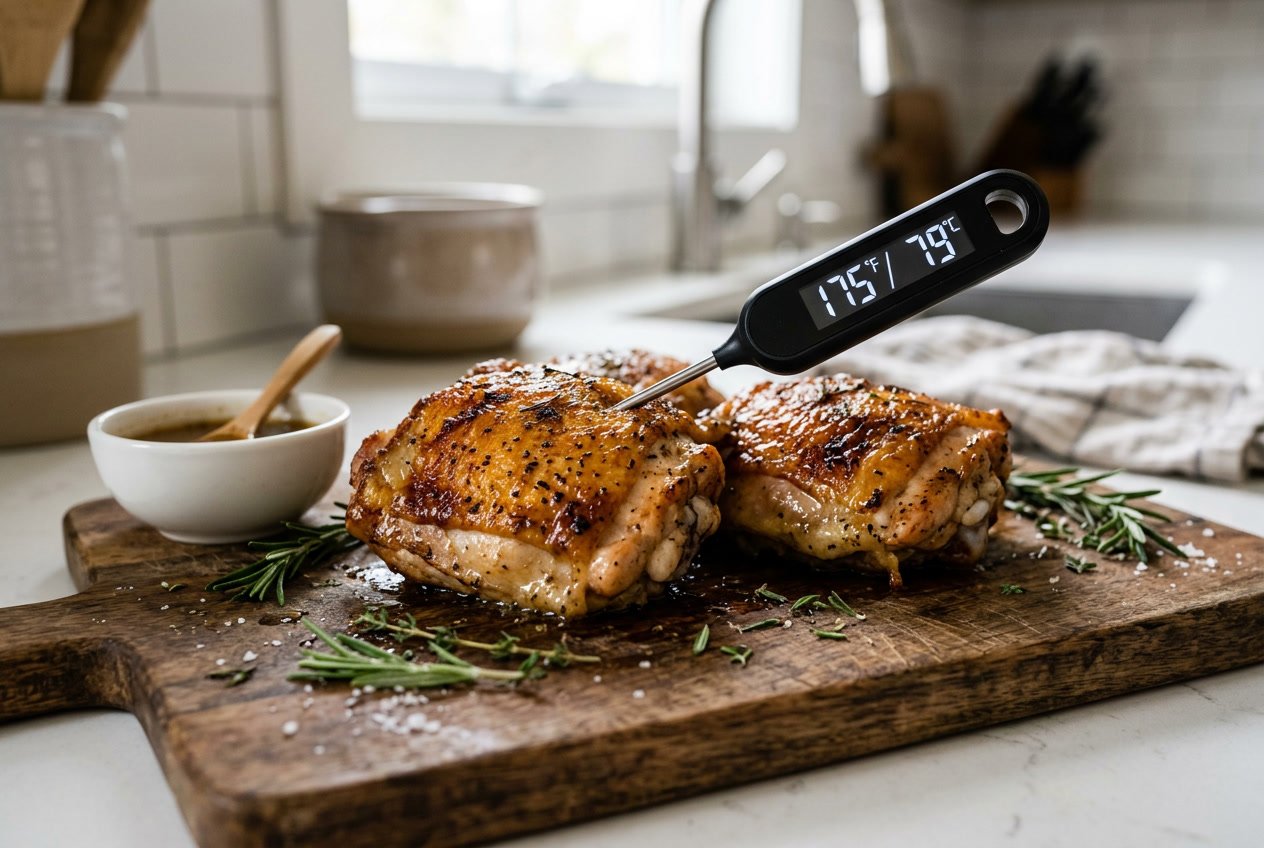
Aim for a temperature that keeps the meat safe while maximizing tenderness and juiciness. Focus on numeric targets and how they affect texture.
Recommended Range for Juicy Results
Cook chicken thighs to at least 165°F (74°C) for safety. For juicier, more tender results, target 175–185°F (79–85°C) for dark meat.
At 175°F the meat will be moist with a slightly firm texture. At 185°F the collagen has softened more, yielding meat that pulls apart easily.
Insert a probe thermometer into the thickest part of the thigh without touching bone. Account for carryover cooking: resting the thighs 5–10 minutes can raise internal temp another 3–8°F, so remove them slightly before your target if you plan to rest.
For bone-in thighs, check near the flesh, not the bone, to get an accurate reading.
The Science of Collagen Breakdown in Chicken Thighs
Chicken thighs contain more connective tissue (collagen) than breasts, which changes how temperature affects texture. Collagen begins to denature and convert to gelatin between 160–185°F; the process accelerates with longer time at higher temperatures.
As collagen turns to gelatin, the meat becomes more tender and juicier because gelatin holds moisture. If you exceed about 205°F, muscle fibers can over-tighten and become stringy or dry.
Use steady heat—low-and-slow roasting, braising, or indirect grilling—to give collagen time to break down while keeping juices intact.
How to Accurately Measure Internal Temperature
Get the right tool and probe placement so your thighs hit safe temperatures without overcooking. Use an instant-read meat thermometer, test in the thickest spot near the bone, and allow a short rest for carryover heat.
Choosing and Using a Meat Thermometer
Pick an instant-read thermometer for quick, accurate readings. Digital probes are faster and more precise than dial units.
Models like the ThermoWorks Thermapen One read in 1–2 seconds and are widely used for reliability. Any calibrated instant-read thermometer that reads to at least 165°F (74°C) will work.
Calibrate before first use and after long storage by testing in an ice bath (32°F/0°C) and boiling water (adjust for altitude). Clean the probe with hot soapy water between checks to avoid cross-contamination.
Insert the probe fully so the sensing tip sits inside the meat, not exposed to air. When testing multiple thighs, check the thickest piece and a few others, especially if sizes vary.
Avoid leaving a dial probe in the oven unless it’s rated for continuous use. Instant-read models are meant for spot checks and give faster, safer results.
Where to Place the Thermometer in Chicken Thighs
Position the probe in the thickest part of the thigh, aiming for the center of the meat near—but not touching—the bone. Bones conduct heat and give falsely high readings if the probe tip contacts them.
Insert the probe from the side so the tip reaches the geometric center of the thigh. For bone-in thighs, angle the probe toward the center parallel to the bone and stop when the tip is roughly 1⁄4 inch from the bone.
For boneless thighs, insert straight down into the middle of the thickest portion. Take multiple readings if the thigh has unequal thickness or if you seared the outside heavily.
Pull the probe back slightly and reposition if you suspect the tip hit bone. Once the thermometer shows at least 165°F (74°C), remove the meat from heat and rest it 5–10 minutes to allow carryover heat and juices to settle.
Cooking Methods and Timing for Chicken Thighs
Focus on temperature and timing that deliver safe, juicy thighs with either crisp skin or quick, tender results. Use an instant-read thermometer to confirm internal temperature instead of relying on time alone.
Baking Chicken Thighs
Preheat the oven to 400°F (204°C) for bone-in, skin-on thighs to get crispy skin and even cooking. Arrange thighs skin-side up on a wire rack set over a rimmed baking sheet so air circulates.
Bake times vary by size: small-to-medium bone-in thighs usually take 35–45 minutes; larger pieces can need up to 50 minutes. Check doneness by inserting an instant-read thermometer into the thickest part without touching bone.
The USDA minimum is 165°F (74°C), but many cooks prefer 175–185°F (79–85°C) for more tender dark meat. If you want extra browning, finish under the broiler 1–3 minutes while watching closely.
For boneless thighs, reduce oven time to about 20–30 minutes at 400°F.
Grilling Chicken Thighs
Set your grill for medium heat (about 350–375°F). For bone-in thighs, start over indirect heat to cook through without burning the skin, about 20–25 minutes, then move to direct heat for 3–5 minutes per side to crisp and char.
Flip only when the skin releases easily. Boneless thighs grill faster: 4–6 minutes per side over direct medium heat usually suffices.
Use a probe thermometer to read the thickest part; remove at 165–175°F depending on your tenderness preference. Let grilled thighs rest 5–7 minutes so juices redistribute.
Marinate or oil skin to prevent sticking. Avoid high flames that char the exterior while leaving the center undercooked.
Cooking Boneless and Bone-In Thighs
Boneless thighs cook faster and more evenly than bone-in. Expect 20–30 minutes in the oven at 400°F or 8–12 minutes total on a stovetop skillet over medium-high heat.
They take well to quick, high-heat methods because there’s no bone to slow heat transfer. Bone-in thighs need longer because the bone slows heat penetration.
For stovetop-to-oven methods, sear skin-side for 5–7 minutes, then transfer to a 400°F oven for 20–25 minutes. Always probe the thickest flesh, not the bone, for an accurate temp reading.
Quick guide:
- Boneless, oven 400°F: 20–30 minutes; target 165–175°F.
- Bone-in, oven 400°F: 35–50 minutes; target 175–185°F.
Adjust times by piece size and always verify with an instant-read thermometer.
Understanding Visual Doneness and Common Pitfalls
Visual cues can help, but they don’t guarantee safety or ideal texture. Rely on a thermometer for precise doneness; use color and juices as secondary checks.
Is Pink Chicken Safe to Eat?
Pink in the center of chicken thighs does not automatically mean it’s unsafe. Dark meat can retain a pinkish hue even after it reaches a safe internal temperature because of myoglobin and, if smoked, a chemical reaction that leaves a reddish ring.
Use a meat thermometer to confirm safety. The USDA minimum safe temperature for poultry is 165°F (74°C).
For thighs, many cooks prefer 175–195°F for more tender, gelatinized collagen. Samples at those temperatures can still show pink color but are safe.
If you see pink and the thermometer reads 165°F or higher, the meat is safe. If the thermometer reads below 165°F, continue cooking regardless of color.
Why You Shouldn’t Rely Only on Color
Color varies with cooking method, age of the bird, and marinade ingredients, so it’s an unreliable measure of doneness. Visual checks can mislead you into undercooking or overcooking.
Follow these practical checks in this order:
- Insert an instant-read thermometer into the thickest part of the thigh without touching bone.
- Check for clear juices when pierced; cloudy or bloody juices indicate undercooking.
- Look for slight shrinkage from the bone in bone-in thighs as a secondary cue.
Avoid mistakes like cutting into the thigh early (releases juices) or relying on surface browning (can occur before the interior is done). Trust precise temperature readings first, then use color and juice as confirmation of quality.
Resting, Serving, and Food Safety Tips
Rest your cooked thighs briefly to let internal heat finish the job and keep juices inside. Follow safe temperatures and simple handling steps to avoid bacterial risk and cross-contamination.
Carryover Cooking and Resting Time
When a chicken thigh reaches 165°F (74°C) at the thickest point, it is safe to eat. Internal temperature can rise another 3–10°F during resting.
Remove thighs from heat a few degrees below your target if you want to finish at a slightly higher serving temp. Rest bone-in thighs 5–10 minutes; boneless pieces need 3–5 minutes.
Tent loosely with foil to reduce heat loss without steaming the skin. Use an instant-read thermometer to check the thickest part, avoiding bone contact.
If you prefer more tender meat, allow the thigh to climb to 175–185°F during rest, but always confirm it reached at least 165°F during cooking.
Serving Safely and Preventing Cross-Contamination
Serve cooked thighs on a clean platter. Never use the one that held raw poultry.
Label and use separate cutting boards and utensils for raw and cooked chicken. This practice prevents the transfer of pathogens like Salmonella.
Keep hot food above 140°F if it will sit out briefly. Refrigerate leftovers within two hours, or within one hour if the temperature exceeds 90°F.
Store leftovers in shallow airtight containers to cool quickly. Refrigerate at 40°F (4°C) or below.
When reheating, bring food to 165°F throughout. Wash hands, countertops, and tools with hot soapy water after handling raw chicken.
Sanitize surfaces with a solution of 1 tablespoon bleach per gallon of water if needed.


