
What Is Chicken Thighs Cooked Temp? Guide to Perfect Tenderness and Safety
For juicy, tender chicken thighs that are safe to eat, aim for an internal temperature between 175–195°F (79–91°C), depending on your texture preference.
Hitting 175°F gives moist dark meat, while 190–195°F melts connective tissue for an even more tender, fall-apart result.
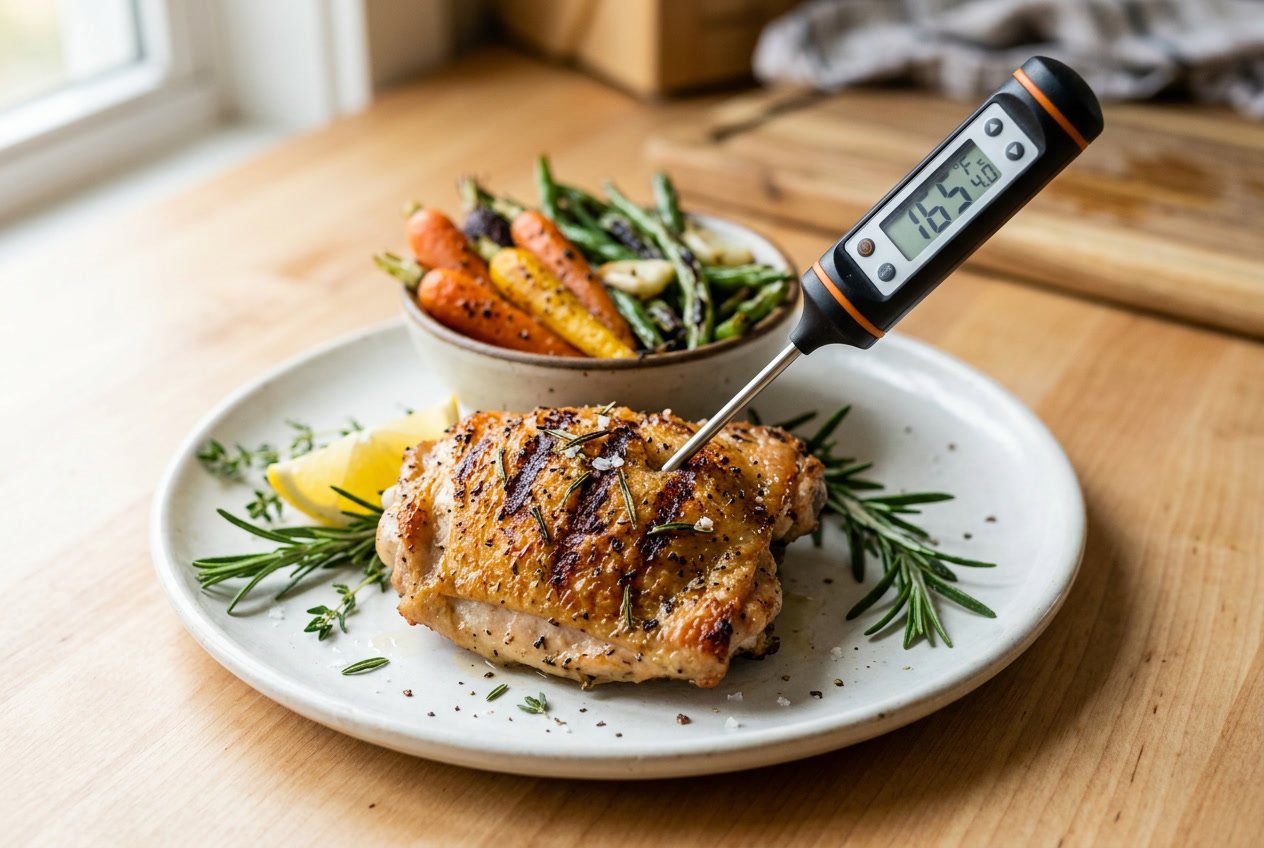
You can check that temperature accurately with an instant-read thermometer.
Choose oven temps and times that help you reach your target, and use simple techniques like slow cooking or high-heat roasting to shape the final texture and crispiness.
Follow practical prep and safety tips so your thighs turn out how you want every time.
What Is the Ideal Internal Temperature for Chicken Thighs?
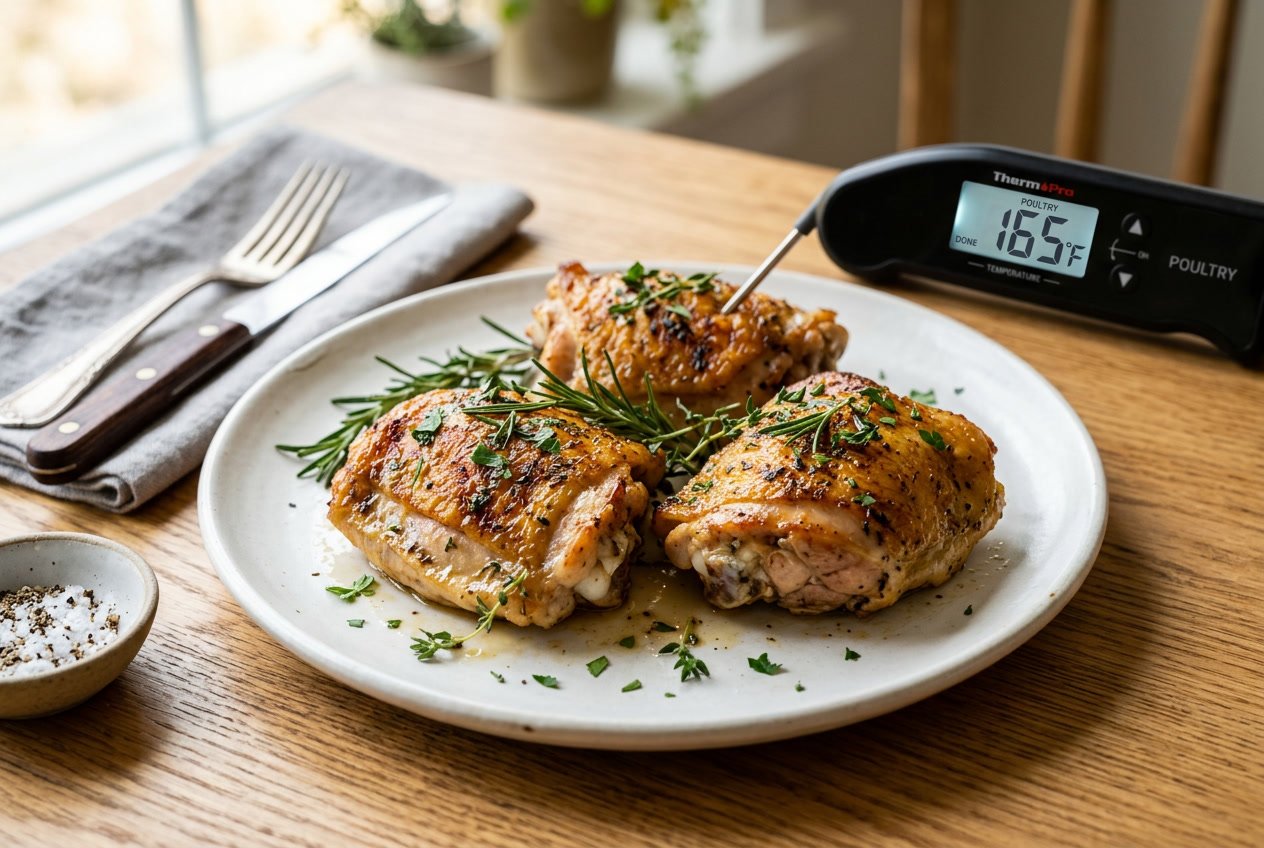
Aim for both safety and texture when you check the internal temperature of chicken thighs.
Use an instant-read thermometer in the thickest part, avoiding bone contact.
Expect different target temperatures depending on your texture preference.
USDA Guidelines for Safe Internal Temperature
The USDA recommends a safe minimum internal temperature of 165°F (74°C) for all poultry, including chicken thighs.
When the thickest part of the thigh reaches 165°F on an instant-read thermometer, you reduce pathogenic bacteria like Salmonella and Campylobacter to safe levels.
Insert the probe at least ¼ inch away from bone to avoid a falsely high reading.
Hold the thermometer steady until it registers.
Rely on temperature rather than time or appearance to confirm safety.
If you finish chicken below 165°F, you must hold the meat at that lower temperature for a validated time to achieve the same pathogen reduction.
That approach is common in professional kitchens, but it requires precise control and is not recommended for casual home cooks.
Optimal Temperature Range for Tender and Juicy Thighs
For best tenderness, let dark meat continue to a higher range: roughly 175–195°F (79–91°C).
Collagen in thighs breaks down into gelatin as temperature rises, so meat becomes more tender and succulent between 175°F and about 195°F.
You’ll notice meat that clings less to the bone and pulls apart more easily in this zone.
Aim for 175–185°F for juicy, sliceable thighs with some structure.
Push toward 190–195°F when you want very tender, fall-off-the-bone results, especially for braises or slow roasting.
Avoid going past 210°F, which can dry the meat or make the texture stringy.
Use the higher targets when cooking with low-and-slow methods like braising or indirect grilling.
When roasting at higher oven temps, pull thighs slightly earlier and allow brief carryover to prevent overshoot.
Temperature Differences for Bone-In vs Boneless Thighs
Bone-in chicken thighs take longer to reach target temperatures because bone slows heat penetration.
Expect 5–15 minutes more cooking time compared with boneless thighs at the same oven or grill temperature.
Always measure in the thickest meat near—but not touching—the bone.
Boneless thighs heat more evenly and reach 165°F (74°C) faster, making them convenient for quick pan-searing or grilling.
If you plan to finish boneless thighs to the higher tenderness range (175–185°F), watch closely to avoid overcooking the exterior.
When cooking mixed bone-in and boneless pieces together, assign the bone-in pieces to a hotter zone or remove boneless pieces early.
Consistent thermometer checks for each piece type ensure both safety and your desired texture.
How to Accurately Measure Chicken Thigh Temperature
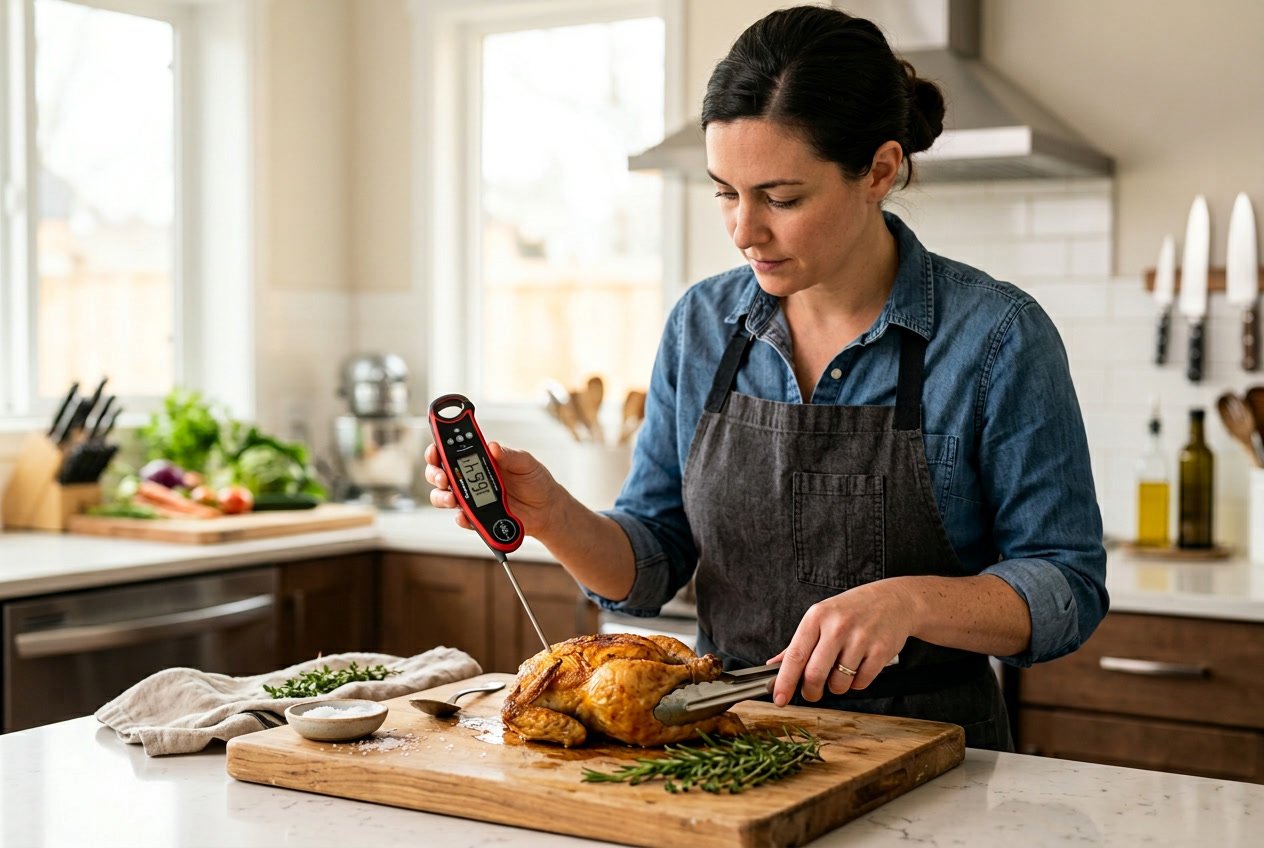
Accurate temperature checks prevent undercooking or drying out thighs.
Use a reliable meat thermometer and place the probe properly to read the true internal temperature.
Using a Meat Thermometer Correctly
Choose an instant-read or probe thermometer rated for meat.
Calibrate your thermometer if possible, or test it in ice water (should read 32°F / 0°C) before use.
Insert the probe near the end of cooking, but leave the thigh in the pan or oven for immediate reading.
For instant-read thermometers, wait the manufacturer’s stated time for a stable value.
For leave-in probe thermometers, monitor during cooking and use oven-safe cables or wireless transmitters.
Avoid touching bone, gristle, or pan surfaces with the probe.
Sanitize the probe between uses to prevent cross-contamination.
Target the internal temperature appropriate for chicken thighs when interpreting readings.
Where to Insert the Thermometer for Best Results
Probe into the thickest part of the thigh—usually the midpoint of the muscle—while steering clear of the bone.
Bone conducts heat and can show higher temperatures than the meat.
Push the probe parallel to the bone until the tip sits in the center of the meat.
If the thigh is very irregular, take two readings at different spots and use the lower value.
For bone-in thighs, aim for an internal temperature of at least 165°F (74°C) to meet safety guidelines, though many cooks prefer 170–175°F (77–79°C) for more tender dark meat.
When testing multiple thighs, check the thickest piece rather than a random one.
Record temperatures if you cook frequently to learn how your oven or grill performs and to hit the desired internal temperature for chicken consistently.
Oven Temperatures and Cooking Times
Focus on oven temperature and timing to reach a safe internal temp of 165°F (74°C) while keeping thighs juicy and, if desired, the skin crispy.
Choose a temperature based on whether you want slower, more forgiving cooking or faster, crispier results.
Recommended Oven Settings: 375°F to 425°F
Set your oven between 375°F (190°C) and 425°F (218°C) for reliable results.
375°F (190°C) gives more even heat and reduces the chance of dried edges.
425°F (218°C) crisps skin faster by rendering fat more quickly, so pat skin dry and use a wire rack to let air circulate.
If you use a convection oven, lower the temperature by about 25°F (14°C) or shorten the time slightly.
Always confirm doneness with a meat thermometer—target 165°F (74°C) anywhere in the thickest part without touching bone.
Baking at Different Temperatures
375°F (190°C): Cook boneless thighs about 20–30 minutes, bone-in about 30–40 minutes.
400°F (204°C): Skin starts crisping and thick pieces finish in 25–35 minutes (boneless sooner, bone-in later).
425°F (218°C): Best for crispy skin or finishing a slower-cooked piece. Expect bone-in thighs near 30–40 minutes; boneless often 20–30 minutes.
Keep an eye on browning and consider broiling for 1–3 minutes at the end for extra crisp.
450°F (232°C): Use only for smaller pieces or to rapidly brown skin; risk of burning before center reaches 165°F is higher.
Monitor closely and reduce time by 5–10 minutes from 425°F guidelines.
Cooking Time Variations for Bone-In and Boneless Thighs
Bone-in chicken thighs take longer because the bone acts as a heat sink.
At 375°F plan on roughly 35–45 minutes; at 425°F expect 30–40 minutes.
Boneless thighs cook faster since heat penetrates more evenly.
At 375°F expect 20–30 minutes; at 425°F they often finish in 15–25 minutes.
Size and thickness change times significantly.
Use a meat thermometer to check for 165°F (74°C).
Rest thighs 5–10 minutes after baking to let juices redistribute.
If skin is under-crisped, broil 1–3 minutes while watching closely.
Adjust time by 5–10 minutes for very large or very small pieces, and reduce times slightly for convection ovens.
Key Cooking Techniques for Perfect Chicken Thighs
These techniques help retain moisture, break down connective tissue, and create crisp, well-browned skin.
You can use direct searing, oven finishing, and proper positioning to produce tender, flavorful thighs with crispy skin.
Searing and Pan-Roasting
Start with bone-in, skin-on thighs for best moisture and flavor retention.
Pat the skin dry with paper towels and season both sides.
Heat an oven-safe skillet over medium-high heat until it’s shimmering, then add a thin layer of neutral oil.
Place thighs skin-side down and press briefly so the skin makes full contact.
Sear without moving for 5–8 minutes until deeply golden and the fat has rendered.
Flip and transfer the whole pan to a preheated oven (325–375°F depending on desired final texture).
Roast until the internal temperature reaches your target—commonly 175–185°F for tender thighs that have broken-down connective tissue.
Use an instant-read thermometer in the thickest part without touching bone.
Let the thighs rest 5 minutes uncovered to let juices redistribute and skin firm up.
Using the Convection Oven
Convection ovens circulate hot air to brown skin faster and more evenly.
Reduce conventional oven recipes by about 25°F or shorten cook time by roughly 10–15% to avoid overcooking.
Preheat fully so the seared pan enters a stable environment and the skin continues to crisp.
Place thighs on a rack set over a rimmed baking sheet or keep them in the skillet used for searing.
The elevated rack promotes airflow under the thighs and improves crisping on all sides.
Monitor internal temp closely; convection can push thighs from ideal to overdone quicker than conventional roasting.
If you want very crispy skin, finish with a brief 425–450°F blast for 5–8 minutes, then check temperature again to confirm tenderness.
Positioning: Skin-Side Up for Crispy Skin
Always finish roasting skin-side up to keep rendered fat away from the skin’s surface and allow direct hot-air exposure.
If you roast skin-side down, the skin steams and softens against the pan.
Position thighs with even spacing so air can circulate around each piece.
For pan-roasted thighs, sear skin-side down first, then turn them skin-side up before transferring to the oven.
If using a baking sheet, place thighs on a wire rack to lift skin off pooled fat.
During the last few minutes, increase oven heat or switch to broil briefly while watching closely to avoid burning.
Check crispness visually and by touch—skin should be taut and crackly.
Maintain internal temperature targets (175–185°F) to ensure the meat is tender while the skin remains crispy.
Essential Preparation Tips: Marinating, Brining, and Seasoning
Marinating adds flavor and some tenderization, while brining changes internal moisture and salt balance.
Seasoning before cooking sets the crust and helps reach the target internal temperature safely.
Benefits of Marinating Chicken Thighs
Marinating chicken thighs infuses flavors into the meat and slightly breaks down connective tissue for more tender chicken thighs.
Use a balance of acid (lemon juice, vinegar) and oil with salt and aromatics.
A 30-minute minimum improves surface flavor, while 2–6 hours gives deeper penetration for boneless thighs.
For bone-in thighs, marinate up to 12 hours in the fridge to avoid mushy texture from prolonged acid exposure.
Salt in the marinade should be moderate—about 1 teaspoon kosher salt per cup of liquid—or omitted if you brined first.
Pat thighs dry before cooking to promote browning and a crisp skin.
Reserve some marinade (boil before using as a sauce) if you want extra glaze or to baste while grilling.
How Brining Affects Texture and Juiciness
Brining drives salt into the meat, partially denaturing proteins so thighs retain more moisture during cooking.
Use a basic wet brine of 1 tablespoon kosher salt per cup of water for 1–4 hours for boneless thighs, and 4–6 hours for bone-in.
Do not exceed 12 hours.
For quicker results, a dry brine (salt rubbed on the surface) for 1–24 hours firms the skin and seasons deeply without extra liquid.
Rinse and pat dry after wet brining to avoid overly salty exterior.
Brined thighs will be juicier at the target cooked temp (165°F), and they develop a better mouthfeel if you allow a short rest after cooking to redistribute juices.
Food Safety and Storing Cooked Chicken Thighs
Cook, check, and chill: reach the right internal temperature, then cool and store promptly in airtight containers at 40°F (4°C) or below.
Use labeled containers and eat refrigerated leftovers within a few days to reduce the risk of foodborne illness.
Ensuring Safe Internal Temperature Every Time
Measure at the thickest part of the thigh near the bone with an instant-read thermometer. The USDA minimum is 165°F, but thighs become more tender at 170–175°F; rely on temperature, not color.
Insert the probe without touching bone and wait until the reading stabilizes. If the thigh reads below the target, return it to heat and recheck in multiple spots.
Check both a thigh and the thickest breast area when cooking a whole bird or bone-in pieces. Use a calibrated thermometer and clean it between uses to avoid cross-contamination.
If you brine or marinate, pat the skin dry before cooking for even heat penetration. Record cook times and temperatures for consistent results.
How to Properly Store Cooked Chicken Thighs
Cool cooked thighs to 70°F (21°C) within two hours, then to 40°F (4°C) or below within the next four hours. Store in shallow, airtight containers or wrap tightly to remove air and speed cooling.
Label containers with the date. Refrigerate and use within 3–4 days.
For longer storage, freeze in portions for up to 4 months for best quality. Wrap in foil and place in a freezer bag to prevent freezer burn.
Reheat only the portion you’ll eat, bringing internal temperature back to 165°F before consuming. Discard any chicken left at room temperature longer than two hours, or one hour above 90°F (32°C).
Troubleshooting and Common Questions About Cooking Chicken Thighs
Aim for a clear internal temperature and reliable visual cues to get moist, safe thighs. Small checks—temperature, texture, juices—solve most problems quickly.
Signs of Under and Overcooked Chicken Thighs
Under-cooked thighs often feel soft and jiggle near the bone. Pink or red bone marrow and juices that are cloudy or tinged with pink can appear; use an instant-read thermometer—165°F minimum for safety, 175–185°F for juicier, more tender results.
Overcooked thighs become stringy and dry with tight, fibrous meat. The skin may be excessively leathery and the meat will pull apart rather than flake.
Thermometer readings above about 200–205°F usually mean lost moisture and over-broken collagen.
Quick checks to use:
- Insert thermometer into the thickest part without touching bone.
- Poke with a fork: undercooked meat resists, overcooked meat shreds easily.
- Observe juices: clear at proper doneness, pink or bloody if undercooked.
Carryover Cooking and Resting Tips
Carryover cooking raises internal temperature after you remove thighs from heat. Expect a 5–10°F increase for typical bone-in thighs; larger pieces can rise more.
Pull thighs from heat a few degrees below your target to hit the perfect range while resting. Rest for 5–10 minutes on a warm plate, loosely tented with foil.
Rest lets juices redistribute so meat stays moist and yields a firmer, sliceable texture. For crispy skin, rest uncovered on a rack for 5 minutes, then tent briefly if needed.
If you need to serve immediately but avoid overcooking, remove thighs at:
- 175°F target: pull at 170°F.
- 180–185°F target for very tender thighs: pull at 175–180°F.
Use your thermometer to confirm final temp after resting to ensure you’ve reached safe, perfectly cooked chicken.
Comparing Chicken Thighs to Other Cuts
Chicken thighs require higher finishing temperatures and longer cooking than lean cuts. They reward you with more forgiving results and deeper flavor when you aim for the right internal temp.
Expect differences in collagen, fat content, and how heat affects texture and juiciness.
Why Chicken Thighs Differ from Breasts in Cooking
Thighs are dark meat with more connective tissue and intramuscular fat than breasts. That collagen begins to convert to gelatin around 170–175°F, so pulling bone-in thighs at 175–185°F produces silkier, more tender meat.
Breasts are lean and best taken to 165°F to avoid drying. Because thighs contain more fat, they tolerate higher heat and longer cooking without becoming chalky.
You can use high-heat searing, braising, or roasting and still get juicy results if you let the thighs reach the higher internal temps that break down collagen. Use an instant-read thermometer in the thickest part to get perfectly cooked chicken thighs every time.
Flavor and Texture Considerations
Thighs deliver richer flavor thanks to fat and myoglobin. They stand up well to bold marinades, longer brines, and smoke.
That richness also changes how the skin crisps. You need a dry surface and high initial heat to render the fat beneath the skin for crispiness.
Properly cooked thighs feel tender and slightly gelatinous when you cut into them, not stringy. Aim for 175–185°F for bone-in or 165–170°F for boneless to balance safety with maximum tenderness and flavor.


