
What Is Chicken Thighs Cooked At? Temperatures, Techniques & Tips
You want to know the temperature that gets chicken thighs safe, juicy, and flavorful without guessing. Cook chicken thighs to at least 165°F (74°C) for safety, but many cooks aim for 175–185°F (79–85°C) for tender meat and crisp skin.
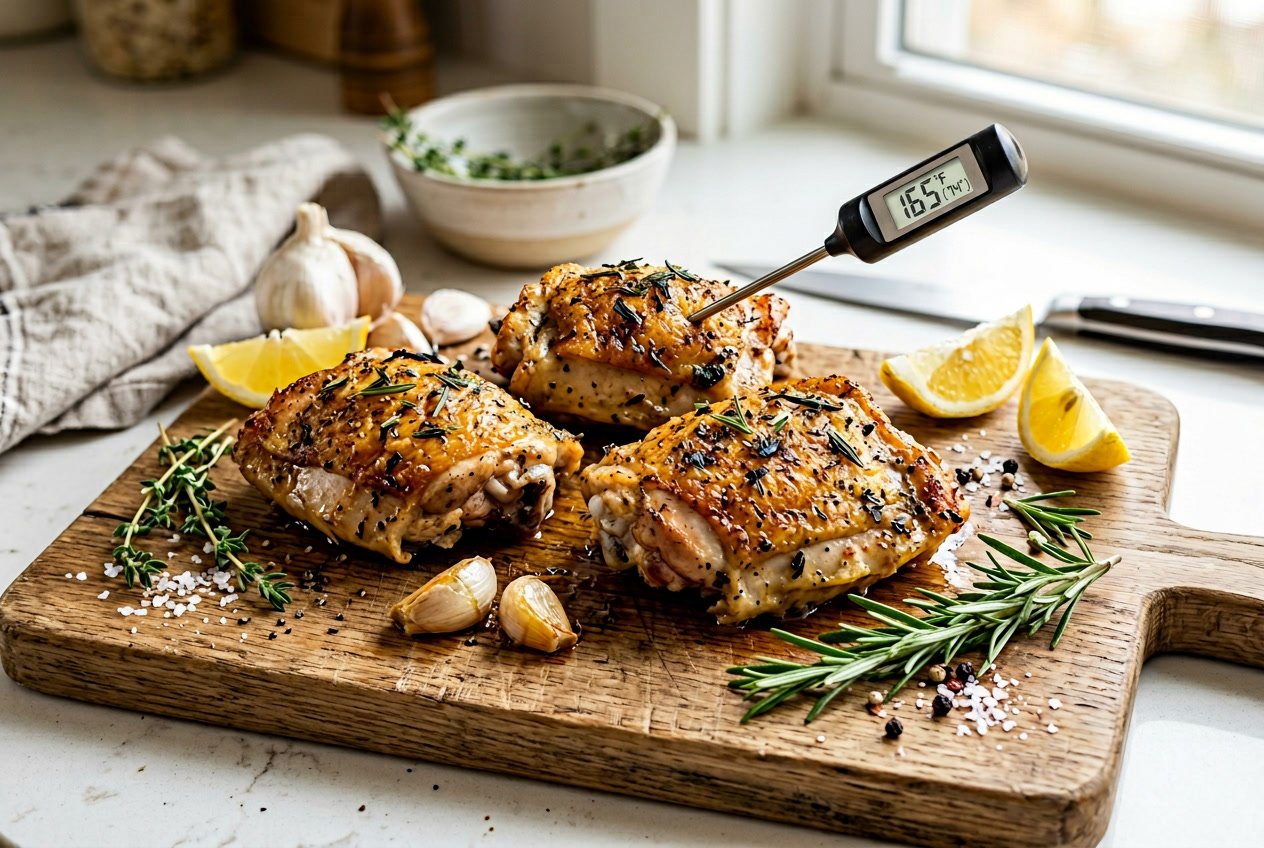
This guide explains oven temps (350–425°F), timing for bone-in versus boneless thighs, and how to check internal temperature. You’ll also learn simple tricks for crispy skin, alternative methods like grilling or braising, and quick serving ideas for easy meals.
Understanding Chicken Thighs
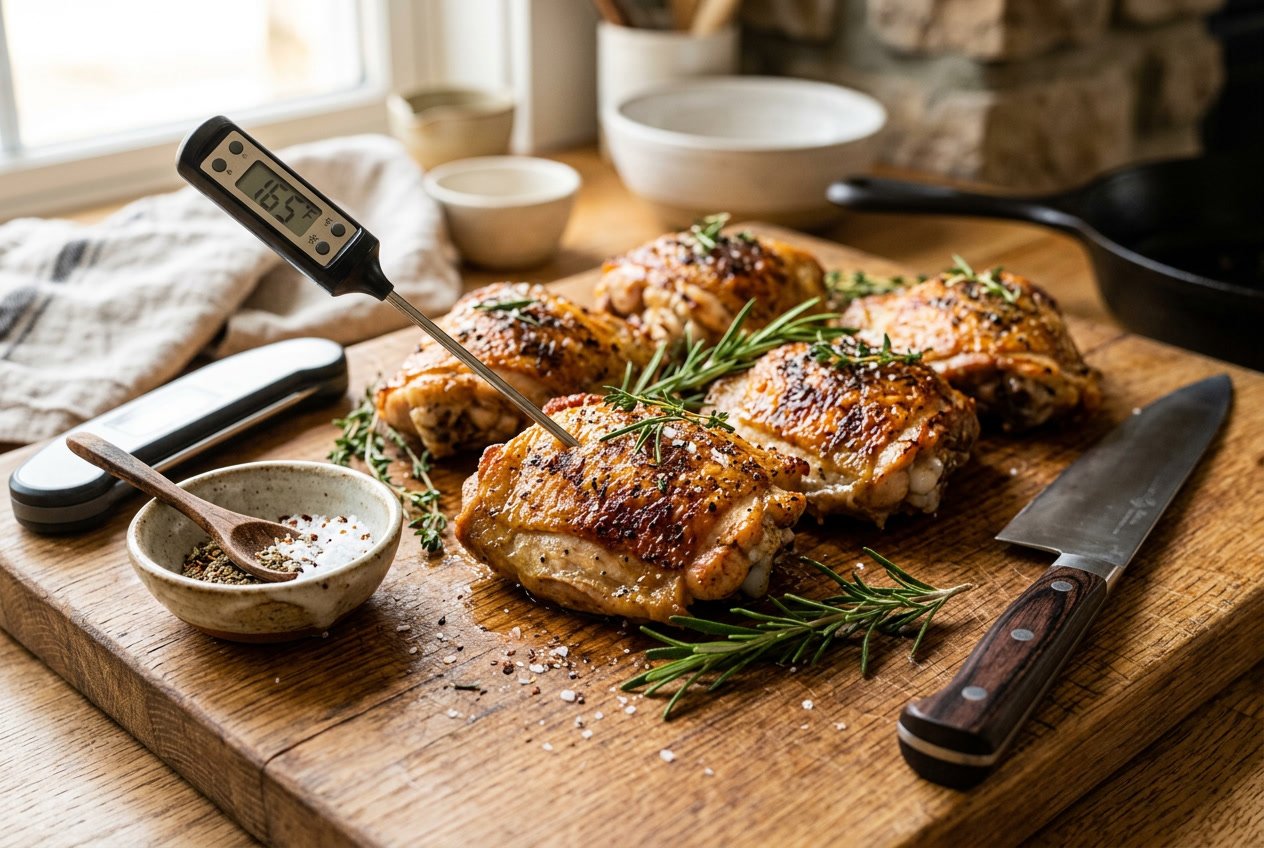
Chicken thighs offer rich flavor and forgiving texture. Bone and skin differences affect cooking time, moisture, and best methods.
Types of Chicken Thighs
You’ll find two main types: bone-in and boneless. Bone-in chicken thighs include the femur and often the skin; they weigh about 4–6 ounces each and deliver more flavor during roasting or braising.
Boneless chicken thighs are deboned and trimmed, usually 3–5 ounces each, and cook faster—great for sautéing, stir-fries, or quick grilling.
Buy fresh or frozen. Thaw frozen pieces fully for even results.
Check packaging labels: “thigh fillet” or “thigh meat” usually mean boneless. Choose longer, slower methods for bone-in; use high-heat, short methods for boneless.
Bone-In vs Boneless Thighs
Bone-in chicken thighs retain heat differently because the bone conducts and radiates heat inward. Bone-in pieces need roughly 5–15 more minutes in the oven compared with boneless, depending on temperature and size.
The bone helps keep meat juicier during longer roasts and works well for braises and slow-cooker recipes. Boneless chicken thighs cook more evenly for pan-searing and quick bakes.
They accept marinades faster thanks to a higher surface-to-mass ratio. If you want shreddable meat, use bone-in for longer cooks. For uniform slices or quick meals, pick boneless.
Skin-On vs Skinless Thighs
Skin-on chicken thighs have a fat layer that crisps under high heat and shields the meat from drying. Roast or pan-sear skin-side down first to render fat and achieve a brown, crispy exterior.
Expect slightly longer cook times with skin attached, but also more flavor and better moisture retention. Skinless thighs cook faster and are leaner, useful when you want less fat or a quicker sear.
They brown differently and may benefit from a light oil or butter to promote color. For broiling or high-heat pan methods where crisp skin isn’t needed, skinless boneless thighs provide convenience and speed.
Safe Cooking Temperatures for Chicken Thighs
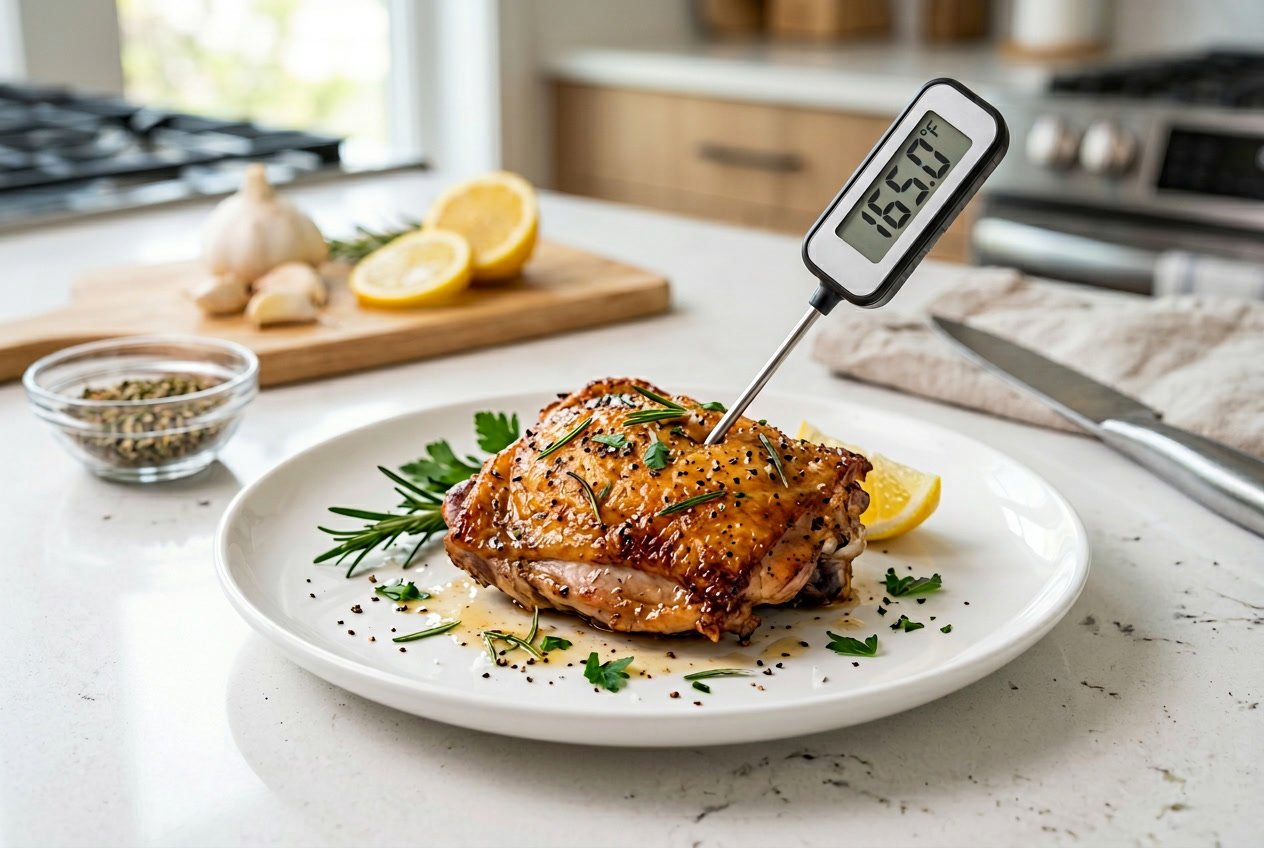
Clear target temperatures and a reliable thermometer help prevent foodborne illness and achieve the texture you want. Follow precise internal-temperature targets and use a proper meat thermometer.
USDA Guidelines and Food Safety
The USDA sets the safe minimum internal temperature for poultry at 165°F (74°C). Reach 165°F in the thickest part of the thigh to inactivate Salmonella and other pathogens.
Rest the meat after pulling it from heat. Carryover cooking and resting for 5–10 minutes help juices redistribute and ensure the temperature remains stable.
Avoid cross-contamination, refrigerate leftovers within two hours, and store cooked thighs in airtight containers for up to four days.
Recommended Internal Temperature
Use 165°F as the minimum safe internal temperature for chicken thighs. For bone-in, skin-on thighs, many chefs recommend pulling at 175–185°F for tender, gelatinized meat.
That higher range converts collagen into gelatin, producing a silkier mouthfeel and less resistance near the bone. For boneless skinless thighs, stay closer to 165–170°F to avoid drying them out.
For braises or slow-cooked dishes, cook to 185°F or higher for shreddable texture. Bone-in: 175–185°F; boneless: 165–170°F. Treat 165°F as the safety floor.
Why Dark Meat Benefits from Higher Temperatures
Thighs have more connective tissue and intramuscular fat than breasts. Collagen begins to break down into gelatin above 170°F, improving tenderness and juiciness.
Cooking thighs only to 165°F makes them safe, but the collagen can feel slightly chewy. Raising the internal temperature to 175–185°F dissolves more collagen, giving a richer, silkier sensation.
Higher final temps also mellow fatty flavors and help rendered fat baste the meat during cooking. Use higher temperatures for shreddable texture or richer mouthfeel, but monitor closely to prevent drying boneless pieces.
Using a Meat Thermometer
Use an instant-read probe thermometer for accuracy. Insert the probe into the thickest part of the thigh, avoiding contact with bone.
Check temperature toward the end of cooking. For oven or grill, test a couple of pieces from different spots if sizes vary.
If the reading is within 2–3°F of your target, remove and rest—the meat will rise slightly during resting. Calibrate your thermometer periodically and clean the probe between uses.
Rely on measured internal temperature, not time or color, to determine doneness.
Oven Temperatures and How to Bake Chicken Thighs
Choose an oven temperature that balances internal doneness with skin crispness. Adjust time for bone-in versus boneless pieces.
Use a probe or instant-read thermometer to confirm the thickest part reaches 165°F (74°C).
Baking at 375°F (190°C)
375°F gives a reliable balance between juiciness and browning for bone-in or boneless chicken thighs. Boneless thighs reach 165°F in roughly 20–30 minutes; bone-in thighs in about 30–40 minutes.
Position the thighs skin-side up on a rimmed sheet or in a shallow pan. Pat the skin dry and season before baking.
Insert a thermometer into the thickest part without touching bone. Start checking temps about 5 minutes before the lower end of the time range.
If you want more crispness, finish under the broiler for 1–3 minutes. Rest the thighs 5 minutes after removing to let juices redistribute.
Baking at 400°F (204°C)
400°F shortens cooking time and increases skin browning. Boneless thighs take about 18–28 minutes; bone-in thighs around 28–38 minutes.
Use a hot oven rack in the center or upper third for faster skin crisping. A cast-iron skillet or heavy sheet delivers more even browning.
Keep thighs spaced at least 1 inch apart so steam doesn’t collect. Check internal temperature at the thickest point; remove at 165°F.
If you prefer slightly higher doneness for dark meat, pull at 170–175°F, but watch for dryness. Let thighs rest briefly before serving.
Baking at 425°F (218°C)
425°F maximizes skin crispness and imparts deeper browning, ideal for bone-in, skin-on thighs. Bone-in thighs need about 30–40 minutes; boneless thighs about 20–30 minutes.
Arrange thighs skin-side up on a rack set over a sheet pan. Heavy pans and preheating improve sear and reduce sticking.
For faster crisping, start at 425°F for 20 minutes, then lower to 375°F if the skin darkens too quickly. Use an instant-read thermometer to verify doneness.
If the skin is crisp but temperature is short of 165°F, tent loosely with foil and continue baking a few minutes.
Using a Convection Oven
Convection shortens cooking time and promotes even browning by circulating hot air. Reduce temperature by 25°F (about 15°C) or cut cook time by 10–20%.
Place thighs in a single layer with space between pieces. Use a light-colored, rimmed baking sheet or a roasting pan.
Monitor internal temperature because convection can raise surface crispness faster than the center heats. Always verify doneness with a thermometer.
Start checking 5–8 minutes earlier than conventional bake times.
Cooking Times and Doneness
Aim for a safe internal temperature and expect different cook times depending on bone and size. Use a probe thermometer and check the thickest part.
Timing for Bone-In Chicken Thighs
Bone-in thighs take longer because the bone absorbs heat. In a 375°F (190°C) oven, expect about 35–45 minutes for average-sized thighs (about 5–7 oz each).
At 425°F (220°C) they often finish in 30–40 minutes while developing crisper skin. Insert a meat thermometer into the thickest part without touching bone.
Target 165°F (74°C) for safety. Check for clear juices and meat that’s no longer pink near the bone as visual cues.
Timing for Boneless Chicken Thighs
Boneless thighs cook faster because there’s no bone to slow heat penetration. At 375°F (190°C) plan for 20–30 minutes for typical 4–6 oz pieces.
At 400–425°F (204–220°C) they can finish in 18–25 minutes and brown more quickly. Probe the thickest part and hit 165°F (74°C).
Because boneless thighs are leaner and smaller, watch closely in the final 5 minutes to avoid drying. Flatten thicker pieces or arrange them in a single layer for even cooking.
Resting After Cooking
Resting lets juices redistribute and raises internal temperature slightly. After removing thighs from heat, tent loosely with foil and rest 5–10 minutes for boneless pieces, and 8–12 minutes for bone-in pieces.
During rest, expect 3–7°F (1–4°C) of carryover heating. After resting, cut into one piece to confirm clear juices and final doneness before serving.
Achieving Crispy Skin and Flavorful Results
Control moisture, pick the right seasonings, and use high, direct heat at the right times for golden, crackling skin and juicy meat. Drying, oil, under-skin seasoning, and a 2-stage bake make the biggest difference.
Patting Dry and Oil Application
Pat each thigh thoroughly with paper towels until the skin feels nearly dry. If skin is wet, steam forms during cooking and you’ll lose crisp texture.
Brush or rub about 1 teaspoon of neutral oil (canola, vegetable) or olive oil per thigh over the skin. Oil conducts heat, encourages even browning, and helps salt and spices stick.
Avoid drenching the skin; a thin, even coating is best. If you lift the skin slightly, dry the meat beneath and smear a little oil there too. That reduces steam trapped under the skin and helps the skin render fat and blister.
Marinating and Seasoning Tips
Slide your fingers between the skin and meat to apply a dry rub: 1 tsp kosher salt per pound, ½–1 tsp garlic powder, ½ tsp black pepper, and 1 tsp smoked or sweet paprika. Add 1–2 tsp chopped fresh rosemary beneath the skin for aromatic notes that withstand high heat.
If you prefer a wet marinade, marinate for 30–60 minutes so the skin can dry before cooking. Pat the skin dry again after marinating.
For longer marination (4–12 hours), use a mostly dry or oil-based marinade to avoid soggy skin. Lightly season the skin surface as well.
Salt on the exterior draws out moisture and helps the skin crisp. Apply salt just before cooking if you used a wet marinade.
Crispy Baked Chicken Thigh Methods
Set a wire rack over a rimmed baking sheet so air circulates under the thighs. This prevents steam buildup and helps the skin crisp all around.
Space thighs at least 1 inch apart. Bake at 425°F (220°C) for 20–25 minutes to brown and render fat.
Lower the oven to 375°F (190°C) and continue baking until the internal temperature reaches 165°F (74°C). You can also roast at 475°F (245°C) for 15–20 minutes, then finish at 375°F.
For extra crispness, finish under a broiler for 1–2 minutes, watching closely. Dust a light coating of cornstarch (about ½ tsp per thigh) into the rub to speed surface drying and create a crisper crust.
Alternative Cooking Methods for Chicken Thighs
You can prioritize crisp skin, fast cooking, or rich moistness. Use the following temperatures, timing cues, and techniques to get consistent results with bone-in, skin-on thighs or boneless pieces.
Grilling Techniques
Set up a two-zone fire: direct high heat (450–500°F) for searing and indirect medium heat (350–400°F) for finishing. Pat thighs dry and season them.
Start skin-side down over direct heat to render fat and create grill marks, about 4–6 minutes for bone-in thighs. Move thighs to indirect heat, close the lid, and finish until an instant-read thermometer reads 165°F (12–18 minutes for bone-in).
For boneless thighs, sear for 3–4 minutes and finish for 6–10 minutes. Brush with sauce only in the last 3–5 minutes to avoid burning.
Let the meat rest 5 minutes before serving to redistribute juices.
Broiling for Quick Crisping
Preheat the broiler and position the rack 6–8 inches from the element. Use a rimmed sheet pan or broiler pan and pat thighs very dry to encourage browning.
Broil skin-side up until the skin crisps and deepens in color, about 6–10 minutes depending on broiler strength. Flip if needed and continue under the broiler only if you want more color; otherwise, transfer to a 375°F oven to finish to 165°F.
Watch closely, as broilers vary and can burn skin quickly. Use an instant-read thermometer and keep a pan of drippings below to reduce flare-ups.
Air Fryer Chicken Thighs
Preheat the air fryer to 400°F. Arrange thighs skin-side up in a single layer with space between pieces for circulating hot air.
Cook bone-in thighs for 18–22 minutes, flipping once halfway; boneless thighs take 12–16 minutes. Pat the skin dry and add a light coating of oil for crisper skin.
Don’t overcrowd the basket; cook in batches if necessary. Because air fryers elevate the meat above drippings, the meat may be slightly less juicy than with roasting or braising.
Reserve pan juices or baste halfway through to add moisture.
Frying and Braising
Heat oil to 350–375°F for frying and cook thighs skin-side down until golden, about 8–12 minutes for bone-in. Finish in a 350°F oven to reach 165°F.
Use a thermometer to maintain oil temperature and drain on a rack to keep the skin crisp. For braising, sear skin-side down in a heavy pot until browned (6–8 minutes).
Add aromatic liquid (broth, wine, or tomatoes) to come halfway up the thighs. Cover and simmer gently on the stove or in a 325°F oven until tender, 25–40 minutes for bone-in.
Braising yields very moist, fall-off-the-bone meat but softens the skin. If you want texture, crisp the skin afterward under a broiler or in a hot pan.
Serving Suggestions and Popular Chicken Thigh Recipes
Pairing, seasoning, and recipe ideas can help you turn properly cooked chicken thighs into complete meals. Choose side dishes and flavors that match the cooking method and sauce for the best texture and balance.
Recipe Pairings
Match the richness of chicken thighs with sides that cut or complement their fat and umami. Serve bone-in, skin-on roasted or grilled thighs with mashed potatoes to soak up pan juices or gravy.
For braised or saucy thighs (adobo, Marbella, or mustard-braised), choose steamed rice, buttered egg noodles, or couscous to carry the sauce. Light salads and acid-forward vegetables work well with fried or honey-hot chicken to refresh the palate.
For sheet-pan or air-fryer thighs, roast seasonal vegetables on the same tray. Potatoes, Brussels sprouts, and carrots cook at similar rates.
Finish plated dishes with a squeeze of lemon, chopped herbs, or a spoonful of salsa verde to lift flavors.
Recommended Seasonings
Pick seasonings based on cuisine and cooking method. Use a simple dry rub of kosher salt, black pepper, garlic powder, and smoked paprika for grilling or roasting to get crisp skin and smoky depth.
Marinated thighs benefit from acid and oil mixes: lemon, yogurt, or vinegar plus olive oil, garlic, and fresh herbs. For braising or stewing, build flavor with aromatics such as onion, garlic, bay leaf, and whole spices like peppercorns or star anise.
Finish with a touch of brown sugar, honey, or fruit (apricots, grapes) for sweet balance if desired. For Asian-style thighs, use soy sauce, mirin, ginger, and brown sugar to create a glossy glaze, and add toasted sesame and scallions at the end.
Chicken Thigh Recipe Inspirations
Try a few reliable templates you can adapt. For roasting, dry-brine skin-on thighs, sear them skin-side down, and finish at 425°F (218°C) until the internal temp reaches 165°F (74°C).
Serve with mashed potatoes and pan sauce. For braising, brown the thighs, then add cider or wine and aromatics, and simmer for 30–45 minutes until tender.
Pair with buttered noodles. For the air fryer or grill, season the thighs and cook them until the skin crisps.
Serve with a bright salsa verde or grilled lemon. In a slow-cooker or Instant Pot, use a soy-honey-ginger or adobo-style braise and serve over rice for hands-off meals.
Experiment by swapping mashed potatoes, rice, or couscous to suit the sauce and your time.


