
What Is Chicken Thighs? A Complete Guide to Cuts, Cooking & Recipes
Chicken thighs are the dark, upper-leg cut of poultry that give you richer flavor, more moisture, and forgiving cooking compared with chicken breast.
They stay juicier during longer cooking, work bone-in or boneless, and adapt to roasting, grilling, braising, or quick pan-searing. You get reliable, tasty results no matter your method.
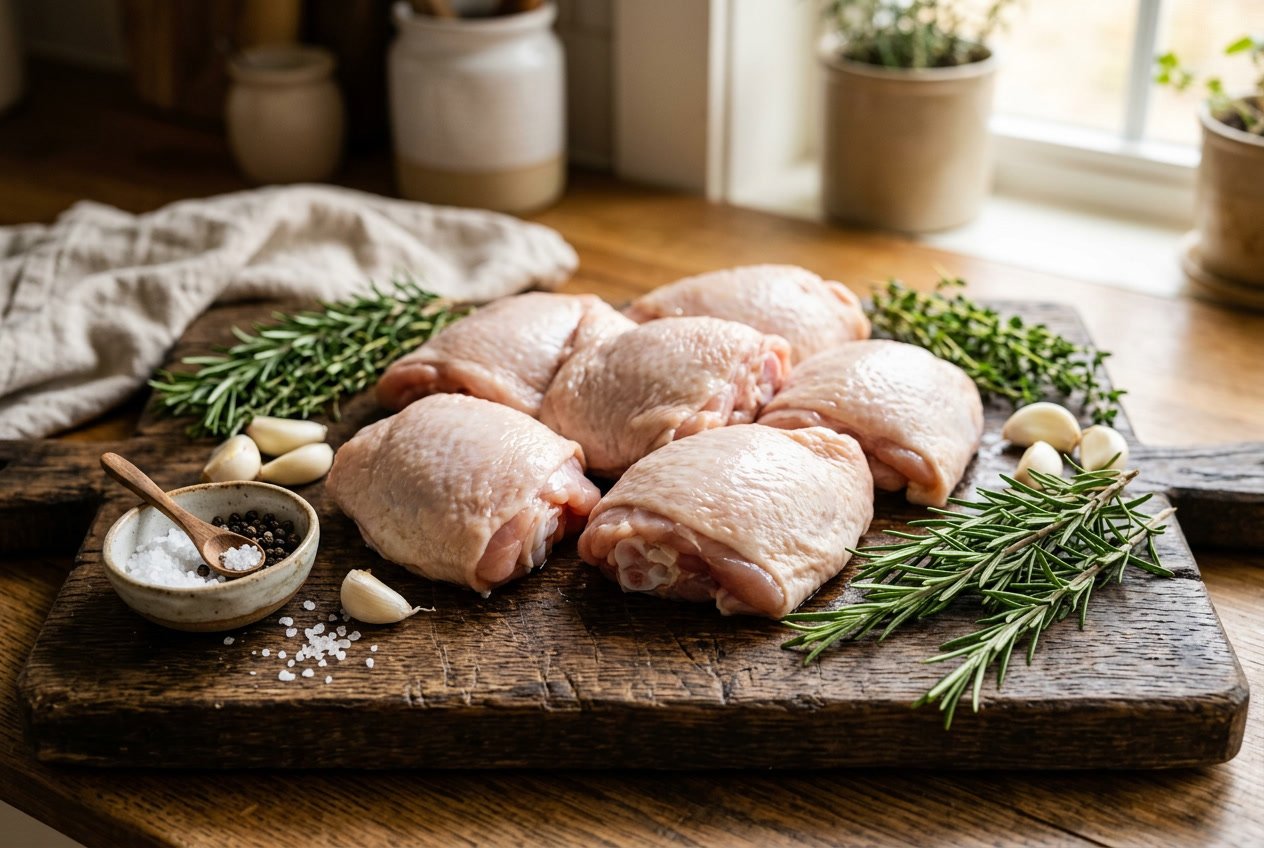
If you want to know which type to buy, how to season them for maximum flavor, and which recipes make the most of their texture, this article walks you through the essentials.
You’ll find clear guidance on types of thighs, simple cooking techniques, seasoning ideas, and recipes from classic comfort to global flavors.
Understanding Chicken Thighs
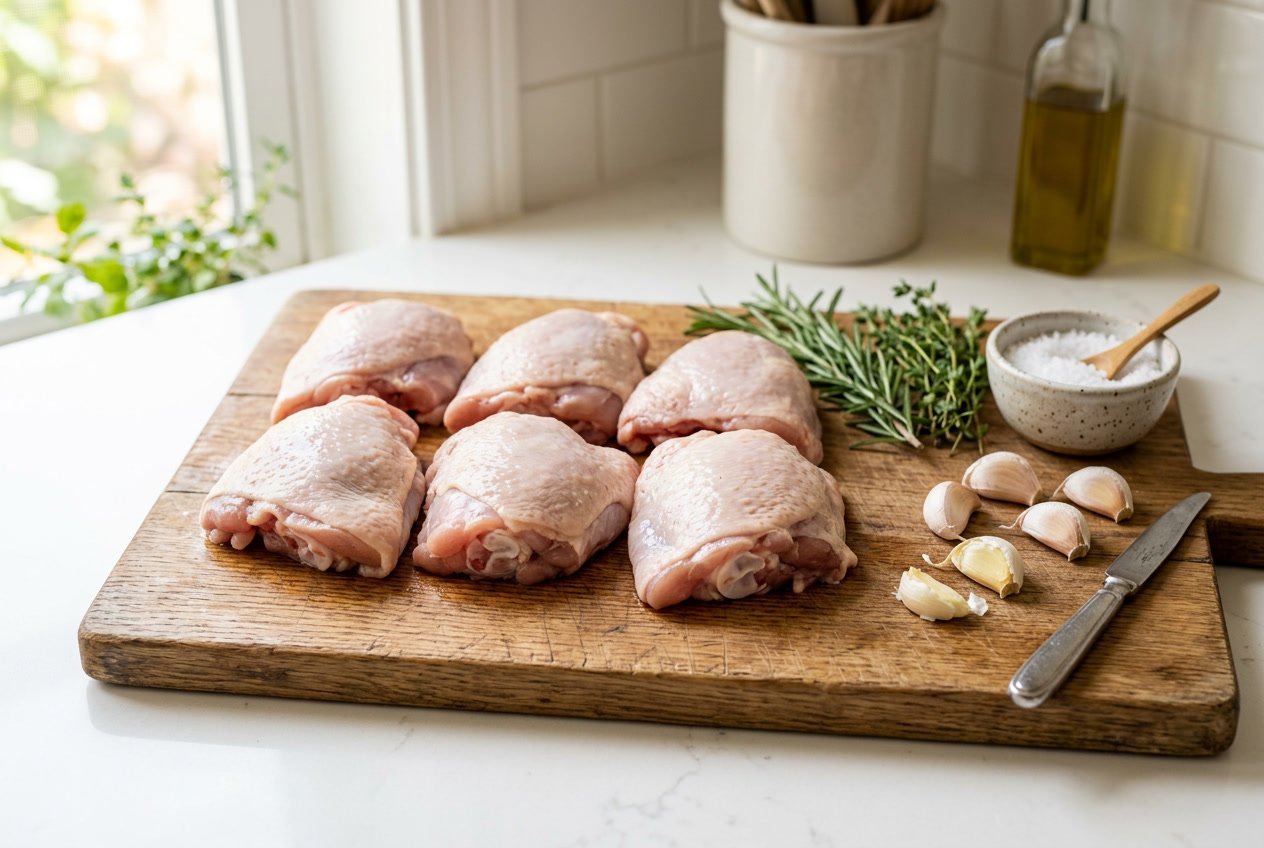
Chicken thighs are the upper portion of the bird’s leg and offer higher fat content, richer flavor, and forgiving texture.
You’ll find them sold bone-in or boneless, with skin on or skinless, and each form changes cooking time and final texture.
What Are Chicken Thighs?
A chicken thigh sits between the hip and the knee joint and contains dark meat with more connective tissue than the breast.
Bone-in thighs include the femur and often the hip joint, while boneless chicken thighs are trimmed free of bone for faster, more even cooking.
Skin-on thighs keep surface fat that crisps under high heat.
Skinless thighs remove that source of crispiness and reduce surface fat while still retaining internal juiciness.
Use bone-in for braising or roasting where flavor from the bone helps the dish.
Boneless thighs suit stir-fries, skewers, and quick pan-searing.
Chicken Thighs vs Chicken Breasts
Thighs are darker, fattier, and more forgiving than breasts during cooking.
That extra fat and collagen means thighs stay moist at higher temperatures and after longer cooking, while breasts cook faster and dry out more easily.
If you want crisp skin and deep flavor, choose bone-in, skin-on thighs and roast at high heat.
If you need quick, uniform pieces for grilling or slicing, pick boneless, skinless thighs.
For leaner options but still moist results, use skinless boneless thighs rather than breasts in slow or high-heat preparations.
Nutritional Value
A typical 3 oz cooked serving of skinless chicken thigh provides roughly 170–210 calories, 18–22 g protein, and 8–12 g fat, depending on trimming and cooking method.
Bone-in, skin-on portions raise calories and saturated fat due to retained skin and any added cooking fat.
Thighs supply B vitamins (notably niacin and B6), selenium, and iron at levels slightly higher than breast meat.
If you track calories or saturated fat, choose skinless boneless thighs and use baking, braising, or grilling without added butter or heavy breading.
Types of Chicken Thighs
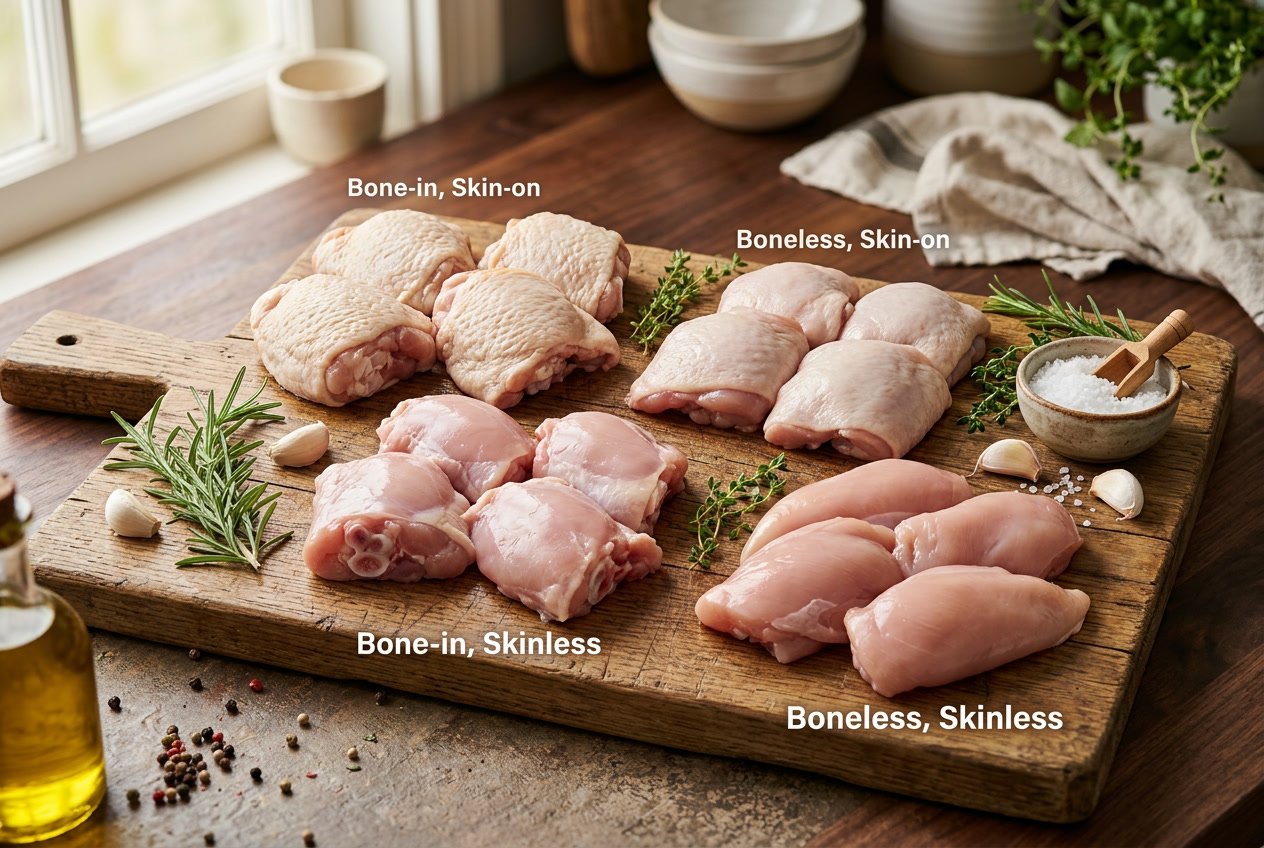
Chicken thighs vary by bone and skin presence, which changes cooking time, flavor, and how you should handle them.
Choose based on texture you want, the cooking method you plan, and how much hands-on trimming you’re willing to do.
Bone-In Chicken Thighs
Bone-in chicken thighs include the femur and joint and give you more flavor and moisture during cooking.
The bone conducts heat differently than meat, so bone-in thighs stay juicier in long braises or oven roasting; expect about 5–10 minutes longer cook time than comparable boneless pieces.
You’ll find them ideal for stews, slow-cooked dishes, and recipes where you want a richer mouthfeel.
The bone also helps when presenting whole pieces at the table.
Use a meat thermometer and check near the bone for doneness because the area around the bone cooks last.
If you plan to debone after cooking, the meat often pulls away more cleanly when it’s fully rested.
Boneless Chicken Thighs
Butchers remove the femur from boneless chicken thighs and usually trim cartilage and excess fat.
They cook faster and more evenly than bone-in thighs, which makes them a practical choice for weeknight sautés, grilling, and stir-fries.
Because they lack the bone’s heat buffer, watch cooking time closely to avoid drying; lower heat and brining or marinating can preserve juiciness.
You can butterfly, stuff, or cut boneless thighs into strips for skewers and tacos.
They also cost slightly more per pound in some markets, but save prep time and carve well for fast, uniform portions.
Skin-On vs Skinless
Skin-on chicken thighs retain the skin during sale and cooking, which crisps and renders fat to add flavor and protect the meat from drying.
Roast or pan-sear skin-on thighs skin-side down first to develop a crisp exterior; the rendered fat also flavors vegetables or pan sauces.
Skinless thighs remove that layer, reducing fat and calories and allowing marinades to penetrate meat directly.
They can be preferable for braises or healthy preparations where you don’t want extra fat.
Choose skin-on when you want a crispy bite and deeper flavor.
Choose skinless for quicker marinades, lower fat, and recipes where you’ll shred or incorporate the meat into sauces.
How to Cook Chicken Thighs
You can keep thighs juicy inside and develop a crisp, browned exterior when desired.
Choose a method based on time, equipment, and whether you want skin-on crispness or boneless convenience.
Oven-Baked Chicken Thighs
Preheat the oven to 425°F (218°C) for crispy skin and even roasting.
Arrange skin-side up on a rimmed baking sheet or shallow dish, spacing pieces so air circulates.
Bone-in thighs need about 25–30 minutes, boneless about 15–20 minutes.
Use a thermometer and check for 165°F (74°C) at the thickest point.
Season simply or use a marinade; a light oil coating helps browning.
Let the meat rest 5–10 minutes after baking to retain juices.
For extra crispness, broil 1–2 minutes at the end, watching closely to avoid burning.
Pan-Fried and Skillet Methods
Heat a heavy skillet (cast iron preferred) over medium-high heat with 1–2 tablespoons oil.
For skin-on thighs, start skin-side down to render fat and crisp the skin; cook 5–7 minutes per side for boneless, longer for bone-in until the internal temp hits 165°F.
Avoid crowding the pan to maintain browning.
Finish thicker pieces in a 350°F oven for 8–12 minutes if the exterior browns too fast.
For saucy skillet dishes, sear first, remove the thighs, then sauté aromatics and deglaze the pan before returning the chicken to finish cooking.
Slow Cooker and Instant Pot Techniques
Use a slow cooker to make fall-off-the-bone chicken thighs.
Brown thighs quickly in a skillet if you want better color, then add them to the slow cooker with ½–1 cup liquid (broth, sauce, or marinade).
Cook on low 4–6 hours or high 2–3 hours until tender.
For Instant Pot recipes, sear on Sauté mode first to build flavor.
Add 1 cup liquid, lock the lid, and cook at high pressure for 8–10 minutes for bone-in thighs (reduce to 6–8 for boneless).
Use natural release 5–10 minutes to preserve moisture.
Finish with a quick broil if you want surface browning.
Air Fryer and Grilled Variations
Air fryers cook chicken thighs quickly and make them crispy with less oil.
Preheat to 375–400°F, arrange thighs in a single layer, and cook 12–20 minutes depending on size and bone presence; flip halfway.
Check for 165°F internal temperature and rest briefly.
For grilled chicken thighs, preheat grill to medium-high and oil the grates.
Grill skin-side down first to render fat; boneless thighs take about 10–12 minutes, bone-in 15–20 minutes, turning once.
Use direct heat for sear and indirect for finishing thicker pieces.
Marinate or brush with sauce near the end to prevent burning.
Seasonings and Flavors
Use strong, complementary seasonings and a bit of fat to get crispy skin and savory meat.
Focus on salt, a primary spice like paprika or black pepper, and an herb or two.
Olive oil helps the spices adhere and promotes browning.
Popular Chicken Thigh Seasonings
Start with salt and freshly ground black pepper; they form the backbone of any chicken seasoning.
Add paprika (sweet or smoked) for color and mild warmth; use about 1 tsp per 4 thighs for a noticeable but balanced effect.
Sprinkle garlic powder and onion powder for depth without the moisture of fresh aromatics.
Drizzle olive oil over thighs before rubbing in spices to help create a crisp, golden skin.
Use cayenne or chili powder sparingly if you want heat; a pinch per thigh is enough for a gentle kick.
Pat thighs dry, coat with oil, then massage the dry rub under and over the skin for even seasoning.
Herbs and Spice Blends
Pick herbs that match the cooking style.
Thyme and oregano work well for roasting or pan-searing.
Try Italian seasoning as a convenient blend that typically contains basil, oregano, thyme, and rosemary.
Use 1–2 tsp for four thighs.
For Mediterranean profiles, combine oregano, thyme, garlic powder, and lemon zest.
For a more assertive rub, mix paprika, black pepper, garlic powder, and a pinch of cayenne.
If you prefer fresh herbs, chop them fine and add at the end of cooking to preserve brightness.
Dried herbs tolerate longer cooking; sprinkle them in before roasting so flavors infuse the meat.
Marinades and Sauces
Marinades use acid, oil, and seasonings to tenderize and flavor.
Common acids are lemon juice, vinegar, or yogurt.
Combine olive oil, lemon juice, garlic powder, black pepper, and a teaspoon of oregano or thyme.
Marinate 30 minutes to 4 hours.
Yogurt-based marinades with garlic and paprika produce tender, spiced thighs.
Yogurt’s enzymes and acid break down proteins gently.
For saucy finishes, braise thighs in a tomato-based sauce seasoned with oregano and garlic powder, or glaze with a mixture of olive oil, paprika, and honey.
Always discard used marinade unless boiled.
Cook to 165°F (74°C) internal temperature for safety.
Classic and Global Chicken Thigh Recipes
Chicken thighs shine in slow-roasted, braised, and boldly spiced dishes.
These recipes keep meat moist, deliver concentrated flavor, and pair well with rice, bread, or simple sides.
Traditional Baked and Roasted Recipes
Baked and roasted chicken thighs give you reliable texture.
Skin crisps while the interior stays juicy.
Roast bone-in, skin-on thighs at 425°F (220°C) for 25–35 minutes, flipping once for even browning.
Use a simple rub of salt, pepper, garlic powder, and a splash of lemon to boost flavor.
If you prefer boneless thighs, shorten the cooking time by 5–10 minutes and watch for an internal temperature of 165°F (74°C).
Try a sheet-pan method with potatoes and onions for an efficient one-pan dinner.
Rest the thighs 5–7 minutes before serving.
International Dishes Featuring Chicken Thighs
Chicken thighs work in global recipes because they absorb spices and stay tender during long cooks.
Make Indian-style chicken curry or vindaloo by browning thighs, then simmering in aromatics, tomatoes, and coconut milk for rich, layered flavor.
For Filipino adobo, braise thighs with soy, vinegar, garlic, and bay leaves, then serve over rice.
For Mediterranean notes, try Greek lemon chicken thighs with oregano and olive oil, roasted until the edges caramelize.
Use thighs in shawarma- or kebab-style marinades with cumin, paprika, and yogurt for grill-ready results.
Each approach uses the thigh’s fat to carry spice and keep the meat succulent.
Comfort Food Favorites
Comfort recipes make the most of thigh meat’s forgiving texture and bold taste.
Smothered chicken thighs braise in a savory gravy with onions and stock until fork-tender.
Chicken cacciatore uses tomatoes, bell peppers, and mushrooms to create a hearty stew that pairs with pasta or polenta.
Make creamy chicken stroganoff with sliced thighs, mushrooms, and a sour cream sauce that clings to the meat.
For soups, add chopped thighs to chicken tortilla soup or chicken and wild rice soup for deep flavor and satisfying bite.
These dishes show how thighs deliver richness and resilience in both slow-cooked and quicker comfort meals.
Serving Ideas and Pairings
Choose sides and uses that match the cooking method and sauce of the thighs to keep textures and flavors balanced.
Creamy starches, roasted vegetables, and simple salads reliably complement the rich, fatty meat and any pan sauce or glaze you’ve made.
Side Dishes for Chicken Thighs
Serve creamy mashed potatoes with roasted or braised chicken thighs. The potatoes soak up pan juices and provide a smooth contrast to the meat’s crisp skin.
For a lighter plate, pair grilled or baked thighs with roasted asparagus or green beans. Season these vegetables with olive oil, garlic, and lemon zest.
Try cauliflower mash or cilantro-lime cauliflower rice for a low-carb option. These sides offer a bright, tangy counterpoint.
Choose starches that hold up well to sauces, like roasted potatoes or basmati rice. Buttered noodles also work well when thighs come with a tomato braise or mustard glaze.
Add a crunchy element such as a simple slaw or toasted nuts. This helps vary the texture of the meal.
Leftover Chicken Thigh Uses
Shred leftover chicken thighs for quick tacos, enchiladas, or a warm grain bowl. The dark meat stays moist after reheating.
Toss shredded chicken with a little reserved pan sauce or stock before refrigerating. This keeps it tender and flavorful.
Cube or pull the meat into salads, fried rice, or pasta primavera. Add a squeeze of lemon or a splash of vinegar to brighten rich flavors.
For soup, add shredded thighs near the end of cooking. This way, they heat through without drying.
Store cooked thighs in airtight containers for 3 to 4 days. Freeze portions for up to 3 months.


