
What Does Trimmed Chicken Thighs Mean: Preparation & Cooking Guide
If you’ve ever stood at the counter with a package of chicken thighs and wondered what “trimmed” means, it simply refers to removing excess skin, fat, cartilage, or loose bits so the pieces cook more evenly and look cleaner.
Trimmed chicken thighs are just trimmed of extra fat, skin, or gristle to create uniform, easier-to-cook pieces that improve texture, presentation, and sometimes healthfulness.
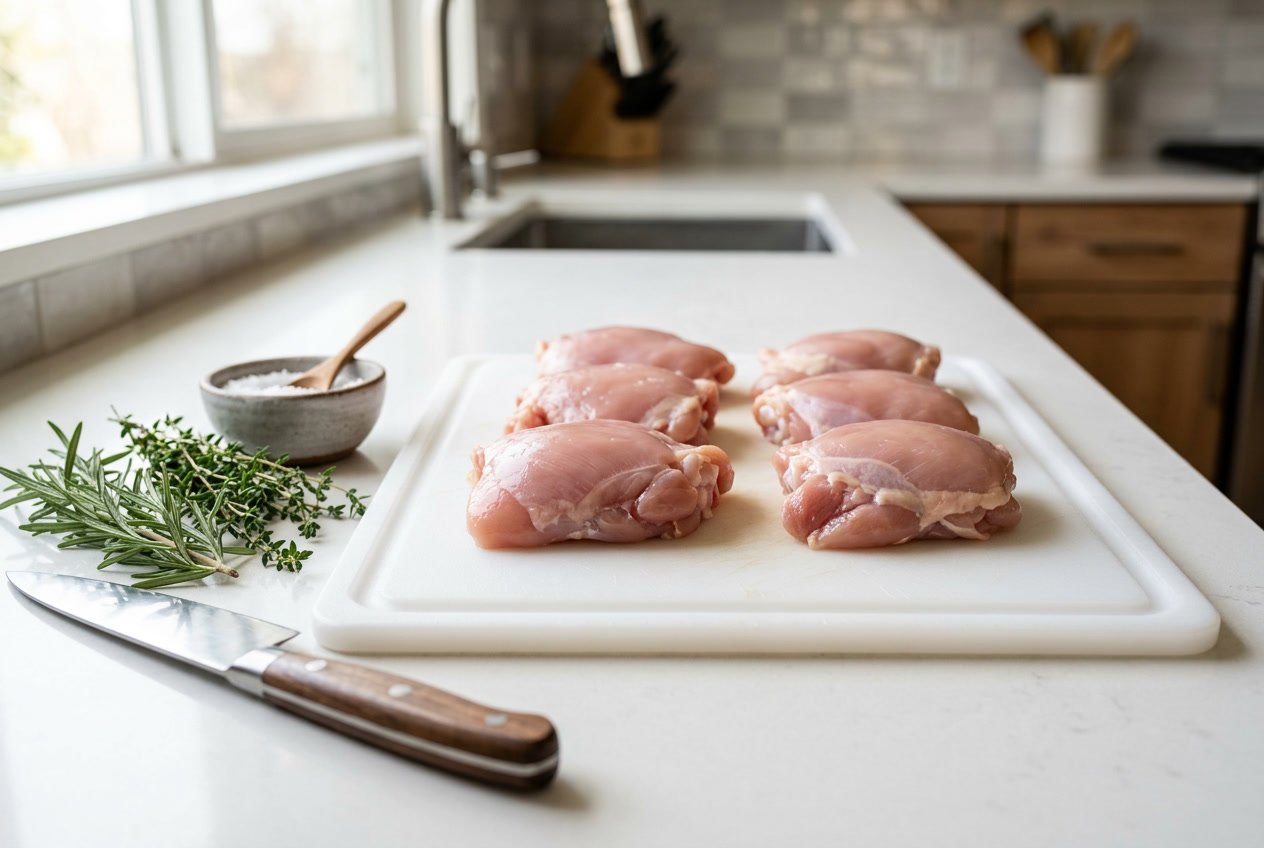
Understanding trimming helps you choose the right prep for roasting, braising, grilling, or frying. It also guides which tools and techniques you’ll need.
What Does Trimmed Chicken Thighs Mean
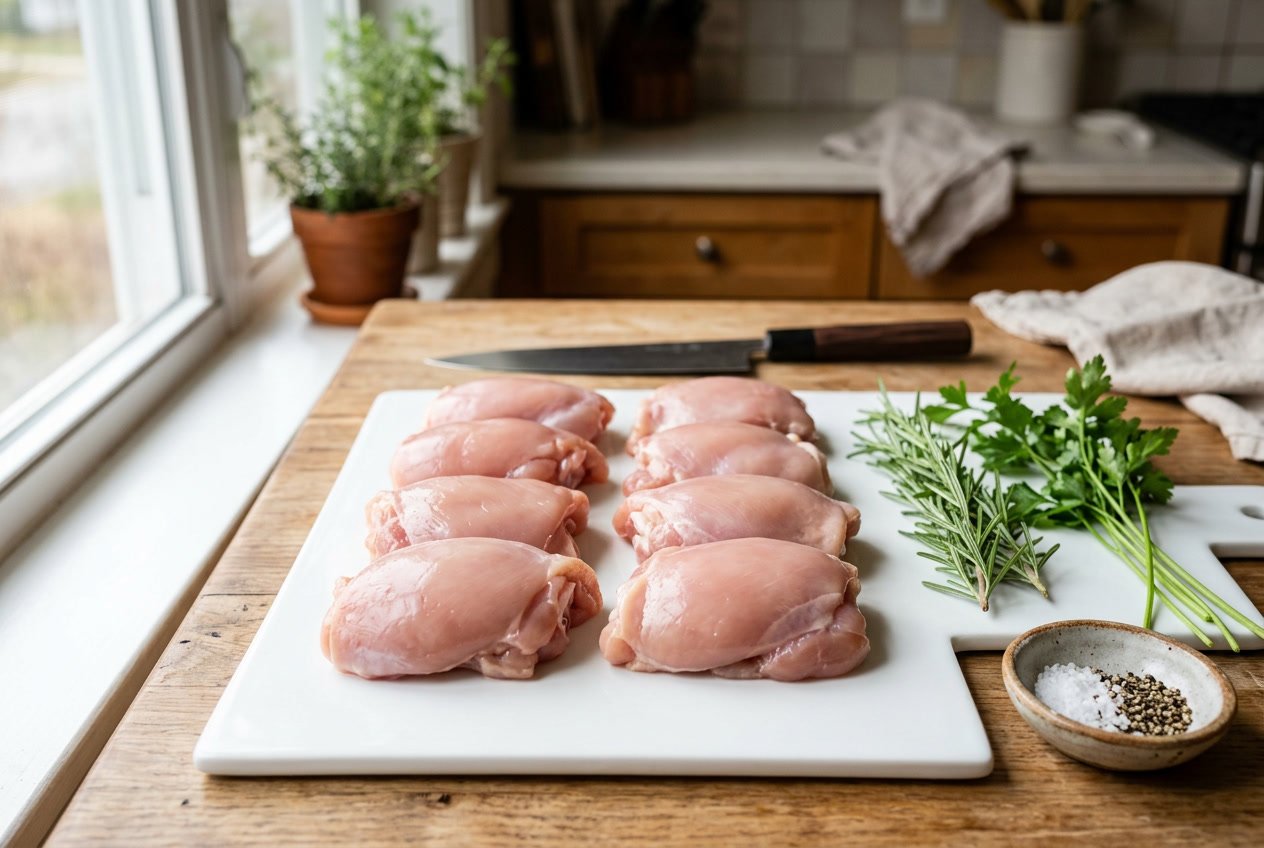
Trimmed chicken thighs are pieces that have had excess skin, fat, or bone removed to create a cleaner, more uniform cut. Butchers or cooks often do this to improve cooking performance, appearance, and ease of eating.
Definition and Overview
A butcher or cook trims chicken thighs by removing unwanted bits. That can mean taking off loose skin flaps, cutting away thick fat deposits, or cleaning surface gristle and tendons so each piece looks and cooks more evenly.
You can buy thighs labeled “trimmed” at the store or trim them yourself at home with a sharp knife. The goal is a consistent portion that browns evenly and presents neatly on the plate.
Purpose of Trimming
You trim chicken thighs to control fat, texture, and cooking results. Removing excess fat reduces flare-ups on a grill and prevents greasy mouthfeel, while leaving some fat preserves flavor and juiciness.
Trimming helps seasoning penetrate the meat when you remove or loosen the skin. It also prevents tough bits like tendons or silver skin from creating chewy bites.
Types of Trimming (Skin, Fat, Bone)
Skin trimming ranges from leaving skin intact for crispness to removing it completely for lower fat. If you keep skin on chicken thighs, you might skim thin fat layers or tidy loose edges.
Fat trimming targets obvious flaps and the “triangle” pocket under the thigh. Trim just enough to avoid excess grease while keeping some fat for flavor.
Bone trimming includes removing the thigh bone for boneless thighs or cleaning around the bone for bone-in cuts. Deboning makes the meat easier to slice and speeds cooking.
Benefits of Trimming Chicken Thighs
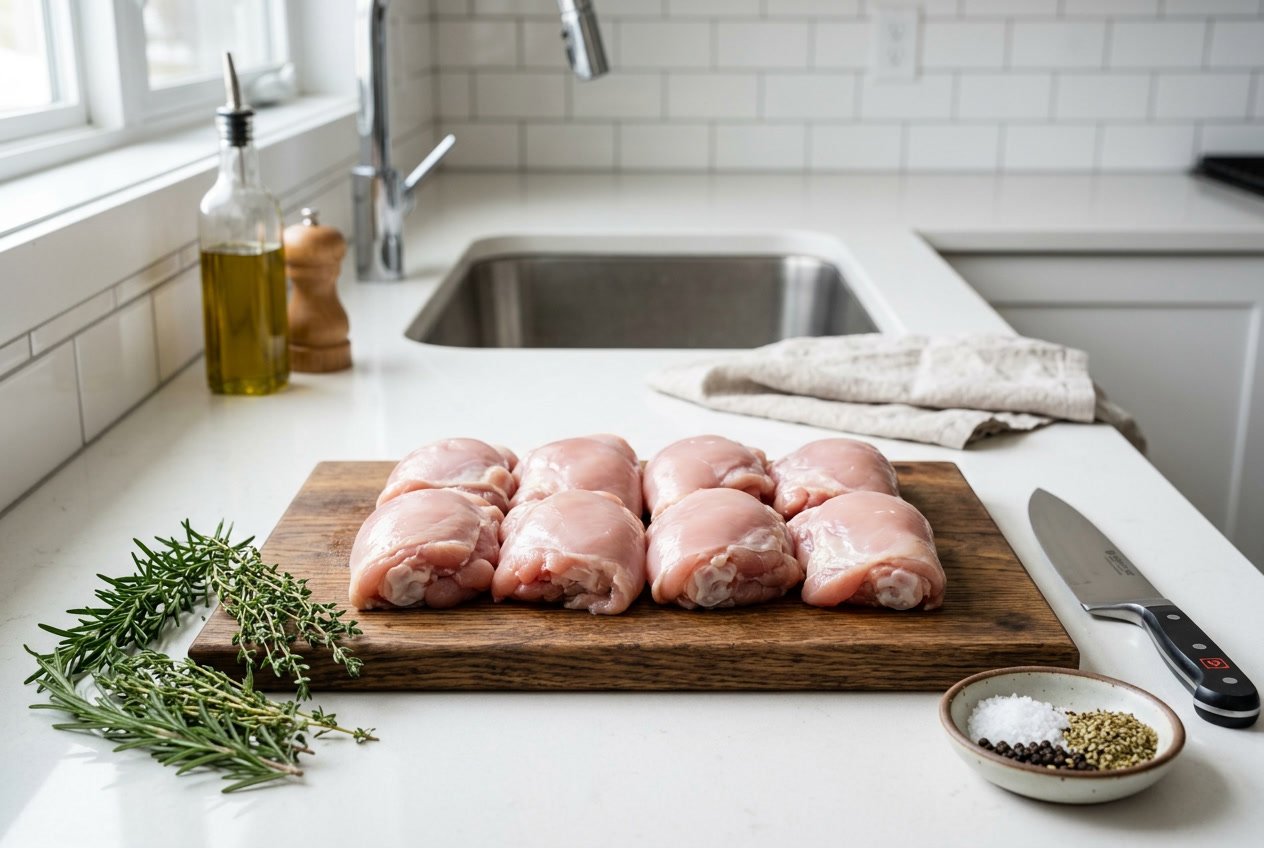
Trimming chicken thighs removes excess skin, fat, gristle, and loose bits so the meat cooks more evenly and looks cleaner. You gain better texture, fewer flare-ups on the grill, and clearer control over calories and mouthfeel.
Improved Texture and Appearance
When you trim chicken thighs, you remove thick fat deposits and ragged skin edges. That yields firmer bites and a more consistent texture across each piece, especially when you cook multiple thighs together.
Trimmed pieces also brown and crisp more predictably. Without hanging skin or flabby folds, skin-on thighs crisp uniformly, and skinless thighs present as neat, even cuts.
Health Considerations
Trimming chicken thighs before cooking lowers surface fat and visible skin that contribute to higher calorie and saturated fat intake. If you’re tracking calories or reducing saturated fat, removing pockets of hard fat around the joint makes a measurable difference per serving.
Avoid over-trimming. Leaving a thin layer of fat under the skin preserves moisture and flavor during roasting or grilling.
Cooking Performance
Trimmed chicken thighs cook more evenly because pieces match in thickness and lack insulating fat lumps that slow internal heat transfer. That helps you hit safe internal temperatures without overcooking edges or drying the meat.
Trimming also reduces flare-ups and excess smoke when you grill or broil. Less dripping fat means less charring, more predictable browning, and easier temperature control.
Tools and Equipment for Trimming
You need a sharp, narrow blade for precise cuts, sturdy shears for joints and cartilage, and a stable cutting surface with non-slip safety. Select tools that fit your hand, stay sharp, and are easy to clean.
Choosing the Right Knife
Pick a boning knife with a 5–7 inch, narrow, slightly flexible blade. The thin blade lets you follow the bone and separate cartilage without removing excess meat.
Keep the knife very sharp. Use a honing steel before each session and a whetstone or professional sharpening every few months.
Hold the knife with a secure pinch grip and use your other hand to steady the thigh, tucking fingertips away from the blade. Clean and dry the knife immediately after use to prevent bacterial buildup and corrosion.
Using Kitchen Shears
Choose heavy-duty kitchen shears with stainless steel blades and a comfortable, non-slip handle. Shears make short work of cartilage, small bones, and trimming excess skin where a knife would be awkward.
Use shears for cutting through joints, snipping off loose flaps of skin, and removing the ball joint if you prefer not to pry with a knife. Open and close the shears fully; avoid twisting since that stresses the pivot point.
Keep shears sharp by periodically sharpening the blade or replacing inexpensive models when they dull. Disassemble shears for cleaning if the model allows; sanitize after handling raw poultry to prevent cross-contamination.
Cutting Boards and Safety Tips
Use a dedicated, non-porous cutting board (plastic or hard composite) for raw poultry. Mark it or color-code it to avoid mixing with boards for produce or cooked food.
Stabilize the board with a damp towel underneath to stop slipping. Work with a well-lit station and keep your dominant hand dry; moisture increases the chance of knife slips.
Sanitize surfaces, knives, and shears immediately after trimming with hot soapy water followed by a food-safe sanitizer. Wash your hands thoroughly and avoid touching other kitchen items until you’ve cleaned up.
Step-by-Step Guide to Trimming Chicken Thighs
You will prepare tools, remove excess skin and fat, choose the right method for bone-in or boneless thighs, and finish with a clean, uniform piece ready to cook. Focus on safety, a sharp knife, and consistent cuts for even cooking.
Preparing Your Workspace
Sanitize a nonporous cutting board and clear counter space so you can move pieces without crowding. Place a damp towel under the board to prevent slipping.
Gather a sharp boning or chef’s knife, kitchen shears, paper towels, and a small bowl for trimmings. Keep a separate board or plate for cooked food to prevent cross-contamination.
Work near the sink or a trash bowl so you can wash hands and rinse tools quickly. Lay out paper towels and a digital thermometer if you plan to check internal temps later.
Trimming Skin and Fat
Pat each thigh dry with paper towels to give the skin traction and reduce knife slips. Start by lifting the skin edge with your fingers and use the tip of the boning knife to cut connective tissue while pulling skin gently away.
Trim large fat deposits and thick seams with a slicing motion, following the meat’s grain to avoid gouging. Use kitchen shears for tight areas and cartilage.
Decide whether to leave some fat under the skin for flavor. If you want crispy skin, scrape excess fat away with the flat of the knife or make small perforations to render fat during cooking.
Bone-In vs. Boneless Trimming
For bone-in thighs, locate the thigh bone and slice along it to expose the joint before cutting out the ball joint and any loose bone fragments. Remove the “oyster” or small cartilage pieces if you prefer uniform pieces, but note they’re edible.
To make boneless thighs, cut parallel to the bone and slice outward, separating meat from bone with short, precise strokes. Use shears to snip any remaining cartilage and pull the bone free with a light twist if needed.
If you intend to cut chicken thighs into strips or cubes for stir-fry, first create a flat surface by trimming ragged edges. Then slice against the grain for tender pieces.
Final Clean-Up
Inspect each thigh visually and by touch. Remove any remaining white tendons, cartilage, or yellowish fat.
Wipe the trimmed pieces with a paper towel and place them on a clean plate for seasoning or storage. Collect trimmings into a bowl for composting, rendering, or stock.
Wash and sanitize all tools, boards, and surfaces with hot soapy water, then a sanitizer. Dry knives immediately to preserve their edge.
How Trimming Affects Cooking and Recipes
Trimming changes how thighs brown, how much fat renders, and how evenly they cook. It also shifts which recipes work best and alters required cook times and resting periods.
Cooking Methods for Trimmed Thighs
When you remove excess fat or skin, pan-searing and roasting become more predictable. Trimmed skin-on thighs crisp faster because the remaining fat layer is thinner.
Start skin-side down in a hot skillet for 6–8 minutes to render and crisp without excess splatter. For skinless trimmed thighs, use a hot pan with a light oil and a shorter sear, about 3–4 minutes per side, to avoid drying the meat.
Grilling benefits from trimming because flare-ups drop when less fat drips. On a gas or charcoal grill, place trimmed thighs over direct medium heat and watch closely.
For braising or slow-cooked chicken thigh recipes, trim only large fat pockets. You’ll retain moisture while avoiding a greasy final sauce.
Recipe Suitability
Trimmed thighs suit recipes where texture and appearance matter. Use trimmed, skin-on thighs for pan-roasted or oven-crisped recipes like herb-roasted thighs; they brown evenly and produce a cleaner plate.
Choose skinless trimmed thighs for curries, stir-fries, or salads where bite-sized pieces must absorb sauce and present neatly. For high-heat methods—grill, broil, pan-sear—trim to prevent excessive smoking and to control charring.
For slow-cooked or braised recipes, trim conservatively: leave enough fat to keep the meat tender and flavorful while removing big flaps that make the sauce greasy. When a recipe calls for bold, concentrated sauces, trimming under the skin and seasoning beneath it helps flavor penetrate without over-greasing the dish.
Timing and Evenness
Trimming promotes uniform thickness, which you can achieve by knocking down high spots with the flat of a knife. Uniform pieces reduce variation in internal temperature, so you can rely on consistent cook times.
For 1-inch-thick trimmed thighs expect 18–22 minutes in a 400°F oven. Use an instant-read thermometer; target 165°F (74°C) in the thickest part.
If you remove skin, plan shorter surface-cooking times and slightly lower oven temperatures to preserve juiciness. Rest trimmed thighs 5–8 minutes after cooking to allow redistributed juices and final carryover to reach safe, stable temperatures.
When you prepare multiple pieces, group similarly trimmed thighs together so the batch finishes simultaneously and fits recipe timing accurately.
Common Mistakes and Tips for Success
Focus on removing only obvious excess fat and loose skin, keeping a thin layer for moisture when needed, and using a sharp knife or shears to avoid tearing meat. Work on a stable board and keep pieces uniform for even cooking.
Over- or Under-Trimming
Trim away large flaps of fat and any loose, yellowish fat deposits that will render into grease. Remove silvery connective tissue that remains tough after cooking, but stop before you cut into the meat itself.
If you trim too much you strip flavor and moisture, especially if you remove all skin and fat from thighs intended to be roasted or grilled. If you leave too much you risk greasy texture and flare-ups on the grill.
Aim to leave a thin, even layer of fat (about 1–2 mm) when you want juiciness; remove larger deposits entirely.
Practical checklist:
- Remove visible fat pockets and loose skin only.
- Cut connective tissue that feels stringy or rubbery.
- Keep pieces similar in size for uniform cooking.
Handling Chicken Thigh Skin
Decide before trimming whether you want skin-on or skinless based on the recipe. If you want crisp skin, leave it on and score lightly.
For salads or stir-fries, remove the skin and pat the meat dry. When you remove skin, place the thigh skin-side up and slide a sharp knife between the skin and meat.
Pull gently as you cut to separate the skin. Avoid ripping, since tearing wastes meat and leaves uneven edges.
If you keep the skin, trim ragged edges and excess fat under the skin so the skin crisps evenly.
Pat skin and meat dry before cooking to promote browning. Chill thighs briefly to firm the skin for easier removal.
Save trimmed skin and fat for stock or rendering.
Maintaining Knife Sharpness
A sharp knife gives clean cuts and reduces slips that cause uneven trimming or injury.
Dull blades make you press harder and increase the chance you’ll tear skin or gouge meat.
Hone your knife before each trim session. Sharpen your knife regularly, every few months for home use or more often for heavy use.
Use a sharp, narrow-bladed boning or paring knife for precision work around bones and connective tissue.
Keep a damp towel under your cutting board to prevent slipping. This stabilizes your work and helps you make consistent trims.
Tool checklist:
- Use a honing steel for daily alignment.
- Get professional sharpening every 2–6 months depending on use.
- Use poultry shears for quick skin or fat removal when appropriate.


