
What Does Chicken Thighs Mean? The Essential Guide to Cuts & Uses
A chicken thigh is the upper part of the bird’s leg between the body and the drumstick. It is prized for higher fat content, richer flavor, and moist texture compared with breast meat.
This specific dark-meat cut is available bone-in or boneless, skin-on or skinless. Cooks value thighs for flavor, versatility, and forgiving cooking behavior.
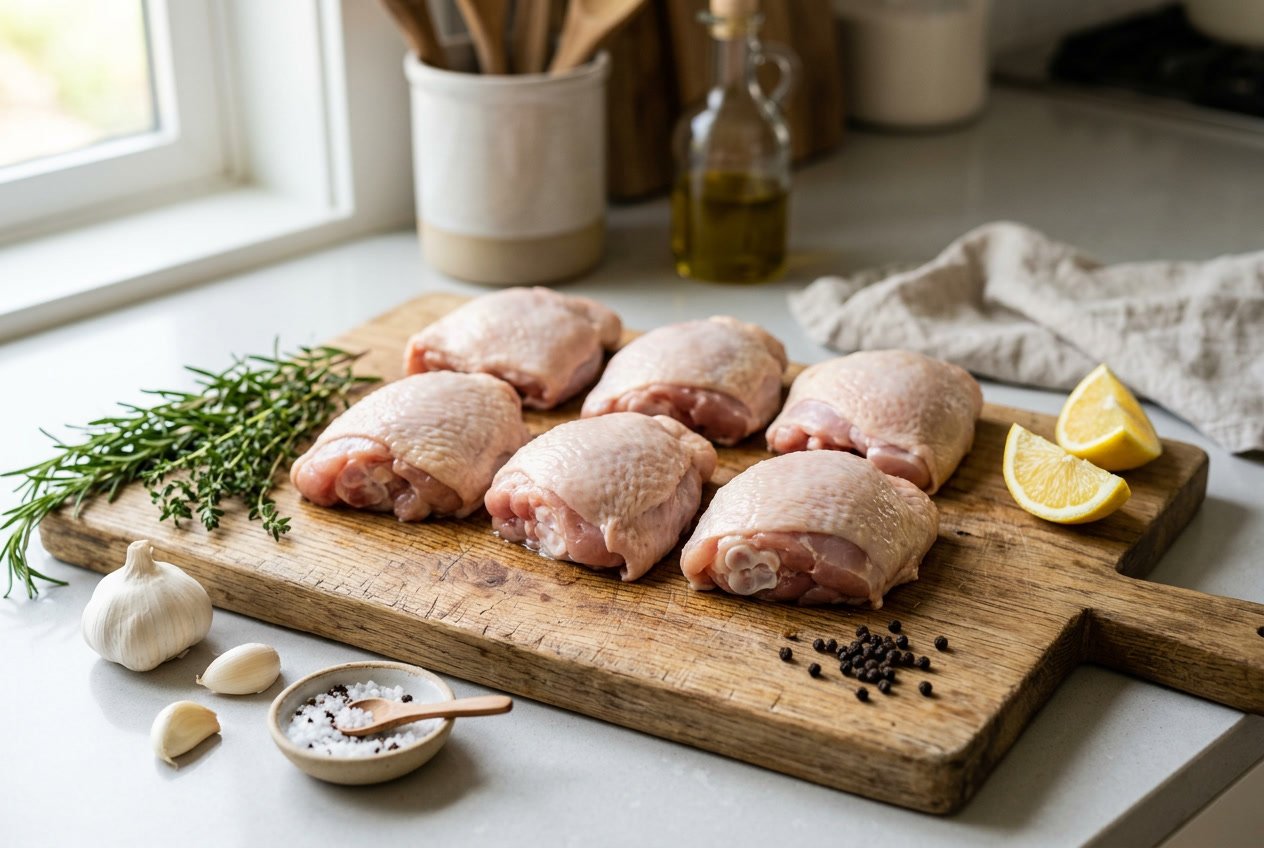
This article explains how thighs differ from white meat, how their nutritional profile and connective tissue affect texture, and which cuts and variations are available. You’ll also get tips for handling, storage, and classic recipes from roasting and braising to grilling and frying.
Definition of Chicken Thighs
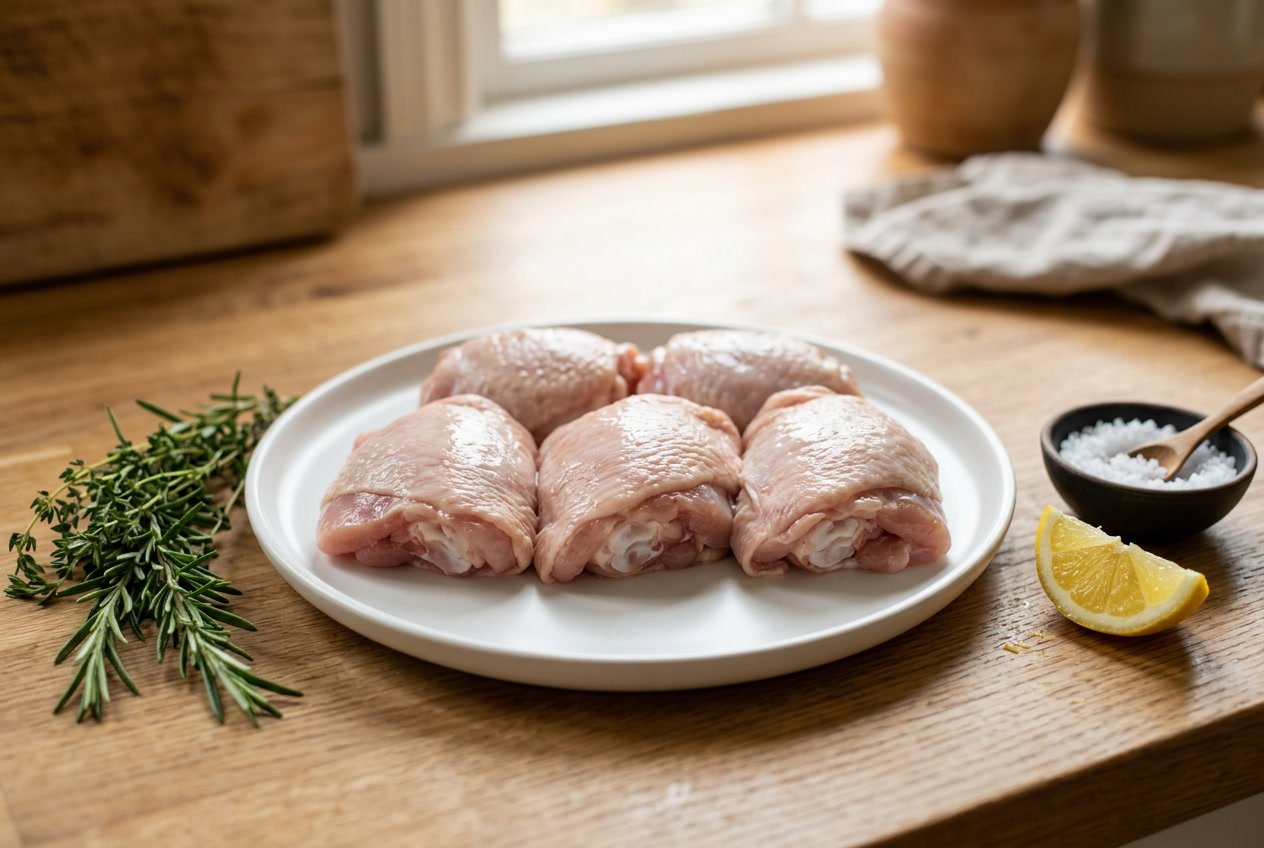
Chicken thighs are the upper portion of the bird’s leg, a dark-meat cut prized for flavor and moisture. Stores sell them bone-in or boneless, skin-on or skinless, and they are common in recipes from grilling to braising.
Anatomy and Location on the Chicken
The thigh sits between the chicken’s body and the drumstick, separated at the knee joint. It contains the femur bone and attaches to the pelvis at the hip.
Muscle and connective tissue make thighs darker and more forgiving to cook than breast meat. When you butcher a whole chicken leg or a leg quarter (thigh plus drumstick), you see the thigh.
The leg quarter includes the back portion where some connective tissue and skin remain. Knowing the thigh’s placement helps when you de-bone, trim fat, or separate a whole chicken leg into thigh and drumstick portions.
Chicken Thighs vs. Other Chicken Parts
Thighs are darker and fattier than the breast. They stay moist at higher cooking temperatures.
Compared with the drumstick, thighs have a larger muscle mass and a different shape around the femur. Drumsticks attach below the knee and are often firmer because of more active muscle use.
Leg quarters combine thigh and drumstick. Buying a leg quarter gives you both cuts with skin and bone for flavor.
The back and flat (as in wings: flat and drumette) are different cuts with distinct cooking uses. Choose thighs for rich flavor, tolerance for longer cooking, or economical protein.
Types of Chicken Thighs
Stores sell thighs as bone-in skin-on, bone-in skinless, and boneless skinless. Bone-in skin-on thighs offer the most flavor and are usually cheapest per pound.
Boneless skinless thighs trade convenience for slightly higher cost and faster, more even cooking. You may also see thigh variations like deboned-with-skin, different trim levels, and heritage or free-range labels that affect texture and price.
Use bone-in for braises and roasts. Use boneless for stir-fries, skewers, or quick pan-searing.
Dark Meat: Characteristics and Nutritional Value
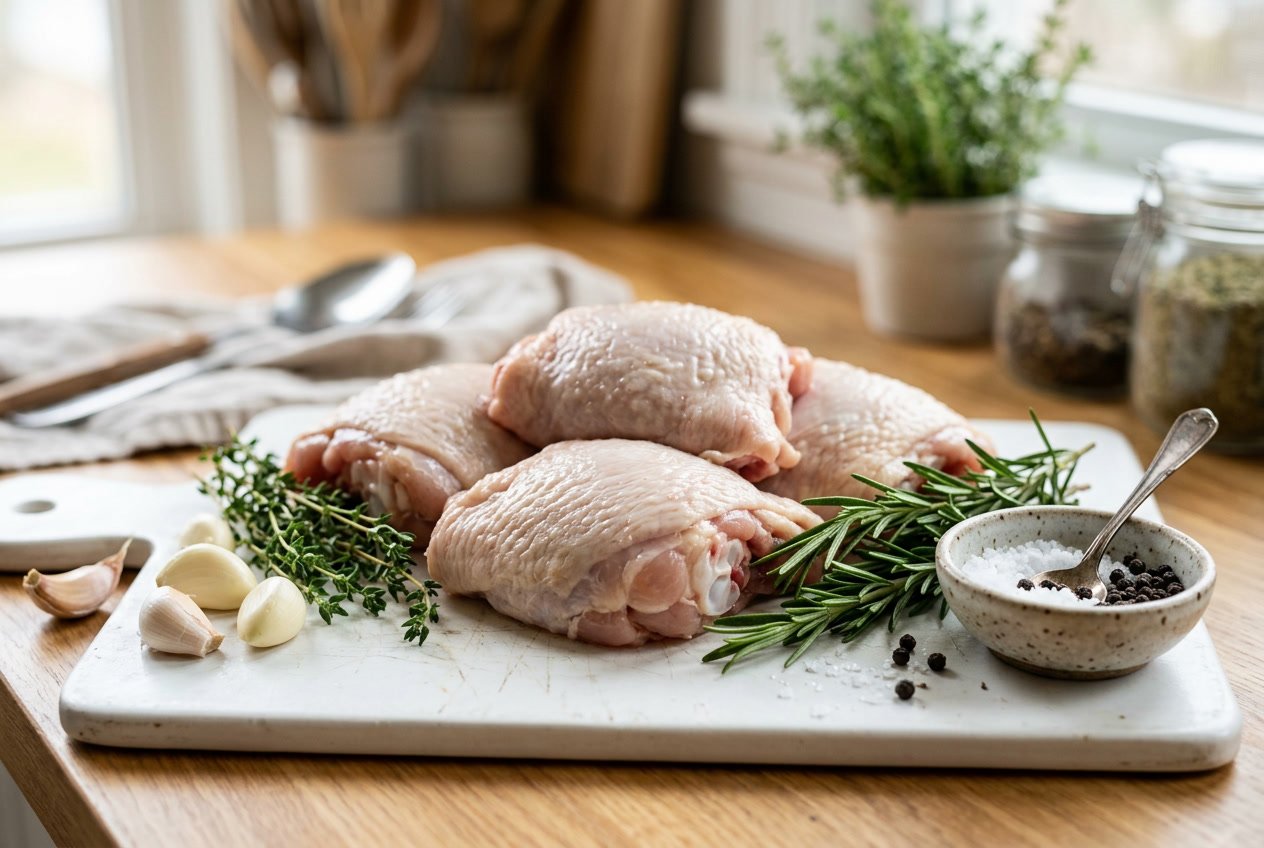
Chicken thighs are darker in color, higher in fat, and richer in flavor than breast meat. Thighs contain more myoglobin, more intramuscular fat, and more connective tissue, which affects cooking behavior and nutrient content.
Dark Meat vs. White Meat
Dark meat comes from muscles used for sustained activity, like thighs and drumsticks. These muscles contain higher myoglobin levels than white meat, which gives the tissue a deeper color and a more pronounced savory taste.
Thighs stay juicier when cooked because their higher fat content and myoglobin retain moisture. White meat cooks faster and can dry out if overcooked, but thighs tolerate longer or higher-heat methods such as braising, roasting, or grilling.
Dark meat is usually more tender and forgiving. If you want bold flavor and resilience during cooking, thighs deliver more consistently than breast.
Nutritional Content
Thighs contain more calories and fat than breast per equivalent cooked portion. Expect about 160–200 kcal and 8–12 g total fat per 3.5 oz (100 g) cooked thigh, compared to about 140 kcal and 3–4 g fat in cooked breast.
Exact values vary with skin-on versus skinless preparation. Thighs provide higher amounts of iron and zinc because of greater myoglobin and slightly higher mineral density.
They also supply B vitamins, especially niacin and B12, which help with energy metabolism and red blood cell support. If you monitor saturated fat or total calories, trim skin or choose smaller portions.
For nutrient-dense meals, pair thighs with vegetables and whole grains to balance fats with fiber and micronutrients.
Collagen and Gelatin in Thighs
Thighs contain more connective tissue and collagen than breast muscles. Collagen breaks down into gelatin when you cook thighs slowly, yielding a silky mouthfeel and adding body to sauces.
Gelatin improves texture, helps retain moisture, and enriches broths without added fat. Thighs convert collagen to gelatin at low, sustained temperatures, producing tender meat and glossy sauces.
Gelatin supplies amino acids like glycine and proline, which support joint and gut health in modest ways. Use slow-cook methods to maximize collagen-to-gelatin conversion and extract body from the meat.
Popular Chicken Thigh Cuts and Variations
Stores sell thighs as bone-in and boneless, and with or without skin. Choose based on cooking method, desired texture, and prep time.
Bone-In Chicken Thigh
Bone-in chicken thighs keep the femur and sometimes part of the hip attached. The bone adds flavor during braising, roasting, and grilling because it conducts heat differently and helps the meat stay moist.
Bone-in thighs need longer cook times than boneless thighs but offer better flavor concentration and slightly more forgiving doneness. Buy bone-in chicken thighs for stews, cacciatore, or oven-roasted portions that benefit from slow, even heat.
They are also cheaper per pound than boneless chicken thighs and look appealing for serving.
Boneless Chicken Thigh
Boneless chicken thighs have the bone removed and may be sold skin-on or skinless. They cook faster and more evenly, making them ideal for sautéing, grilling, and stir-fries where quick, high heat is used.
Boneless thighs are easier to cut into strips for skewers, stir-fries, or making chicken tenders. Choose boneless chicken thighs for uniform pieces in marinades, sandwiches, or recipes that call for fast cooking.
Boneless cuts can dry faster than bone-in. Brief marination or a lower-temperature finish helps preserve juiciness.
Skin-On vs. Skinless Thighs
Skin-on chicken thighs include the skin layer that crisps during roasting, pan-searing, or broiling and adds visible fat and flavor. Use skin-on chicken thighs for dishes where crisp texture and rendered fat improve sauce and mouthfeel.
Skinless chicken thighs remove that layer and reduce surface fat and calories. They work well in braises, curries, and recipes where you want the meat to absorb sauce quickly.
Skinless boneless thighs are convenient for shredding into tacos or casseroles and mimic the quick-cook behavior of chicken tenderloin.
Cooking Chicken Thighs
Here are practical steps for handling thighs, temperature targets, and techniques to get crisp skin while keeping the meat juicy and tender.
Preparation and Deboning
Pat thighs dry with paper towels; moisture prevents a good sear. Trim excess fat and loose skin, then season or brine for at least 30 minutes.
To debone a thigh, place it skin-side down and feel for the thigh bone. Use a sharp boning or paring knife to cut along the bone, then work the knife close to the bone and pull it free.
Flip and trim any cartilage or stray bits. If you want boneless skin-on, remove the bone but keep the skin attached for texture.
Use bone-in thighs in low, moist methods like braising or slow-roasting for “fall-off-the-bone” tenderness. Boneless thighs cook faster and work well for stir-fries or pan-searing.
Internal Temperature Guidelines
Test doneness with an instant-read thermometer inserted into the thickest part without touching bone. The USDA recommends 165°F for safety.
For a more tender, shreddable texture, cook thighs to 175–185°F to break down connective tissue. Remove thighs at target temp and rest 5–10 minutes.
Carryover heat can raise the internal temp a few degrees while juices redistribute. If you sear then oven-finish, transfer to the oven when the skin is golden and the thickest part is around 155–160°F, then roast to at least 165°F.
For braises, simmer until meat easily pulls from the bone, usually at 175–185°F.
Tips for Crispy Skin
Dry skin is essential. Pat very dry and refrigerate uncovered for 1–4 hours when possible to further dehydrate the skin.
Salt the skin right before cooking to draw out moisture and season. Use high, direct heat to render fat and crisp skin.
Start skin-side down in a hot, oven-safe skillet without moving the thigh for 6–8 minutes to render and brown. Finish in a 375–400°F oven until the internal temp reaches your target.
Avoid overcrowding the pan, as crowding traps steam and softens skin. If skin still lacks crispness, broil briefly while watching closely.
For extra crunch, brush a light coating of oil or a sprinkle of baking powder (small pinch) on the skin to promote browning.
Best Cooking Methods for Chicken Thighs
You can use high-heat dry methods for crisp skin and char, low-and-slow moist methods for shreddable tenderness, and frying or oven-baking for crunchy coatings with juicy interiors.
Grilling and Roasting
Grill bone-in, skin-on thighs over a two-zone fire. Sear skin-side down over direct high heat for 5–6 minutes to build color, then move to indirect heat and cook covered until the thickest part reaches 175°F.
That higher pull temperature converts collagen to gelatin and keeps meat moist. For oven roasting, set the oven to 400–425°F, place thighs skin-side up on a wire rack over a rimmed sheet pan, and roast for 35–45 minutes for bone-in or 20–25 for boneless.
Pat skin dry and salt ahead of time to draw moisture out. Use an instant-read thermometer and avoid flipping or covering; dry heat circulation is key.
Braised and Slow-Cooked Thighs
Use braising or a slow cooker for shreddable, fall-apart texture and a flavorful sauce. Brown thighs first to render fat and deepen flavor, then add liquid to cover about one-third to one-half of the meat.
Braise at 300–325°F in the oven for 1.5–2 hours, or cook on low in a slow cooker for 6–7 hours. Collagen melts into gelatin between 175°F–185°F, so let the internal temp rise past 175°F for silky mouthfeel.
Finish by reducing the braising liquid on the stovetop for a concentrated sauce. You can also shred the thighs directly into the cooking liquid for tacos, sandwiches, or stews.
Fried and Oven-Baked Thighs
For classic fried chicken thighs, brine or marinate in buttermilk for at least 2 hours, dredge in seasoned flour, and fry at 325–350°F until internal temp hits 165°F. Frying gives a crisp crust and locks juices inside.
For baked thighs, pat dry, apply a thin oil layer and seasoned coating, then bake at 425°F on a wire rack for 25–35 minutes for boneless and 35–45 for bone-in. To restore crispness on reheated or braised thighs, broil or sear in a hot skillet for 2–4 minutes per side.
Classic Recipes and Global Dishes
Chicken thighs offer rich flavor, forgiving texture, and versatility across many cooking methods and cuisines. You’ll find them in quick weeknight pans, slow braises, spicy curries, and grilled tacos, with each preparation highlighting their ability to stay juicy and absorb bold sauces.
Popular Chicken Thigh Recipes
Crisp skin-on, bone-in thighs in the oven for a simple dinner. This method gives brown, crackling skin and tender meat.
Use boneless, skinless thighs for pan-frying or stir-fries. They also work well in honey garlic chicken thighs, where a sticky glaze clings to the meat.
Try thighs for sauced bakes like chicken cacciatore or chicken parmesan for more flavor and less dryness. Braise thighs in wine or stock for 30–40 minutes to break down connective tissue and add body to the sauce.
Make buffalo-style dishes or boneless wings by cutting thighs into pieces, breading, and frying or air-frying. Toss in hot sauce for game-day meals and enjoy juicier wings than those made with breast meat.
International Chicken Thigh Dishes
Many global classics use thighs because they hold up to long cooking and strong spices. In Indian kitchens, cooks make chicken tikka masala or chicken thigh curry by marinating pieces overnight for deeper flavor.
Filipino cooking features chicken adobo, simmering thighs in vinegar, soy, and aromatics for a savory-tangy dish. Eastern European chicken paprikash simmers thighs with paprika and sour cream for a creamy sauce.
North African tagines and Moroccan chicken tagine braise thighs with preserved lemons, olives, and warm spices. The thighs release gelatin that enriches the cooking liquid.
Latin dishes like chicken fajitas use seared, sliced thighs for more flavor in every bite.
Using Leftover Chicken Thighs
Leftover cooked thighs make quick meals. Shred or slice chilled thighs to top salads, fold into tacos, or stir into fried rice.
Their higher fat and connective tissue keep them moist after reheating. Simmer shredded thighs with tomato sauce for a fast chicken cacciatore-style pasta, or add curry paste and coconut milk for a quick chicken curry.
For sandwiches, mix chopped thighs with mayo, herbs, and lemon for an easy deli-style salad. Repurpose thigh meat into soups, stews, or quesadillas.
Cut leftovers into strips and reheat in a skillet with onions and peppers for instant chicken fajitas.
Storing and Handling Chicken Thighs
Keep raw and cooked thighs separate. Set fridge temperature at or below 40°F (4°C) and use or freeze raw thighs within 1–2 days.
Cooked thighs last 3–4 days in the fridge and freeze for longer. Use bones and trimmings to make stock.
How to Store Fresh Thighs
Store raw thighs in their original sealed packaging or transfer to a leak-proof container. Place the container on the lowest fridge shelf to prevent juices from dripping onto other foods.
Label the package with the purchase or prep date. Use raw thighs within 1–2 days or freeze them if needed.
Keep your refrigerator at or below 40°F (4°C) and check with an appliance thermometer. For cooked thighs, cool to room temperature for no longer than 2 hours, then refrigerate in airtight containers.
Tight sealing preserves moisture and prevents odors from other foods.
Freezing Chicken Thighs
Wrap thighs tightly to avoid freezer burn. Use vacuum sealing, heavy-duty freezer bags, or double-wrap in plastic and foil.
Remove as much air as possible before sealing. Raw thighs keep best up to 9 months for quality and cooked thighs keep 2–6 months for best texture.
Label each package with the contents and freeze date. Thaw safely in the refrigerator overnight, in a cold-water bath (sealed bag, change water every 30 minutes), or in the microwave if cooking immediately.
Never thaw on the countertop.
Using Chicken Thighs for Stock and Broth
Use bones, skin, and trimmings from thighs to make a rich stock. Roast the bones first for a deeper flavor.
Simmer the roasted bones gently with aromatic vegetables, herbs, and cold water for 4–6 hours. Strain the stock through a fine mesh.
Cool the strained stock quickly by using an ice bath or dividing it into shallow containers. Refrigerate for up to 3–4 days or freeze in portioned containers or ice cube trays.
Label frozen stock with the date and contents. Use thawed stock in soups, sauces, and braises, and bring it to a boil when reheating to ensure safety.


