
What Does Chicken Thighs Look Like: Visual Guide & Key Differences
You can spot a chicken thigh at a glance. It’s a roughly pear-shaped piece of dark meat from the bird’s upper leg, usually pinkish raw with visible fat marbling and, if bone-in, a short femur at one end.
Cooked thighs turn opaque and firm up. The juices run clear once they reach a safe internal temperature, so appearance plus a thermometer tell you when they’re done.
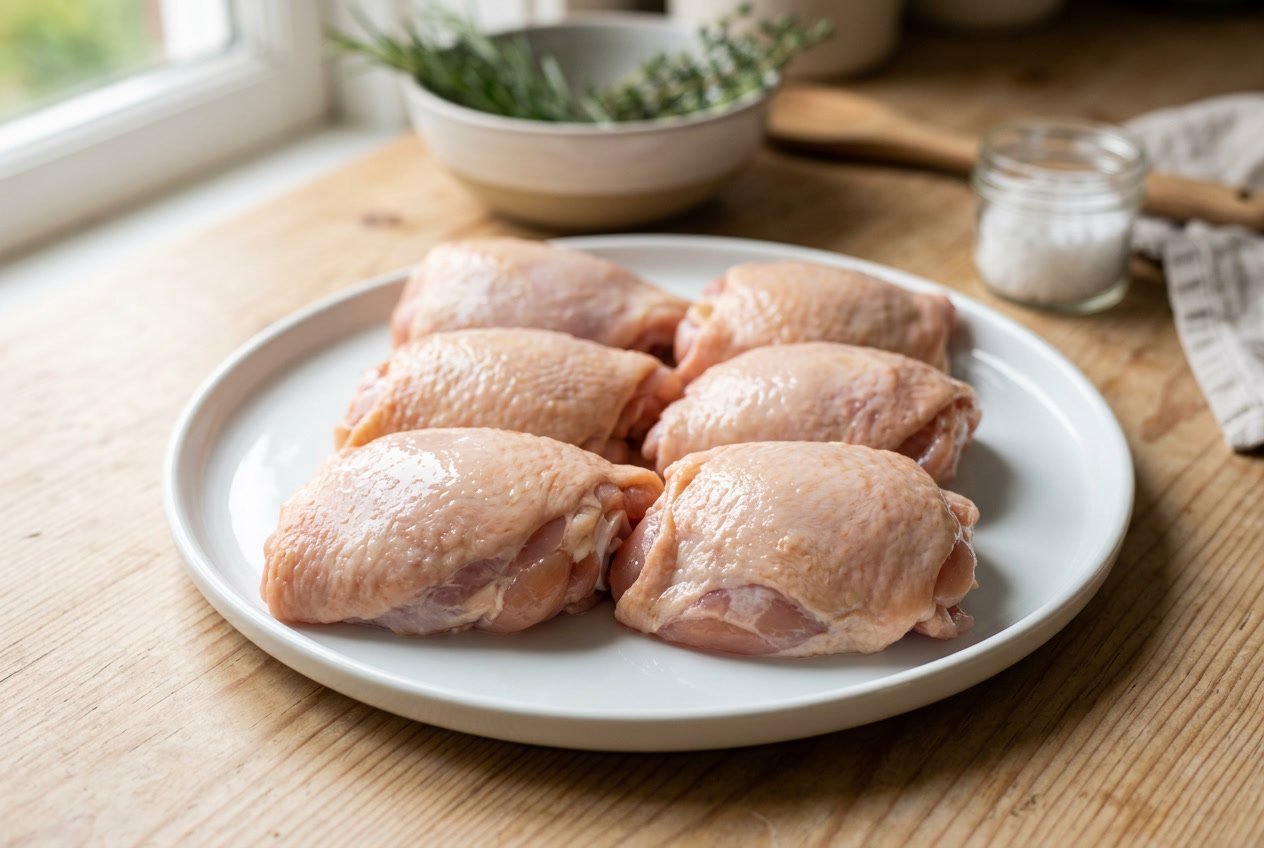
You’ll see what thighs look like raw and cooked. You’ll also learn the visual differences between bone-in and boneless cuts, and practical cues for choosing and handling them at the store or in your kitchen.
You’ll get tips for identifying freshness, spotting problems, and how cooking methods change color and texture. Use these cues to shop, prepare, and serve thighs with confidence.
Understanding Chicken Thighs
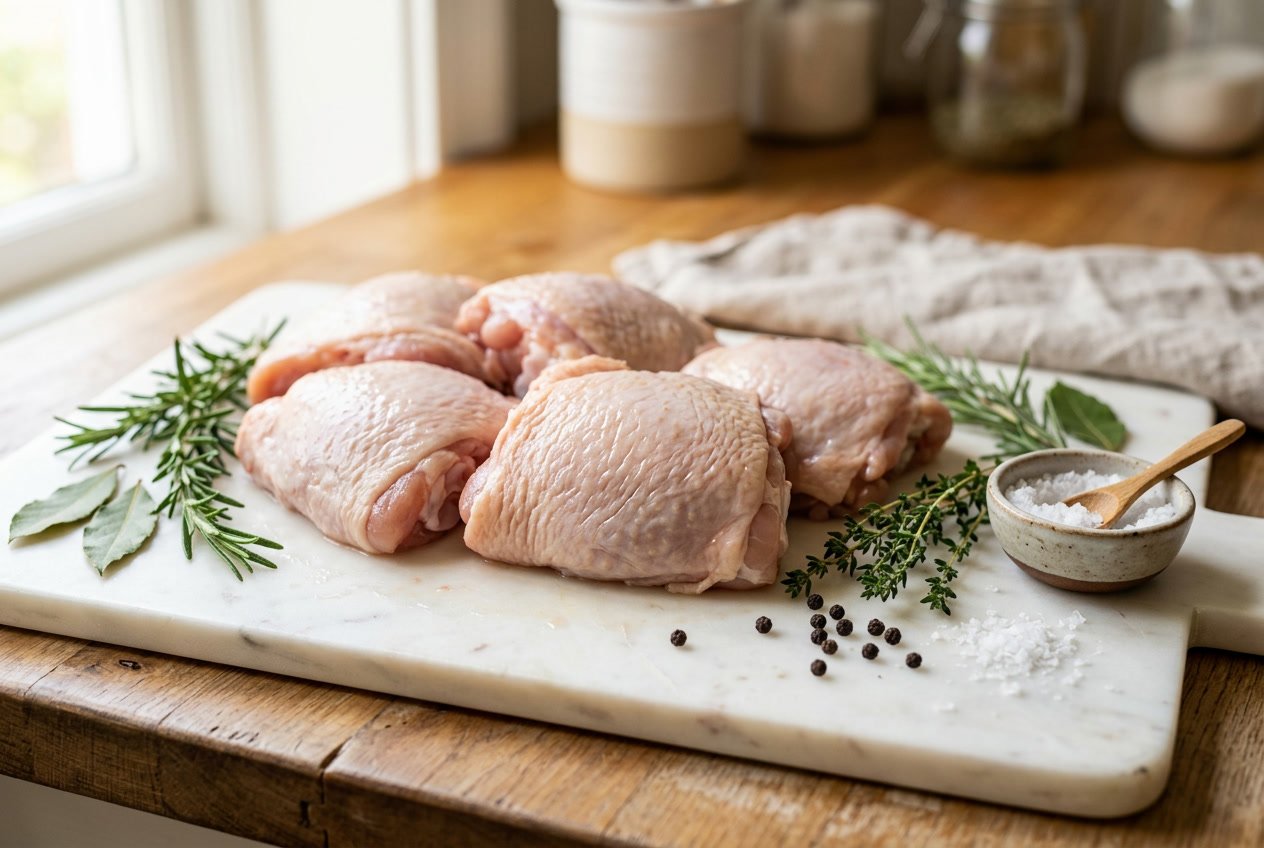
You’ll learn what a thigh actually is and how it differs from the drumstick. Dark meat behaves differently in cooking, and you’ll see how shape and structure affect buying and cooking.
What Is a Chicken Thigh
A chicken thigh is the upper portion of the bird’s leg, attached to the body at the hip joint and separated from the lower leg at the knee. Visually, a raw thigh often looks slightly pear-shaped, with a broader top tapering toward the joint and a visible femur when bone-in.
Thighs are sold as bone-in or boneless, and with skin-on or skinless. Bone-in, skin-on thighs weigh about 4–6 ounces each. Boneless, skinless pieces are flatter and cook faster.
The thigh’s higher fat content gives it more marbling and moisture than breast meat. This affects flavor and cooking times.
Thigh Versus Drumstick
The thigh sits above the drumstick. The drumstick is the lower leg portion you hold by the bone.
The thigh contains the femur and more muscle mass around the hip, while the drumstick includes the tibia and typically has a firmer bite.
In markets, you’ll find them labeled separately: “thigh” for upper-leg cuts and “drumstick” for lower-leg cuts. Thighs generally offer more meat per piece and a higher fat ratio.
Drumsticks work well for grilling and frying when you want an easy-to-hold portion.
Dark Meat Versus White Meat
Dark meat refers to muscles used more frequently for movement—thighs and drumsticks. These cuts contain higher myoglobin and intramuscular fat.
Dark meat chicken appears darker pink-red raw and tastes richer when cooked. It stays moister at higher cooking temperatures.
White meat (breast) has less myoglobin and fat, so it looks paler and dries out faster if overcooked. Choose thighs for forgiving meat that tolerates longer cooking and bold seasoning.
For lower fat, pick skinless thighs or trim excess fat, though you may lose some juiciness.
Raw Chicken Thigh Appearance
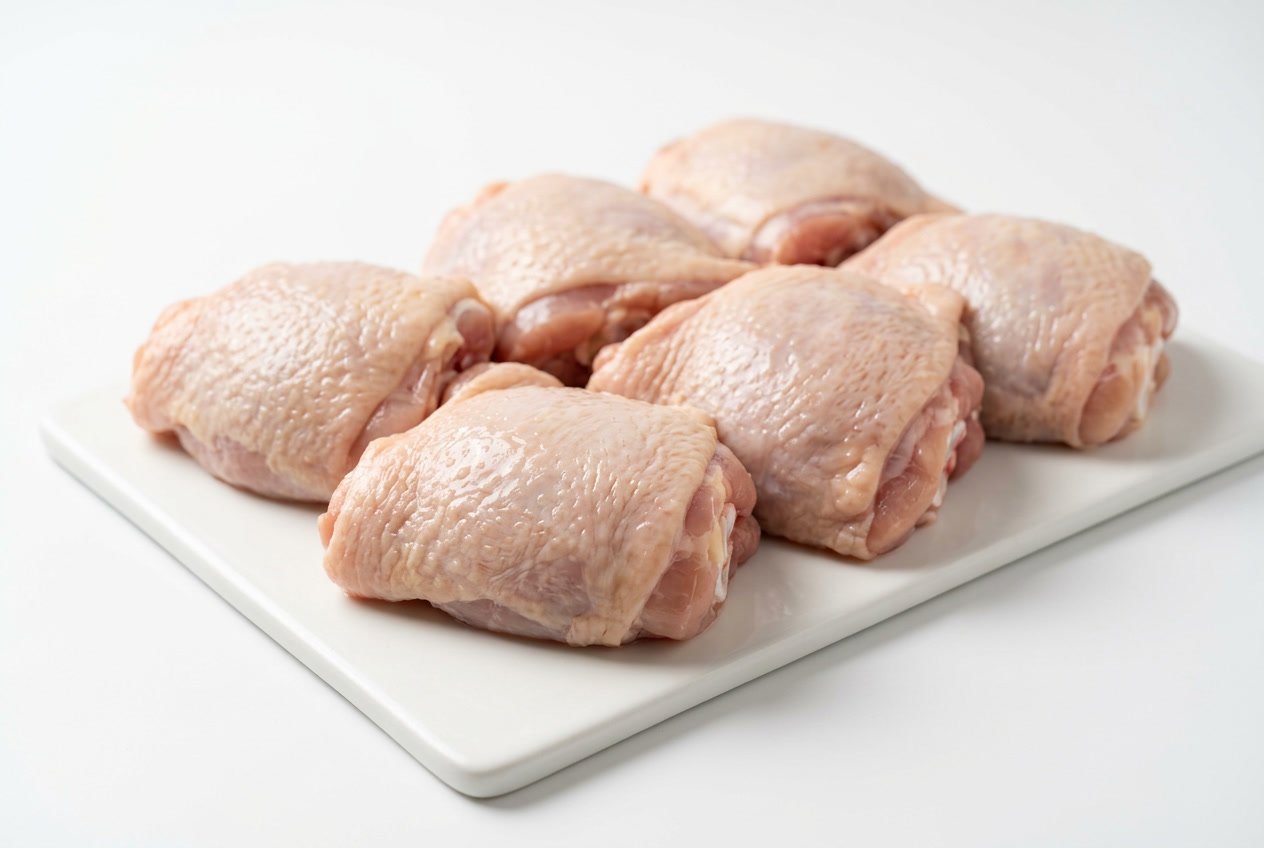
You’ll notice the thigh’s shape, color, and fat first. These features determine how the piece cooks, how it should be handled, and whether it’s fresh.
Shape and Size of Raw Chicken Thighs
A raw chicken thigh typically has a pear-like, slightly rounded shape with a broader top that tapers toward the joint area. Bone-in thighs often show a small exposed femur at one end.
Boneless thighs are flatter and more uniform because the bone and connective tissue have been removed. Sizes vary by bird: small supermarket thighs weigh about 3–4 ounces, while larger ones reach 6 ounces or more.
Packaging usually groups thighs by weight, so check labels if you need consistent portion sizes. When you handle the thigh, expect some give; the meat should spring back slightly when pressed.
Color and Texture in Raw Form
Raw chicken thighs usually appear pink to reddish-pink, darker than breast meat because thigh muscles contain more myoglobin. Fresh thighs have a moist, slightly glossy surface without sliminess.
Avoid pieces that look grayish, greenish, or have dull, dry patches—those are warning signs of spoilage. Texture is tender and a bit slippery from natural juices, not sticky.
Skin-on thighs show pale yellow to white skin with visible pores and occasional fat beneath. Skinless thighs expose the underlying muscle fibers and slightly uneven surface where fat and connective tissue run through the meat.
Fat Content and Marbling
Chicken thighs have noticeably more fat than breasts. White streaks or pockets within the muscle show marbling.
The fat concentrates near the bone and under the skin, contributing to flavor and moisture during cooking. Skin-on thighs have an additional layer of subcutaneous fat that crisps when roasted.
Look for even marbling and white fat rather than yellow-tinged or spotty deposits. Excessive yellow in fat can indicate older birds or improper storage.
Trim only as needed; much of the visible fat renders and improves juiciness. Leaving some fat and skin on benefits texture and taste.
Bone-In vs. Boneless Chicken Thighs
You’ll notice differences in shape, handling, and cooking behavior that matter for shopping and recipes. Bone presence, size, and whether the skin is attached affect flavor, cooking time, and appearance.
Visual Differences in Bone-In Chicken Thighs
Bone-in chicken thighs have a rounded, irregular shape caused by the femur and surrounding joint. You can usually see or feel the bone end tucked into the meat.
That gives the piece a thicker center and thinner edges. Each thigh varies in size and contour, so portions look less uniform on a platter.
Raw bone-in thighs range from pale pink to deeper pink-red because of higher myoglobin in leg muscles. If skin is present, it may cover the bone end and add a yellowish tint.
When cooked, the meat near the bone often stays slightly darker and retains more moisture than the outer meat.
What Boneless Chicken Thighs Look Like
Boneless chicken thighs appear more uniform and flattened because the bone and sometimes excess connective tissue have been removed. They usually come as single muscle pieces about 3–6 ounces each.
Boneless thighs show more consistent thickness across the piece, which helps them cook faster and more evenly than bone-in thighs. Raw boneless thighs show visible marbling of fat through the meat and a pink hue.
Without the bone, you’ll notice smoother edges and a compact, oval shape. When packaged, boneless thighs often lie flat and stack neatly, making them easier to portion for quick recipes or stir-fries.
Skin-On Versus Skinless Thighs
Skin-on thighs present a thin layer of skin that ranges from pale white to yellow. It can hide fat and connective tissue beneath.
The skin adds visual texture—wrinkled when raw and crisping to golden-brown when cooked. If you want visible browning and a crispy finish, choose skin-on bone-in or boneless chicken thighs.
Skinless thighs expose the meat directly, showing the pink flesh and fat marbling. They look leaner and more uniform, which some cooks prefer for sauces or dishes where crisp skin isn’t needed.
Skinless bone-in thighs combine the irregular bone shape with exposed meat. Skinless boneless thighs retain that flat, compact appearance useful for skewers or quick sautés.
Cooked Chicken Thigh Visuals
Expect golden-brown skin, opaque flesh, and juices that run clear when the thighs are done. Look for even color, slight shrinkage from the bone, and a glossy surface where fat has rendered.
Color and Juiciness When Cooked
Cooked chicken thighs typically show golden to deep amber skin when roasted or seared. The meat beneath should be opaque beige or light tan.
Avoid raw-looking translucence in the thickest part. A faint pink tinge close to the bone can appear in fully cooked chicken thighs because of myoglobin and bone marrow.
Juices provide a quick check. When you pierce the thickest part, the liquid should be clear or very slightly tinted, not bright pink or bloody.
If you brined the thighs, juices can look clearer than expected, so pair this test with a thermometer reading of 165°F (74°C) for certainty. Properly cooked thighs will retain moisture and appear plump, not dry or stringy.
Texture and Tenderness of Cooked Thighs
When fully cooked, chicken thigh meat yields easily to a fork and pulls apart in moist flakes. The collagen in thighs breaks down into gelatin during cooking, so the interior should feel slightly springy and tender rather than firm or rubbery.
If the exterior is crisp but the interior resists, the thighs need more time. Press the thickest area gently: done thighs feel yielding and return slowly, while undercooked meat is squishy and overly soft.
Overcooked thighs feel dry, fibrous, and tight. You’ll notice white, chalky strands rather than glossy, moist fibers.
Aim for a balance where the meat separates cleanly and stays juicy.
Appearance of Fully Cooked Versus Undercooked
Fully cooked chicken thighs show uniform opacity from edge to center, with no glassy spots in the meat away from the bone. The skin should be evenly browned and slightly blistered if crisping was intended.
You may see slight separation where the meat pulls back from the bone on bone-in thighs. Undercooked thighs display translucent, glossy areas, especially near the bone, and juices that are pink or red.
The texture will feel stubborn when pierced and resist flaking. Use a meat thermometer and ensure the thickest point (avoiding bone) reads 165°F (74°C) to distinguish fully cooked chicken thighs from undercooked ones.
Indicators of Doneness and Safety
You need clear, testable signs to know when thighs are safe and still juicy. Focus on internal temperature first, then check color, texture, and common mistakes that cause undercooking or dryness.
Using a Meat Thermometer
Insert an instant-read digital meat thermometer into the thickest part of the thigh, avoiding bone. Aim for an internal temperature of 165°F (74°C) as measured at the deepest point; this ensures harmful bacteria are destroyed.
If you prefer carryover cooking, remove thighs at about 160–162°F (71–72°C) and let rest 5–10 minutes. Residual heat will raise them to 165°F.
For bone-in thighs, probe near but not touching the bone because bone conducts heat differently and can give a falsely high reading. Calibrate or compare cheap thermometers occasionally.
Clean the probe between checks to avoid cross-contamination.
Visual and Texture Signs of Doneness
Cooked chicken thighs should be opaque throughout; the flesh will be white to light tan, not translucent or bright pink. Small pockets of pink near bone can occur in fully cooked thighs, especially in younger birds, so color alone can mislead you.
Juices should run clear when you cut into the thickest part. The meat will pull slightly away from the bone and feel firm but still springy when pressed.
Overcooked thighs feel dry and stringy; undercooked thighs feel soft and gummy. If the skin is present, it should be golden-brown and crisp when finished at higher heat.
Use visual cues together with a thermometer for the most reliable assessment.
Common Doneness Mistakes
If you rely solely on surface color or juices, you risk undercooking. Pink can persist even after safe temperatures are reached, and clear juices can sometimes appear before the center reaches 165°F.
Always verify with a thermometer. Probing the wrong spot—near the bone or in fat—gives inaccurate readings.
Insert the thermometer into the thickest central muscle and avoid contact with bone. Also avoid overcrowding the pan or oven; crowded thighs cook unevenly and increase the chance of cold centers.
Let thighs rest 5–10 minutes to redistribute moisture and complete any carryover cooking.
Impact of Cooking Methods on Appearance
Different cooking methods change how chicken thighs look. Skin color, surface texture, and the interior’s color and moisture vary with heat source, time, and whether the cut is bone-in or boneless.
You’ll see crisp, caramelized skins from high dry heat, smoky char and grill marks from direct flame, and uniformly pale, shredded surfaces from braising or slow cooking.
Baking Chicken Thighs
Baking produces even browning and a reliably crisp skin when you use bone-in, skin-on thighs and roast at 400–425°F (200–220°C). The skin develops a golden to deep brown color.
A final broil for 2–4 minutes deepens color and crisps any softened areas. Inside, the meat should be opaque and moist if you remove thighs at 165°F (75°C) for safety.
Pulling to 170–175°F (77–79°C) helps loosen connective tissue without over-drying. Seasoning and added oil affect appearance.
A light oil coating helps even browning. Sugary glazes will darken faster, so watch for spotty charring.
Use a baking rack to let air circulate and avoid soggy undersides.
Grilled Chicken Thighs
Grilling creates distinct dark grill marks and a mottled exterior where the direct flame contacts the skin. High, direct heat (450°F/232°C+) crisps and blisters the skin and concentrates browning at contact points.
Indirect heat cooks the thighs through without excessive charring. You will see color contrast: near-black sear lines and golden areas between marks.
Bone-in thighs hold moisture better, so the interior stays juicy even with aggressive searing. Flip sparingly to preserve the crust.
Marinades with sugar caramelize quickly, so move thighs to indirect heat if flare-ups happen. Use an instant-read thermometer in the thickest part without touching bone for accurate doneness.
BBQ and Other Methods
BBQ and smoking create a smoke ring, a pink rim beneath the surface, and a deeper mahogany color from low, long heat and wood compounds. The skin may remain less crisp than with grilling unless you finish over higher heat.
Braising or slow-cooking makes pale, uniformly colored meat that pulls apart easily. The exterior often lacks crispness but carries the braising liquid’s color and glaze.
Frying gives an even golden-brown crust when breaded. The color is uniform and the surface is textured.
For BBQ chicken thighs, expect sticky, glossy sauces to darken during finishing. Avoid over-sugaring early in the cook.
For pan-seared then oven-finished methods, a well-browned exterior from the pan complements even oven color.
Effects of Cooking on Texture
Texture changes reveal doneness and cooking style. Dry, stringy fibers show overcooking; tender, slightly springy meat means proper internal temperature and moisture retention.
Bone-in thighs stay moister because the bone slows heat penetration and protects surrounding meat. Higher final internal temps (175–185°F / 79–85°C) break down collagen in dark meat, yielding a shreddable, silky texture.
Lower temps near 165°F keep the meat sliceable and firmer, which is better for plated presentations. Surface texture signals method: blistered, crackled skin from high heat; glossy, tacky skin from sauced finishes; soft, melded surfaces from long-moist cooking.
Rely on touch, appearance, and an instant-read thermometer to judge both safety and preferred texture.
Selecting and Handling Chicken Thighs
Look for plump, firm pieces with a consistent pink color and minimal surface moisture. Keep raw thighs cold and separate from other foods.
Plan to cook or properly freeze them within the recommended time.
Signs of Freshness When Buying
Check color first. Fresh thighs show a pale to medium pink hue without gray or green tinges.
Avoid any with dark spots or a dull appearance. Press gently; fresh meat springs back.
A slimy or sticky surface signals spoilage or poor handling. Smell is decisive; a mild, neutral scent is normal.
Strong, sour, or ammonia-like odors mean you should discard the meat. Inspect packaging for excess liquid.
A small amount of clear juices is okay, but lots of pooled liquid suggests older meat or damaged packaging. Choose thighs that are uniform in size for even cooking.
If you want less fat, pick skinless thighs. For more flavor and browning, choose skin-on, bone-in cuts.
Thawing Frozen Chicken Thighs
Place chicken thighs in the refrigerator on a tray to catch drips. Allow 24 hours for a single layer or up to 48 hours for a thicker package.
Keep the thighs sealed or in a leak-proof container to prevent cross-contamination.
For faster thawing, submerge the sealed package in cold water. Change the water every 30 minutes, and expect thawing to take 1 to 2 hours depending on quantity and thickness.
Do not thaw at room temperature or in warm water.
Cook thawed thighs within 1 to 2 days. You can refreeze them only if you thawed them in the fridge and did not leave them at room temperature.
When you use a microwave to thaw, cook the chicken immediately after, since microwaves create hot spots that encourage bacterial growth.


