
What Does Chicken Thigh Weigh? Average Weights, Serving Sizes & Cooking Loss
You probably want a quick, practical answer before you start weighing packages or scaling recipes. A typical raw boneless, skinless chicken thigh weighs about 80–90 grams (around 3 ounces), while a bone-in, skin-on thigh is usually closer to 120–140 grams (4–5 ounces).
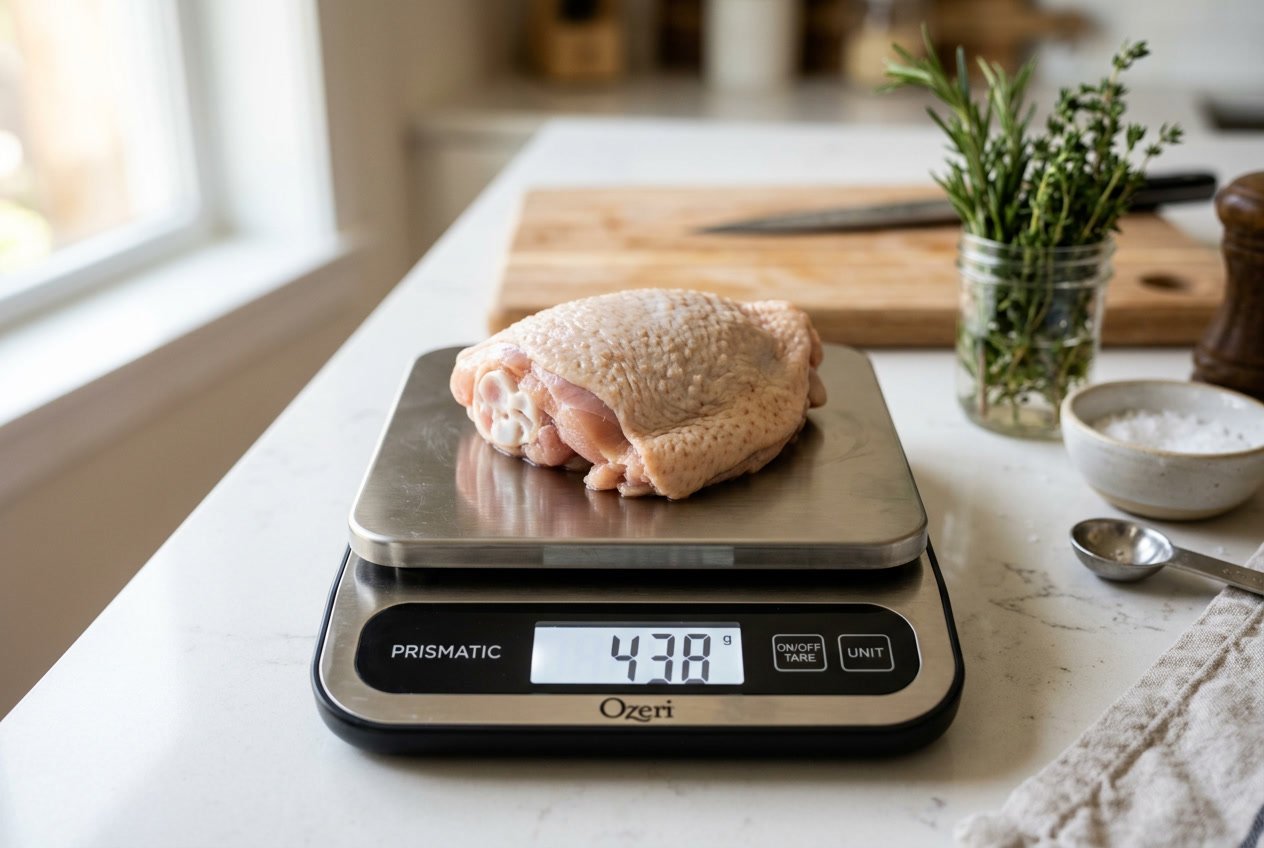
Knowing those averages helps you plan portions and calculate calories. You can also convert between thighs, pounds, and kilograms using these averages.
The following sections explain why weights vary, how much edible meat you get, how cooking changes weight, and how to weigh thighs accurately.
Average Weight Of A Chicken Thigh
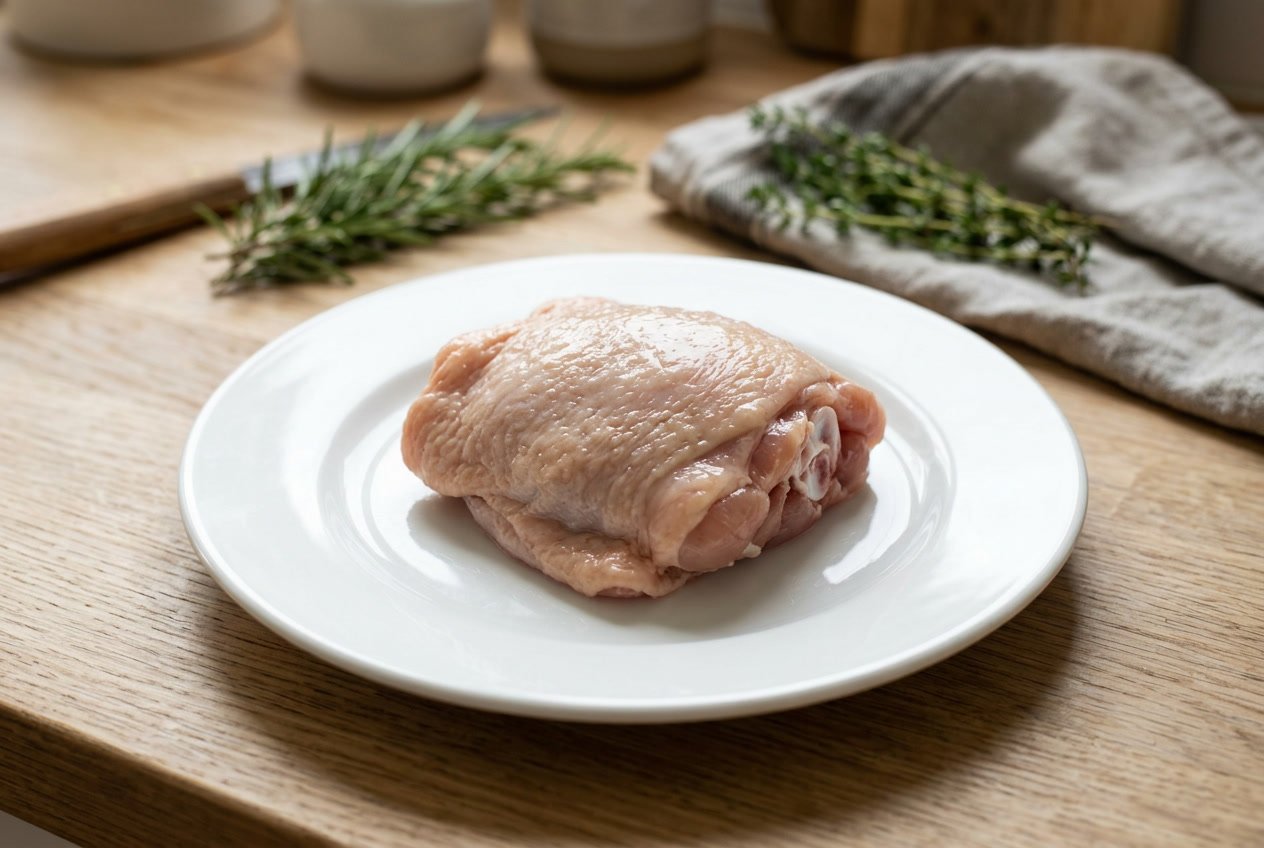
A single chicken thigh commonly falls within a specific weight band depending on whether it includes bone and skin or is trimmed. Bone-in, skin-on thighs weigh noticeably more than boneless, skinless thighs because the bone and skin add both mass and calories.
Typical Ranges For Bone-In, Skin-On Thighs
Bone-in, skin-on thighs usually weigh between about 110–200 grams (3.9–7.1 oz).
A common supermarket average sits near 125 grams (4.4 oz) per thigh.
The bone typically accounts for 20–30% of that weight.
Skin adds extra grams and fat, so a 125 g thigh may contain roughly 80–95 g of edible meat after trimming.
If you buy thighs by package, divide the package weight by the number of pieces to estimate the weight per thigh. For calorie counting, use the raw weight on nutrition labels since those values usually reflect whole, bone-in portions.
Typical Ranges For Boneless, Skinless Thighs
Boneless, skinless thighs commonly fall in the 70–110 grams (2.5–3.9 oz) range.
An industry average often cited is about 80–90 grams (2.8–3.2 oz) per thigh.
Removing bone and skin reduces weight by roughly 30–40% compared with bone-in, skin-on pieces.
For example, a 125 g bone-in thigh becomes about 80–90 g of meat when boned and skinned.
Weigh your trimmed thighs if you track macros.
Small differences between brands and breeds make weighing the most reliable method for precise portion control.
Weight Variations By Chicken Size
Chicken age and breed significantly affect thigh weight.
Smaller fryer chickens yield thighs near the low end (70–90 g trimmed), while larger broilers or older birds produce thighs above 120 g.
Free-range or heritage breeds sometimes weigh less in uniformity but can have denser meat.
Processors may also size-pack thighs (e.g., 20–24 oz per pack), which changes average piece weight; check pack labeling for the clearest estimate.
If a package lists total weight and piece count, divide to get the average weight of one thigh.
This method gives you a practical number for recipe scaling and nutrition tracking.
Factors That Affect Chicken Thigh Weight
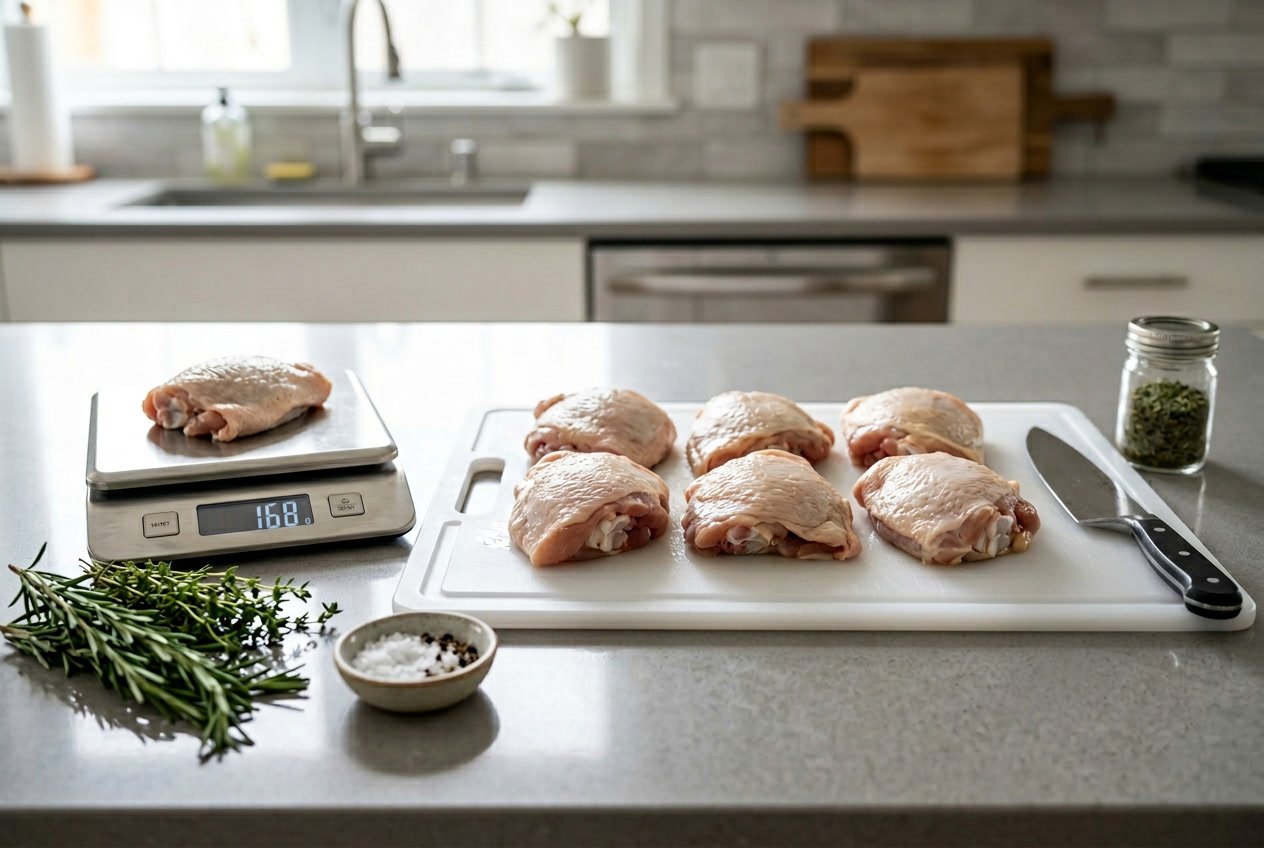
Several factors change how much a chicken thigh weighs. Bone and skin presence, bird breed and size, plus the chicken’s diet, age, and farming method all play a role.
These elements determine raw weight, edible meat proportion, and how much weight is lost during cooking.
Bone-In Versus Boneless
A bone can account for roughly 20–35% of a thigh’s total raw weight.
If you buy bone-in thighs, expect each piece to weigh about 110–160 g (3.9–5.6 oz) on average; boneless thighs commonly weigh about 70–100 g (2.5–3.5 oz).
When you remove the bone, you lower packaged weight and increase the proportion of edible meat.
For recipes and calorie counts, weigh boneless thighs directly.
If you need a precise yield for a recipe or cost-per-meat calculations, weigh a sample thigh or subtract about 25–30% from bone-in weight to estimate boneless meat weight.
Skin-On Versus Skinless
Skin adds both mass and fat, typically increasing raw thigh weight by about 10–20 g depending on size.
A skin-on, bone-in thigh will weigh more than the same cut with skin removed and will retain more moisture during cooking.
Count skin when tracking calories or portion sizes because its fat content raises caloric value.
If you prefer to portion by edible meat, weigh thighs after removing skin.
For roasting or braising, leaving skin on changes cooked yield.
Skin-on thighs often lose a smaller percentage of weight (around 20–25%) compared with skinless pieces.
Chicken Breed And Size
Different breeds produce thighs with noticeably different weights.
Industrial broilers bred for rapid growth give larger thighs, often in the upper ranges, while heritage or bantam breeds produce smaller thighs, sometimes under 80 g boneless.
Commercial labels like “jumbo,” “standard,” or specific weight ranges help predict average thigh mass.
If precision matters, buy a sample pack and weigh several thighs to get an average.
Size variation can be wide.
Individual thighs from the same bird may differ by 20–30% in weight.
Diet, Age, And Farming Method
A chicken’s diet and age affect muscle development and fat deposition, which in turn affect thigh weight.
Well-fed, grain-rich diets and younger, fast-grown broilers typically yield heavier thighs with less connective tissue.
Free-range or slower-grown birds often develop firmer muscles and slightly lower weights per thigh, but richer flavor and different fat distribution.
Antibiotic-free or organic labels indicate management practices, not exact weight, so use supplier averages for planning.
If you need consistent portion sizes, source from the same supplier and monitor weights seasonally, since feed changes and flock age shift average thigh mass.
How Much Meat Is On A Chicken Thigh
You can expect about 80–90 grams (2.8–3.2 oz) of edible meat from a typical raw chicken thigh once the bone and skin are removed. This range covers most supermarket thighs, though small or large birds will shift the number up or down slightly.
If the thigh is skinless and boneless when you buy it, the package weight usually equals the edible meat weight.
For bone-in, skin-on thighs, the bone and skin add roughly 30–45% extra weight, so a 125 g (4.4 oz) whole thigh often yields about 80–90 g of meat after trimming.
Quick reference:
- Average skinless, boneless meat: ~80–90 g per thigh
- Average bone-in, skin-on whole thigh: ~125 g total weight
- Typical yield after removing bone/skin: ~60–75% of whole weight
When you cook thighs, expect additional weight loss from moisture and fat render. Plan on around 20–30% shrinkage during cooking for most methods.
If you track calories or portions, weigh the part you actually serve. Weigh raw for raw-nutrition labels, or cooked if you’re using cooked-package values.
Weighing Chicken Thighs Accurately
You need consistent, measurable weights for recipe accuracy, nutrition tracking, and portion control. Weigh the thighs in the same state you’ll cook and serve them to avoid errors.
Best Practices For Weighing
Weigh thighs individually when possible. That prevents averaging errors, since one large thigh can skew a batch.
Use a clean plate or bowl and tare the scale before placing the first piece.
Record whether thighs are skin-on or skinless and bone-in or boneless.
Note the state in grams or ounces so you can scale recipes precisely.
If you buy bulk packs, separate and weigh a representative sample of 3–5 thighs to establish an average weight per piece.
Handle raw poultry with care. Clean the scale and container after contact, and always wash hands and surfaces to prevent cross-contamination.
For meal prep, label weighed portions with date and weight for fridge or freezer storage.
Weighing Raw Vs Cooked
Raw and cooked weights differ because cooking removes water and fat.
Expect 15–30% weight loss after roasting or pan-frying, depending on method and skin presence.
If a recipe lists raw weights, weigh before cooking. If it lists cooked weights, cook first and then weigh to match the recipe’s intent.
For nutrition tracking, use raw weight for packaged values or cooked weight if your nutrition source specifies cooked values.
When tracking serving sizes, weigh the edible portion only. Remove bones and skin if you won’t eat them, then record the meat weight.
This ensures calorie and macronutrient calculations reflect what you actually consume.
Using Kitchen Scales
Choose a digital kitchen scale with a tare function and 1 g (0.1 oz) resolution for best accuracy.
Place the scale on a flat, stable surface and avoid drafts or vibrations while weighing.
Use a shallow container for small pieces and always tare the container to zero.
For multiple thighs, weigh them together for total mass, then divide by the number of pieces to get an average per thigh if individual weighing isn’t practical.
Calibrate the scale periodically following the manufacturer’s instructions.
If you move between metric and imperial units, confirm the scale’s displayed units match your recipe or nutrition database before recording weights.
How Much Weight Do Chicken Thighs Lose When Cooked
Expect cooked thighs to weigh noticeably less than raw ones because moisture and some fat escape during cooking. Typical loss ranges and the effects of different methods help you plan portions and track calories more accurately.
Average Cooking Weight Loss
A raw chicken thigh loses about 20–25% of its weight during cooking.
For example, a 125 g raw bone-in, skin-on thigh will usually end up around 94–100 g after roasting.
Skinless, boneless thighs often lose a bit more moisture and can shrink by 25–30%.
An 83 g raw boneless thigh may finish near 58–62 g.
Weight loss comes mainly from water evaporation; some fat also renders out.
If you track calories, weigh meat raw when possible, since nutrition labels typically use raw weights.
If you must weigh cooked meat, apply a conversion factor. Multiply raw weight by 0.75–0.80 for bone-in/skin-on, or 0.70–0.75 for boneless/skinless as a quick estimate.
How Cooking Method Impacts Weight Loss
High-heat dry methods like grilling, roasting, or broiling cause the most moisture loss.
A roasted thigh loses more water than a braised thigh because braising traps steam and liquid, reducing shrinkage to closer to 10–15%.
Frying sears the surface quickly and can preserve more interior moisture, but breading and oil absorption change final weight unpredictably.
Sous-vide cooking minimizes loss: vacuum sealing and low temperatures keep moisture, so you’ll see the least shrinkage, often under 10%.
If you brine or marinate, expect less percentage loss because added water increases starting weight and some of that fluid remains after cooking.
Quick reference (approximate weight retention):
- Roasting/Grilling: retain ~70–80% of raw weight
- Braising/Steaming: retain ~85–90%
- Sous-vide: retain ~90–95%
- Pan-frying (unbreaded): retain ~75–85%
Use these method-specific factors when converting raw to cooked weights for recipes, meal prep, or calorie tracking.
Thighs Per Pound And Portion Guidance
You’ll learn how many chicken thighs typically make a pound and get clear serving-size advice for shopping and meal planning. Use these numbers to buy the right amount and to scale recipes accurately.
How Many Thighs In A Pound
Bone-in, skin-on thighs usually weigh about 3.5–6 ounces each, so expect roughly 3–4 thighs per pound.
Skinless, boneless thighs are smaller, often 2.5–4 ounces each, giving you about 4–6 thighs per pound.
When buying, check package weight and count rather than relying on “pieces per pound” labels.
Supermarkets often sell thighs by total package weight; divide that weight by the average per-thigh number above to estimate pieces.
If a recipe calls for 1 lb bone-in thighs, buy a 1.25 lb package to allow for trimming and bone weight loss during prep.
Quick reference (approximate):
- Bone-in, skin-on: 3–4 thighs per pound
- Skinless, boneless: 4–6 thighs per pound
Serving Size Recommendations
Plan for 1 bone-in thigh or 1–2 boneless thighs per person for average adult portions.
If you track calories or protein, use about 125 g (4.4 oz) raw for a bone-in thigh and 80–90 g (2.8–3.2 oz) raw for a boneless thigh as a baseline.
Adjust portions based on appetite and meal type.
For a light meal or with many sides, serve 1 boneless thigh (80–90 g) per person.
For a main course with minimal sides, serve 1 bone-in thigh (125 g) or 2 boneless thighs per person.
When you batch cook or buy in bulk, multiply the per-person weight by the number of diners.
Then convert to thighs per the counts above to determine how many to buy.
Calories In Chicken Thighs
The calorie count of a single chicken thigh depends on whether it has skin and bone, and on the cooking method.
Expect higher calories when you leave the skin on or fry the thighs with added fats.
Calories For Skin-On, Bone-In Thighs
Skin-on, bone-in thighs contain both the skin’s fat and the full portion of meat, so calories are higher per piece.
A typical raw skin-on, bone-in thigh weighs about 125 g (4.4 oz) and usually contains roughly 250–300 kcal per thigh, depending on size and any added marinades or brines.
Cooking the thigh with oil or roasting it until the skin crisps increases the calorie count because the skin absorbs fat.
Keep portion control in mind: one skin-on thigh usually equals about one recommended serving for a hearty portion.
Two skin-on thighs can push calorie totals above 500 kcal.
Key quick references:
-
Average raw weight: ~125 g (4.4 oz)
-
Typical calories per raw skin-on thigh: ~250–300 kcal
-
Cooking method and added fats can increase this by 10–30%
Calories For Boneless, Skinless Thighs
Boneless, skinless thighs have less fat and therefore fewer calories per piece. A common raw boneless, skinless thigh weighs about 80–90 g (2.8–3.2 oz) and contains roughly 100–140 kcal, depending on the exact weight and whether it contains injected solutions.
If you grill or bake without added fat, you keep calories near the lower end. Pan-frying in oil or using sugary glazes increases the total.
For calorie counting, weigh the raw meat before cooking. Note any sauces or oils you add, since those contribute most of the extra calories.
Quick facts:
- Average raw weight: ~80–90 g (2.8–3.2 oz)
- Typical calories per raw boneless, skinless thigh: ~100–140 kcal
- Cooking fats and marinades add the most additional calories


